|
Friends: In addition to taxes and death, another universal experience is that every one of us was born to two parents. Most of us were fortunate to have those two people raise us and have them in our lives until we were approaching our own old age. And most of us were fortunate to have our own children, parent them through their childhood and adolesence, and still be present in their adult lives.The parent/child relationship is one of the most powerful themes in fiction, one of the core elements of most memoirs, and the one that centered most of this month's reading. Tolstoy wrote in "Anna Karenina" that "All happy families are alike; each unhappy family is unhappy in its own way." The books that I read this month told stories of families, both happy and unhappy.
Here are the books I read in July:
- The Yearling, Marjorie Kinnan Rawlings
- Where the Crawdads Sing, Delia Owens
- Hush Money, Robert B. Parker
-
Summer Solstice: An Essay, Nina MacLaughlin
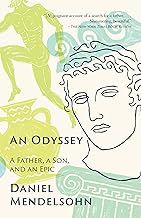
- An Odyssey: A Father, A Son, and an Epic, Daniel Mendelsohn
- To Kill a Mockingbird, Harper Lee
- Ripples in the Fabric of the Universe: New & Selected Poems, Jim Tilley
- Nonrequired Reading: Prose Pieces, Wislawa Szymborska
- The Adventures of Huckleberry Finn, Mark Twain
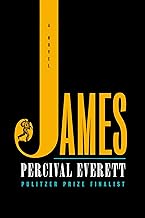
- James, Percival Everett
-
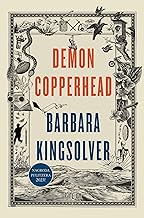
Demon Copperfield, Barbara Kingsolver
- Fugitive: My Childhood on the Hollywood Blacklist, Tony Kahn
This month's novels were all set in the American South---Marjorie Kinnan Rawling's Florida, Delia Owens' North Carolina, Harper Lee's Alabama, Mark Twain's and Percival Everett's Missouri, and Barbara Kingsolver's, Virginia. Through stories of the horrors of slavery, the racism of the Jim Crow era, and today's debilitating impact of poverty and opioid addiction, a central theme that emerged from those books was the powerful and often fraught relationship between a son and his father.
That relationship is at the core of "The Yearling", the 1939 Pulitzer Prize winner, as 12 year old Jody Baxter grows into a man under the loving eye and guidance of his father, Penny. Often thought of as an 'animal lover's story' due to Jody's love for a fawn he adopts, the novel turns on the father's love for the boy and his efforts to help him grow into a man. I doubt if this book is still a regular part of the middle school curriculum, but I'd urge you grown-ups to give it a try---engaging writing and a heck of a story.
This same parental love and motivation to shape the future adult is a primary feature of Harper Lee's classic "To Kill a Mockingbird", the Pulitzer Prize winner in 1960. As narrated by his young daughter Scout, Atticus Finch's parenting of her and her brother Jem are, along with Finch's defense of the wrongly accused Black, Tom Robinson, the core of this fine book. We see Jem grow over 3 years into a strong, just, and clear-thinking adolescent, certain that he will mirror his father's ethics and character. Made into a movie with Gregory Peck that won three Oscars in 1962 and into a Broadway hit with Jeff Bridges that won a Tony in 2018, the book is still my favorite vehicle for this powerful story.
"The Adventures of Huckleberry Finn" and "James" present two more variations on the father/son theme. Huck's presumptive father, Pap, is an ignorant, drunk, abusive man whose main contribution to Huck's upbringing is to beat him and prevent him from going to school. Despite this pernicious paternal influence, Huck, for all his adolescent antics, turns into a thoughtful and moral youngster, choosing to help Jim run away rather than turn him in as society would have had him do. Percival Everett takes the father/son theme to a whole other level, but I would need a two page 'spoiler alert' to let you in on the ending. Read both of them for the pleasure of fine writing separated by nearly 150 years and to admire Everett's creative spin on what some call the first truly American novel.
"Where the Crawdads Sing" is not about a father and son but all about a father and daughter. Another contender for "Worst Father of the Decade" award, Jackson Clark is another alcoholic, wife and child beater whose main contribution to Kya's development is to abandon her. This novel was terrific, often tense and sometimes painful to read, but with a great surprise ending that made the whole effort worthwhile. If you missed it when it was first published, read it now and enjoy the ride.
Barbara Kingsolver's 2023 Pulitzer Prize winning "Demon Copperfield" is fashioned on Dickens'1850 novel "David Copperfield", but unlike the Huckleberry/James duo, I couldn't find the time or energy to read Dickens again before diving into this contemporary version. Once again, the central theme of this long and disturbing novel is the main character's attempts to figure out his father thing. Demon has his father's name and red hair, but Dad checked out via an auto accident before his son was born. Nonetheless, the elder Demon's influence on his son is always present as Demon junior tries to figure out 'life', growing up in abject poverty, orphaned at 10, fostered to a series of hellish homes, and eventually 'fathered' by a man more interested in winning football games than in his young charge's health or development. I found this book to be difficult to read, partly because it went on and on and on (548 pages!!!) but mostly because poor Demon kept encountering disaster after disaster. It became wearing. Perhaps you'll like it better than I did.
That brings me to two non-fiction books in which the authors' fathers were the central figures, Daniel Mendelsohn's "An Odyssey" and Tony Kahn's graphic book "Fugitive".
I loved Mendelsohn's two prior books of literary criticism and his excruciating tale of his family murdered in the Holocaust, "Lost", so it was no surprise that I loved this book as well. It has everything. There's the wonderful re-telling of Odysseus's travels, reducing the epic poem's 12,100 lines of Greek hexameter into a series of wonderfully described encounters with those terrors of the mythical past----Polyphemus, Circe, Calypso, Scylla, Charybdis, Chiron. This retelling is done through the vehicle of Mendlesohn's course on the Odyssey at Bard College when his 81 year old father decides to audit the course. The book also tells the parallel story of the cruise Daniel and his father took, retracing the ten year voyage of Odysseus from Troy to Ithaca. Finally, the epic poem provides the scaffolding for Mendelsohn to revisit his childhood and young adulthood growing up in the shadow of his distant mathematician father. The book ends with a great final sentence. Mendelsohn is awakened at 3AM by his sister-in-law who is calling from the hospital where his father is dying after a stroke. He picks up the phone and says "What is it". His sister-in-law responds, "It's your father." Truer words were never spoken.
Tony Kahn is a much awarded radio and podcast creator and producer, and he turns those skills to the telling of the story of his father, a leading Hollywood screenwriter who was blacklisted for 25 years in the graphic book "Fugitive". Using photographs, copies of correspondence from J. Edgar Hoover among others, FBI records, and 'cartoons', Kahn immerses the reader in the world of the Red Scare of the 1940's and '50's when the House UnAmerican Activities Committee, Hoover, Nixon, and Joe McCarthy weaponized the Federal Government's power in order to destroy those they suspected of being communists. Gordon Kahn refused to name names, fleeing with his young sons and wife to Mexico to avoid prison. For the remainder of his life, Kahn was harassed, spied upon, phone-tapped, and prevented from publishing his writing under his own name. Tony Kahn tells this story of his father with passion, style, and grace, and it's an important lesson in this election year about how the misuse of governmental power can ruin lives. If you don't have experience with graphic books, give this one a try. You won't be disappointed.
To round out the rest of the month's reading there was Robert B. Parker's "Hush Money", a good distraction though an example of how, as the Spenser series progressed, the plots became more far-fetched and the white spaces on the pages became larger and larger. It's not one of his best efforts but still provided some chuckles through its clever dialogue.
Nina Maclaughlin who writes a column each week for the Boston Globe Book Review has written a love letter to summer, a beautiful, signed, numbered, letter-press printed volume "Summer Solstice" ---a fine way to spend a warm, quiet evening by the sea or in the mountains.
Wislawa Szymborska is best known for her poetry and was named the Nobel Prize winner for Literature in 1996. She also wrote a weekly column for a literary journal in Poland in which she wrote brief reviews, sketches as she called them, of books that were not mainstream best-sellers. Ninety seven of those sketches have been collected in "Nonrequired Reading." It is hard to imagine me emerging from a book by a fine writer who reviewed 97 books with only one to add to my TBR list, but the joy of reading this book wasn't in finding new books to read; it was savoring Szymborska's erudition, wit, humor, and fine writing.
Finally, in a prime example of being open to random reading, I met someone at a wedding in northern Vermont this month who, when I discovered he was a poet, asked if he had any of his books with him. He generously gave me a copy of his newly published book. It's not often you find someone who can write powerful, insightful, and often beautiful verse while also understanding quantum mechanics (Tilley has a Harvard PhD in physics.) and actuarial tables (He was twice awarded the annual prize by the Society of Actuaries while working at Morgan Stanley.). The poems in "Ripples in the Fabric of the Universe: New and Selected Poems" surprised, delighted, and unsettled. Among the usual love/death/aging/nature themes common to most poetry, Tilley focuses on the loving and respectful father/son relationships between him and his father and with his two sons. In his poem "Billy and Stephen and Me" (that would be Billy Collins and Stephen Dunn, not Tilley's sons!), Tilley writes "I'm the one in the hammock, reading both/on this first warm day of spring, coming from one/to the other, going back, pausing every few pages/to let the words plant themselves." Great advice on how to read great poetry, which I'm confident, Tilley will be sharing with us as the years go by.
This month's Poetry Tree on the Charles features two poets, Donald Hall, my all time favorite poet, and George Bilgere who I had not known until I read this poem in a recent 'The Writer's Almanc'. Hall's 'Kearsarge' and 'Affirmatiion" are powerful messages about aging, loss, and death while his 'My Son, My Executioner' addresses the father/son theme with stark realism. That theme is given another expression in Bilgere's poem filled with memories of his father and finding his father's influence in the simple act of taking out the trash. Good stuff!
- Affirmation, Donald Hall
- Kearsarge, Donald Hall
- My Son, My Executioner, Donald Hall
- Taking out the Trash, George Bilgere
In closing, here are some words of wisdom from two great thinkers, Walt Whitman and Dr. Seuss. From Whitman's Preface of the 1855 edition of "Leaves of Grass": "This is what you shall do: Love the earth and sun and the animals, despise riches, give alms to every one that asks, stand up for the stupid and crazy, devote your income and labor to others, hate tyrants, argue not concerning God, have patience and indulgence toward the people, take off your hat to nothing known or unknown or to any man or number of men, go freely with powerful uneducated persons and with the young and with the mothers of families, read these leaves in the open air every season of every year of your life, re-examine all you have been told at school or church or in any book, dismiss whatever insults your own soul; and your very flesh shall be a great poem and have the richest fluency not only in its words but in the silent lines of its lips and face and between the lashes of your eyes and in every motion and joint of your body."
And this wisdom from Dr.Seuss's inimitable classic (which I've read at least 500 times to my grandchildren!),"One Fish, two fish, red fish, blue fish": "And now good night, it is time for sleep. So we will sleep with our pet Zeep. Today is gone. Today was fun. Tomorrow is another one. Every day, from here to there, funny things are everywhere."
Good reading and thoughful introspection!
|