|
Prevalence of Asian Longhorned Tick and Theileria orientalis in Arkansas
Kirsten Midkiff, PhD Extension Animal Health and Wellbeing Specialist
Kelly Loftin, PhD Extension Entomologist
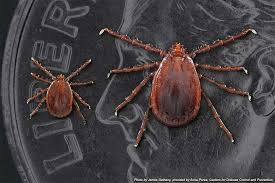
Over the past few years, we have been documenting the spread of the Asian Longhorned tick and Theileria orientalis Ikeda and Chitose through Arkansas, trying to determine the spread throughout Arkansas. Several states have seen increases in tick populations; similarly, Arkansas has seen an increase in both tick populations and pathogen detections in cattle. The Asian Longhorned tick is a solid brown to reddish-brown color with short, pentagonal mouthparts. They can be difficult to find due to their size. It is about the size of a sesame seed; even when engorged from feeding, it is around the size of a pea. This makes it incredibly difficult to find on animals. Theileriosis is caused by an infection with the protozoan pathogen, Theileria orientalis, through the bite of an infected Asian Longhorned tick, or by contaminated needles or surgical equipment. Symptoms of Theileriosis in cattle are fever, anemia, weakness, abortions, suppression of milk production, and even death. In many cases, symptoms in the herd can mirror that of Anaplasmosis. It is also not uncommon to see coinfections – for example, there have been cattle testing positive for Theileriosis and Anaplasmosis. The only way to determine the difference between Theileriosis and Anaplasmosis is through blood testing, and at this time, there are no treatments for Theileriosis in cattle. This is a stark difference from Anaplasmosis, which can be treated using antibiotics. As we transition into warmer days and ticks start to move again, here is an update on where the tick and pathogen have been found so far.
Current Status
In Arkansas, the Asian Longhorned tick has been identified in 10 counties. Counties with established tick populations are Benton, Washington, Carroll, Madison, Boone, Newton, Marion, Searcy, Baxter, and Independence counties. There are two Theileria orientalis genotypes of interest that researchers have found in Arkansas, being Ikeda and Chitose. Theileria orientalis Ikeda has been confirmed in 15 counties. Counties with positive detections of Theileria orientalis Ikeda are Benton, Washington, Carroll, Madison, Boone, Newton, Marion, Searcy, Baxter, Independence, Sharp, Franklin, Logan, Cleveland, and Arkansas counties. Theileria orientalis Chitose has been confirmed in 7 counties thus far, with confirmed counties being Boone, Baxter, Sharp, Independence, Johnson, Logan, and Lonoke counties. This is the only genotype found in Johnson and Lonoke counties. Faulkner county has also confirmed Theileria orientalis infection, but the genotype was unknown.
Some Tick Reminders
Be vigilant in protecting our herds, pets, and ourselves from acquiring tickborne diseases. Consider regular tick treatments for the herd and consult a veterinarian about what would be best to use on the herd. Check animals regularly for ticks; feel around the ears, chin, brisket, and tailhead for ticks. Ticks can also be found between the forearm and brisket (what can be considered the armpit area) and around the udder. Also, as Theileria orientalis is a bloodborne pathogen, it is important to remember to change needles between animals that are known positive or symptomatic cattle and the rest of the herd, as there is potential for transmission. Environmental control can be used as well – start thinking of a good time to clear the brush from the pasture’s fenceline.
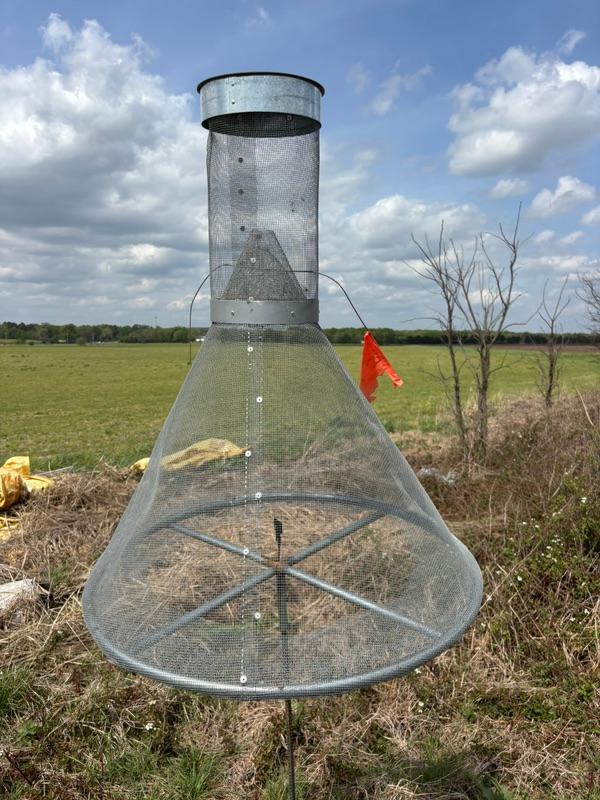
With the warmer weather, ticks are on the move in Arkansas. If a producer suspects Theileriosis in cattle, call a veterinarian to discuss testing. If Asian Longhorned Ticks are suspected on cattle, reach out to a veterinarian, local extension office, or Arkansas Department of Agriculture. Remember that there is an active research project occurring with University of Arkansas researchers to survey the Asian Longhorned tick and Theileria orientalis Ikeda and Chitose in the state. There are tick collection kits available to anyone willing to participate; the kits include information about how to identify the tick, how to collect ticks and vials to collect the ticks into, and where to send samples after collections. Blood can also be collected using a purple top (EDTA) tube for this research project. Note that this is not a diagnostic test; it is to aid in pathogen surveillance in the state for research purposes. Environment and cattle tick collections can also be performed if needed. Please reach out to Dr. Loftin (kloftin@uada.edu) or Dr. Midkiff (kmidkiff@uada.edu) with any questions.
Testing at the Veterinary Diagnostic Laboratory Now Available
The Arkansas Department of Agriculture’s Veterinary Diagnostic Laboratory (AVDL) is now offering testing for Theileria orientalis Ikeda genotype. Samples can be sent to the AVDL for testing at a cost of $35 per test, with an estimated turnaround time of 1-3 days. Blood should be collected in a purple top (EDTA) tube and shipped (preferably overnight) to the AVDL. Do not freeze the samples; store the blood samples in a refrigerator or on ice after collection prior to sending to the lab. Ensure that the tubes are labeled appropriately, and Reach out to the AVDL for any questions regarding testing or utilize the links below for more information, a list of services and fees, or to view the lab submission form.
AVDL Website
https://agriculture.arkansas.gov/crops-industry/laboratory-services/veterinary-diagnostic-lab/
AVDL List of Services and Fees
https://media.ark.org/agri/ARVDL-List-of-Tests-and-Fees-rev-091725-25957.pdf
AVDL Lab Submission Form
https://media.ark.org/agri/ARVDL_Lab_Submission_Form_25960_061725-fillable.pdf
|