Faulkner County Agriculture Update
August 1, 2025
| | |
Weather
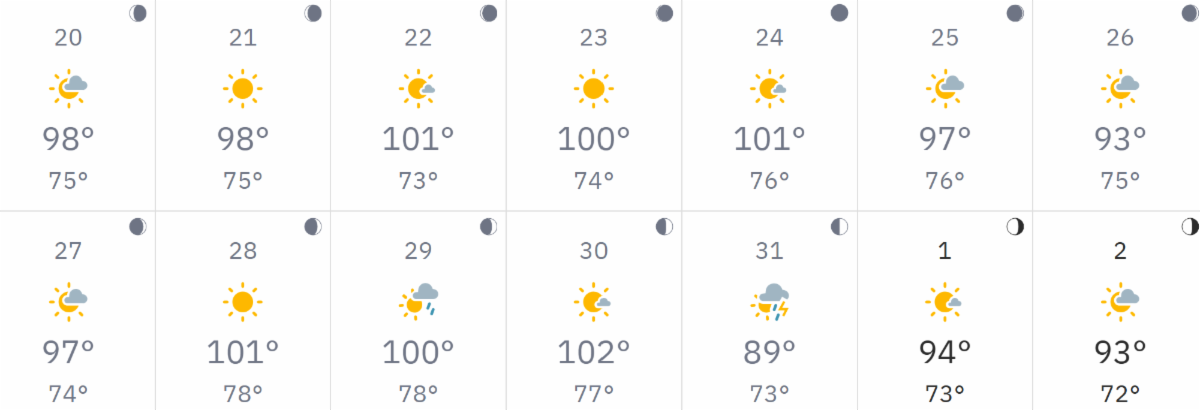
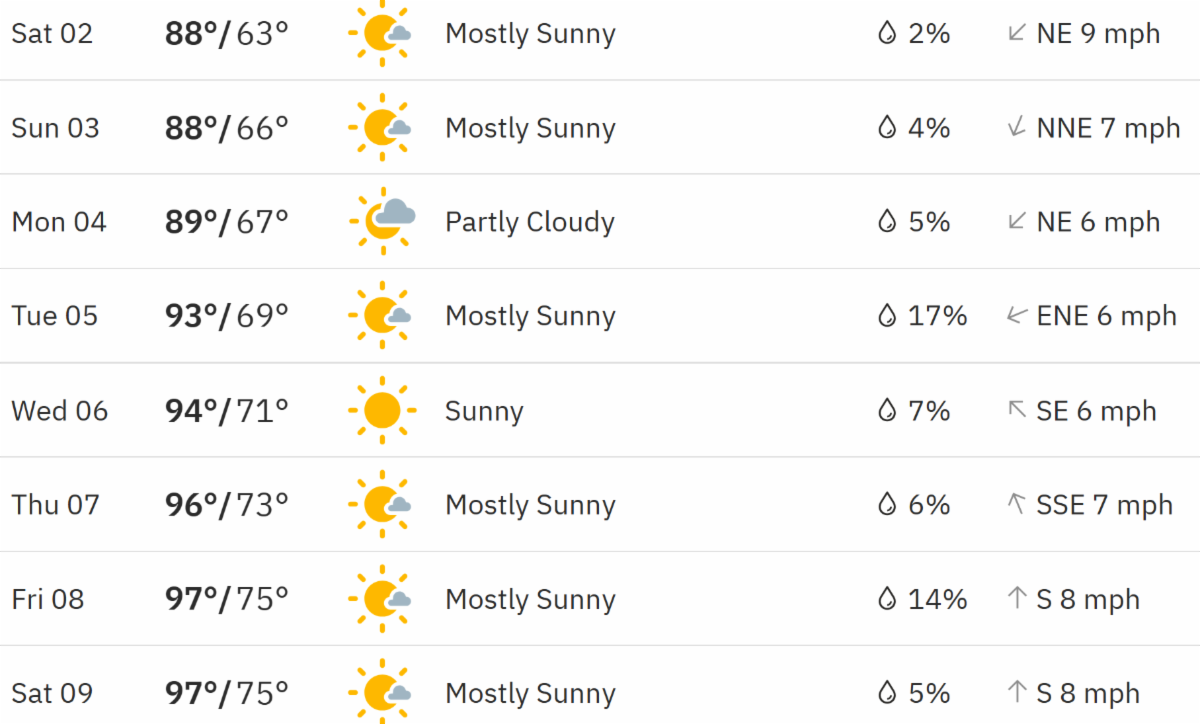
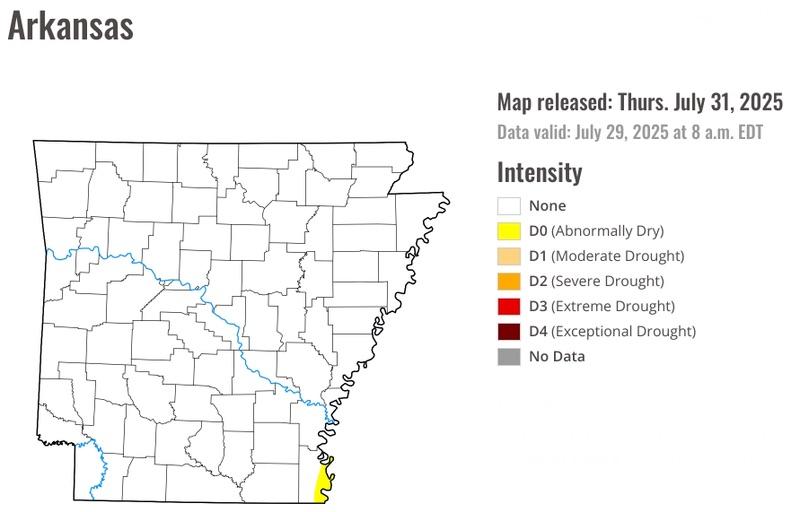
Several areas in the county this week received a nice rain. Some areas got as much as 1.5 inches, while others are still dry. We got a great break from the heat yesterday and today which has been nice but we will start creeping back up by the end of next week. Rain chances are slim next week.
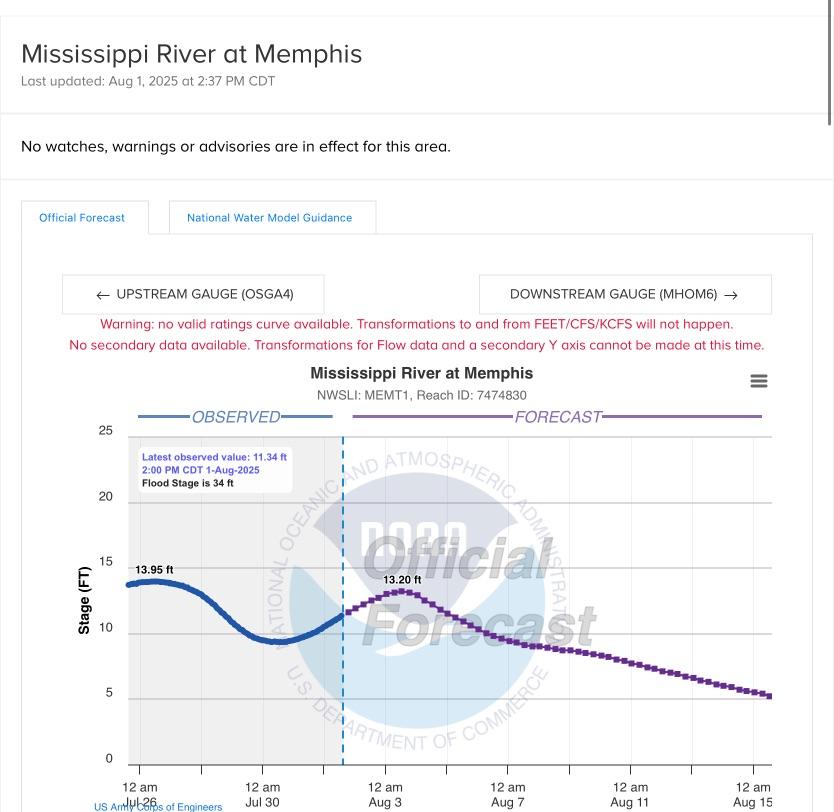
| | Arkansas and Mississippi River | | |
River Valley Row Crop Tour
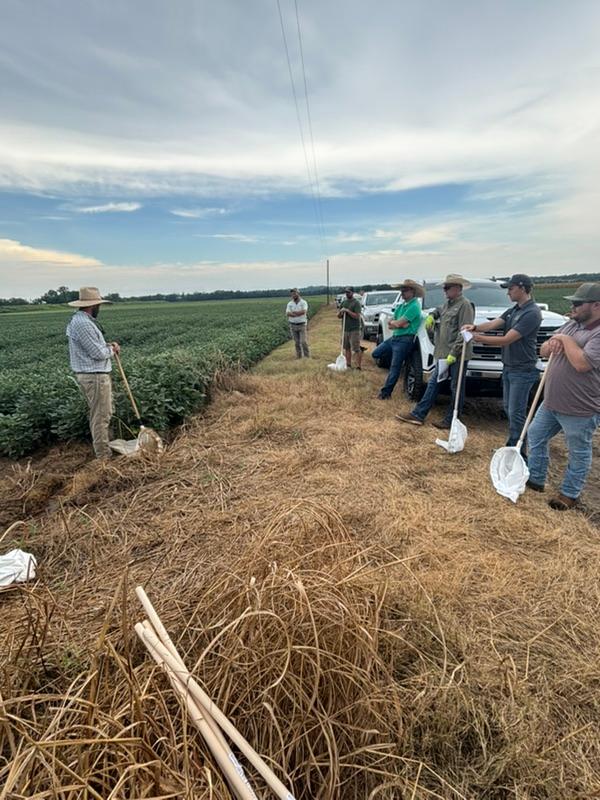
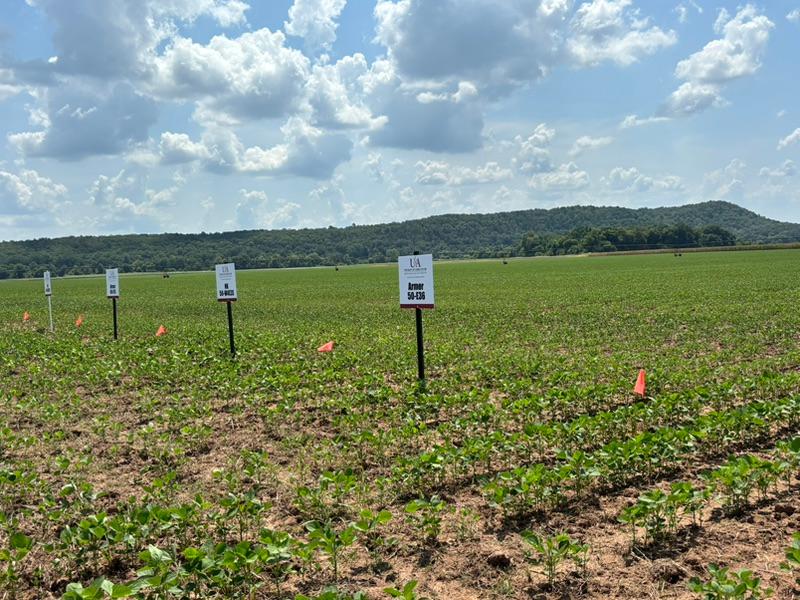
Yesterday was the River Valley Row Crop Tour. We had a great crowd and producers got to see first hand some of the demonstrations we have going on in the River Valley and updates on corn, rice and soybeans.
Thank you to all of the producers that came out, the sponsors for the meeting and the speakers that came out.
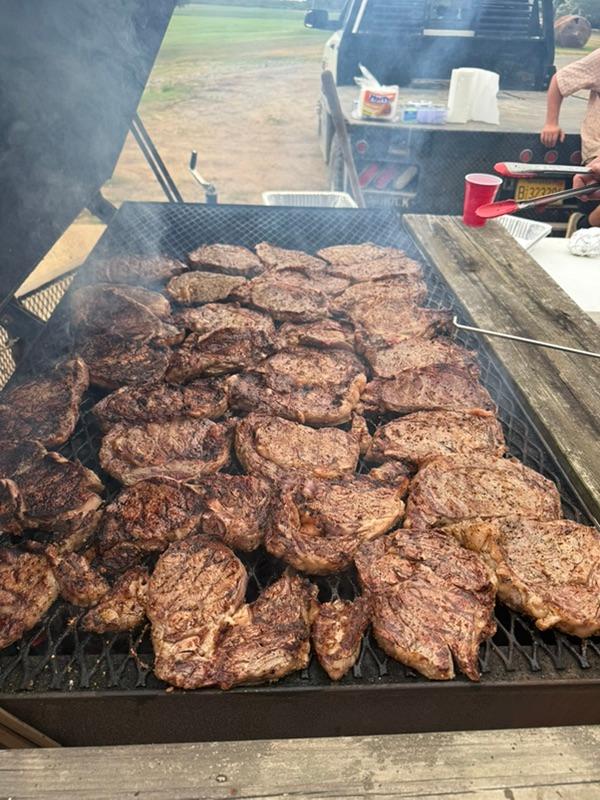
Also thank you to our cooks. They did a great job and we really appreciate it!
| | |
Corn
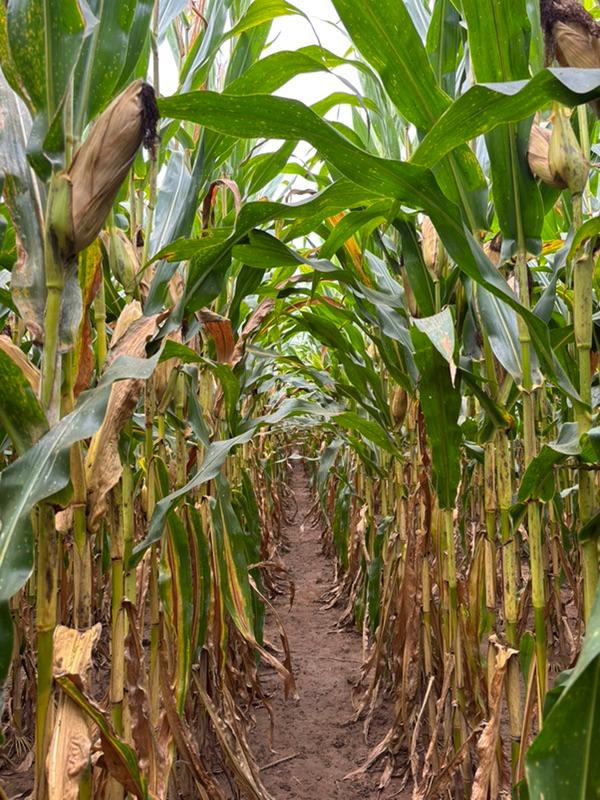
We continue to wrap up the corn year. I made the call on shutting off irrigation on a couple more fields today and just one more round with the pivot on another field. Now the question turns to how long before I can harvest. Once a field reaches black layer it is approximately 30% moisture. From that point on with the weather we have predicted you will lose about 0.5% of moisture a day. So it will take about 24 days to get about 18%. So all in all we are probably about 24 to 31 days away from harvest hitting full swing.
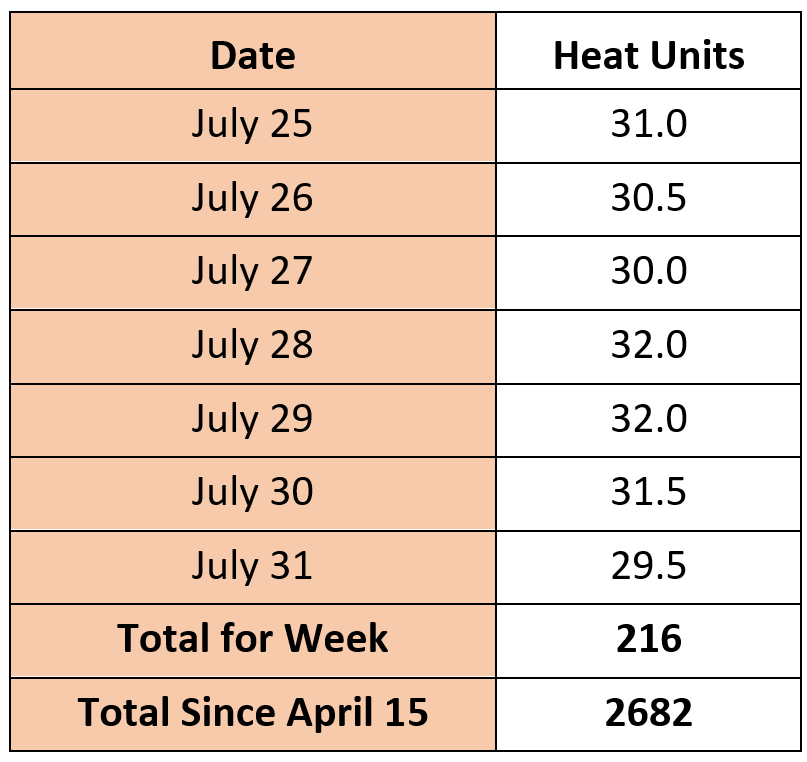
We accumulated 216 heat units this week for a total of 2682 for corn planted on April 15. That should put that corn at R5.75. If we have another 200 heat unit week we should be at R6 next week.
| | |
Rice
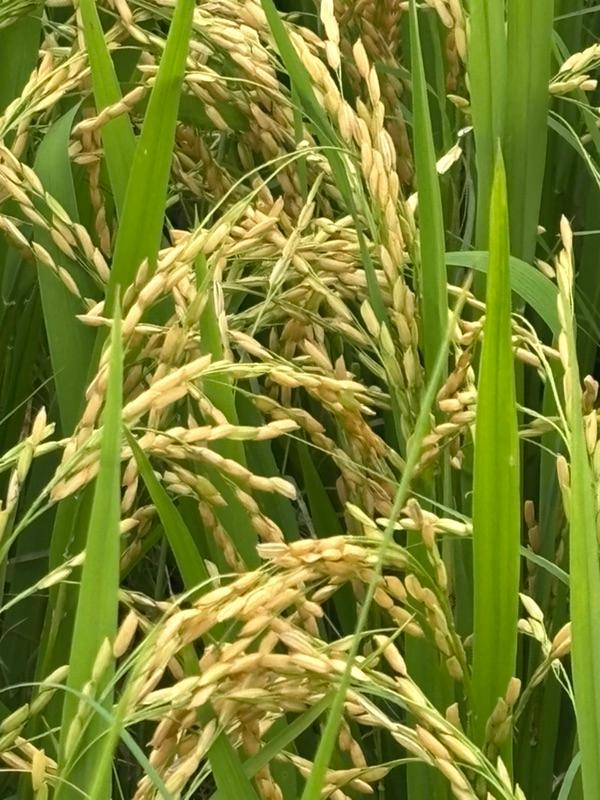
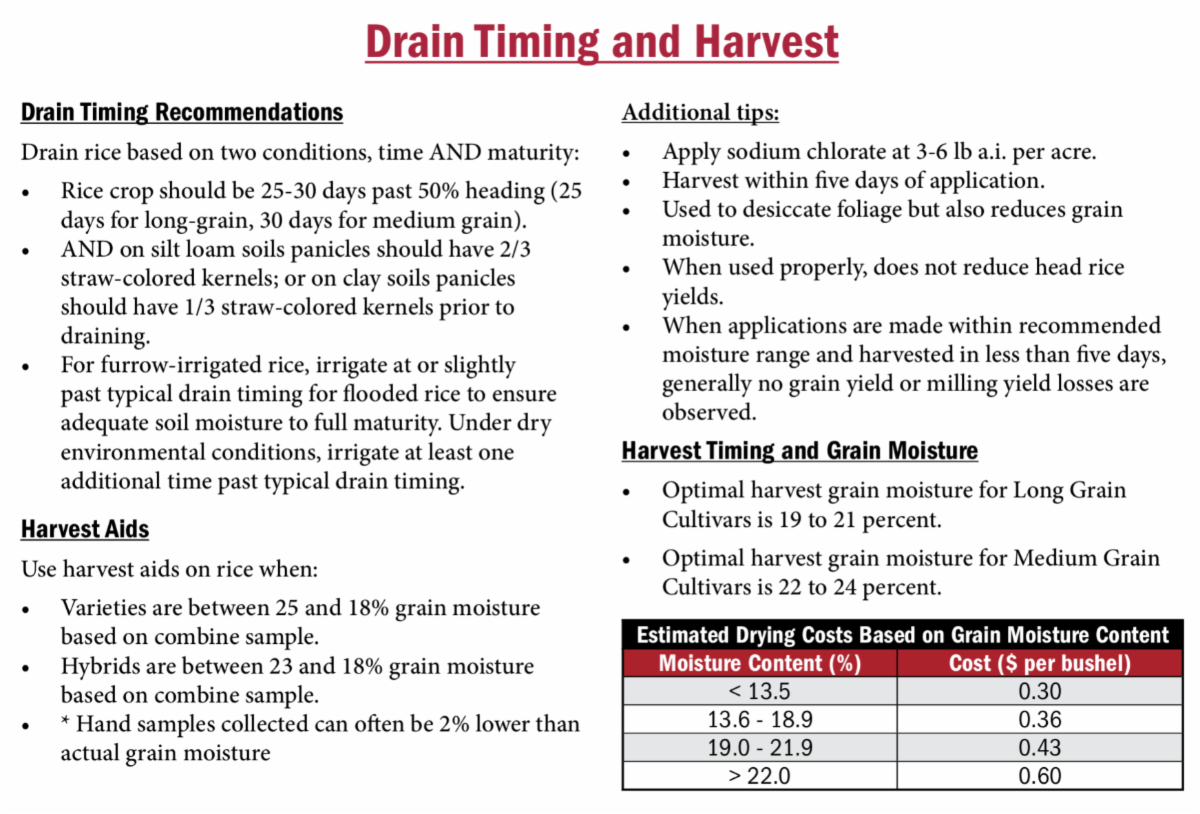
Early planted rice is moving right along. We are seeing lots of straw colored kernels and the kernels are getting hard. Now comes one of the hardest calls to make in my opinion and that is when to drain. Drain to late and you have a muddy mess at harvest, drain to early and you could have brokens. I added the rules on draining from this years management guide below. If you aren't at these stages, make sure you keep that pump going. We have made it this close to the end so we don't want to mess it up now.
Keep scouting for stink bugs. Tenchu or Kruger are the best options if you reach threshold (10 per 10 sweeps). There are some cases when we could use lambda, but that needs to be when we are about done and you are just barely over threshold. With a lambda application you will probably only get 50% of the stink bugs out there.
| | |
Soybeans
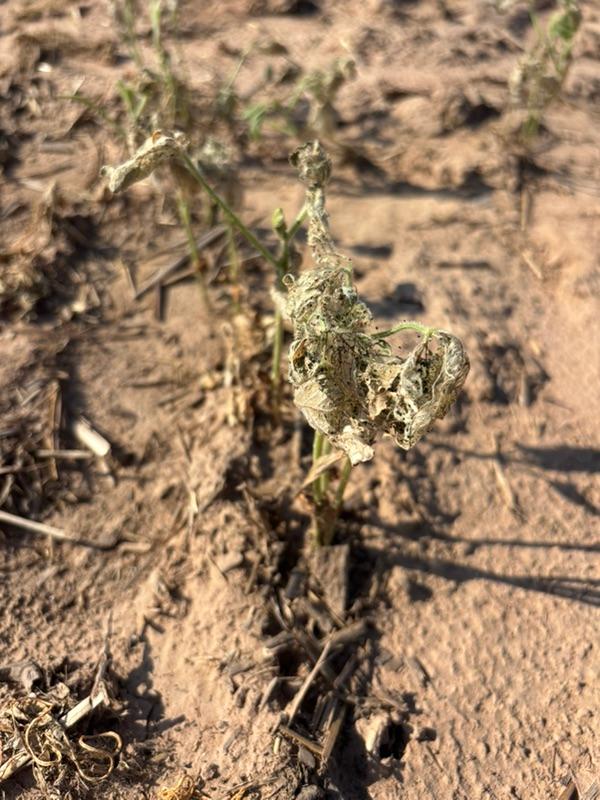
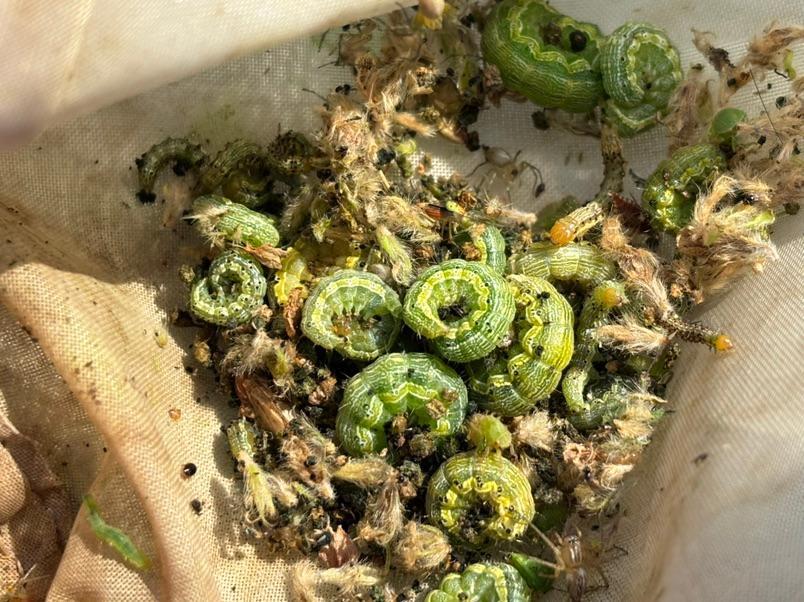
Another week with worm pressure in the county. Corn earworms seem to be going to young soybeans. I am seeing a little defoliation, and getting around 12 to 14 worms per 25 sweeps. If you are going over the field with a herbicide application, this would be a good time for Heligen. I have more information about Heligen in the link below.
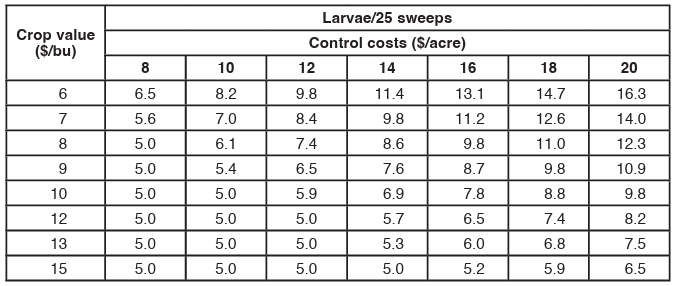
I ran into another situation this week on some bigger soybeans. These beans have pods and I was averaging about 6 worms per 25 sweeps. Now we are sitting on a border line situation. According to the control chart, we would have to have $11 control cost for that many worms. I know that would be hard to do, but I also don't want these worms to get worse. So what do you do? That is a great question and I think these are field by field decisions that we need to make. In this case, we may let it ride for one more week and see if the number increases. But also, the producer was spraying lambda on a different field and I felt like if they wanted to add a little more and spray this field also go ahead. As these situations come up, just give me a call and we will talk out a solution.
We are still seeing a few garden webworms out there. It looks like the reason we got these populations is the webworms were on pigweeds that were sprayed. The webworms then jumped on the soybeans as the pigweeds died. So if you are looking to control pigweeds on small beans, scout them for webworms. If you have them, add lambda to your weed control application.
| | | |  | Corn earworms after 25 sweeps in small beans | | | |
Corn Earworm Moth Traps
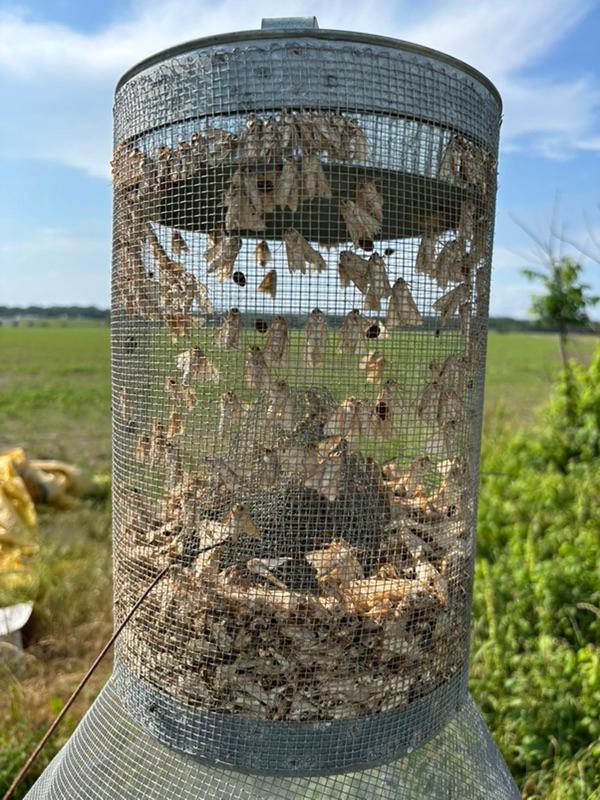
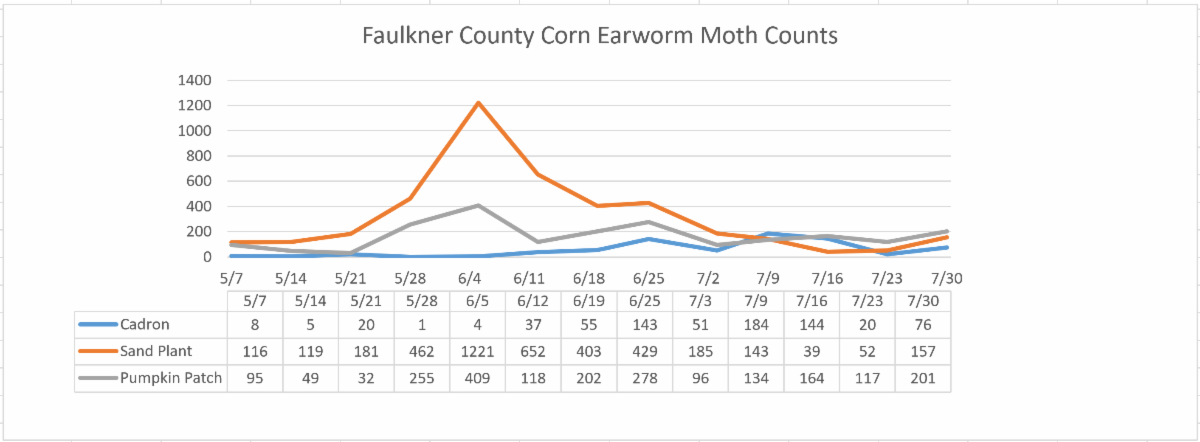
Trap number are back up this week. We need to continue to scout soybeans for corn earworms because we are no seeing a decrease in adults.
Cadron - 76 moths
Sand Plant - 157 moths
Pumpkin Patch - 201 moths
| | |
Prevented Planting: Coverage Levels, Payments, and Rules
Dr. Hunter D. Biram, Assistant Professor and Extension Agricultural Economist, University of Arkansas
Each year producers face production risks which impact expected profits, or the expected value of a crop net of its production cost. Crop insurance is one tool producers use to manage the risk of extreme weather events like the flooding event that occurred in Arkansas April 2-5, 2025, resulting in nearly $100 million in crop losses (Biram et al., 2025). Yield Protection (YP) and Revenue Protection (RP) are the most popular federal crop insurance products comprising 72% of the $158.67 billion in total Federal Crop Insurance Program liability in 2024. In addition to the yield guarantees provided by YP and the revenue guarantees provided by RP, there is a coverage embedded in all these policies called Prevented Planting (PP). This newsletter is the first of a three-part series detailing the basics of PP coverage, including coverage and rules, historical PP losses across Arkansas, and addressing when PP coverage is a useful risk management tool.
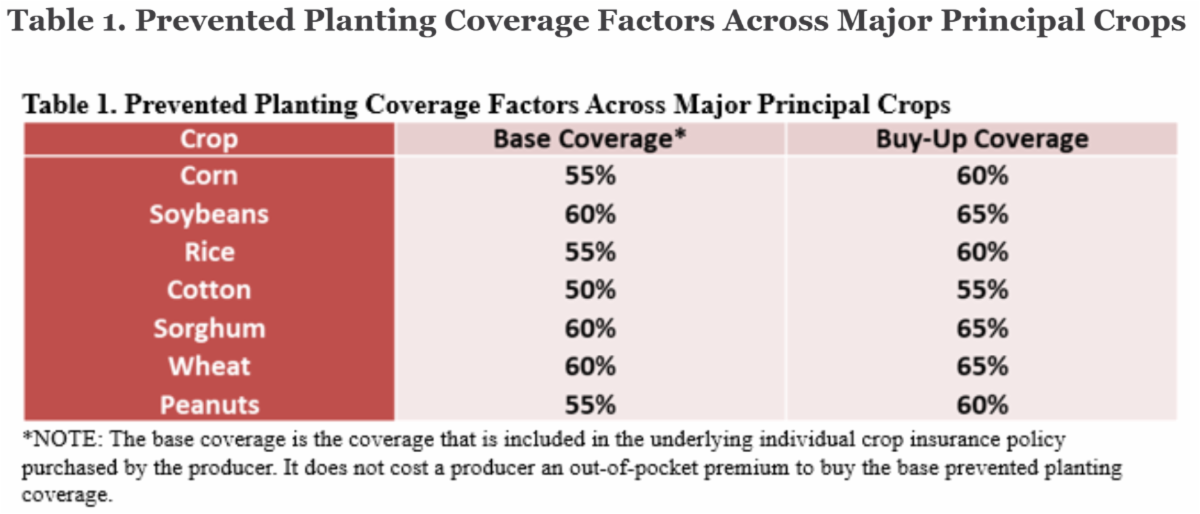
PP coverage is designed to provide an indemnity for losses associated with preparing an insurable unit for planting a crop prior to the Final Planting Date determined by the USDA Risk Management Agency (RMA). These “pre-production” losses consist of the sunk costs associated with planting, which vary widely by crop and county. The RMA determines PP base coverage factors, applied as a proportion of the chosen coverage level, for each crop based on the percentage of the total cost of production associated with planting. For administrative feasibility, the coverage factor is determined nationally by crop and accounts for the average cost of machinery, land rent, fertilizer, pesticides, labor, and repairs, though studies have shown the factors should be regionalized (Boyer et al., 2024). For an additional premium, the RMA also provides a 5% buy-up band of coverage beyond the base coverage provided by the underlying individual (e.g., YP and RP) coverage (see Table 1). For example, the base PP coverage for rice is 55% of purchased liability, which means that RMA has determined that the average producer has incurred 55% of the total cost to produce the crop in planting costs alone.
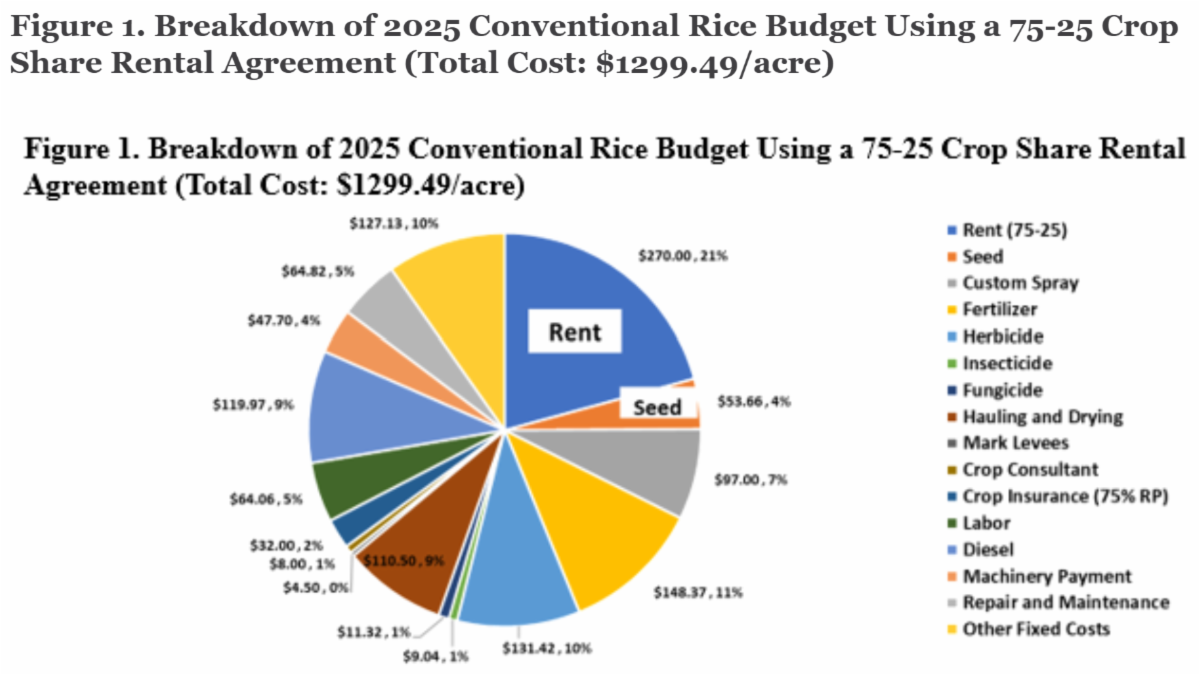
| The total cost to produce rice in Arkansas in 2025 was $1,279/acre, consisting of over 15 different itemized expenses and a 75-25 crop share rental agreement (see Figure 1). Breaking down the expenses accounted for in the PP coverage level determination for rice, land rental expense is $269.88/acre based on an expected crop value of $1,079.50/acre, which is based on the 2024 state average yield of 170 bushels/acre and RMA projected spring price of $6.35/bushel. Machinery expense is $47.70/acre, fertilizer is $148.37/acre, pesticides are $151.68/acre, labor is $64.06/acre, and repairs are $64.82/acre. These pre-production expenses total $746.51/acre, which is 69% of the total 2024 production costs, which include other fixed costs (UADA, 2025). While these dollar amounts assume full production of the crop and so will be overestimates for planting, they provide the dollar amounts considered when the PP coverage level is determined. | |
Indemnities for PP (i.e., PP payments) are calculated in the same way for acreage enrolled in either YP or RP policies. The full PP payment is determined by multiplying the base coverage percentage, the coverage level, RMA projected price, and the farm-level Actual Production History (APH). For example, a full PP indemnity for rice in 2025 under a 75% YP (or RP) policy would be:
55% x 75% x 170 bushels/acre x $6.35/bushel = 445.29/ac
where 55% is the base PP coverage for rice, 75% is the coverage level of the underlying YP or RP policy, 170 bushels/ac1 is the APH yield, $7.63 bushels/acre is the RMA projected price based on the budget values presented in Table 2. Importantly, this amount will first have to pay any per acre producer paid premium for the policy insuring rice, and a second crop must not be planted following rice. If a second crop, such as soybeans, is planted on the same acreage as the acreage the PP payment for rice was collected, then the PP payment is reduced to 35% of the full payment, or $155.85/acre (i.e., 35% of $445.29). While the payment rate is reduced, the premium is also reduced to 35% of the full producer premium. However, if the second crop, soybeans, do not incur any losses, then the other 65% of the PP payment for rice is given and the full premium must be paid. Additionally, the yield recorded for subsequent farm-level APH calculations on the first crop is reduced to 60% of the approved APH yield in the current year crop insurance is purchased.
In this newsletter, PP coverage levels, payment determination, and rules were outlined. The next newsletter will provide a historical look at how PP losses have trended over the last 20 years for principal crops grown in Arkansas.
1While the Chicago Mercantile Exchange (CME) and RMA report rice prices and yields, respectively, in terms of hundredweights (cwt), we convert these values to bushels. For example, the yield of 170 is found by dividing the 2024 Arkansas state average yield of 7670 pounds/acre by 45, and the price of $6.35/bushel is found by dividing the 2025 RMA projected spring futures price of $14.10/cwt by 2.22.
| | Beef, Small Ruminants, & Forages | | |
Expected Beef Yield from a Butcher Calf
Mark Z. Johnson, Oklahoma State University Extension Beef Cattle Breeding Specialist
Producers who finish their own calves or consumers who purchase a finished butcher calf often face the question of how much beef they will take home after the harvest and cutting process. The answer to the question dictates how much freezer space will be needed. The amount of product yielded from a finished beef calf is often misunderstood. Accordingly, this topic addresses what to expect in terms of the relationship between live weight, carcass weight and actual take home product from the carcass.
Dressing Percentage (DP) is the portion of the live weight that will result in hot carcass weight (HCW) after removal of the head, hide and internal organs. For most fed cattle, the HCW will range from 60 – 64%. HCW will vary and is influenced by gut fill, degree of muscularity and fatness, mud or manure on the hide, and pregnancy status. For example, a 1500 live finished beef calf with a dressing percentage of 63% DP would yield a 945 pound carcass. The 945 pound HCW is not the amount of beef the consumer will take home to put in the freezer. It is noteworthy that a chilled carcass weight will be 2 - 5 percent lower than HCW. A beef carcass is 70 – 75 percent water, as it chills water evaporation will cause the carcass weight to decrease.
Chilled Carcass Weight, Primals, Sub-Primals and Retail Cuts
After the carcass is cooled, it will be further processed into cuts of meat. This process is referred to as “breaking down the carcass.” Beef primal cuts are the rib, chuck, shank, brisket, plate, flank, round, short loin and the sirloin. Primal cuts will be further processed into sub-primal or retail cuts. The basic concept is to remove the majority of the bones, separate tender muscles from less tender muscles, to separate thicker muscles from thin muscles and to separate fatter from leaner portions. There are several factors that will influence the amount of beef that will be wrapped for the freezer. The most common factors influencing variation include:
External Carcass Fat has the greatest impact on the percentage of retail product from a carcass. As more fat is trimmed away, less weight will be in the packaged meat.
Superior Carcass Muscularity will increase the percentage of retail product. For example, Dairy-type cattle typically yield lower than beef-type cattle.
Cutting Style or the cutting specs given to the processor can effect the take home yield. This can be a major influence based on the amount of bone-in versus boneless cuts, how much external fat is trimmed off and the amount of fat in the ground beef.
Carcass Aging (typically for 7 – 10 days) offers the advantages of improving tenderness and intensifying the flavor of beef. With respect to carcass yield, long-term aging can have a negative effect.
Bottomline
As a general guideline, expect to take home about 42 percent of the live weight for consumption. If basing the prediction off the HCW, expect to take home roughly two-thirds. If using the 1500 pound live butcher calf with a 63% DP referenced in the above example, you will need freezer storage space for about 630 pounds of cut and wrapped beef. More detailed information is available in the material referenced below.
| | |
Armyworms
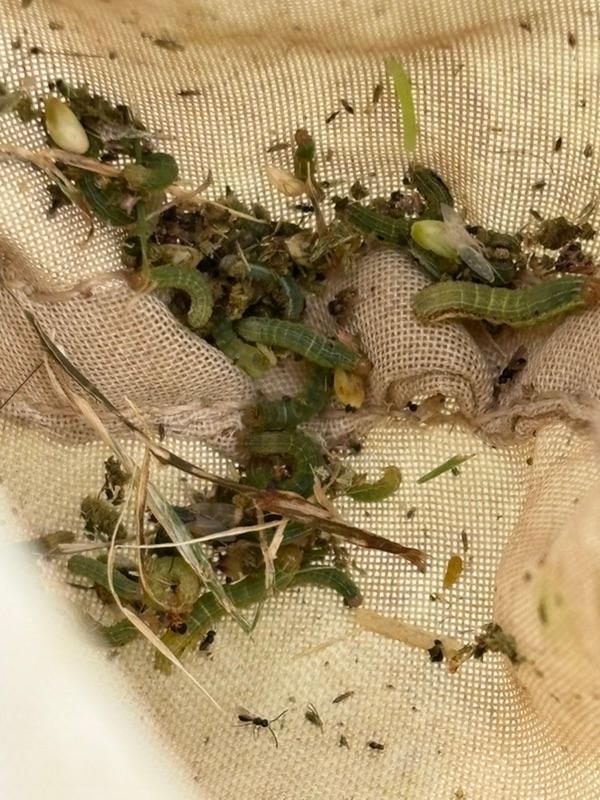
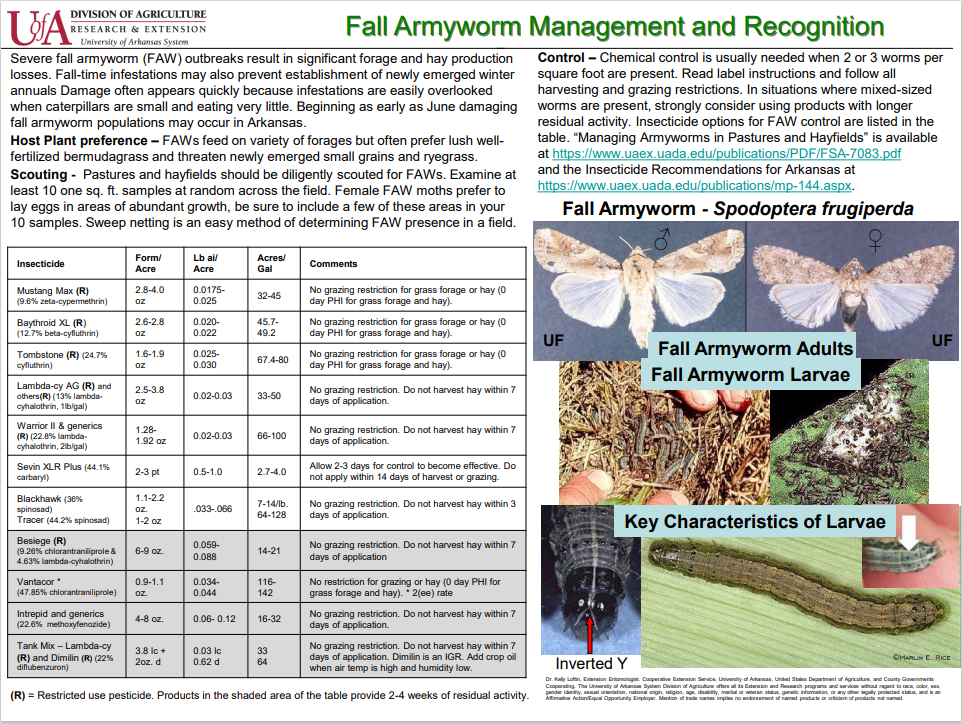
Armyworms are starting to pick up across the county. I have heard of a few accounts up around Greenbrier and Conway in yards. I have been sweeping pastures and hay fields and I am starting to find very small worms. Small worms don't do any damage and we need to wait until they get up to around 1/4 inch long before we think about treatment. So keep an eye out and keep scouting. If anyone needs a sweep net, I still have some available.
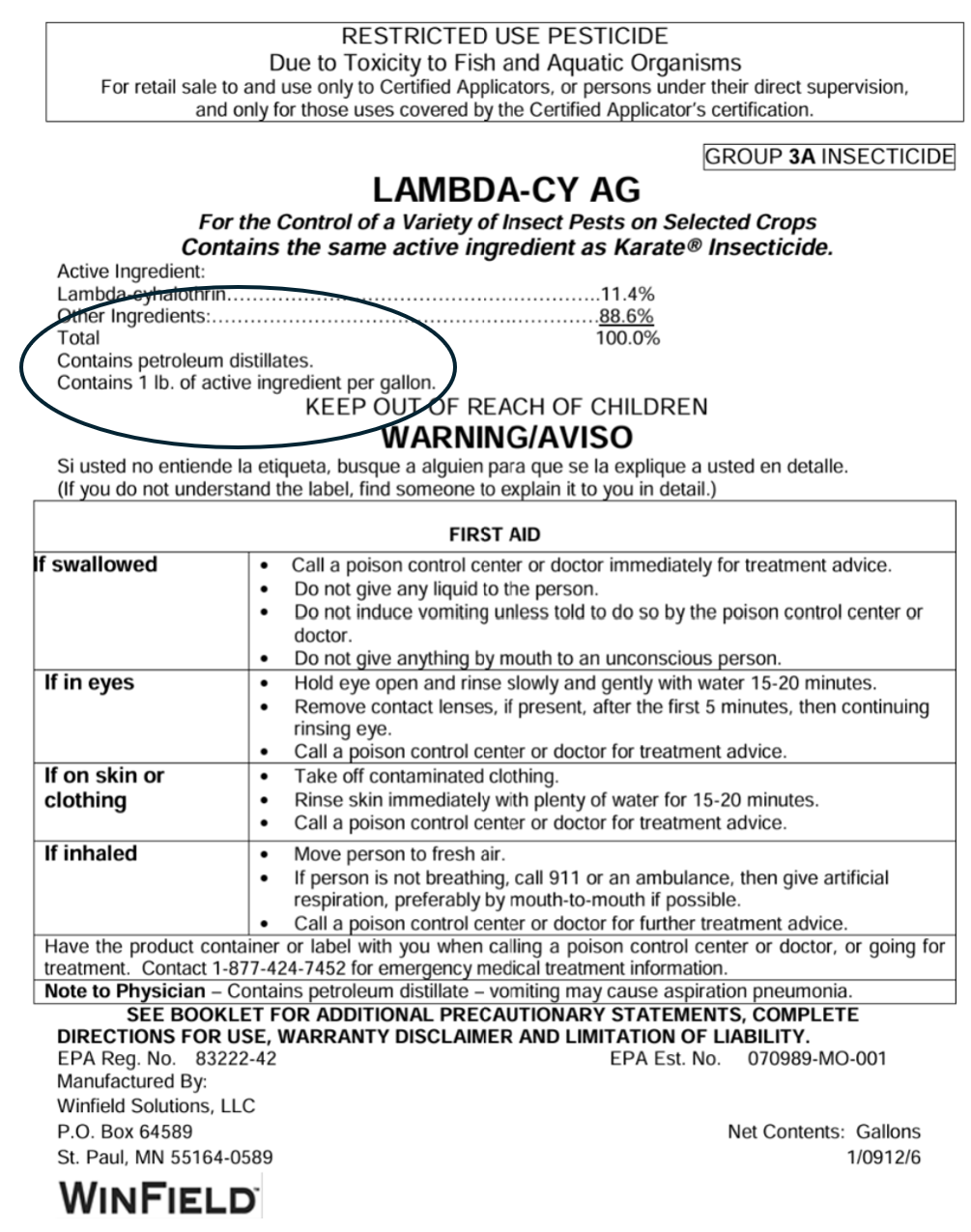
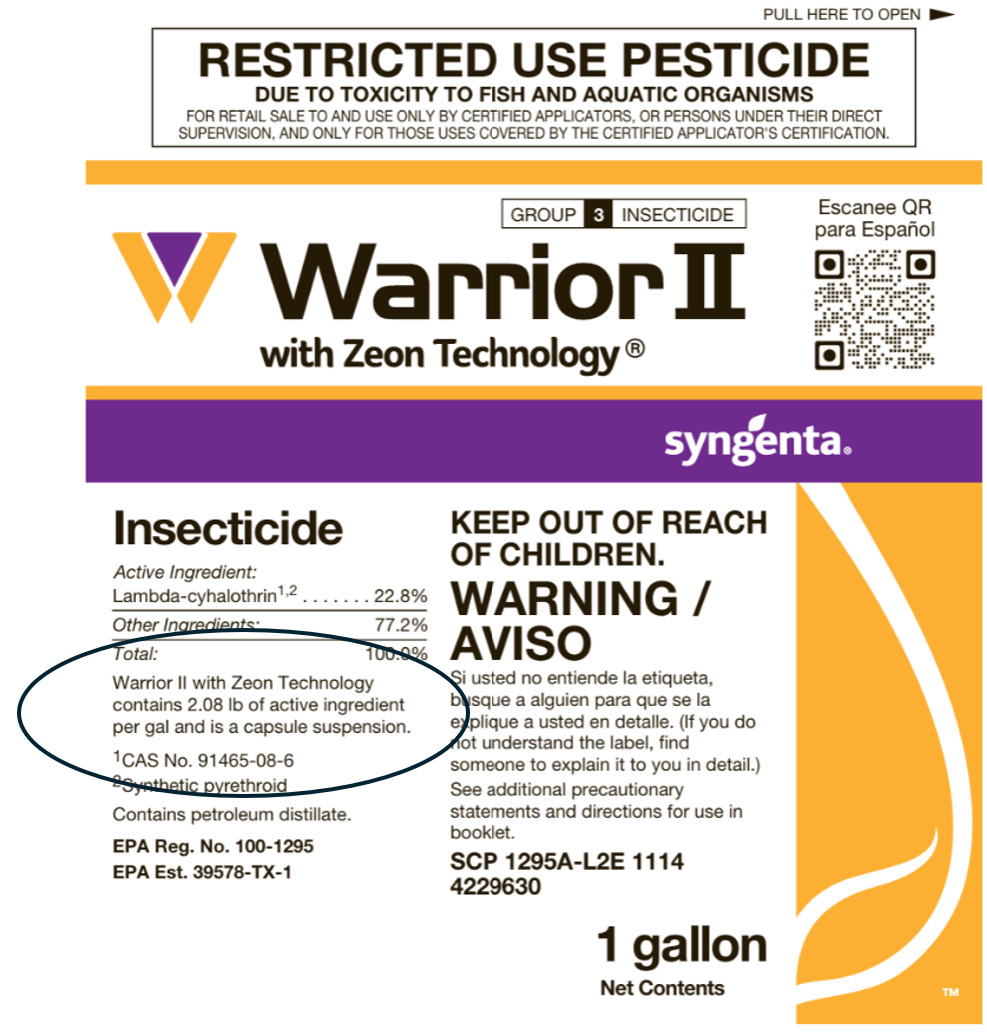
When it comes time for treatment, lambda cy is recommended. I have made the point before that you need to know the amount of active ingredient in the product to get a rate. Lambda is going to come as either a 1 pound material or a 2 pound material. I have included two labels here. I have circled on the label where you will see how much lambda is in that product. Usually the 2 pound material has the number 2 in the name. Like in this example I used the label for Warrior II.
The rate for a 1 pound material is 4 ounces per acre and for a 2 pound material is 2 ounces per acre.
| |
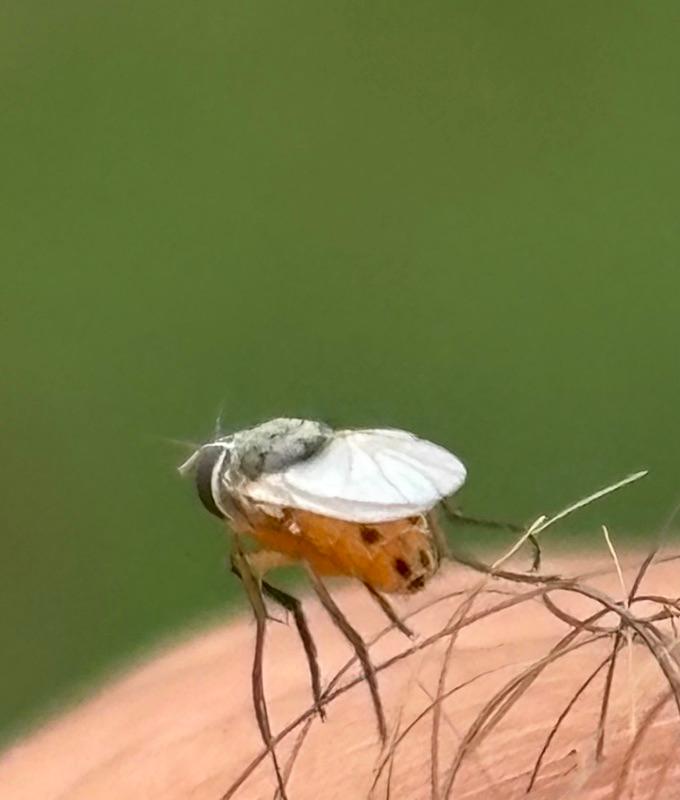
Bermudagrass Stem Maggot
Stem maggot populations are still blowing up all over the county. Fields with bermudagrass are full of flies and it isn't hard to find damage. I encourage anyone that has bermudagrass think about applying some lambda cy after a hay cutting. Usually 7-10 days after the harvest.
| | |
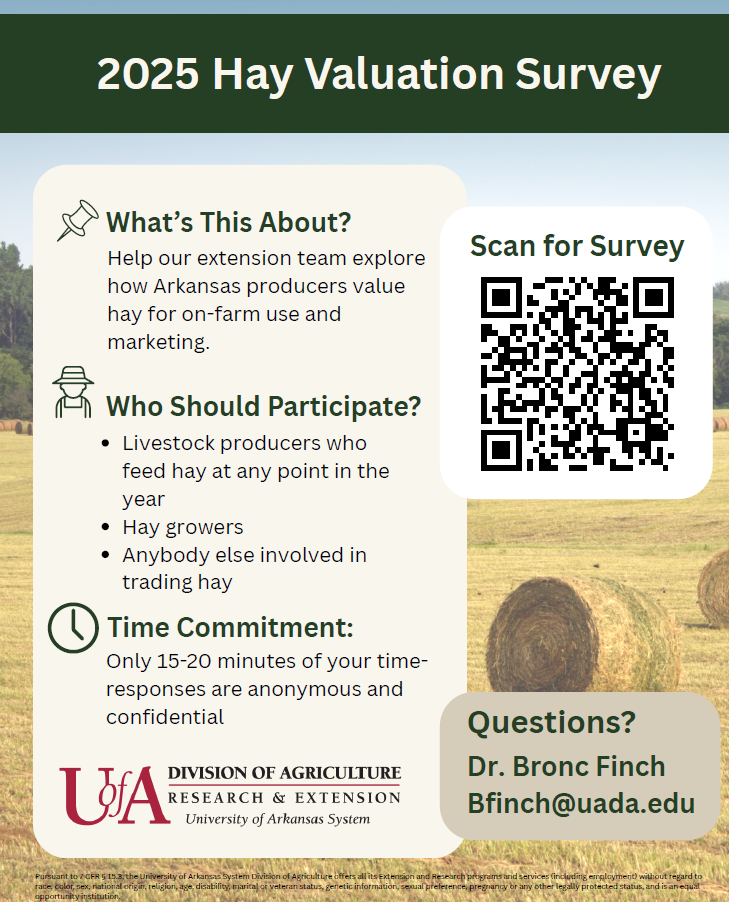
2025 Hay Valuation Survey
If you are a hay producer, please take the time to take our hay valuation survey. Our specialists are wanting to learn more about how producers value their hay.
| | |
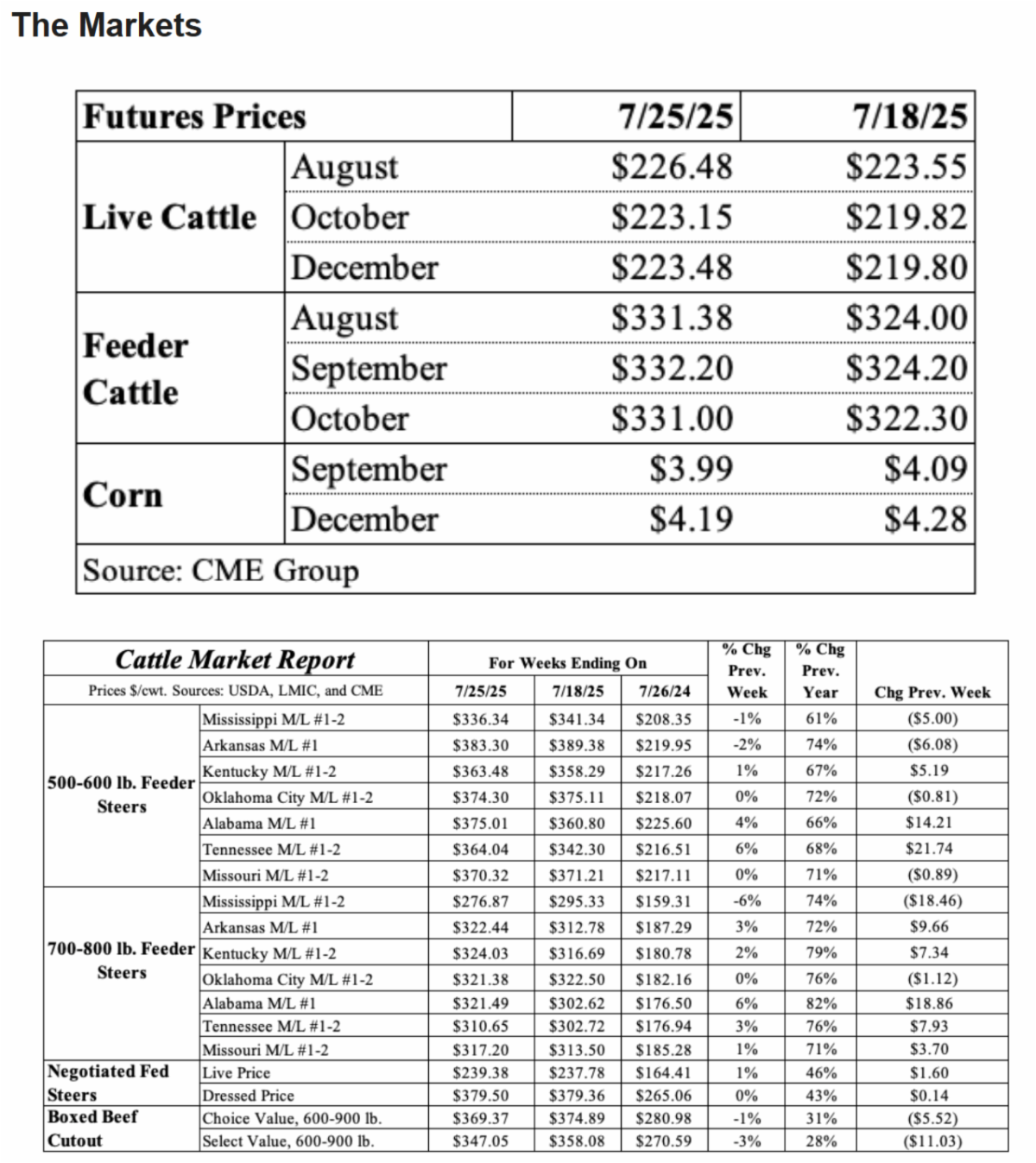
Livestock Market Report
The weekly livestock market report is available on the Arkansas Department of Agriculture website.
| | |
Sign up for Text Alerts
You can now sign up for text alerts from me throughout the year. I have two areas you can sign up for which includes Faulkner Livestock or Faulkner Ag (Row Crop Updates). To sign up you can follow one of these links or use the QR Codes below.
| | Pursuant to 7 CFR § 15.3, the University of Arkansas System Division of Agriculture offers all its Extension and Research programs and services (including employment) without regard to race, color, sex, national origin, religion, age, disability, marital or veteran status, genetic information, sexual preference, pregnancy or any other legally protected status, and is an equal opportunity institution. | | | | |