Faulkner County Agriculture Update
August 21, 2026
| | |
Burn Ban
Just a reminder we are still under a burn ban.
| | |
USDA Approves Emergency Conservation Assistance for Conway and Faulkner Counties
Please read the following from Deborah Bolin, County Executive Director
Conway/Faulkner/Perry and Van Buren County Farm Service Agency
The U.S. Department of Agriculture (USDA) Conway/Faulkner/Perry Farm Service Agency (FSA) is accepting applications for the Emergency Conservation Program (ECP) to address emergency water conservation measures in periods of severe drought for areas affected by the severe water crisis involving Brewer Lake.
ECP provides cost-share and technical assistance to producers to restore farmland to pre-disaster conditions following a qualifying natural disaster. ECP signup began on August 10, 2026, and ends on September 9, 2026. Approved ECP applicants can receive up to 75% of the allowable cost of the approved restoration activity with a maximum cost share of $500,000 per natural disaster event.
Approved ECP practices include:
• Water Well
• Watering Facility
• Critical Area Planning
• Irrigation and Drainage Tailwater Recovery
• Livestock Pipeline
• Spring Development
Repairing, deepening, or removing silt from ponds is not authorized. Conservation concerns present on the land prior to the qualifying natural disaster event are not eligible for ECP assistance. Natural Resource Conservation Service (NRCS) will complete on-site inspections and needs determination. Practices must meet NRCS standards and specifications. Check with FSA before beginning any work. FSA County Committees will evaluate applications based on an on-site inspection of the area. An on-site inspection does not guarantee that cost-share funding will be provided.
ECP cost-share assistance can provide advance payments for up to 25% of the total allowable cost for all ECP practices before the restoration is carried out. The advance payment must be spent within 60 days. Producers who lease federally owned or managed lands, including tribal trust land, as well as state land, are eligible to participate in ECP.
To apply or learn more about ECP, producers can contact the Conway/Faulkner/Perry County FSA Office at (501) 354-2000 ext. 2 or visit farmers.gov/protection-recovery.
| | |
Weather
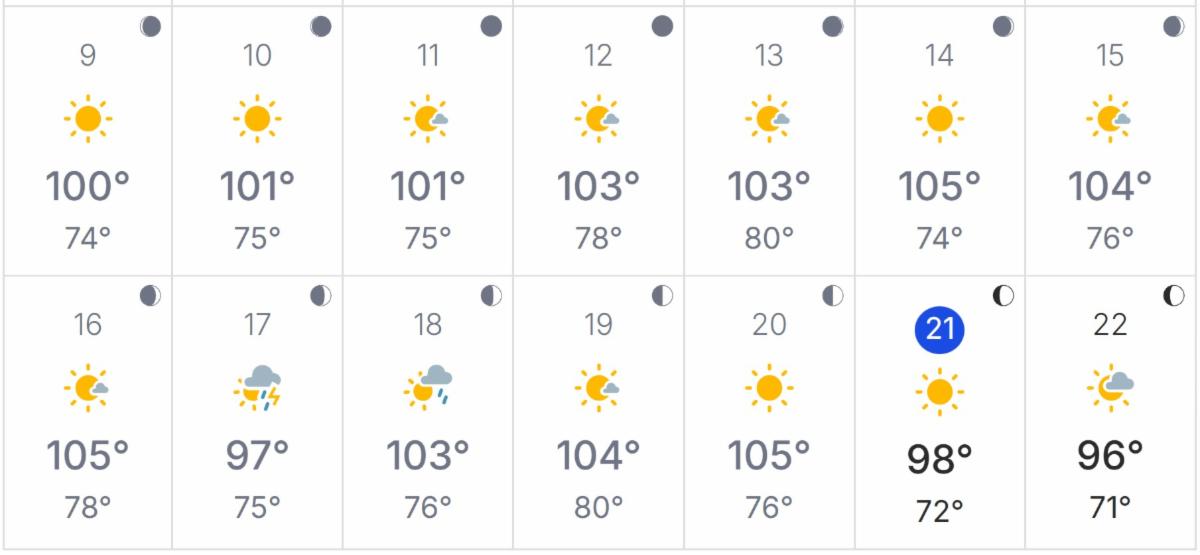
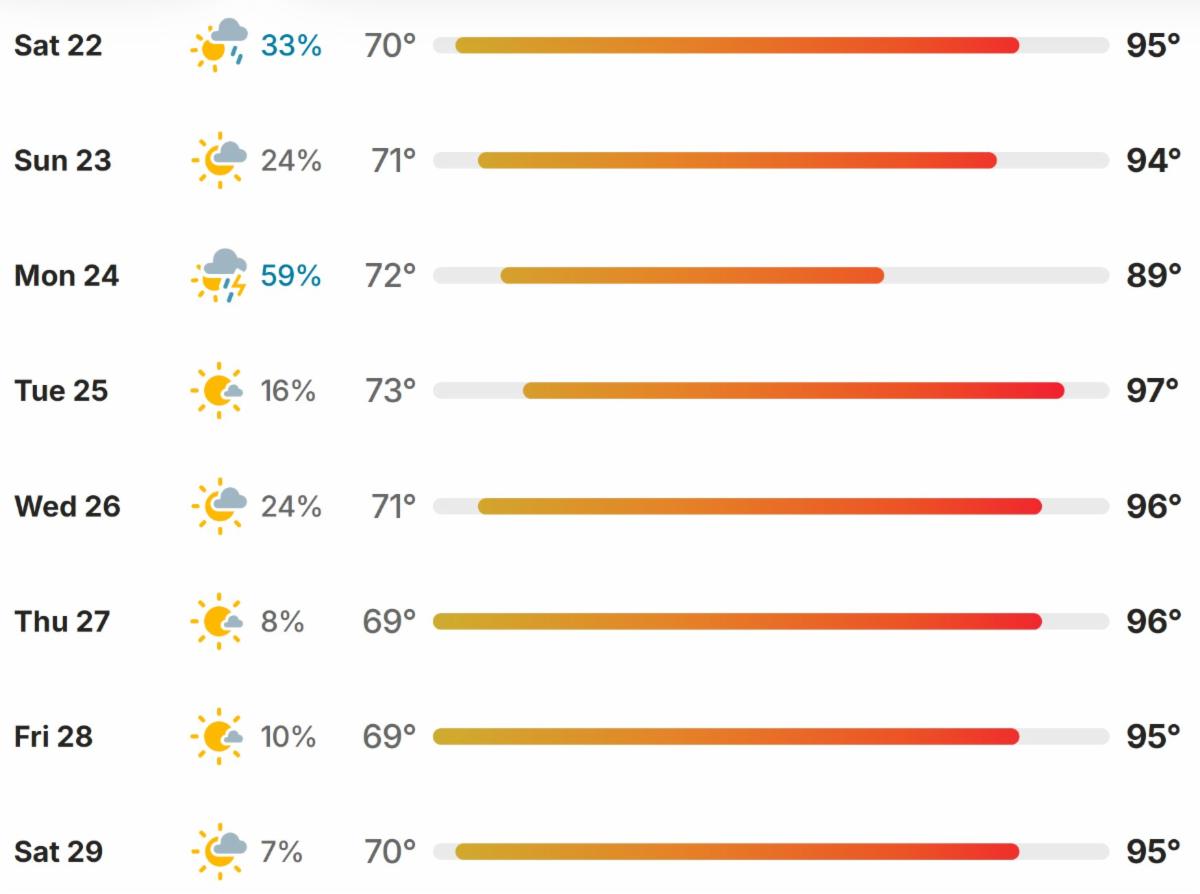
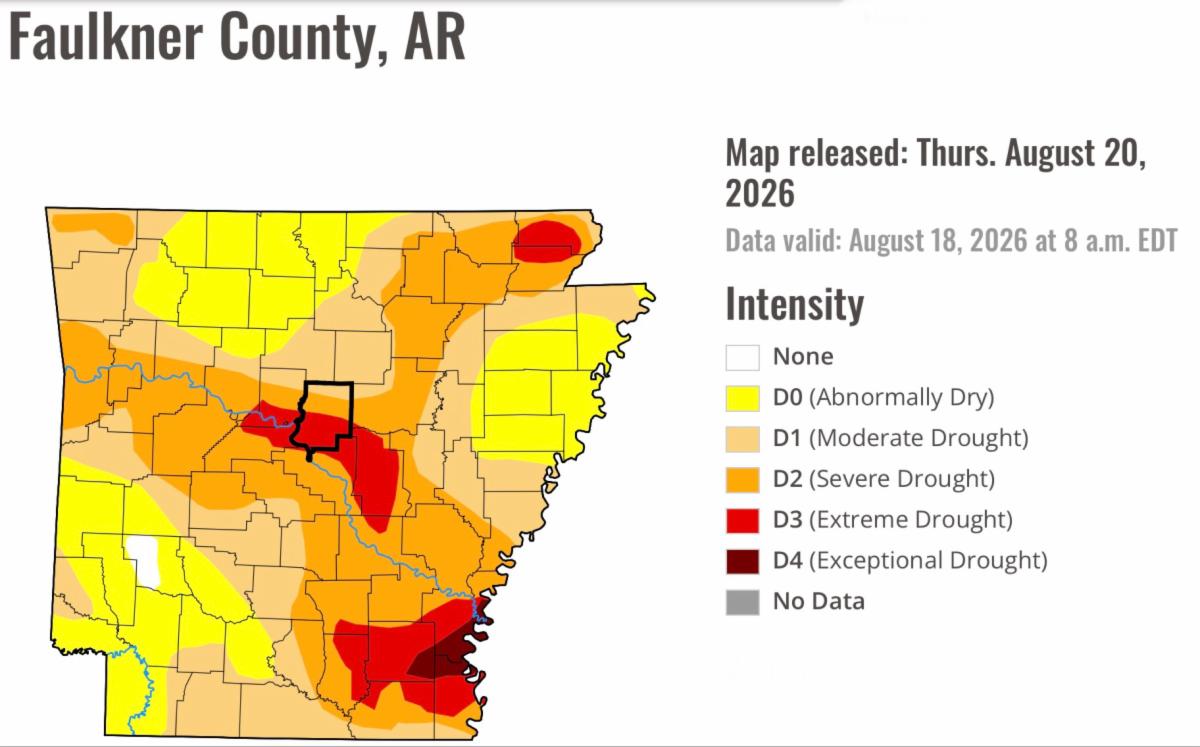
We had another hot week in Faulkner County. We had a big storm come through on Monday and cause some damage across the county and give us a little relief on moisture. But once the temperatures returned to 105 degrees it didn't last long. We will see some relief as temperatures aren't supposed to be as hot next week and there are a couple of good chances for rain. The southern half of Faulkner County did move into D3 drought status this week.
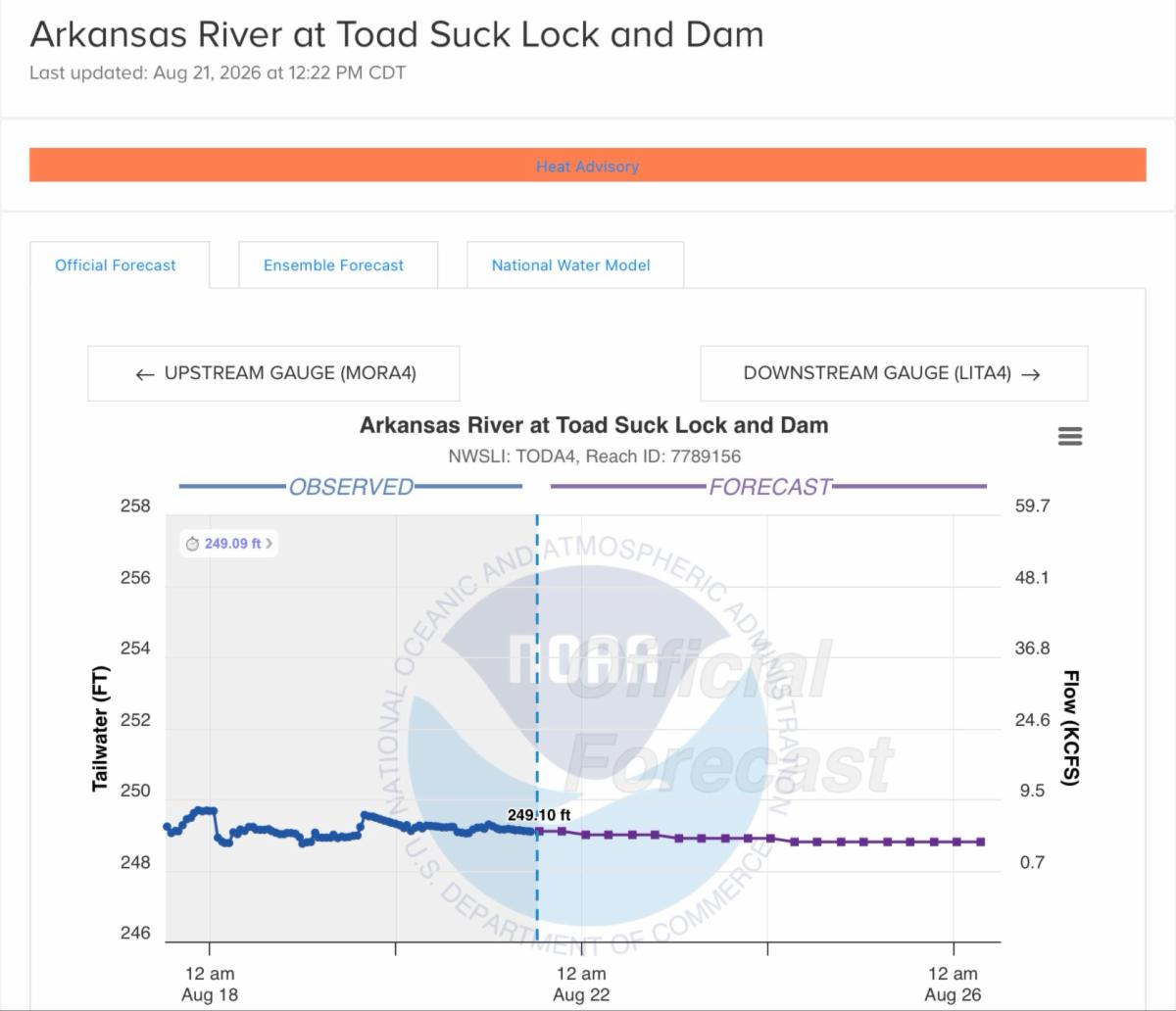
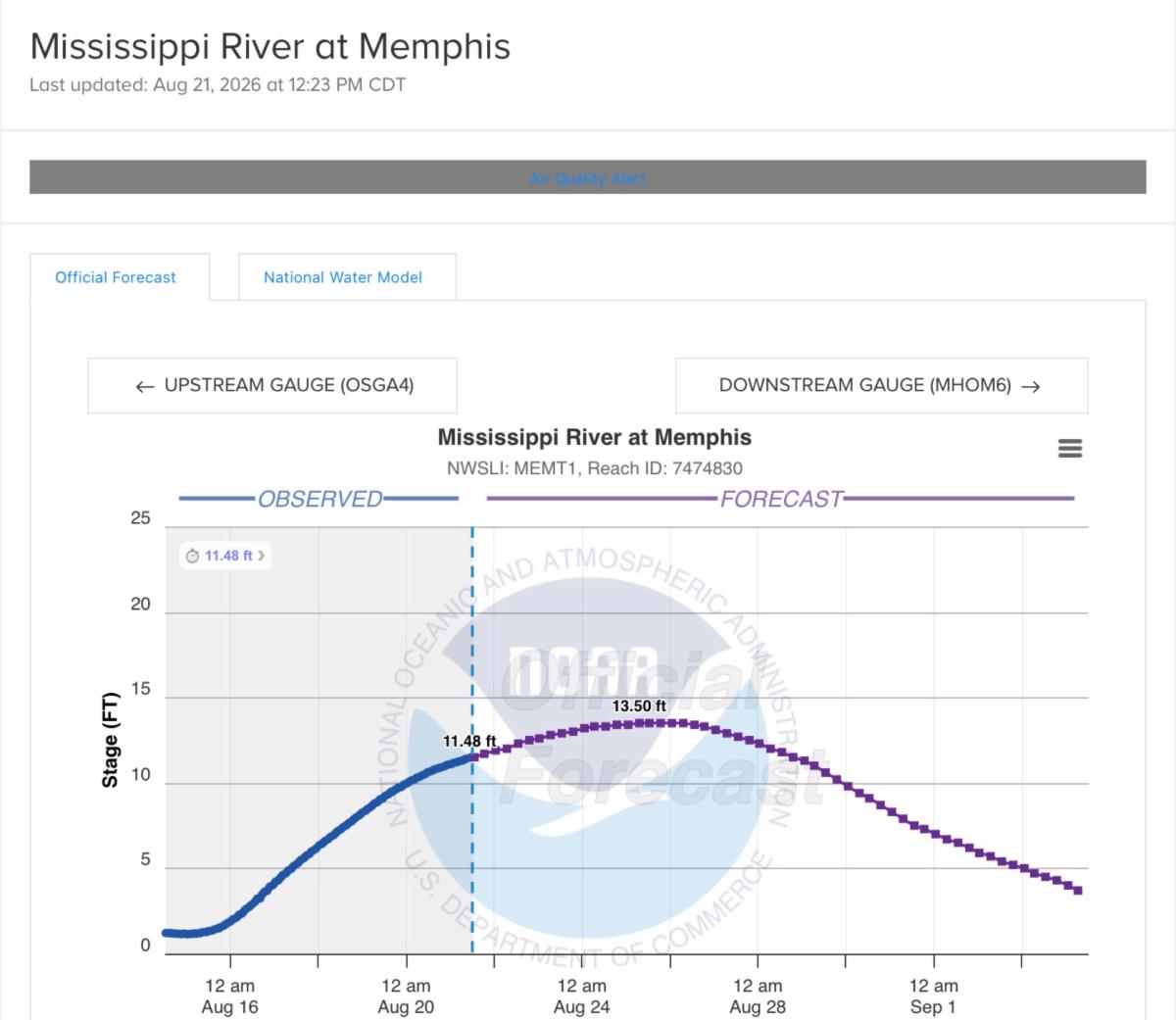
| | Arkansas and Mississippi River | | |
Rice
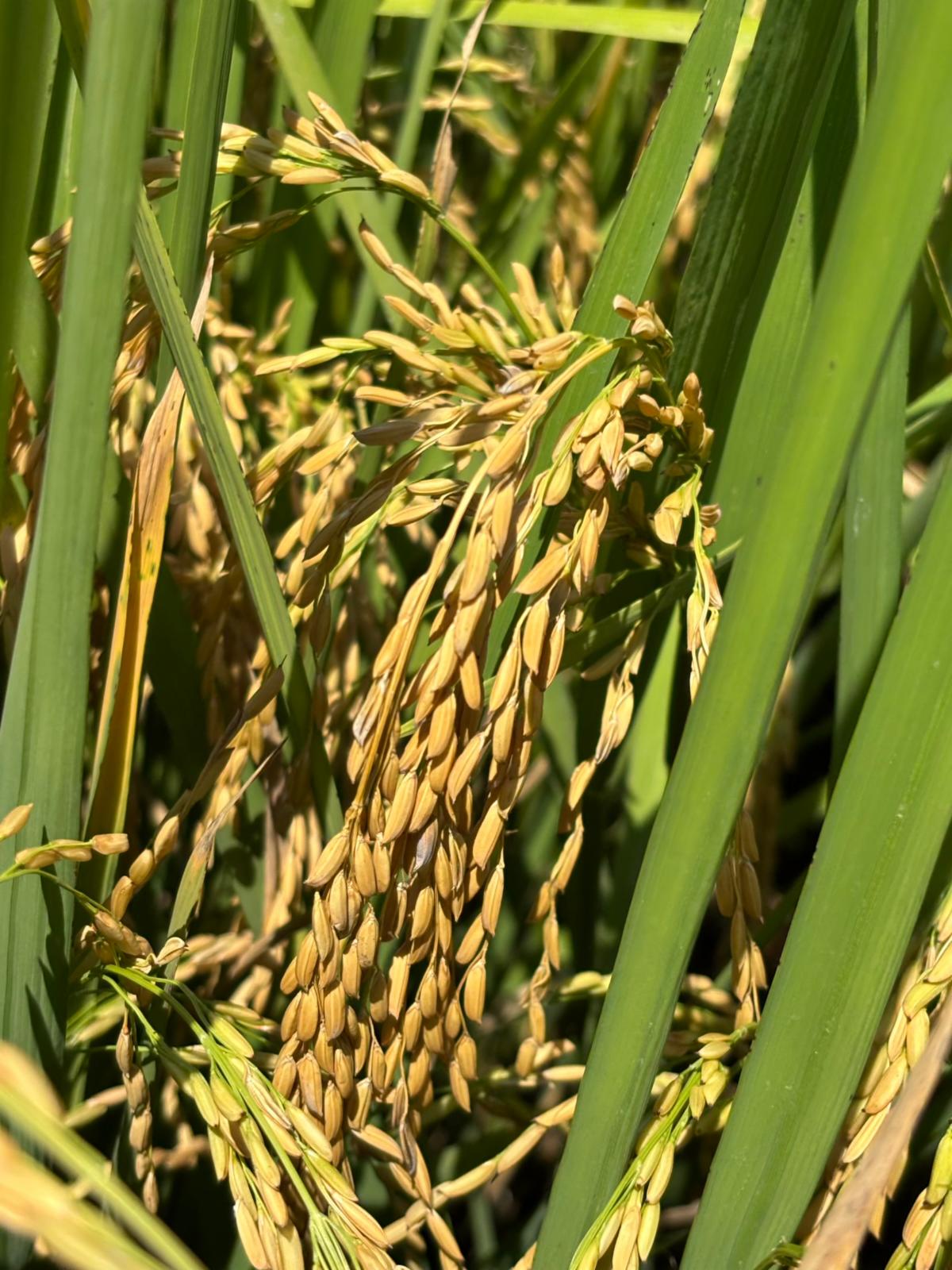
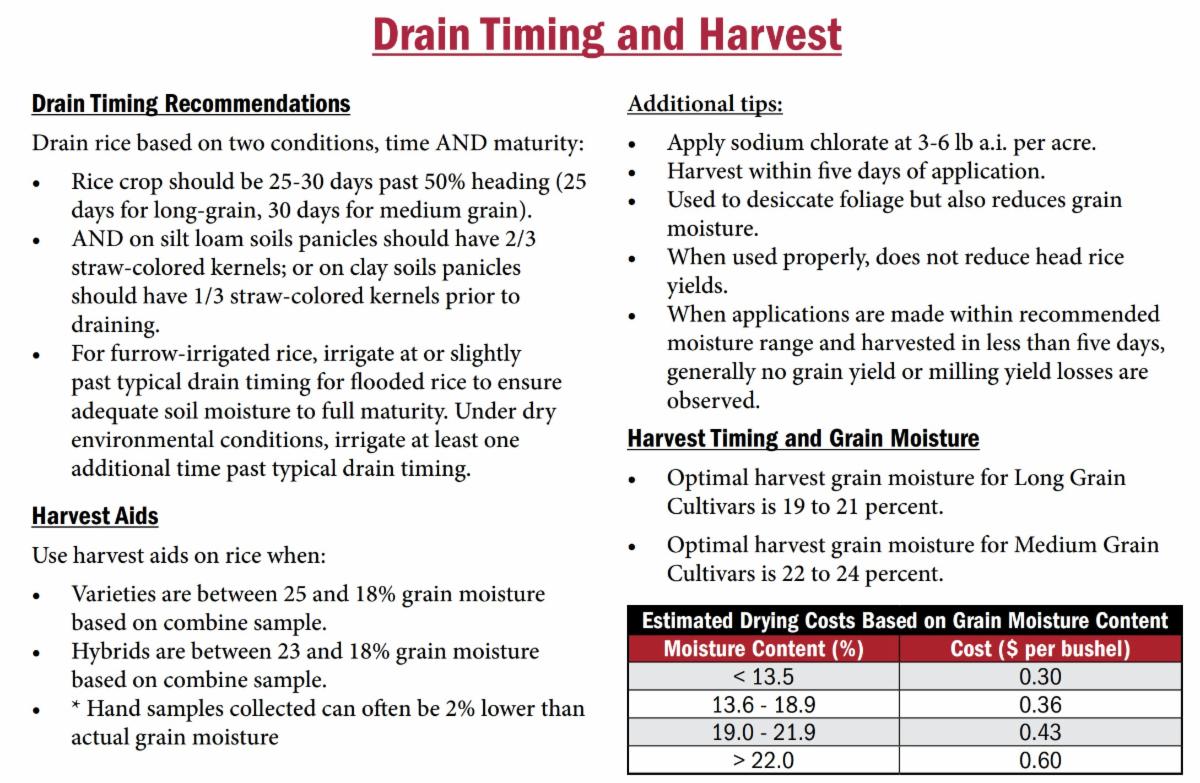
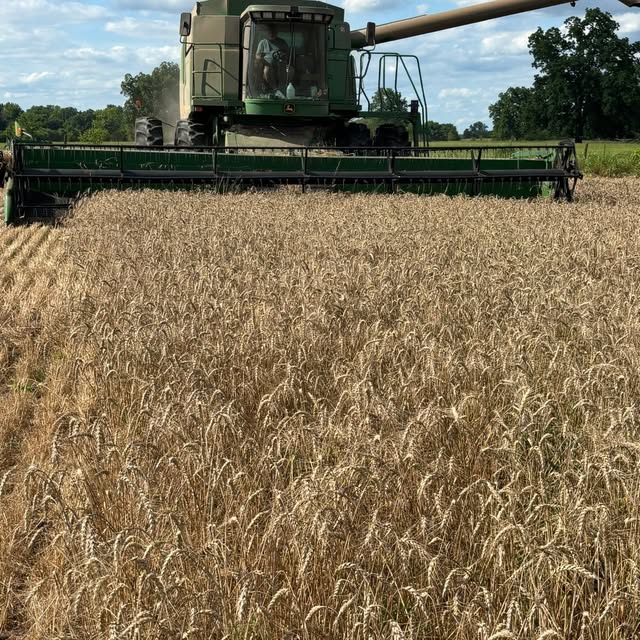
Rice harvest should start soon in Faulkner County. Fields are drying down fast as producers are looking at starting harvest around 18% moisture.
| | Dr. Jarrod Hardke's Rice Update and 2026 Rice Management Guide | | |
Soybeans
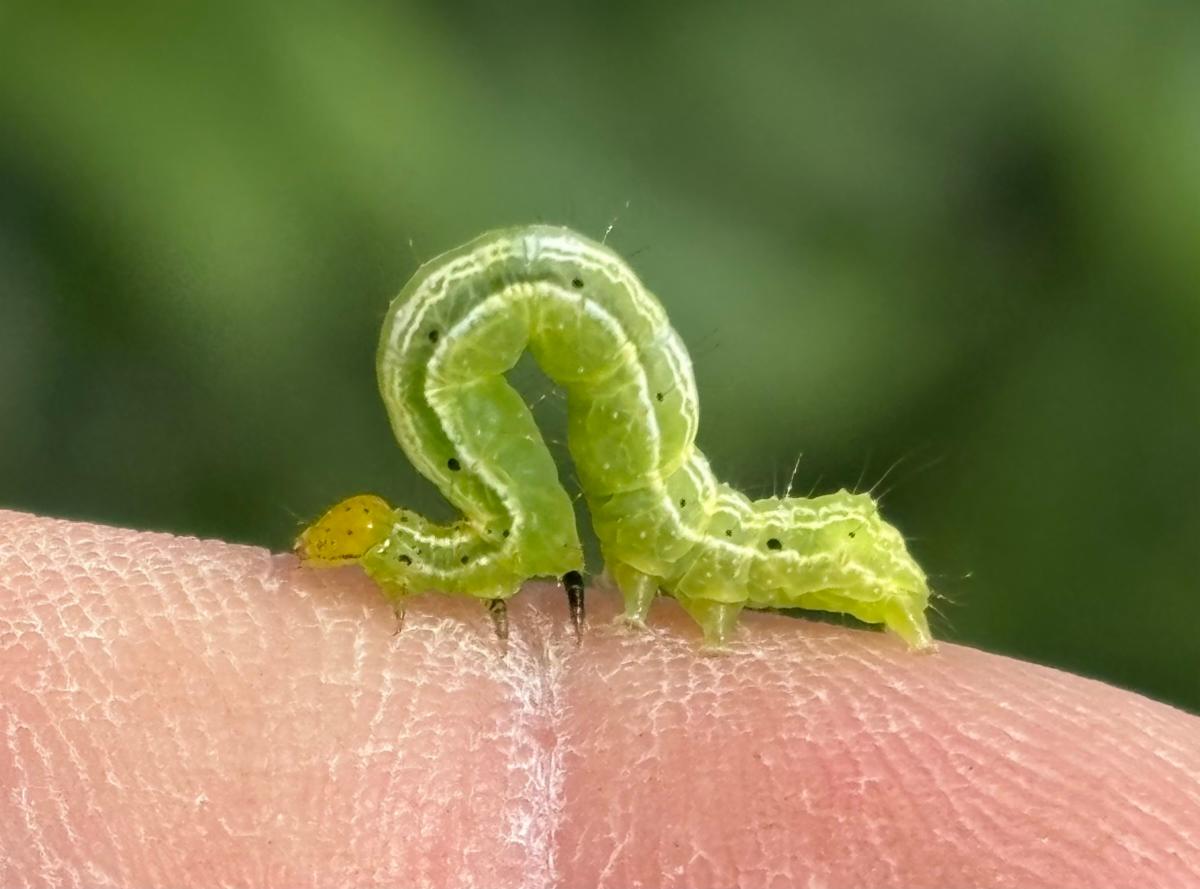
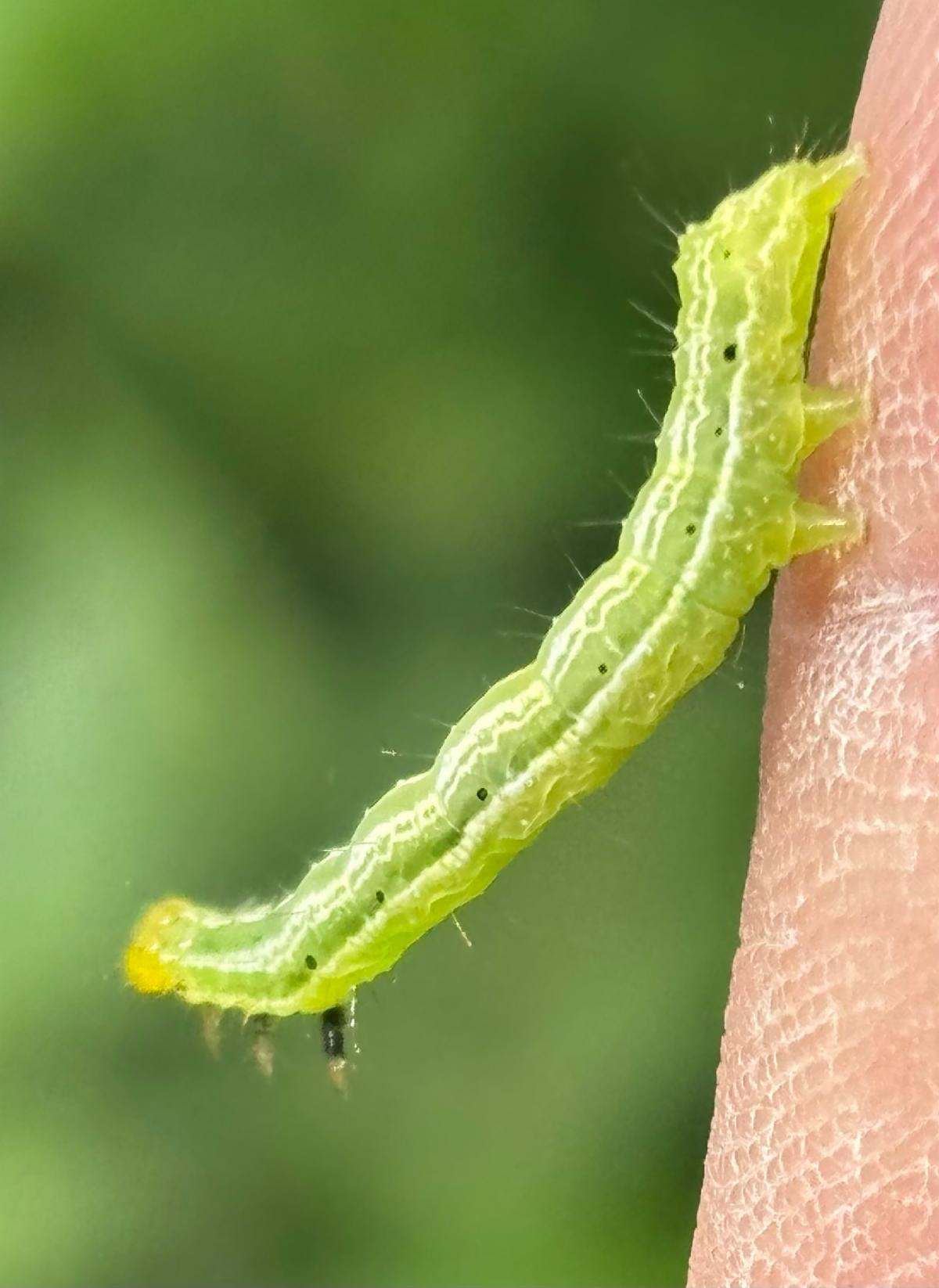
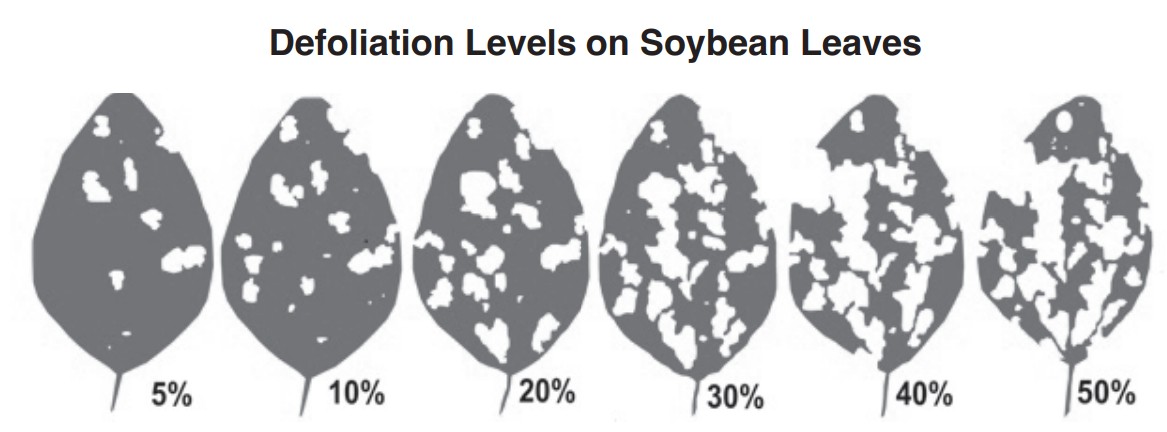
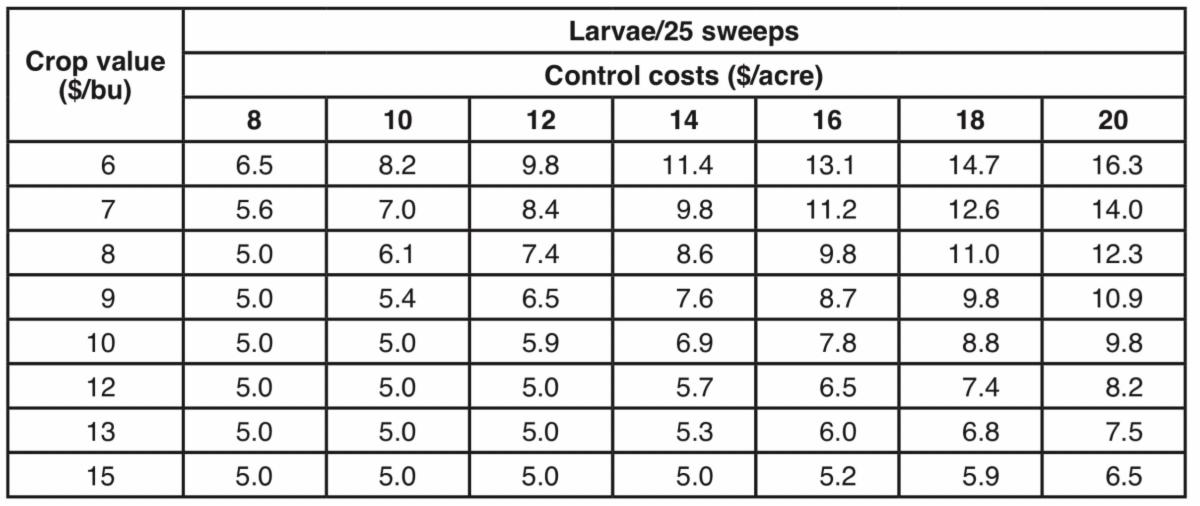
A new week in soybeans and a new pest rolls in. Today I found the first soybean loopers of the year. The soybean looper and cabbage looper look alike, but the difference is soybean loopers have black front legs versus green for a cabbage looper. Soybean loopers along with velvetbean caterpillars can be devastating to soybeans, so be on the look out. I didn't find many and I hope it stays that way.
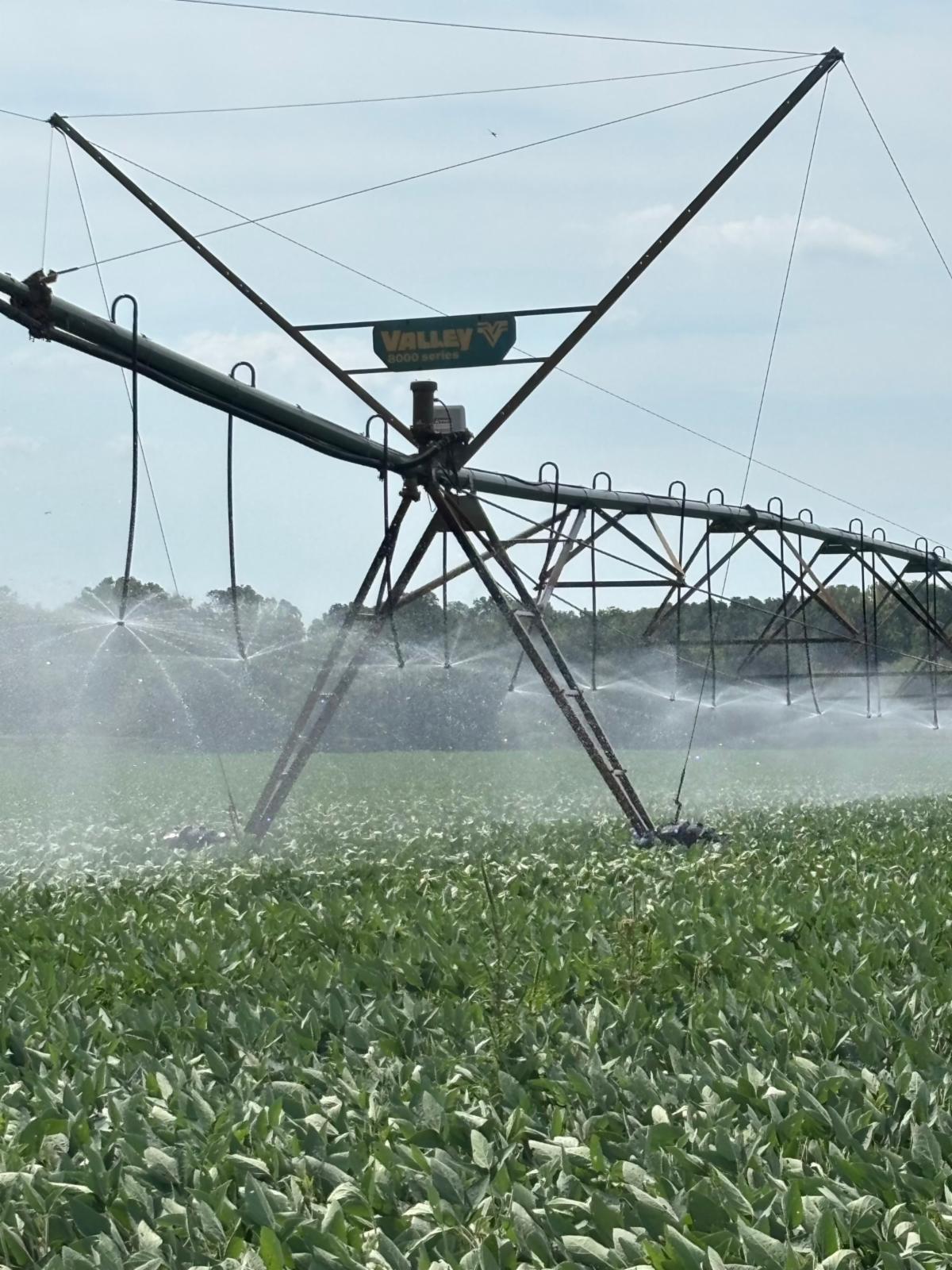
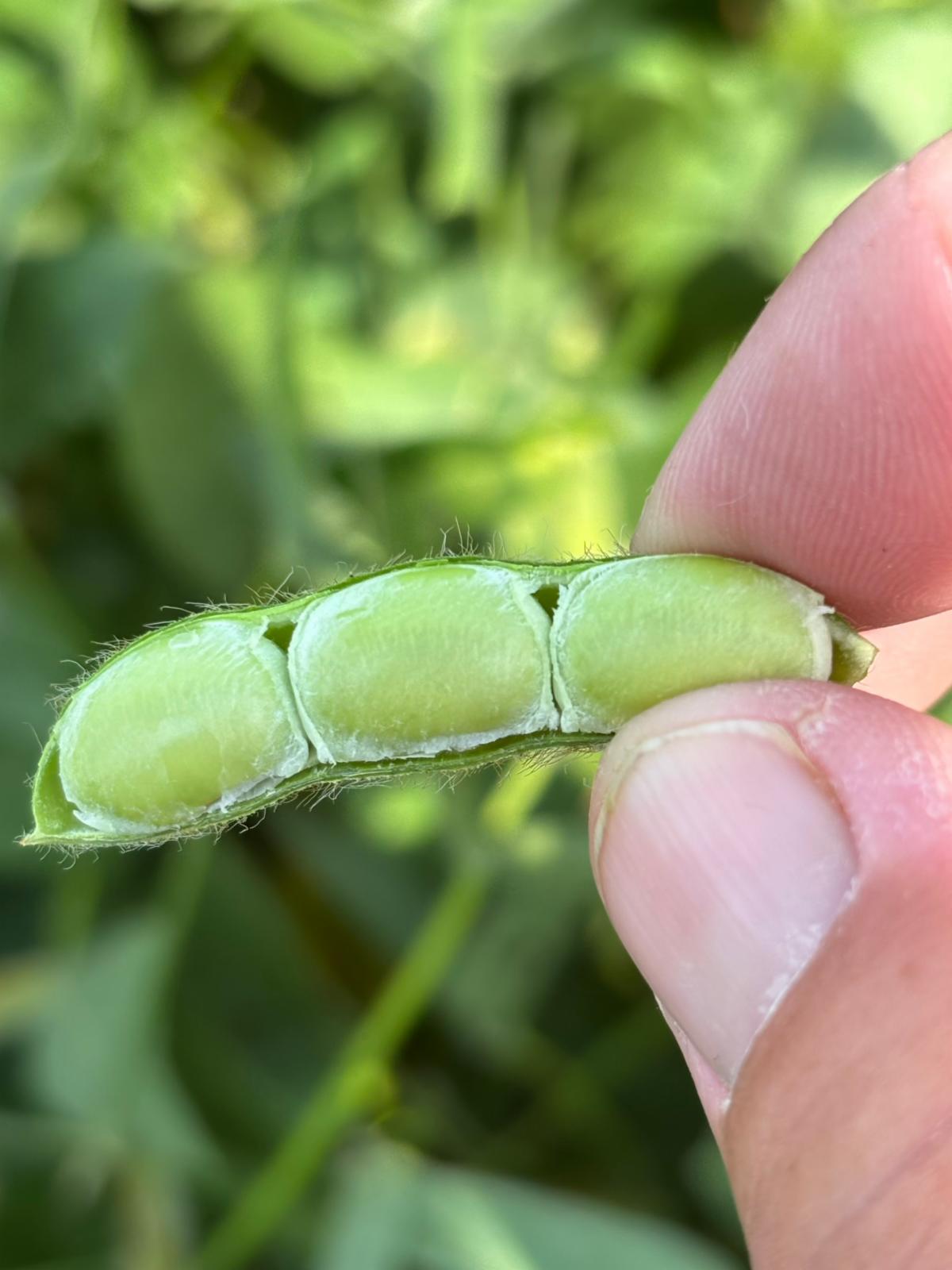
We are starting to terminate irrigation on a few fields. When we are thinking about terminating irrigation on soybeans, 50% of the pods need to have beans touching in the pod WITH good moisture. If you see beans just starting to touch and it is getting dry, run the water one more time.
| | Soybean Looper has the black front legs versus a cabbage looper that has green front legs. | |  | | | |
Corn
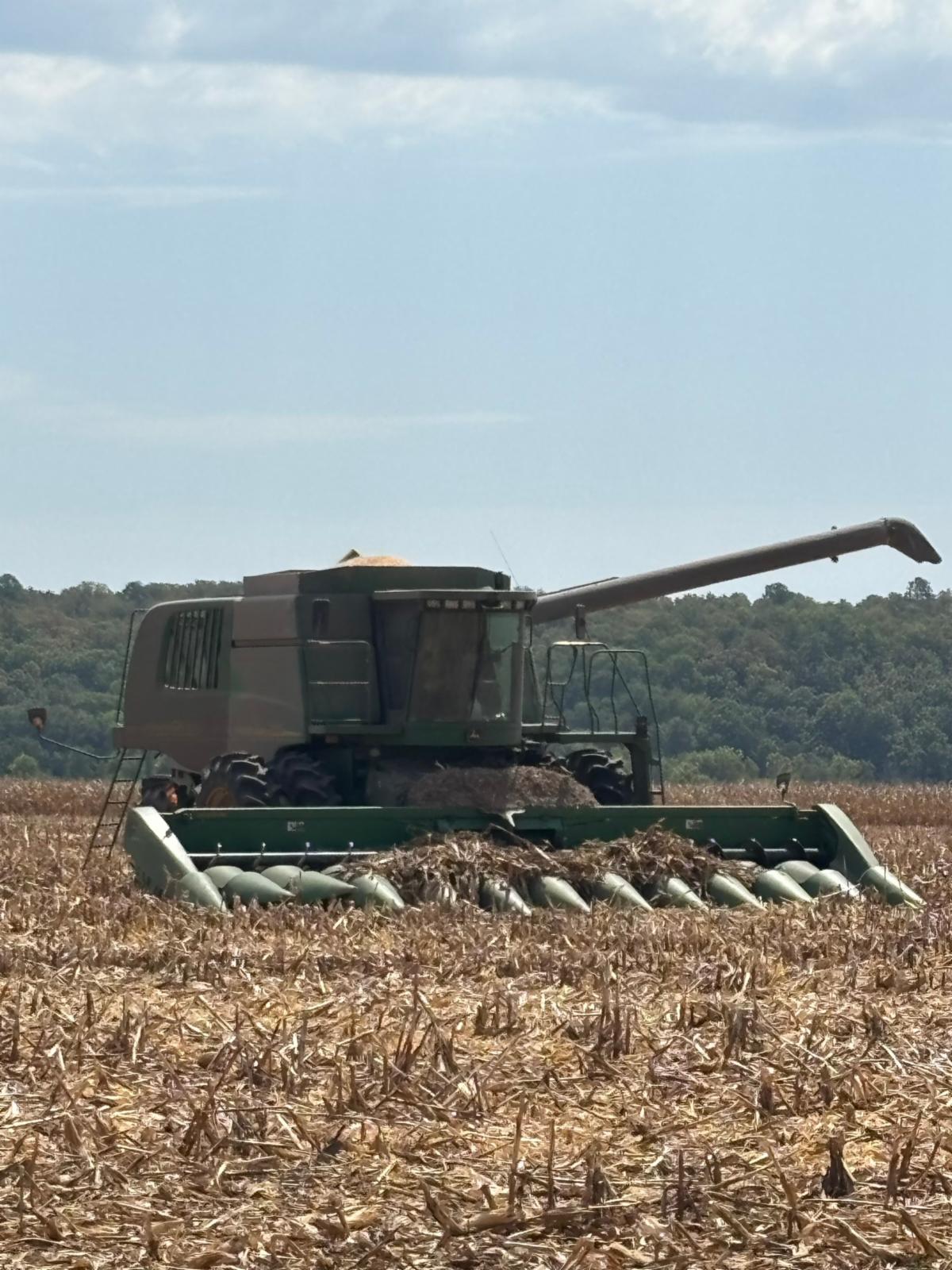
Corn harvest continues in the county and I am hearing some excellent yields were they were watered, but once you get out of the pivot circle, the yields really move downward. We needed just one more rain and some cooler temperatures on the dryland acres. It won't be long before we are done with corn.
|
2025 ARC-County and PLC Payments for Wheat
Scott Stiles
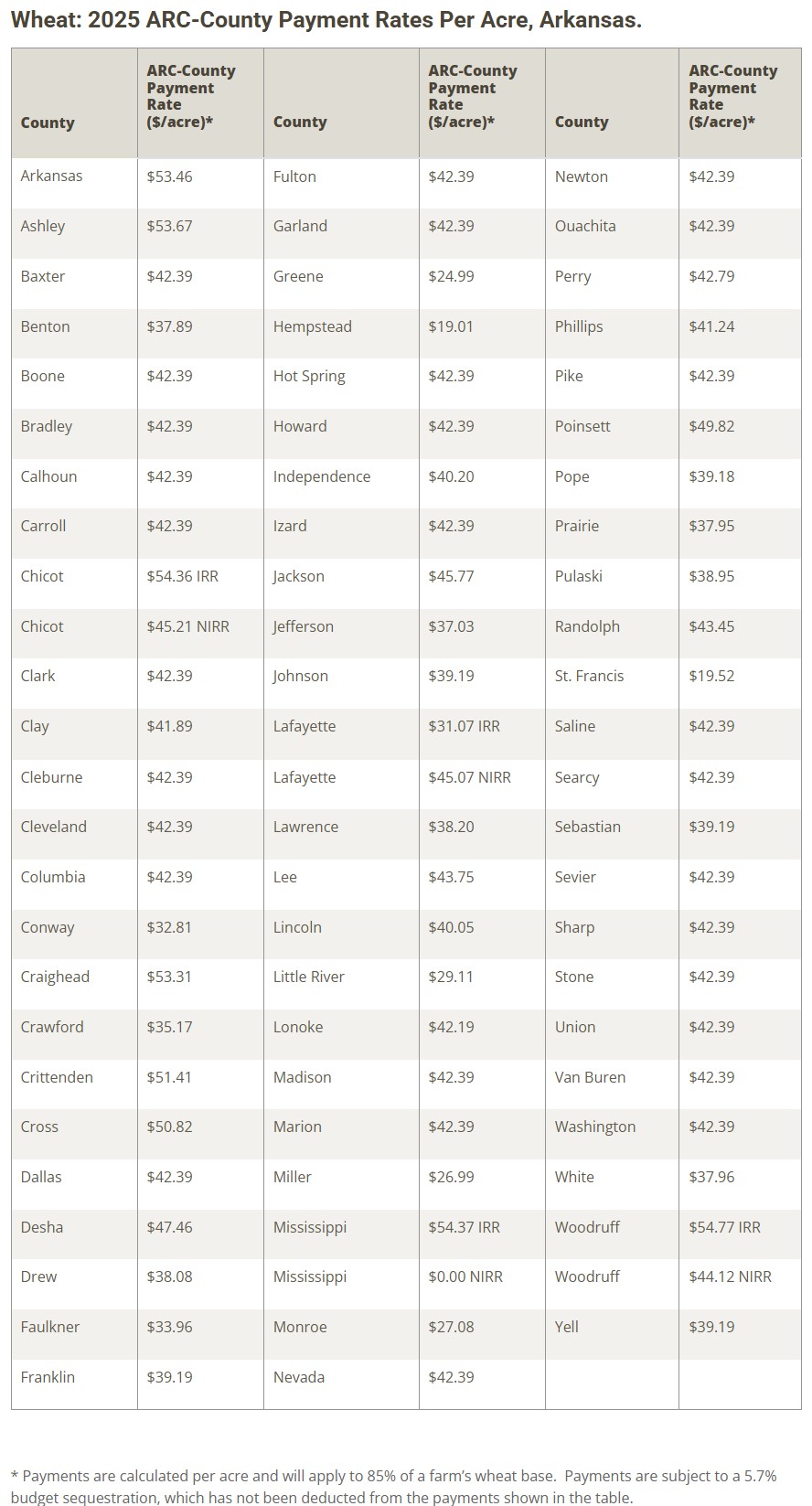
USDA’s Farm Service Agency recently provided an early look at the 2025 PLC and ARC-County payment rates for wheat. The information can be found at these links:
Seventy (70) counties in Arkansas are eligible for ARC-County wheat payments (shown in the table below).
| | |
2025 Wheat PLC Payment:
For the 2025 crop year, a wheat PLC payment of $1.29 per bushel will be made. The 2025 marketing year average price of $5.06 per bushel was well below the Effective Reference Price of $6.35 needed to trigger a PLC payment. The PLC payment rate (e.g. $1.29) is multiplied by a farm’s PLC yield and 85% of the base acres for the respective crop. This determines the total PLC payment.
2025 “Best of Both Provision”:
Generally, producers and landowners choose between PLC and ARC based on their preference for protection against a decline in either (a) crop prices or (b) crop revenue, respectively. However, for the 2025 program year only, growers will automatically receive the higher calculated payout between PLC and ARC, regardless of which program was elected during spring enrollment.
Changes to Payment Limitations:
Enhancements to farm program payment limits were made in the One Big Beautiful Bill Act Title I provisions. The baseline payment limitation for ARC and PLC payments was increased to $155,000 per person. However, payment limits are now adjusted for inflation. Inflation indexing begins with the 2025 program year and further increases the payment limitation to $160,000 per individual.
For the 2025 crop year, Arkansas had 779,161 wheat base acres enrolled in the ARC and PLC programs.
ARC-County, ARC-Individual, and PLC payments for the 2025 crop year will be issued after October 1, 2026.
| | |
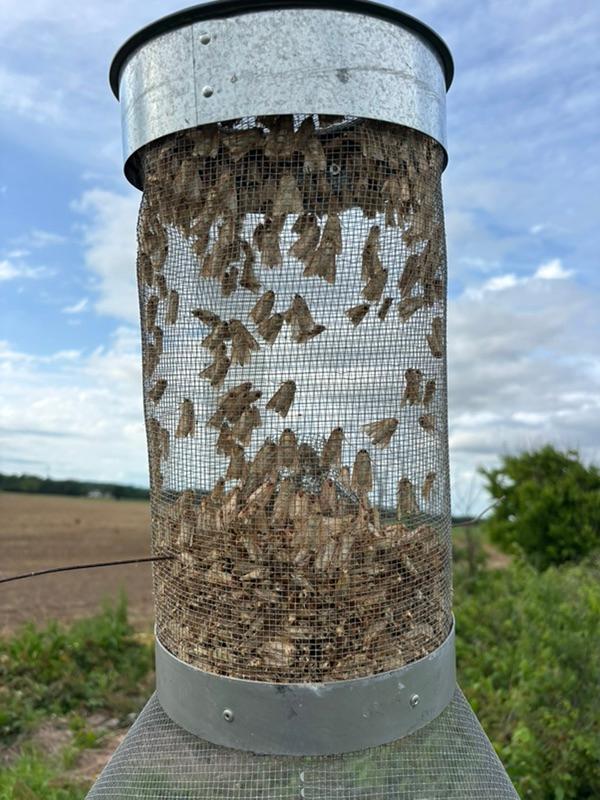
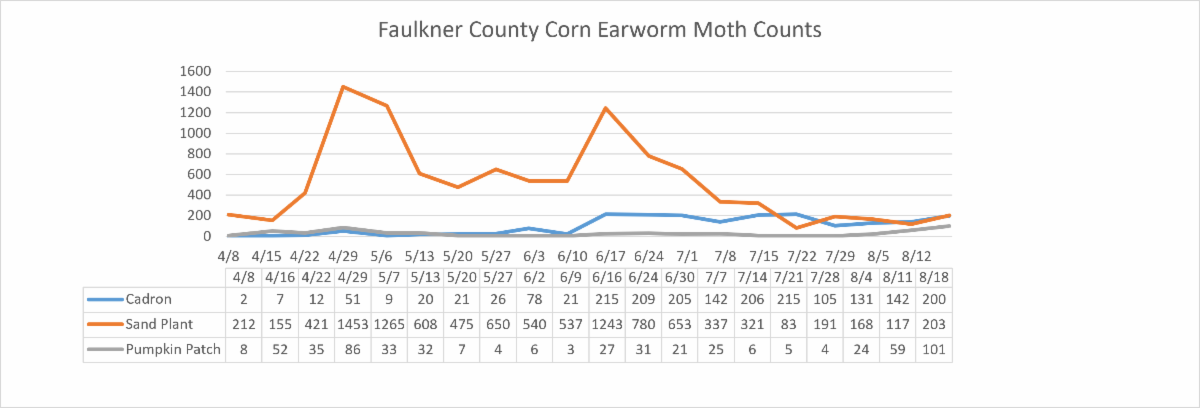
Corn Earworm Moth Traps
Corn Earworm Moth Counts for August 21, 2026
Cadron - 200
Sand Plant - 203
Pumpkin Patch - 101
| | |
More Acres, Lower Yields:
The Focus of August USDA Reports
H. Scott Stiles, Extension Economist, University of Arkansas
Hunter D. Biram, Assistant Professor and Extension Economist, University of Arkansas
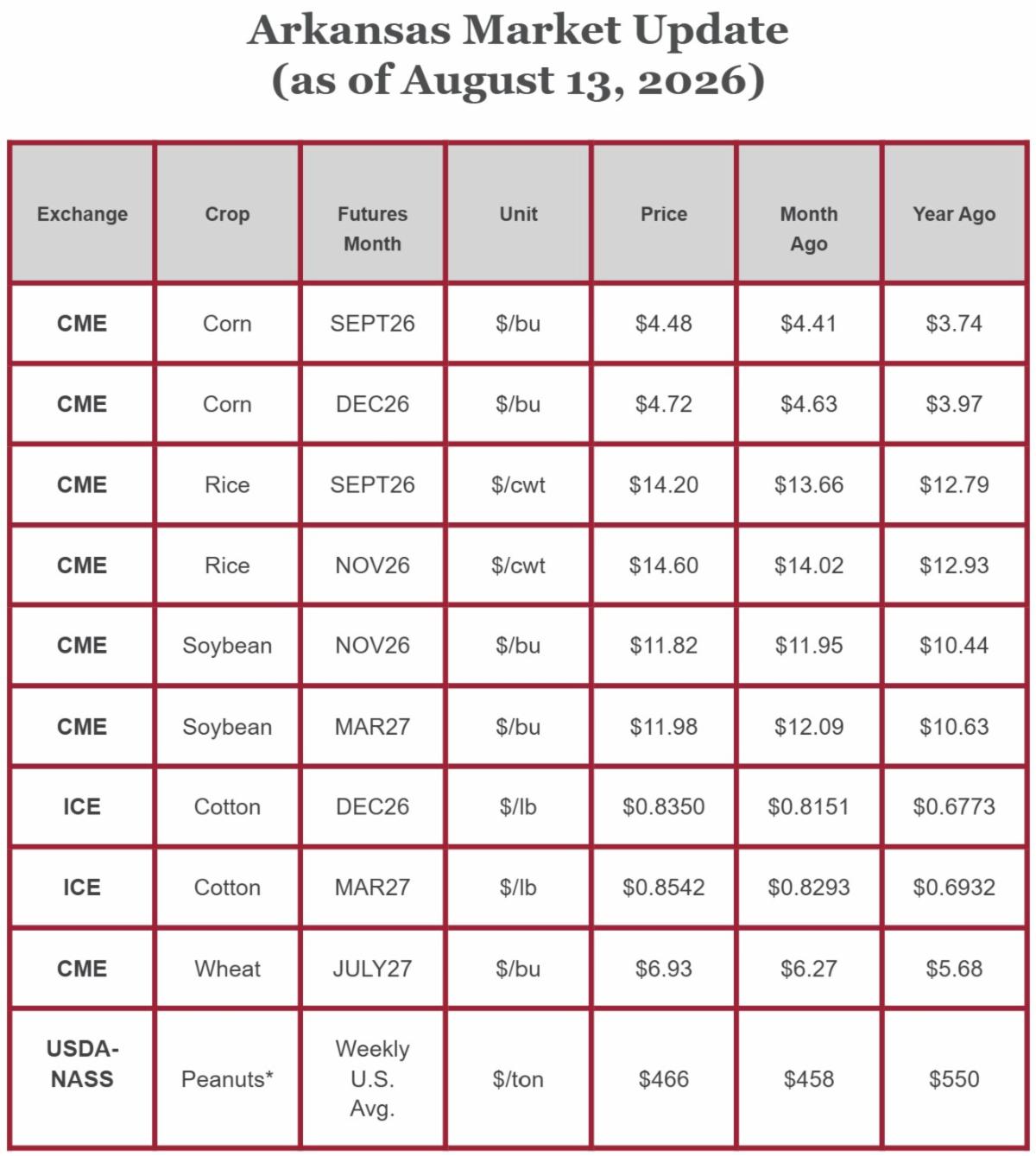
USDA’s first survey-based production and yield estimates were the focal point of the August 12th Crop Production and WASDE. This month’s yield estimates were based primarily on farmer surveys, the week 30 Good/Excellent ratings of the crop, and satellite imagery. NASS also included FSA certified acreage in its initial production estimates.
For all of the major field crops, USDA found more acres in August. However, yields were lowered and offset much of the acreage increases. There continues to be a consistent theme of tightening stocks across all commodities and price improvement in the 2026/27 marketing year.
Soybeans:
Beginning with soybeans, 2026 production is projected at a record 4.519 billion bushels, up 44 million from July. Planted and harvested acres were increased by 1.4 million this month to 86.8 and 85.8 million acres respectively. The first survey-based yield forecast of 52.7 bushels per acre is 0.3 bushels below last month’s projection and last year’s record yield. Arkansas’ soybean yield is projected to be a record 57 bushels per acre. Soybean supplies for 2026/27 are projected 39 million bushels higher than last month as the increase in production is partly offset by a 5-million-bushel reduction in beginning stocks.
U.S. soybean crush for 2026/27 was increased 30 million bushels to a record 2.78 billion, driven by strong demand for both soybean meal and oil. U.S. soybean exports were unchanged at 1.66 billion bushels and ending stocks were raised 10 million bushels to 320 million; slightly below last year’s 325 million bushels. The U.S. season-average soybean farm price forecast was unchanged this month at $11.40 per bushel; up from $10.40 per bushel in 2025/26.
Long-Grain Rice:
For 2026/27, U.S. long-grain supplies increased this month on higher production and increased beginning stocks (from a 1 million cwt. reduction in 2025/26 exports). The initial survey-based forecast for the 2026/27 crop year increased production to 106.7 million cwt, up 2.6 million from last month, on higher harvested area. NASS increased long-grain planted acres by 22,000 this month to 1.417 million. Surprisingly, Arkansas’ long-grain acreage increased by 50,000 to a total of 780,000. Much of this increase was offset by a combined 45,000-acre reduction in Louisiana and Missouri. Acres were increased by a total of 17,000 in California, Mississippi and Texas. The U.S. average long-grain yield is forecast at 7,643 pounds per acre (169.8 bu/ac). Long-grain production for 2026/27 remains the lowest since 1993 and acres the lowest since 1974.
Domestic and residual use was raised 1.0 million cwt to 117.0 million cwt on increased supplies. Exports were unchanged at 50 million cwt. Projected 2026/27 ending stocks increased 2.6 million to 20.3 million cwt but are still down 46 percent from last year. The 2026/27 season-average farm price (SAFP) for long-grain was unchanged at $13.50 per cwt ($6.08/bu.), compared to the 2025/26 SAFP of $10.40/cwt. or $4.68/bu.
Corn:
U.S. corn production for 2026/27 is forecast at 16.0 billion bushels, up just 13 million from last month with a 1.2-million acre increase in harvested area that was largely offset by a reduced yield forecast. This would be the second largest U.S. corn harvest on record. The season’s first survey-based corn yield forecast is down 2.3 bushels per acre from last month to 180.7 bushels per acre. Arkansas average corn yield was projected at 185 bushels per acre.
Corn beginning stocks were lowered 75 million bushels to 1.945 billion, reflecting an increase in exports for 2025/26. Total U.S. corn use for 2026/27 is forecast 75 million bushels higher to 16.33 billion. Exports were increased 75 million bushels to 3.275 billion, reflecting increased global demand. As we touched on in our July WASDE podcast, the severe drought in western Europe is impacting corn production. Since June, USDA has lowered its estimate of E.U. corn production by 287 million bushels and increased E.U. corn imports by 157 million bushels. USDA’s current estimate of E.U. corn production at 50.2 MMT would be the lowest since 2007.
With total usage rising more than supply, U.S. ending stocks were lowered 137 million bushels this month to 1.653 billion, down 292 million bushels or 15% from 2025/26. The stocks-to-use for 2026/27 currently sits at 10.1%. The season-average price was increased $0.10 per bushel to $4.50, reflecting tighter ending stocks and improving expectations for futures and cash prices. This is up from $4.15 per bushel in 2025/26.
Cotton:
The 2026/27 U.S. cotton balance sheet for August projects lower production and ending stocks compared to last month. Beginning stocks, domestic mill use, exports, and imports were unchanged. U.S. all-cotton production is forecast at 13.61 million bales. This is 90,000 bales below the July projection and almost 300,000 bales smaller than the 2025/26 crop. Planted area was increased 620,000 acres to 10.47 million. The forecast for harvested area is increased to 8.19 million acres, over 8 percent higher than last month. The national average yield was lowered 74 pounds to 798 pounds per acre—the lowest since 2015. Crop conditions are declining in Texas as abandonment for the state is projected to reach 2 million acres. Hot, dry weather is expected across much of the Southwest this week, keeping stress on areas already short on moisture. Currently, 41% of U.S. cotton production is affected by drought.
With the smaller crop, projected ending stocks were reduced to 4 million bales, down from 4.2 million in 2025/26. The projected season-average farm price improved 2 cents to 75 cents per pound. There were no changes to supply and demand in the 2025/26 U.S. cotton balance sheet this month. The 2025/26 season-average farm price was lowered 1 cent to 61.5 cents per pound.
The complete USDA August WASDE and NASS Crop Production reports can be found at these links:
August 2026 WASDE Report
Crop Production
The next monthly USDA reports are scheduled for September 11th.
| | Beef, Small Ruminants, & Forages | | |
Trump Announcement on Beef Imports
James Mitchell - Associate Professor and Extension Economist
On Friday, August 21, 2026, President Trump announced that the United States would allow 300,000 metric tons of ground beef to enter the country over the next 90 days without out-of-quota tariffs. The announcement also stated that these imports would be sold at 25% below current market prices. This announcement comes against the backdrop of record U.S. cattle prices, historically low domestic cattle inventories, realignment in the domestic beef packing sector, continued uncertainty surrounding the reopening of the southern border to Mexican feeder cattle, and escalation of the war with Iran.
This short note provides additional context on what was announced this morning and discusses what I expect the potential impacts to be for Arkansas cattle producers and the broader U.S. cattle industry.
How Much is 300,000 metric tons?
To put the size of the announcement into perspective, USDA currently forecasts 2026 U.S. beef production at 25.7 billion pounds and beef imports at 6.8 billion pounds. An additional 300,000 metric tons is equivalent to approximately 661.4 million pounds of beef. Relative to USDA’s current annual forecast, that would represent roughly an 11% increase in U.S. beef imports and add about 2% to total domestic beef supplies.
The impact becomes much more pronounced when we consider that these imports are expected to arrive within a 90-day period. Concentrating an additional 661.4 million pounds of beef in the fourth quarter would increase expected fourth-quarter beef imports by approximately 51% and increase total fourth-quarter domestic beef supplies by about 8%. That would make the fourth quarter of 2026 the largest fourth quarter for U.S. beef supplies on record.
Will this impact cattle prices?
This could easily impact Arkansas cattle prices at a time when many producers are beginning to market calves. An unexpected surge in beef imports over a 90-day period could put significant downward pressure on U.S. cattle prices. We can look to last fall for some indication of the potential price response.
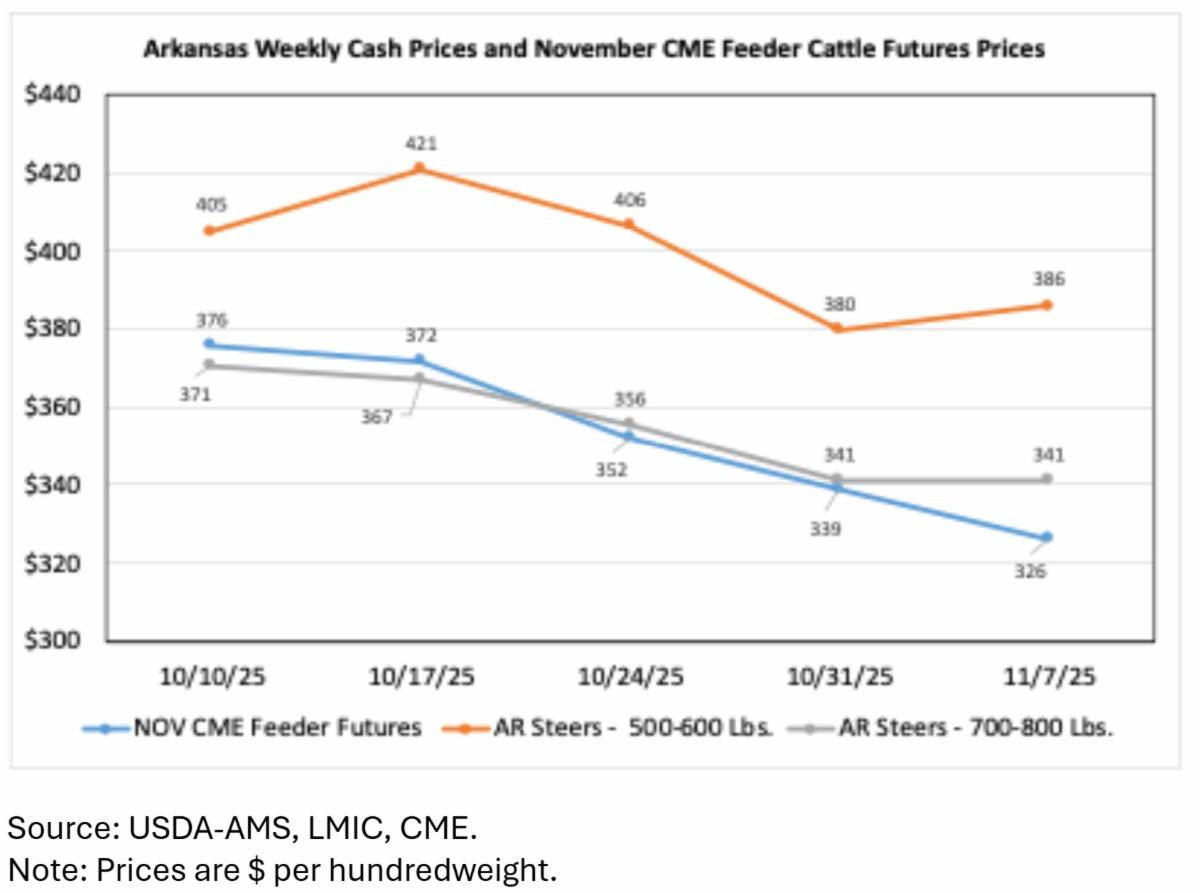
Recall that on October 16, 2025, President Trump announced a plan aimed at lowering U.S. beef prices that included expanding the tariff-rate quota (TRQ) for Argentine beef imports and relaxing tariffs on Brazilian beef imports. The figure below shows the price reaction in Arkansas following that announcement. At the time, Arkansas steer calves were averaging $421/cwt. Two weeks later, steer calf prices had fallen $41/cwt to $380/cwt. Over the same two-week period, Arkansas feeder steer prices declined $28/cwt, from $367/cwt to $339/cwt.
As of this writing, the September 2026 feeder cattle futures contract is down more than $6/cwt since trading opened at 8:30 a.m. CST. The potential market implications of this announcement are arguably larger than those of last fall’s news, making the ultimate price impact difficult to project. However, last year’s market reaction provides a useful example of how quickly cattle prices can respond to an unexpected change in U.S. beef import policy.
| | |
Will this impact herd expansion?
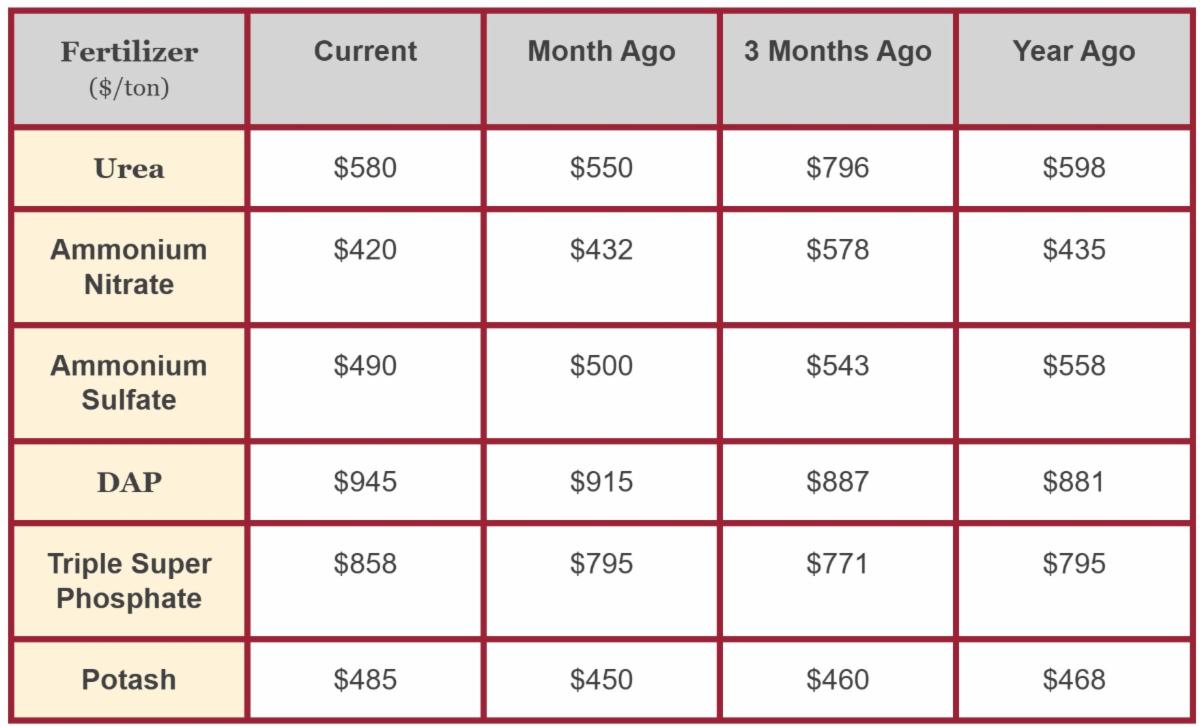
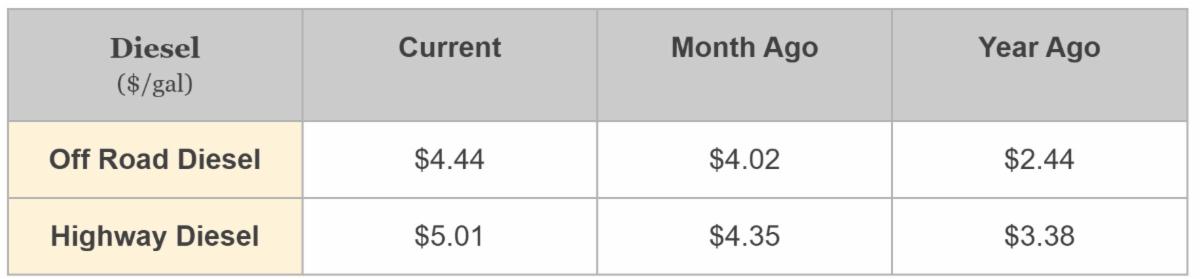
Fundamentally, this announcement does not help the U.S. cattle industry rebuild the herd. Producers are already facing higher input costs, particularly for fuel and fertilizer, while drought conditions have expanded across Arkansas and many of the major cattle-producing states. Those factors were already making herd expansion a difficult decision. Producers must now also consider the potential for unexpectedly lower cattle prices and increased market volatility at a time when retaining heifers and expanding cow inventories requires a significant long-term financial commitment.
Herd rebuilding depends heavily on producer expectations about future profitability. Strong cattle prices provide an economic incentive for producers to retain heifers rather than market them as feeder cattle and to keep older cows in the herd longer. An unexpected increase in beef imports that puts downward pressure on cattle prices reduces that incentive. Even if the immediate price effects prove temporary, greater uncertainty about future cattle prices can make producers more hesitant to commit capital to herd expansion. At best, this announcement could delay the beginning or pace of U.S. herd rebuilding. At worst, if the resulting price pressure and uncertainty are large or persistent enough, it could cause producers to abandon expansion plans and create longer-lasting damage to rebuilding efforts.
| | |
Forages
It is interesting how a little bit of rain will green up grass really fast. The rain earlier this week was a little boost to at least give us some hope on another harvest of hay. With more rain predicted, we may be in business on one more round of hay. Now is the time to start thinking about stockpiling bermudagrass. I have attached a great fact sheet below that has the steps to stockpiling bermudagrass. Right now you should be looking at getting out about 50 pounds of nitrogen.
Another hot topic is nitrates and prussic acid in our johnsongrass and summer annuals. I tested some johnsongrass at the beginning of the week and it was at the top of the generally safe level. It was running 1385 ppm which is right under the threshold of 1400 ppm. I didn't feel safe using that forage and the producer went a different direction with it. Now that afternoon it rained 1 inch at that farm, so what did that do to the nitrates? More than likely if we check again in about 10 days, hopefully the levels will be down, but the problem is now you will have quick regrowth which could lead to purssic acid issues. Hopefully after 10 days, that will dissipate.
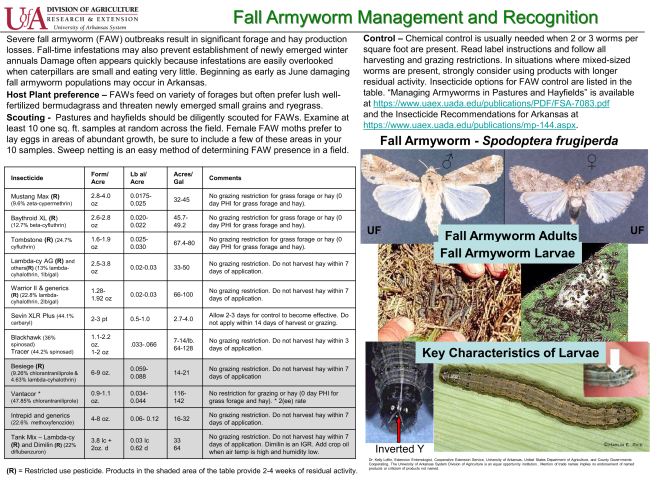
The next topic everyone needs to be aware of is the presence of armyworms. After the rain came through the armyworms started back again. Please get out and check your forages. If the field is ready to harvest for hay, then I would harvest it. If you need to spray, make sure you add dimilin to lambda cy applications. My preference for an insecticide is Besiege. I know for sure it is going to get them and give you some residual, if you need it. We are getting so late in the season that a residual may not be needed. The third option of course is let them have it. They will not kill a stand, so if you don't need the forage just let them have their fun.
| |
Winter Annuals
Now is the time to start thinking about planting winter annuals. Most of our winter annuals will be planted in September and October. Hopefully some moisture will be available to get them to come up this year. I have added some fact sheets below but one of the best fact sheets we have is the General Traits of Forage Grasses Grown in Arkansas. That fact sheet has charts with seeding rates and planting dates for all the forages in Arkansas. Be sure to download that if you have questions about seeding rates.
There are many ways to go with winter annuals, but to me it is hard to beat ryegrass. It is going to give you the most yield and is the easiest to establish. Some people want a combination of grasses, and if that is the case my second favorite combination is ryegrass and wheat. Great combo! I do often get asked what can I plant to get grazing in the fall and the spring. That brings in my third favorite combination which is spring oats (Jerry) and ryegrass. The spring oats will grow quickly and give you some fall grazing but will die out after a freeze allowing the ryegrass to take over in the spring. There is another type of oat out there and that is the winter oat (Bob). Winter oats will produce just like ryegrass. They won't give you any grazing until the spring.
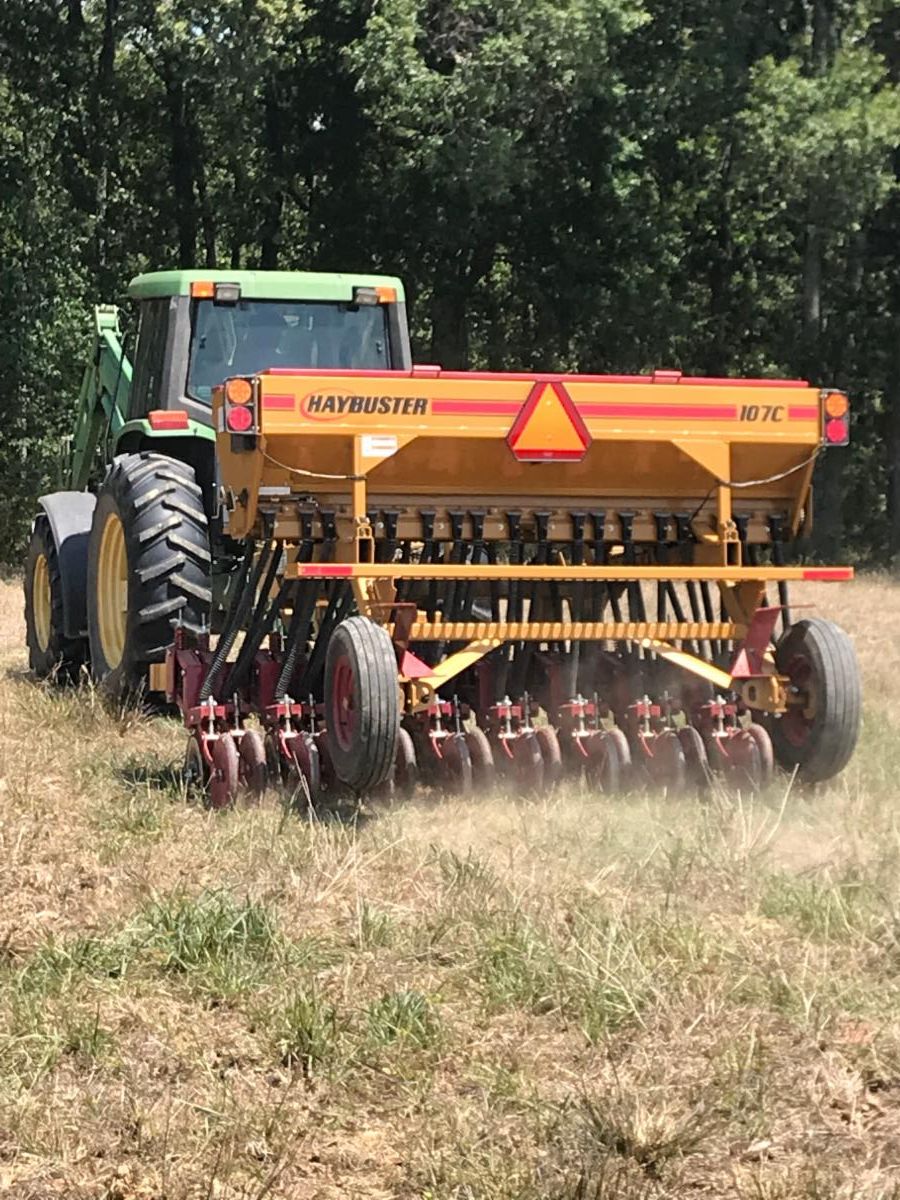
Drilling these winter annuals works the best, and I would take advantage of our Faulkner County Conservation District. They have drills that producers can rent to get these annuals planted. If you are thinking about planting winter annuals, you may want to go ahead and get ahold of them for a reservation.
| | |
Importance of Nutrition During Gestation for Ewes
Dr. Dan Quadros
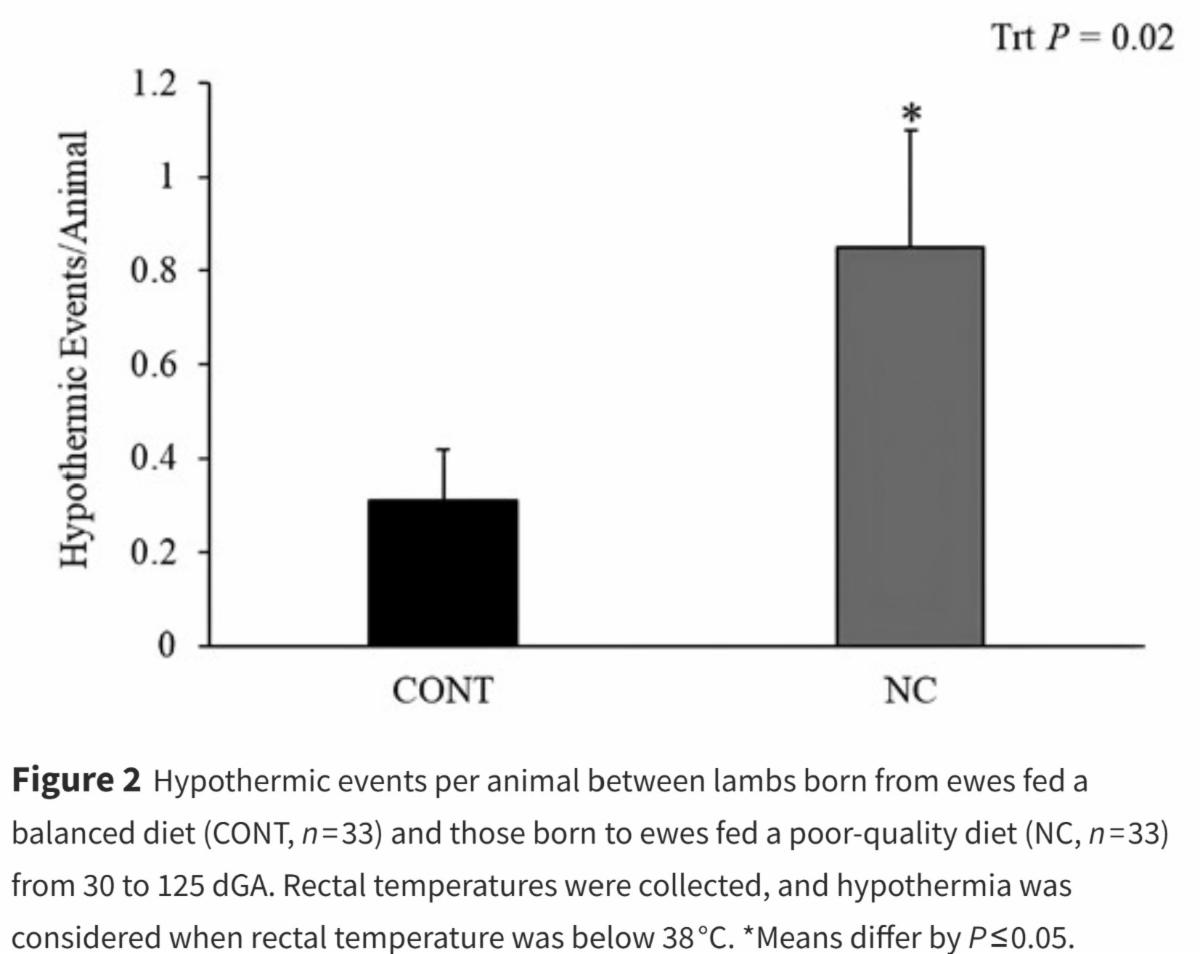
I have been talking for years about the importance of nutrition during gestation. For most producers in Arkansas, one of the most critical periods is late gestation (when fetuses gain most of their weight), because it occurs during winter, and the quality of the hay is questionable. A recent paper published in the Journal of Animal Science by Stucke et al., 2026; https://doi.org/10.1093/jas/skag211 investigated early life performance in lambs from ewes fed a poor-quality diet versus fed a diet meeting all nutritional requirements for the entire gestation. Ewes receiving the poor-quality diet lost weight and body condition. Lambs from poor-quality diet ewes were more likely to experience hypothermia in the first week of life (Figure below), which is one of the main causes of newborn losses. Additionally, lambs from ewes fed poor-quality feed grew more slowly and asymmetrically, highlighting the importance of maintaining ewe nutrition throughout gestation to support offspring health and productivity.
| | |
Faulkner County Sheep Success Series
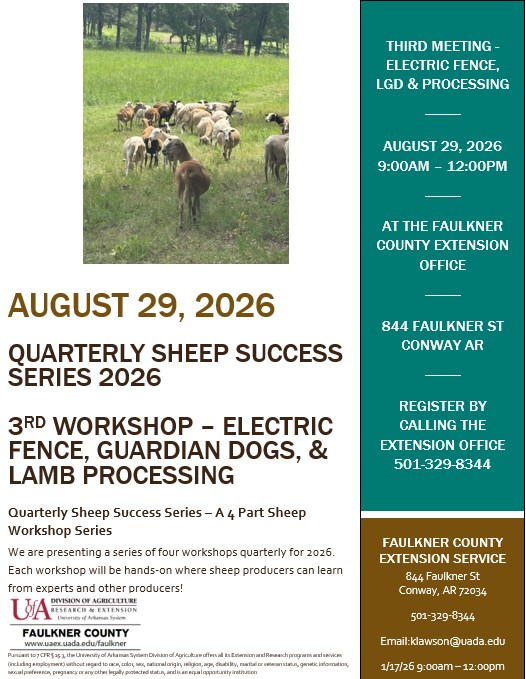
Our next Quarterly Sheep Series Meeting is coming up next Saturday. You still have time to register, so please call the office and let us know you are attending.
It is time for our 3rd quarterly meeting of the 2026 Sheep Success Series. The next meeting will be held on August 29 at the Faulkner County Extension Office. We will start at 9:00 and go until noon. Our speakers include:
Kenny Simon - Arkansas Extension Forage Instructor - Electric Fencing
Bill Constanzo - Texas A&M - Guardian Dogs (zoom)
Janeal Yancy - University of Arkansas Meat Science - Custom cuts of Lamb
Please call the Extension Office to register, 501-329-8344.
| | |
Sheep IQ
The American Lamb Board and the American Sheep Industry Association have joined forces to launch Sheep IQ, a new website designed to give sheep producers one trusted site to find practical education, tools, and expert guidance.
https://sheepiq.com/
| | |
Arkansas Shepherds Association Field Day
ASA Field Day — Saturday, September 19, 2026
8:30am - 2:30pm
Heifer Ranch, 55 Heifer Road Perryville, AR
Join us for a full day of hands‑on learning, great speakers, door prizes, and silent auction items benefiting the Arkansas Shepherds Association.
Members attend FREE.
Non‑members: $5 per person, paid at the door.
Must be 13 and older to attend.
Everyone must register on Eventbrite to attend.
Topics include:
Nutrition
Hoof care and trimming
How to draw blood
How to give shots
Parasites
Signs/Symptoms
Identifying
Treatment
We’re excited to see producers from across Arkansas and surrounding states come together for education, community, and a great day at Heifer Ranch.
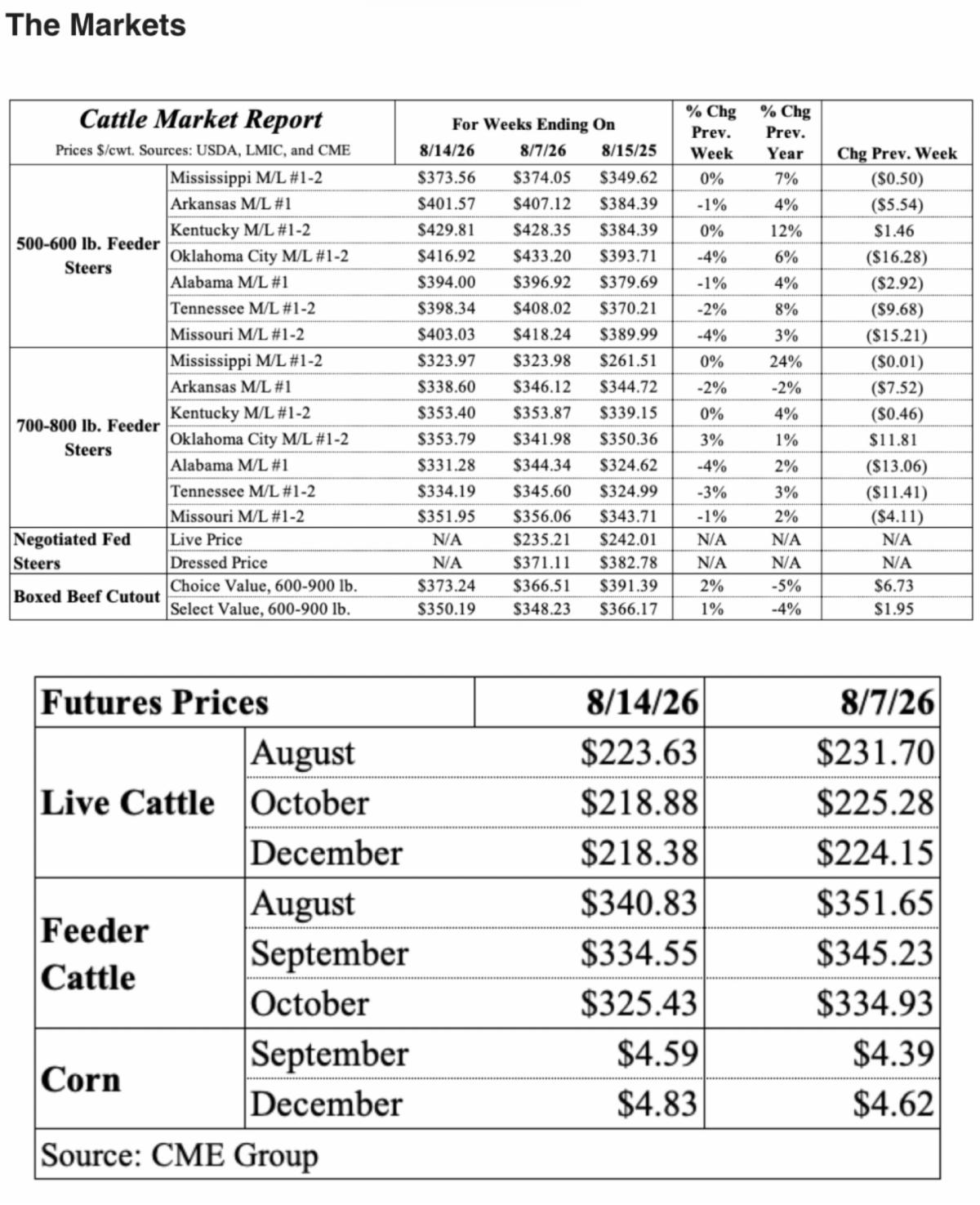
| | Here is this weeks Cattle Market Notes Weekly | | |
Pesticide Applicator Trainings
There will be no more in person Pesticide Applicator Trainings until this winter. If you need a license you can still do the training online. There is a link below for the online training and a link to check your license status.
| | |
Livestock Market Report
The following links are for the weekly livestock market report from the Arkansas Department of Agriculture website and the Livestock Auction Dashboard from USDA. Both sites have marketing data for all livestock sold at Arkansas Sale Barns.
| | |
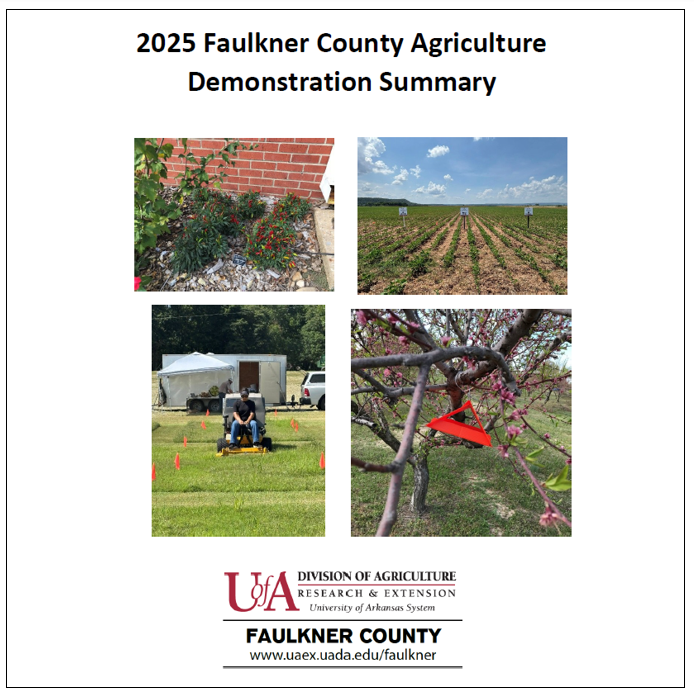
2025 Faulkner County Agriculture Demonstration Summary
The 2025 Faulkner County Agriculture Demonstration Summary is now available at the link below.
The 2025 Faulkner County Demonstration Summary is a collection of on-site demonstration results conducted in Faulkner County by local County Agents. Demonstrations are the cornerstone of the University of Arkansas System Division of Agriculture Cooperative Extension Service’s mission which is:
“We strengthen agriculture, communities, and families by connecting trusted research to the adoption of best practices.”
On-site demonstrations allow producers and homeowners to see firsthand how Extension recommended varieties and best management practices work in their counties and surrounding area.
| | |
Sign up for Text Alerts
You can now sign up for text alerts from me throughout the year. I have two areas you can sign up for which includes Faulkner Livestock or Faulkner Ag (Row Crop Updates). To sign up you can follow one of these links or use the QR Codes below.
| | Pursuant to 7 CFR § 15.3, the University of Arkansas System Division of Agriculture offers all its Extension and Research programs and services (including employment) without regard to race, color, sex, national origin, religion, age, disability, marital or veteran status, genetic information, sexual preference, pregnancy or any other legally protected status, and is an equal opportunity institution. | | | | |