Faulkner County Agriculture Update
August 7, 2026
| | |
Weather
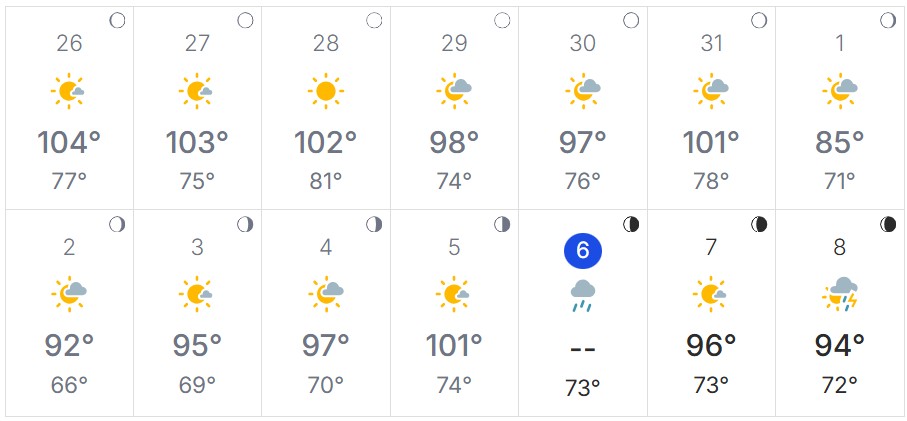
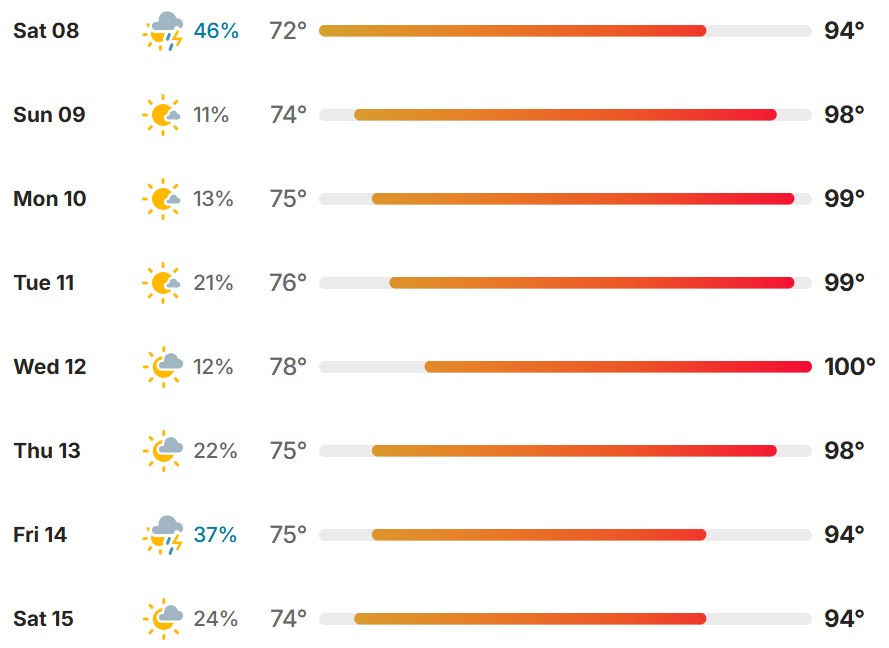
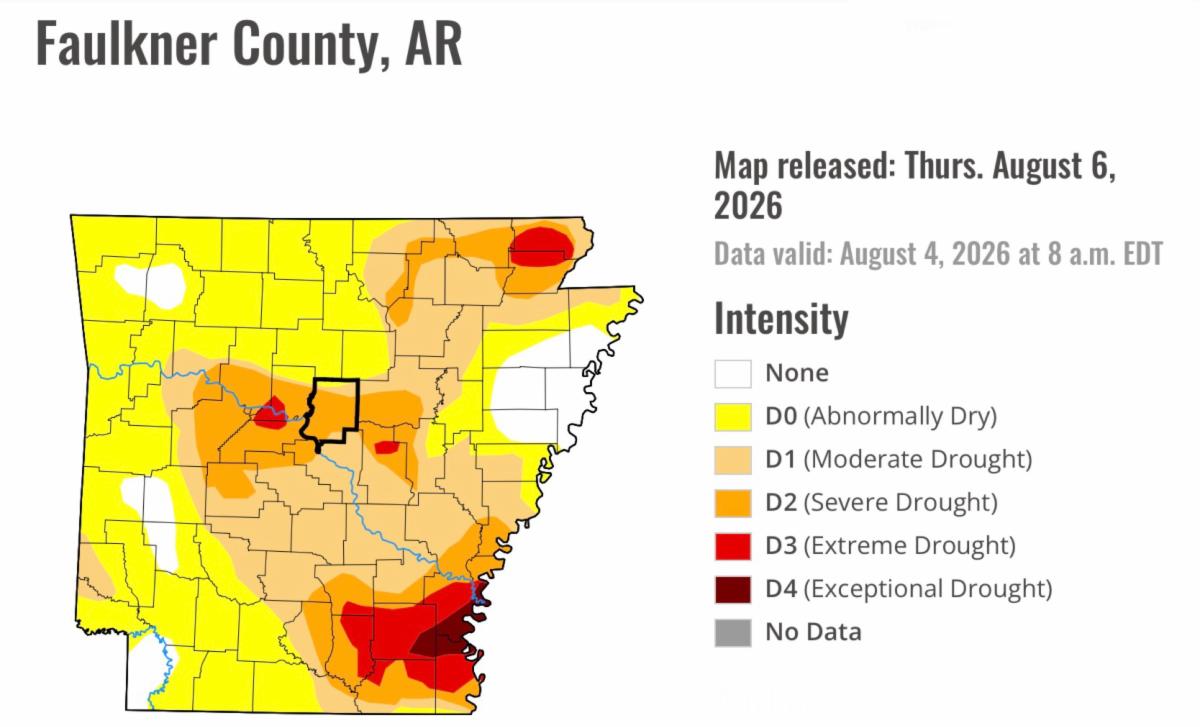
Another hot week this week. I have had a few people say "well at least it isn't as hot as last week". And I agree, but dang it was still hot! A few showers came through the county on Thursday and more rain is predicted for today. Showers are great, but the whole county needs a full day slow rain to get us back out of this drought. I fear that if we don't get county wide rain soon, a burn ban may be on the way.
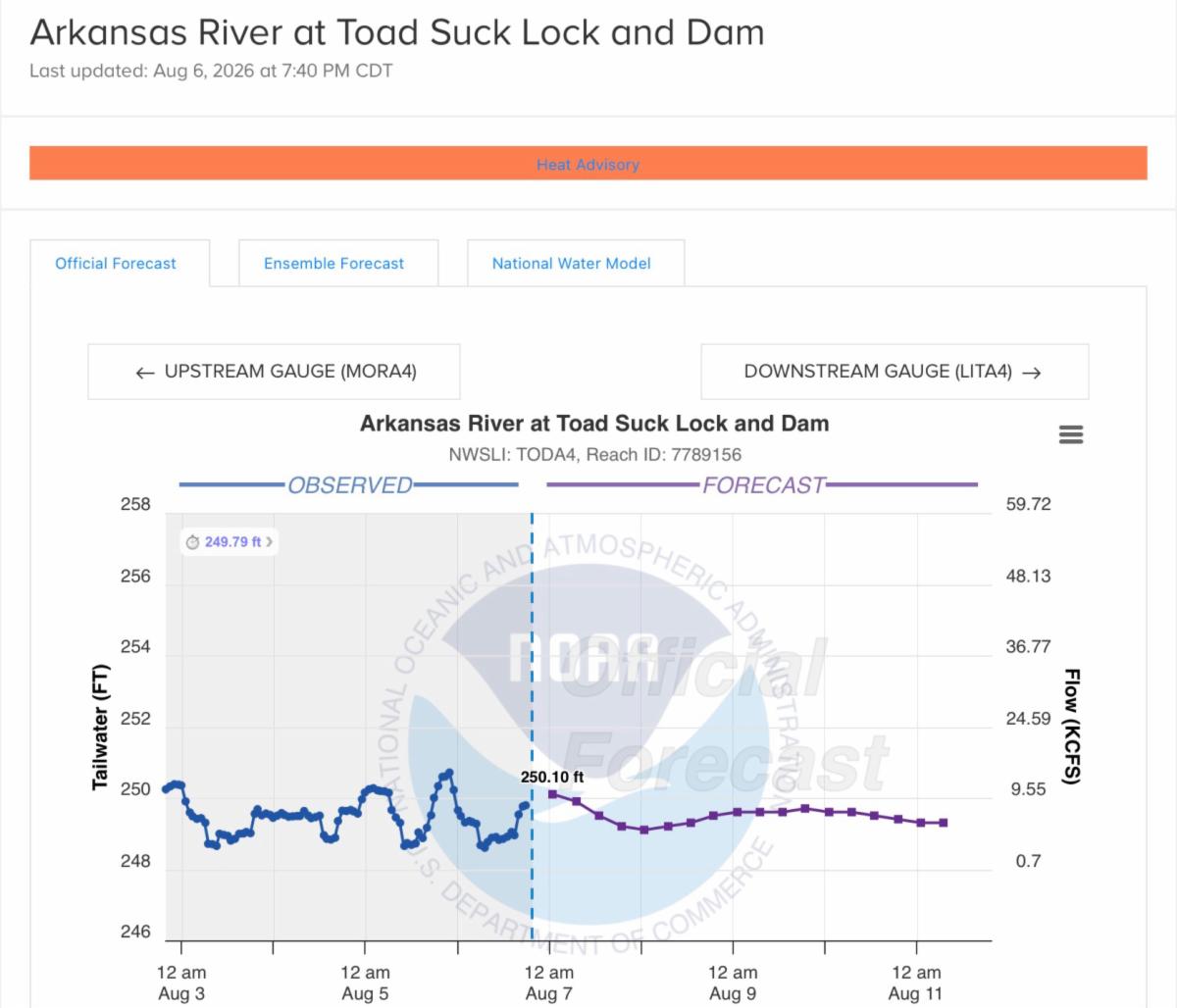
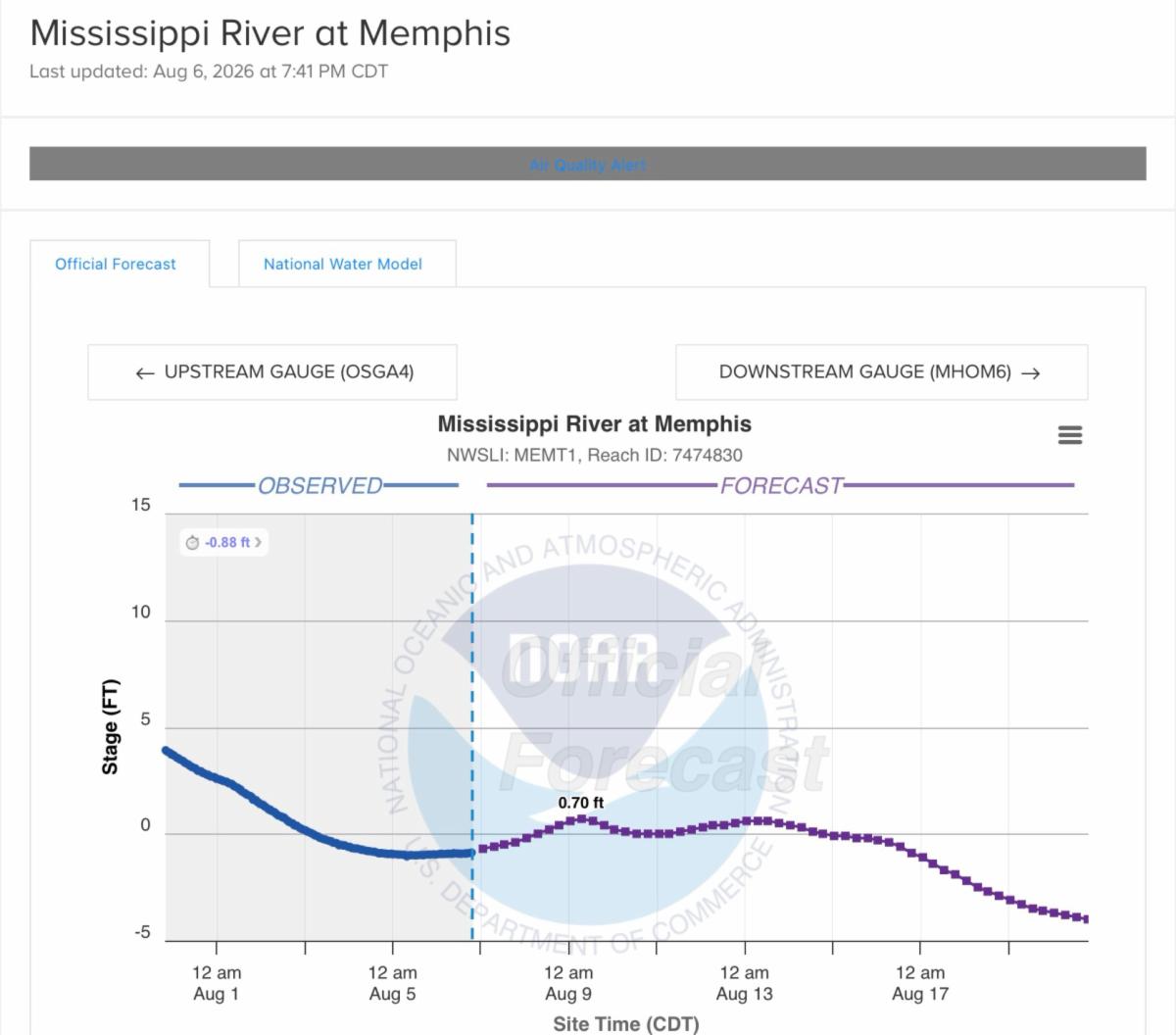
| | Arkansas and Mississippi River | | |
Rice
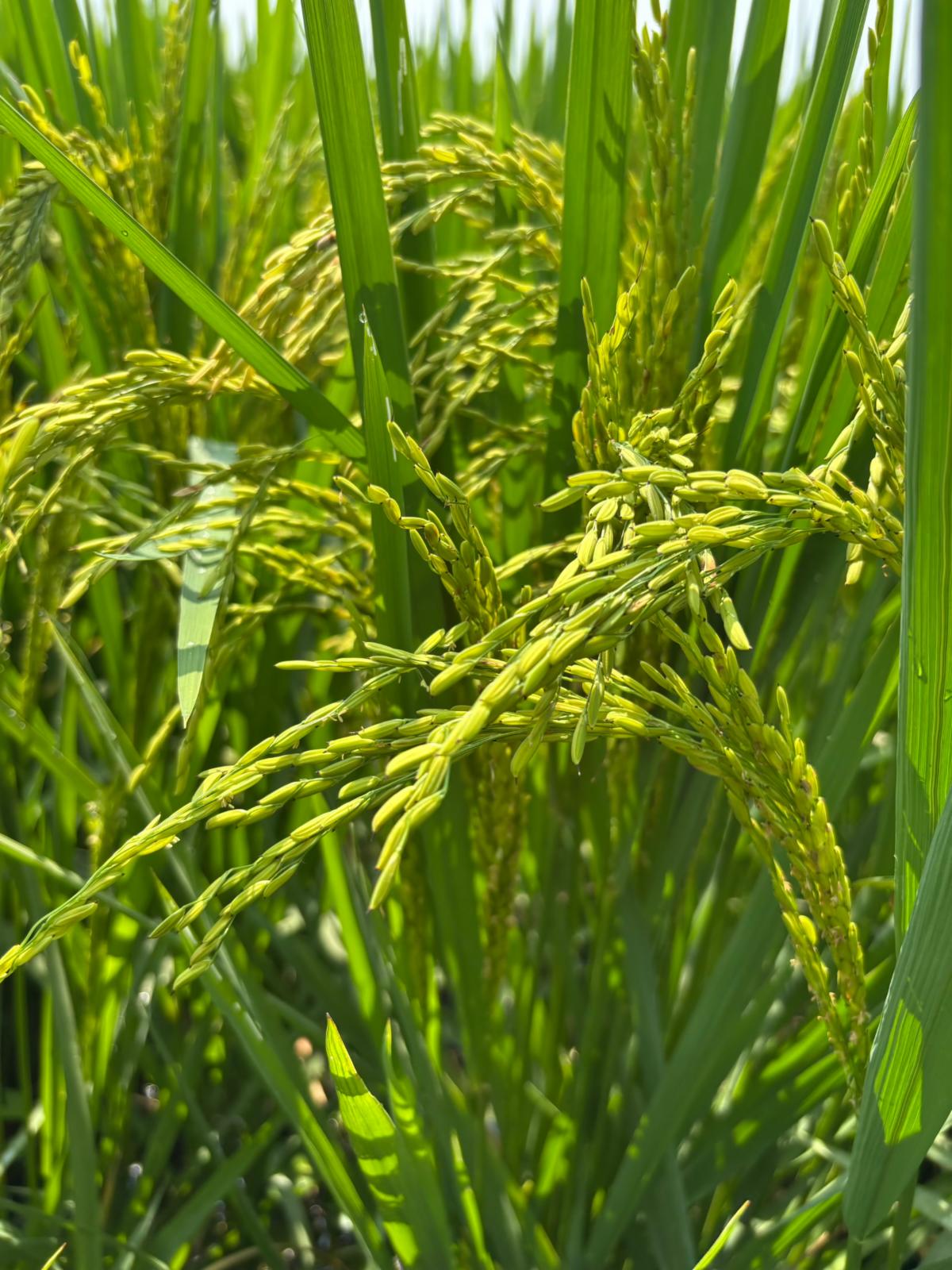
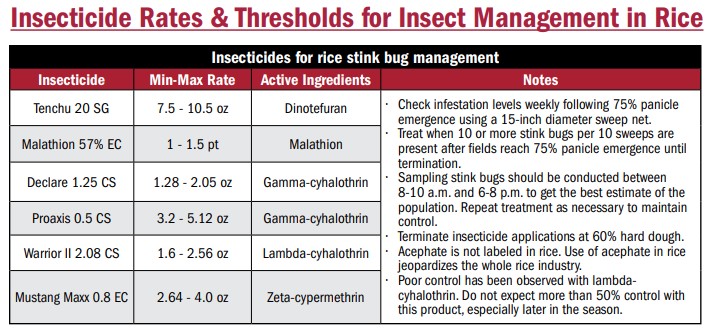
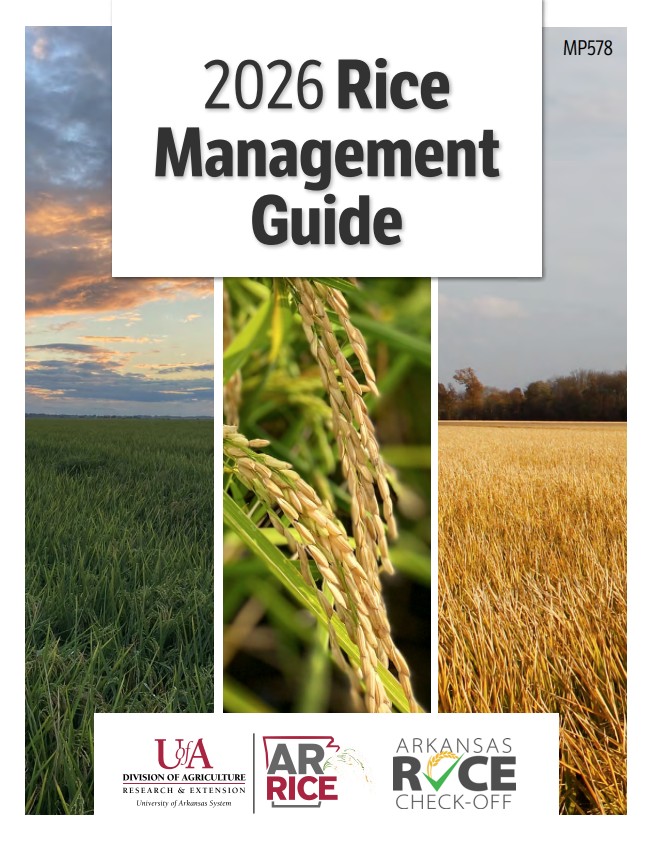
Rice is moving right along in the county. Don't close the door on rice stink bugs just yet. The darn things just won't go away so we need to keep scouting for them. This weeks update from Dr. Jarrod Hardke (in the link below) has some really good recommendations on draining fields. This is the time of year I get nervous about making calls because draining is a tough call, but Dr. Hardke has some good advice in his update.
| | Dr. Jarrod Hardke's Rice Update and 2026 Rice Management Guide | | |
Soybeans
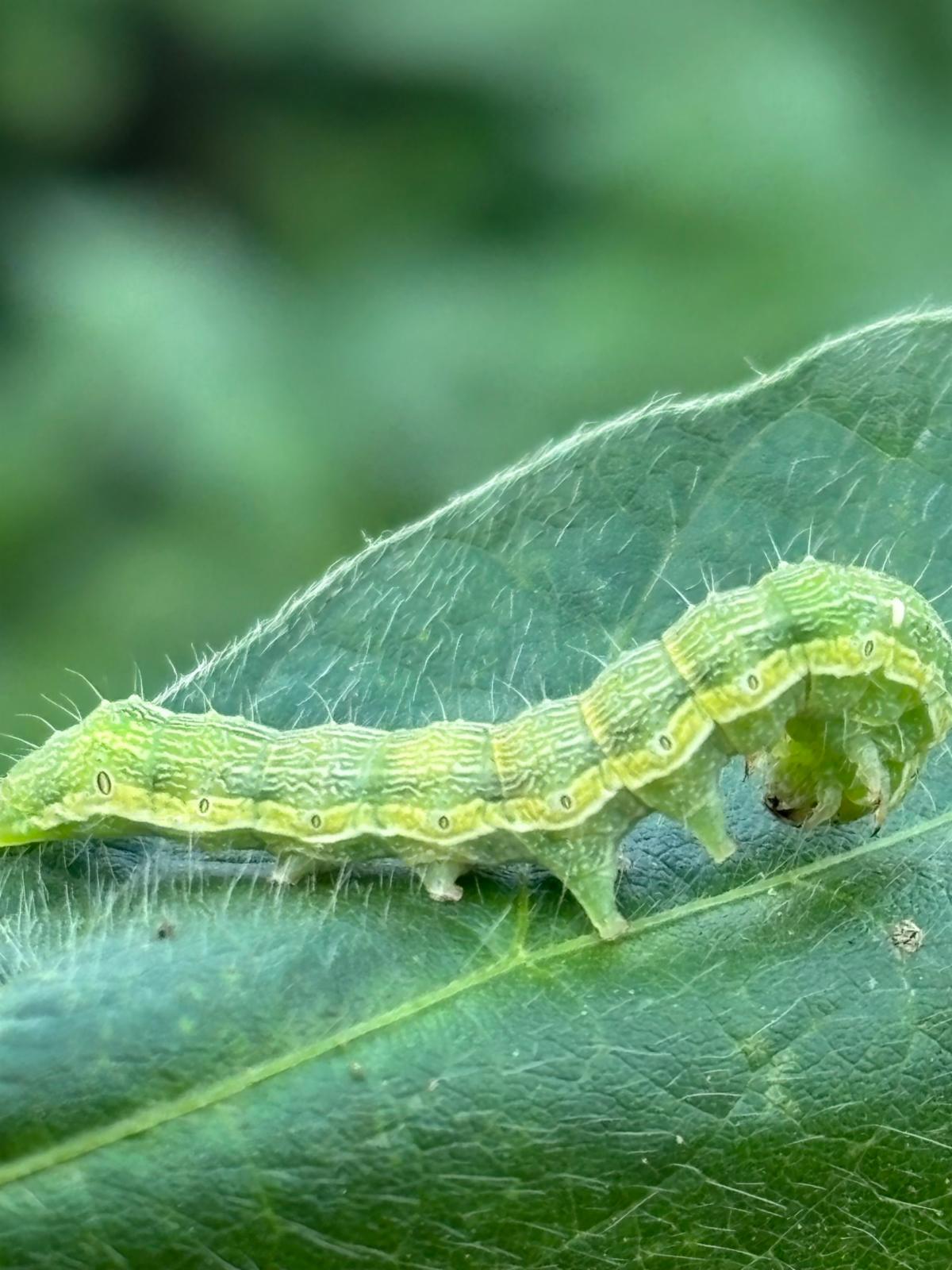
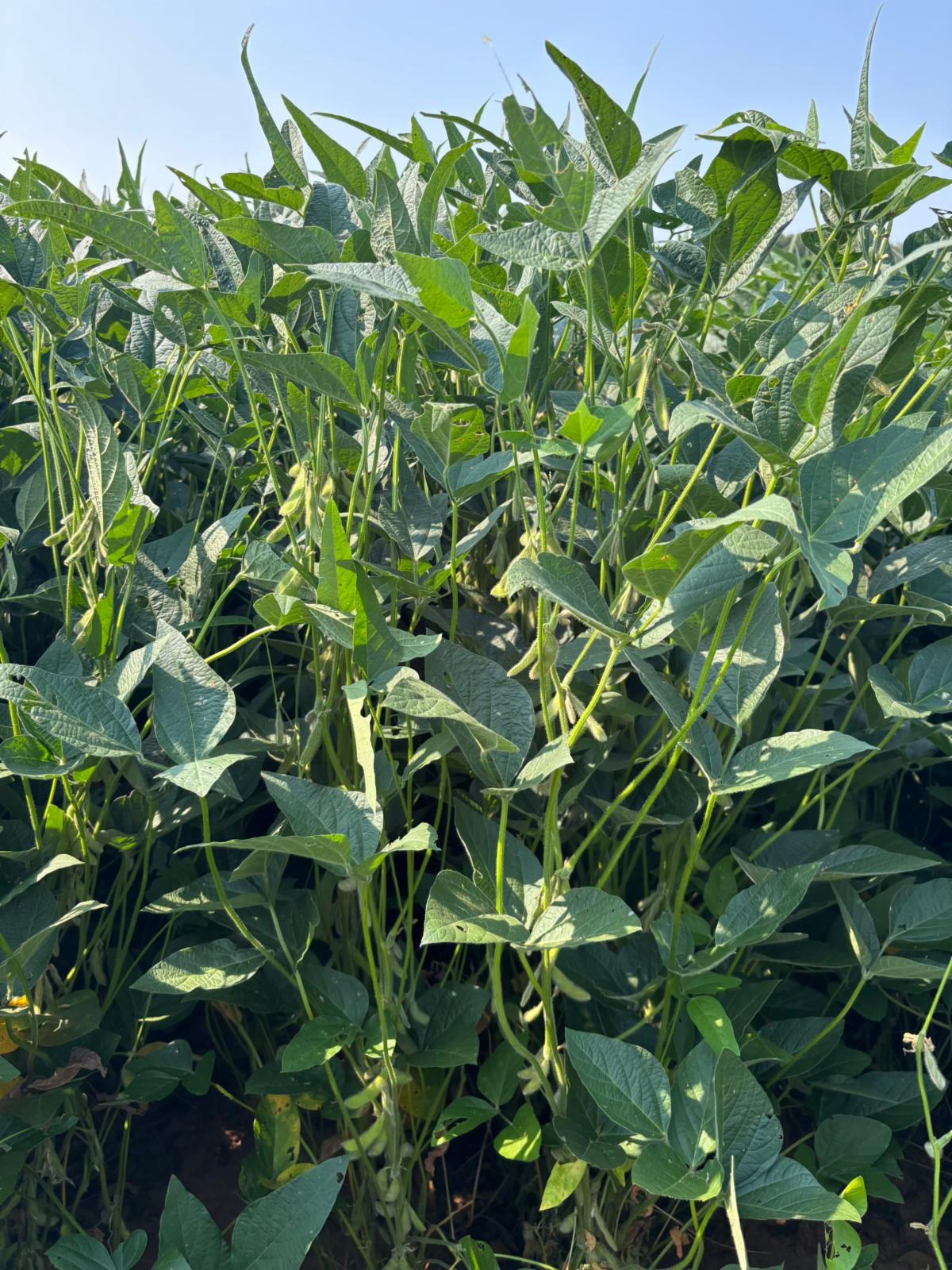
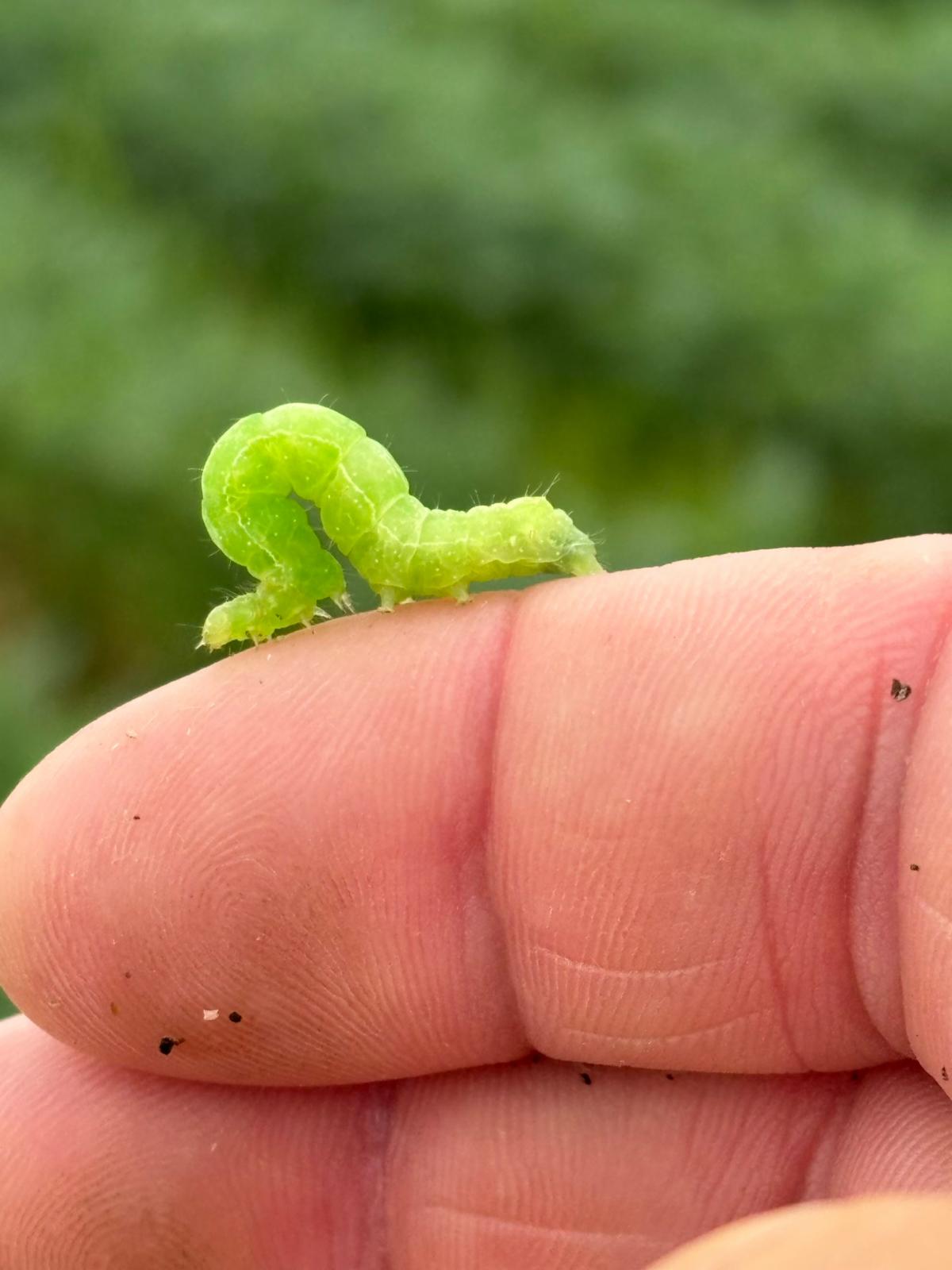
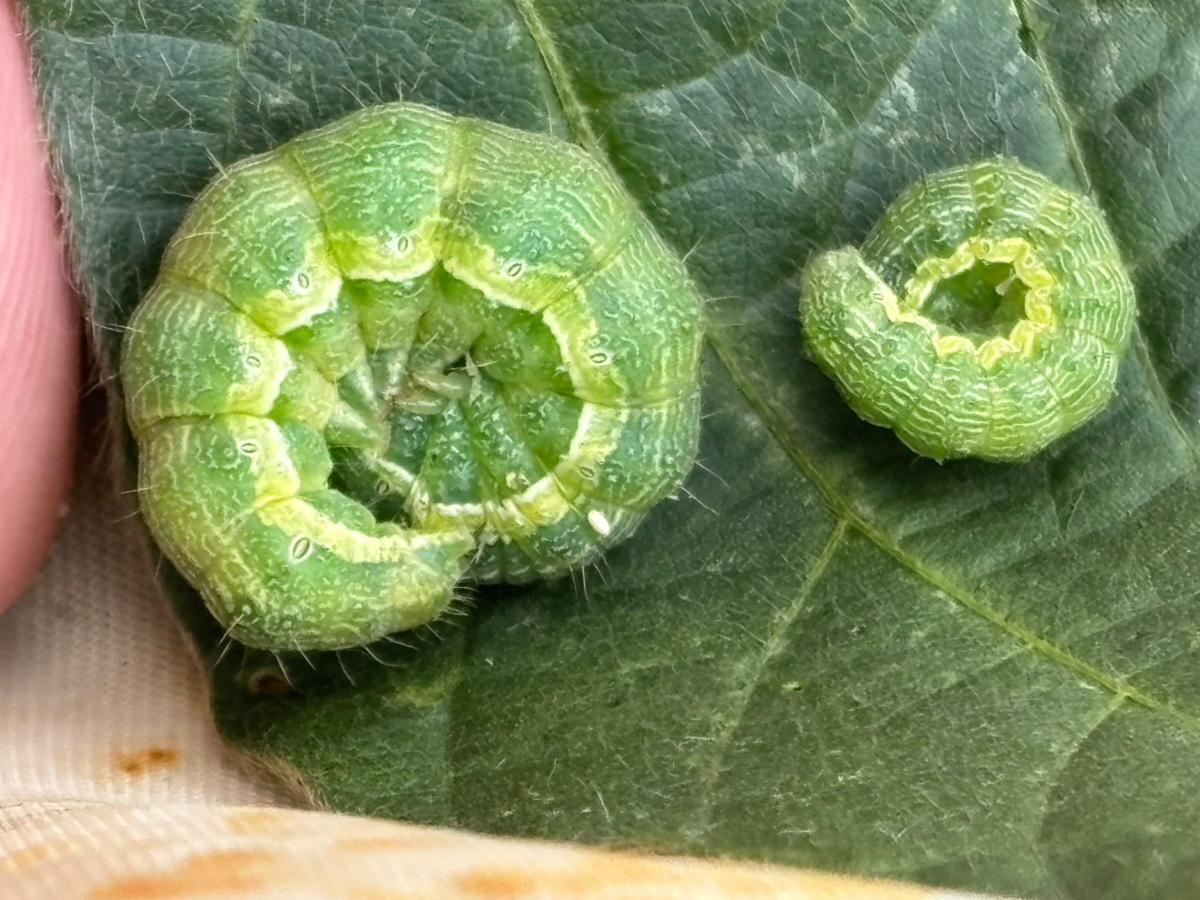
After scouting soybeans for the last few weeks I finally treated a field on Thursday for corn earworms. I was catching around 15 corn earworms per 25 sweeps, but just across the road on a field that was a little older with 15 inch rows that had lapped, I couldn't find the first earworm. I have also found the first velvetbean caterpillars this week. This is the one worm that makes me more nervous than any other worm. This worm can defoliate a field as fast as armyworms in a pasture. It has been several years since we have had them that bad, but I always want to keep an eye on them. Velvetbean's look a lot like corn earworms except they wiggle very violently when touched. Corn earworms will curl up in a "C" when they are touched. Both of these worms have four prolegs. That is a big difference between these and the loopers which have three prolegs. I am also still catching several cabbage loopers out there. We just need to keep an eye on this complex of worms and make sure we don't let them get ahead of us.
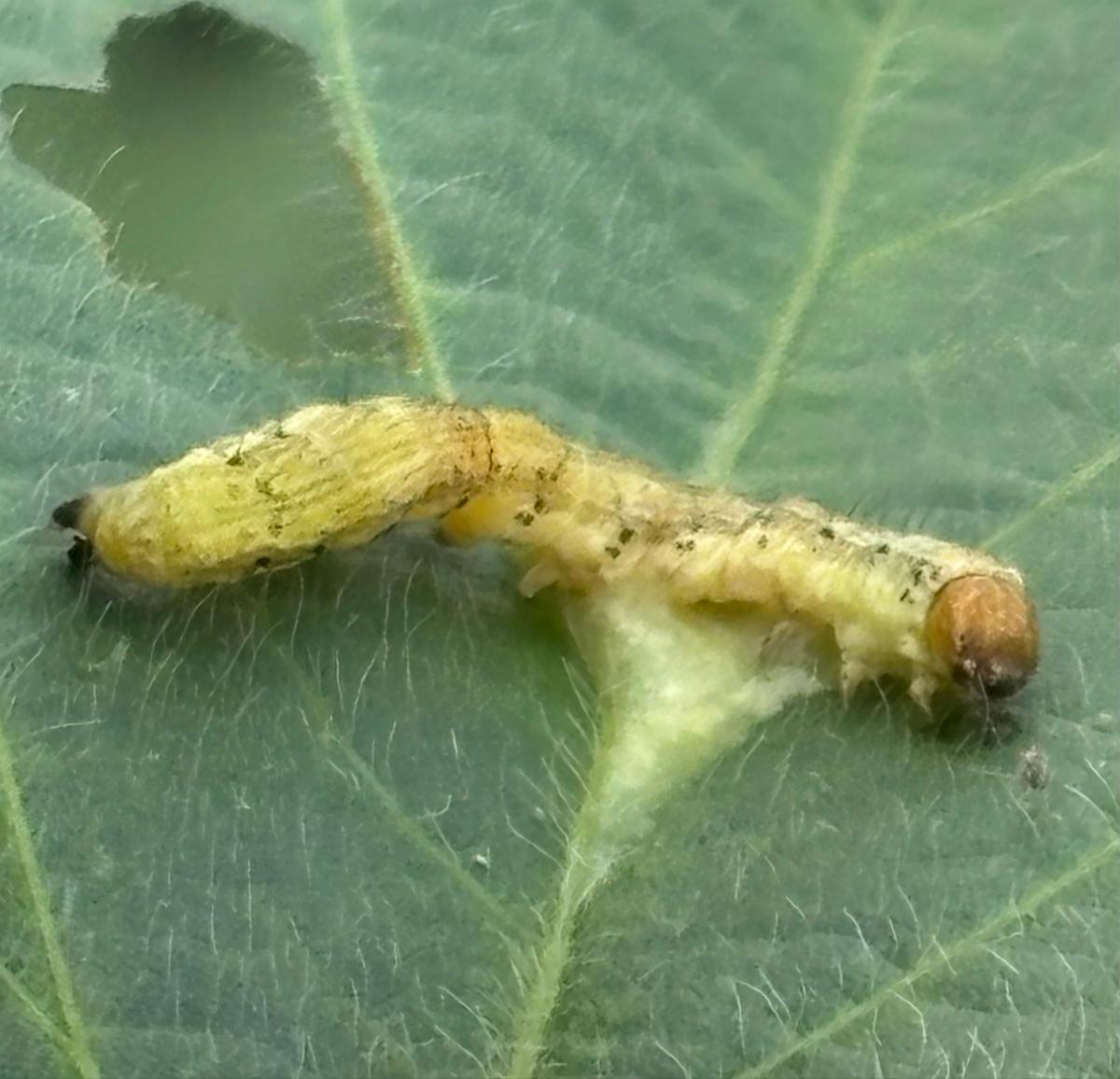
I did find something else interesting in a soybean field on Thursday. I found a corn earworm on a leaf that had died from a natural virus. Hopefully this will keep spreading around and help control the corn earworm population!
| | Corn Earworm with natural virus working on it. | Cabbage looper with the characteristic loop and three prolegs. | | Corn Earworms curled up in the "C" | Velvetbean caterpillar. Very similar to corn earworm with four prolegs but wiggle violently when touched. | | |
Wheat
The preliminary yields from the Arkansas Wheat Variety Testing program are now available.
To view the results click the link below.
| | |
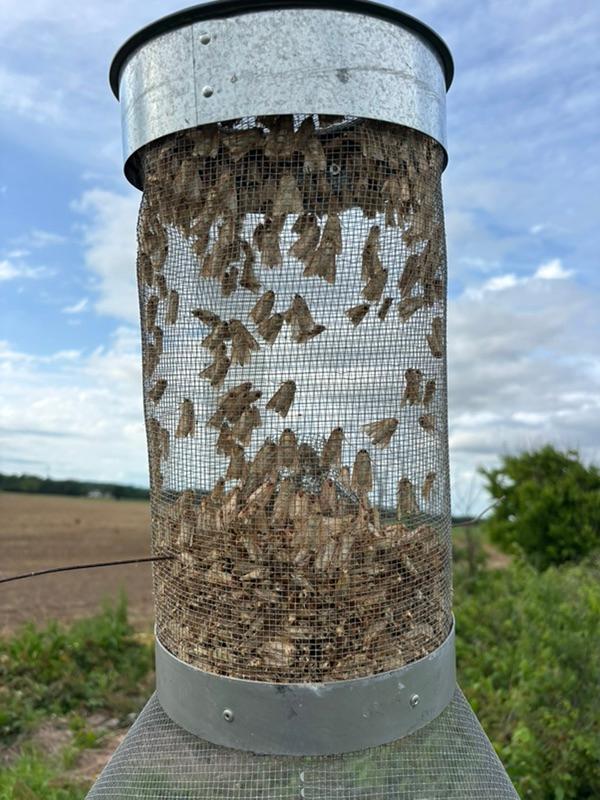
Corn Earworm Moth Traps
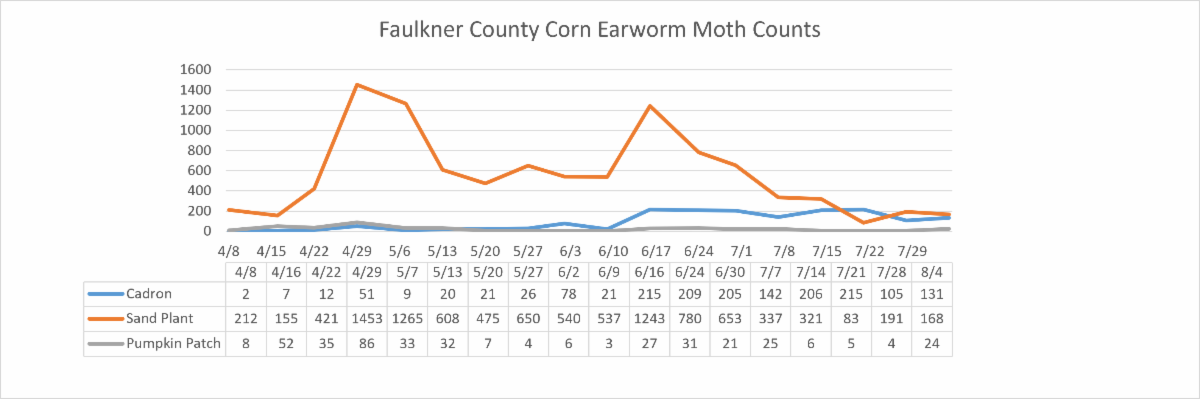
Corn Earworm Moth Counts for August 4, 2026
Cadron - 131
Sand Plant - 168
Pumpkin Patch - 24
| | |
The Crop Insurance Premium Implications of the USDA EARP Rule Reversal
Hunter D. Biram, University of Arkansas
Francis Tsiboe, Agricultural Risk and Policy Center at North Dakota State University
In the original USDA final rule for Expanding Access to Risk Protection (EARP), the 5 percent prevented planting buy-up option was eliminated, removing a targeted premium surcharge of approximately 2 to 6 percent (based on 2025 rates). However, during a July 21, 2026, Senate Agriculture Appropriations Committee hearing, USDA Secretary Brooke Rollins stated that USDA is "100% supportive" of reinstating the 5 percent prevented planting buy-up option. Because the original version of this newsletter was written before that announcement, the analysis reflects the policy as initially released. Nevertheless, the discussion remains relevant for understanding the producer-paid premium implications if the buy-up option is ultimately reinstated.
We begin by noting that replacing the prevented planting buy-up option with higher coverage levels expands the insured liability base and generally increases gross premiums. Whether this adjustment ultimately raises producer out-of-pocket costs depends critically on the structure of premium subsidies. Holding insured acres, insurance plan elections, and unit structure choices fixed at their observed values from 2011 to 2025, we use a counterfactual simulation to evaluate producer-paid premiums in southern states with insured rice acreage under the One Big Beautiful Bill (OBBB), which takes effect beginning with the 2026 commodity year.
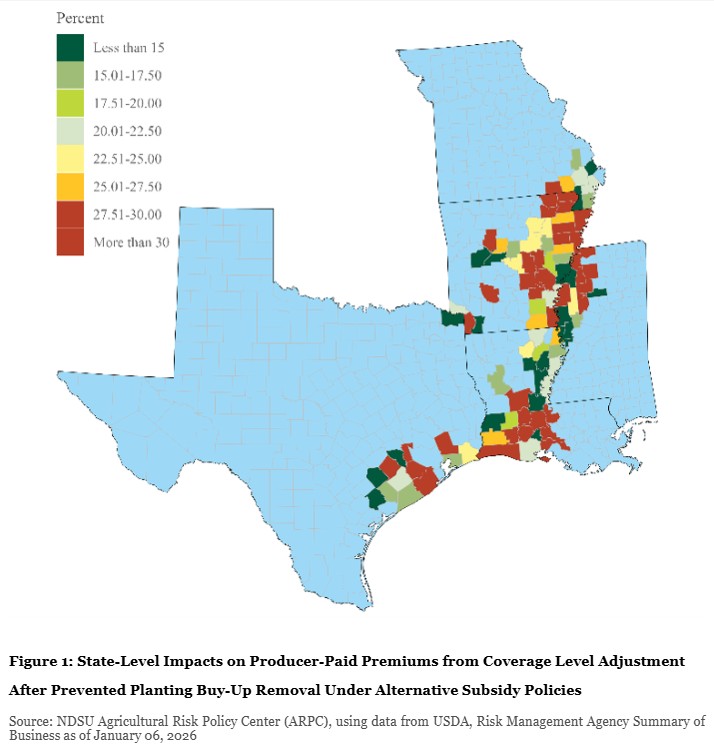
We find that all counties in southern states with insured rice acreage will face an increase in producer-paid premium due to the elimination of the 5 percent prevented planting buy-up (Figure 1). The average increase in producer-paid premium will be 23% with the most likely increase being greater than 29%. Nearly half of the rice-insured counties in southern states will see a more than 25% increase in producer-paid premium with increase in per acre cost between $2.97 per acre and $5.53 per acre. Notably, over half of the counties in Arkansas, which has the greatest share of rice production and insured acreage in the U.S., will see a more than 25% increase in producer-paid premium which equates to $2.95/acre in out-of-pocket cost.
Two key mechanisms explain the variation in premium increases illustrated in Figure 1. First, the magnitude of the increase depends on a producer’s initial coverage level. Transitioning from lower to higher coverage levels mechanically raises total premium liability, even after accounting for the elimination of the 2–6% PP buy-up surcharge. Second, the overall effect is shaped by the amount of additional premium subsidy available under OBBB. Because subsidy rates differ by both coverage level and unit structure, the interaction between post-OBBB coverage choices and unit elections determines whether the removal of PP buy-up costs is partially offset or further amplified.
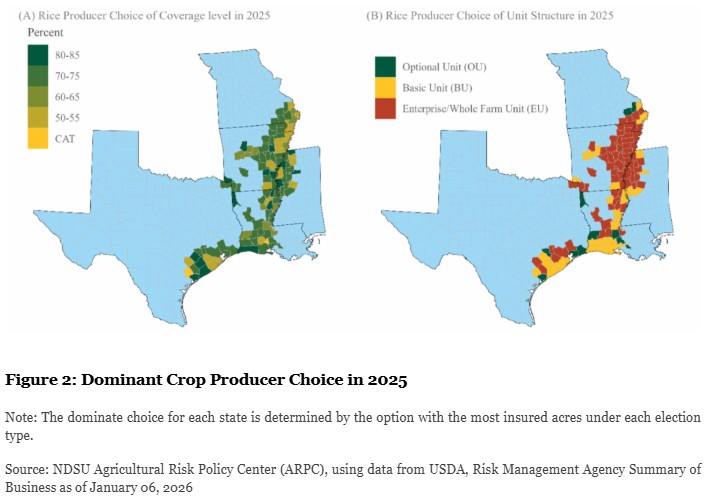
A comparison of Figure 1 and Figure 2 reveals substantial differences across unit structures and coverage levels. Rice producers insured under Basic Units at the 60–65% coverage level experience the smallest premium increase, averaging 7.93% (roughly $10 per acre). By comparison, producers insured under Enterprise/Whole Farm Units at the 70–75% coverage level face much larger increases, averaging 27.44% (approximately $50 per acre). More generally, preserving equivalent PP protection following the elimination of the buy-up option results in the largest premium increases for producers using Enterprise/Whole Farm Units (25.32%), followed by Basic Units (18.86%) and Optional Units (17.5%). County-level variation in underlying base premium rates further contributes to the geographic differences in producer-paid premium impacts.
| | Beef, Small Ruminants, & Forages | | |
Forages
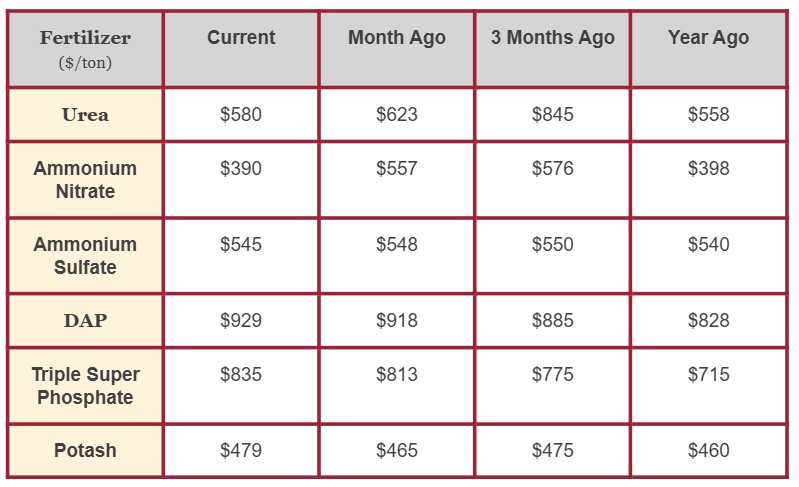
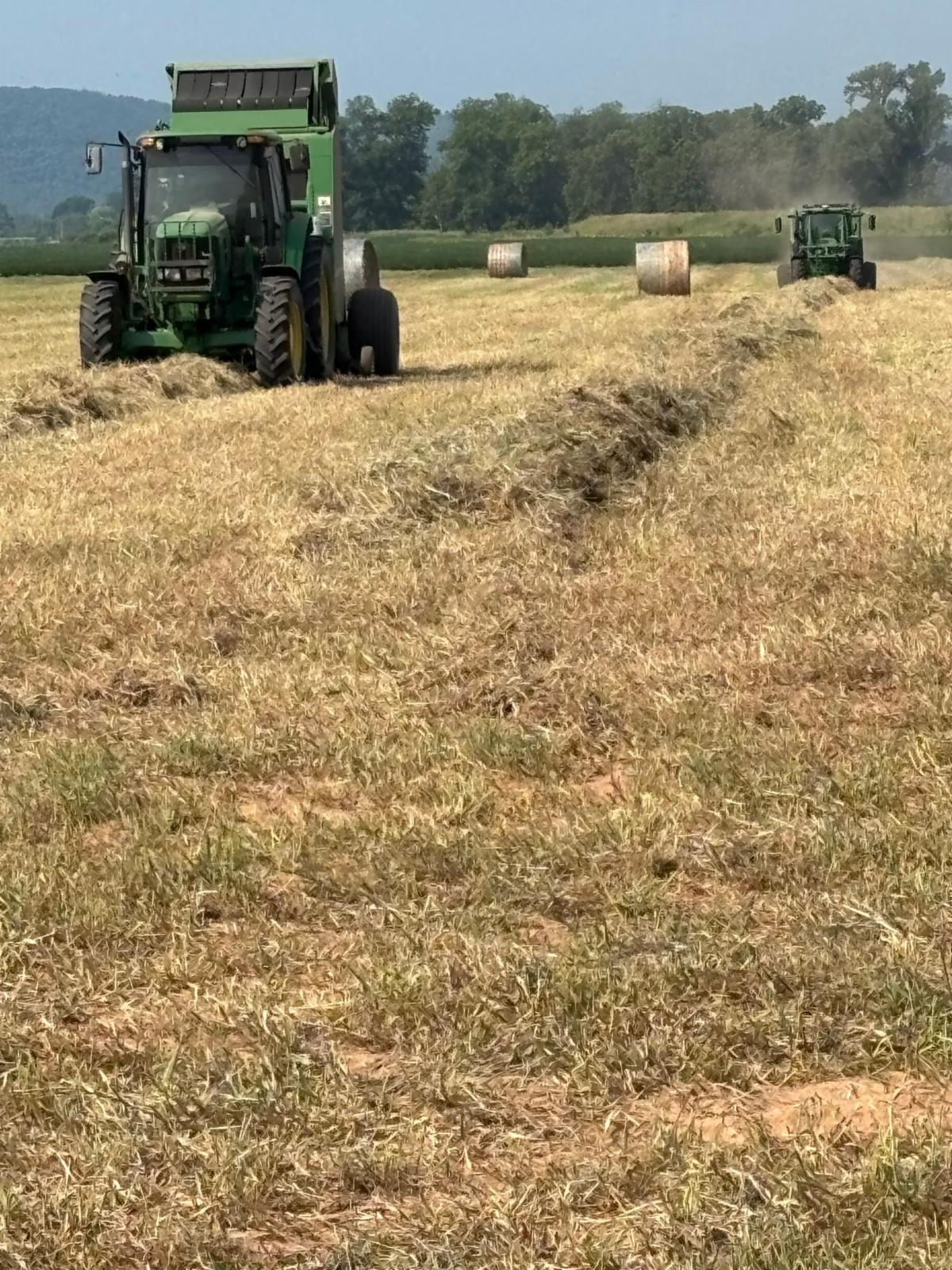
Fields around the county are starting to really show the stress from the dry and the heat. Spotty showers at the end of the week brought a little relief to some areas, but honestly there isn't a lot in those small rains. So with that being said, where do we stand this time of year? As we continue to harvest hay, I think the question that keeps coming up is do you need more hay? If you don't need more hay, I think don't worry about fertilize and just let what happens happen. If you do need more hay, then that is where things get a little iffy. If we can catch a rain, then fertilize will help. But I would want the chances to be really high for a rain if I was to apply any kind of fertilizer right now. Maybe 75 to 100 pounds of Urea is all I would chance right now with this heat and these rain chances. These are tough times for Faulkner County forages.
| |
Armyworms
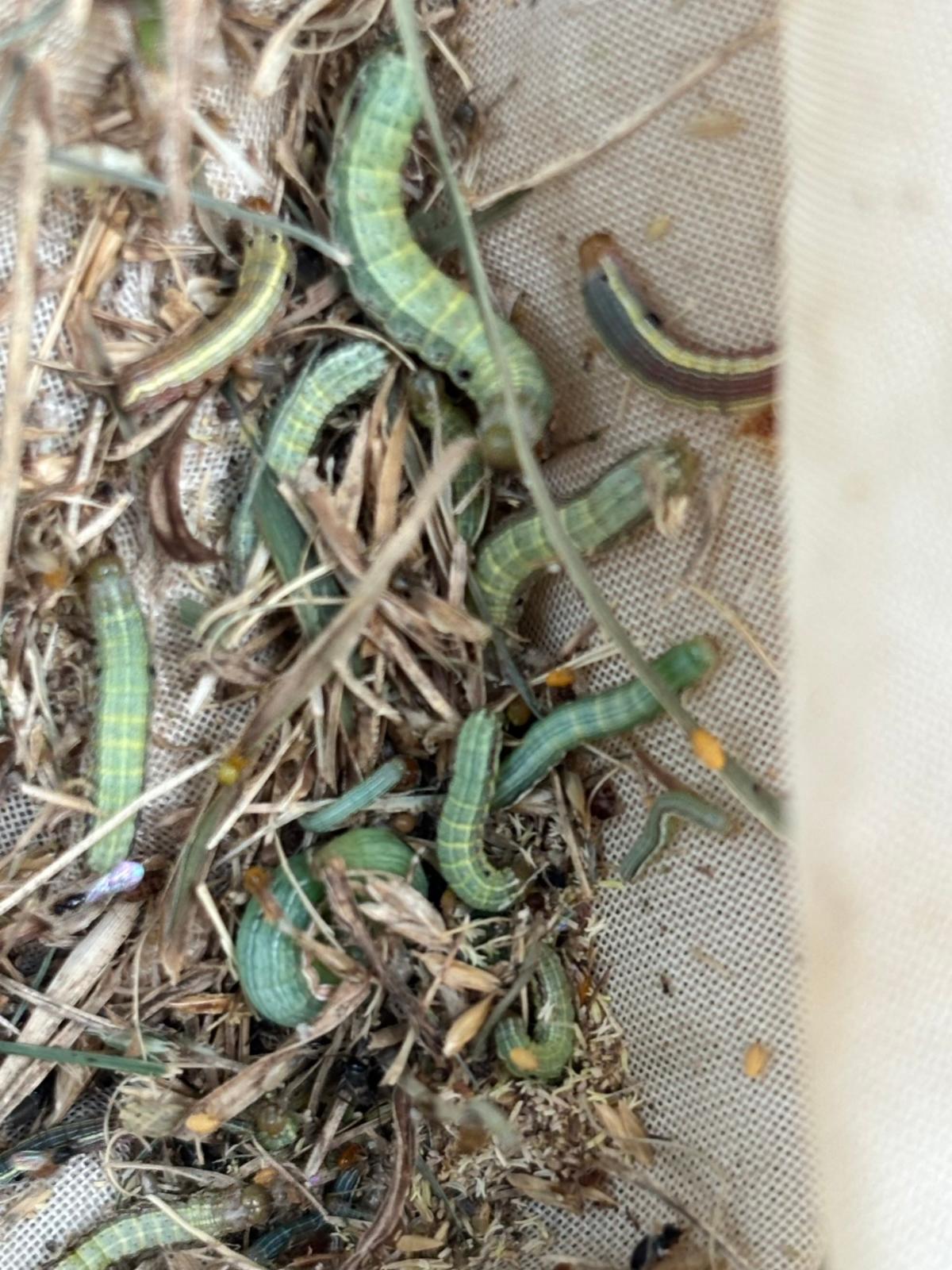
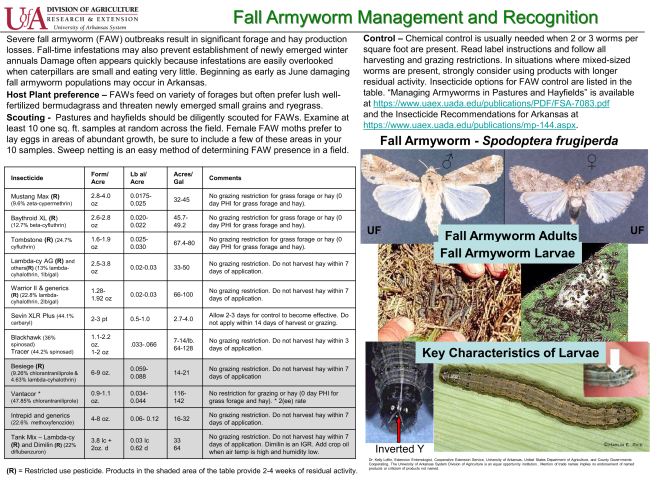
I am not hearing much on the armyworm front. I haven't found anymore since last week, and nobody has contacted me and said they have found any. Keep on the lookout and monitor all forage fields for any sign.
| | |
Ground Beef Prices Rising Fastest
Derrell S. Peel, Oklahoma State University Extension Livestock Marketing Specialist
Much has been said and written about rising beef prices, and especially ground beef prices, for many months. Since 2022, the year of record beef production, and the beginning of the current bull market, wholesale and retail beef prices have risen with strong beef demand and declining beef production. Choice wholesale boxed beef prices have increased by 44.1 percent from the 2022 average and all-fresh retail beef prices are up 29.8 percent. Total beef production has decreased 10.5 percent from the 2022 average to current levels.
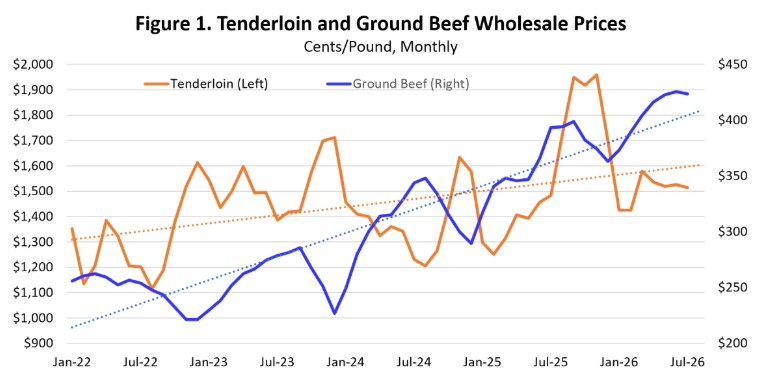
Beef consists of many products, each in individual markets, and not all change at the same rate reflecting differences in supply and demand for each product. Across the range of beef products, Figure 1 shows monthly wholesale values for beef tenderloin and a representative ground beef formulation of a 7:1 mixture of 90 and 50 percent lean trimmings resulting in an 85 percent lean product. The trend lines for each price series confirm that ground beef prices have been rising faster than tenderloin (and most all other muscle cuts).
| |
The relatively faster increase in ground beef prices is a function of demand and supply factors. In general, as beef prices increase, consumers are likely to rely even more heavily on ground beef to blunt the impact of higher beef prices, thus increasing ground beef demand relative to other beef products. In Figure 1, wholesale beef tenderloin prices have increased an average of 26.6 percent since 2022 and 85 percent lean ground beef prices are up 60.7 percent. On average prices for the highest value steak cuts including tenderloin, ribeye and strip loin wholesale prices are up 33.6 percent while prices for cuts including flank steak, tri-tip, top sirloin and top round are up an average of 42.7 percent.
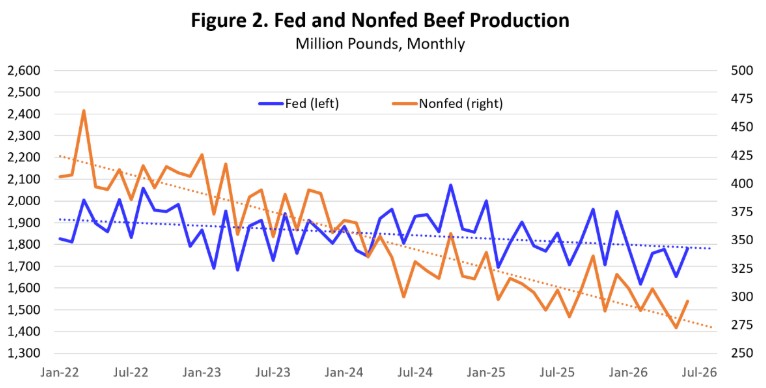
Not only is the demand for ground beef demand higher, the supply of ground beef has decreased faster than for fed beef. Ground beef relies heavily on lean processing beef from cull cow and bull slaughter. Figure 2 shows that the supply of nonfed beef (cull cows and bulls) has decreased faster than the production of fed (steer and heifer) beef.
| | The production of nonfed beef is down more sharply than fed beef because cow slaughter has decreased 30.5 percent since 2022 while fed slaughter is down 12.7 percent. Moreover, declining fed slaughter is partially offset by a sharp increase in steer and heifer carcass weights, while cow carcass weights have increased modestly. Going forward, nonfed beef production may decrease more slowly as the beef cow herd and cow slaughter stabilize. However, fed beef production is expected to continue decreasing with tighter fed cattle supplies expected through 2027 at least. | | |
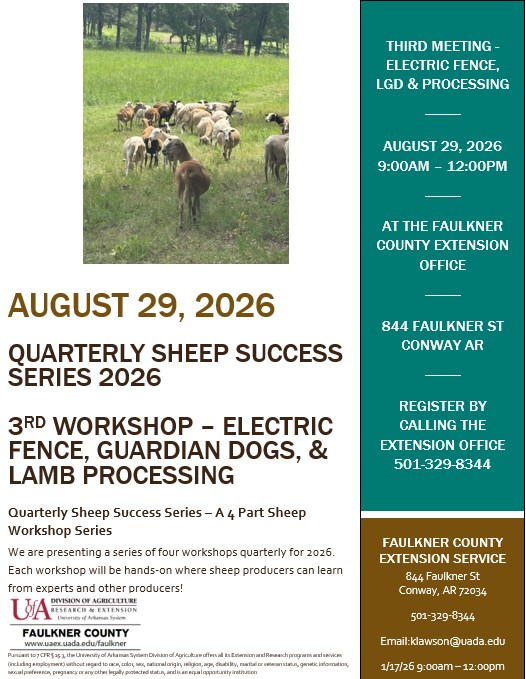
Faulkner County Sheep Success Series
It is time for our 3rd quarterly meeting of the 2026 Sheep Success Series. The next meeting will be held on August 29 at the Faulkner County Extension Office. We will start at 9:00 and go until noon. Our speakers include:
Kenny Simon - Arkansas Extension Forage Instructor - Electric Fencing
Bill Constanzo - Texas A&M - Guardian Dogs (zoom)
Janeal Yancy - University of Arkansas Meat Science - Custom cuts of Lamb
Please call the Extension Office to register, 501-329-8344.
| | |
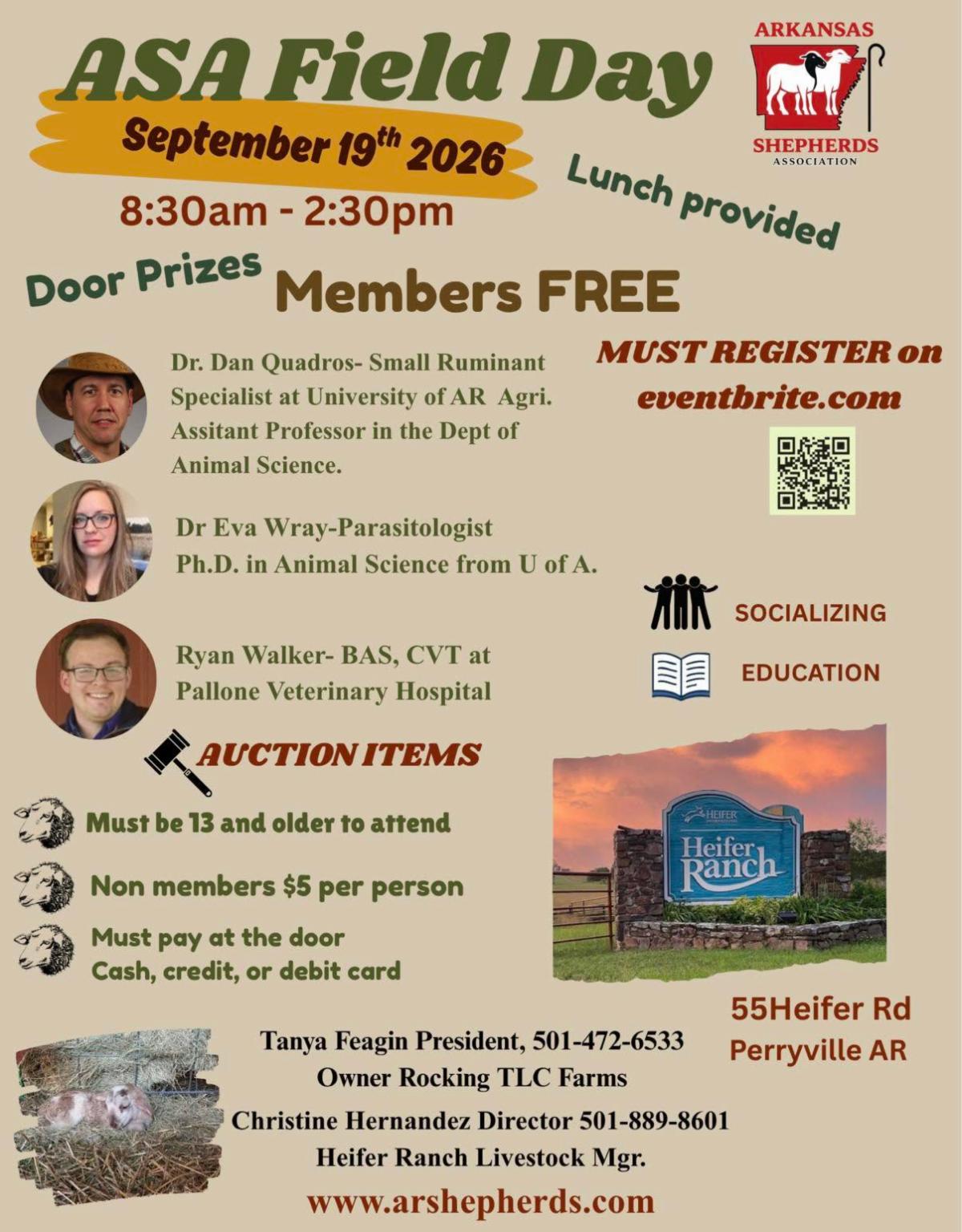
Arkansas Shepherds Association Field Day
ASA Field Day — Saturday, September 19, 2026
8:30am - 2:30pm
Heifer Ranch, 55 Heifer Road Perryville, AR
Join us for a full day of hands‑on learning, great speakers, door prizes, and silent auction items benefiting the Arkansas Shepherds Association.
Members attend FREE.
Non‑members: $5 per person, paid at the door.
Must be 13 and older to attend.
Everyone must register on Eventbrite to attend.
Topics include:
Nutrition
Hoof care and trimming
How to draw blood
How to give shots
Parasites
Signs/Symptoms
Identifying
Treatment
We’re excited to see producers from across Arkansas and surrounding states come together for education, community, and a great day at Heifer Ranch.
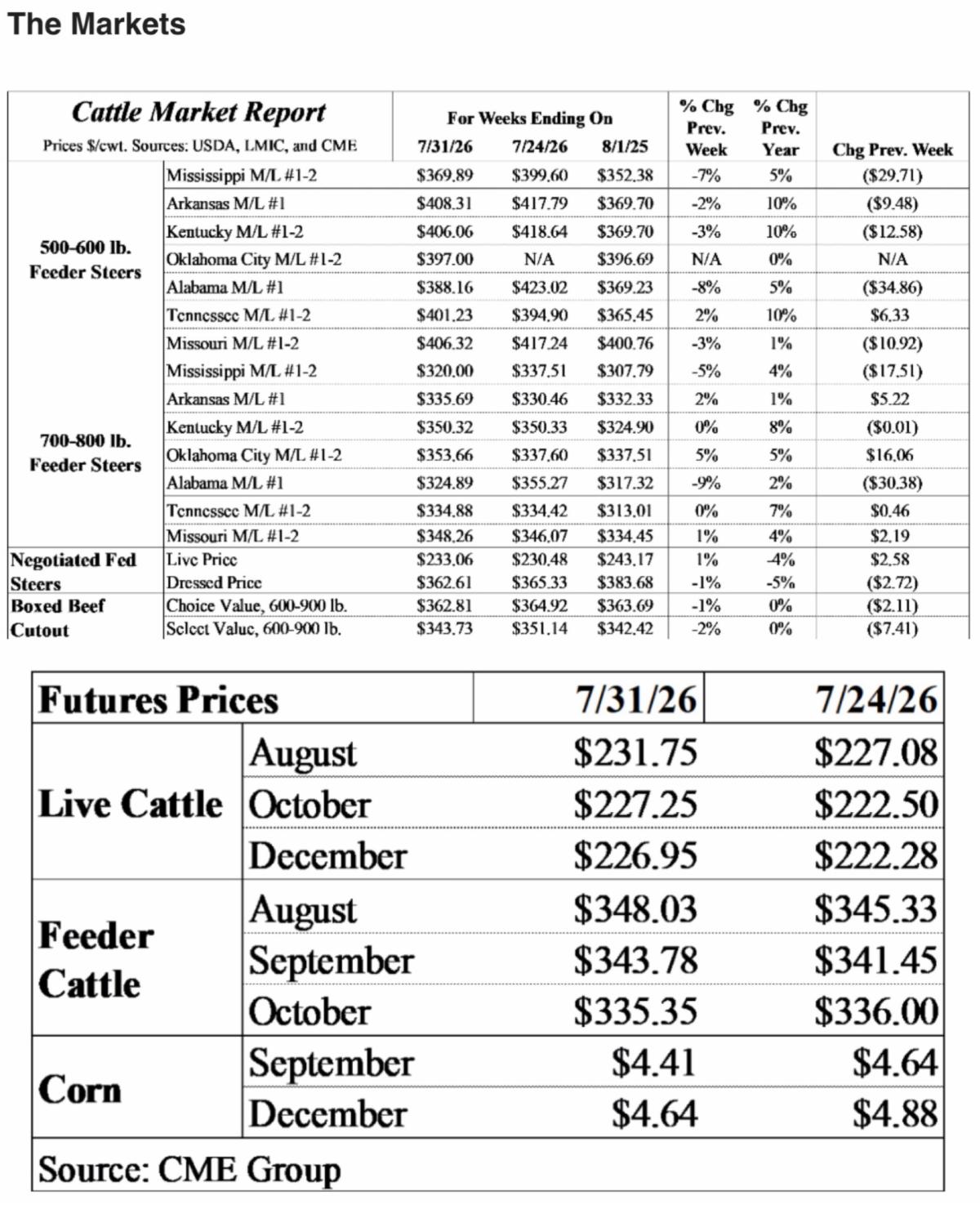
| | Here is this weeks Cattle Market Notes Weekly | | |
Pesticide Applicator Trainings
There will be no more in person Pesticide Applicator Trainings until this winter. If you need a license you can still do the training online. There is a link below for the online training and a link to check your license status.
| | |
Livestock Market Report
The following links are for the weekly livestock market report from the Arkansas Department of Agriculture website and the Livestock Auction Dashboard from USDA. Both sites have marketing data for all livestock sold at Arkansas Sale Barns.
| | |
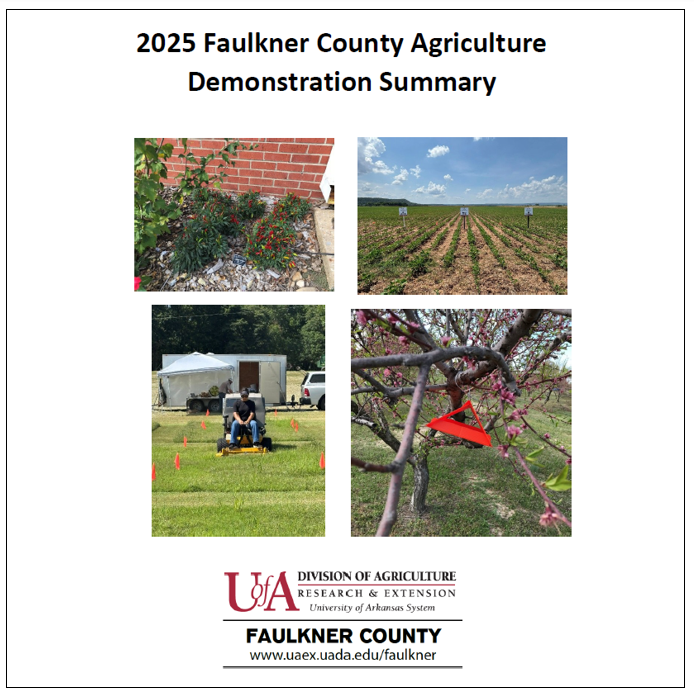
2025 Faulkner County Agriculture Demonstration Summary
The 2025 Faulkner County Agriculture Demonstration Summary is now available at the link below.
The 2025 Faulkner County Demonstration Summary is a collection of on-site demonstration results conducted in Faulkner County by local County Agents. Demonstrations are the cornerstone of the University of Arkansas System Division of Agriculture Cooperative Extension Service’s mission which is:
“We strengthen agriculture, communities, and families by connecting trusted research to the adoption of best practices.”
On-site demonstrations allow producers and homeowners to see firsthand how Extension recommended varieties and best management practices work in their counties and surrounding area.
| | |
Sign up for Text Alerts
You can now sign up for text alerts from me throughout the year. I have two areas you can sign up for which includes Faulkner Livestock or Faulkner Ag (Row Crop Updates). To sign up you can follow one of these links or use the QR Codes below.
| | Pursuant to 7 CFR § 15.3, the University of Arkansas System Division of Agriculture offers all its Extension and Research programs and services (including employment) without regard to race, color, sex, national origin, religion, age, disability, marital or veteran status, genetic information, sexual preference, pregnancy or any other legally protected status, and is an equal opportunity institution. | | | | |