Faulkner County Agriculture Update
August 8, 2025
| | |
Weather
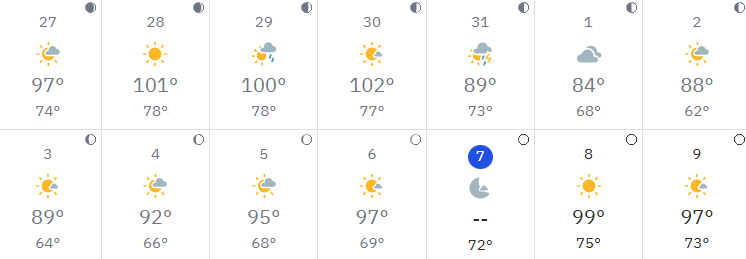
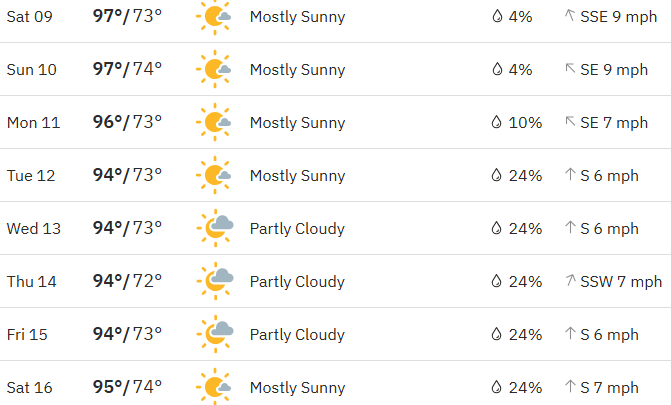
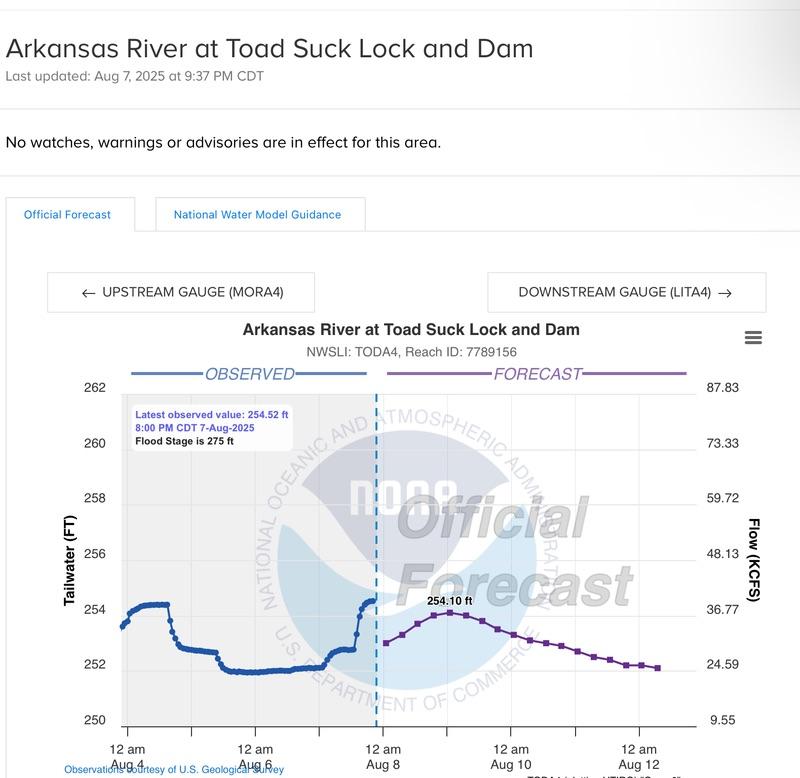
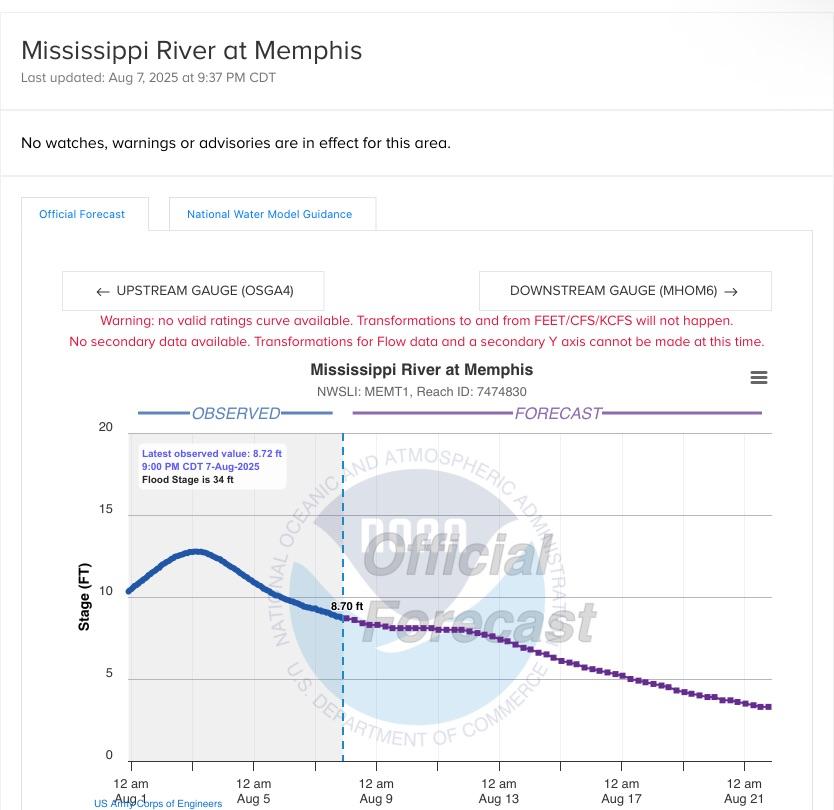
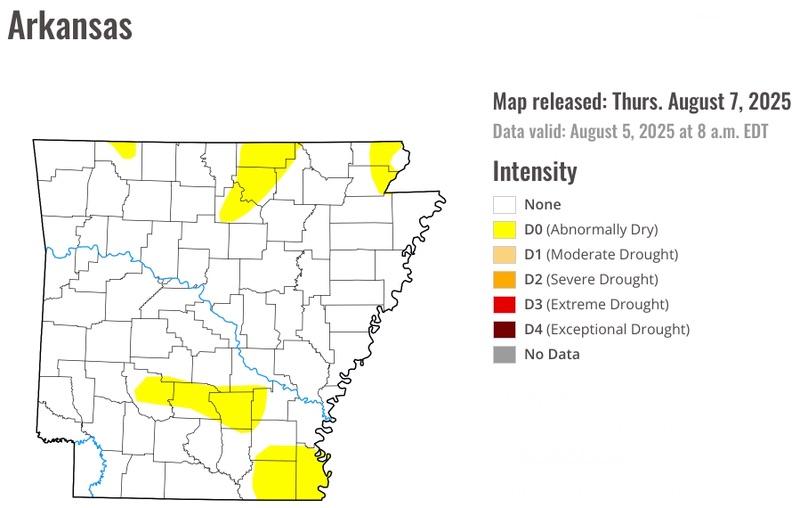
Temperatures started creeping up the end of this week with no rain. We are starting to get really dry in certain areas of the county. If you look at the drought monitor later in this newsletter you will see that drought is slowly moving into the state. Hopefully next week will bring some much needed rain.
| | Arkansas and Mississippi River | | |
Corn
Corn is drying down pretty fast in the county. We will see the first corn harvested probably next week.
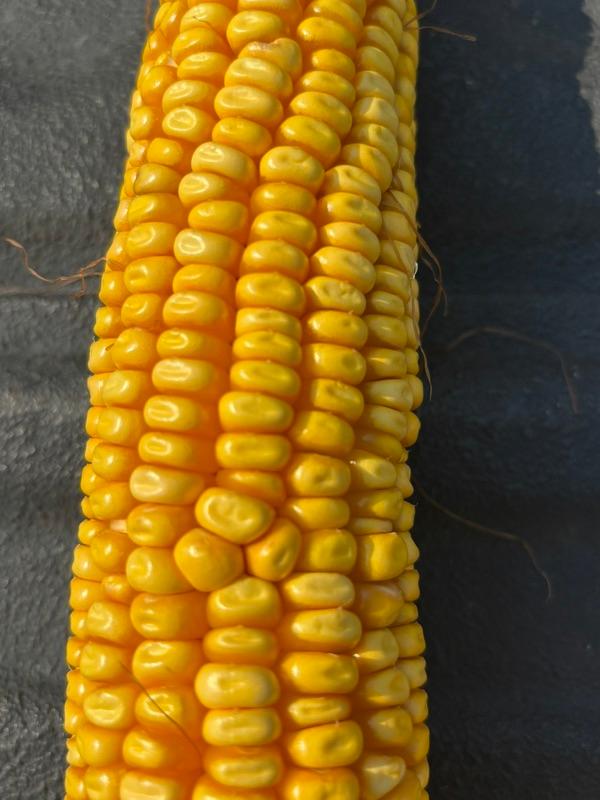
I have pulled a few cobs that look like the picture here. It will have odd rows or three kernels instead of one. This is probably due to some kind of environmental stress or maybe even hybrid dependent, but in the end it shouldn't lead to any yield loss. It just really looks odd.
| | |
Rice
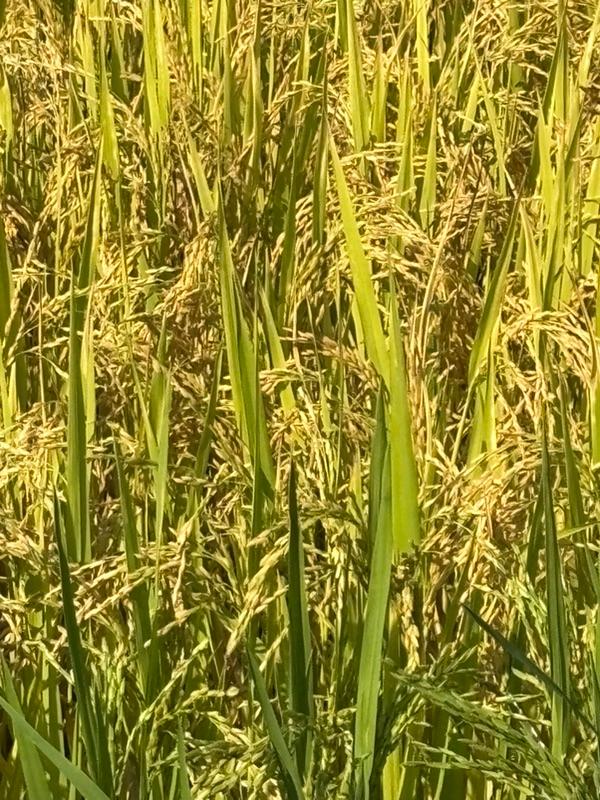
Most of the early planted rice hasn't been drained, but the pumps are off and the water is slowly drying.
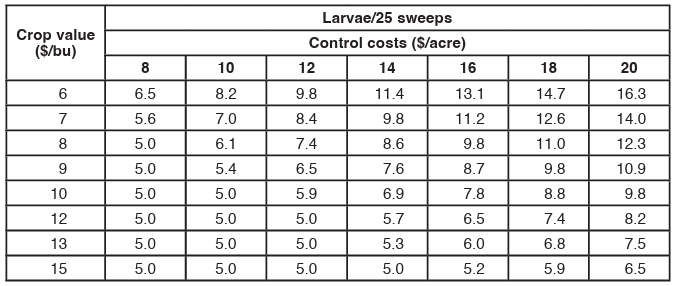
Later planted fields are headed good and stink bug levels are still up. I talked to Hank Chaney and he reported he was seeing 15 rice stink bugs or more on 10 sweeps, so treatments continue.
| | Dr. Hardke's Latest Rice Update | | |
Soybeans
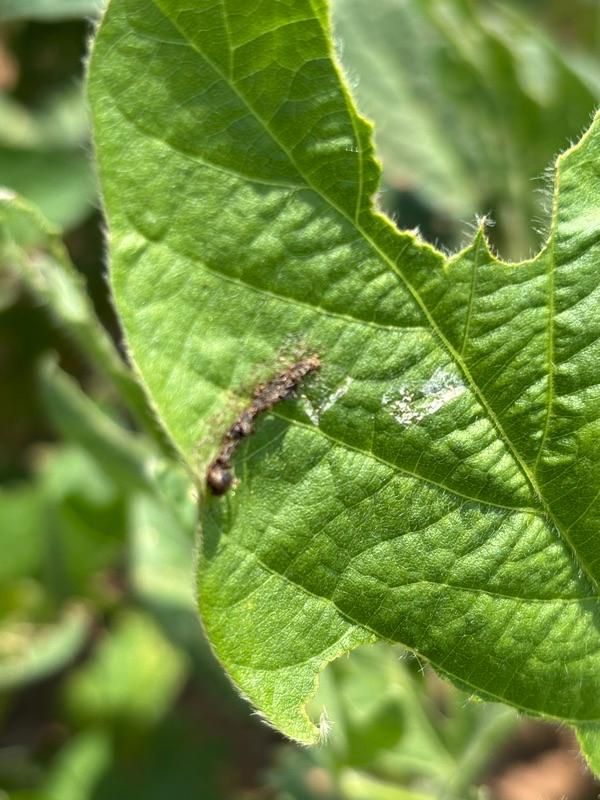
Worms continue to be the main issue on soybeans in Faulkner County. I am still seeing corn earworms at treatment levels on several small soybeans. We had a field sprayed with Heligen last week and it did a really good job. Our initial corn earworm numbers went down to about 1/3 of the original population in a week and we were seeing new leaves that weren't getting damaged. I found a couple of mummies showing that the virus is out there in the field. The picture here shows a mummy of a worm that was infected. Several of the corn earworms also looked sick and lethargic with a few sweating from the virus.
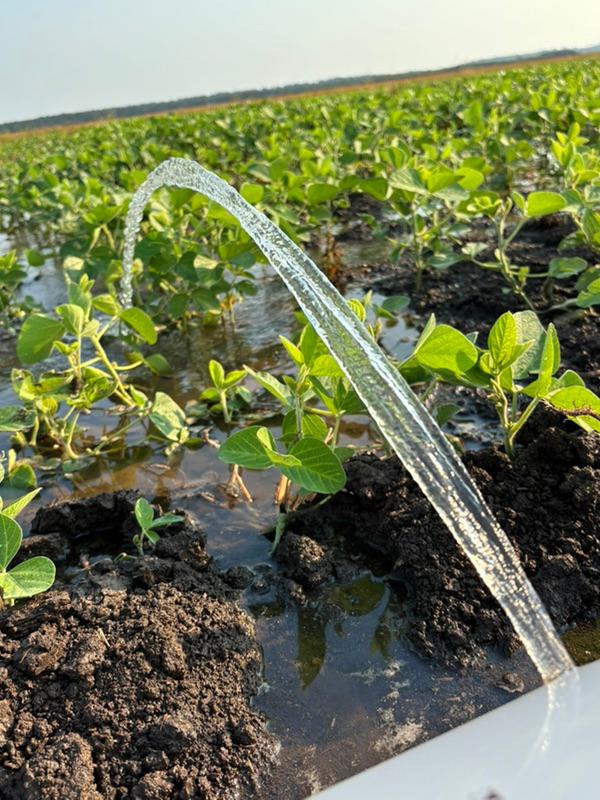
Keep irrigation going on beans as we try to get through this dry hot spell. Non irrigated soybeans need a rain bad. We are seeing some soybeans drying up that had a really good yield potential.
| | |
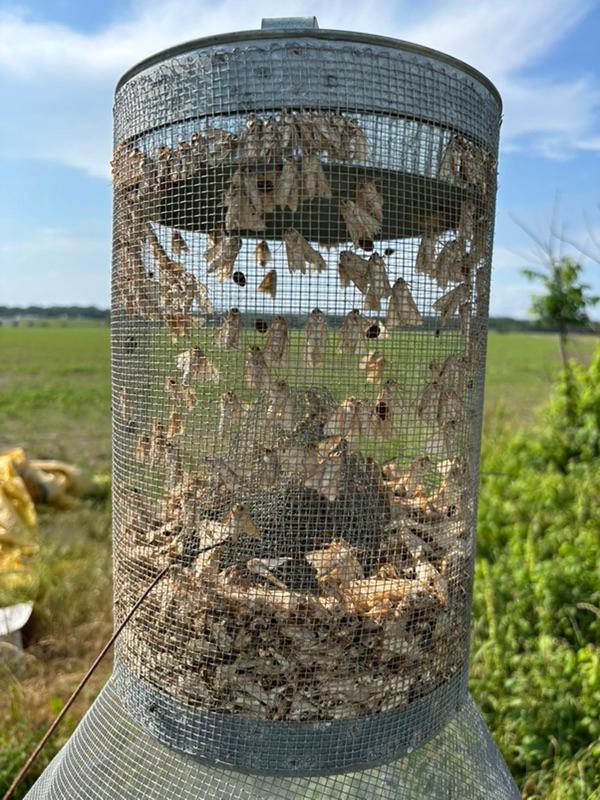
Corn Earworm Moth Traps
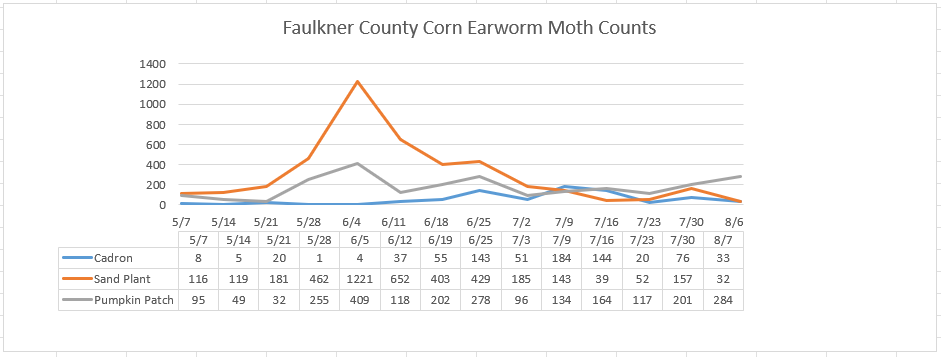
Trap number went down in tow of the three traps this week with the pumpkin patch trap increasing slightly. That trap is close to some young corn that may be attracting the moths.
Cadron - 33 moths
Sand Plant - 32 moths
Pumpkin Patch - 284 moths
| | |
Do Daily Large Export Sales Reports Move Markets?
Dr. Eunchun Park, Assistant Professor, University of Arkansas
Dr. Andrew McKenzie, Professor and Fryar Endowed Chair, University of Arkansas
Dr. Hunter D. Biram, Assistant Professor and Extension Agricultural Economist, University of Arkansas
Background
The importance of the United States Department of Agriculture (USDA) reports to price discovery is well documented. A vast amount of literature illustrates the value and market impact of a wide range of scheduled USDA reports (Massa, Karali, and Irwin, 2023). For example, futures prices have been shown to react quickly and significantly to the release of World Agricultural Supply and Demand Estimates (WASDE), crop production, and grain stock reports, indicating that the reports are "newsworthy" and that futures markets efficiently embody the information into prices. However, one USDA report that has received no attention – despite its potential importance to commodity price discovery – is the Daily Large Export Sales Reports (DLESR).
DLESR is unlike other USDA reports in that is an unscheduled and unanticipated market event, and as such, futures price reactions in response to their release are of particular interest to policymakers. Using export sales data from the USDA Foreign Agricultural Service (FAS) and intraday 1-minute interval Chicago Mercantile Exchange (CME) corn and soybeans nearby futures price from Barchart, we explore commodity futures price discovery behavior around the release of these reports. Specifically, we focus on understanding the unique reporting lag of two days between the occurrence of large sales and their announcement, a characteristic not present in other USDA reports.
Weekly Export Sales Reports
The FAS Export Sales Reporting Program consists of weekly and daily reports. The weekly report aggregates data on U.S. export sales across a broad range of commodities by quantity and country destination, aiding in evaluating export demand levels, market identification, and the competitive stance of U.S. commodities in the global market. This involves approximately 500 exporters submitting around 1,800 data entries weekly through various digital and traditional mediums. To uphold confidentiality, as mandated by law, all data is aggregated across exporting firms before public release. The weekly report is released every Thursday at 7:30 AM CT, and hence, this release schedule is known and anticipated by the market in advance. The limited body of research examining the information content of weekly reports has found little evidence to suggest that commodity prices react to the report releases (Patterson and Brorsen, 1993; Xie et. al., 2016). This is perhaps not surprising as the release of information contained in the weekly export sales reports is delayed by a week and its scheduled release date and time is known in advance to the market. Therefore, it is highly likely that the market has already incorporated the information into prices prior to the official release date.
Daily Large Export Sales Reports
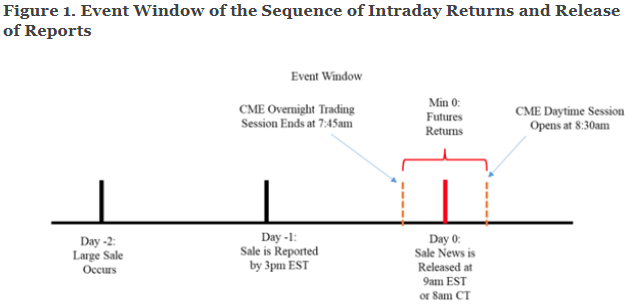
In contrast, no prior research has analyzed whether DLESR move futures markets. Since these reports are unscheduled events and, as such, are not known or anticipated by the market prior to their release, they certainly have the potential to move futures markets. In addition, and as the name suggests, these reports announce significant sales that exceed certain thresholds, specifically 100,000 metric tons of a single commodity to one destination in a single day (excluding soybean oil), or 200,000 metric tons in any reporting week. These transactions must be reported to FAS by 2 PM Central Time (CT) the following business day, detailing the quantity of the sale, commodity type, marketing year, and destination. FAS then releases the reported information at 8 AM CT on the next business day. Notably, these daily sales are also included within the weekly reporting framework, which spans from Friday to Thursday. Figure 1 shows there is the 2-day delay from when a large daily export sale occurs and when it is publicly released as a DLESR.
| |
Implications of Delayed Reporting
The two-day reporting lag inherent to the DLESR creates potential market fairness and transparency concerns. Because major export transactions are disclosed with notable delays, there exists a risk of temporary information asymmetries that may advantage certain market participants. Policymakers and market participants should therefore carefully consider the implications of this unique reporting feature, as it could influence market volatility and the efficiency of commodity price discovery.
| | Beef, Small Ruminants, & Forages | | |
Cattle and Heat Stress: How to Overcome It
Kirsten Midkiff, PhD – Animal Health and Wellbeing Specialist
As our temperatures stay consistently hot and dry, the increased pressure of the heat and humidity on our cattle rises as well. With this, cattle must thermoregulate, or maintain their body temperature to avoid heat or cold stress. Cattle’s thermoneutral zone (or their “comfort zone”) is anywhere between 32°F and 77°F, and when we have nights that don’t cool off, cattle will not be able to regulate their body temperature efficiently. A cow’s ability to withstand the heat depends on various factors, including ambient temperature, humidity, wind speed, solar radiation, age, coat color, coat length, body condition, and diet. Both reproductive efficiency and performance of cattle on pasture can be negatively impacted by the increased temperature, so understanding what we can do to prevent this additional heat stress on our cattle and what to look for if heat stress occurs is important.
There are a few strategies that we can do to manage heat stress that cattle may experience. During the heat, water intake will increase dramatically, so access to that cool, clean, readily available water source becomes important. Having plenty of shade for our herds lets them get a much needed break from the sun, so we need to make sure that the pastures have trees, an artificial shade structure, or barn to get under. Something to keep in mind with the barns or the structures is making sure that there is sufficient air flow. One of the easiest tings we can do is not working cattle in the hottest parts of the day, preferably early morning or late at night to avoid the peak temperatures. If cattle are getting any supplement or fed, the best time to feed is later in the evening. Finally, we think about pest control during spring and early summer, but the pressure that pests have on cattle during hot temperatures is intense. This is where the fly tags and other preventative/control measures come into play. After our summer months, it may be a good time to make some decisions about culling. Consider the ones that are not performing well in the heat, have lameness or poor udders, or the “problem child” that stirs the herd up when working the herd.
We have had a moderate past few months, but we may not have much of a break in the temperatures over the coming weeks. Be on the lookout for signs of heat stress, such as increased respiratory rate, panting, decreased feed intake, and poor performance. If there are any questions about heat stress, reach out to a veterinarian or the local Cooperative Extension Service for additional resources.
| | |
Armyworms
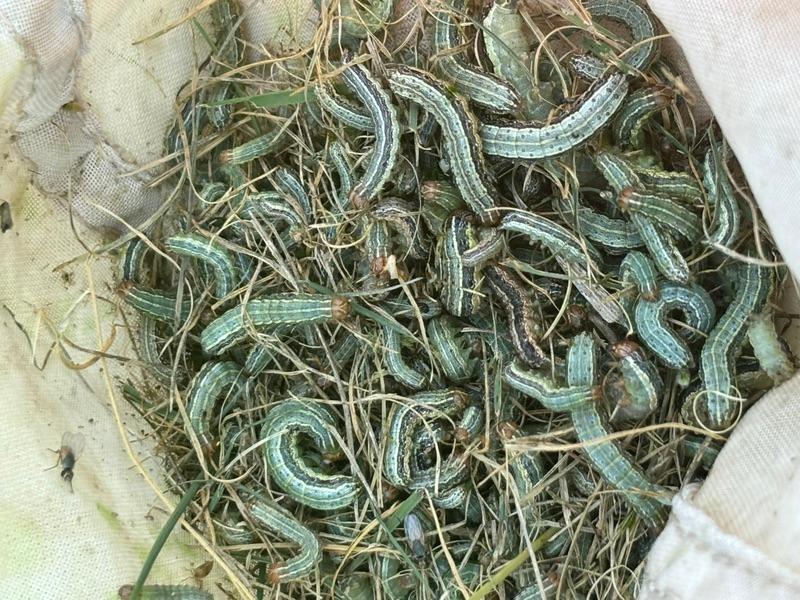
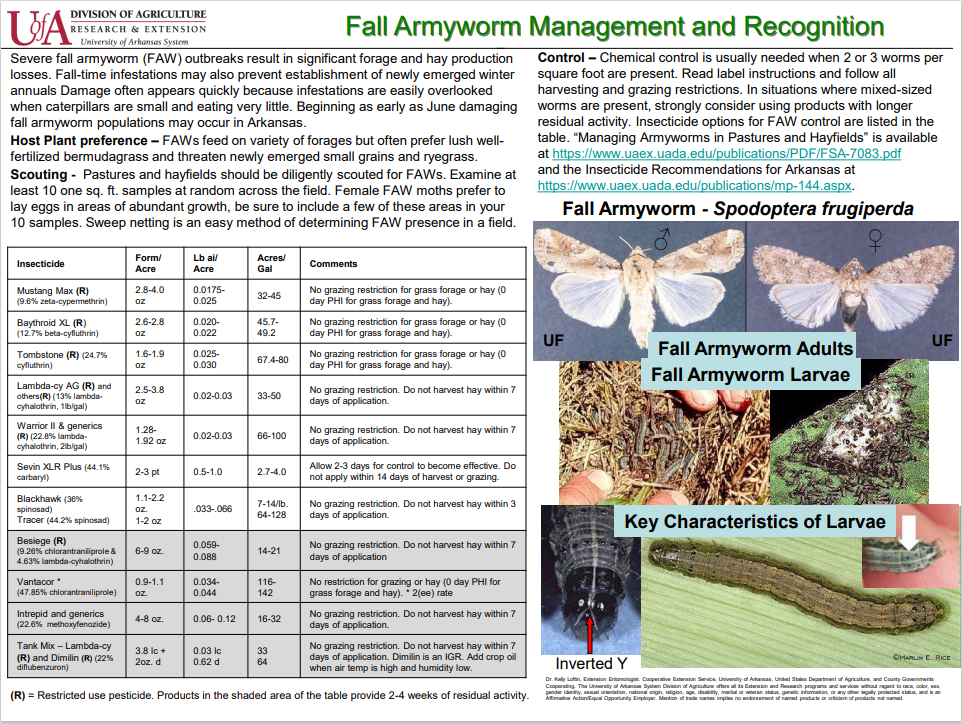
Armyworms are really picking up this week. I am finding them in hay fields and pastures in pockets. I can sweep across a field and find enough to spray and 10 steps away I may not find a one. I have to say they are really frustrating me because I am not sure if I should spray or not. It has been a case by case recommendation. Some fields I sprayed, some I am holding off.
My best advice I can give right now is get out there, scout and know your situation. If you need help making a call on to spray or not, give me a call and I will help you the best I can.
| | |
Expected Beef Yield From a Butcher Calf – Part 2 Response to Questions
Mark Z. Johnson, Oklahoma State University Extension Beef Cattle Breeding Specialist
In response to questions received after the article last week on the expected beef yield from a butcher calf, this week additional information is provided. First, a quick recap of last week’s article. When having a butcher calf processed we face the question of how much freezer space will be needed for the take home product. As a general guideline, expect to take home about 42 percent of the live weight. If basing the prediction off of the HCW, expect to take home roughly two-thirds. For example, if we had a butcher calf with a 1,500 pound live finished weight, a dressing percentage of 63% would result in a 945 pound hot carcass weight. After breaking down the carcass and packaging the cuts, we should expect about 630 pounds of beef. The actual amount of product taken home for consumption will vary based on degree of fatness and muscularity, cutting specs and carcass aging.
Questions primarily focused on three topics.
What is the expected yield of specific cuts?
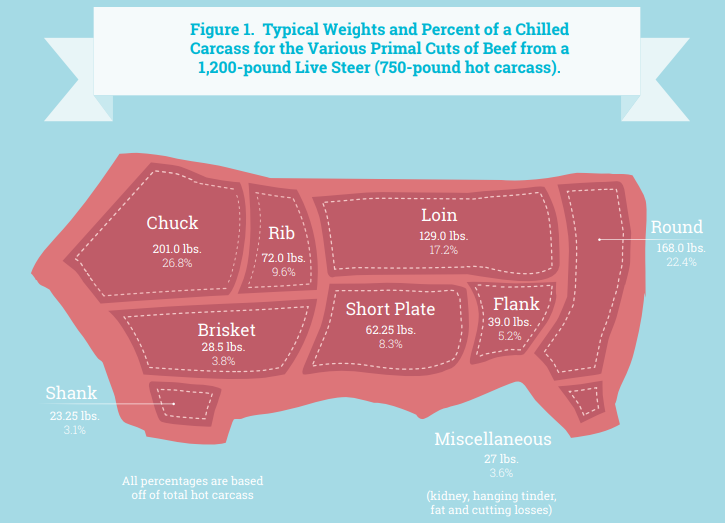
Below, figure 1 shows the expected yield of specific cuts from a 750 pound hot carcass weight.
| | |
What is the number of steaks expected?
In addition to the percentages and pounds expected shown in figure 1, the following serves as a general guideline:
- 20 – 26 Ribeye Steaks
- 22 – 28 T-Bone/Porterhouse Steaks
- 6 – 8 Filets
- 10 – 14 Sirloin Steaks
The number of steaks yielded can vary a great deal based on the desired cut and thickness - most consumers prefer a steak between .75 – 1.5 inches of thickness. Steaks result from the rib and loin, which collectively account for just under 27% of the beef carcass. The remainder of the carcass is usually divided into roasts, tenderized steaks (often used for Chicken Fried Steaks), stew meat and ground beef.
How much external fat to leave on?
Strive for an optimum amount. Fat enhances flavor, palatability and the perception of tenderness. A calf’s ability to put on fat is dependent on time on feed, the quality of the ration fed and genetic potential. Excessive amounts of external fat should be trimmed off. Although trimming off fat is not beneficial to the amount of take home product, a fatter carcass will lose less weight during the aging process. Most processors strive to provide the best quality product possible. Custom processing instructions allow the processor to provide the specific cuts the customer requests. Dialogue between the customer and processor often leads to a better eating experience.
| | |
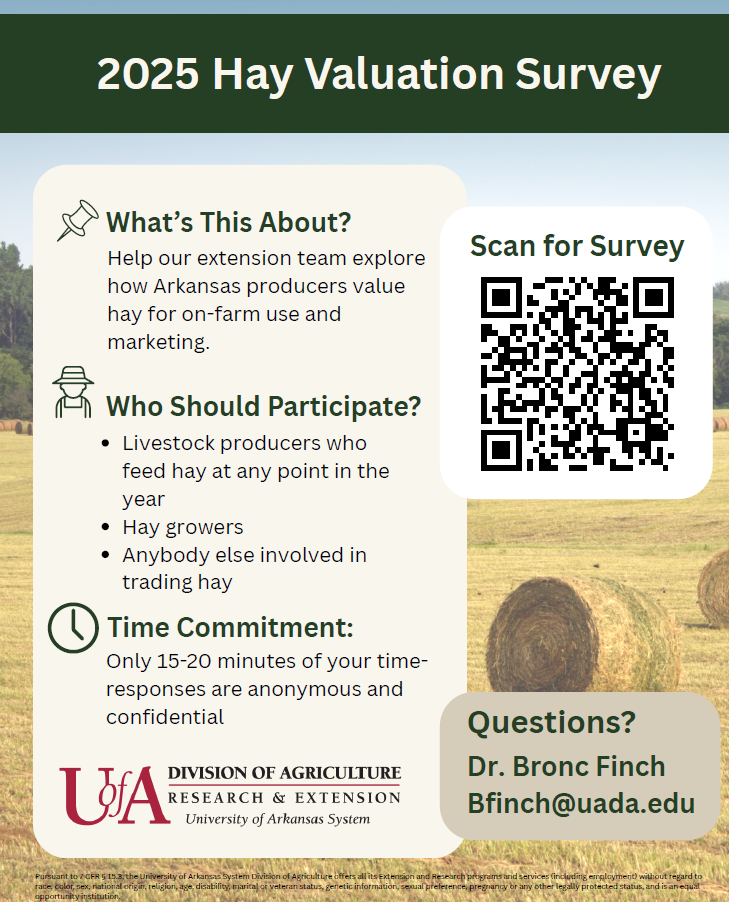
2025 Hay Valuation Survey
If you are a hay producer, please take the time to take our hay valuation survey. Our specialists are wanting to learn more about how producers value their hay.
| | |
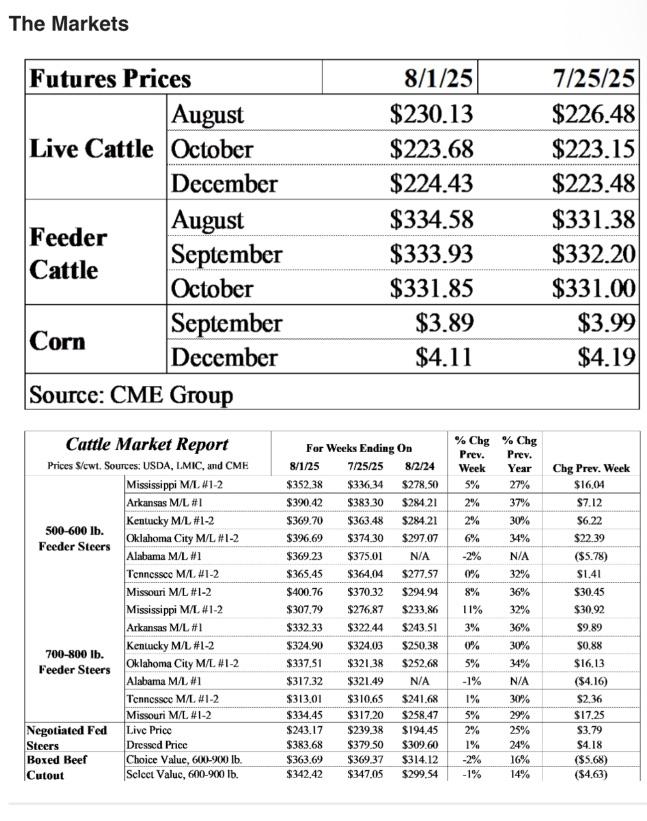
Livestock Market Report
The weekly livestock market report is available on the Arkansas Department of Agriculture website.
| | |
Sign up for Text Alerts
You can now sign up for text alerts from me throughout the year. I have two areas you can sign up for which includes Faulkner Livestock or Faulkner Ag (Row Crop Updates). To sign up you can follow one of these links or use the QR Codes below.
| | Pursuant to 7 CFR § 15.3, the University of Arkansas System Division of Agriculture offers all its Extension and Research programs and services (including employment) without regard to race, color, sex, national origin, religion, age, disability, marital or veteran status, genetic information, sexual preference, pregnancy or any other legally protected status, and is an equal opportunity institution. | | | | |