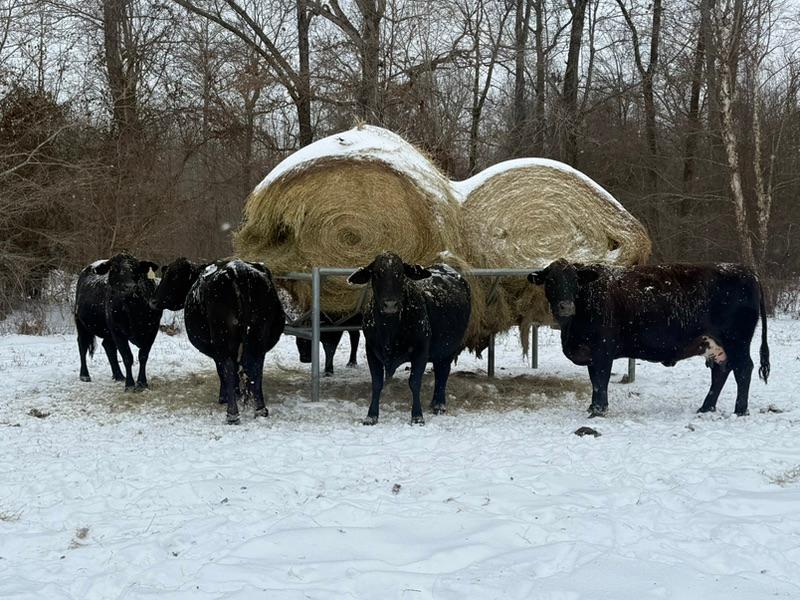
Photo from Jill Edwards, Tucker Farms | |
Faulkner County Agriculture Update
January 30, 2026
| | |
2025 Faulkner County Agriculture Demonstration Summary
The 2025 Faulkner County Agriculture Demonstration Summary is now available at the link below.
The 2025 Faulkner County Demonstration Summary is a collection of on-site demonstration results conducted in Faulkner County by local County Agents. Demonstrations are the cornerstone of the University of Arkansas System Division of Agriculture Cooperative Extension Service’s mission which is:
“We strengthen agriculture, communities, and families by connecting trusted research to the adoption of best practices.”
On-site demonstrations allow producers and homeowners to see firsthand how Extension recommended varieties and best management practices work in their counties and surrounding area.
| | |
Weather
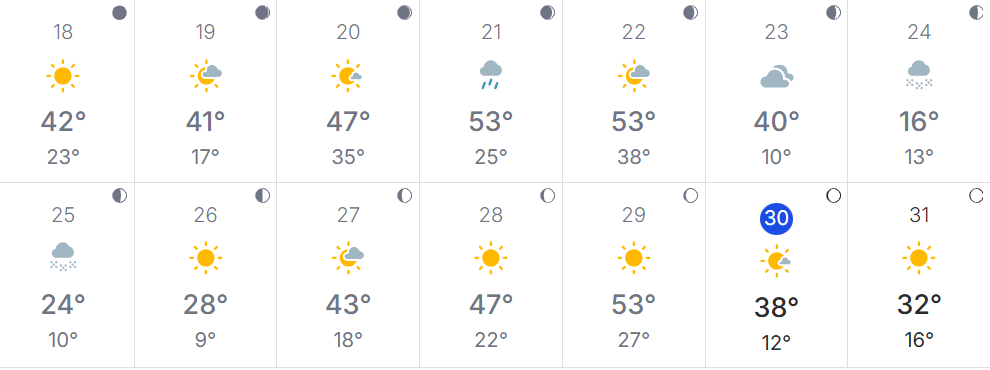
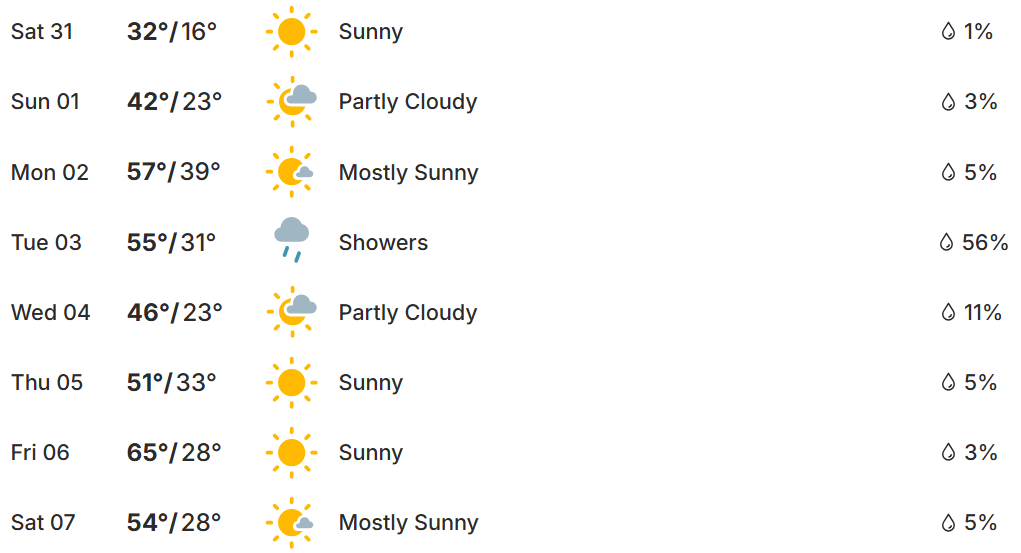
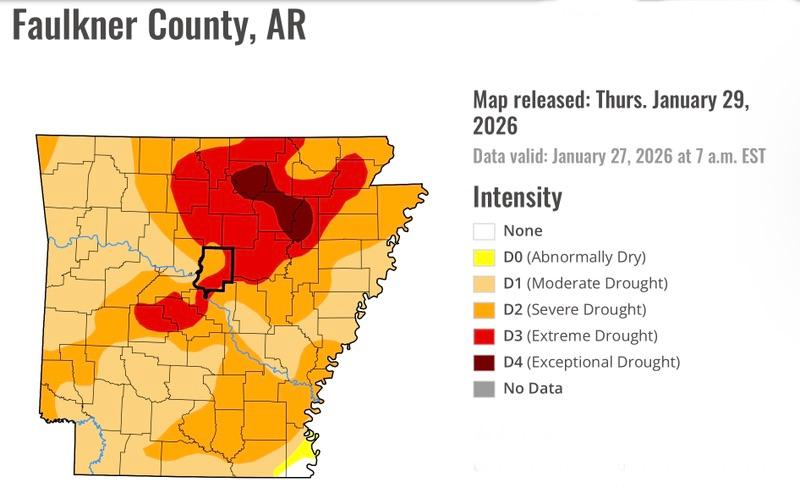
Wow what a winter storm! Snow and sleet pounded Faulkner County all last weekend and it is still sticking around. Producers worked hard keeping livestock watered at fed all week. Luckily we got so warmer temperatures later in the week that has helped with thawing but we are going right back into freezing this weekend. Tuesday has a chance of showers and hopefully we get it because we need it to get rid of this ice and snow and also we are still dry.
Despite all of this winter weather, we are still in a D2 and D3 drought in the county. Hopefully the next rain system and this melting winter precipitation will help.
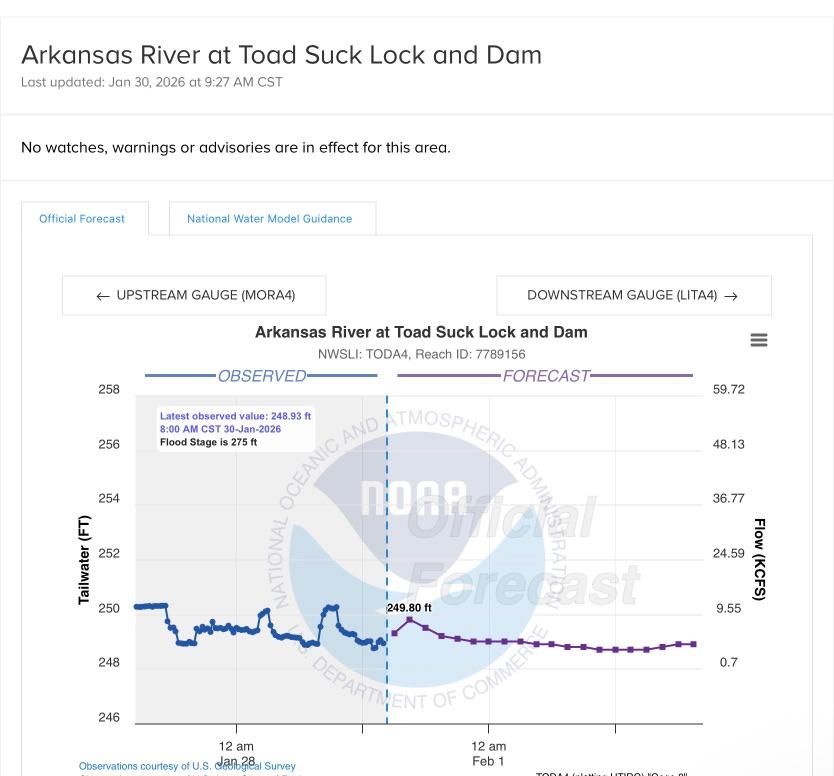
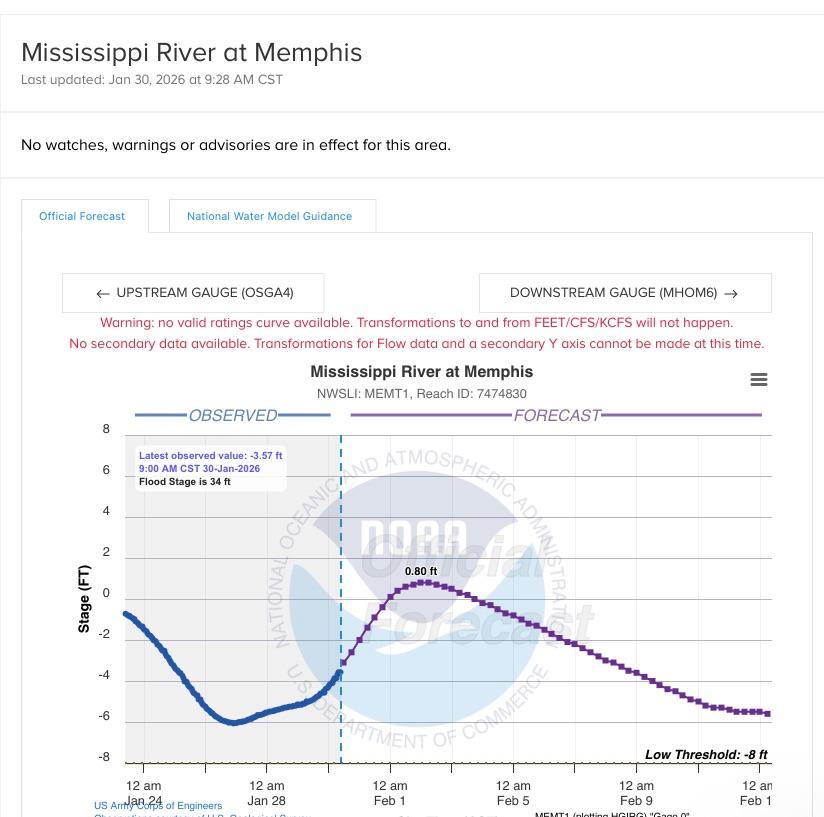
| | Arkansas and Mississippi River | | |
River Valley Rice Meeting
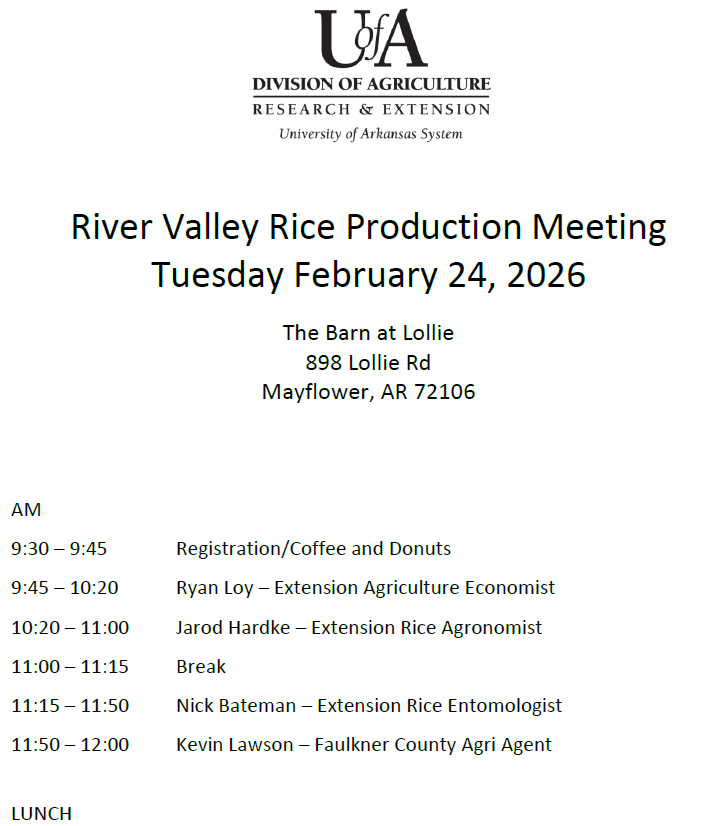
Here is the agenda for the River Valley Rice Production Meeting coming up on February 24, 2026.
|
2026 Arkansas Rice Meeting
The Arkansas Rice Council and Arkansas Rice Farmers will hold their annual joint meeting on Wednesday, Feb. 4 at the Northeast Arkansas Rice Research and Extension Center in Harrisburg. To see more information and register click the link below.
| | |
Crop Enterprise Budgets
Below is a link to the 2026 Crop Enterprise Budgets. If anyone needs assistance with these budgets please let me know.
| | |
Developing a Crop Marketing Plan in 2026
Dr. Will Maples, Associate Extension Professor, Mississippi State University
Dr. Hunter D. Biram, Assistant Professor and Extension Agricultural Economist, University of Arkansas
[Adapted from SouthernAgToday.org]
Every January, there is talk of New Year’s resolutions—a time to commit to improvements and set new goals. While health and personal finance often top the list of resolutions, there is no reason not to think about the farm business and marketing commitments in the same way. Farm profitability depends on effective management across many areas. Producers devote significant time and effort to decisions that affect crop production, but just as important is having a marketing plan for how the crop will be sold. Marketing is a continuous process that can span multiple production years, but it should be revisited for possible updating. With a solid marketing plan, producers can approach selling their crop as a year-round process rather than a single decision at one point in the year. This article highlights key considerations for developing a successful marketing strategy.
First, it is important to understand what a marketing plan is not. It is not a one-time silver bullet that guarantees sales at the highest price. While some producers may ‘beat’ the market in certain years, few can do so consistently. Commodity prices reflect supply and demand fundamentals, but in the short run, they are influenced by unpredictable events and new information. Even long-term outlooks are subject to shocks such as trade wars or other geopolitical developments. Expecting a marketing plan to always capture the top of the market sets up unrealistic goals. Instead, the value of a marketing plan lies in its ability to manage risk through consistent, disciplined decisions.
Every marketing plan should be anchored in the farm’s business goals. Those goals set the operation’s risk tolerance, cash-flow needs, and planning horizon. A producer nearing retirement may prioritize capital preservation, while a younger producer focused on growth may accept more price variability to preserve upside and liquidity. The plan should explicitly tie tactics to goals and assess which risks (price, basis, yield, liquidity, etc.) would most threaten those goals. In short, the marketing plan should serve the business plan, not the other way around.
Cost of production is the foundation of any marketing plan. Without a current, credible breakeven, you can’t judge whether a sale protects margin. Prices are volatile and mostly outside the producer’s control, so the most reliable gains come from managing inputs and operating efficiently. A sound approach is to build price objectives directly from breakeven, setting a minimum price that locks in a base margin. Additional targets can then be layered at predefined margin levels (for example, breakeven + $0.20 and + $0.40) based on the farm’s goals and cash-flow needs.
Marketing plans are most effective when they encourage proactive, rather than reactive, sales. Often, the worst sale is a forced sale, such as selling grain at harvest due to limited storage or pulling grain from the bin to meet a loan payment. Coordinating decision dates with price targets allows sales to be spread throughout the year. Crop markets frequently show seasonal strength in spring and early summer, making that window a natural fit for higher targets. Extending the marketing window, considering preharvest sales within the operation’s risk tolerance, and using crop insurance to backstop commitments can all help create more opportunities to lock in margin. Maintaining strong relationships with local buyers can also expand contract options and delivery flexibility.
Marketing plans should also consider the full suite of risk management tools available to a farmer. In a previous article, Biram, McKenzie, and Bhattarai (2025) discuss how cash marketing using forward contracts and crop revenue insurance can be used jointly to manage both price and production risk. Biram et al. (2022) and Maples et al. (2022) evaluate how farm safety net programs (i.e., Agriculture Risk Coverage and Price Loss Coverage) and leveraging futures and options can be used in a whole-farm risk management plan. Importantly, these tools are not duplicitous since they manage price risk in different markets (i.e., cash and local versus futures and global), and they manage production risk which is important to consider when promising delivery of bushels to an elevator with a forward contract.
Finally, it is essential to document the reasoning behind every marketing decision. A simple decision log noting the trigger, target price, quantity, tool, and rationale can reinforce discipline when action is required. The biggest threats to good marketing decisions are emotion, fear of making a mistake, and the temptation to hold out for just a little more. If a sale aligns with business goals and protects margin above breakeven, it is a sound decision, even if prices later move higher. Long-term success comes from steady, margin-protecting progress, not perfection on every sale. Now is an excellent time to make a New Year’s resolution for the farm by committing to a clear, disciplined marketing strategy for 2026 and beyond.
| | Beef, Small Ruminants, & Forages | | |
Water Needs during Cold Weather
Dana Zook, OSU Cooperative Extension NW Area Livestock Specialist
During winter, much of the conversation around cow management focuses on helping cattle maintain body condition through cold temperatures. Supplementation and feeding strategies are always top of mind, but one often overlooked component of winter management is water. How much water do cows really need during cold weather?
As temperatures decrease, cows’ energy requirements increase. This added energy is typically supplied through dry feeds such as hay, byproduct cubes, or commodity blends. Adequate water intake is essential for cows to properly digest these feeds. When water is limited, feed intake often declines, making it difficult for cows to maintain body weight and condition.
Stage of production also plays a significant role in determining water needs. As production demands increase, so does water intake. Lactating cows, for example, require more water than pregnant, non-lactating cows. Water intake data collected by Oklahoma State University and other research institutions provide baseline estimates across production stages. These guidelines are useful for producers hauling water or planning new water infrastructure.
So, how much water do cows need in cold weather? OSU factsheet AFS-3299, Estimating Water Requirements for Mature Beef Cows, reports that 1,300-pound cows experiencing 40°F temperatures typically require 9 to 15 gallons of water per day. The lower end of this range applies to open or pregnant, dry cows, while the higher end reflects the needs of lactating cows.
Additional research is currently underway by Dr. Dave Lalman and his research team to further refine these estimates. In a recent study, five-year-old cows averaging 1,363 pounds with calves at side have consumed an average of 15 gallons per day since mid-November. This total includes calf consumption; however, it is reasonable to assume calves account for 1 to 2 gallons daily.
This highlights the importance of ensuring calves have access to water. Tanks should be filled high enough for smaller animals to reach the water, and natural water sources should be kept open so calves can safely drink.
Water is often considered a “hot weather” concern, but its importance should not be overlooked during winter. Dehydration adds stress during cold conditions. Ensuring cows have adequate access to water is a simple yet critical step in helping them manage winter stress and maintain body condition.
| | |
What to do for pastures during a drought
Dr. Jonathan O.C. Kubesch, Extension Forage Specialist
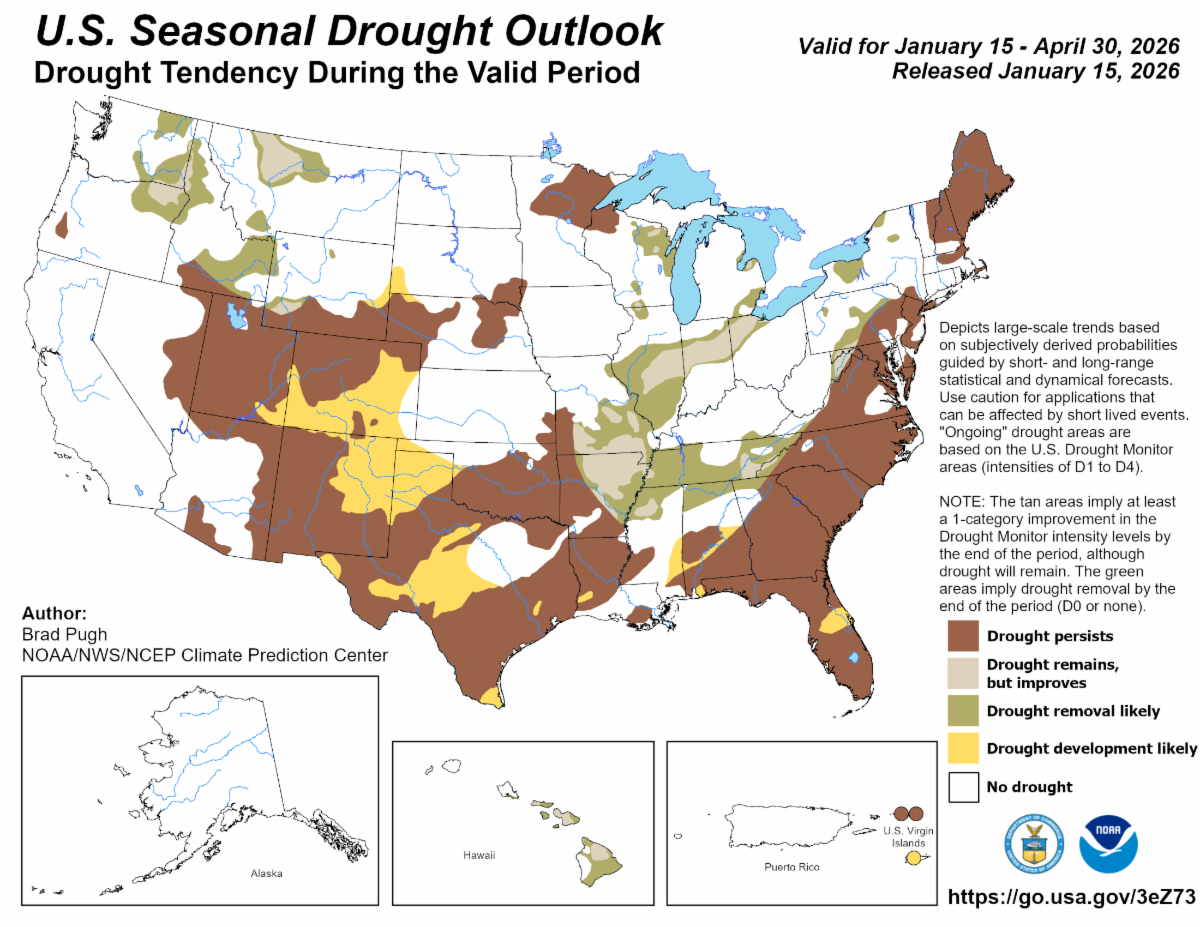
Producers and agents have been asking about what to do with their forages this year in view of the dry fall and winter. The National Weather Service has some interesting information I thought I would pass along. Below are excerpts from the National Weather Service website regarding the long-term weather outlook.
“Drought coverage decreased throughout the West during the early 2025-26 winter, while drought expanded and intensified across the Central to Southern Great Plains and much of the Southeast....”
“Due to an increased chance of above-normal precipitation beginning in late January and continuing through FMA, improvement and removal are forecast from eastern Arkansas and northern Mississippi north through most of the Midwest….”
Here is the current national map showing the predicted drought pattern:
| | |
https://www.cpc.ncep.noaa.gov/products/expert_assessment/sdo_summary.php
The creation of the La Niña weather pattern is an ominous prediction of poor growing conditions in late winter and early spring 2026. So what can producers do for their pastures and hayfields?
We know a lot of fields were beaten up by the 2025 drought so producers need some extra care this year. We can assess stands using a frequency grid to determine which fields need to be rested, renovated, or replaced as we come into the growing season. We can classify pastures in terms of the frequency of desirable forage species*:
-
Fully functional = stand frequency greater than 70 percent. Fully functional pastures should recover quickly with weed control, proper soil fertility, and deferred grazing or harvest once satisfactory growing conditions return. Complete recovery in these pastures may require one to two months of uninterrupted growth.
-
Moderately damaged or functional = stand frequency between 40 and 70 percent. Pastures with this level of damage should fully recover with weed control, proper soil fertility, and deferred grazing or harvest. Past management practices likely have contributed to the pasture response to drought. Tillers and volunteer seed from some species will aid in stand recovery. Some overseeding may be necessary. Complete recovery in these pastures may require two to three months or more of uninterrupted growth.
-
Severely damaged or partially functional = stand frequency less than 40 percent. Severely damaged stands will require patience and precipitation for adequate recovery. Similar to the other drought-damaged pastures, these could also fully recover with weed control, proper soil fertility, and deferred grazing or harvest, but it may take a year or longer for full recovery. Tillers and volunteer seed from some species will aid in stand recovery. Pastures in this category should be the first considered for stand renovation if a forage species change would help with developing a balanced seasonal forage system.
That means checking the fertility (read that to say SOIL TESTS!), scouting for and controlling weeds, and developing a rotational grazing program. Why are these practices more important than any other year you might ask?
One of the first ways to speed up recovery might look like soil testing and improving fertility. Good fertility equals good growth when weather conditions are good. Poor fertility equals poor growth regardless of weather conditions so good fertility automatically tips the odds in your favor by being ready to take advantage of any respite the drought may give. Fertility is my preferred method of weed control because an actively growing forage crop can compete more effectively with weeds.
Secondly, weed management may be especially critical this year. Again, drought-damaged pastures will likely be on the thin and overgrazed side this spring which will give weeds a head start. During scarce rainfall conditions (refer to the above prediction), weeds will compete with your forage for precipitation. Identify the weed and use the method that fits – it may be a good early-intensive rotational grazing program, or judicious use of herbicide, or for the overachievers – both good grazing and herbicide. Ideally most in-season spray decisions will be made in May/June when drought conditions are expected to improve.
Thirdly, rotational grazing systems will help maximize the amount of ground ready for rainfall. It has been shown repeatedly by research and producer experience that rotationally grazed pastures maintain productivity longer into a drought than those that are continuously grazed. In addition to giving more of the pasture recovery time, rotational grazing systems can help to concentrate damage. Ideally hay is being fed on the weakest stands to get those areas ready for a summer annual in the spring. Drought can allow us to feed hay where wet ground might normally preclude tractors. You don’t have to move cattle every day to see the benefits for your pastures. Rotating pastures once a week isn’t bad and twice a week gains most of the benefits for most livestock systems.
So, to cover the points again, good fertility, good weed control, and good grazing management will lessen effects of the drought. Otherwise, there is always the sale barn or irrigation.
*For more information on assessing pasture damage, please refer to MP530, Drought management and recovery for livestock systems.
Author’s note: this article was derived from Dr. John Jennings’ news article dated February 7, 2006. While we will face many of the same environmental challenges over the years, our management options and opportunities continue to expand!
| | |
River Valley Beef Meeting
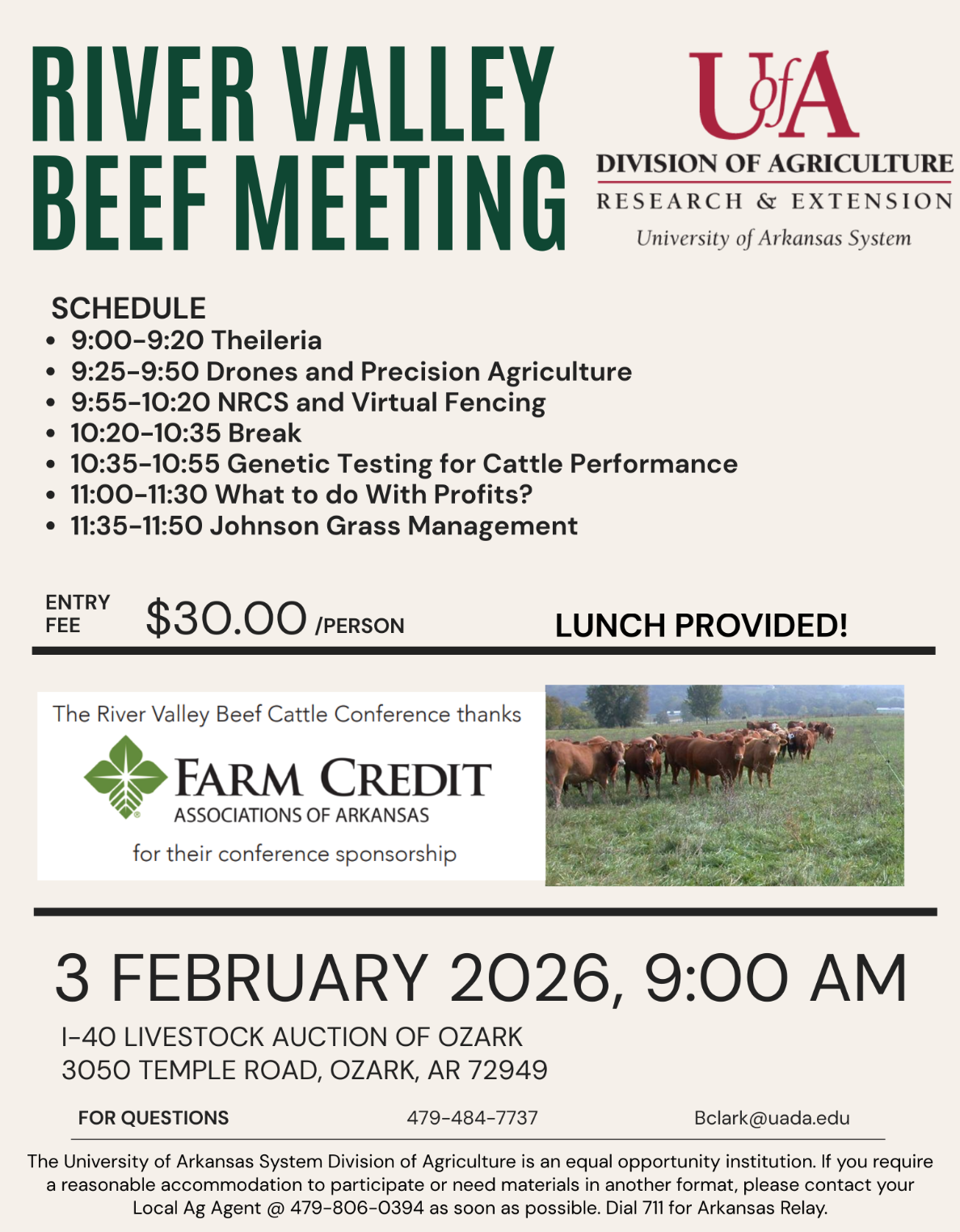
The Arkansas River Valley Beef Meeting will be February 3, 2026 at the I-40 Livestock Auction at 3050 Temple Rd, Ozark, Arkansas 72949. The meeting will start at 9:00 and go to 12:00 and end with a steak lunch. Registration this year is $30. Thanks to Farm Credit Services of Western Arkansas for sponsoring.
| | |
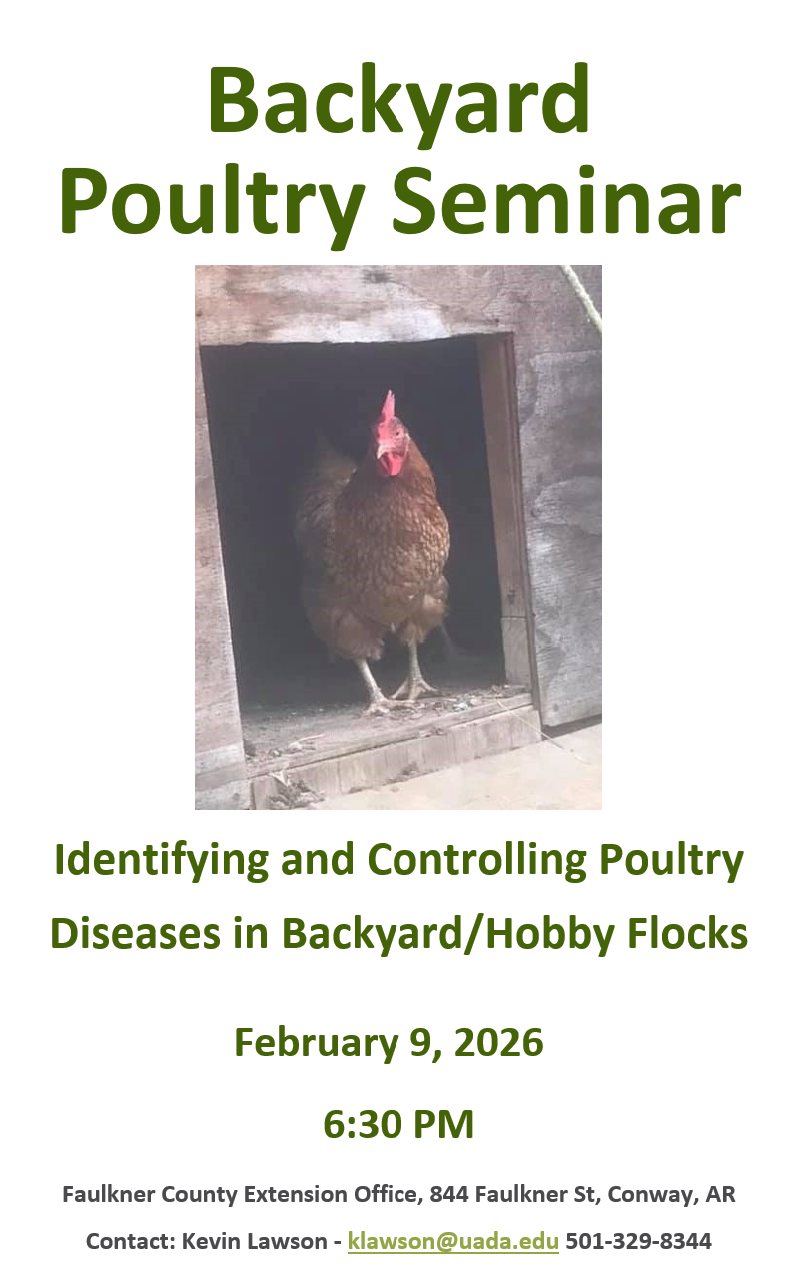
Backyard Poultry Seminar
There has been a confirmed case of Avian Influenza in Faulkner County. With this recent outbreak of Avian Influenza, we have decided to have a seminar here at the Extension office. Dr. Dustin Clark will be here to speak on "Identifying and Controlling Poultry Diseases in Backyard/Hobby Flocks".
The meeting will be at the Extension Office at 844 Faulkner Street, Conway on February 9th starting at 6:30 pm.
| | |
Where to Report Sick Birds
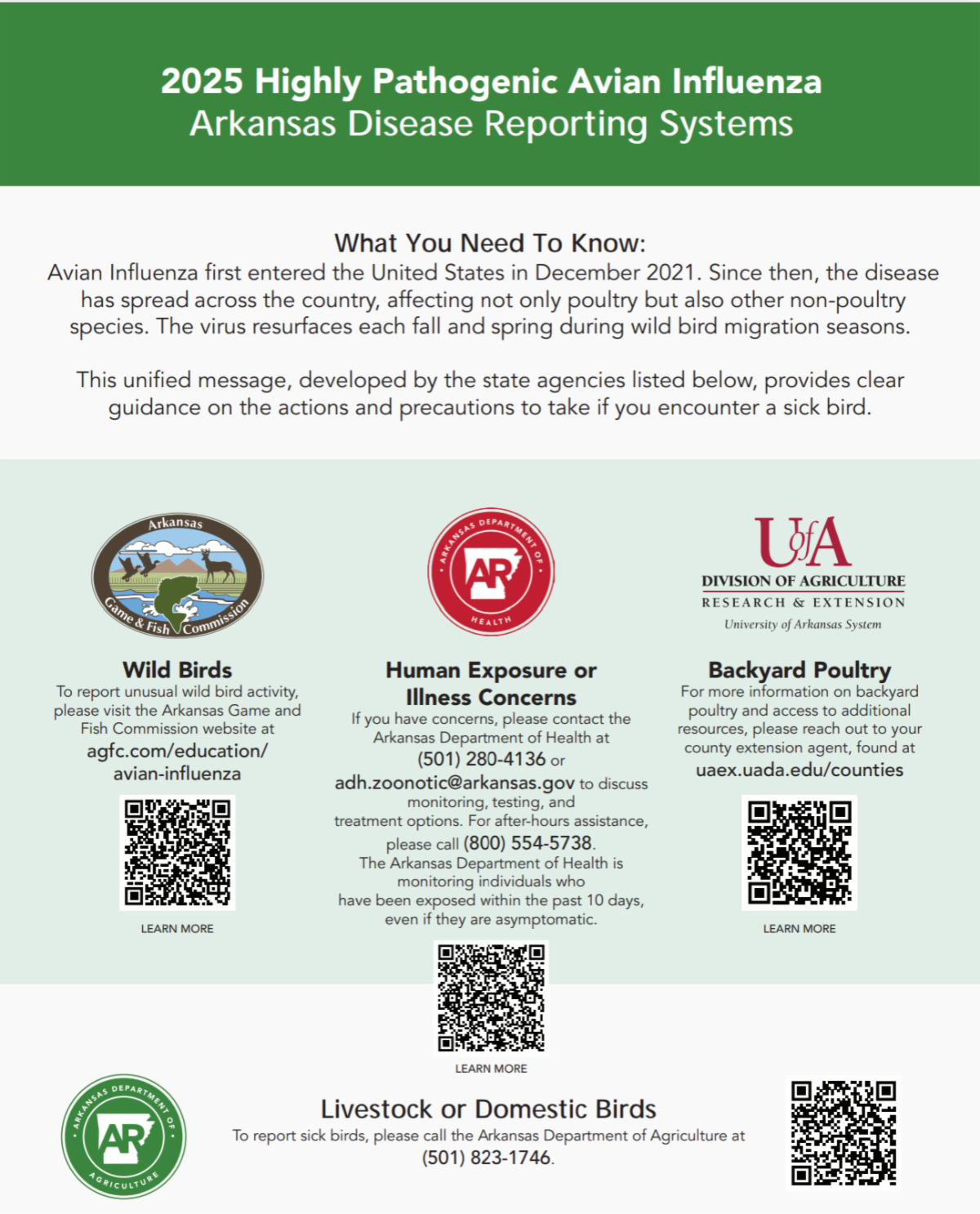
If you happen to see sick birds (wild or domesticated) in the county, depending on where you see them will depend on who to contact. The following flyer gives you a guide on who to contact if you see sick birds.
| | |
Sheep & Goat Genetic Improvement Field Day
by Dr. Dan Quadros
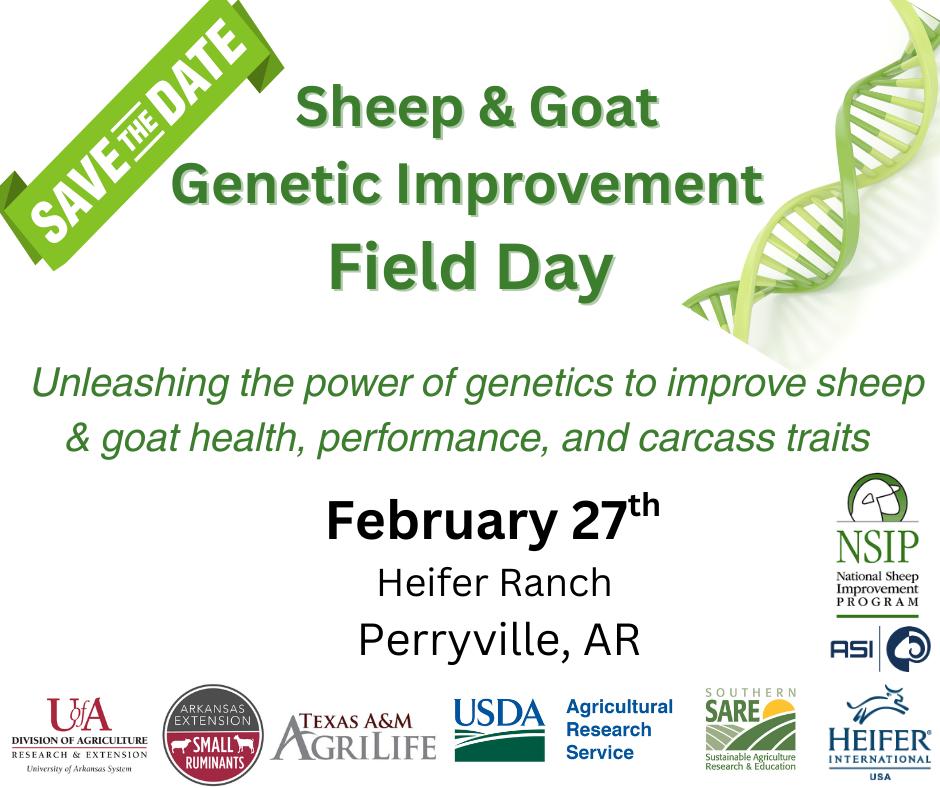
Registration is now open for the "Sheep & Goat Genetic Improvement Field Day" (www.uaex.uada.edu/smallruminantgenetics), one of the premier events of its kind that has ever taken place in the U.S. Don’t miss the opportunity to learn from top researchers, ask questions, develop networks, and participate in live demonstrations on how to put into practice the available technology to increase productivity and profit. It’s free of charge. It will be on February 27th (Friday) at Heifer Ranch (55 Heifer Rd, Perryville, Central Arkansas), from 9:30 am to 3:30 pm. Check the tentative agenda below. Lambing/kidding season will make things a bit complicated, I know, but it is a reschedule from a previous date, and we have a tight deadline established by the funding agency. So, plan in advance to attend it.
Sheep & Goat Genetic Improvement Field Day
Heifer Ranch, Perryville, Arkansas
9:30 am: Welcome, Christine Hernandez, Heifer Ranch; Blake Erbach and Dr. Dan Quadros, University of Arkansas Division of Agriculture; Dr. Jake Thorne, Texas A&M
9:45 am: Economic benefits of using rams/bucks with EBVs, Dr. Tom Murphy, USDA/ARS
10:30 am: Breakdown sessions I: Collecting and recording data
Parasites: FAMACHA system, Dr. Joan Burke, Sheep Management Solutions, LLC
Parasites: Collecting and submitting fecal samples, fecal egg counting methodology, body condition scoring, Dr. Dan Quadros, UADA
12:00 pm Lunch and learn: Implementing an on-farm genetic improvement program, Dr. James Morgan, Sheep Management Solutions, LLC
1:00 pm: Breakdown sessions II: Collecting and recording data
Growth performance: types of ID and RFID, number of lambs born/weaned, birth weight, weaning weight, postweaning weight and collecting tissue, Heifer Ranch; Texas A&M University; UofA
Buying rams with good genetics: visual assessment vs. EBVs, Dr. Joan Burke, Sheep Management Solutions, LLC
Using ultrasound for pregnancy check and carcass evaluation, Dr. Jake Thorne, Texas A&M AgriLife
2:30 pm: The future development of the NSIP, Dr. Tom Murphy, USDA/ARS and Dr. Jake Thorne, Texas A&M AgriLife
3:00 pm: Producer Panel: Using Estimated Breeding Values (EBVs) to improve economically important traits, TBA
3:30 pm: Adjourn
Optional, 3:30 p.m - 4:30 pm: One-on-one with experts: Learn more about the National Sheep Improvement Program (NSIP)
Dr. Tom Murphy, USDA/ARS
Dr. Joan Burke, Sheep Management Solutions, LLC
Dr. James Morgan, Sheep Management Solutions, LLC
Dr. Jake Thorne, Texas A&M AgriLife
| | |
Pesticide Applicator Trainings
In order to purchase restricted use pesticides (herbicides, insecticides, fungicides, etc) you must have a private applicators license. The license is good for 5 years.
To obtain a license you must first attend a certification training. Certification trainings are done in person by a County Extension Agent or you can go online and be certified. Below is a link to the online training.
In person trainings this year will all be at the Faulkner County Extension Office and will be on:
March 12 - 6:00 PM
April 30 - 2:00 PM
A certification training costs $20 and is due the day of the training.
Once a producer is certified, they will go through the Arkansas Department of Agriculture to obtain the license which is $45.
Please call the Extension office at 501-329-8344 to sign up for one of these dates.
There will be other opportunities for trainings in Perry and Conway County and I will post those as soon as those dates are available.
If you have a question about your license, please follow the License Search and Verification link below to find your license.
| | |
Livestock Market Report
The following links are for the weekly livestock market report from the Arkansas Department of Agriculture website and the Livestock Auction Dashboard from USDA. Both sites have marketing data for all livestock sold at Arkansas Sale Barns.
| | |
Grow Your Own Groceries Conference
The award winning Grow Your Own Groceries program is moving to the next level with an in-person conference! Join us February 10, 2026 at the Conway Expo & Event Center for a fun-filled and educational day of learning how to grow healthy, nutritious food in your own backyard and get some tips for cooking and preserving your harvest.
You will be able to choose 6 different classes (3 in the morning and 3 in the afternoon) from the topics below. We’ll also serve lunch and have a fun presentation to enjoy while you eat.
Break-out Session Topics
- Using Cover Crops in the Garden
- Planning for an Abundant Harvest
- Food Preservation Methods
- Growing in High Tunnels
- Hydroponic Vegetable Production
- Composting
- Nurturing Your Soil
- Getting Started with Beekeeping
- Setting Up a Drip Irrigation System
If anyone has any questions feel free to give me or Krista Quinn a call at the office. I have included the registration link below.
| | |
Sign up for Text Alerts
You can now sign up for text alerts from me throughout the year. I have two areas you can sign up for which includes Faulkner Livestock or Faulkner Ag (Row Crop Updates). To sign up you can follow one of these links or use the QR Codes below.
| | Pursuant to 7 CFR § 15.3, the University of Arkansas System Division of Agriculture offers all its Extension and Research programs and services (including employment) without regard to race, color, sex, national origin, religion, age, disability, marital or veteran status, genetic information, sexual preference, pregnancy or any other legally protected status, and is an equal opportunity institution. | | | | |