Faulkner County Agriculture Update
January 9, 2026
| | |
Grow Your Own Groceries Conference
The award winning Grow Your Own Groceries program is moving to the next level with an in-person conference! Join us February 10, 2026 at the Conway Expo & Event Center for a fun-filled and educational day of learning how to grow healthy, nutritious food in your own backyard and get some tips for cooking and preserving your harvest.
You will be able to choose 6 different classes (3 in the morning and 3 in the afternoon) from the topics below. We’ll also serve lunch and have a fun presentation to enjoy while you eat.
Break-out Session Topics
- Using Cover Crops in the Garden
- Planning for an Abundant Harvest
- Food Preservation Methods
- Growing in High Tunnels
- Hydroponic Vegetable Production
- Composting
- Nurturing Your Soil
- Getting Started with Beekeeping
- Setting Up a Drip Irrigation System
If anyone has any questions feel free to give me or Krista Quinn a call at the office. I have included the registration link below.
| | |
Weather
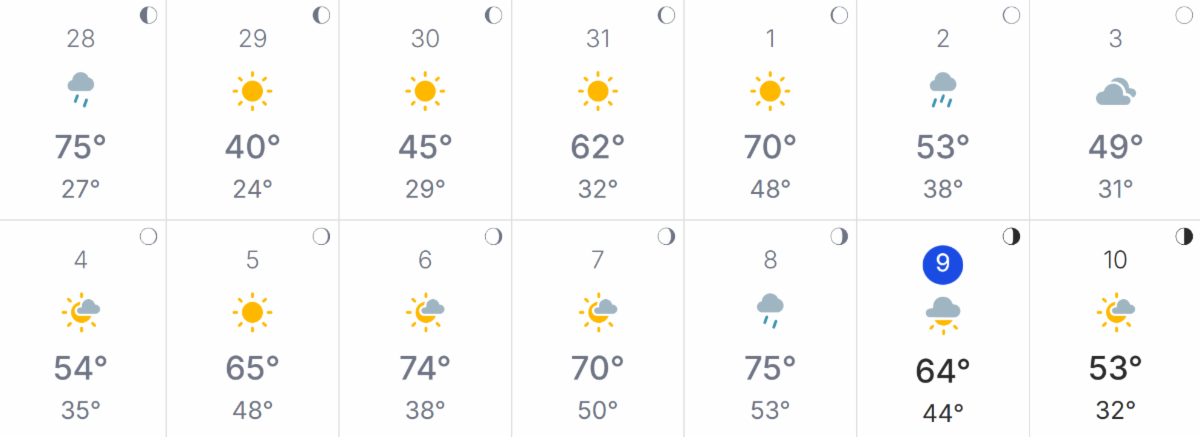
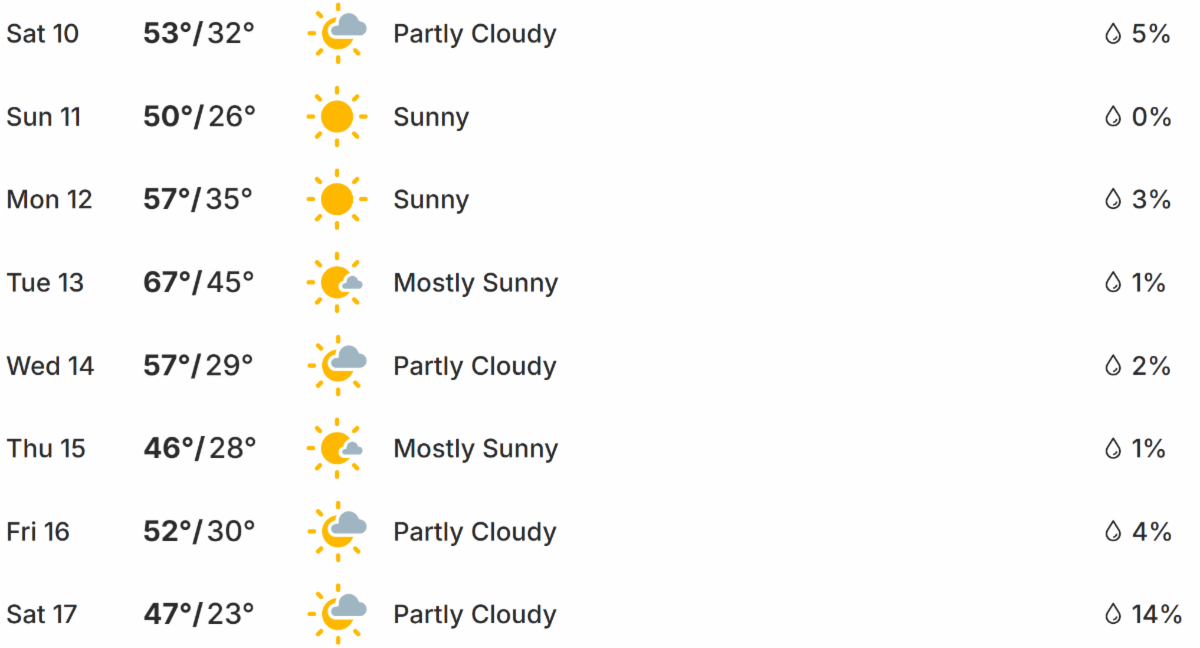
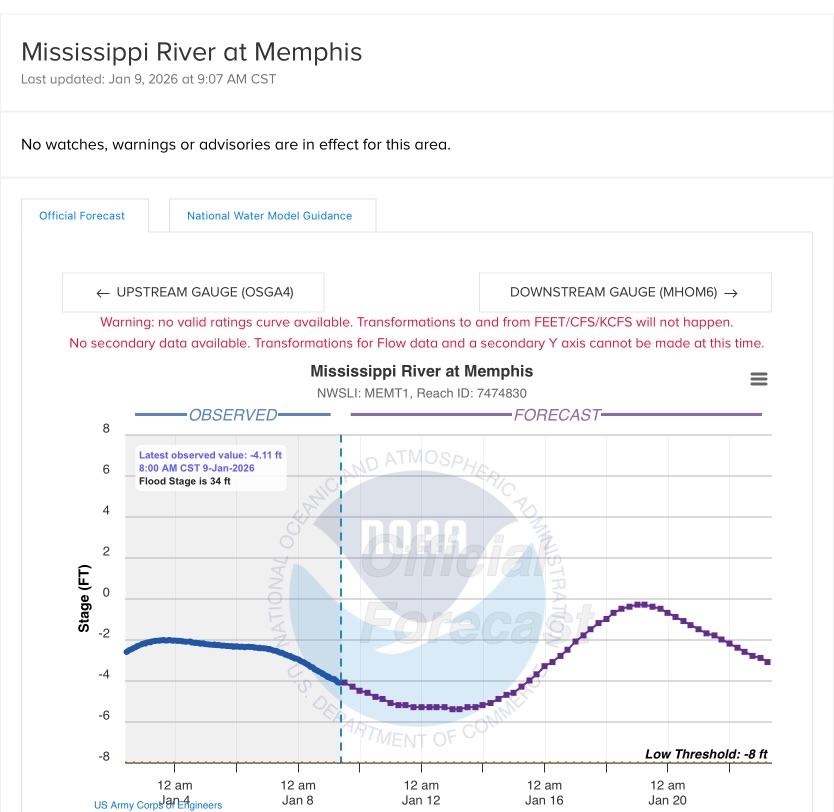
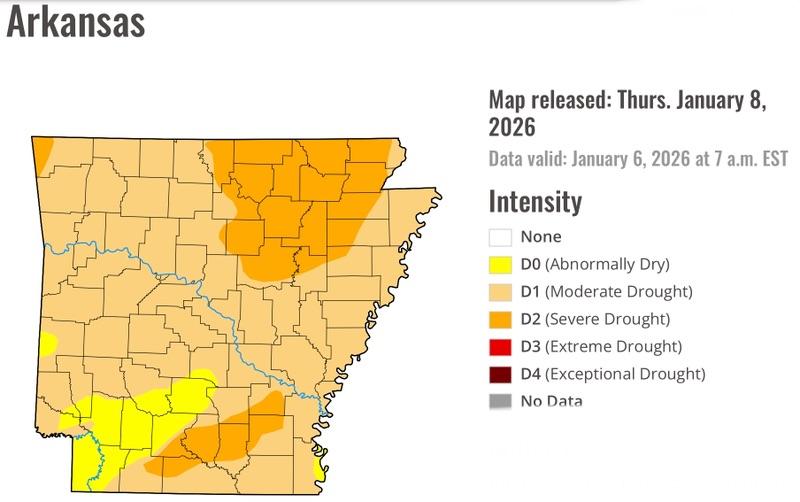
This is the driest winter I can ever remember. We got less than one inch of rain for December and it looks like we are going to miss the rain that was predicted for yesterday and today. Faulkner County is completely in D1 drought status with D2 not far away. If we continue to stay this dry, make sure you take note of any issues the drought causes. If any assistance comes in the future you want to be prepared for it. I would also take caution while burning anything. We need a rain folks, and the long term forecast doesn't look good.
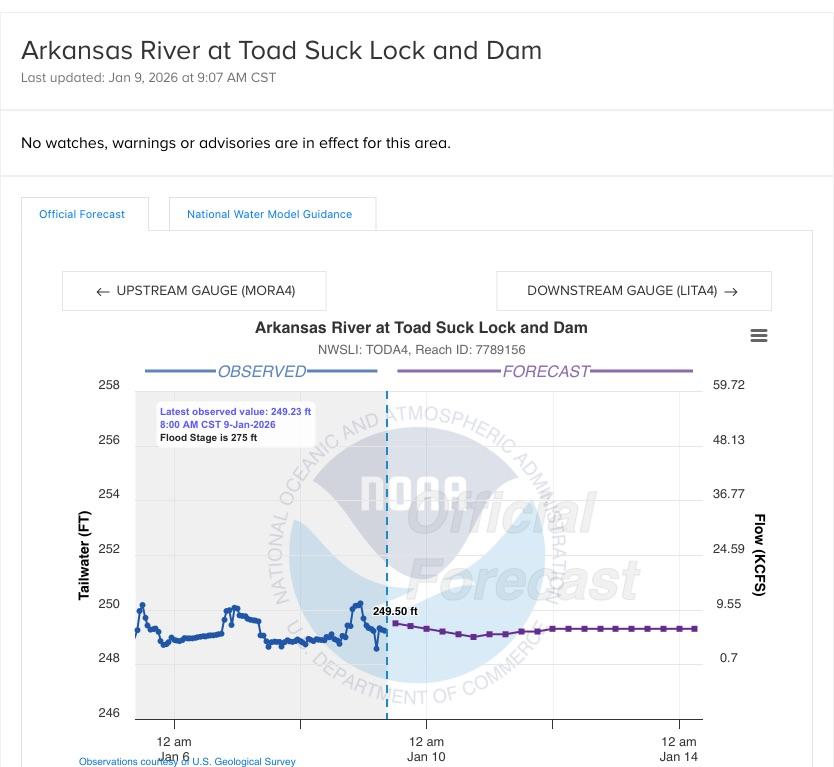
| | Arkansas and Mississippi River | | |
Farmer Sales Tax Identification Cards
Update from Arkansas Farm Bureau
by Brandy Carroll
The creation of a farmer sales tax identification card to help facilitate the application of farmer sales tax exemptions and to prevent fraud was an Arkansas Farm Bureau priority during the 2025 legislative session. A bill to create the cards, sponsored by Rep. DeAnn Vaught and Sen. Tyler Dees, became Act 621 of 2025.
Beginning Jan. 2, 2026, farmers will be able to log in to the Arkansas Taxpayer Access Point at atap.arkansas.gov, to apply for their exemption card. The application will require 3 years of tax documents or, for young and beginning farmers, the completion of a 3-year business plan form that will be found on the website.
The application fee is $20 and each card is valid for 8 years. The renewal fee will be $10. The cards are not mandatory. Current business relationships can continue with existing exemption certificates, and new business relationships can be established using exemption certificates or the new farmer sales tax exemption card.
The card will be accepted by businesses as proof that purchases of tangible property, specified digital products, digital codes, and taxable services are exempt from sales and use taxes when they are purchased for business purposes.
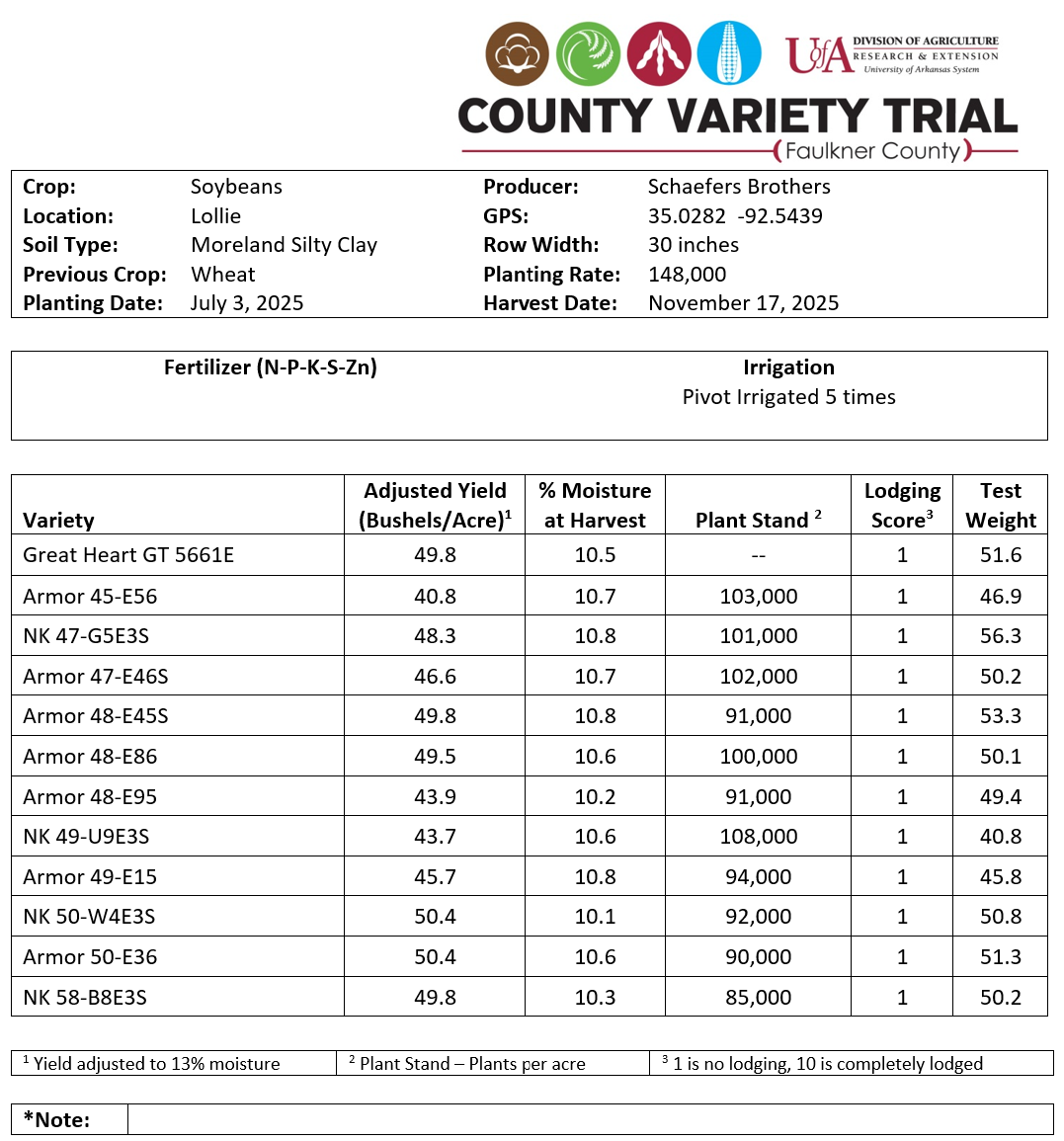
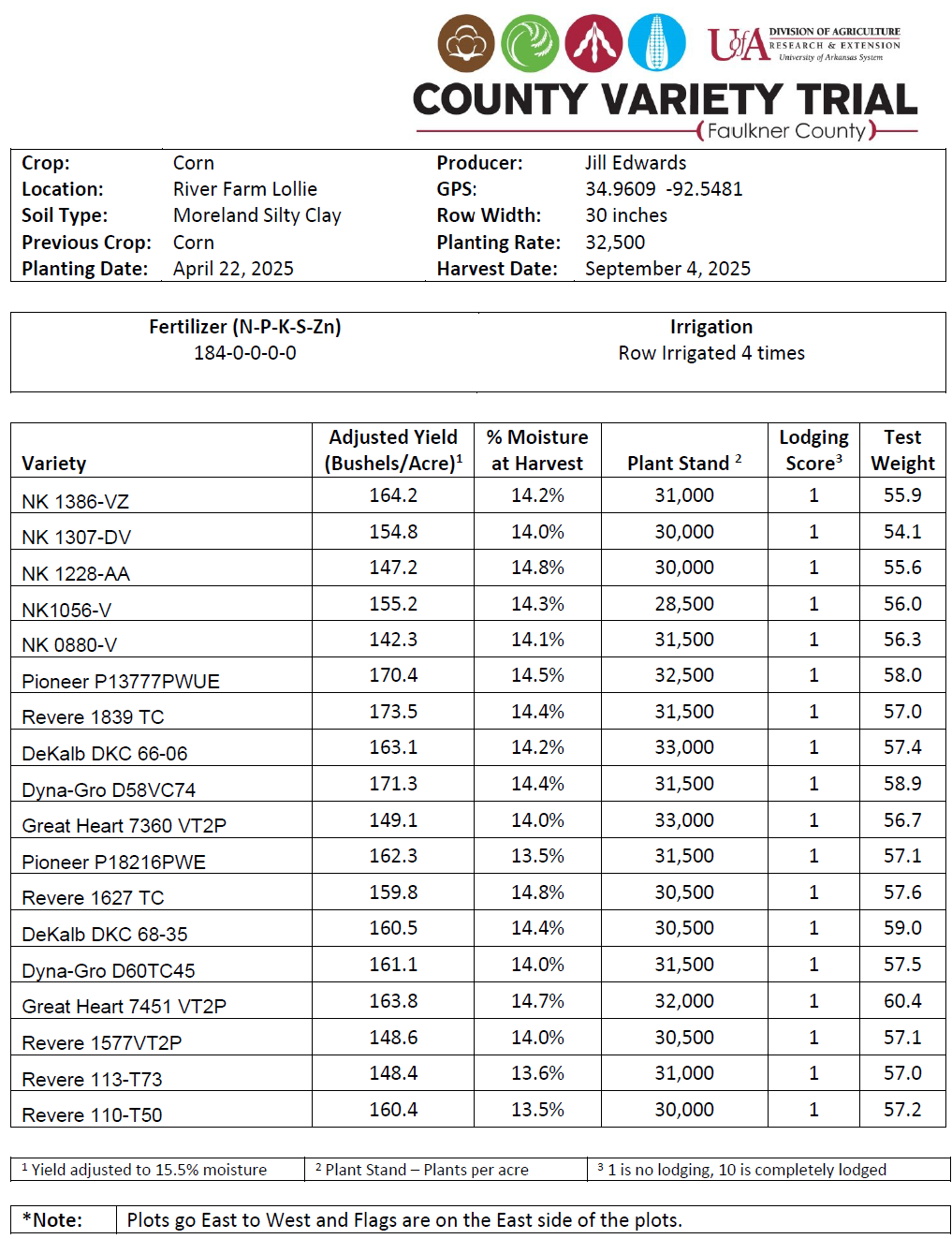
| | 2025 Faulkner County Variety Trials | |
2025 Arkansas Rice Performance Trials
Jarrod Hardke, Rice Extension Agronomist
The link to Rice Information Sheet No. 185 Arkansas Rice Performance Trials 2025 is provided below. This contains the final results of the Arkansas Rice Performance Trials (ARPT) and DD50 Planting Date studies, as well as updated cultivar descriptions and disease ratings.
| | |
Row Crop Production Meetings
Our annual row crop production meetings are scheduled for 2026.
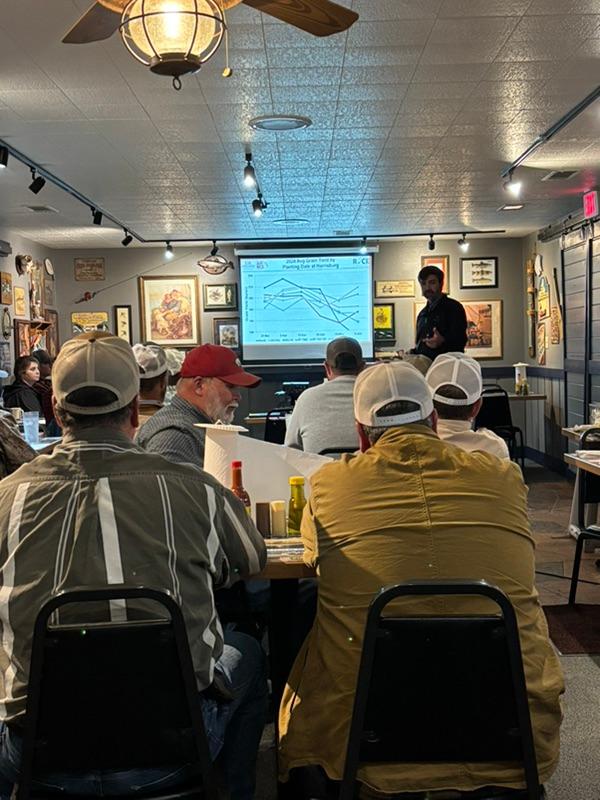
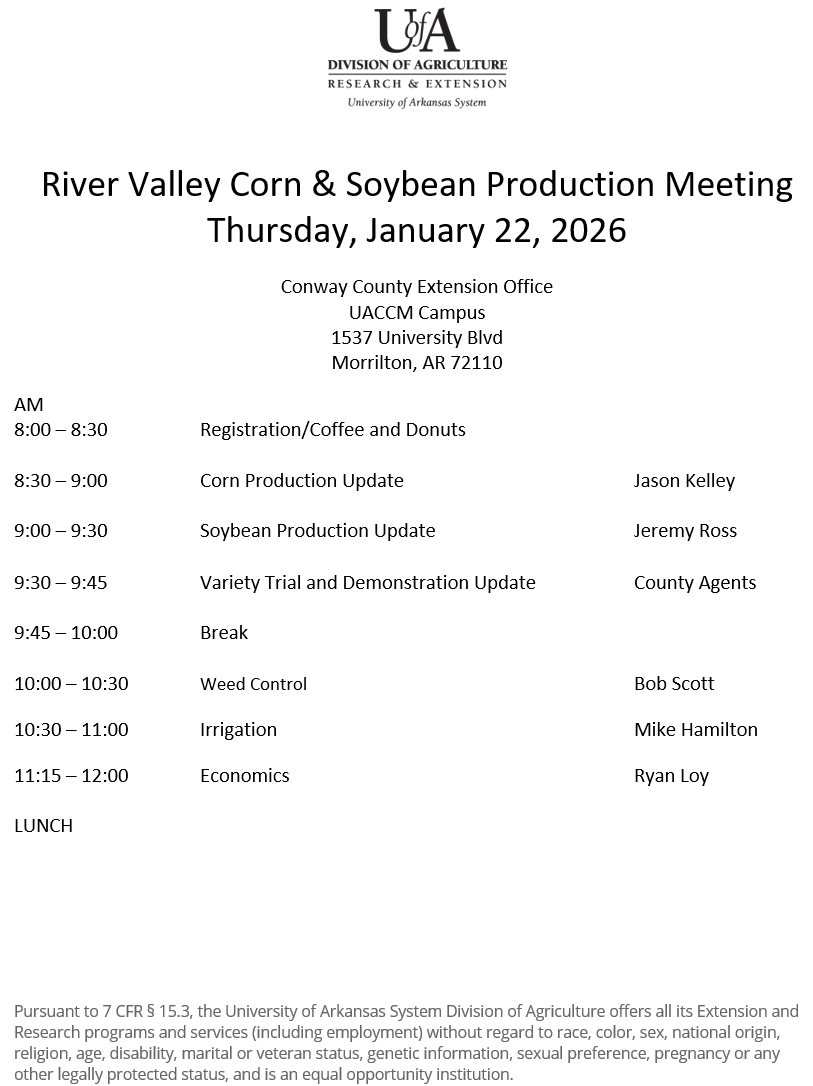
Corn and Soybean Production Meeting - January 22, 2026 - Conway County Extension Office on UACCM Campus. If you come up the road by Roberson Tire, the first building you come up to is the Kirk Building and the Extension Office is there. If you have any questions of need directions feel free to give me a call.
Rice Production Meeting - February 24, 2026 - The Barn at Lollie
| |
Crop Enterprise Budgets
Below is a link to the 2026 Crop Enterprise Budgets. If anyone needs assistance with these budgets please let me know.
| | |
Market and Inputs Update
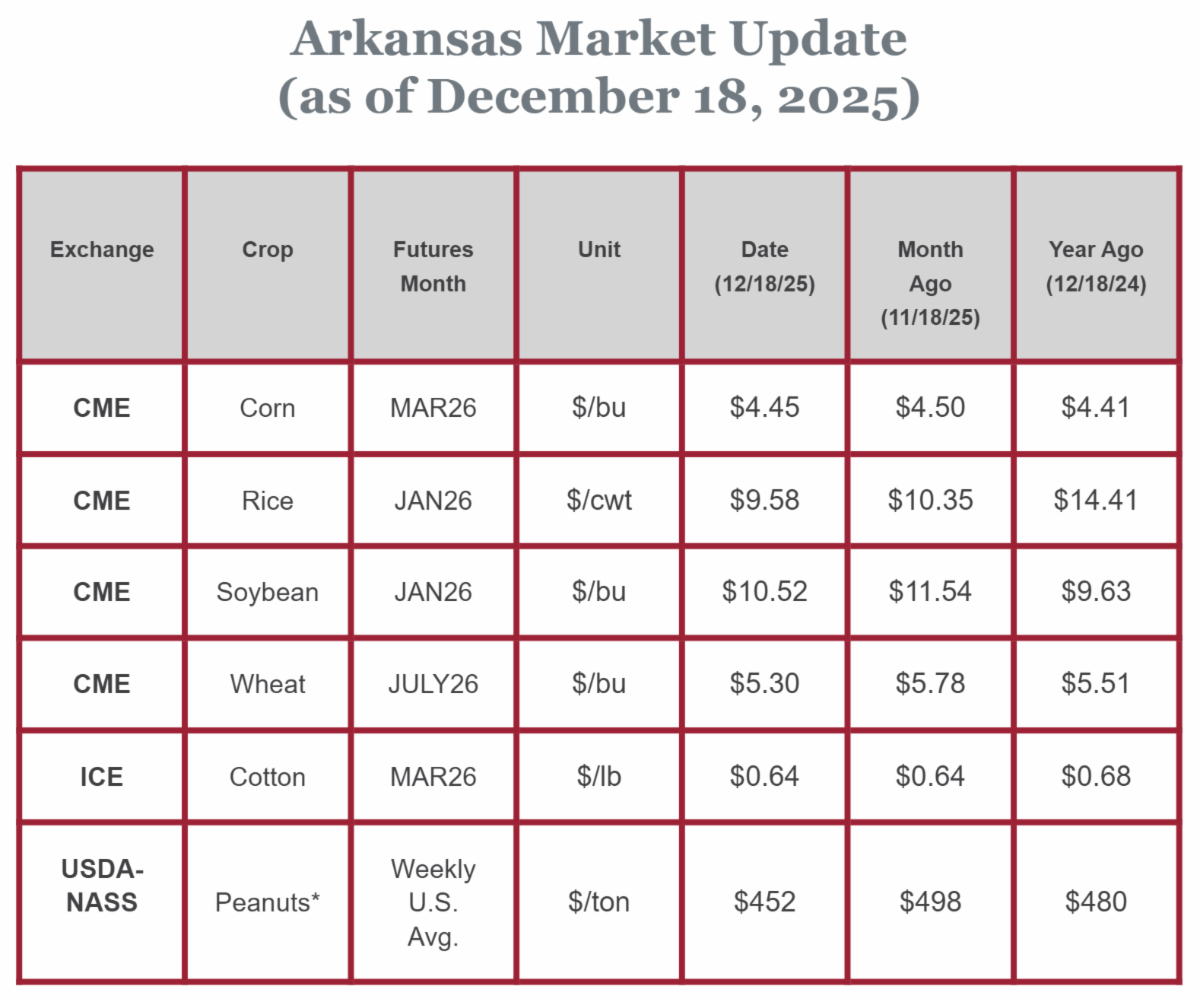
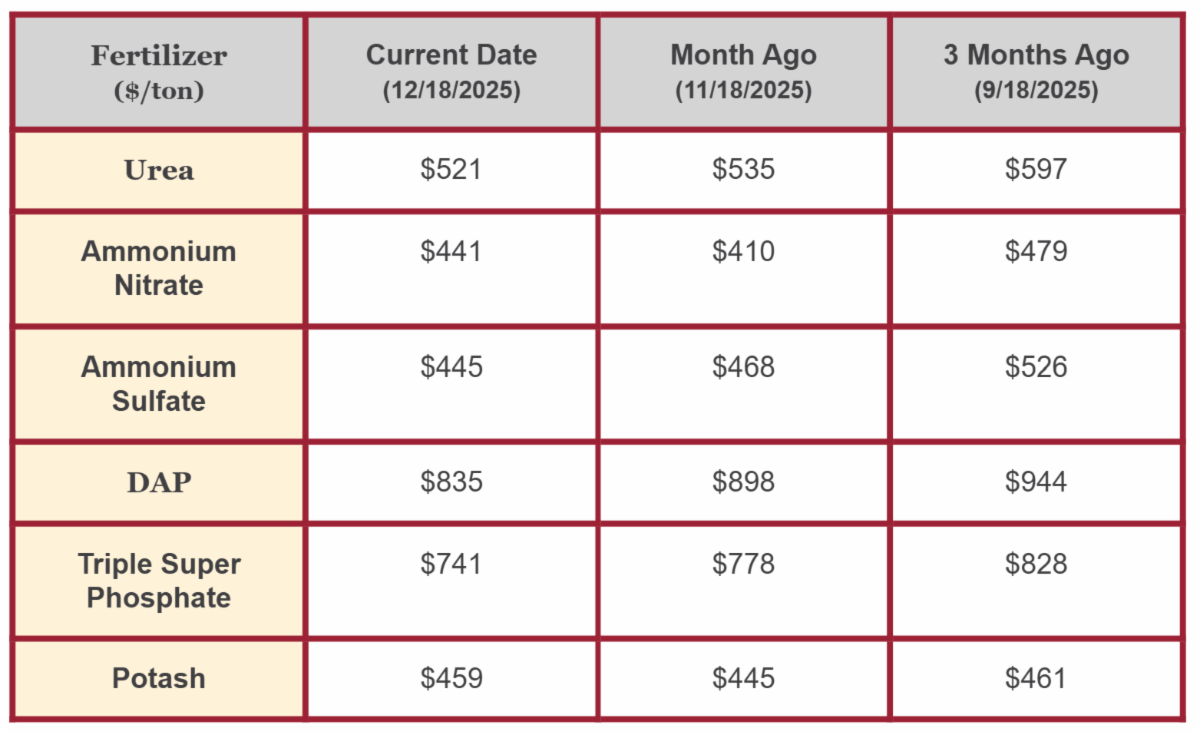
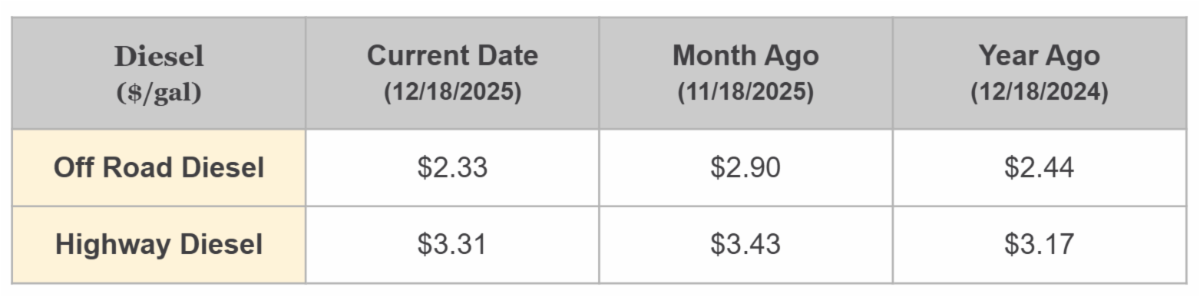
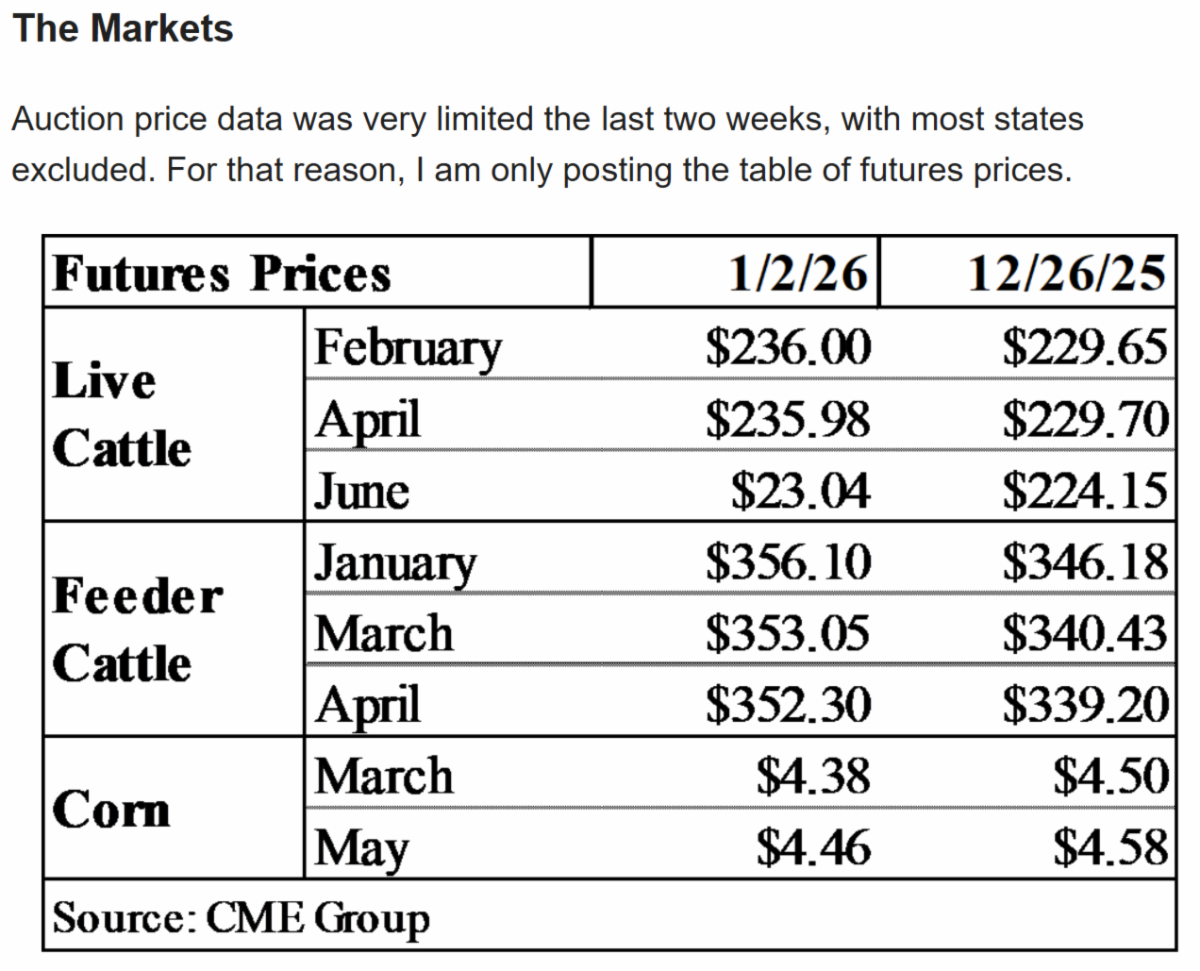
The market and input updates for this week are from December 18 but we should have more updated tables next week.
| | Beef, Small Ruminants, & Forages | | |
Faulkner County Cattlemen's Meeting
The next meeting of the Faulkner County Cattlemen's will be January 22, 2026 at the Faulkner County Extension Office starting at 6:30.
Sponsors:
- Aday Lime and Fertilize, Inc.
- 4M Equipment/McLehaney Equipment
Program:
- Jeff Monk, 4M Equipment/McLehaney Equipment
| | |
River Valley Beef Meeting
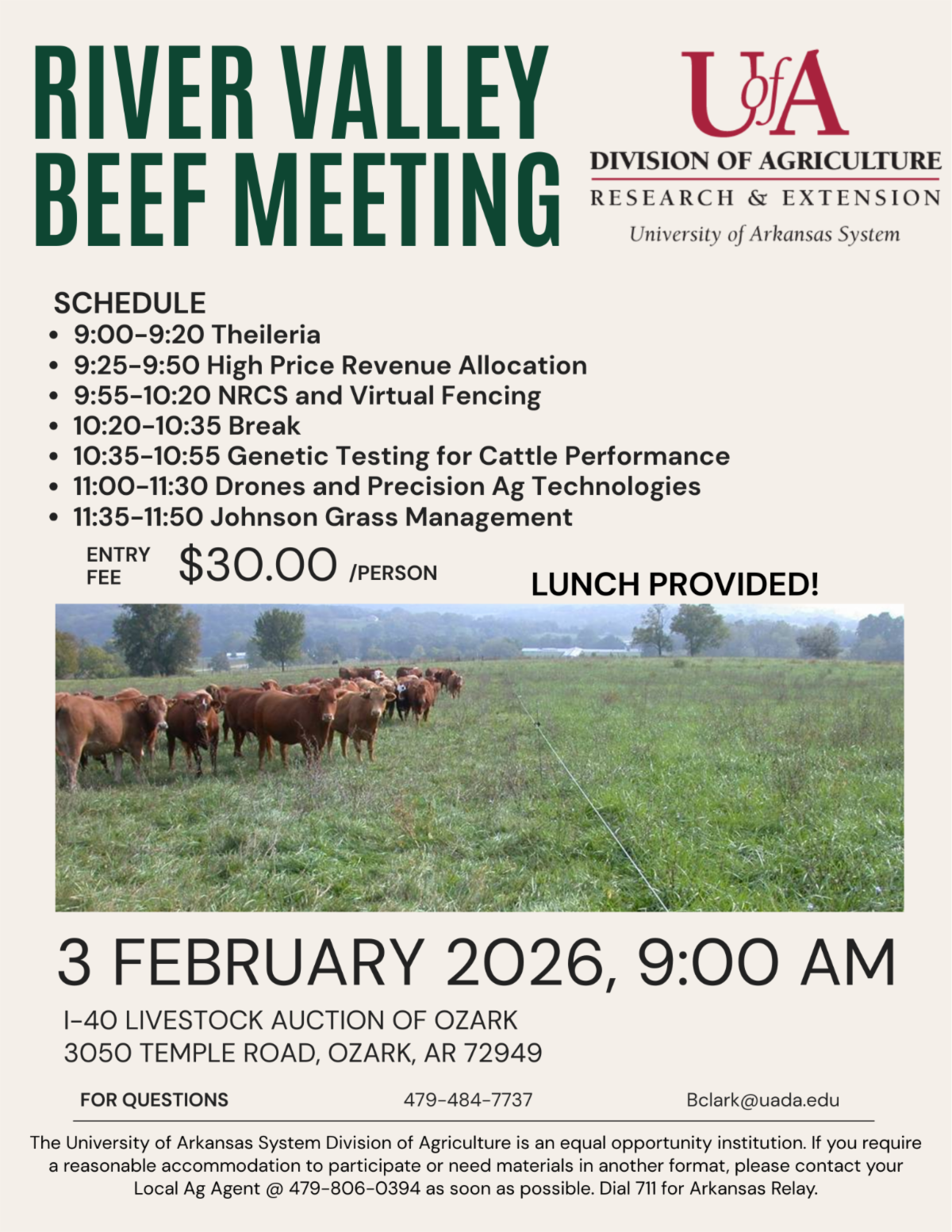
The Arkansas River Valley Beef Meeting will be February 3, 2026 at the I-40 Livestock Auction at 3050 Temple Rd, Ozark, Arkansas 72949. The meeting will start at 9:00 and go to 12:00 and end with a steak lunch. Registration this year is $30. Thanks to Farm Credit Services of Western Arkansas for sponsoring.
| | |
What’s Your Plan for 2026?
Derrell S. Peel, Oklahoma State University Extension Livestock Marketing Specialist
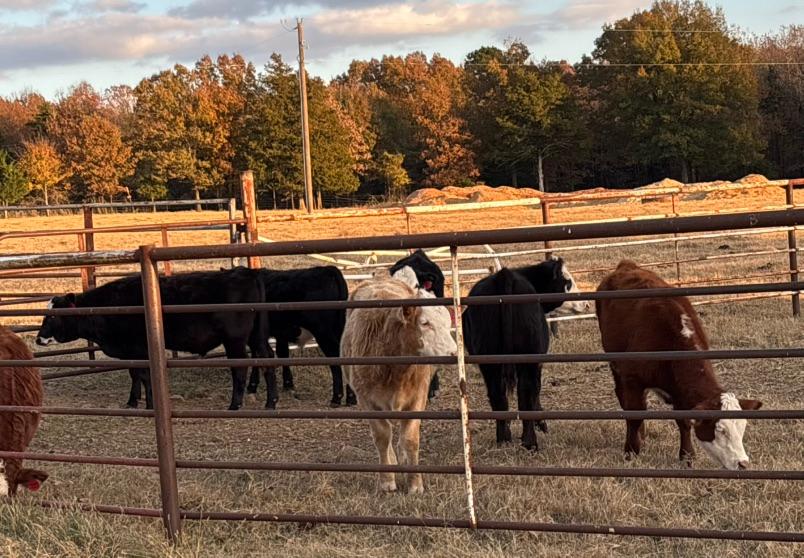
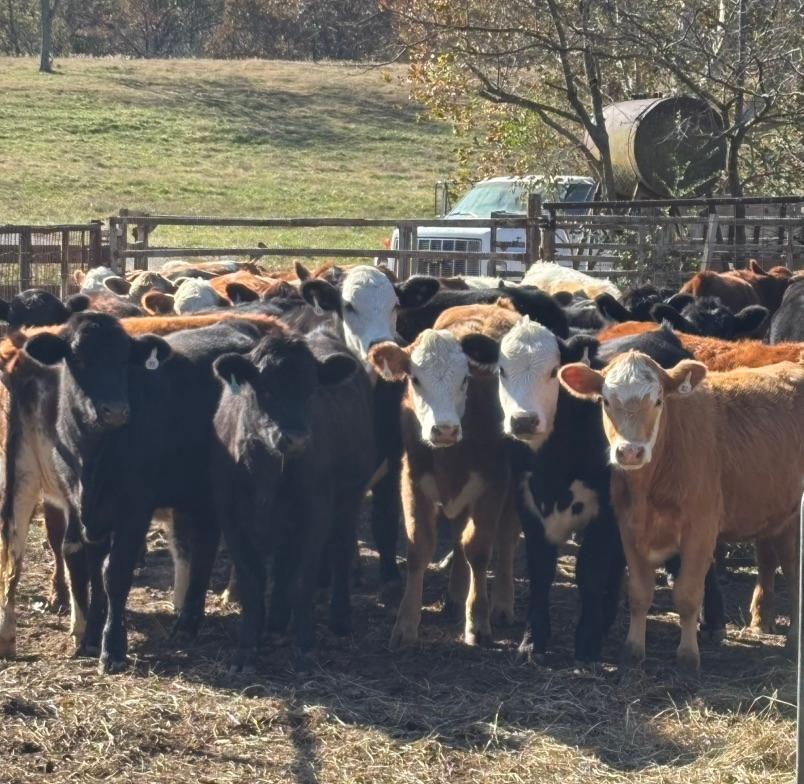
Cattle and beef markets are poised to continue the path of the past few years in 2026. Despite turbulence in the fourth quarter of 2025, cattle markets ended the year strong. Tight cattle supplies, decreased beef production, and strong demand continue to support and elevate cattle and beef prices. Multi-decade lows in cattle inventories are the driving supply force that underpins cattle markets and the market is focused on the cow-calf sector, which holds the key to cattle supplies going forward. The rest of the cattle industry above the cow-calf sector will take their cues from cow-calf producers regarding cattle supplies in 2026 and beyond. Cow-calf producers have a number of factors to consider in the coming year.
Listen to the Market – The job of markets is to provide price signals to help producers allocate and use resources to produce products to meet market demands. In the case of cattle markets, price signals indicate what to produce, how much to produce and how resources should be used for that production. Record high calf prices and cow-calf returns is the market’s way of strongly encouraging increased calf production. Moreover, production resources, especially forage resources, should focus on calf production over alternatives such as backgrounding/stocker production. Cheap corn further emphasizes this, encouraging calf production in the country with feedlot placement at relatively lighter weights and finishing as quickly as possible.
Maintain Herd Productivity – A top priority for cow-calf producers is to maintain the productivity of the beef cow herd. Three years of declining beef cow slaughter has pulled the beef herd culling rate down to the lowest level in a decade. The net culling rate for the beef cow herd in 2025 is project to be less than 8.4 percent. The average net culling rate for the last 30 years is 10 percent. Low culling rates have allowed producers to sell more heifers in the last three years, but additional heifer retention is needed going forward just to maintain the productivity of the current low cow inventory
Herd Growth? – Beyond keeping enough heifers to maintain the herd, some producers have further considerations about additional heifer retention to increase herd inventories. Conditions vary widely regarding pasture recovery from previous drought, current status of pastures, expectations/concerns about future forage conditions. Nevertheless, strong calf prices and the slow pace of market response thus far to high prices likely means that more producers are considering some level of restocking and herd growth.
Manage Costs – Profit maximization means managing costs as well as increasing revenue. While current calf prices are generating record high per head revenues, complacency about cost management means that producers are not taking full advantage of the current opportunity to maximize profits and build equity. Harvested and purchased feeds are the largest part of annual cow cost of production. Now is a good time to develop grazing plans for forage use and minimizing harvested and purchased feed needs in the coming year.
Manage Risk – Despite a general bullish market environment, cattle markets will continue to be subject to considerable uncertainty and market volatility. Most of the market shocks that occur are likely to be short-lived. Having the flexibility to adjust marketing plans by a few days or a few weeks can help to avoid brief market dips. Additionally, producers can consider risk management tools to provide downside risk protection for planned marketing windows. These include LRP insurance or futures options. Higher average prices are expected so leaving the upside open is important.
| | |
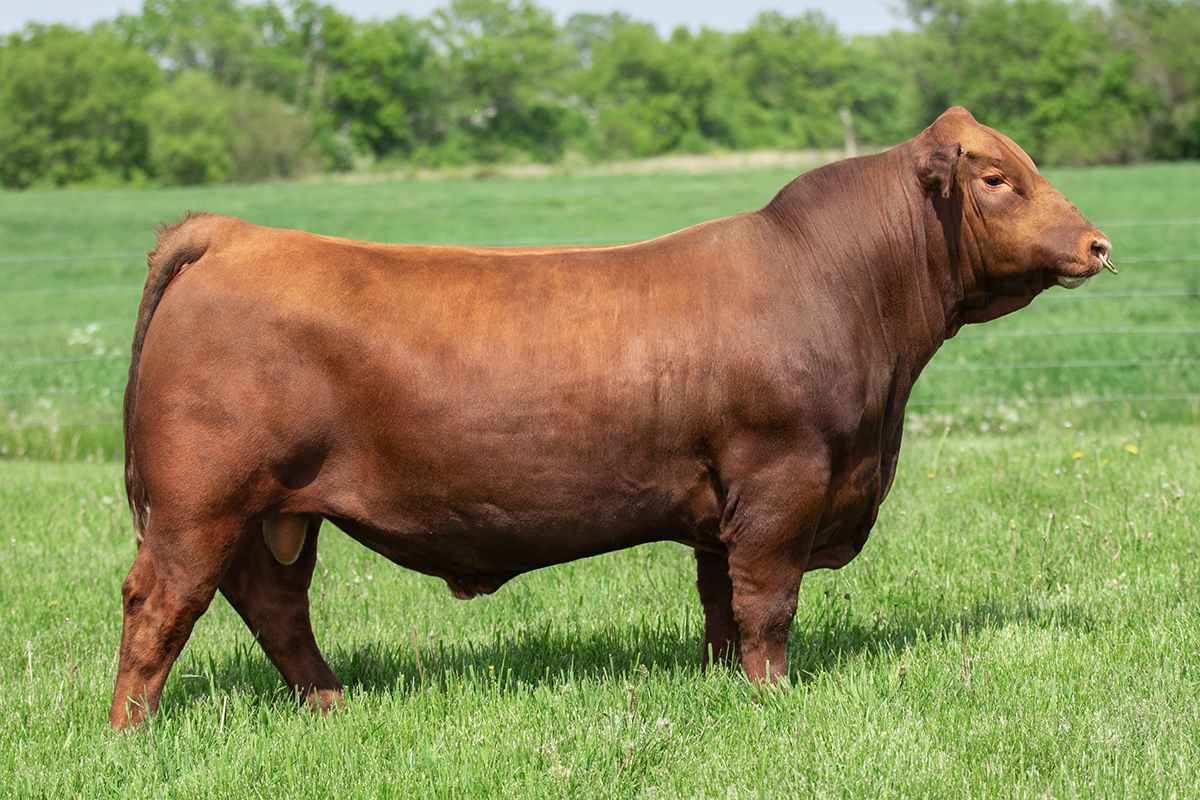
What is a Good Bull Worth in 2026?
Mark Z. Johnson, Oklahoma State University Extension Beef Cattle Breeding Specialist
With the onset of The Cattlemen’s Congress currently taking place in Oklahoma City, the spring 2026 bull buying season has officially started. The full schedule of sales during the Cattlemen’s Congress can be found at https://cattlemenscongress.com/sales/. Bull buying season will continue into the spring months, in Oklahoma and across the nation with progressive seedstock operations offering yearling bulls. Accordingly, it’s time to revisit the age old question. What is a Good Bull Worth in 2026?
The Answer
As a student at Oklahoma State University in the mid-1980s, I was taught “A good bull is worth the value of five calves he sires.” It is a good answer and a good rule of thumb to follow, the problem is it doesn’t exactly narrow down the range. As always, we need define “a good bull,” check current market reports, answer some questions about how we intend to market future calf crops, and do some “cowboy math” to arrive at a more precise answer.
What is considered a “Good Bull”?
For this discussion, qualifications to meet “Good Bull” status are:
- A bull that sells with a registration paper which includes pedigree information and a complete set of genetic values (including EPDs and Bio-economic indices) to be considered in the selection process.
- A bull that has passed a Breeding Soundness Exam (BSE) and sells with a breeding soundness warranty (terms will vary).
- A bull that will add value to calves sired because he fits your breeding objectives, production system and marketing plans.
When are we marketing our Calves? What is their Value?
Using the end of year market prices for 2025 from Dr. Derrell Peel’s article in the December 29th, 2025 issue of the Cow-Calf Corner newsletter:
500 lb. weaned steer calves were worth about $4.80/lb. for a value of approximately $2,400 per head. Therefore, if my future marketing plan is to sell weaned steers, $2,400 x 5 = $12,000 is the answer.
800 lb. yearling steers were worth about $3.50/lb. for a value of $2,800 per head. Therefore, if my future marketing plan is to sell yearling steers, $2,800 x 5 = $14,000 is the answer.
1,500 lb. finished beef steers were worth $2.29/lb. live for a value of $3,435 each. Therefore, if my future marketing plan is to retain ownership through finishing and sell fed cattle on a live weight basis, $3,435 x 5 = $17,175 is the answer.
So, in the current market, a good bull is worth somewhere between $12,000 - $17,175 to a commercial cow-calf operation. Where exactly in that range depends on your marketing plan and the market conditions at that time. Not an exact number because there are many variables in play. One key point illustrated here is that the longer you own the offspring before marketing, the greater the value of the bull to your operation. Retained ownership gives you more time and opportunity to capture the value of your investment in genetics. It is noteworthy that we haven’t considered the value added to replacement females a bull will sire. Bulls used to sire the next generation of cows have an even greater long-term economic impact on the profit potential of your operation and should be valued accordingly.
I encourage cow-calf operations to consider their breeding goals, production system and marketing plan. Doing so should dictate where to apply selection pressure. Genetic values pay when you purchase bulls capable of improving genetic potential for the specific traits that will translate to added value at your intended marketing endpoint.
| | |
Using Ionophores to Increase Efficiency of Heifer Development
Paul Beck, OSU Cooperative Extension Beef Cattle Nutrition Specialist
Ionophores are feed additives that improve ruminal efficiency by shifting fermentation toward greater propionate production and reducing energy lost as methane in the rumen. The ionophores monensin (marketed as Rumensin® by Elanco Animal Health and as the FDA-approved generic Monovet® by Huvepharma) and lasalocid (marketed as Bovatec® by Zoetis) are approved for growing cattle on pasture or in confinement and are commonly used in heifer development programs.
Multiple studies show that both monensin and lasalocid increase weight gain of growing heifers; however, lasalocid has not been widely studied for reproductive performance. In contrast, there is a large body of research evaluating the pioneer monensin product, Rumensin®, on heifer efficiency and reproductive development. A recent analysis (Gadberry and others, 2022) pooled these studies to quantify growth and reproductive responses of beef replacement heifers fed monensin during development.
Feeding monensin to developing heifers increased average daily gain by 5% and reduced feed intake by 4.3%, resulting in a 14% improvement in feed efficiency. Beyond growth and efficiency, monensin reduced age at puberty by approximately 9 days and increased the proportion of heifers cycling prior to breeding by 16%. Earlier puberty and increased cycling activity before the breeding season improve the likelihood of early conception. Cows that calve early in the calving season tend to have higher reproductive rates and greater longevity in the herd, making these responses highly valuable for improving lifetime productivity of replacement heifers.
A study from the early 1980s by Corah and Riley reported that lasalocid increased gain of replacement heifers by 0.2 lb/day and reduced age at puberty; however, additional research evaluating reproductive responses to lasalocid is limited.
Importantly, feeding monensin did not increase mature size or weight at puberty and did not negatively affect pregnancy rate. Improvements in feed efficiency, earlier puberty, and enhanced cyclicity make monensin a valuable tool for heifer development.
As the U.S. beef herd moves into expansion, the role of ionophores in improving efficiency, lowering development costs, and strengthening reproductive performance of developing heifers is increasingly important.
| | |
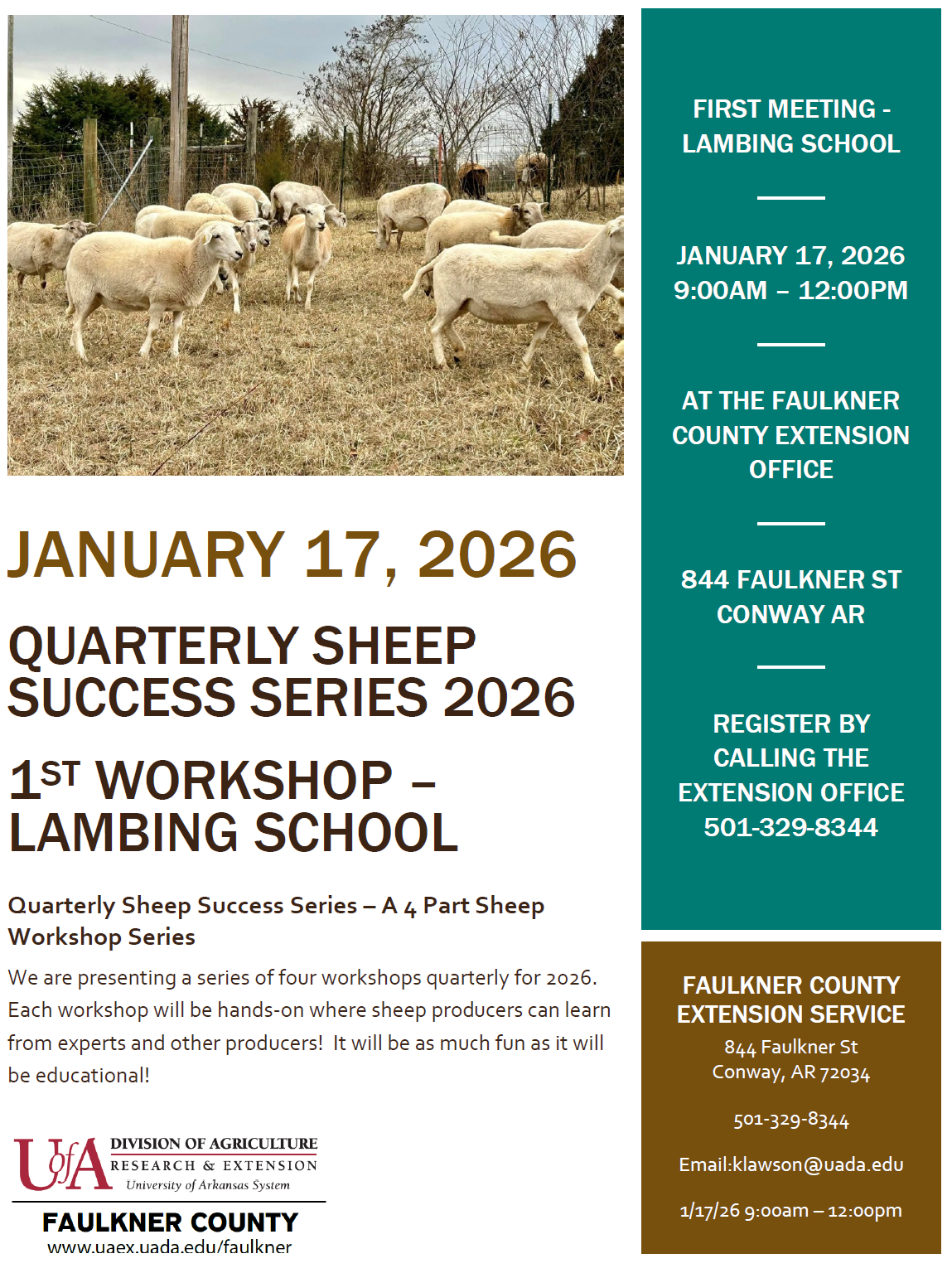
Quarterly Sheep Success Series 2026
We are excited to announce The Quarterly Sheep Success Series for 2026. This series will consist of 4 quarterly sheep production workshops. The first workshop will be a lambing school workshop on January 17, 2026 at the Faulkner County Extension Office. We are planning to start at 9:00 and be done by 12:00. Please call the Extension Office at 501-329-8344 to register.
Plans for other workshops include composting of manure, economics, and a farm tour.
| | |
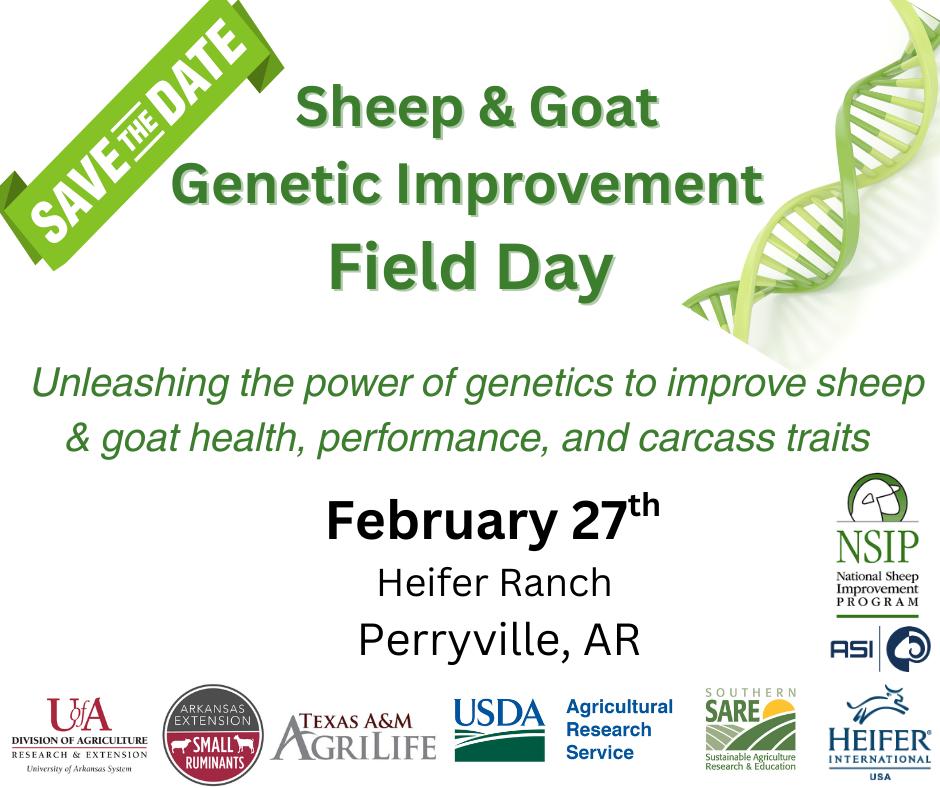
Sheep & Goat Genetic Improvement Field Day
by Dr. Dan Quadros
We have rescheduled it! Save the date: The "Sheep & Goat Genetic Improvement Field Day" will take place on February 27th (Friday), now in a new location, at Heifer Ranch (55 Heifer Rd, Perryville, Central Arkansas), from 9:30 am to 3:30 pm. The program and registration website will be released in January.
I know that some of you will be busy with the lambing/kidding season, but please plan in advance to attend.
| | |
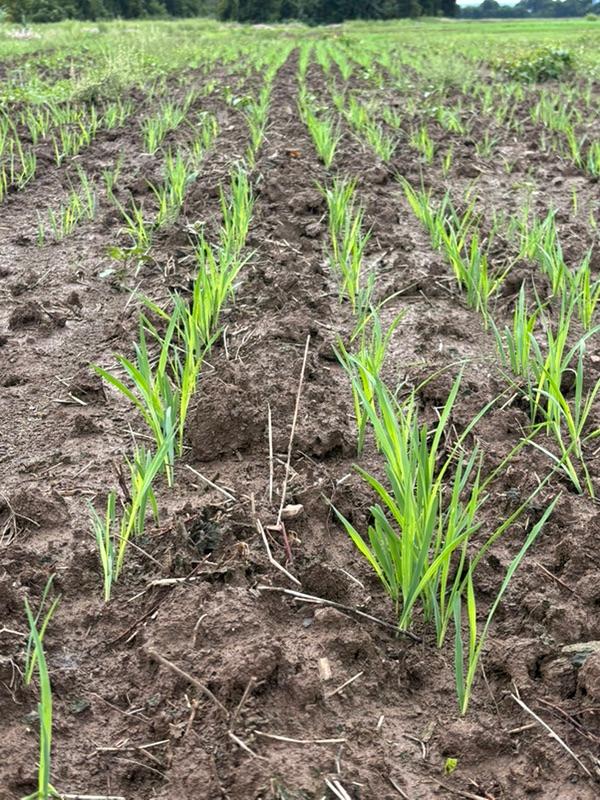
Cool Season Annuals
Cool season annuals are growing with all of the warm weather we have seen. If they had some moisture I am sure they would be doing much better. I am getting several questions about fertilizing annuals now while it is dry. I still think we are about a month too soon for fertilize. I know we are taking a chance that it will be too wet in a month, but I would rather take my chances in a month so I don't run out of nitrogen in April. Stay the course and aim for Valentine's day as your fertilizing target.
| | |
Pesticide Applicator Trainings
In order to purchase restricted use pesticides (herbicides, insecticides, fungicides, etc) you must have a private applicators license. The license is good for 5 years.
To obtain a license you must first attend a certification training. Certification trainings are done in person by a County Extension Agent or you can go online and be certified. Below is a link to the online training.
In person trainings this year will all be at the Faulkner County Extension Office and will be on:
January 29 - 6:00 PM
March 12 - 6:00 PM
April 30 - 2:00 PM
A certification training costs $20 and is due the day of the training.
Once a producer is certified, they will go through the Arkansas Department of Agriculture to obtain the license which is $45.
Please call the Extension office at 501-329-8344 to sign up for one of these dates.
There will be other opportunities for trainings in Perry and Conway County and I will post those as soon as those dates are available.
If you have a question about your license, please follow the License Search and Verification link below to find your license.
| | |
Livestock Market Report
The weekly livestock market report is available on the Arkansas Department of Agriculture website.
| | |
Sign up for Text Alerts
You can now sign up for text alerts from me throughout the year. I have two areas you can sign up for which includes Faulkner Livestock or Faulkner Ag (Row Crop Updates). To sign up you can follow one of these links or use the QR Codes below.
| | Pursuant to 7 CFR § 15.3, the University of Arkansas System Division of Agriculture offers all its Extension and Research programs and services (including employment) without regard to race, color, sex, national origin, religion, age, disability, marital or veteran status, genetic information, sexual preference, pregnancy or any other legally protected status, and is an equal opportunity institution. | | | | |