|
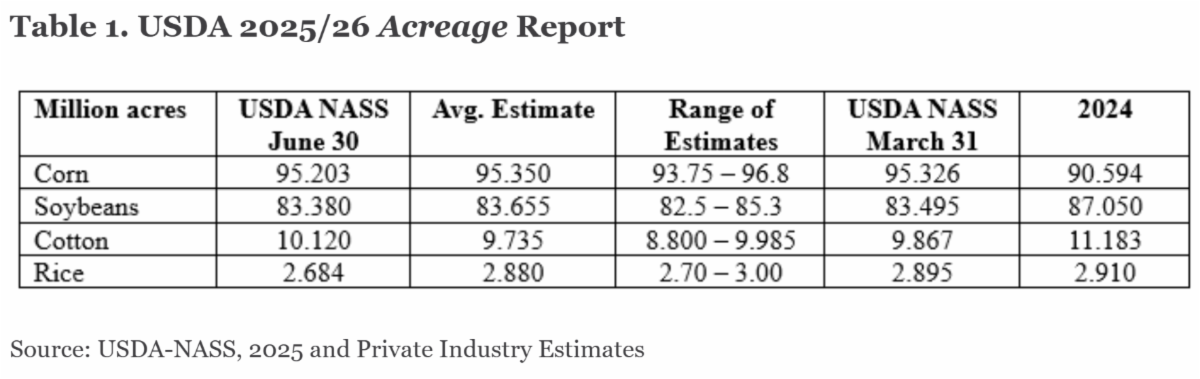
The USDA generally incorporates the information from the June 30 Acreage into the upcoming July WASDE report. For corn, planted acres should fall by 123,000 to 95.203 million from 95.326 million in June. Harvested acres are also expected to be revised lower in July to 86.774 million acres compared to 87.4 in the June report. Assuming USDA maintains its’ current average yield estimate of 181 bushels per acre, new crop production could be lowered next month by 113.3 million bushels. Some or all of this reduction may be offset by adjustments to beginning stocks or demand. With no offsetting changes to production, ending stocks could land between 1.6 and 1.7 billion bushels for the 2025/26 new crop.
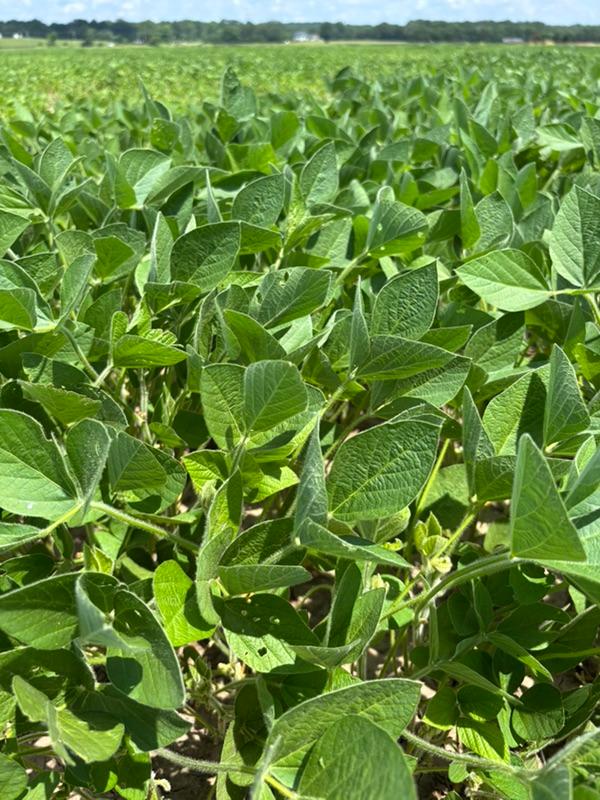
Like corn, there were no real surprises in the soybean acres either. The June Acreage estimate came in 115,000 acres below the March intentions, primarily on reductions in the Midsouth and Ohio Valley. Both areas saw considerable rain during the planting season. NASS conducted their June Acreage survey from May 30th and June 16th. At the time of the survey, 11.5 million acres of soybeans remained to be planted. This is below last year’s 12.8 million acres unplanted at the time of the survey.
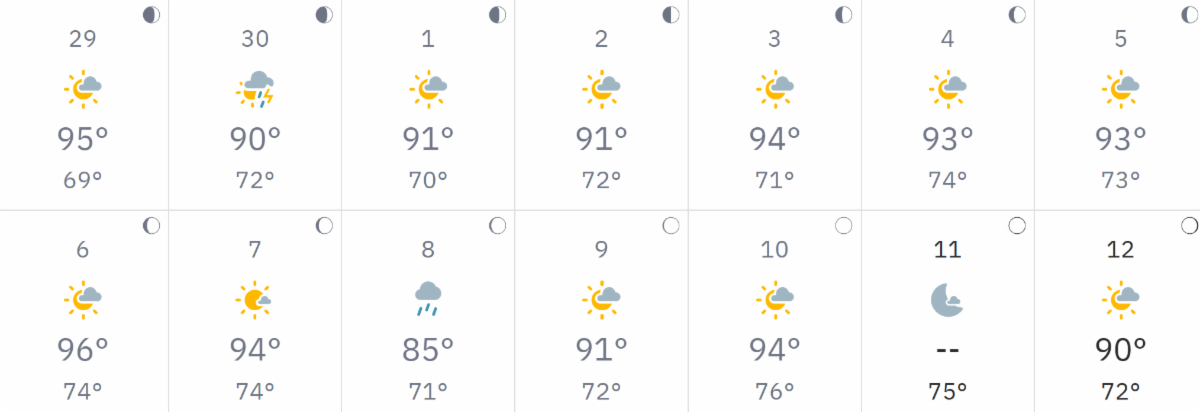
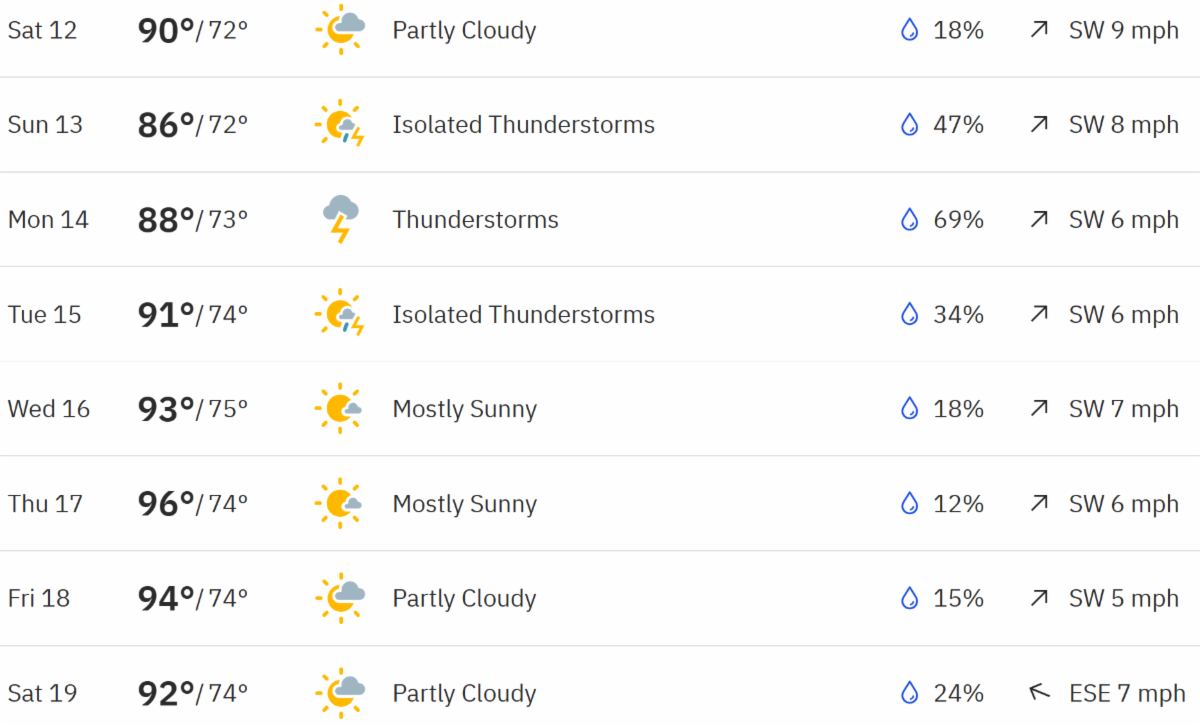
For soybeans, every acre counts in 2025. The acreage revisions in Monday’s report again places emphasis on the importance of favorable weather and trend yields to keep U.S. ending stocks in a comfortable position. There is potential for the soybean market to rally on any adverse weather in July or the first half of August. Keep in mind the Midwestern crop was planted much earlier in 2025 than in previous years. The USDA is currently projecting a record 52.5-bushel yield for the 2025 crop. Likely, this yield estimate will remain unchanged in the July 11th WASDE report. On lower acres, the July production estimate should be revised 8.7 million bushels lower.
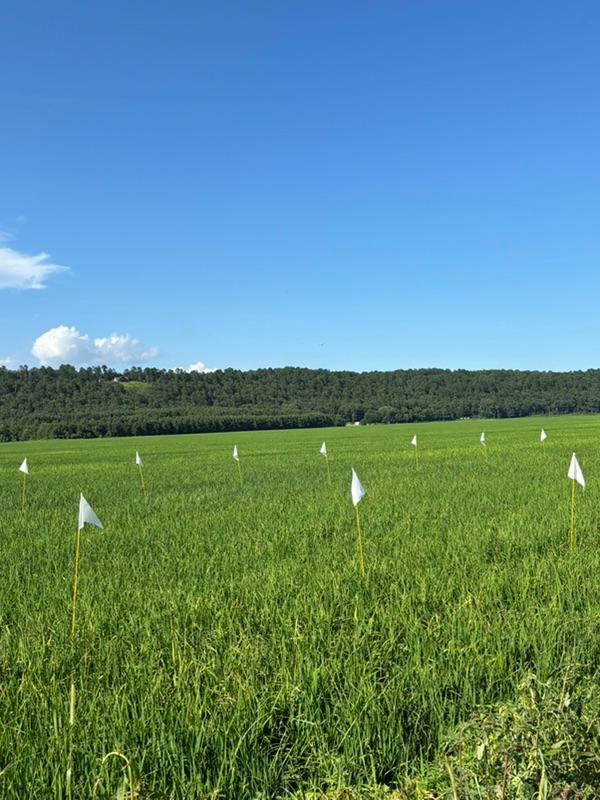
Turning to rice, it is a certainty that new crop production will be reduced again in July. With long-grain acres now 210,000 below the March intentions, that in turn should result in another significant monthly reduction in crop size similar to the 7.5 million cwt. cut seen in June. However, revisions to the old crop balance sheet could have significant implications for long-grain in the July WASDE. Monday’s Rice Stocks report revealed historically heavy supplies of old crop rice still held in both on-farm and commercial storage as of June 1. USDA may deem it necessary to revise old crop usage lower in the July WASDE.
On the surprising increase in cotton acres, production could be increased by 350,000 bales in the July WASDE. This assumes no changes to the U.S. average yield of 820 pounds and roughly 17% abandonment. Without an increase in exports or mill use, new crop ending stocks could increase to 4.65 million bales and keep the outlook for 2025/26 average farm prices in the low 60 cent area.
|