Faulkner County Agriculture Update
July 17, 2026
| | |
Summer Intern Korbin Singleton
Next week will be the last week for our summer intern Korbin Singleton. Korbin will be at state o'rama next week, so this was his last week riding with me in the county. Here are some of the things Korbin learned this summer as our intern.
"Throughout the course of this internship I have gained experience in row crops, livestock, weeds, and agriculture in general. Some of the things I learned include how to calibrate drills and sprayers; how to track the vegetative growth of crops; how to collect soil and hay samples and how to send them away to the labs; and how to check for insect issues and disease. Learning how to read the MP44 for recommendations was difficult at first, but I am confident in my ability to read it now. Helping with the research demos and seeing how they were set up was also a very enjoyable part of the internship for me.
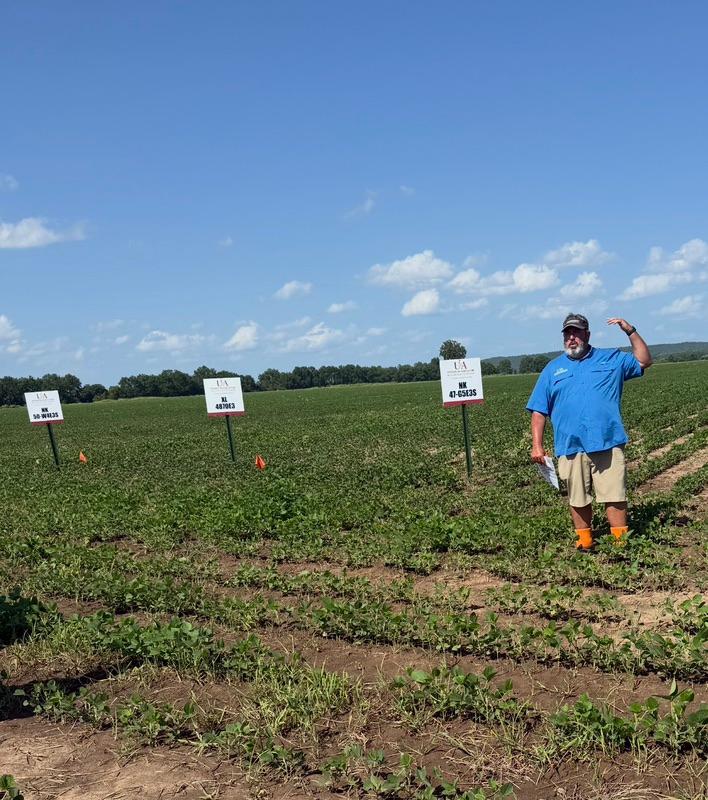
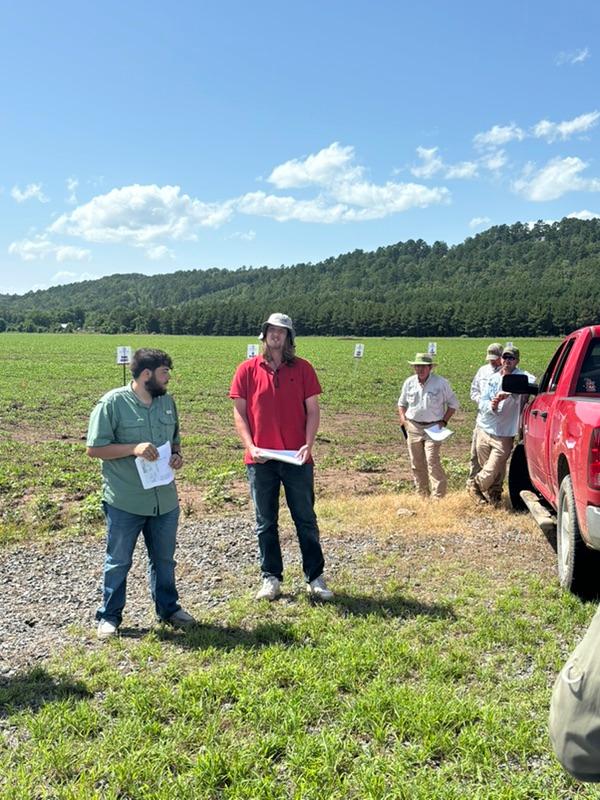
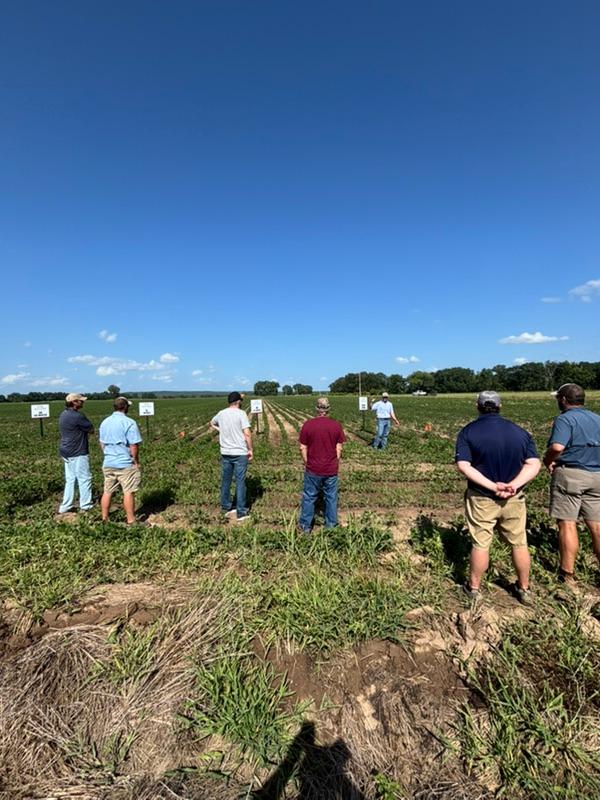
Haden Richardson and I have also been working on a final project for our internship. We have been walking a soybean multiplier field for the past 7 weeks and have been tracking various types of data. To finish our project, we presented at the River Valley Row Crop Tour that was yesterday. The project was a very insightful experience for learning more about row crops and soybeans in particular.
I could not have asked for a better person to teach me all of these things. Kevin has been extremely helpful in teaching and showing me everything that he does and what a county extension agent can and can’t do. Coming into the internship knowing practically nothing about row crops and leaving with the knowledge I have now is directly correlated to him. I really enjoyed getting the opportunity to see what a county extension agent does and getting to assist in any way I could all of you that we helped."
| | |
Weather
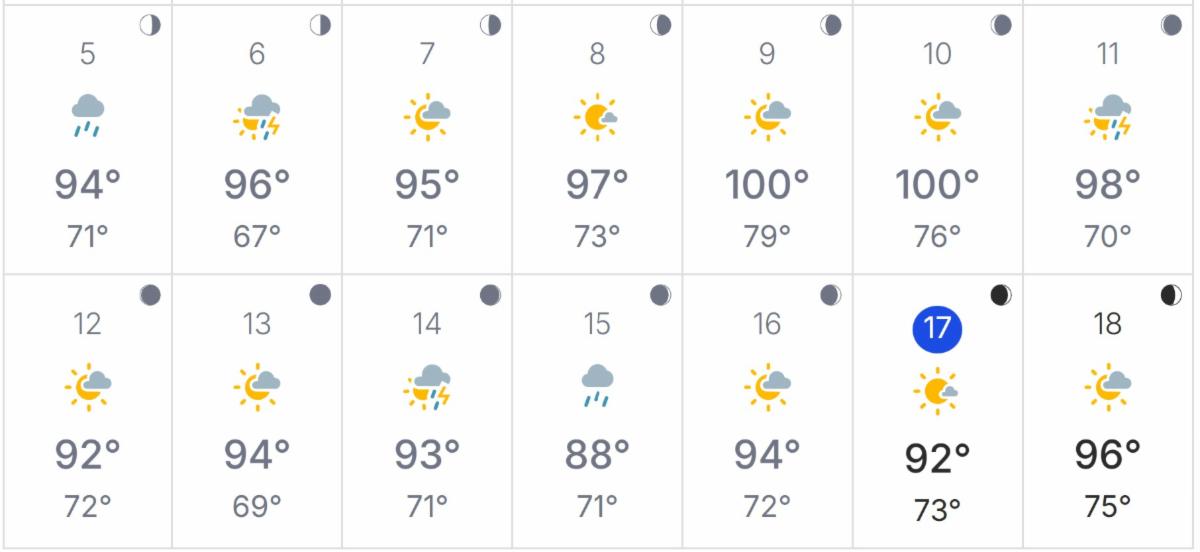
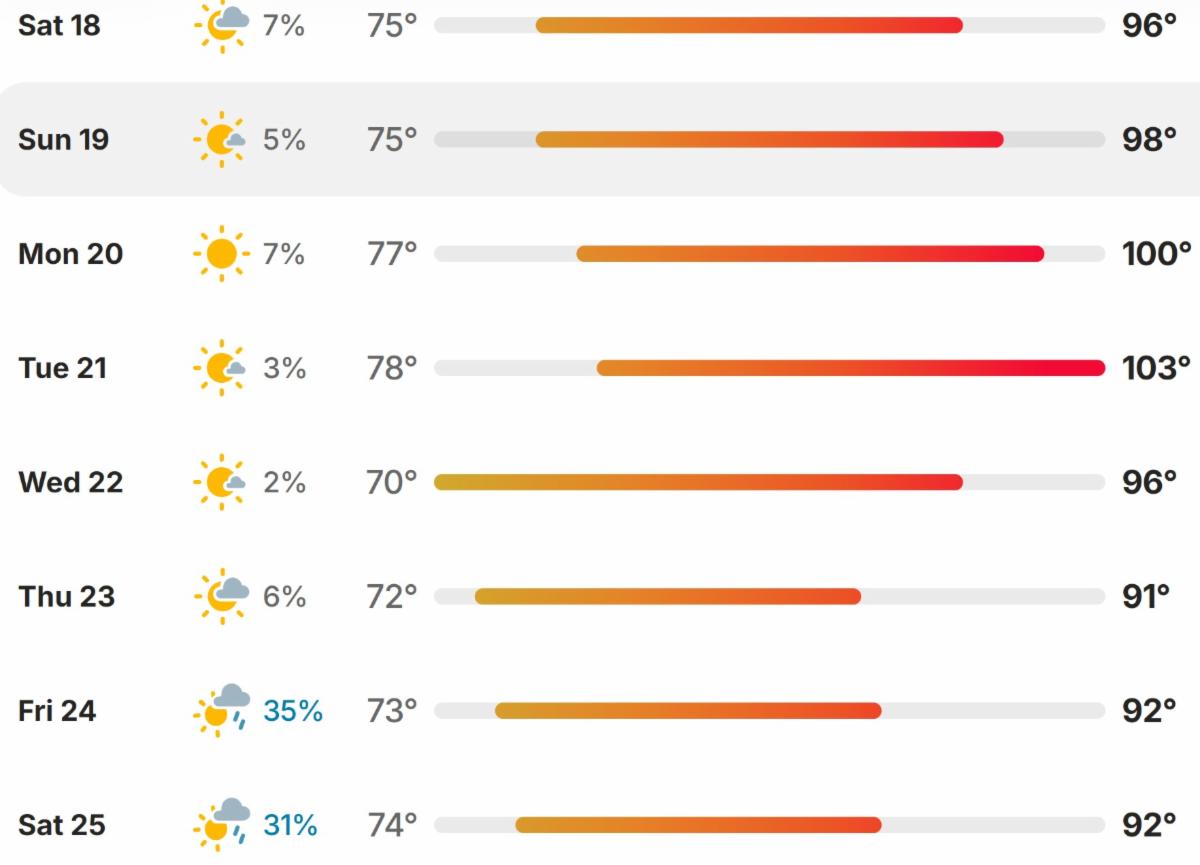
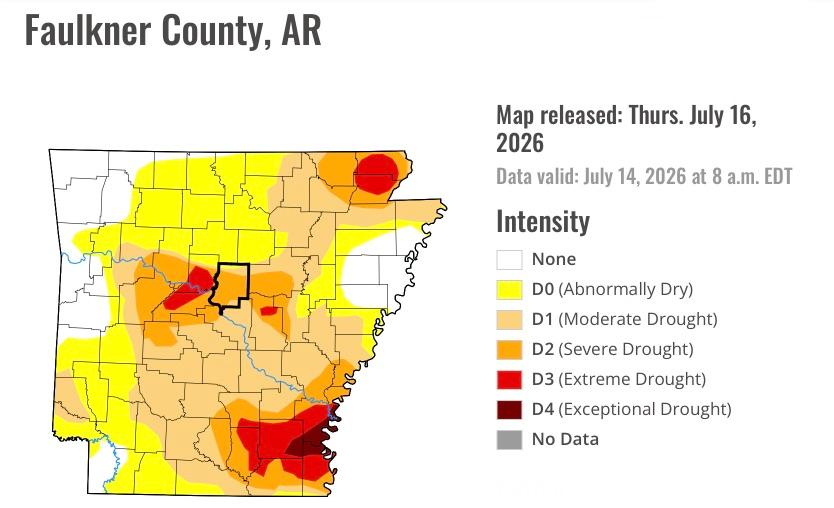
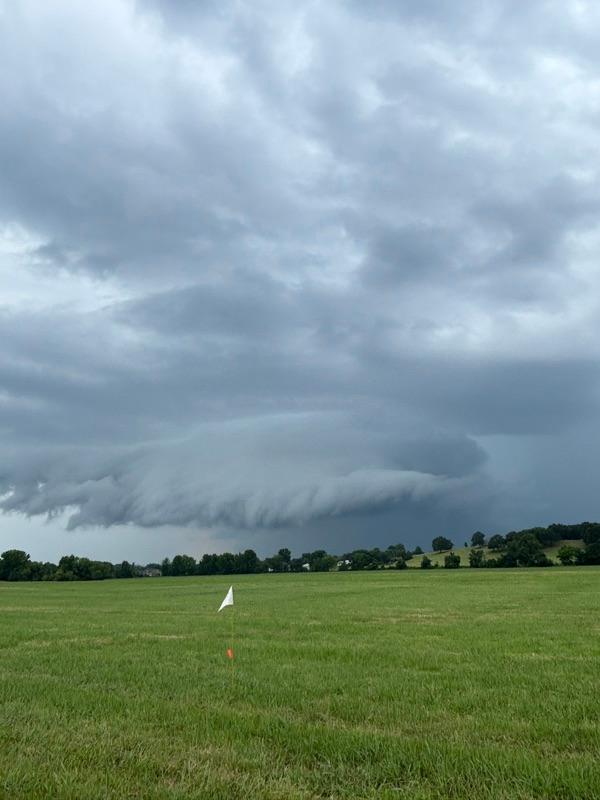
Looking around the county this week, rain totals ranged from 1.4 to 2.9 inches. We were lucky to get rain where we did. I have talked to producers and agents in neighboring counties that weren't so lucky. We have officially moved out of any D3 drought status in Faulkner County. Temperatures weren't too bad this week, but it looks like next week we get back to Arkansas summer temperatures.
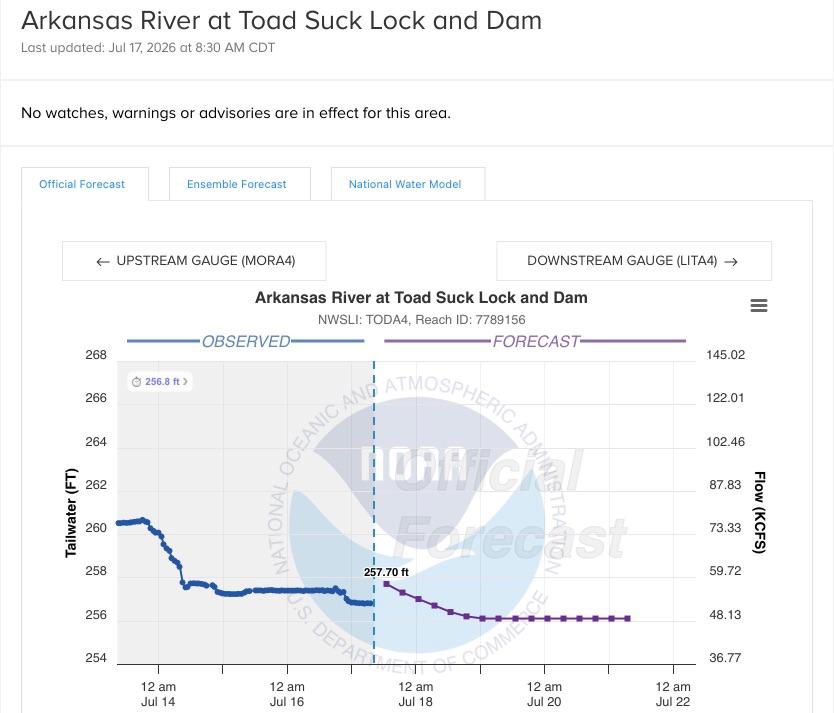
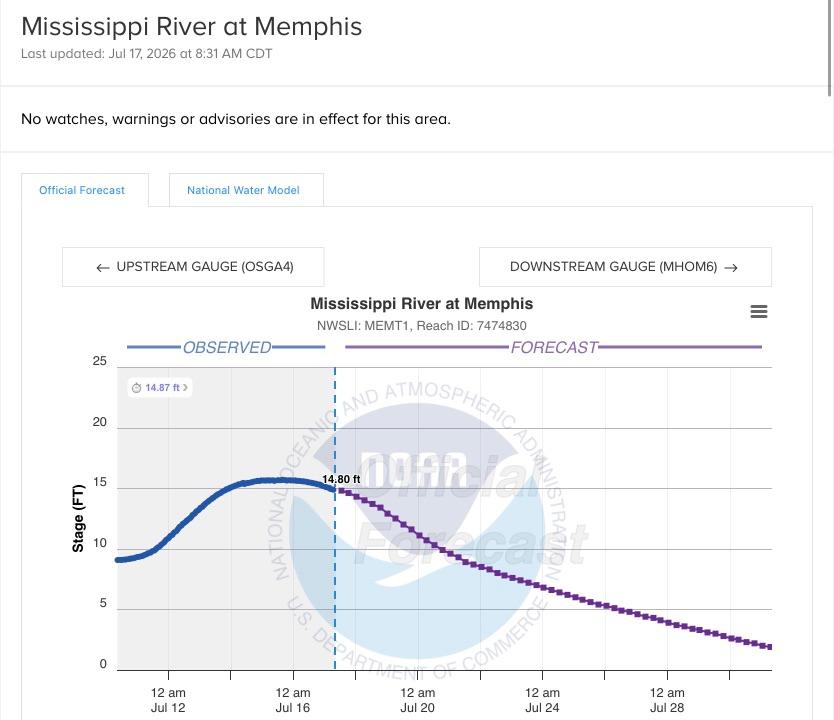
| | Arkansas and Mississippi River | | |
River Valley Row Crop Tour
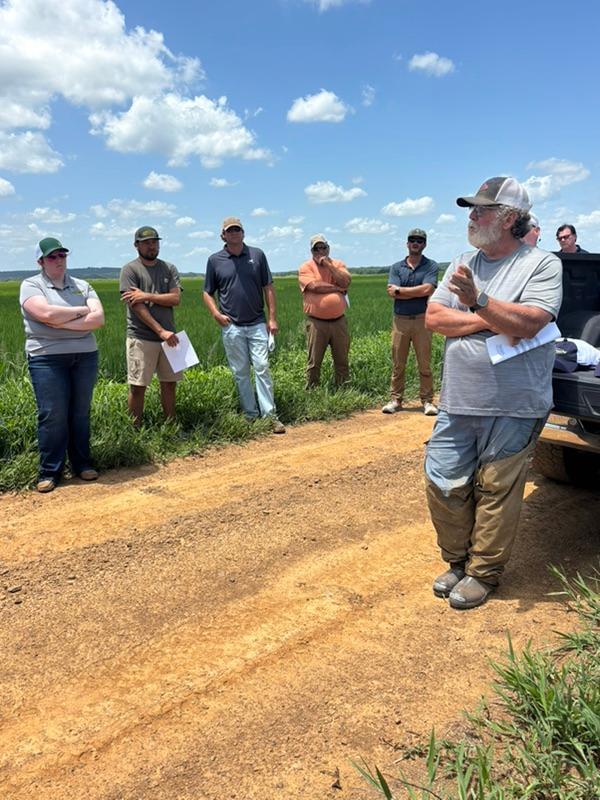
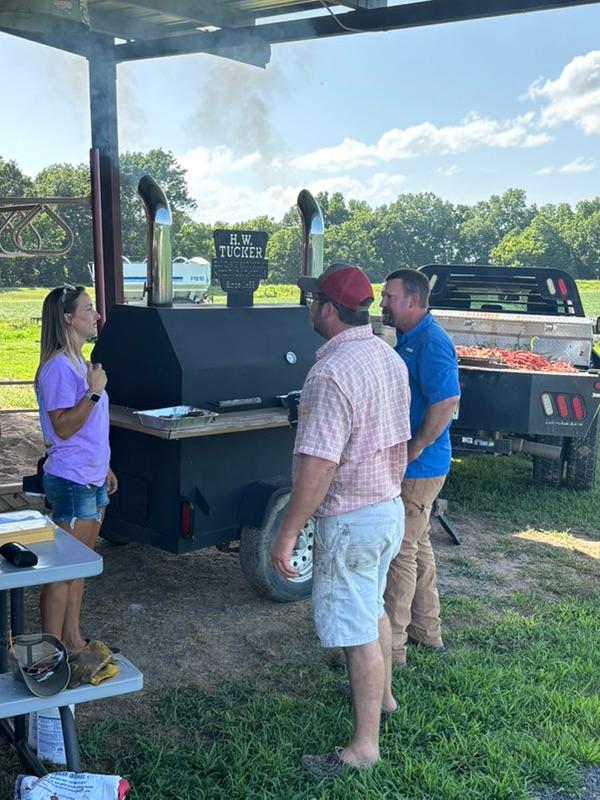
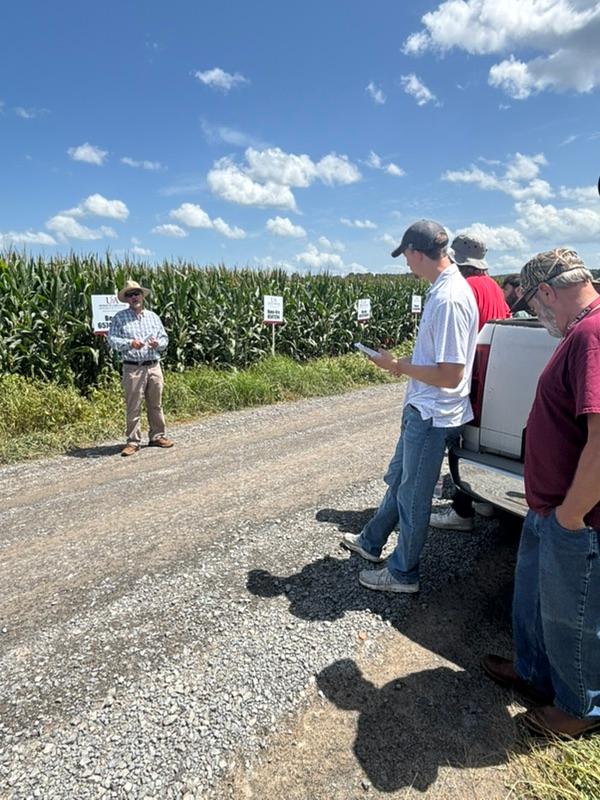
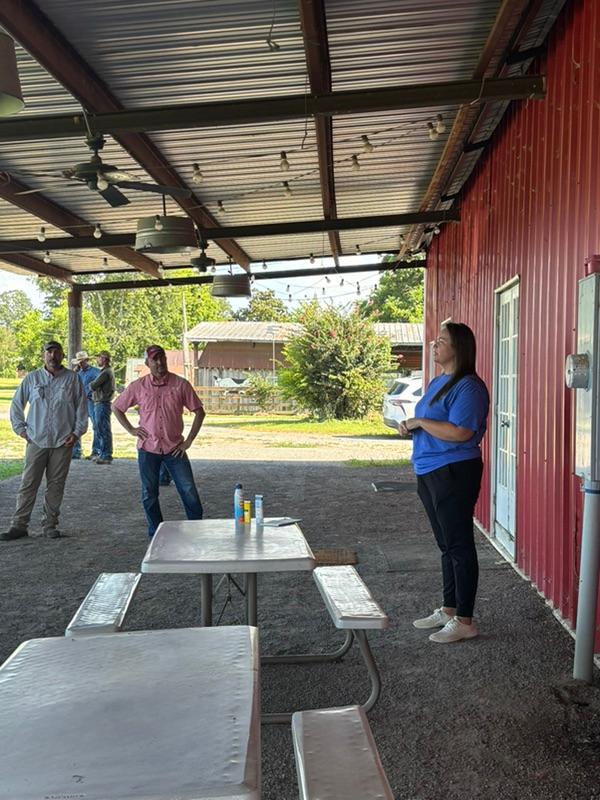
The River Valley Row Crop Tour was a big success yesterday. We had fairly decent temperatures as producers followed us around Faulkner County to visit different demonstrations that have been established.
First off I want to say thank you to all the producers that came out and enjoyed the tour. I appreciate all of you and your support.
Thank you to our speakers which included industry reps, Hank Chaney, Dr. Jason Kelley, Mary Beth Groce, and our Conway and Faulkner County summer interns.
Thank you to our cooks, John Hartley Evans, Garrett Moix, Josh Moore, and Jill Edwards. You all did an amazing job and I appreciate all the hard work you put in.
Thank you to Schaefers Brothers Farms for letting us use The Barn.
Thank you to our sponsors. Without you we could not have put this on for our producers and thank you for speaking at the meal.
Sponsors:
Beck's Seed
Chaney Consulting LLC
Farm Credit Services
Farmers Supply - Marvell
Helena Agri
Horizon Ag
Rice Tech
Syngenta (NK)
| |
Corn
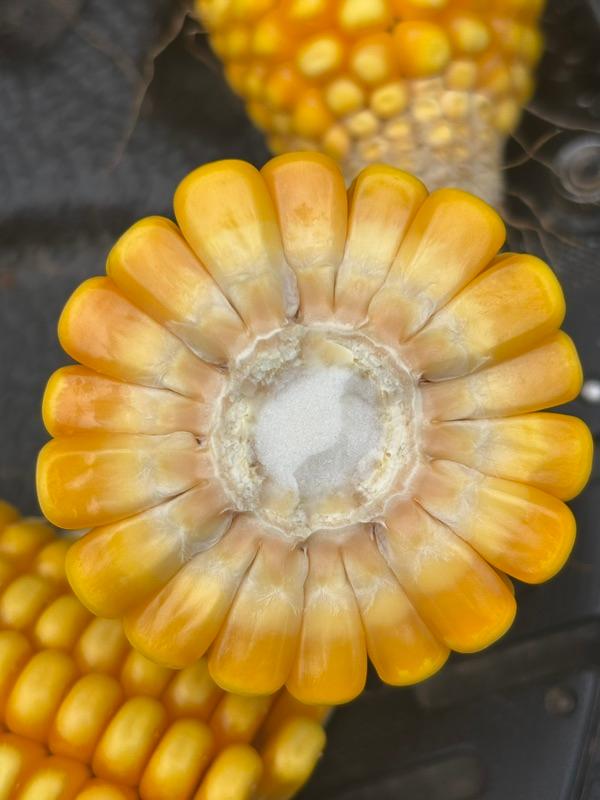
The beginning of the end of the 2026 corn crop is upon us. Fields that were planted first have reached approximately 50-70% starch. Most of those early fields received at least an inch of rain this week. I am ready to call it done. No more water and no more inputs for those fields. Now we just need to dry down.
For the later planted fields, we still need to continue that water. Even though we received good rains this week, don't get behind with a pivot. Keep it going for at least another week.
Silage harvest is in full swing in between rain showers. Yields on silage are very good.
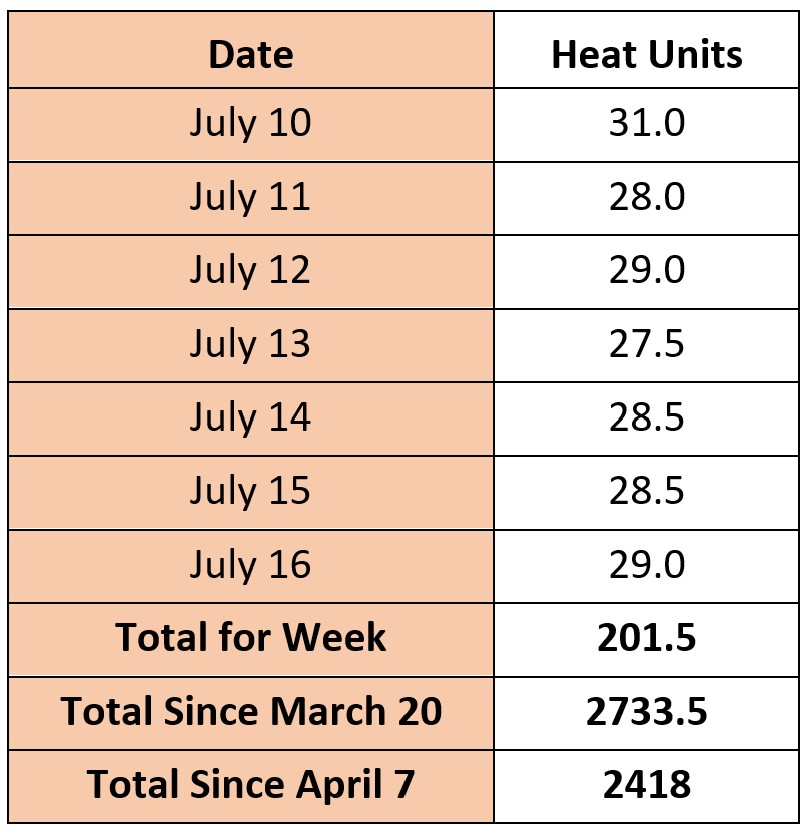
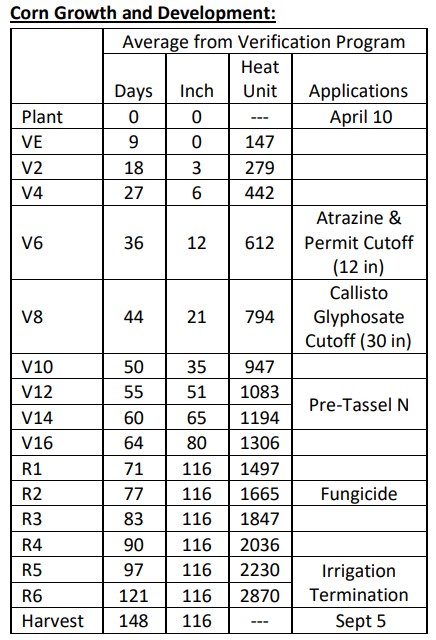
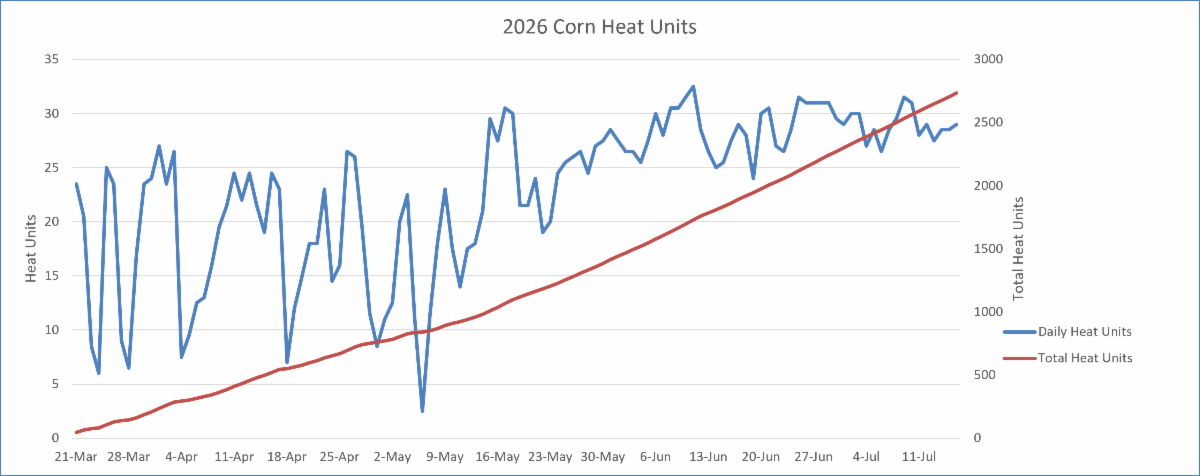
Heat units for corn planted on March 20 is at 2733.5 and for fields planted on April 7 there is 2418.0 heat units. We could see some R6 fields by next week.
| | |
Rice
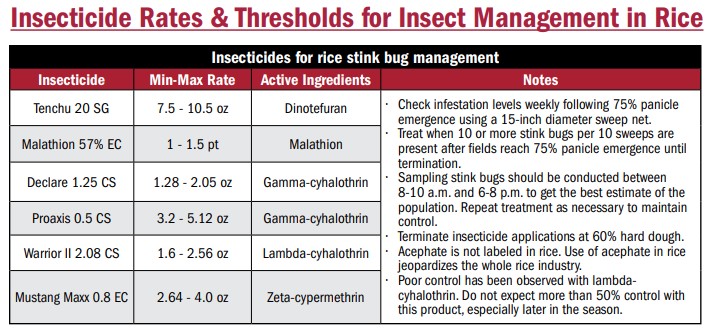
As we start to head, rice stink bugs will be moving in. The hardest hit fields will be the first and last headed fields. Here is an update from Dr. Nick Bateman on rice stink bug management.
"There are a few things we wanted to remind everyone on rice stink bug management since there have been some changes in recent years. The biggest change is with the threshold. We have moved the threshold to 10 bugs per 10 sweeps throughout the whole year, instead of the 5 per 10 during the first two weeks and 10 per 10 during the second two weeks. We have been evaluating this threshold since 2017 and all our data suggest that we can go to a straight 10 all season without jeopardizing yield or quality losses. Lastly on thresholds, let fields get to a minimum of 75% headed before making applications. If using products such as Tenchu, we want to get as much product on heads as possible to increase odds of residual control.
For control options things are similar to last year – lambda does not provide adequate control, and Tenchu and Kruger perform well. Both Tenchu and Kruger are dinotefuran and in the demo work we did last year, they looked very similar to each other. Another option is Transform. Transform has had a label in rice for several years but due to cost compared to lambda, not a lot of testing was done with it. Over the last few years, several of us in the midsouth have done some testing on rice stink bug, and initial looks suggest its comparable to Tenchu. Keep in mind this is based on a fairly small dataset, however we plan to do a lot more work this year.
One way to get the “most bang for your buck” with Tenchu (or similar) is to spray during the 2nd or 3rd week of heading (when heads just begin to turn down). It has the residual to get us to our termination timing of 60% straw-colored kernels. Our current situation doesn’t allow the flexibility to spray twice with Tenchu, so this method is something to consider if you can only spray once. We have done some work with lower rates of Tenchu and they perform well, however I would not want to go with a reduced rate if I need 10 plus days of residual. These reduced rates are really more intended for when populations blow up close to termination timing and we need really good knockdown but not a long residual."
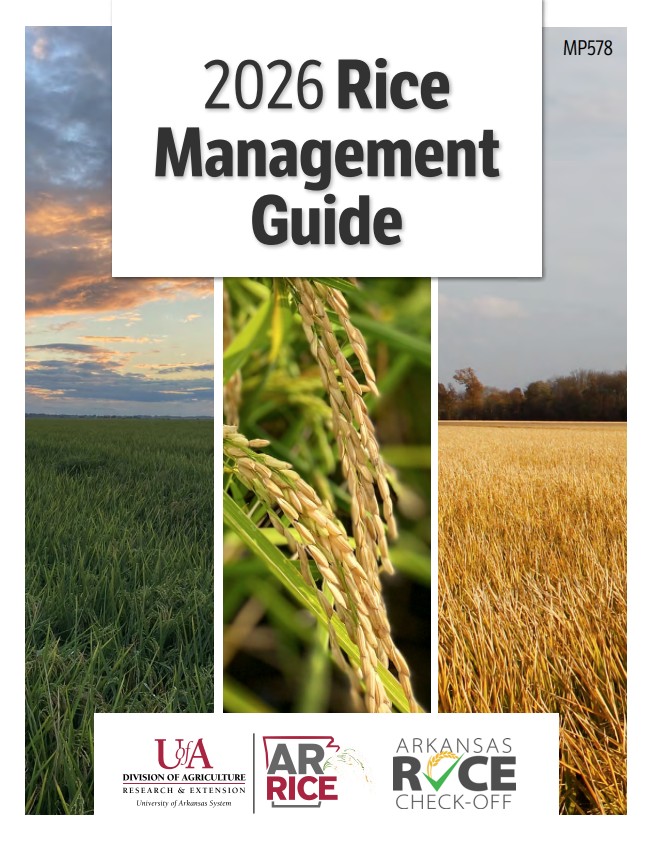
| | Latest rice update from Dr. Jarrod Hardke and our 2026 Rice Management Guide. | | |
Soybeans
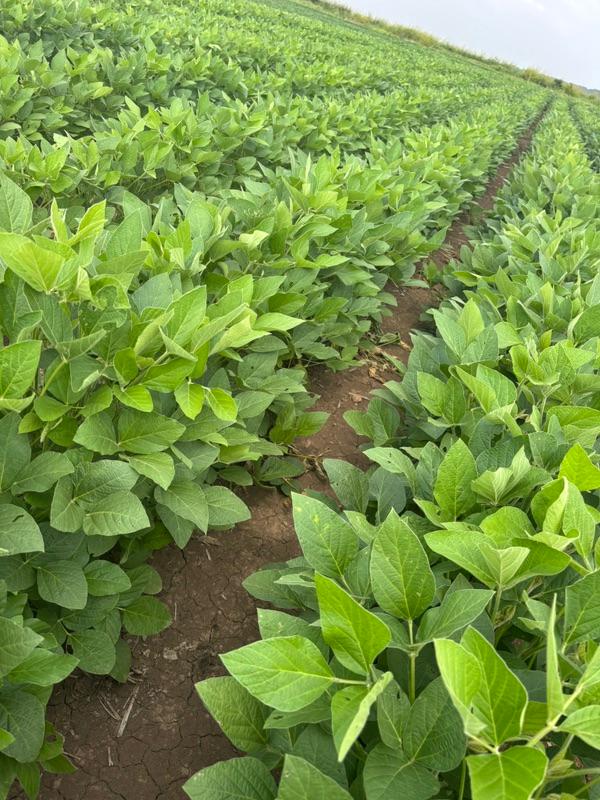
The recent rains are moving the soybean crop right along. Late planted fields needed this lift to get them growing. We had some fields just sitting there, and dry conditions were starting to show up. Insect counts continue to be low as we sweep fields. Green stink bugs are about the only thing that is showing up, but we are way below any threshold. Continue to scout for corn earworms and velvetbean caterpillars.
| | |
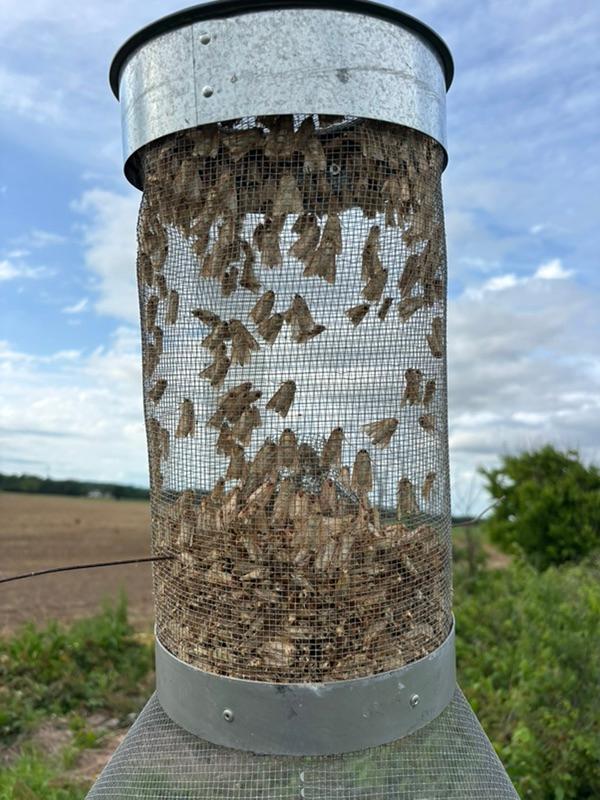
Corn Earworm Moth Traps
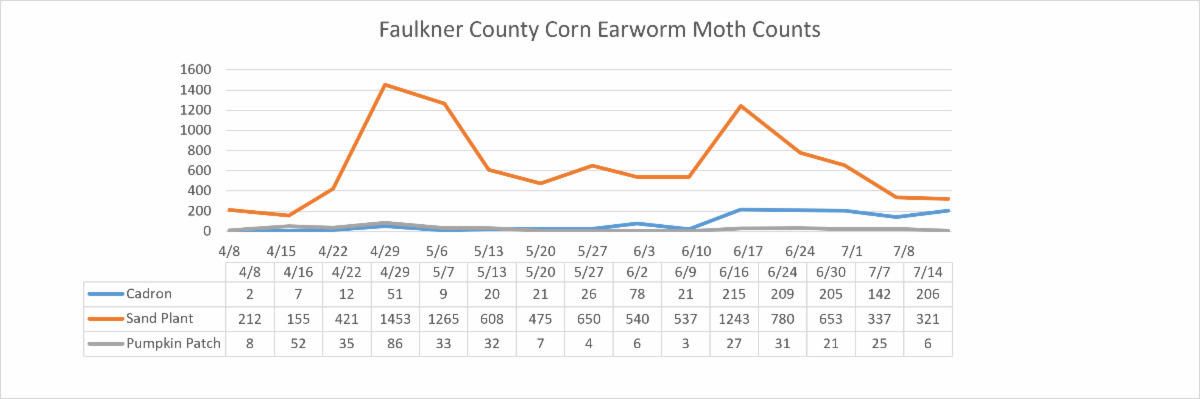
Corn Earworm Moth Counts for July 14, 2026
Cadron - 206
Sand Plant - 321
Pumpkin Patch - 6
| | |
Fed Funds Update and Outlook
Ryan Loy, Assistant Professor and Extension Agricultural Economist, University of Arkansas
Overview
At its June 2026 meeting, the Federal Reserve Open Market Committee voted to hold the federal funds rate at 3.5–3.75 percent, unchanged since a quarter-point cut in December 2025. While this rate applies to interbank lending rather than consumer or commercial loans directly, it is the primary benchmark from which agricultural loan rates are derived. This article summarizes the current rate environment, the factors likely to influence the Committee's next moves, and the implications for producers managing operating and capital loans.
Current Rate Environment
The Committee's decision to hold rates reflects continued caution amid mixed inflation signals. Historical patterns from the past two years suggest the Committee may not adjust the benchmark rate again until late 2026.
The Committee's remaining 2026 meeting dates are July 28–29, September 15–16, October 27–28, and December 8–9. A hold is widely expected at the July meeting absent a major geopolitical or trade disruption. The September meeting carries more uncertainty: the CME Group, an industry analyst and market operator, currently estimates a 33.7 percent probability of a rate increase at that meeting via its FedWatch Tool. That probability is expected to rise as the year progresses.
Factors Influencing the Outlook
Several energy-related developments are shaping the Committee's deliberations, including uncertainty surrounding the Strait of Hormuz — a corridor through which roughly 20 percent of global oil consumption flows — along with shifts in Venezuelan oil exports and sanctions affecting Russia and other producers.
The central question for policymakers is whether energy-driven inflation remains isolated to the energy sector or transmits more broadly into the economy. This transmission would be reflected in core inflation measures such as the Personal Consumption Expenditures (PCE) price index and the U.S. Bureau of Labor Statistics' Consumer Price Index. Core PCE currently stands at 3.4 percent, up from 3.0 percent in February 2026 and 2.8 percent in May 2025. The U.S. Bureau of Economic Analysis further reported that consumer spending on gasoline and other energy goods increased by $21.1 billion over the past year.
Kevin Warsh, who was appointed chairman of the Federal Reserve's Board of Governors in May 2026, reaffirmed the Committee's commitment to its long-standing 2 percent inflation target.
Implications for Farmers
A future rate reduction would ease interest expense on agricultural loans; however, rising input costs projected for next year may offset some or all of that benefit. Producers borrowing at a lower rate may also need to borrow larger amounts to cover higher input costs, further diminishing any net relief from a rate cut.
Producers evaluating loan timing, terms, or refinancing decisions should monitor upcoming Committee meetings and core inflation data as leading indicators of rate direction.
Metrics to Watch and Additional Resources
| | Beef, Small Ruminants, & Forages | | |
Forages
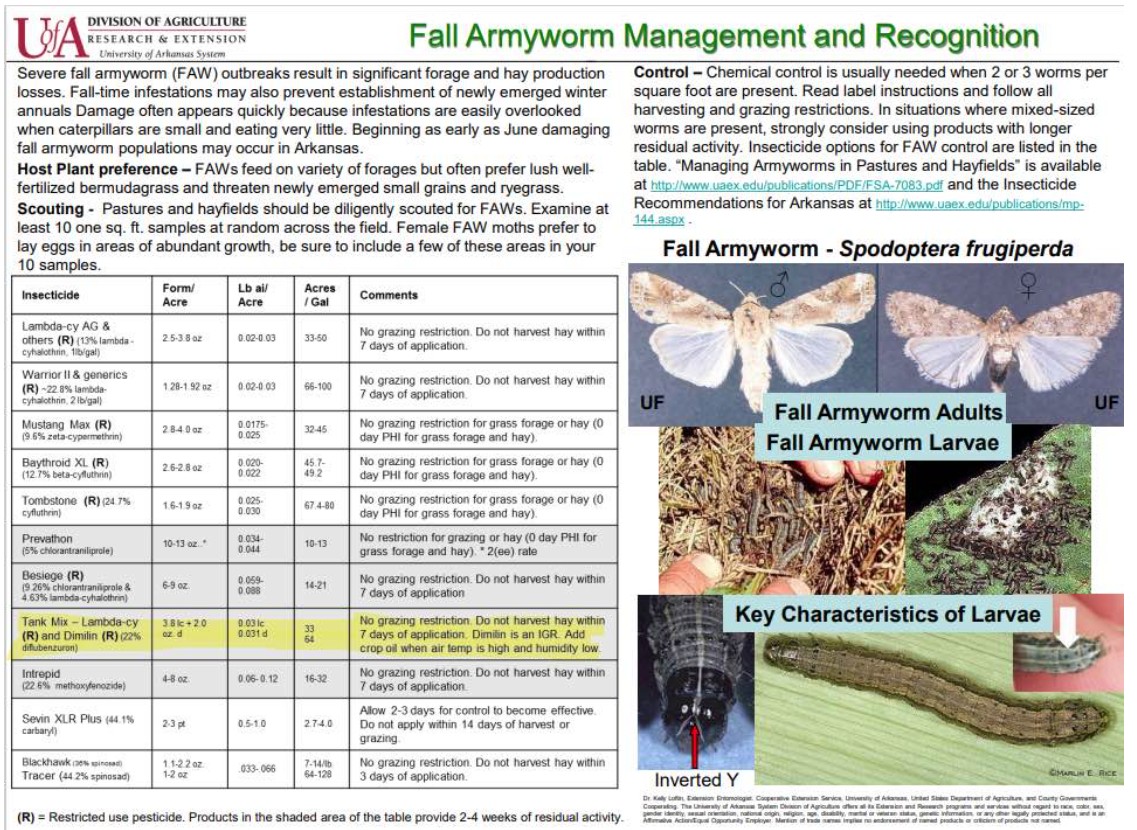
Rains this week were perfect for fields that were recently harvested for hay. If you were able to get your hay cut and fertilized followed by a rain, you are in business for another great cutting coming up. I am seeing an increase of stem maggots out there in bermudagrass. If you are planning on another harvest, I would be applying some lambda cy 7-10 days after you harvest. This is only in bermudagrass hay. If you have mostly bahiagrass you don't have to worry about maggots. I still anticipate armyworms starting up soon, so keep scouting!
| | |
Late-summer and fall annual plantings
Kenny J. Simon, Harley D. Warren, & Dr. Jonathan O.C. Kubesch
Late-summer plantings are a worthwhile gamble; fall plantings can be a guarantee
Fall and winter grazing opportunities require the most effort to plan and execute in the Arkansas grazing calendar. Perennial pastures and hayfields are often less productive in the fall and early winter. One solution to filling forage gaps in the fall and winter is the use of annuals planted in late-summer or fall. There seems to be frequent confusion about the timing of annual plantings and when grazing can begin. To quickly summarize these points:
Late-summer annual plantings
• planted late August to mid-September
• graze warm-season species in October
• graze cool-season species in November/December
Fall annual plantings
• planted in mid-October to mid-November
• only winter annual species
• graze in January/February
Late-summer plantings are best accomplished on warm-season perennial sods. Sod suppression is requisite to making late-summer plantings. This is often accomplished through close grazing and a light application of glyphosate. Livestock need to be excluded from these planted until the appropriate grazing window. Warm-season plantings of sorghum-sudangrass, pearl millet, browntop millet, and corn will need to be monitored in the event of nitrate accumulation and/or prussic acid concerns as temperatures drop and killing frosts come up in the forecast. Fertility recommendations are being developed to identify when to apply N on these plantings. There is concern that apply N too early can favor weeds or the existing sod.
Fall plantings should consist solely of winter annual grasses (small grains or annual ryegrass) planted into warm-season perennial sods. Sod suppression may not be necessary if nighttime temperatures are less than 60 degrees consistently in October. These fall plantings will be ready for grazing when they reach 8-10” tall or when they don’t come out of the ground when pulled. Fertility recommendations can be coded as 210-Winter annuals as part of routine soil testing.
Recent summer and fall precipitation patterns suggest that late-summer plantings are riskier than fall plantings. Without a regular 1.5” of precipitation it can be challenging to get seedlings growing. It is more likely that we get rain on pastures and hayfields in October than in August and September.
With clarification on how to prepare these options, farmers should be able to target whether late-summer or fall plantings best fit their operations. Late-summer plantings are a worthwhile gamble; fall plantings can be a guarantee.
| |
|
A Practical Guide to Genetic Improvement for Sheep Producers
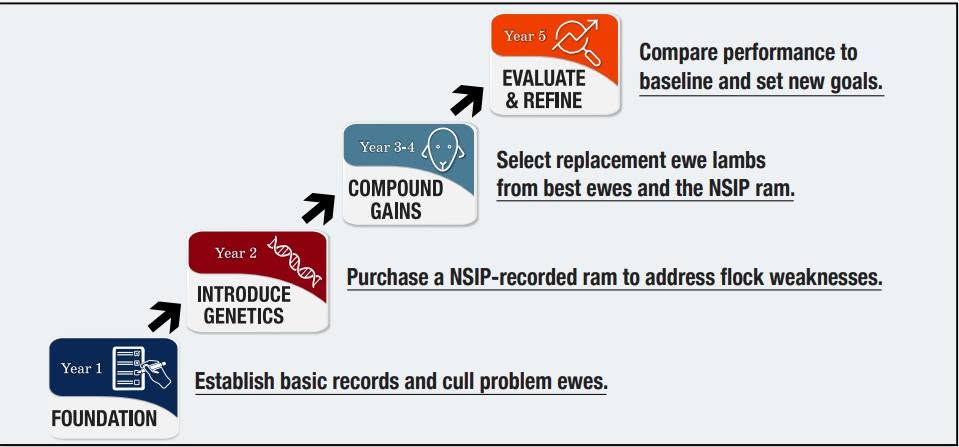
The publication "A Practical Guide to Genetic Improvement for Sheep Producers" has just been released online. This factsheet outlines a path from foundational concepts to advanced tools, but the core principle remains constant: consistent, goal-oriented selection is the single most powerful force in genetic improvement.
| |
Beat the Heat: Protecting Cattle During Summer Heat Stress
Paul Beck, Oklahoma State University Extension Beef Nutrition Specialist
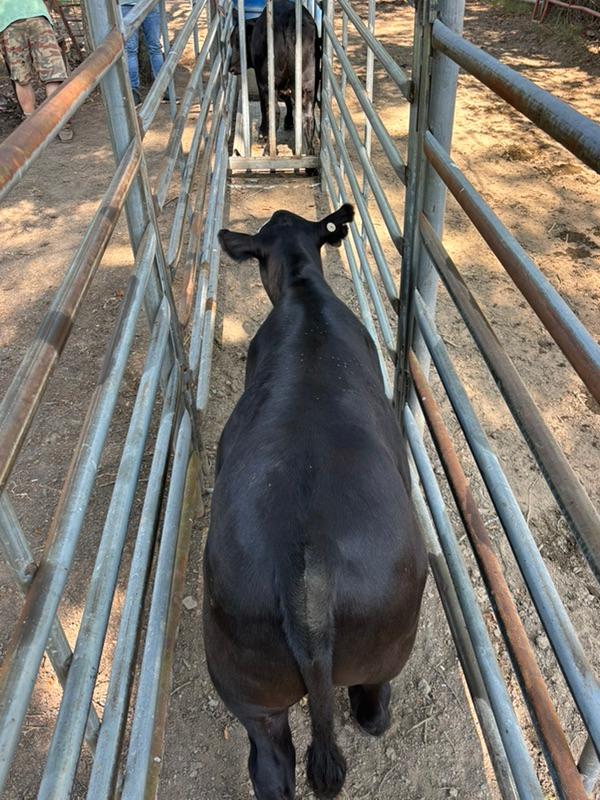
Summer heat stress reduces cattle performance, reproductive efficiency and animal welfare. Extreme heat stress may result in death. Heat stress is not determined by temperature alone. Humidity, direct sunlight, wind speed and the amount of nighttime cooling all influence the heat load cattle must manage.
Cattle accumulate heat during the day and normally release much of it overnight. Consecutive hot days become especially dangerous when nighttime temperatures remain above 70°F, limiting the amount of night cooling.
Early warning signs include reduced grazing or feed intake, restlessness, increased standing and crowding around water. As heat stress progresses, breathing rate increases and cattle may begin drooling or foaming at the mouth. Open-mouth breathing, an extended tongue, labored breathing or isolation from the herd indicate severe heat stress and require immediate action.
Water and shade are the first priorities. Water consumption may approach 2 gallons per 100 pounds of body weight when temperatures exceed 80°F. A 1,200-pound cow could therefore require approximately 24 gallons daily. Check water supplies, flow rates and storage capacity before a heat wave. Keep troughs clean and, when practical, shaded because cattle drink less as water temperatures rise above 80°F. Crowding can limit access, so provide additional tanks before extreme heat arrives rather than waiting until cattle are already stressed.
Shade reduces the solar heat load and can lower respiration rates and body temperature and can increase feed intake and improve performance during the summer. Provide approximately 15 to 20 square feet of shade for calves and 30 to 40 square feet for mature cows. Structures should be high enough to allow airflow and large enough that cattle are not forced to bunch tightly underneath them.
Avoid working cattle, hauling or moving cattle during dangerous conditions. Work cattle early in the morning—not during the evening, when their internal heat load may still be near its daily peak. Use small groups, minimize time in holding pens and move cattle quietly. When nights provide little cooling, postpone nonessential cattle work. Flies cause cattle to bunch, increasing activity and heat load, so maintaining fly-control programs is important.
The best heat-stress strategy is preparation. Clean water, adequate shade, airflow and timely cattle handling can prevent a hot day from becoming an animal-health crisis.
| | |
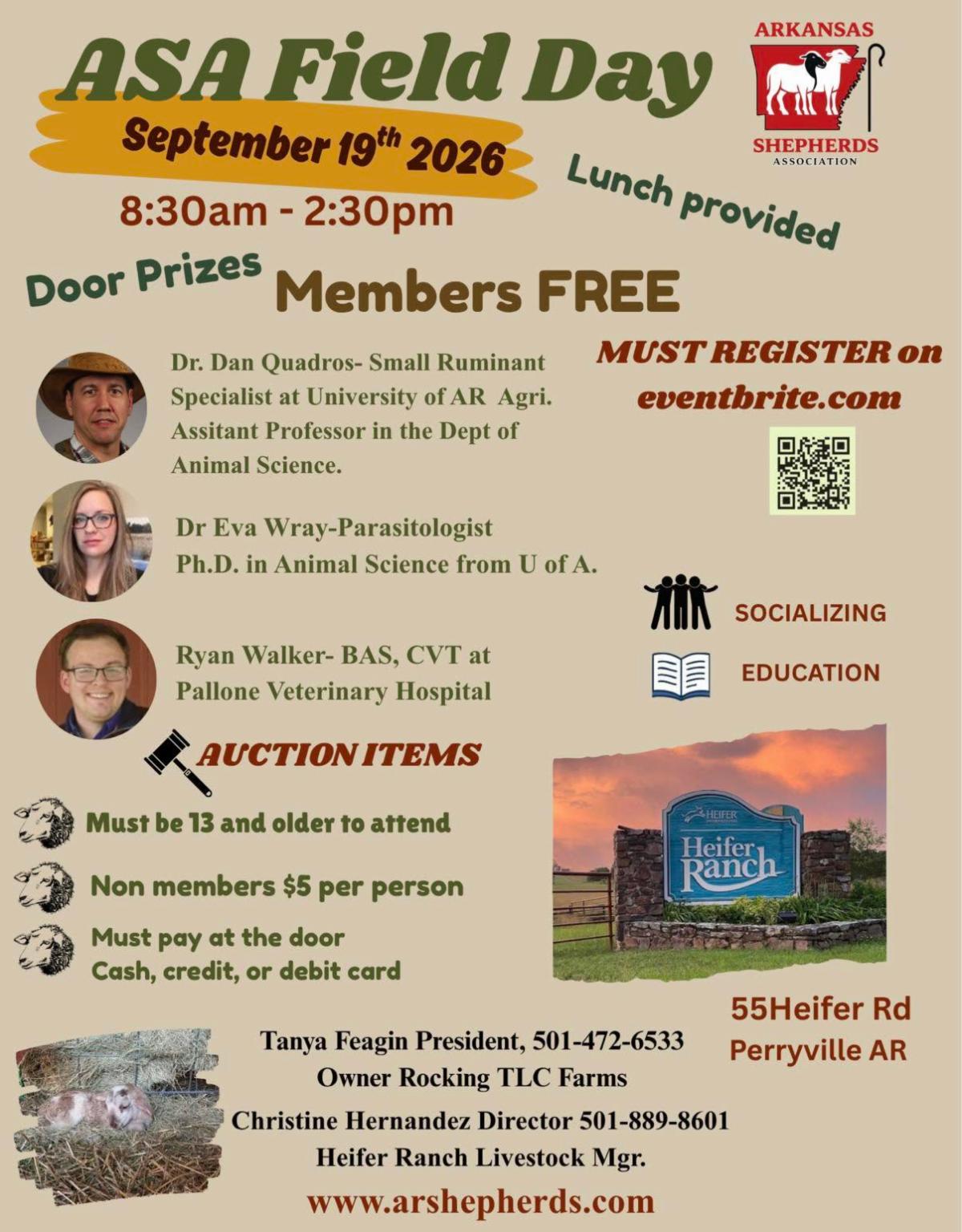
Arkansas Shepherds Association Field Day
ASA Field Day — Saturday, September 19, 2026
8:30am - 2:30pm
Heifer Ranch, 55 Heifer Road Perryville, AR
Join us for a full day of hands‑on learning, great speakers, door prizes, and silent auction items benefiting the Arkansas Shepherds Association.
Members attend FREE.
Non‑members: $5 per person, paid at the door.
Must be 13 and older to attend.
Everyone must register on Eventbrite to attend.
Topics include:
Nutrition
Hoof care and trimming
How to draw blood
How to give shots
Parasites
Signs/Symptoms
Identifying
Treatment
We’re excited to see producers from across Arkansas and surrounding states come together for education, community, and a great day at Heifer Ranch.
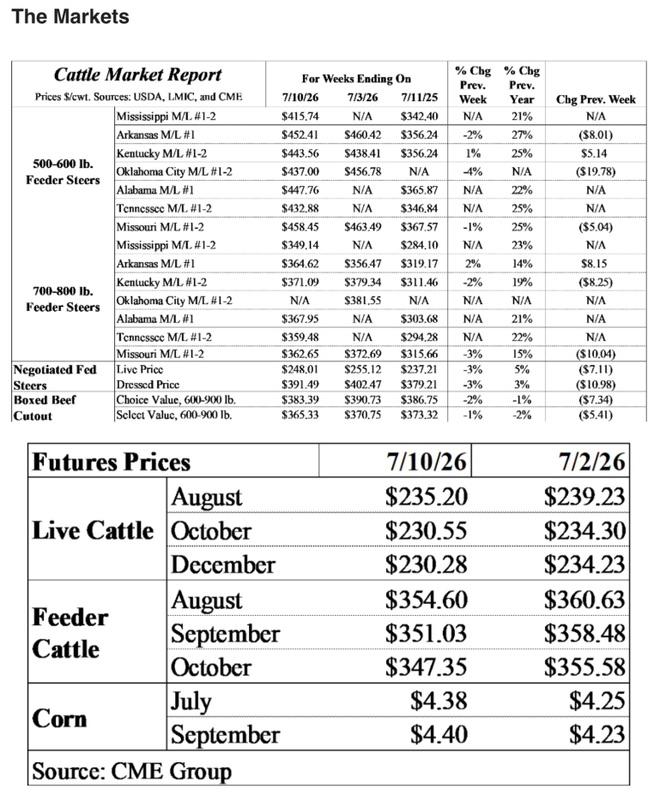
| | Here is this weeks Cattle Market Notes Weekly | | |
Pesticide Applicator Trainings
There will be no more in person Pesticide Applicator Trainings until this winter. If you need a license you can still do the training online. There is a link below for the online training and a link to check your license status.
| | |
Livestock Market Report
The following links are for the weekly livestock market report from the Arkansas Department of Agriculture website and the Livestock Auction Dashboard from USDA. Both sites have marketing data for all livestock sold at Arkansas Sale Barns.
| | |
2025 Faulkner County Agriculture Demonstration Summary
The 2025 Faulkner County Agriculture Demonstration Summary is now available at the link below.
The 2025 Faulkner County Demonstration Summary is a collection of on-site demonstration results conducted in Faulkner County by local County Agents. Demonstrations are the cornerstone of the University of Arkansas System Division of Agriculture Cooperative Extension Service’s mission which is:
“We strengthen agriculture, communities, and families by connecting trusted research to the adoption of best practices.”
On-site demonstrations allow producers and homeowners to see firsthand how Extension recommended varieties and best management practices work in their counties and surrounding area.
| | |
Sign up for Text Alerts
You can now sign up for text alerts from me throughout the year. I have two areas you can sign up for which includes Faulkner Livestock or Faulkner Ag (Row Crop Updates). To sign up you can follow one of these links or use the QR Codes below.
| | Pursuant to 7 CFR § 15.3, the University of Arkansas System Division of Agriculture offers all its Extension and Research programs and services (including employment) without regard to race, color, sex, national origin, religion, age, disability, marital or veteran status, genetic information, sexual preference, pregnancy or any other legally protected status, and is an equal opportunity institution. | | | | |