Faulkner County Agriculture Update
May 2, 2025
| | |
Weather
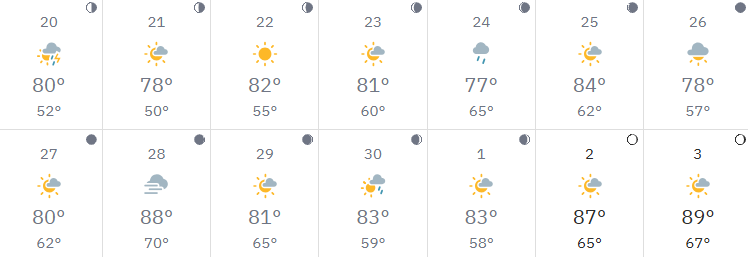
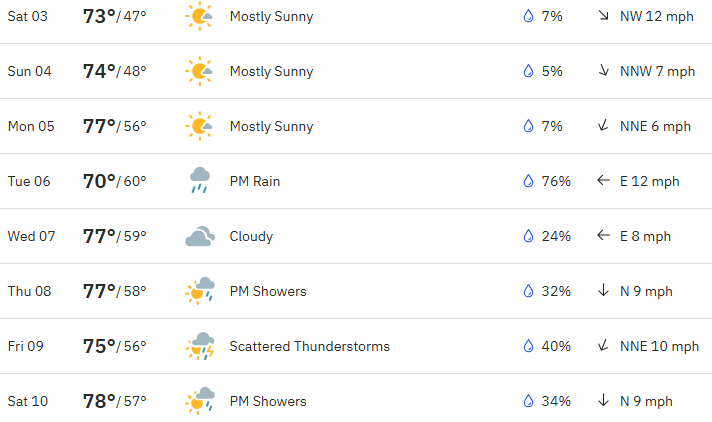
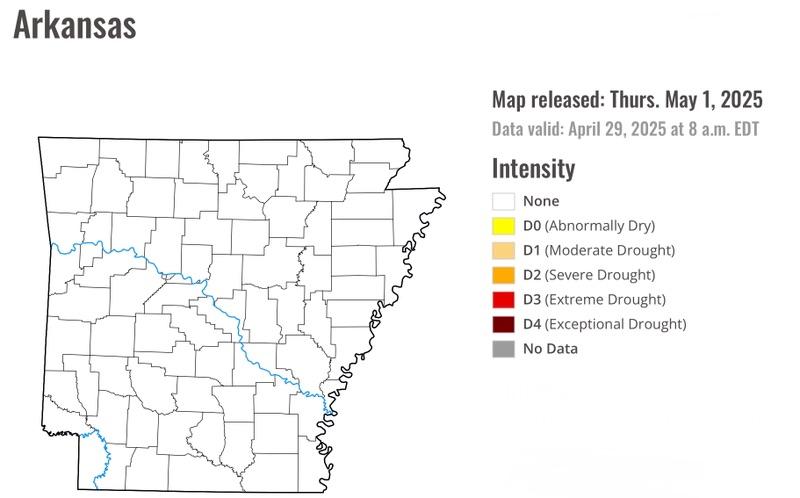
We finally got some rain all across the county this week. We had some fields that were really dry and needed this rain. Some areas of the county have received over 2 inches the last few days. Looks like we have a nice weekend followed by another week of rain chances next week.
| | |
Arkansas and Mississippi River
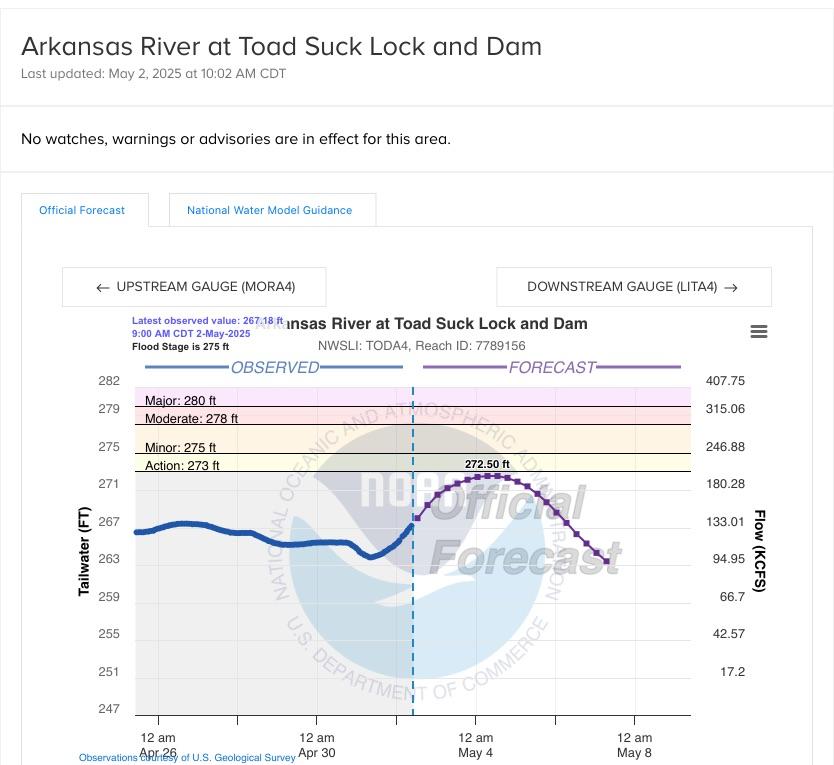
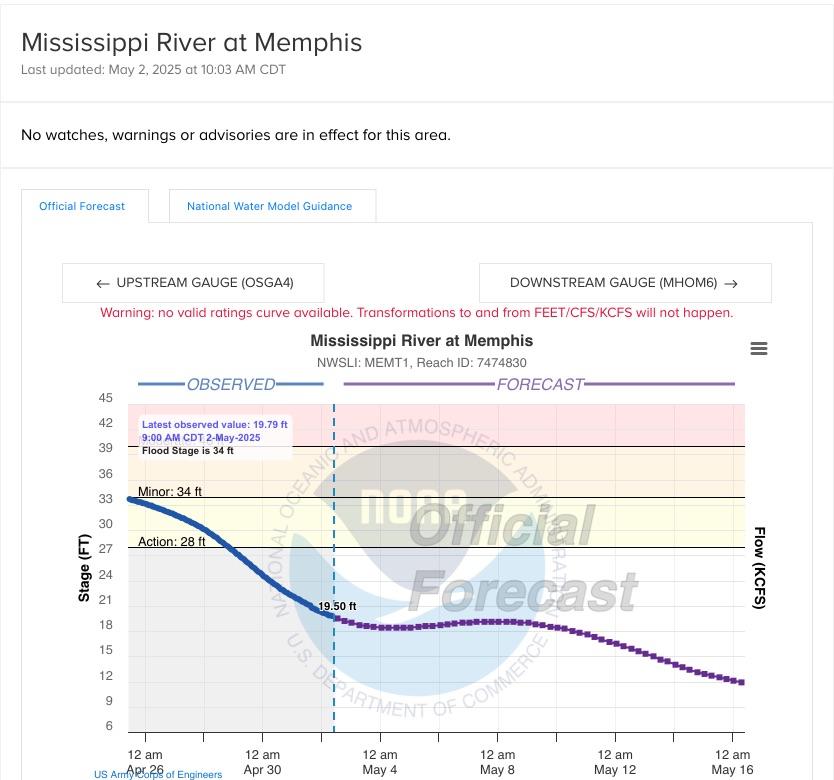
Here we go again with flooding chances. The Arkansas River has been running high and the rains out west are going to catch up with us on Sunday. We are looking at 272 which will cover some farm land again. The majority of the rain this week has been in the central part of the county, which will end up in the Cadron. With nowhere for the Cadron to go, it will probably get out again. Last time we didn't have anything planted along the Cadron, but this time we do have some rice and corn planted. This is not a good situation with more rain predicted.
| | |
Wheat
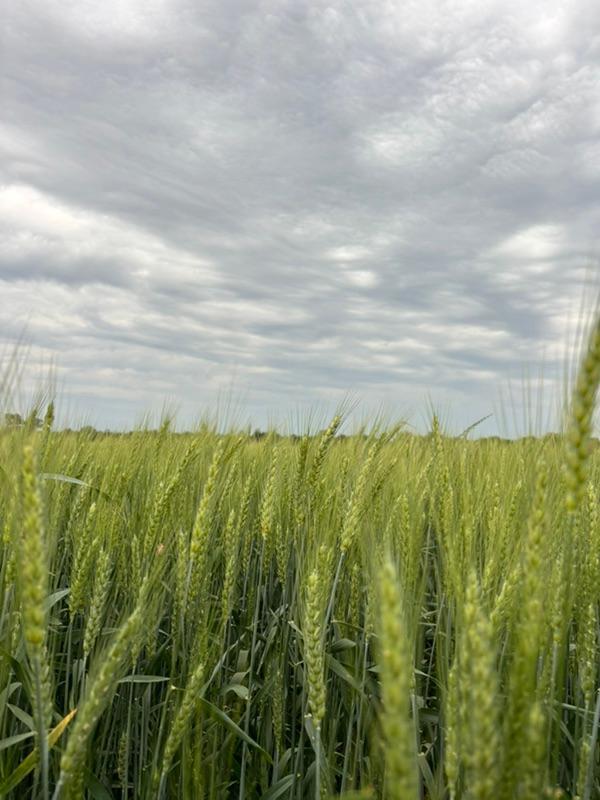
Wheat continues to look good as we get past the flowering stage. I wouldn't mind if we had a few days of sunny dry weather. We don't need a lot more rain as we fill the grain.
| | |
Corn
More corn was planted this week as we are coming up on the end of our corn planting window. If planting irrigated Bt corn you can plant up to around May 15 with no yield decrease.
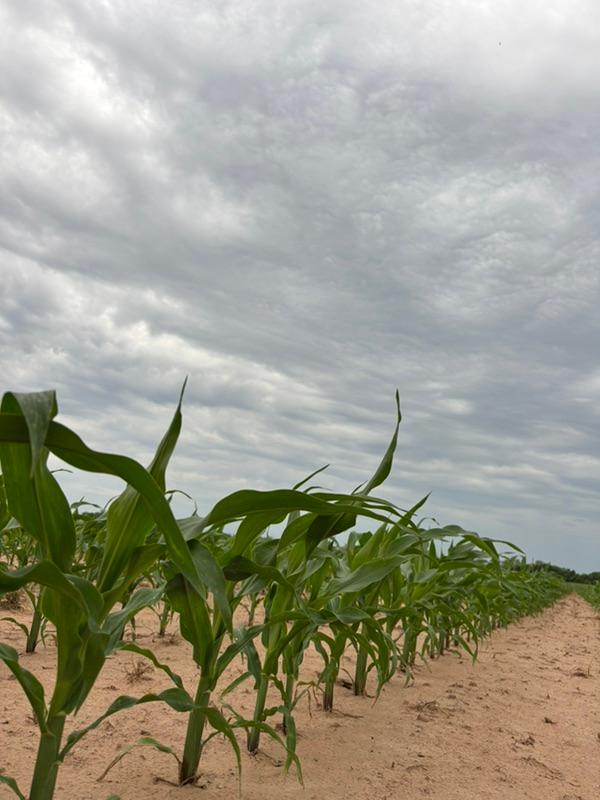
Some of the earlier planted corn isn't growing as well as corn that was planted later. Sulfur deficiencies have been showing up in the sandier soils. We have applied some ammonium sulfate and hopefully this rain will allow the corn to take it up and green up. Herbicide applications went out on several acres this week.
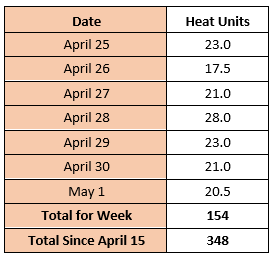
We accumulated 154 heat units this week with a total of 348 units since April 15. This puts those plants around V3.
Arkansas Corn DD50 Program - Arkansas Corn DD50
| | |
Rice
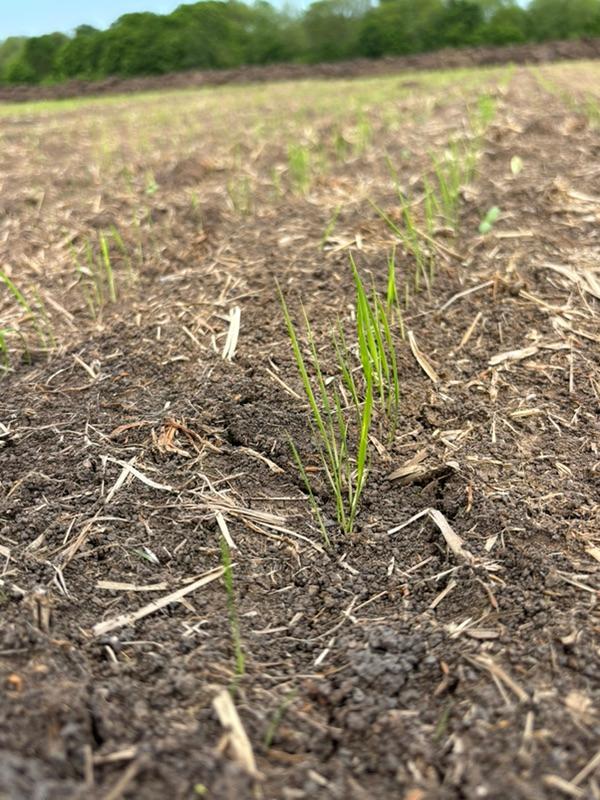
Rice was needing this rain probably more than any of our crops. Several of the fields were needing a flush and thankfully this rain took care of that. We needed help with getting a better stand and reactivating the Command that had been put out. Grass is starting to show up, and we will have to watch it and see if this Command will come back and get it. If not, we need to be planning some kind of grass application soon. For Provisia rice, our first application of Provisia will be coming up soon. Remember that if you are using Provisia and need to add Permit Plus or Gambit for nutsedge, add it to the first application.
If you need help with DD50, please let me know. I would be glad to run those for anyone that needs help.
| | Here is Dr. Jarrod Hardke's latest Arkansas Rice Update. | | |
Rice Disease and Insect Training
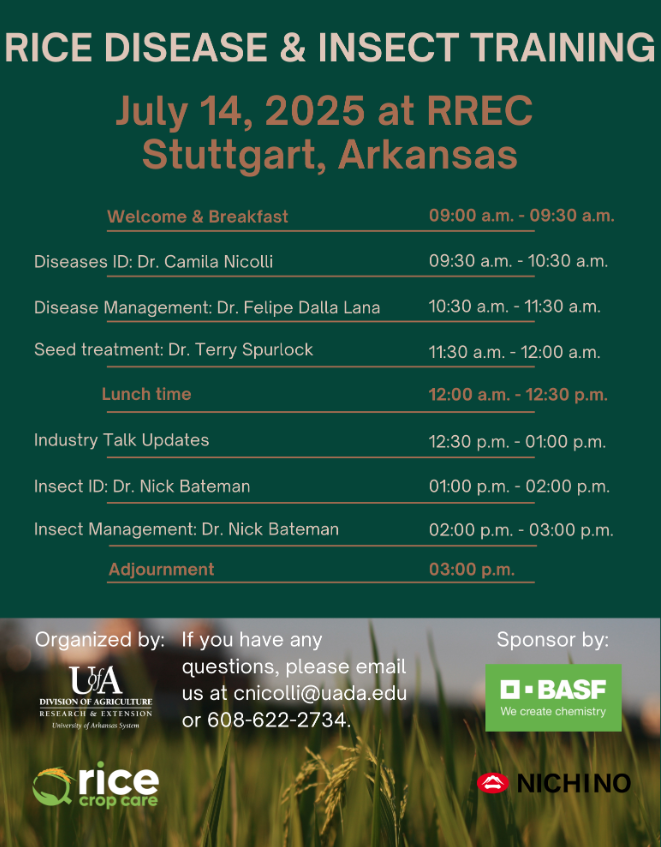
You're invited to attend the 2025 Rice Disease and Insect Training, which will be held at the Rice Research and Extension Center (RREC) in Stuttgart on July 14th, from 9:00 AM to 3:00 PM.
Please use the link below to register and indicate any dietary restrictions:
🔗 Registration Form
| | |
Corn Earworm Moth Traps
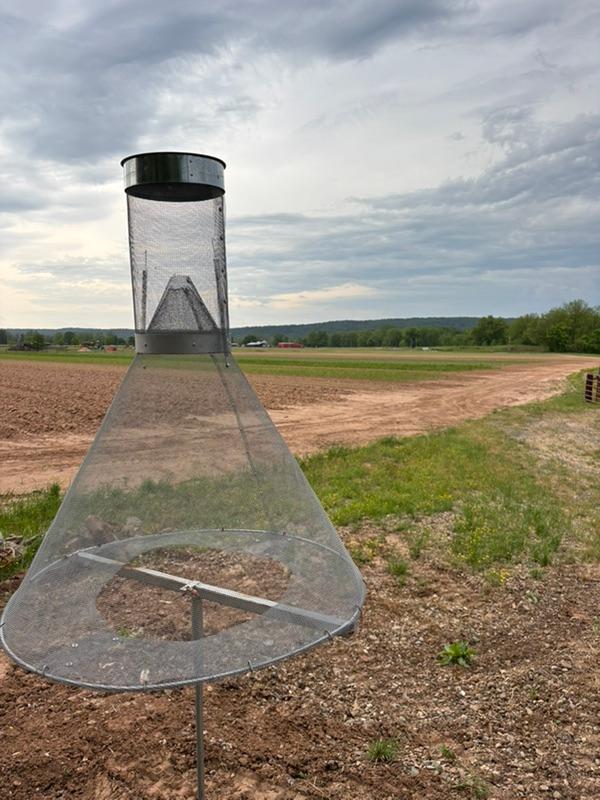
Three corn earworm moth traps have been put up for the 2025 crop season. I placed them at the same place they were last year.
Cadron - Placed by a corn and soybean field on a farm at Cadron Creek.
Sand Plant - Placed by a soybean field across from the sand plant at Lollie.
Pumpkin Patch - Placed by a sweet corn field at the bayou bridge in Lollie.
I will start reporting catches next week.
| | |
Arkansas Row Crop Update & Fertilizer Market Outlook
Riley Smith, Program Associate, University of Arkansas
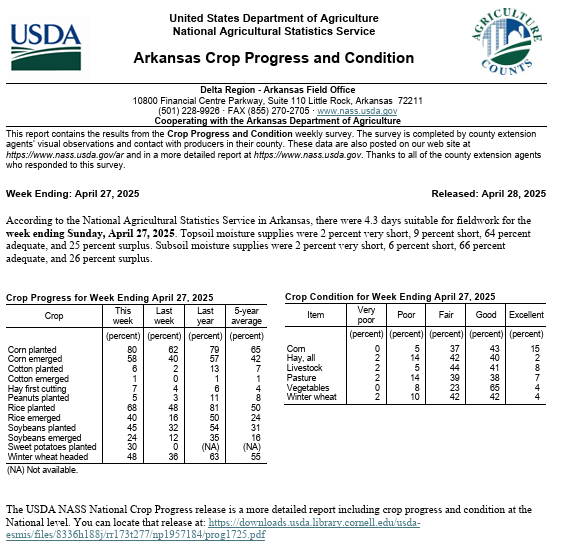
Following significant rainfall in early April, the USDA’s National Agricultural Statistics Service (NASS) released the Crop Progress and Condition Report for Arkansas on April 20, 2025. After reviewing the report and conducting a thorough damage analysis, we would like to provide an update on the status of row crop planting across the state.
As of April 20, soybean planting in Arkansas stands at 32 percent. Corn is currently 62 percent planted, while rice is at 48 percent. Cotton has just begun, with only 2 percent planted, and peanuts are at 3 percent. To put this in perspective, a comparison with the same time last year shows that on April 20, 2024, soybean planting was at 41 percent. Corn was slightly ahead at 66 percent. Rice was 64 percent planted. Cotton had reached 5 percent, and peanuts, like this year, were at 3 percent.
These figures indicate that planting progress in 2025 is slightly behind 2024 levels across most crops, primarily due to the heavy rainfall and subsequent flooding in early April. However, the dry weather experienced last week allowed many producers to return to the fields and regain valuable time, pushing forward planting efforts that had been delayed.
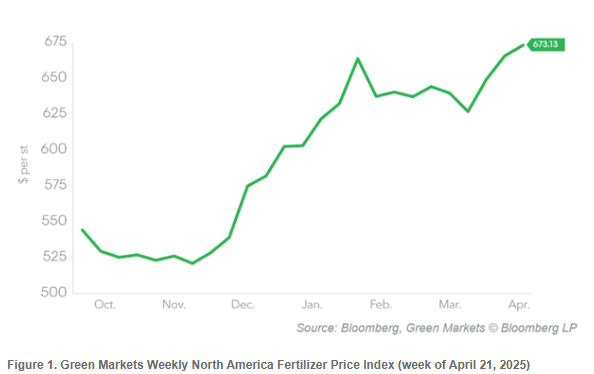
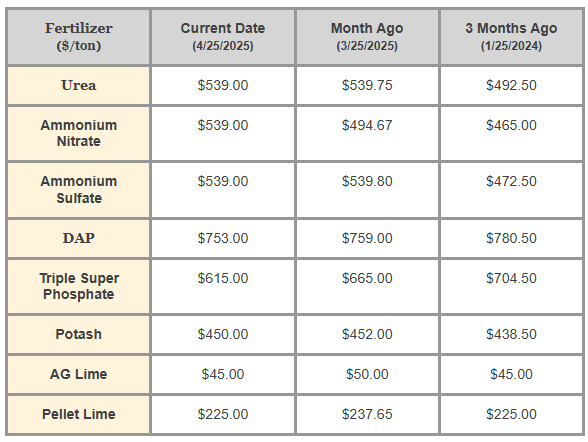
Turning to the input side, we conducted an analysis of fertilizer market trends, examining both wholesale and retail prices across the state. We provide the Bloomberg Green Markets weekly fertilizer price index in Figure 1 below which shows the general rise in prices for fertilizers purchased in North America. We note the recent price increase in January through April is largely driven by seasonal demand due to planting. Using data on key macronutrients from Bloomberg Green Markets, which reflects wholesale pricing, we observed the following price increases from January 5 to April 22, 2025: urea rose by $85 per ton, ammonium nitrate (UAN) also increased by $85 per ton, DAP rose by $48 per ton, and potash climbed by $40 per ton. Comparatively, during the same period in 2024, urea increased by $22 per ton, UAN rose by $32 per ton, DAP jumped by $65 per ton, and potash decreased by $27 per ton.
| | |
This figure shows the overall change in weekly average prices for fertilizers sold in North America. For example, the overall average price for North American fertilizer is $673.13/short ton for the week of April 21, 2025. Compare this to the last high of around $663.68/short ton the week of February 18, 2025 and the low of $525.23/short ton the week of November 11, 2024.
Looking at state-level retail pricing for Arkansas collected by the University of Arkansas Division of Agriculture (UADA), the following changes were recorded between January 5 and April 18, 2025: urea increased by $68.33 per ton, UAN rose by $15 per ton, DAP increased by $22.25 per ton, and potash went up by $36.75 per ton. It’s important to note that Green Markets reports wholesale prices typically associated with rail delivery, whereas UADA’s figures reflect retail costs including transportation from the river to local elevators or cooperatives. This accounts for some of the discrepancy between the two sets of figures and highlights the ongoing influence of logistical costs on input pricing at the local level.
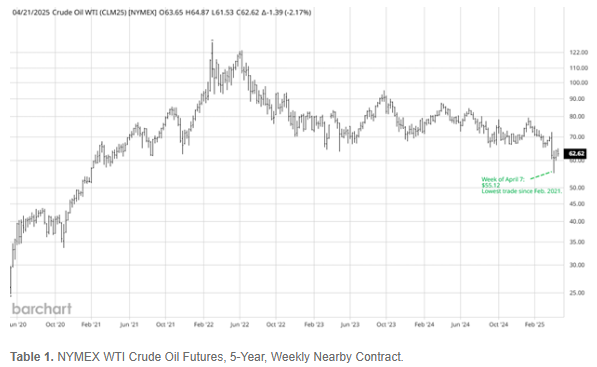
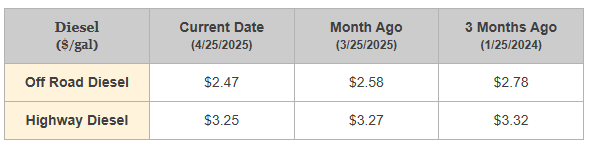
Lastly, it’s worth mentioning that WTI crude oil is trading near four (4) year lows. The graph below is a 5-year weekly chart of WTI crude oil futures. Note in the first week of April, WTI did trade as low as $55.12 per barrel—the lowest level since February 2021. Crude has since recovered above $60 and has generally traded in a range of $61.50 to $64.90 this week. This could potentially signal some relief ahead in fuel costs, offering a positive outlook for producers as planting season continues.
| | We will continue to monitor conditions closely and provide timely updates to keep Arkansas growers informed as the season progresses. | | Beef, Small Ruminants, & Forages | | |
Brucellosis Vaccinations
Faulkner County’s Brucellosis (Bang’s) Vaccination Program will be held Wednesday May 21.
Even though it’s no longer a state law, it is highly recommended to have your heifers vaccinated between the ages of 4 and 12 months against Brucellosis to keep brucellosis eradicated in Arkansas.
A representative from the Livestock & Poultry Commission and the Faulkner County Cooperative Extension Service will offer an on-farm vaccination program at no cost to all Faulkner County cattle producers. If you are interested please CALL the office at 501-329-8344, by Friday May 9 to be added to the schedule. After the registration deadline, a schedule will be put together and producers will be notified.
Producers must have a premise ID. You can apply for a premise ID at the Livestock & Poultry website. A link is provided below.
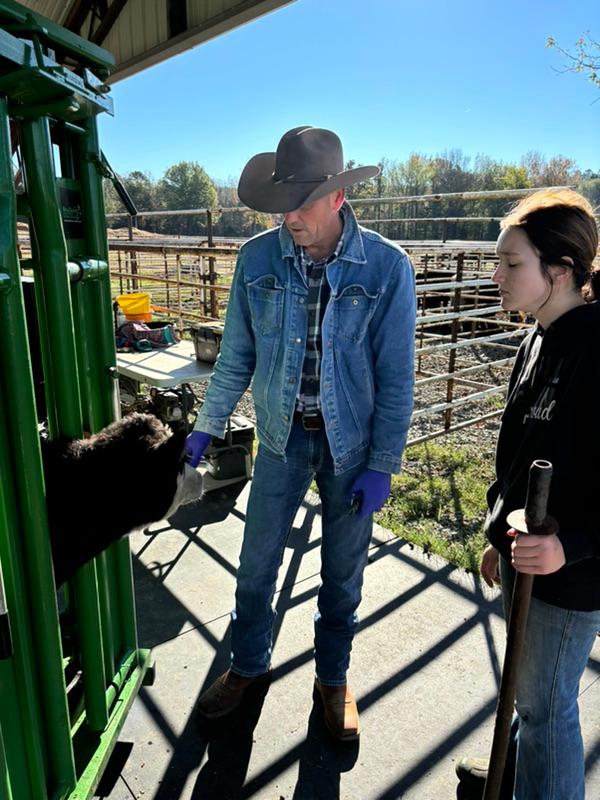
The Livestock & Poultry Commission has stated that each farm where cattle are to be vaccinated MUST have a chute or squeeze chute with a head gate where cattle can be subdued. Even with good facilities, the chances of someone getting hurt are possible. If the proper facilities are not available or safe, the vaccinator has the right to refuse to vaccinate your calves. Calves will not be vaccinated unless the owner or someone representing the owner is present.
| | |
North Central Small Ruminant Production Meeting
Save the date of May 30 for the North Central Small Ruminant Production Meeting at Hilltop Acres Goat and Sheep Auction near Romance.
More details to come soon!
| | |
Sweep Tubs vs. Bud Box
Mark Z. Johnson, Oklahoma State University Extension Beef Cattle Breeding Specialist
In a cattle working facility, the function of the crowding area, often called a “tub” is to funnel cattle into alleyway on the way to the squeeze chute or loadout. The crowding area must be designed and located so cattle can be easily moved into this area from a common sorting alley that is fed by holding pens. There are two commonly used systems that offer differing advantages which we cover this week.
Sweep Tub
The circular crowding area, with totally enclosed sides and crowding gate, is effective because the only escape route visible to the animal is through the alleyway leading to the squeeze chute or loadout. To further encourage cattle to exit crowding area, the solid crowding gate is intermittently moved toward a closed position. This effectively restricts the cattle to a successively smaller area as they move into the alleyway. A roughened concrete floor is desirable to provide an all-weather surface and for ease in cleaning. This design of cattle working facilities is to use circular crowding areas and working chutes. The circular designs take advantage of cattle’s tendency to circle and crowd toward the outside of a curved passage. The curved crowding area and working chute encourages cattle to move in a continuous flow toward the squeeze chute. Solid enclosures shield the animals’ vision from distractions outside the working area while focusing their attention on moving out of the crowding tub. When a balky animal needs to be prodded, it is only a short walk from the squeeze chute to any location along the curved working alleyway. Consequently, cattle can normally be worked in less time with a curved alleyway than with a straight one. The crowding alley also should be curved with totally enclosed sides. Cattle move more freely because they cannot view the cattlemen or squeeze chute until they approach the palpation cage or rear gate of the squeeze chute. Sloping sides in the working alleyway confine the animal’s feet and legs to a narrow path which, in turn, reduces balking. Sloping sides also reduce the capability of an animal to turn around in the crowding alley. Sloping sides are well matched to cow-calf operations because varied sizes of cattle can be worked efficiently in the same system. Recommended width for the bottom of the alleyway is 16 inches with the top at 28 inches. Emergency release panels can be constructed as movable crowding alley side panels that can be opened. An important consideration is that the cattle handler does not need to been inside the sweep tub. The handler works from the outside of the tub and alleyway while processing the cattle.
Bud Box
The same concepts regarding the alleyway leading to the squeeze chute or loadout still apply. The primary difference is the way in which cattle are coaxed into the alleyway. The Bud Box is a rectangular pen in which the alleyway leading to the chute is placed at a right angle at the point of entry. The design is simple and with proper handling techniques can be highly effective. Cattle are brought into the box and the position of the handler along the opposite side of the box stimulates cattle to move by the handler and into the alleyway. The gate that is closed behind the cattle as they moved past the alley forms the box. The Bud Box requires a basic understanding of cattle handling principles and may require additional training for inexperienced producers. The effectiveness of the design and the manner in which cattle flow into the alley is the result of the cattle handling skills and the attitude of the handler. Proper use of the box requires the cattle handler to be inside the box with the cattle.
The Bud Box contrasts the large, circular, sweep systems described above. The absence of large fabricated bends make it easier to construct. The box typically has open sides and does not require crowding gates which reduces the material cost and footprint of the facility. A typical box is 12 feet wide and 20 feet long. It is closed on one end with a gate at the other end. A Bud Box can be constructed and deconstructed from portable panels. Accordingly it offers the advantage of being tried on a temporary basis.
Summary
The decision of incorporating a Sweep Tub or Bud Box into your cattle working system should be based on considering a number of factors determining what is the best fit for your budget and type of operation. There are numerous YouTube videos available on the web showing examples of working cattle through, and the construction of, both sweep tubs and Bud Boxes.
For more information, click on the link to see our University of Arkansas Extension Publication MP239 Cattle Working Facilities.
| | |
The Case for Earlier Castration: Selling Steers versus Bulls
Kellie Curry Raper, OSU Extension Livestock Marketing Specialist
For cow-calf producers, your “current situation” likely includes lots of young calves running around the place with a few more expected in the near future. That also means there are additional management decisions coming your way – one of which is the castration decision. That involves a yes/no decision and – if yes - then it also involves decisions about method and timing. Today’s focus is on the yes/no decision and timing.
Research over time has consistently indicated price discounts for bulls sold in feeder calf markets. Oklahoma data indicates that bulls are consistently discounted relative to steers when comparing cattle of similar weight, quality, breed, and other physical and management attributes. Past OSU research has measured bull discounts in Oklahoma markets at $6/cwt to $12/cwt at different points in time. Discounts tend to increase when market price levels increase.
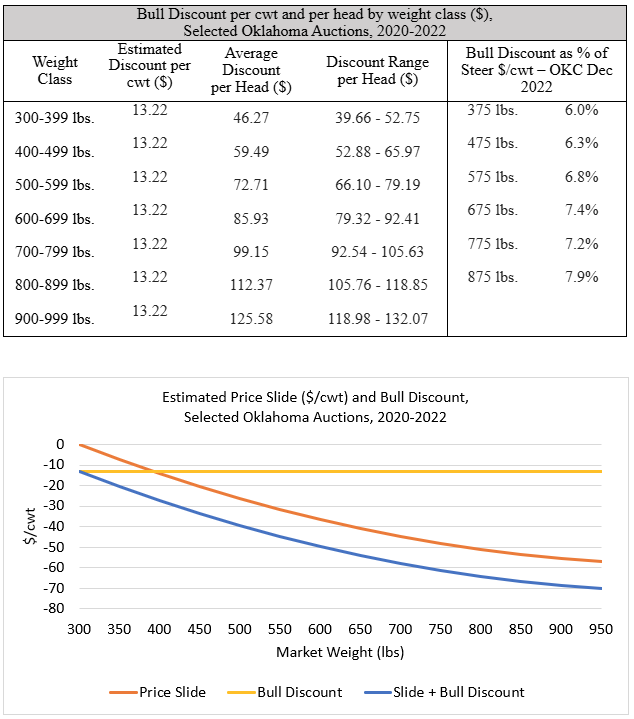
Preliminary research with recent Oklahoma data indicates that the bull discount per cwt is stable across weight classes at -$13.22/cwt. At first glance, that may seem counterintuitive, as we might expect the bull discount to be larger for heavier animals based on the implications of later castration on health, performance, management, and carcass quality as those animals move through the beef supply chain. And actually, it is…when you look at it on a per head basis.
The table below reflects average bull discounts per hundredweight and per head based on the latest research using our auction data. These values are relative to steers of the same weight with similar characteristics. Though the estimated discount per hundredweight does not increase by weight class, it does still result in larger per head discounts for heavier bulls. When combined with the price slide for heavier cattle, an unchanging bull discount ($/cwt) still has a proportionately larger impact on overall price per hundredweight for heavier versus lighter animals. That concept is reinforced in the table above using Oklahoma City prices for Medium/Large #1  cattle from December 2022. The bull discount as a percentage of the steer price at the corresponding weight steadily increases from 6.0% at 375 pounds to 7.9% at 875 pounds.
| | Castrating your male calves is not free. It requires resources, including time, labor, equipment and sometimes an extra measure of patience - with the calf or with your labor resource. Also, the availability and cost of those resources varies by producer. But the market does provide incentives for including castration in your bundle of calf management practices and those incentives encourage castration at an earlier age and weight rather than when calves are older. | | |
Weed of the Week
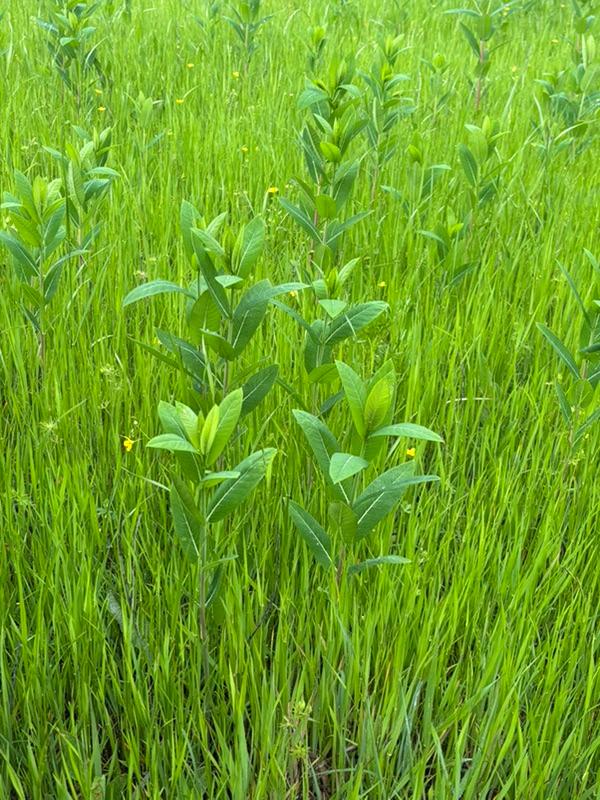
The weed of the week this week is hemp dogbane. You will notice dogbane in your pastures or hay fields starting as one or two plants, but over time they start to spread in a circle pattern like johnsongrass does. They grow from vegetative rootstalks.
I notice a lot of hemp dogbane on the roadsides. Just like in pastures, you will see one or two plants then over time they just take over. Several of the populations that have started in forage fields have started on the other side of the fence from the roadside.
Surmount at 3 to 6 pt/A is the best treatment we have found for hemp dogbane. Apply when the weeds are 18 to 24 inches tall. Add 0.25% nonionic surfactant. In areas where picloram cannot be used, apply 2 qt/A Weedmaster + 1 oz/A metsulfuron 60 DF plus 0.25% nonionic surfactant. Or, apply metsulfuron 60 DF at 1 ounce of product per acre plus 0.25% nonionic surfactant. Follow up next spring to control escapes.
| | |
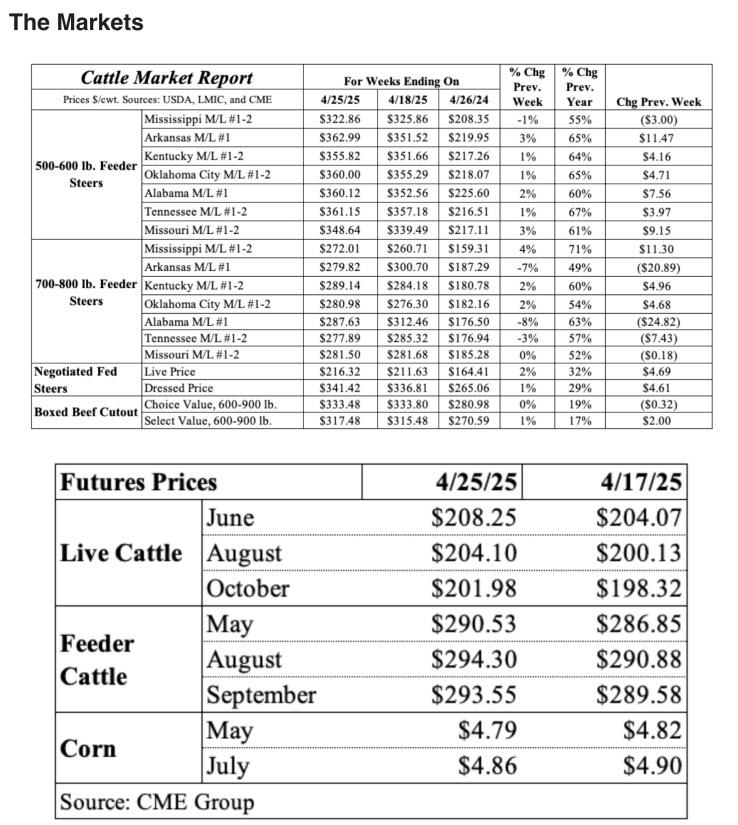
Livestock Market Report
The weekly livestock market report is available on the Arkansas Department of Agriculture website.
| | |
Pesticide Applicator Trainings
We have finished up all of the winter/spring PAT's at the Faulkner County Extension Office. There are two more trainings in Perry and Conway county the next couple of months. We will beginning classes again in December.
| | |
Sign up for Text Alerts
You can now sign up for text alerts from me throughout the year. I have two areas you can sign up for which includes Faulkner Livestock or Faulkner Ag (Row Crop Updates). To sign up you can follow one of these links or use the QR Codes below.
| | Pursuant to 7 CFR § 15.3, the University of Arkansas System Division of Agriculture offers all its Extension and Research programs and services (including employment) without regard to race, color, sex, national origin, religion, age, disability, marital or veteran status, genetic information, sexual preference, pregnancy or any other legally protected status, and is an equal opportunity institution. | | | | |