Faulkner County Agriculture Update
May 22, 2026
| | |
Summer Intern
I wanted to introduce our summer inter Korbin Singleton. Korbin will be working with me this summer so you may see him riding around with me as I visit your fields. I asked him to write a few paragraphs about himself.
My name is Korbin Singleton. I grew up in Sherwood, Arkansas, with a plethora of immediate family. I went to high school at Sylvan Hills and was on the baseball team as well as the chess club. I love games or sports that require a lot of thinking. One of the things I was most proud of in high school was when I graduated with honors and received a scholarship to attend Arkansas State University.
Today I am a senior at Arkansas State, where I am majoring in animal science with a pre-vet emphasis. After completing my undergrad, instead of going to vet school, I plan on enrolling in graduate school to attain a master's degree. The reason I wanted to choose this internship was to broaden my knowledge to include the agricultural side of my studies and not just animals. I believe this extra knowledge will help me strengthen my skills for any future employment opportunity in this field.
|
| |
Weather
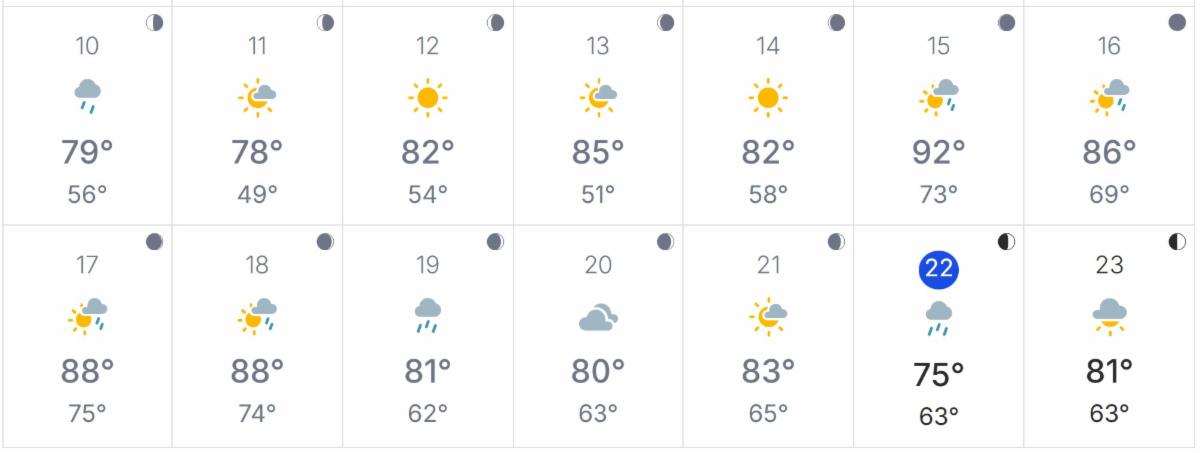
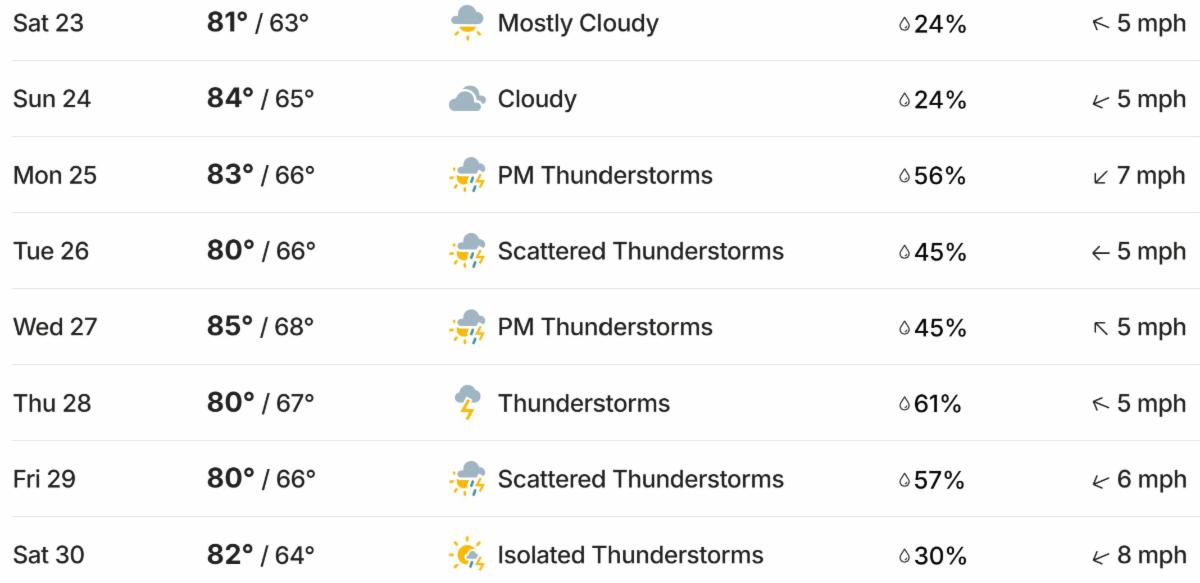
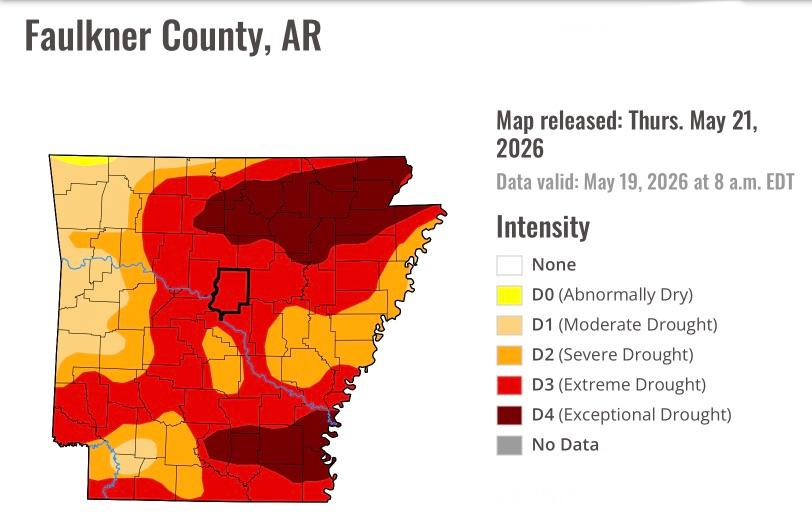
This was another week with varied rain amounts. The rain on Tuesday varied from 0.75 to 0.20 inches across the county. We are receiving rain today, and it looks like this one will be as varied as Tuesday. The good new is there is no more D4 drought in the county. The whole county is at a D3 status, which is still bad, but at least we are heading in the right direction.
Next week looks like rain chances all week on and off. Temperatures are good for growing conditions and fertilizer applications.
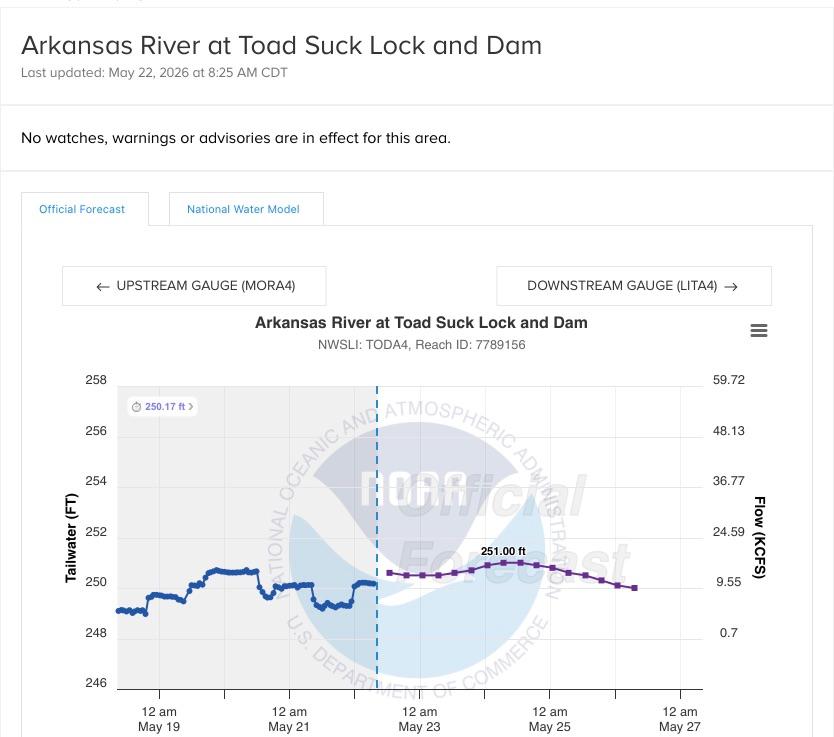
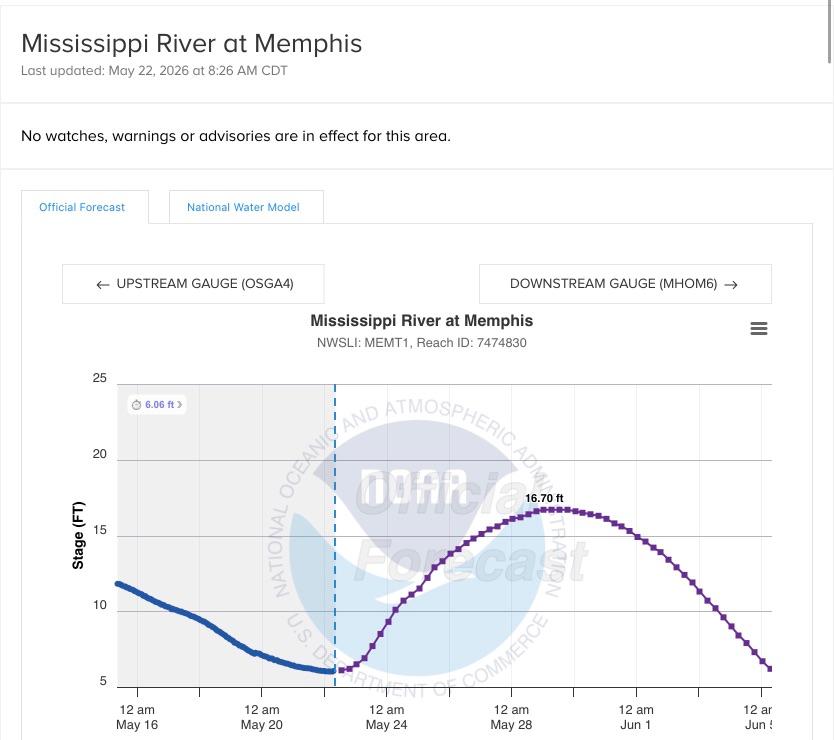
| | Arkansas and Mississippi River | |
Corn
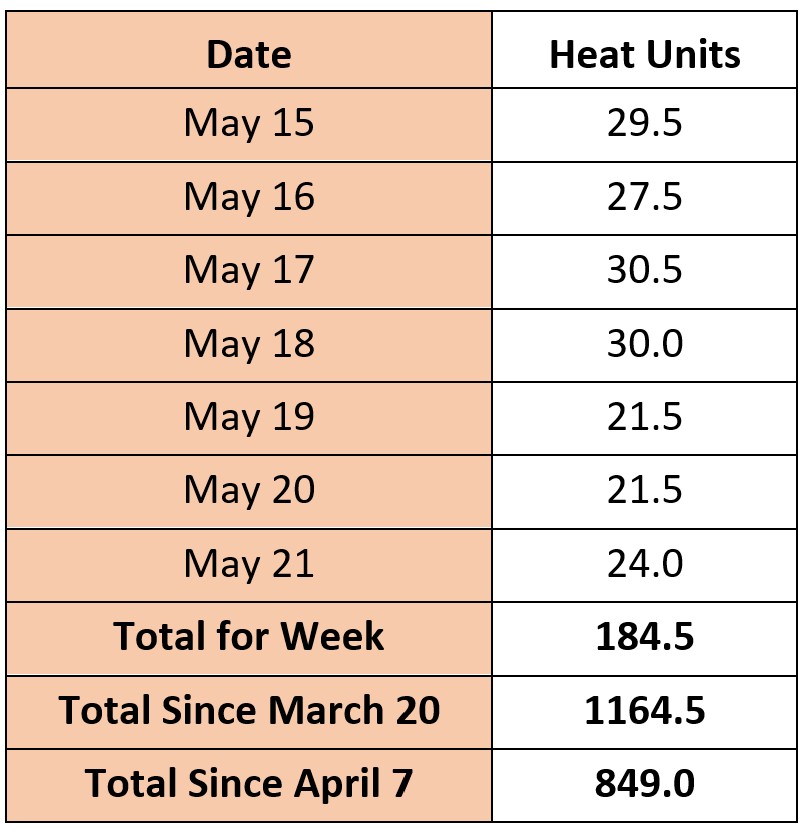
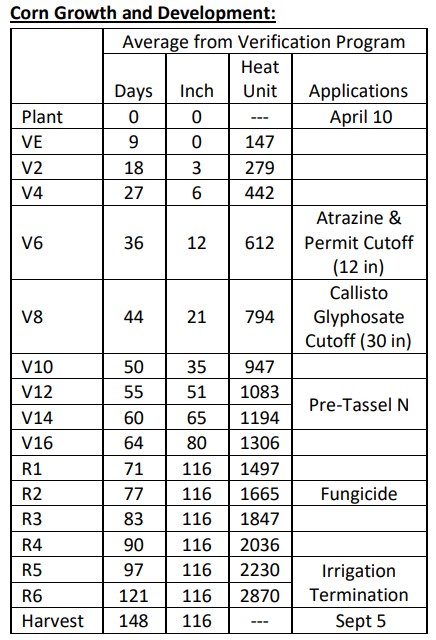
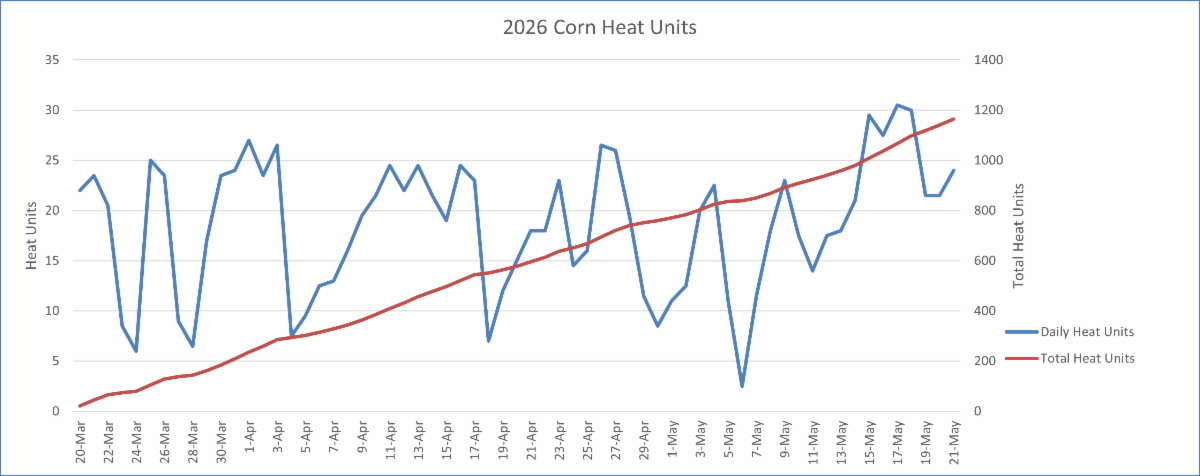
This week has been really good corn growing weather. If you look at the heat units for this week we have finally hit some 30's. That, combined with some sunny days, is great news for our corn as it continues to move forward. We should start seeing tassels soon on the early planted corn. I can already find a few small ears in the shoots as we get ready to move into reproductive stage. Now is the time to be planning the tassel application of fertilizer.
I know we are getting rain now, and it is predicted through much of the week, but be ready to irrigate as soon as this is over. As corn goes into reproductive stage it will be pulling 0.3 inches of water a day. Try to stay ahead of water needs with pivots so we don't get behind.
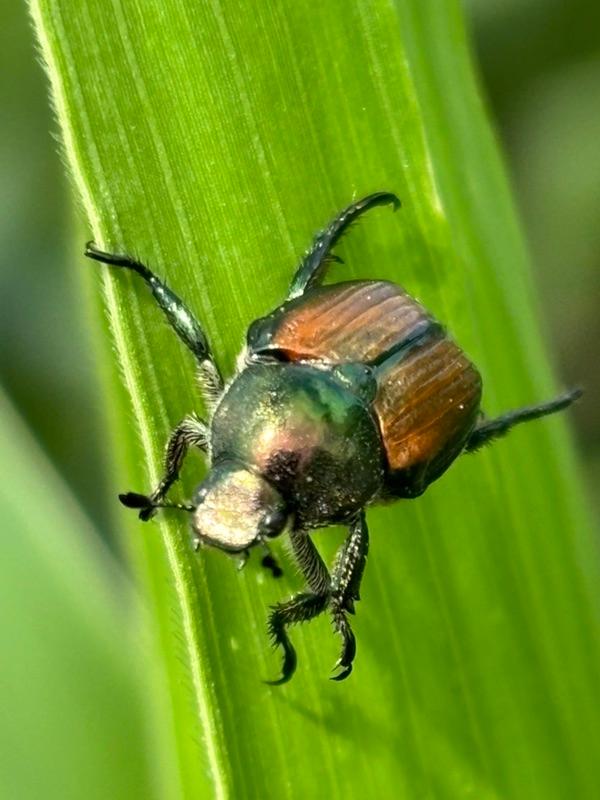
I did find an interesting pest in one field this week. While walking through a field I noticed a Japanese Beetle. Then I started to notice several more. There wasn't a ton of them, but enough that we need to watch as corn starts to silk. They can clip silks which will lead to poor pollination. I am not to concerned, but just want everyone to be aware.
Heat units for corn planted on March 20 is at 1164.5 and for fields planted on April 7 there is 849 heat units. Early planted fields are at V14 while late planted fields are around V8.
| | |
Rice
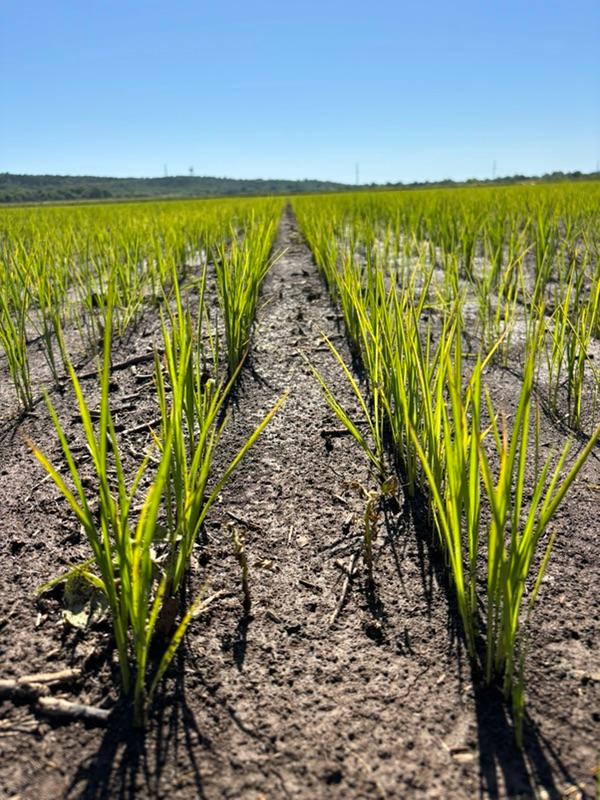
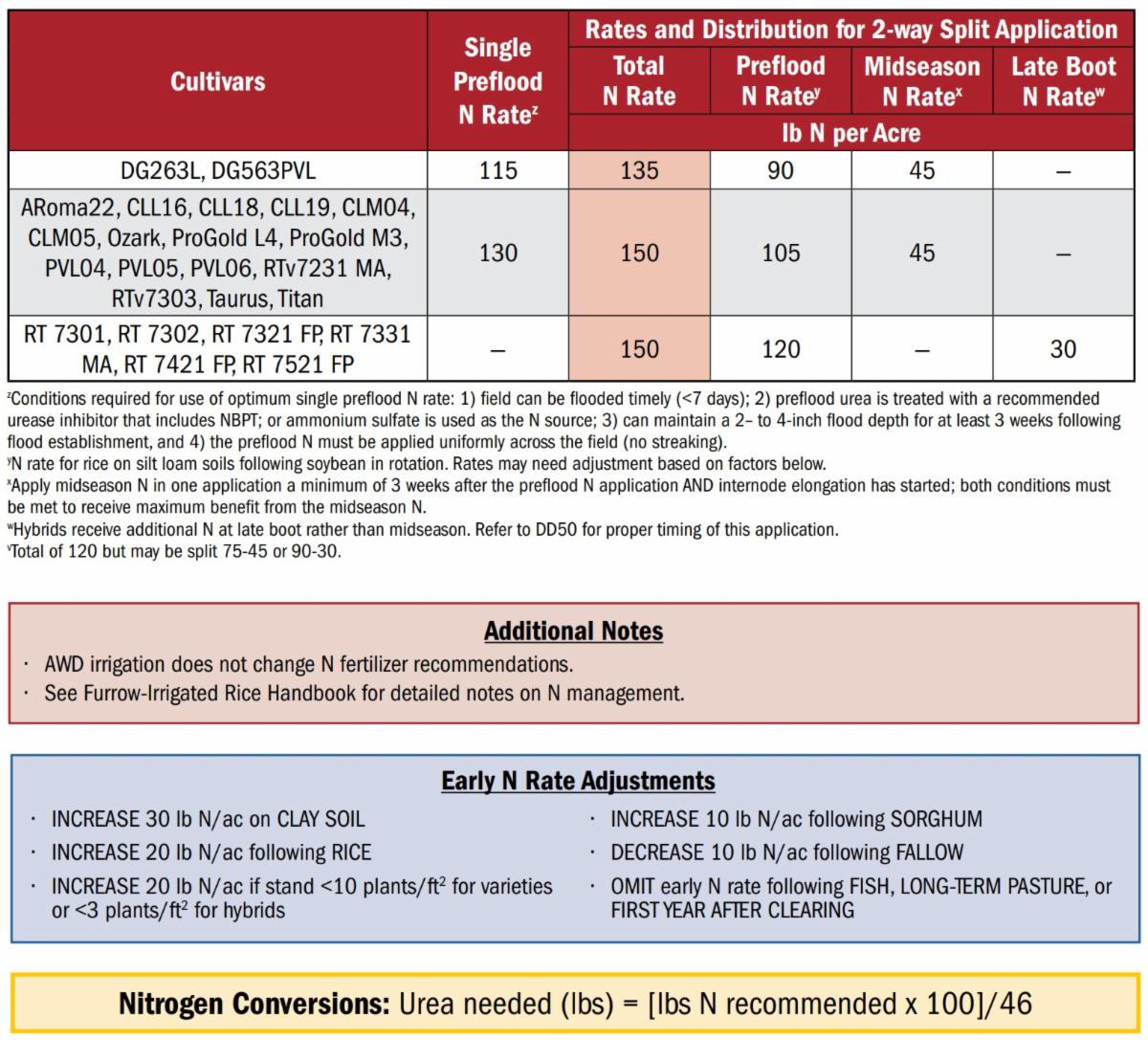
Looks like we hit a few fields with perfect timing on fertilize. Floods have started as we start moving into the tillering stage of rice. The midseason fertilizer will be the next step. We need to be 3 weeks out from the preflood nitrogen application and internode elongation starting. Later planted Provisia fields received Provisia applications this week also.
| | Latest rice update from Dr. Jarrod Hardke and our 2026 Rice Management Guide. | | |
Soybeans
Soybean planting continued this week along with pre-emerge applications of herbicide. There were several fields that received post application herbicides of Enlist and glyphosate. Hopefully the rain will be just enough to bring up the latest plantings and not drown them out.
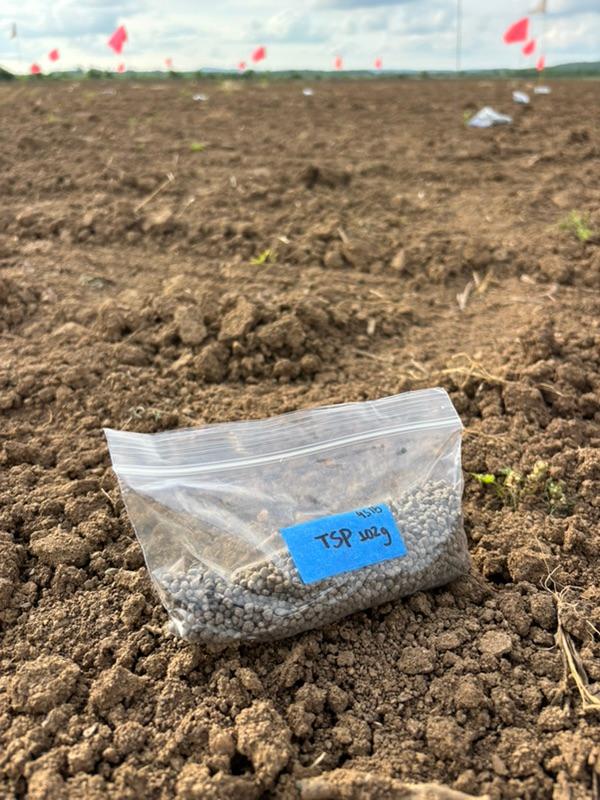
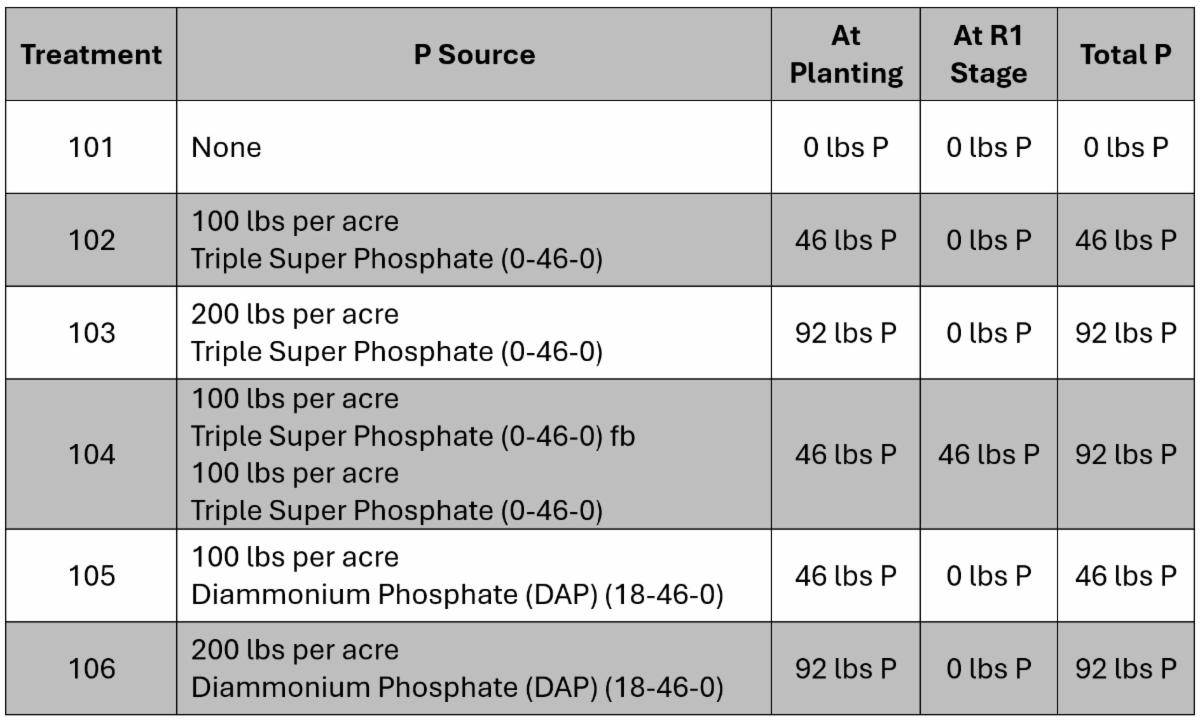
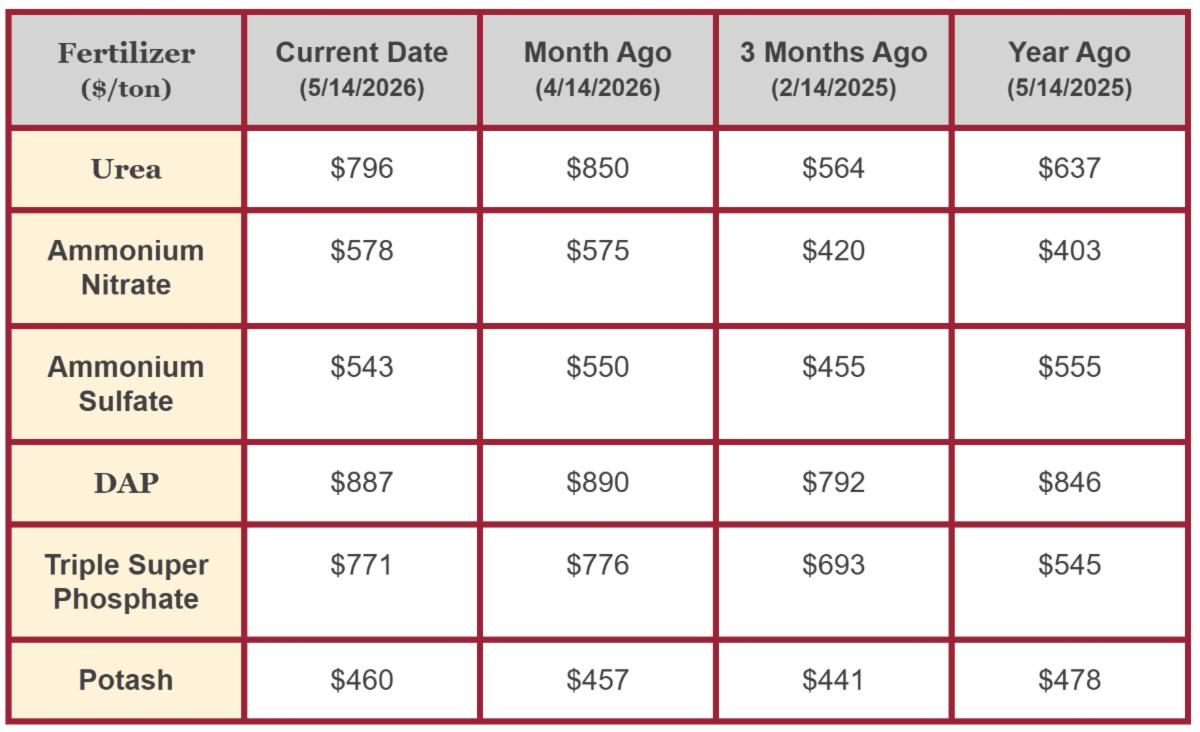
I have plans for two fertility trials on soybeans this summer. I will have one for phosphorous and one for potassium. I established the phosphorous trial yesterday. This field is very low in phosphorous, so I put out different rates of Triple Super Phosphate and Diammonium Phosphate (DAP) to see if we get any yield differences at the end of the year. Below are the treatments and the trial is replicated 4 times.
| | |
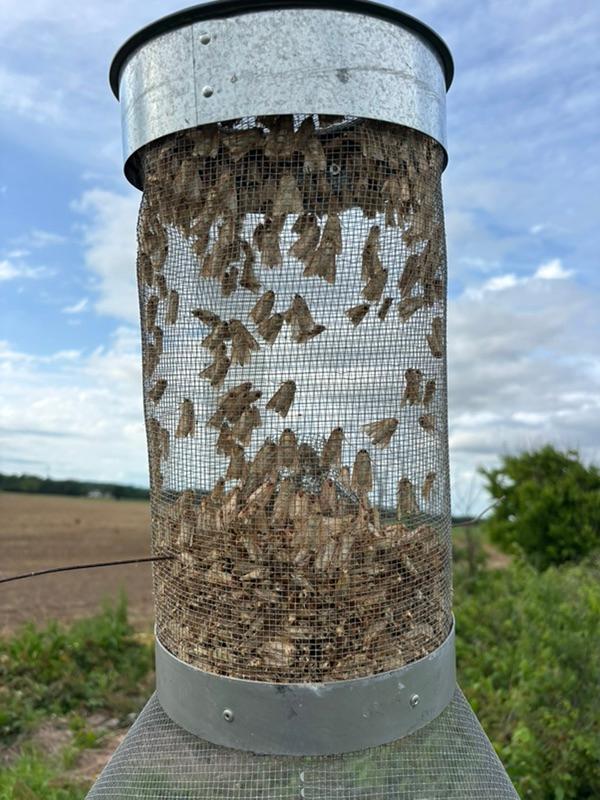
Corn Earworm Moth Traps
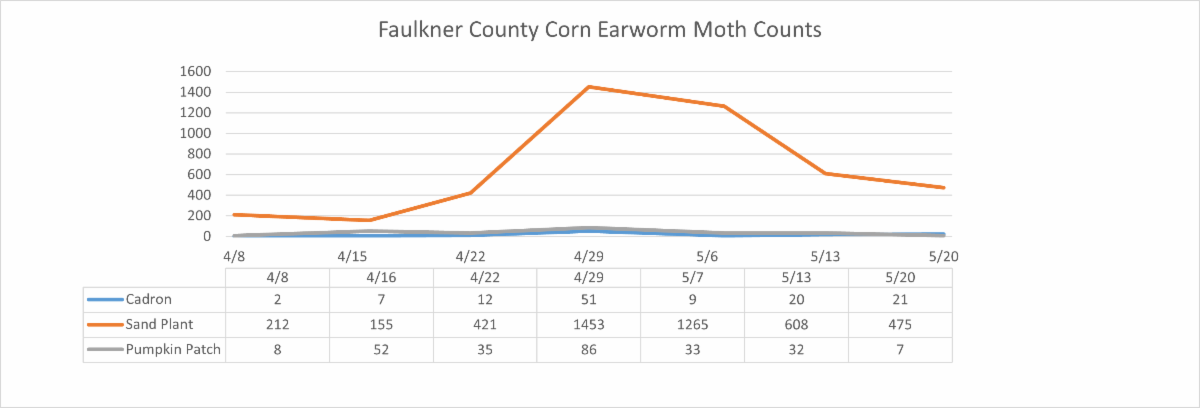
Corn Earworm Moth Counts for May 20, 2026
Cadron - 21
Sand Plant - 475
Pumpkin Patch - 7
| | |
Moisture Sensors
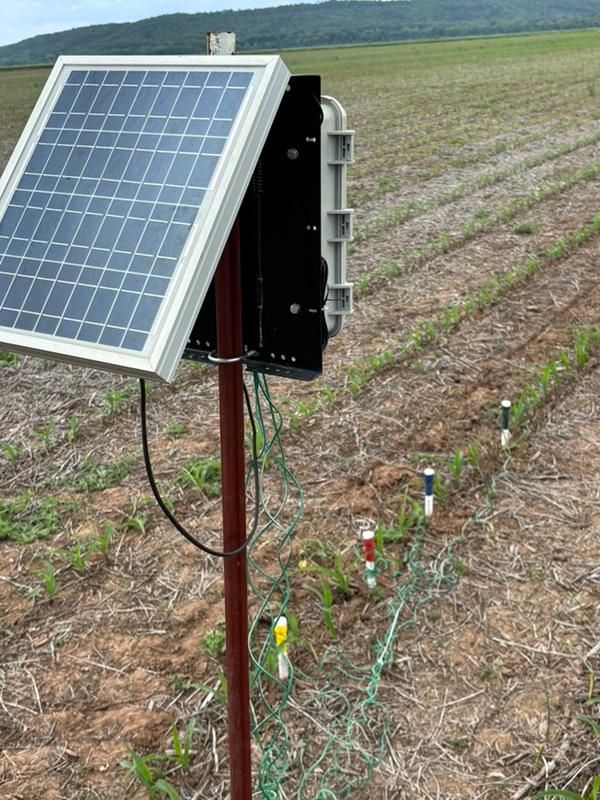
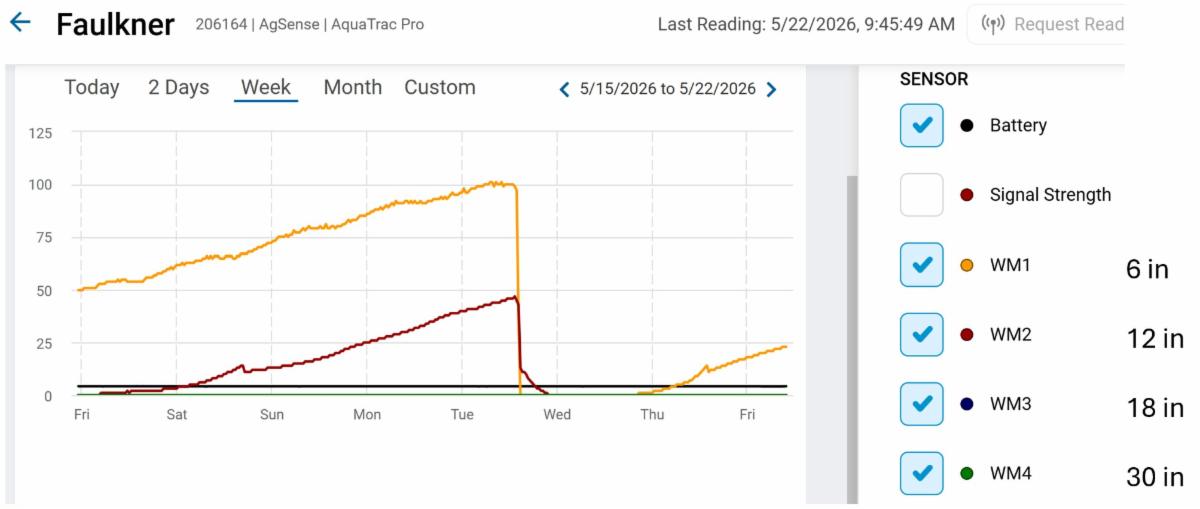
I have established some watermark moisture sensors in the corn hybrid field.
The corn in this field is at V8 so it is a little smaller than most of the corn in the county. Last week and this week the corn was really pulling from the 6 inch sensor, but this week the 12 inch sensor was really starting to go up until we got the rain on Tuesday.
| | |
May 2026 WASDE Highlights for U.S. Supply and Demand
Mr. H. Scott Stiles, Program Associate and Extension Agricultural Economist, University of Arkansas
Dr. Hunter D. Biram, Assistant Professor and Extension Agricultural Economist, University of Arkansas
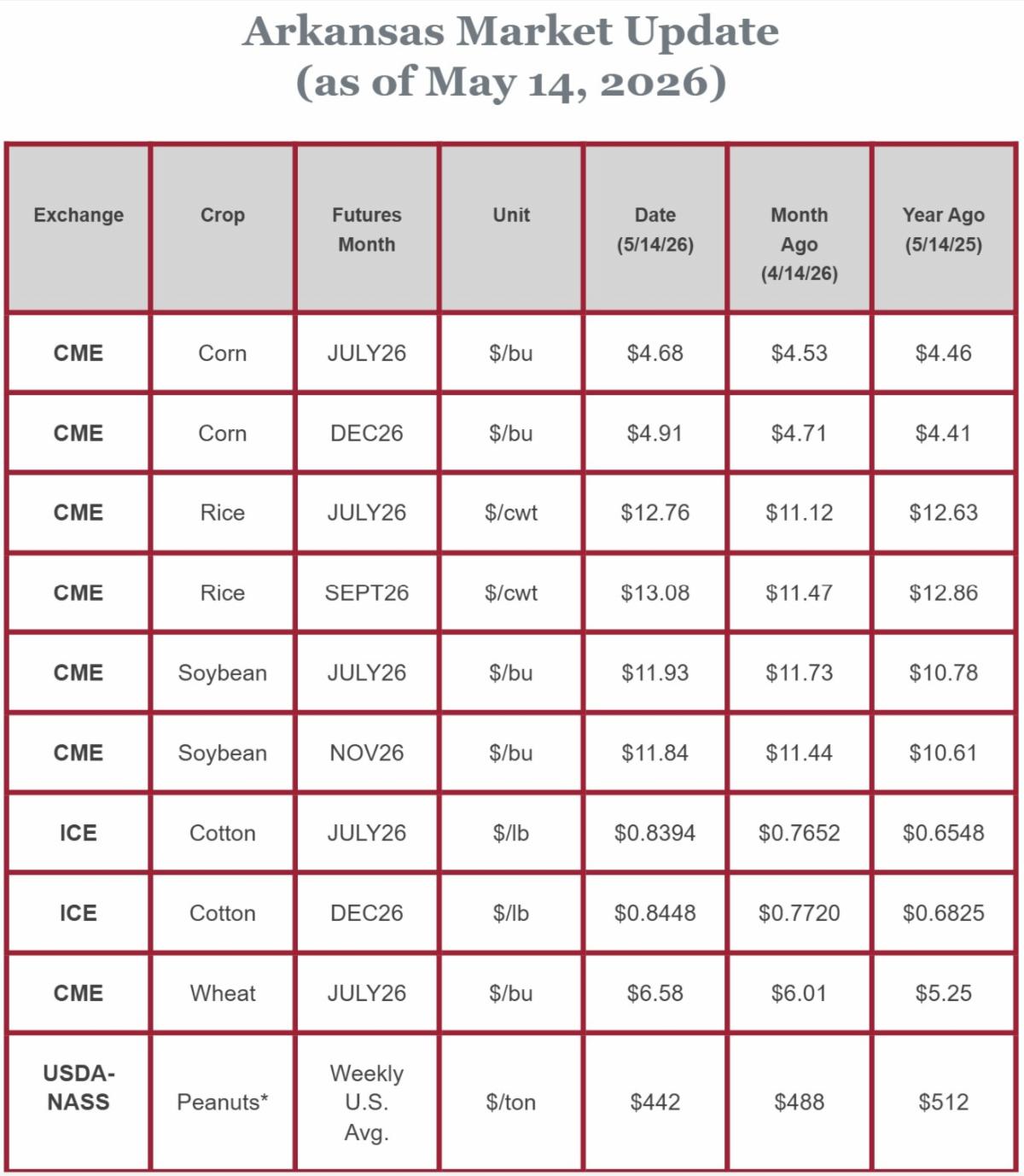
The USDA’s World Agricultural Outlook Board (WAOB) released the monthly report of World Agricultural Supply and Demand Estimates (WASDE) on May 12th. That report contained the first forecasts for the 2026-27 marketing year. The following are some of the highlights of that report.
Soybeans
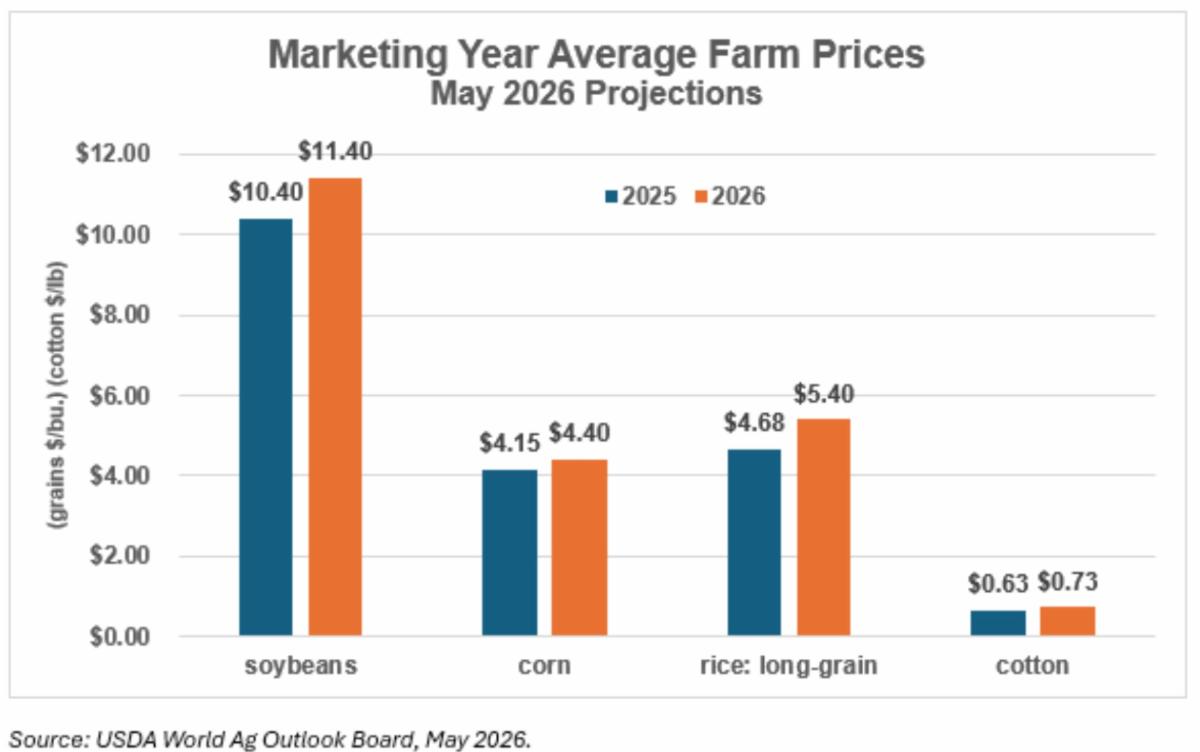
New crop, 2026 soybean production is forecast at 4.435 billion bushels, reflecting an average yield of 53 bushels and 83.7 million harvested acres. For its initial production estimates, USDA has traditionally used the March Prospective Plantings acreage estimate and the trend-yield assumption used at the February Ag Outlook Forum. Total consumption for the 2026 crop is expected to increase 218 million bushels to 4.49 billion on record crush (2.75 billion bu.) and modest improvement in exports (1.63 billion bu.). This places year-ending stocks at 310 million bushels, down from 340 million in the current year. The marketing year average farm price for the 2026 crop is projected at $11.40 compared to $10.40 in 2025-26.
| | |
Corn
The 2026-27 corn crop is projected at 16.0 billion bushels, down 6 percent from last year’s record crop on declines in both acreage and yield. Planted acres of 95.3 million acres are projected to be down 3.5 million. The yield projection of 183.0 bushels per acre is based on a weather adjusted trend assuming normal planting progress and summer growing season weather. Total corn supplies are seen declining 2 percent to 18.1 billion bushels. Total U.S. corn use for 2026-27 is forecast to fall 2 percent relative to a year ago on reductions in domestic use and exports. Food, seed, and industrial use is forecast flat at 6.955 billion bushels. Feed and residual use is projected down 100 million bushels to 6.1 billion bushels on lower production and higher prices. U.S. corn exports for 2026-27 are forecast to decline 150 million bushels from a year ago to 3.15 billion bushels. Driven by lower production, 2026-27 ending stocks are expected to decline 185 million bushels to 1.957 billion. The 2026-27 season-average farm price is projected at $4.40 per bushel, up 25 cents from $4.15 in the current marketing year.
Cotton
The May U.S. cotton 2026-27 projections include a smaller crop, an increase in exports, unchanged mill use and lower ending stocks compared with the 2025-26 season. New crop production is expected to be 13.3 million bales, 600,000 bales less than in 2025-26. Domestic mill use is expected to be flat year-to-year at 1.6 million. Exports are expected to increase 300,000 bales to 12.3 million bales from 12 million in 2025-26. Ending stocks are expected to decrease to 3.9 million bales from 4.4 million in 2025-26. That is the least since 3.15 million in 2023-24 and below the 10-year average of 4.25 million bales. The forecast average price of 73 cents for the 2026-27 marketing year is up considerably compared to 63 cents for the 2025-26 crop.
Long-Grain Rice
U.S. long-grain production is projected at 122.5 million cwt, down 20 percent from last year on reduced acreage. This would be the smallest long-grain crop since 2011. Total supply is forecast at 201.1 million cwt, down nearly 12 percent from last year on lower production. Total use is projected at 173.0 million cwt, down from 188 million in the current year. Total exports are projected at 50 million cwt, down 1.0 million cwt from 2025-26, on continued strong global competition and higher U.S. long-grain prices. Domestic use is forecast at 123 million cwt., down 14 million from 2025-26. Ending stocks are projected at 28.1 million cwt, down 29 percent from last year and the lowest since 2023-24. The 2026-27 season average farm price for long-grain is projected at $12.00 per cwt, up from $10.40 in 2025-26.
The complete May 2026 WASDE report can be found at this link.
| | Beef, Small Ruminants, & Forages | | |
Forages
I saw several buggies on the road last weekend and earlier this week trying to beat the Tuesday rain. I hope some fertilizer got out there. I want to establish two potassium trials in Faulkner County, and my goal was to get one of them out yesterday before today's rain. But like most of you time ran out on me and I didn't make it. I hope to get it in before the expected rain on Monday. The second one won't go out until we get the first cutting of hay off.
We did get our high nitrogen trial established last week for the second year. We had some really interesting results last year and I am looking forward to this second year of data.
| | |
Extended Days on Feed Increasing Carcass Weight, Carcass Quality, and Fat
Paul Beck, Oklahoma State University Extension Beef Cattle Nutrition Specialist
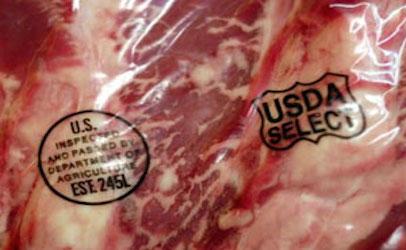
Carcass weights have been steadily increasing at about 5 pounds per year for the last 60-years, but in the last few years they have increased by over 20 pounds per year. We evaluated the impact of extended days on feed on carcass composition from 5,656 cattle to model either a historically typical marketing endpoint of 10% of the pen graded Yield Grade 4 or 5 or a longer-fed endpoint more common to the beef industry currently, where approximately 30% of the pen grade hit Yield Grades of 4 or 5.
The extended-feeding scenario increased average hot carcass weight from 889 to 918 pounds, a 29-pound increase per head. Increased marbling score increased the percentage of carcasses grading Choice or greater from 77.8% to 90.7%.
Backfat thickness increased from approximately 0.54 to 0.64 inches. Estimated total body fat increased from approximately 262 to 287pounds, or about 25 pounds more fat per head, making up 87% of the extra 29 pounds of carcass weight.
Extended feeding can increase carcass weight and improve quality grade, which increases gross carcass value when Choice and Prime premiums are strong and heavy carcass discounts are limited.
Extended days on feed are a marketing and management decision. Longer feeding can be profitable when the value of added carcass weight and improved quality grade exceeds the added feed cost, yardage, death loss risk, interest cost, and yield grade discounts, but can be costly if market conditions change to increase discounts for heavyweight or over-finished carcasses or if feed costs increase.
| | |
Brucellosis Vaccinations
We usually partner with the Arkansas Department of Agriculture to offer a brucellosis vaccination schedule in May. This year, we have had to delay that schedule until the middle of June. I am sorry for the confusion for this spring schedule but I will get dates posted and start contacting producers as soon as I know the June dates.
| | |
Faulkner County Cattlemen's Meeting
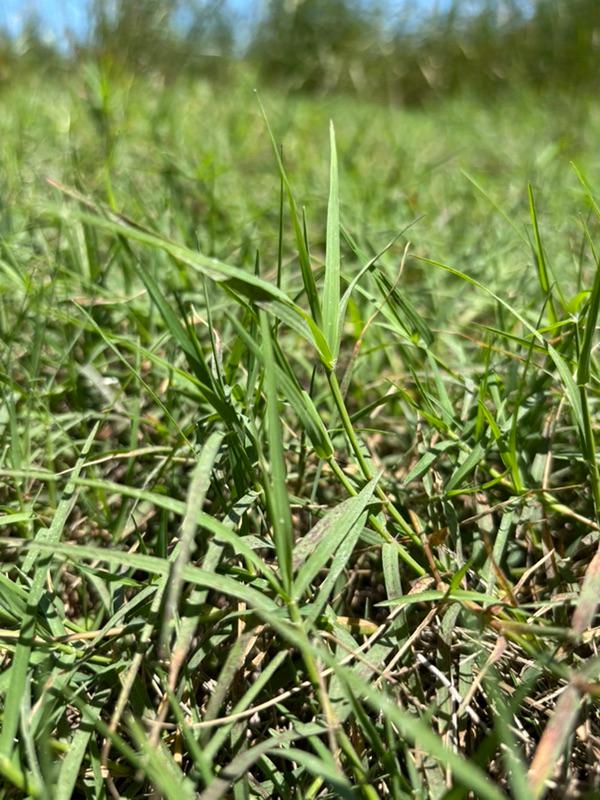
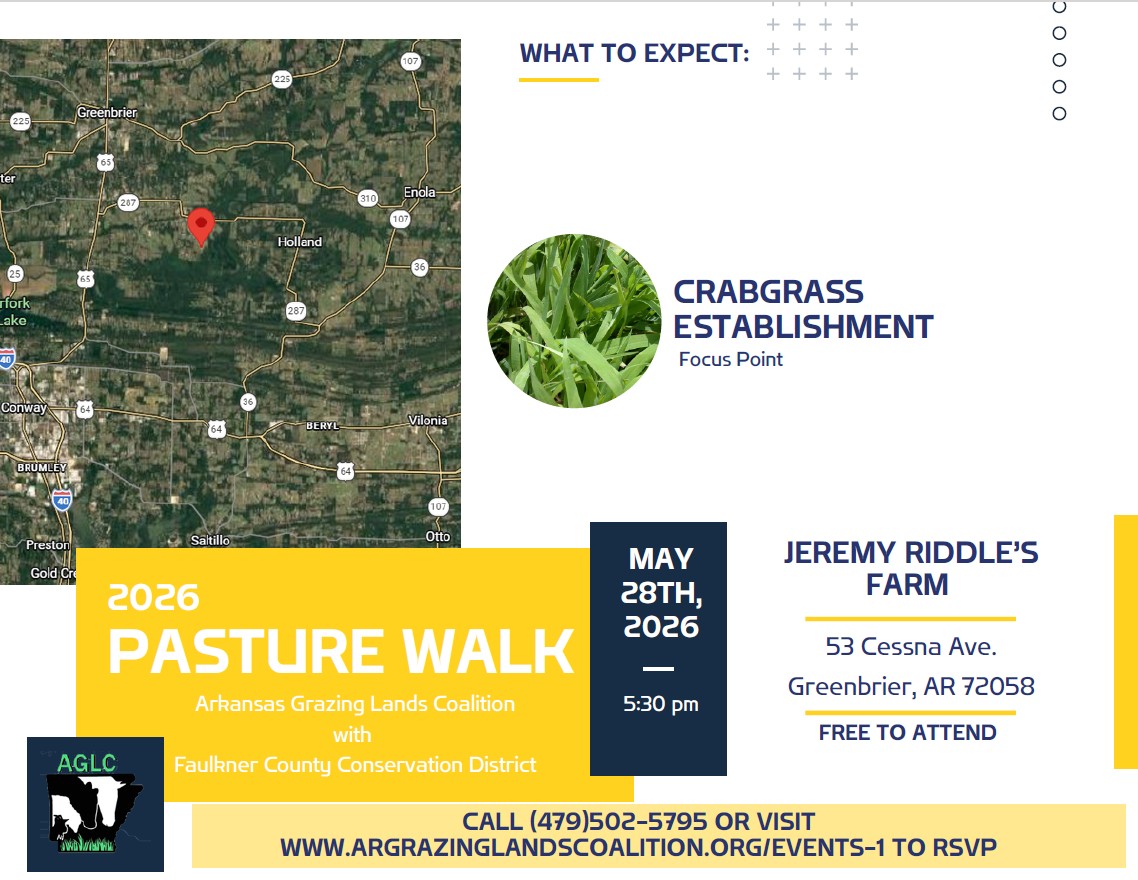
The next Faulkner County Cattlemen's meeting will be on May 28 at the Jeremy Riddle Farm in Greenbrier. The actual Cattlemen's Meeting will start at 6:30, but for anyone that wants to come early we will have a pasture walk looking at establishing crabgrass sponsored by the Arkansas Grazing Lands Coalition and the Faulkner County Conservation District. This pasture walk will count towards continuing education for EQIP participants.
| | |
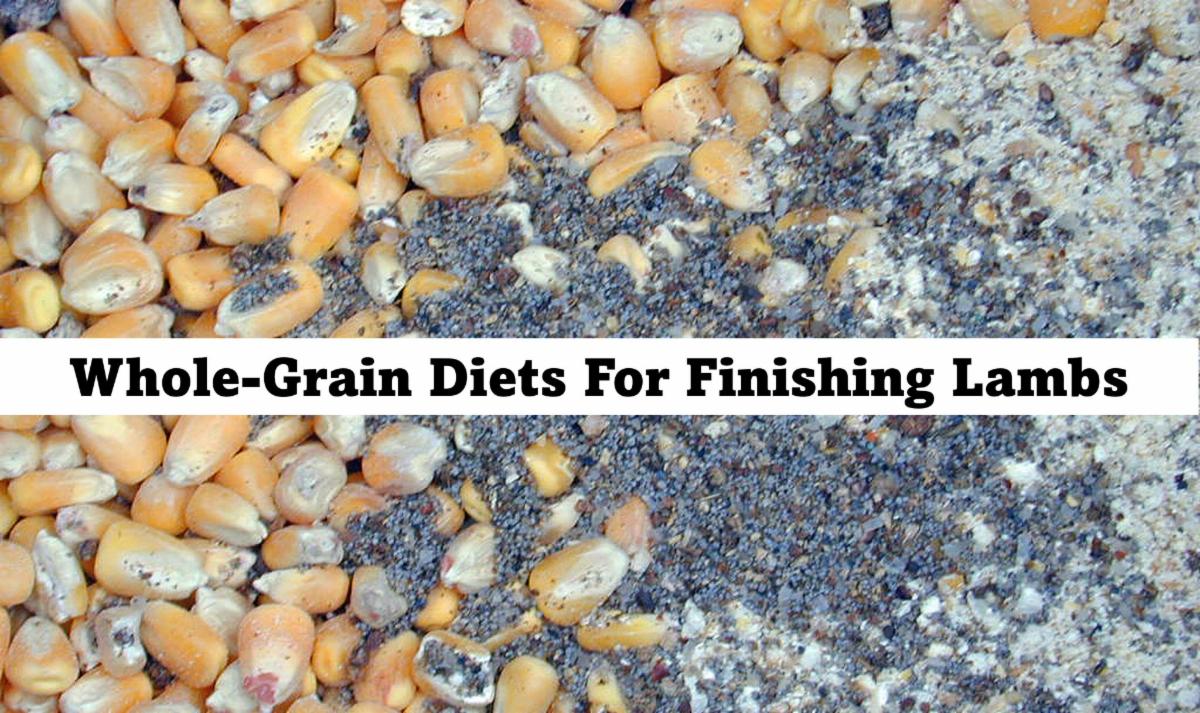
Whole-Grain Diets For Finishing Lambs
Whole-grain feeding of lambs improves feed efficiency, increases average daily gain, and lowers overall feed costs per pound of gain. It is the most profitable feeding program that can be used for grain-based finishing of feedlot lambs. Whole-grain diets consist of whole (unprocessed) grains, such as shelled corn or barley, mixed with a pelleted protein-vitamin-mineral supplement. Roughage (hay) is not incorporated into a whole-grain diet or supplemented on the side. Consequently, wholegrain diets are high in energy and promote accelerated lamb gains.
| |
Arkansas Shepherds Association
The Arkansas Shepherds Association is an organization for sheep owners or businesses that want to support the Arkansas sheep industry. They will have lots of information for sheep owners and an annual educational workshop.
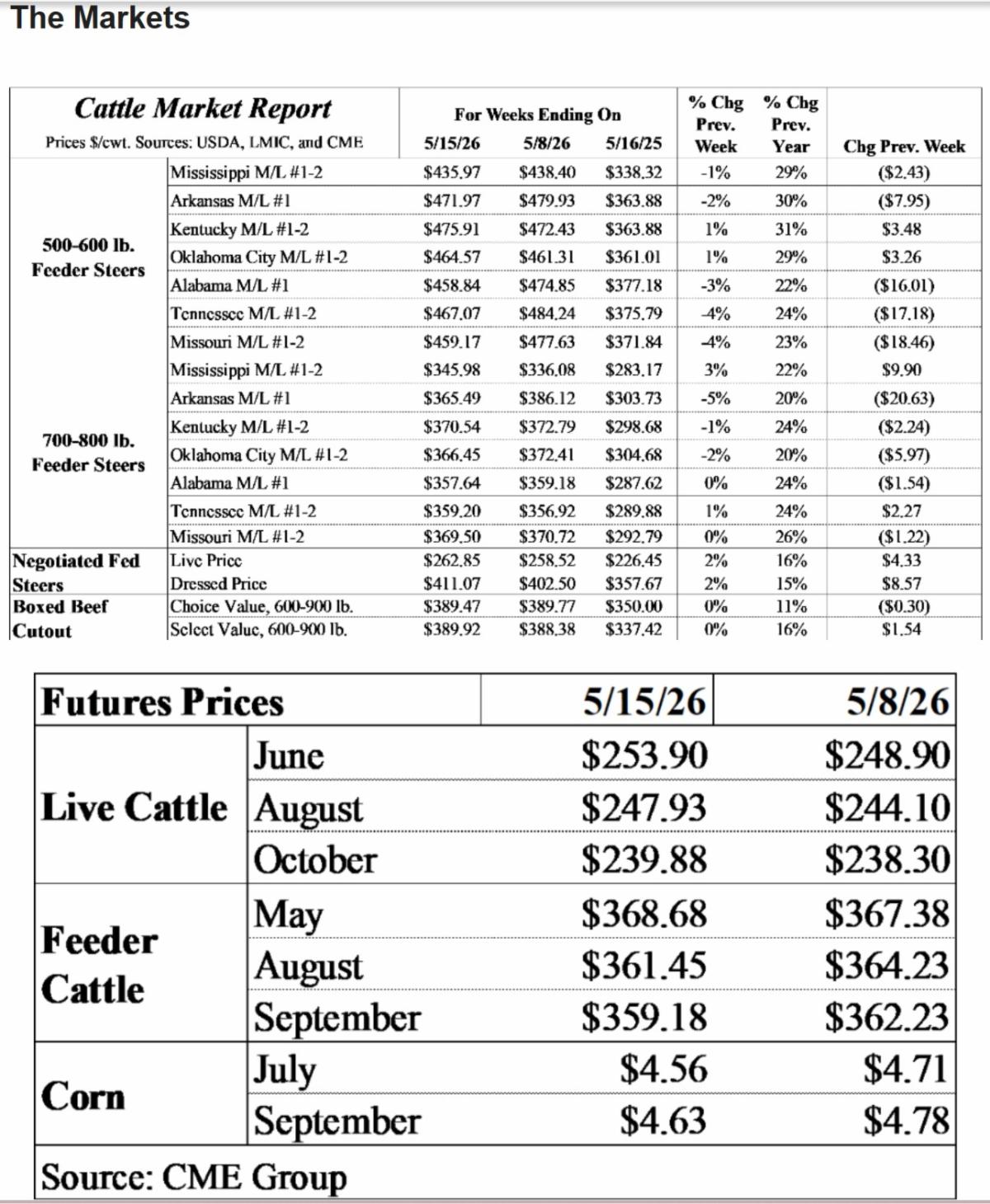
| | Here is this weeks Cattle Market Notes Weekly | | |
Pesticide Applicator Trainings
There will be no more in person Pesticide Applicator Trainings until this winter. If you need a license you can still do the training online. There is a link below for the online training and a link to check your license status.
| | |
Livestock Market Report
The following links are for the weekly livestock market report from the Arkansas Department of Agriculture website and the Livestock Auction Dashboard from USDA. Both sites have marketing data for all livestock sold at Arkansas Sale Barns.
| | |
2025 Faulkner County Agriculture Demonstration Summary
The 2025 Faulkner County Agriculture Demonstration Summary is now available at the link below.
The 2025 Faulkner County Demonstration Summary is a collection of on-site demonstration results conducted in Faulkner County by local County Agents. Demonstrations are the cornerstone of the University of Arkansas System Division of Agriculture Cooperative Extension Service’s mission which is:
“We strengthen agriculture, communities, and families by connecting trusted research to the adoption of best practices.”
On-site demonstrations allow producers and homeowners to see firsthand how Extension recommended varieties and best management practices work in their counties and surrounding area.
| | |
Sign up for Text Alerts
You can now sign up for text alerts from me throughout the year. I have two areas you can sign up for which includes Faulkner Livestock or Faulkner Ag (Row Crop Updates). To sign up you can follow one of these links or use the QR Codes below.
| | Pursuant to 7 CFR § 15.3, the University of Arkansas System Division of Agriculture offers all its Extension and Research programs and services (including employment) without regard to race, color, sex, national origin, religion, age, disability, marital or veteran status, genetic information, sexual preference, pregnancy or any other legally protected status, and is an equal opportunity institution. | | | | |