Faulkner County Agriculture Update
May 29, 2026
| | |
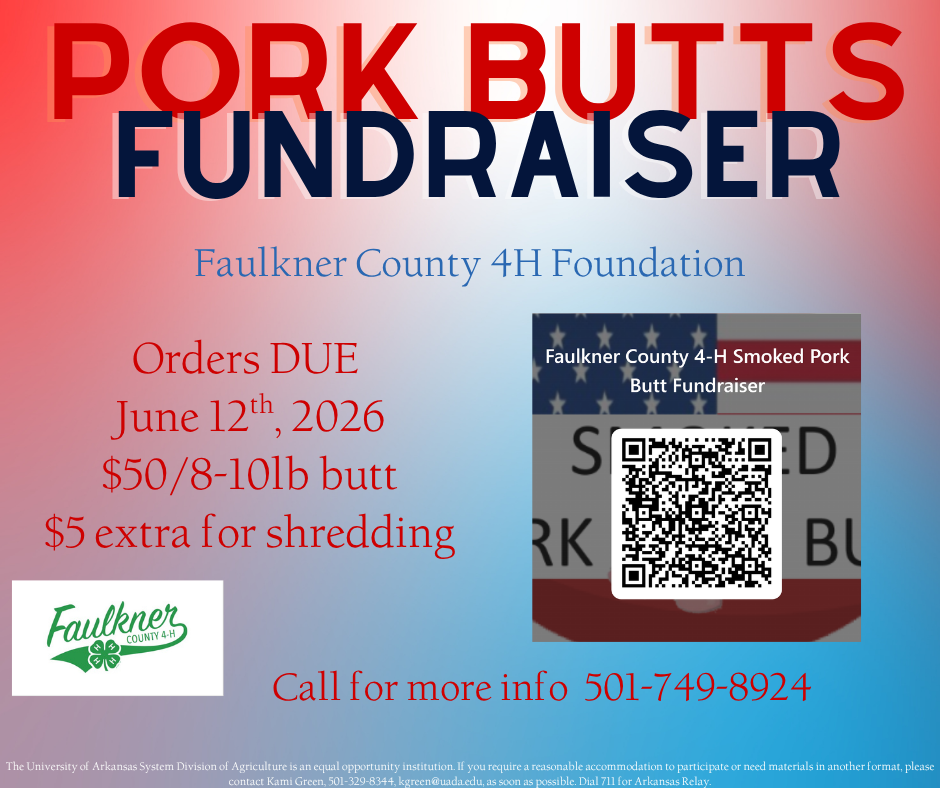
Faulkner County 4-H Foundation Annual Pork Butt Fundraiser
It is time again to order your pork butts for the 4th of July. Use the QR code below to order yours by June 12th. Pick up will be at the Flying "C" Ranch July 2nd 4-6pm and July 3rd 9-11am.
|
| |
Weather
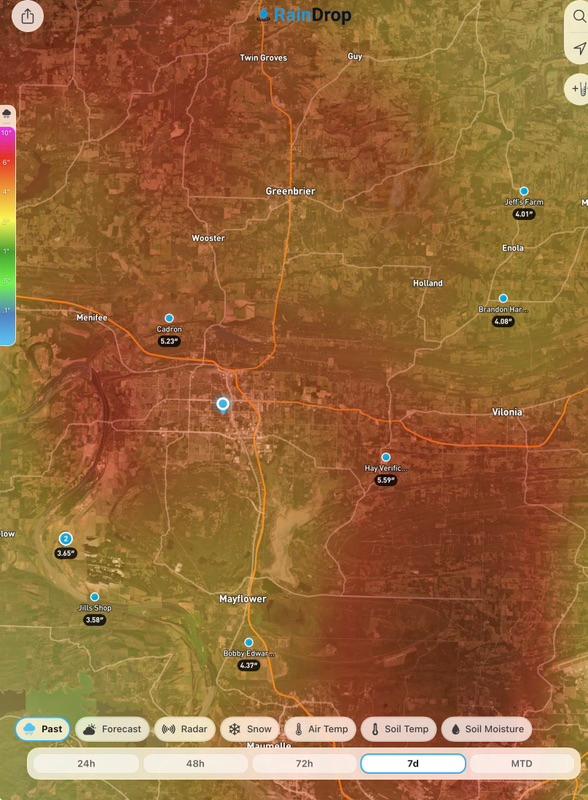
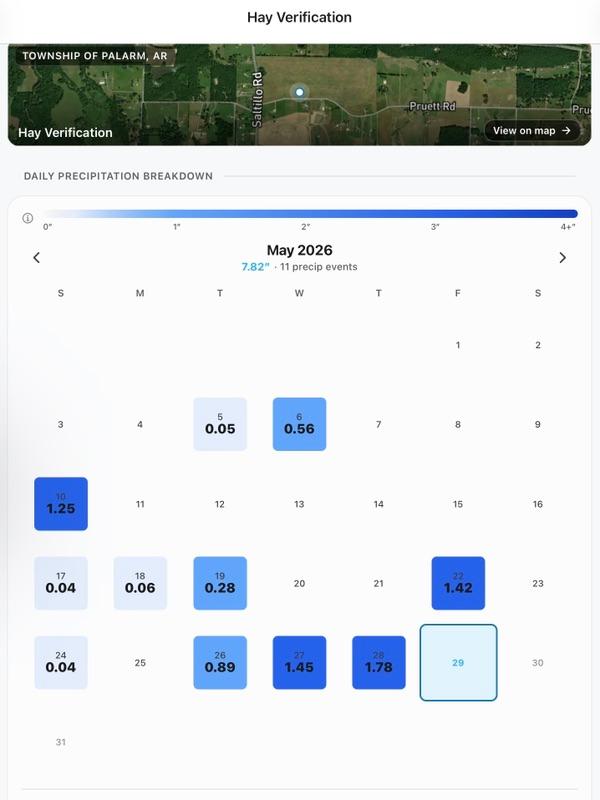
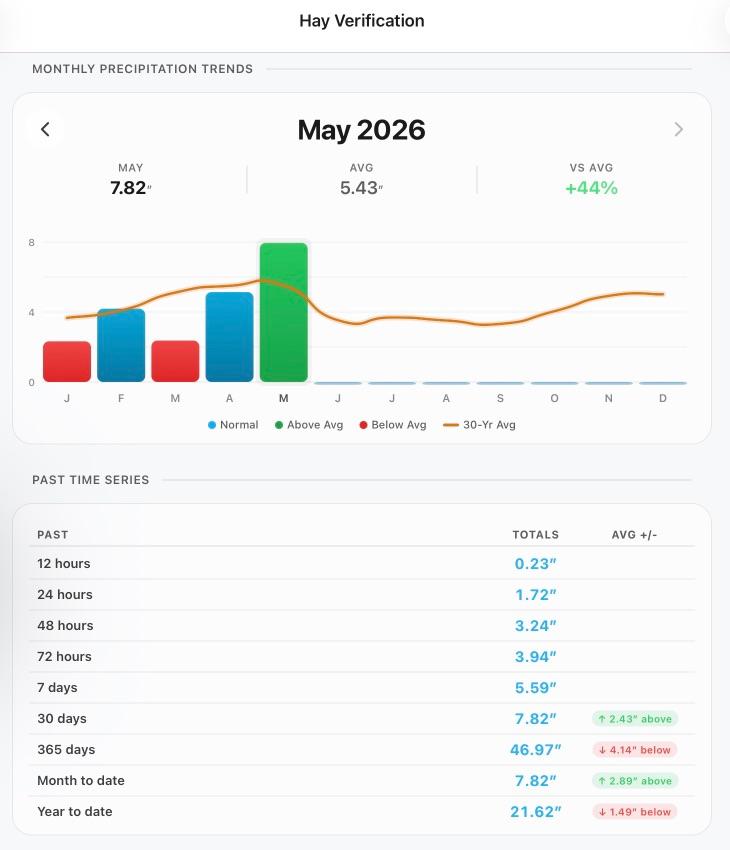
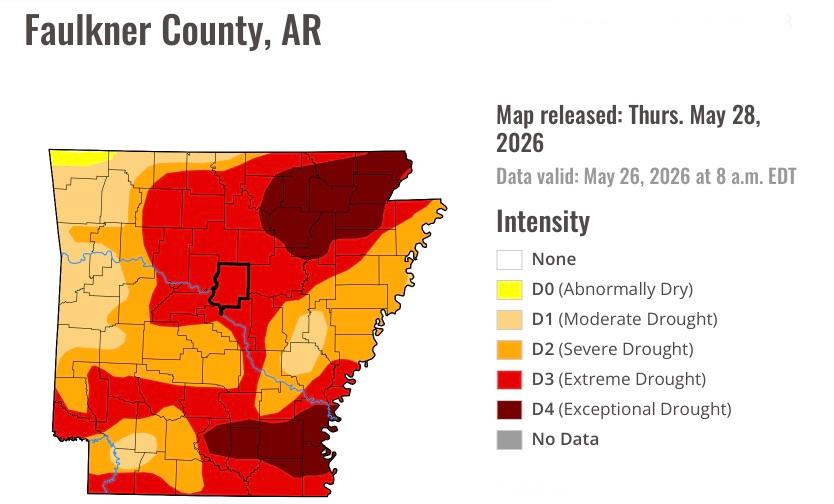
This was the week for the rain! I have attached some amounts from the Rainfall App that I use. Several places had over 5 inches of rain the past 7 days. I also included some information from the Hay Verification location which is located at the corner of Saltillo Road and Pruett Road near Vilonia. They received 5.6 inches of rain this week and that put them at 2.4 inches of rain above normal for May. This is the first month of the year that we were above normal on rain fall. We are still short 1.5 inches for the year. The drought monitor still shows us in a D3 drought, but I would expect that to change next week.
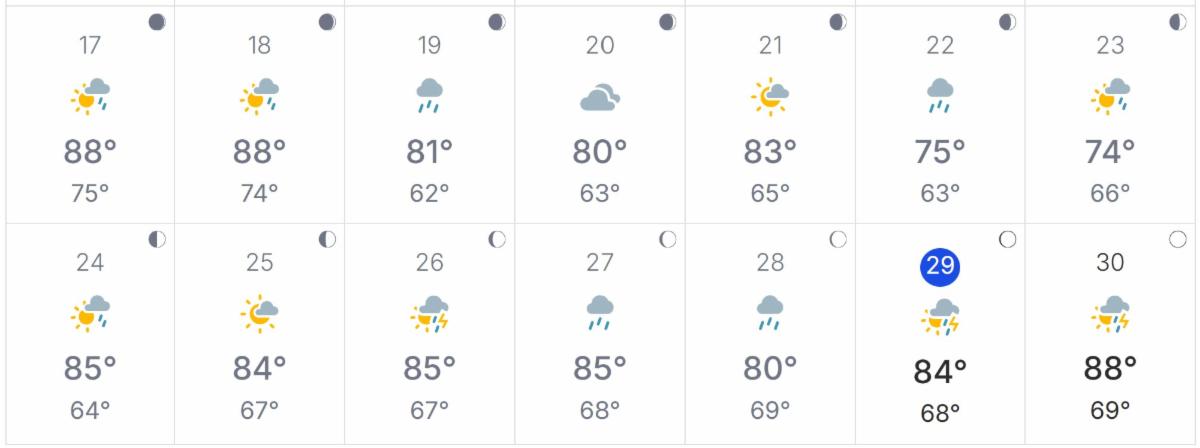
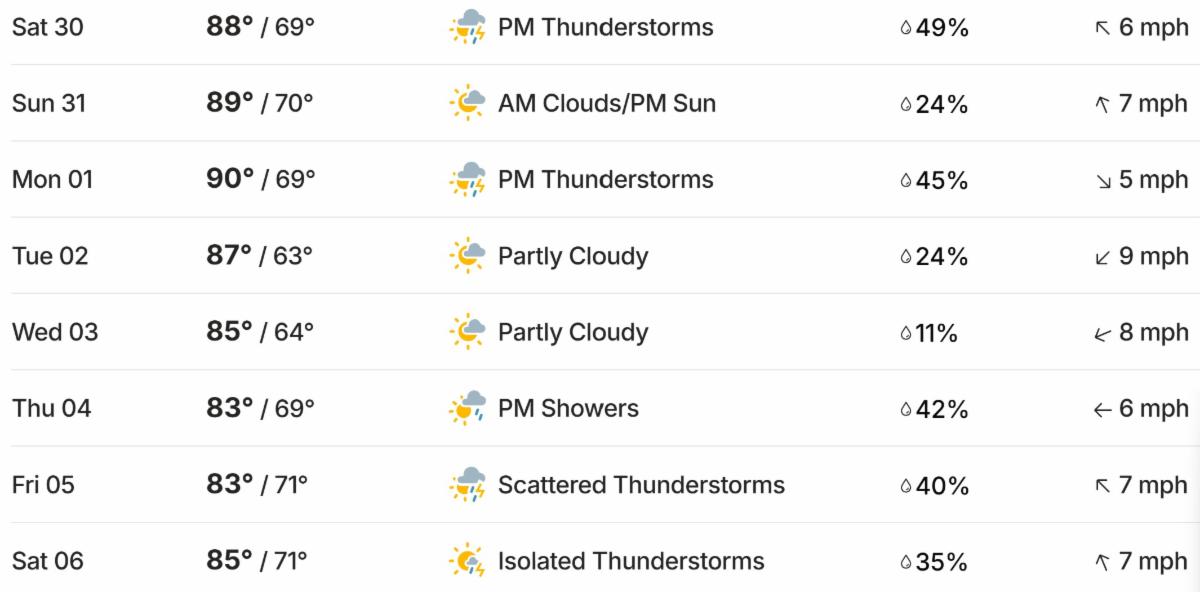
Next week has more chances of rain with the nighttime lows creeping up into the low 70's. This is perfect grass growing weather.
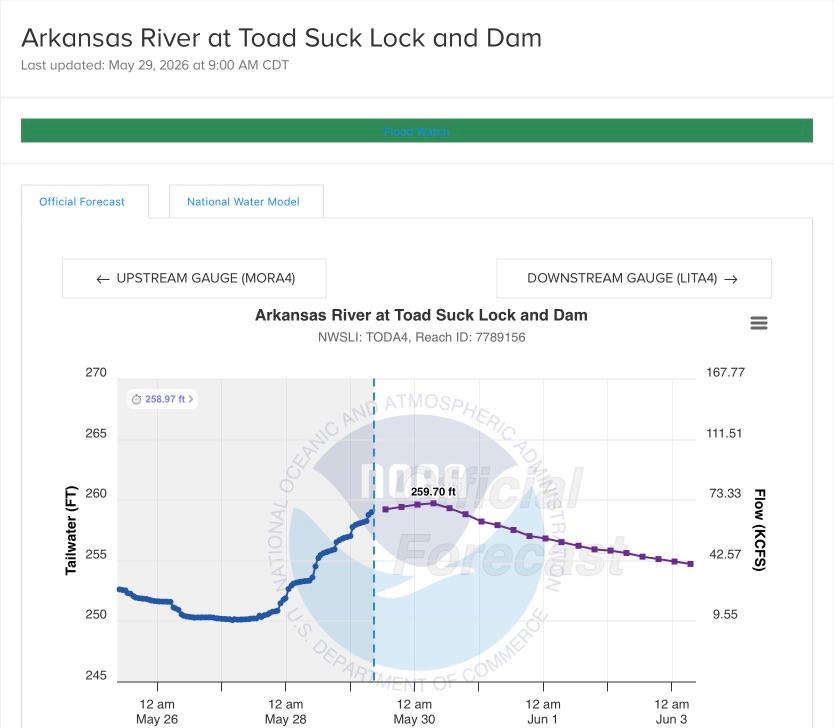
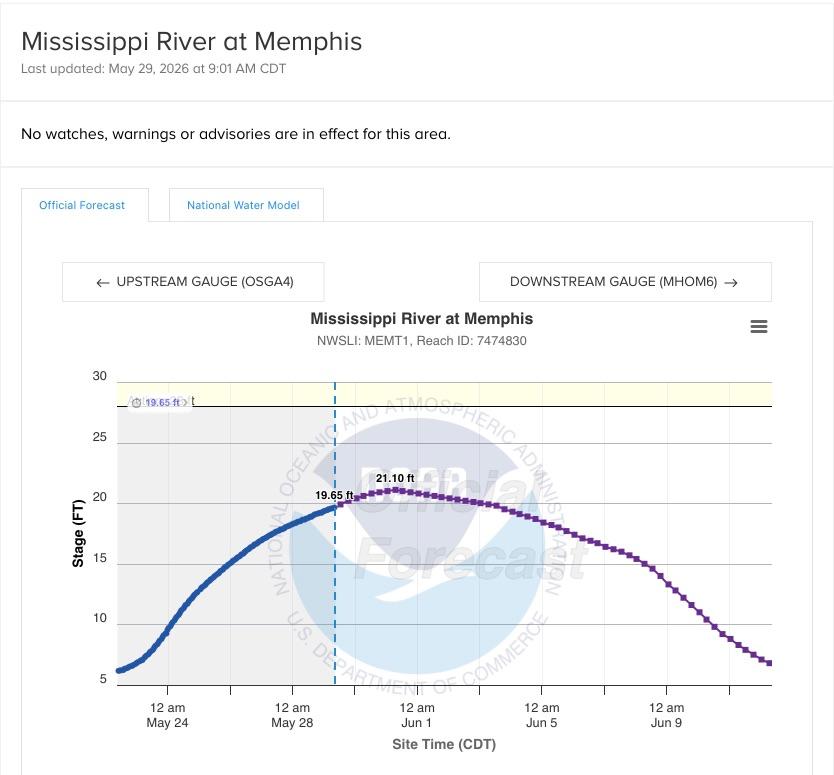
Minor flooding is possible along the Cadron and Palarm areas from the excessive rain. Luckily the Arkansas is still low and is only predicted to crest at 260 at Toad Suck. That will allow those creeks to run on out hopefully quickly.
| | Arkansas and Mississippi River | |
Corn
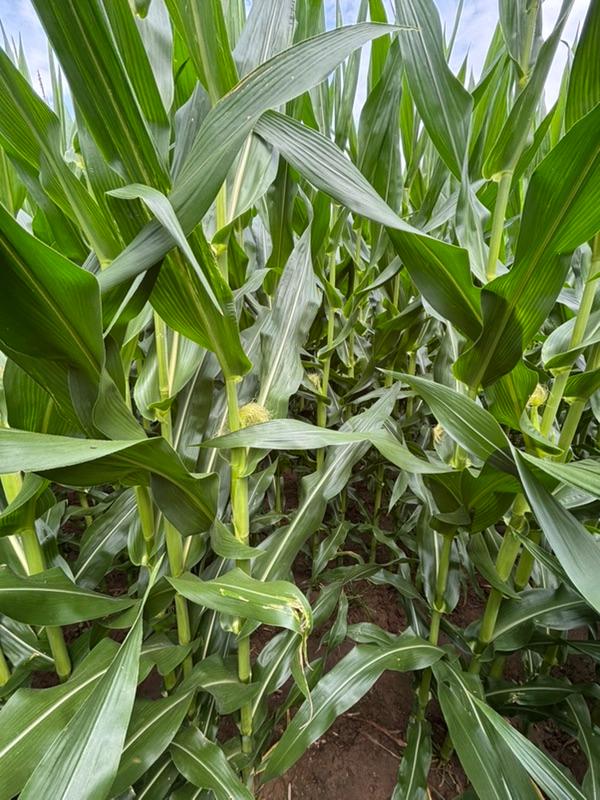
Early planted corn is starting to tassel and silks are extending out of ears. Several fields received their last application of fertilizer this week. Pollination is right around the corner, and I have to say this is not great pollination weather. Rain and cloudy during this time can lead to poor pollination which is the last thing we need. One way to judge pollination is to shuck an ear and try not to disturb the silks. After a kernel is pollinated, the silk will die and fall off the ear, but if it stays attached then it probably didn't pollinate. Just turn the ear upside down and shake it to see what falls off and what stays on the ear. This will give you an idea of how well it pollinated. We will know more about this time next week on how well we did.
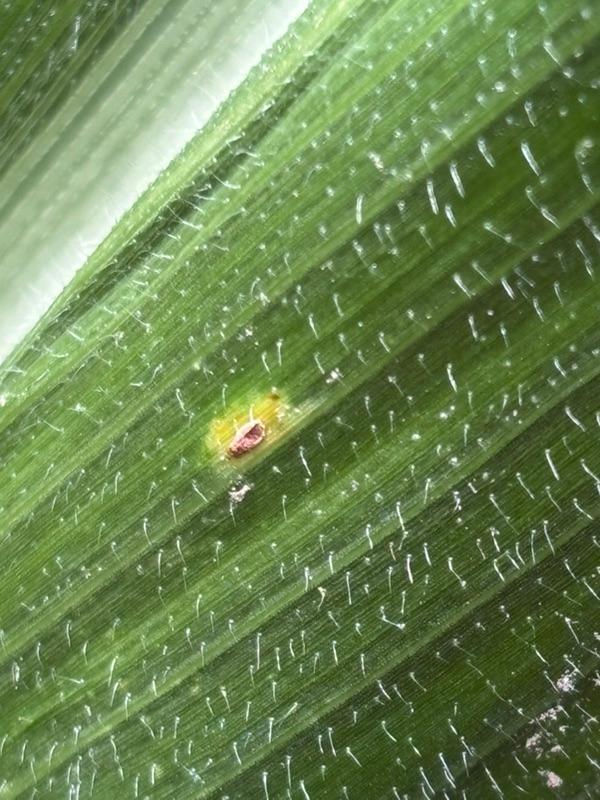
I did find my first pustule of common rust this week. And I have to say I did just find one. I could not find another pustule to save my life. But be aware it is that time of year to start seeing common rust. Don't mistake it for southern rust which comes in later when it is much hotter.
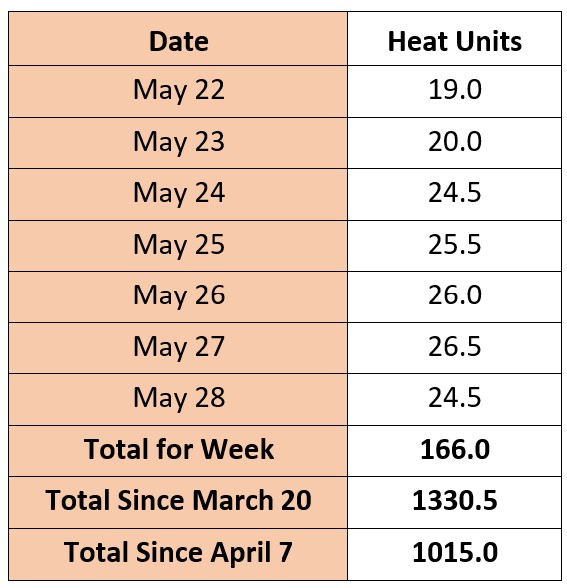
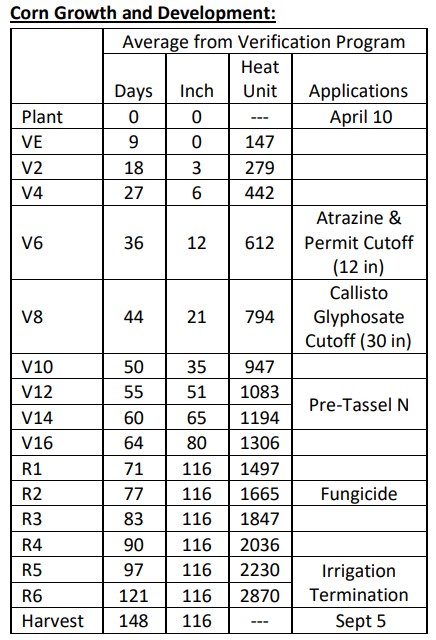
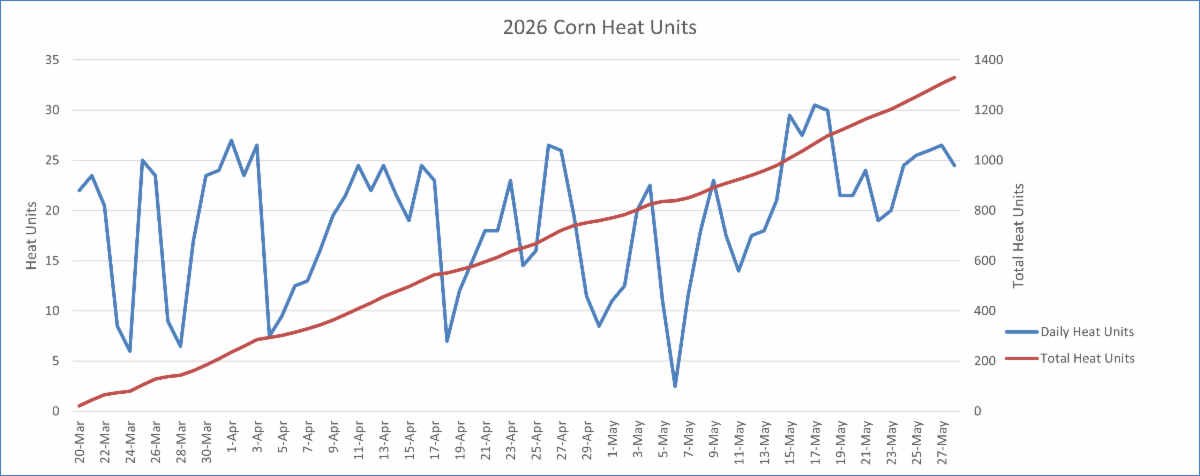
We accumulated 166 heat units for this week. Heat units for corn planted on March 20 is at 1330.5 and for fields planted on April 7 there is 1015 heat units. Early planted fields are tasseling while late planted fields are around V11 - V12.
| | |
Rice
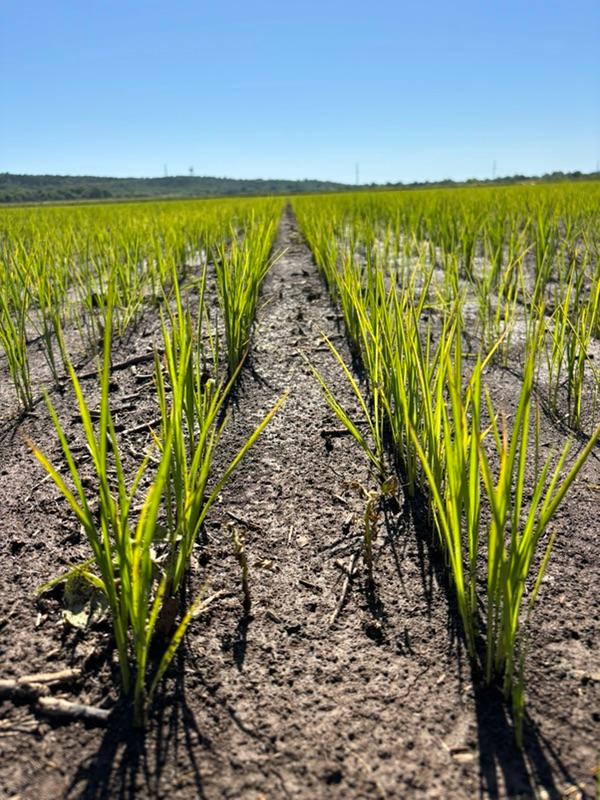
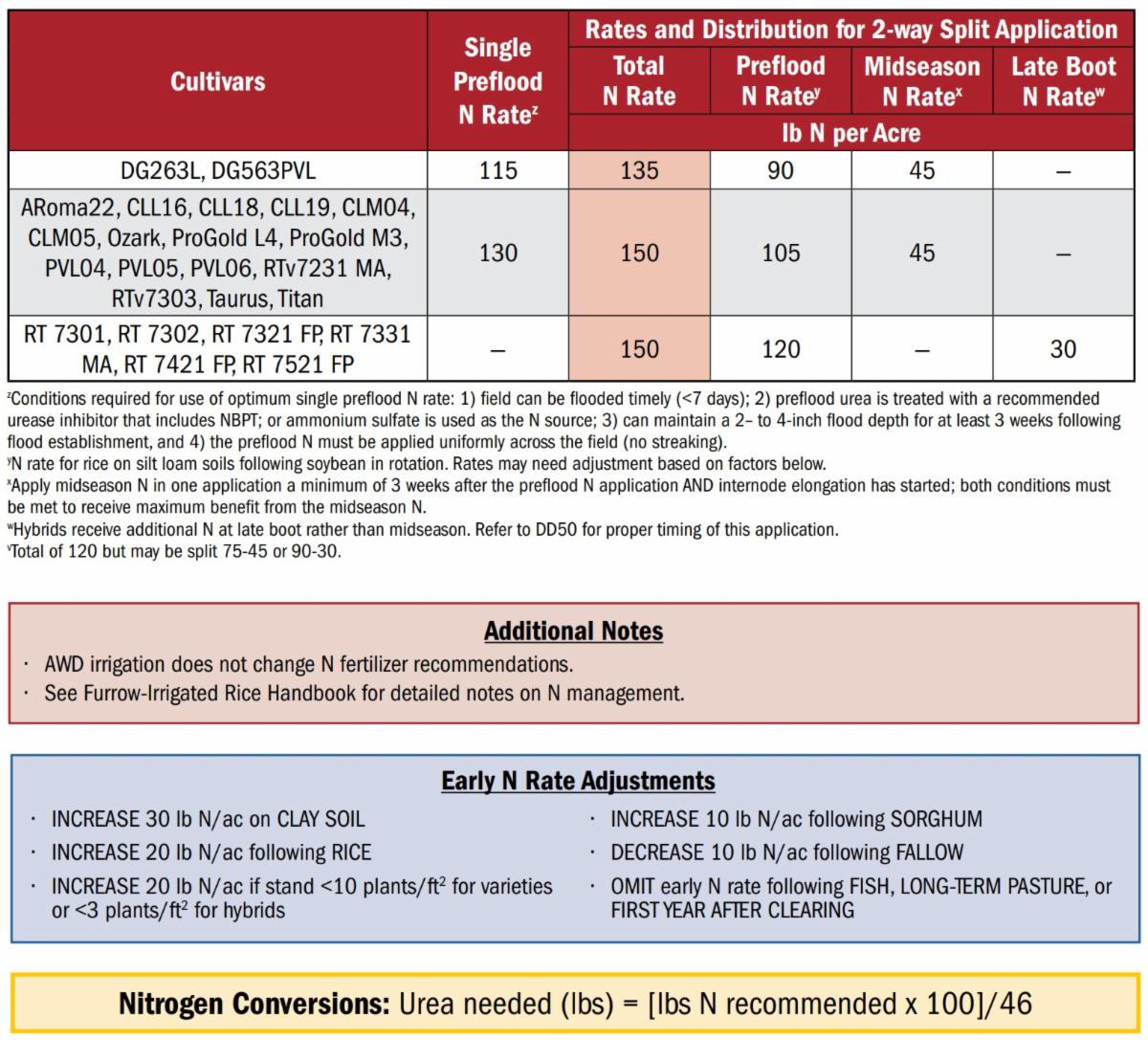
For fields that emerged about the middle of May you are coming up on the last recommended timing to apply preflood nitrogen. We are to the point now that you may have to apply into waterlogged or muddy fields. The latest update from Dr. Hardke (link below) has some great information on different scenarios that you could be facing right now and the best way to apply preflood nitrogen to the crop right now. It may consist of 3 or 4 weekly spoon feeding applications of 100 lbs of Urea.
| | Latest rice update from Dr. Jarrod Hardke and our 2026 Rice Management Guide. | | |
Soybeans
Soybeans that were planted the last few weeks were coming up to good stands, but several fields have felt the wrath of the down pours and are now under water. Short-duration floods are less damaging to the crop than floods that last several days or more. Producers rarely note yield losses in fields flooded for 48 hours or less. Four days or more of flooding stresses the crop, delays the plants’ growth and leads to shorter plants with fewer nodes. Flooding for six days or more can significantly depress yields, while flooding for a week or more may result in significant – or entire – stand losses. Hopefully the water will move on out so we can continue growing.
| | |
Corn Earworm Moth Traps
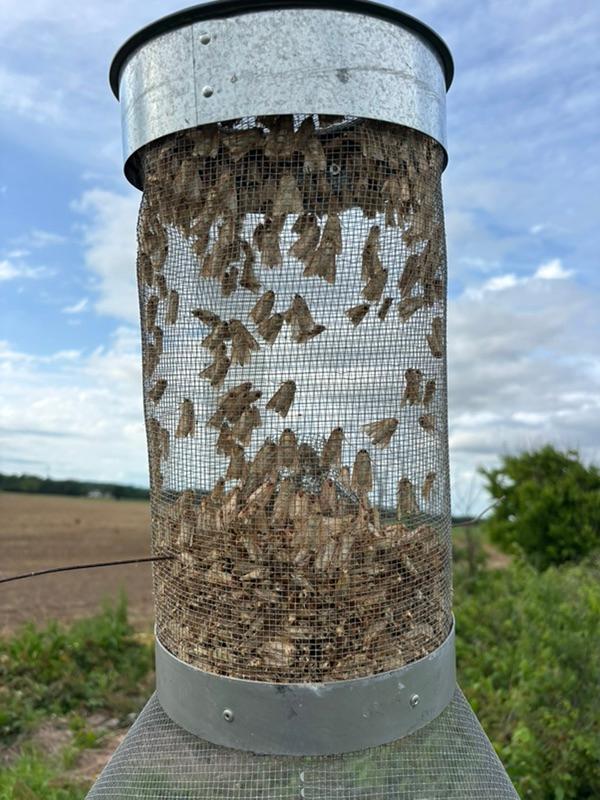
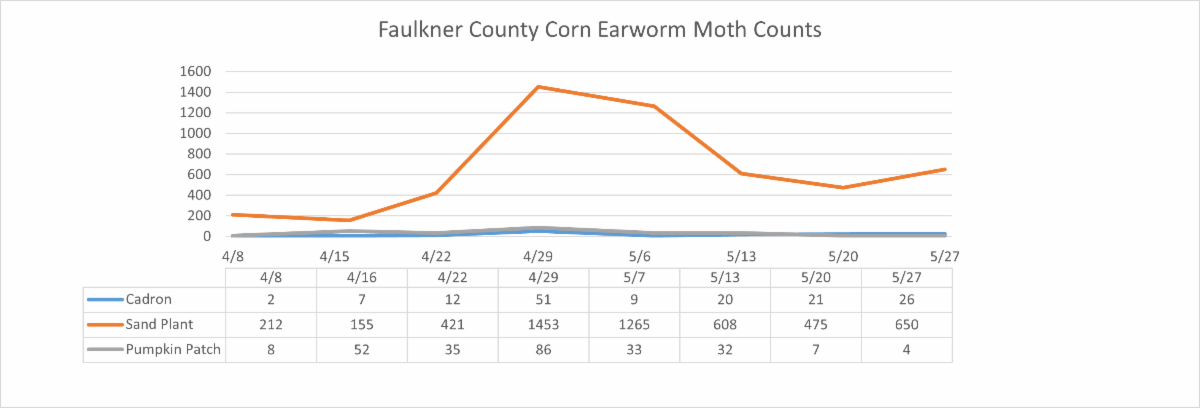
Corn Earworm Moth Counts for May 27, 2026
Cadron - 26
Sand Plant - 650
Pumpkin Patch - 4
| | |
Moisture Sensors
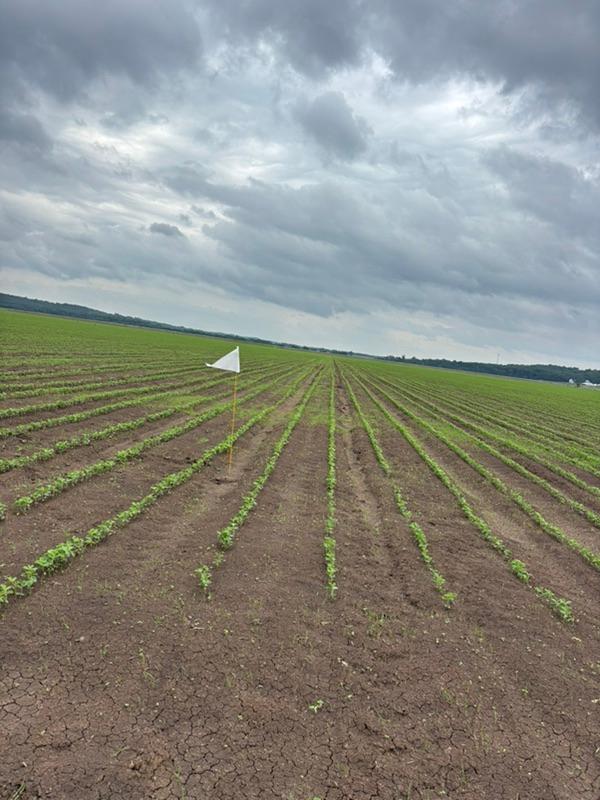
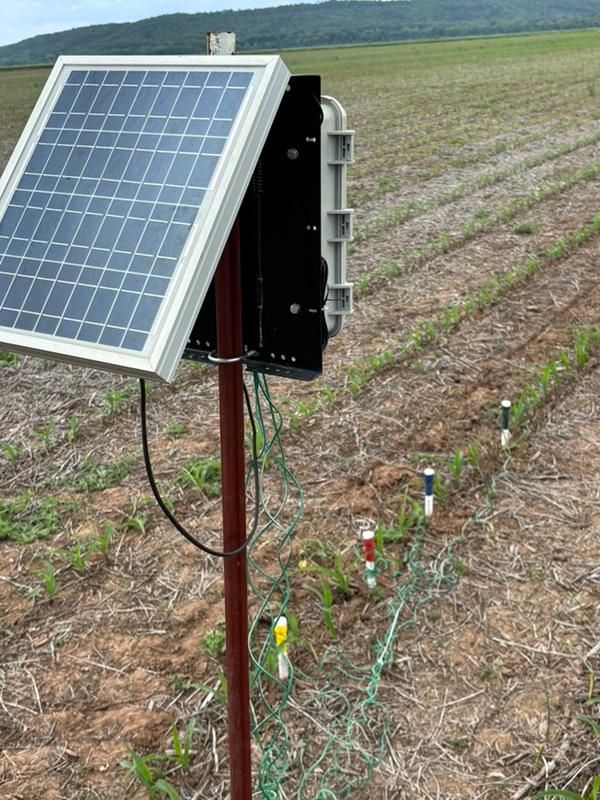
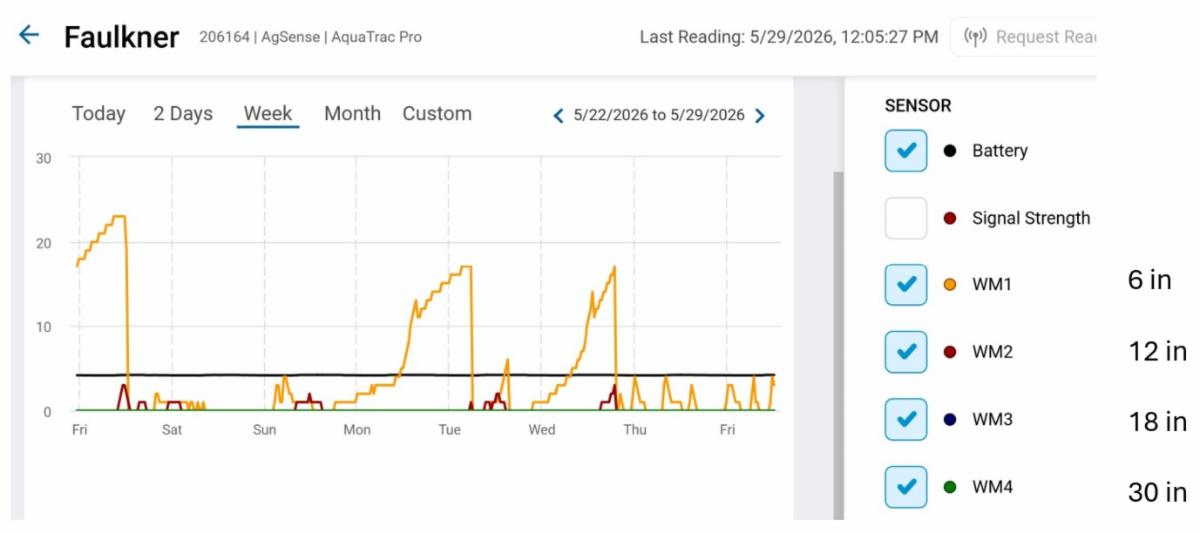
This field had not received as much rain earlier in the week than some other areas in the county. On Monday and Tuesday the 6 inch and the 12 inch sensor were moving until the rain started. It didn't rain much but enough to move us back down to zero, and then it started to move again, until it really started to rain on Wednesday and Thursday. The field is still sitting at zero today as the field ended up with 3 inches of rain for the week.
| | Beef, Small Ruminants, & Forages | | |
Forages
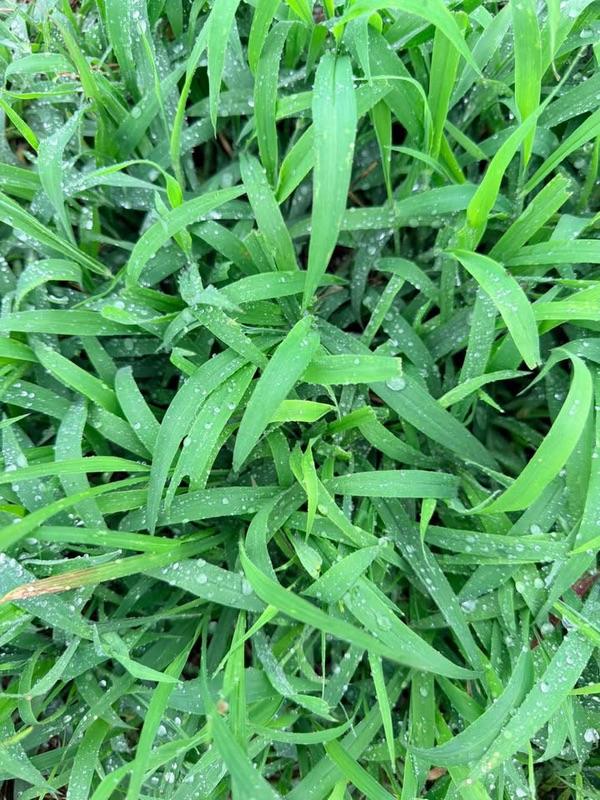
Rains and warmer night and day time temperatures are great for growing grass, but the problem is all of the rain is keeping us out of the hay fields. If it was a perfect world I would like to fertilize the first of May then have my first harvest the first of June. Then I would love to harvest every thirty days from there. But we know it is never a perfect world and the weather dictates what we do. So with that being said, we need the rain to stop for a little bit and give us a break to get the first cutting out of the way on the majority of our hay fields. It is going to be tight to try and harvest next week, but maybe the week after that we can get some fields laid down.
Remember that anyone that wants to hay test, please feel free to contact me as you harvest. It is sometimes easier to test while the hay is in the field, or bunched up in the field before moving it to where you store. Hay testing is $20 per sample.
| | |
Faulkner County Cattlemen's Meeting and Crabgrass Establishment Pasture Walk
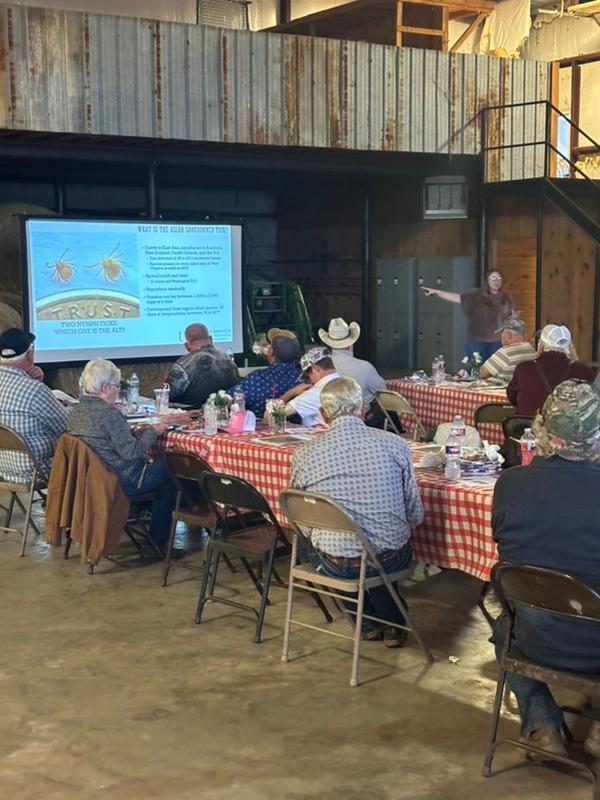
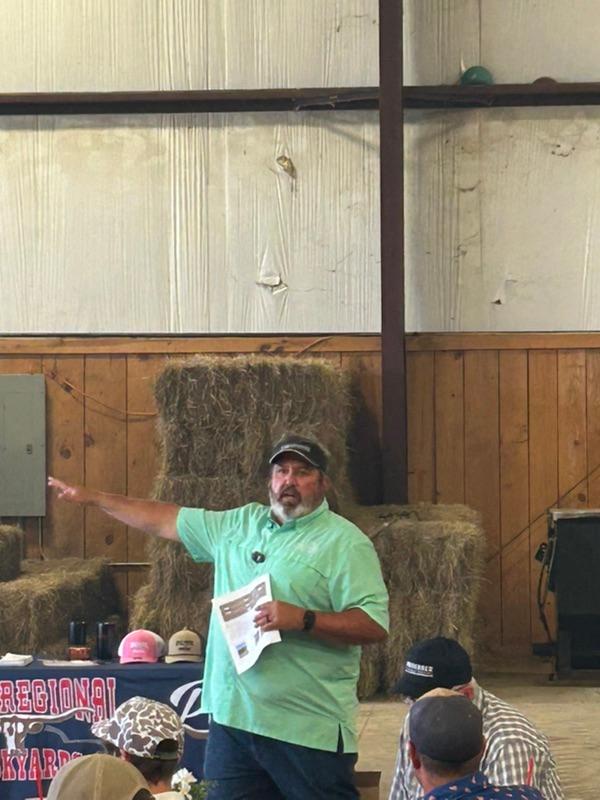
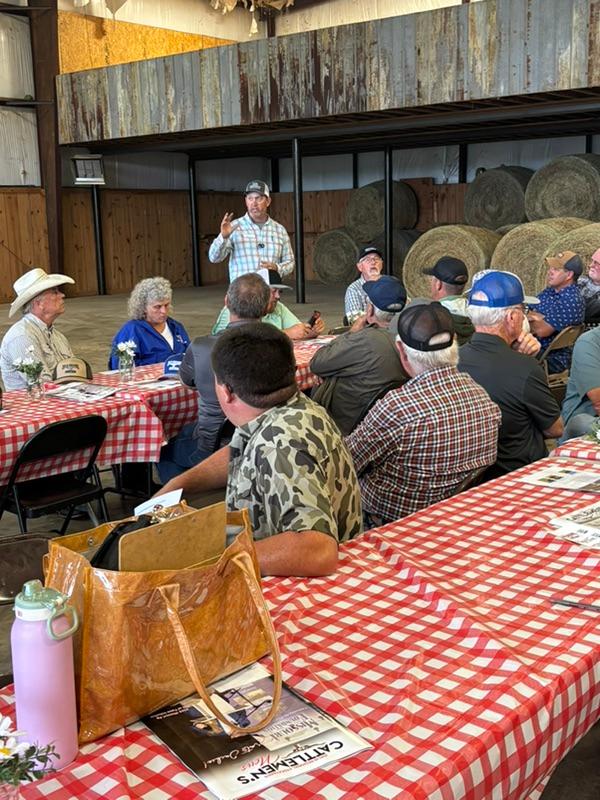
The Crabgrass Establishment Pasture Walk and Faulkner County Cattlemen's meeting was held at the Jeremy Riddle Farm on Thursday of this week. It was pouring rain, so we didn't to actually get to walk in the field, but we did discuss how we established the crabgrass and some of the results. Both the broadcast and drilled establishment method worked good as long as it was in the area where the sod was suppressed by glyphosate. In the areas we didn't suppress the sod, we didn't have any success.
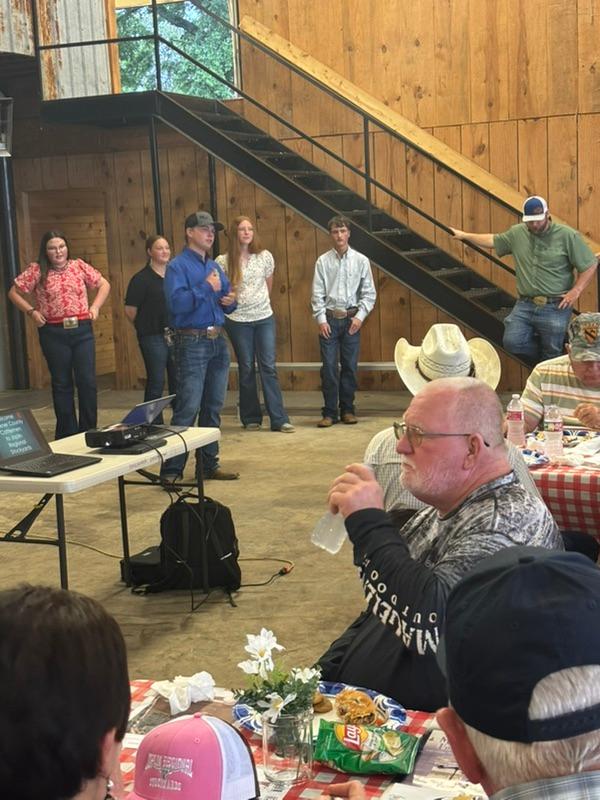
For the Cattlemen's meeting, Dr. Kirsten Midkiff gave an update on the Asian Longhorned Tick and the New World Screw Worm. Mt Vernon Enola FFA members gave updates on what is going on in their chapter and some of their projects. Six youth were at the meeting to receive this year's scholarships. Sponsors Joplin Stockyards gave an update, while Springfield Meat Processing had their mobile processing trailer on display. The other sponsor for Thursday was First Service Bank. It was a big turnout even though the rain kept us out of the field!
| |
|
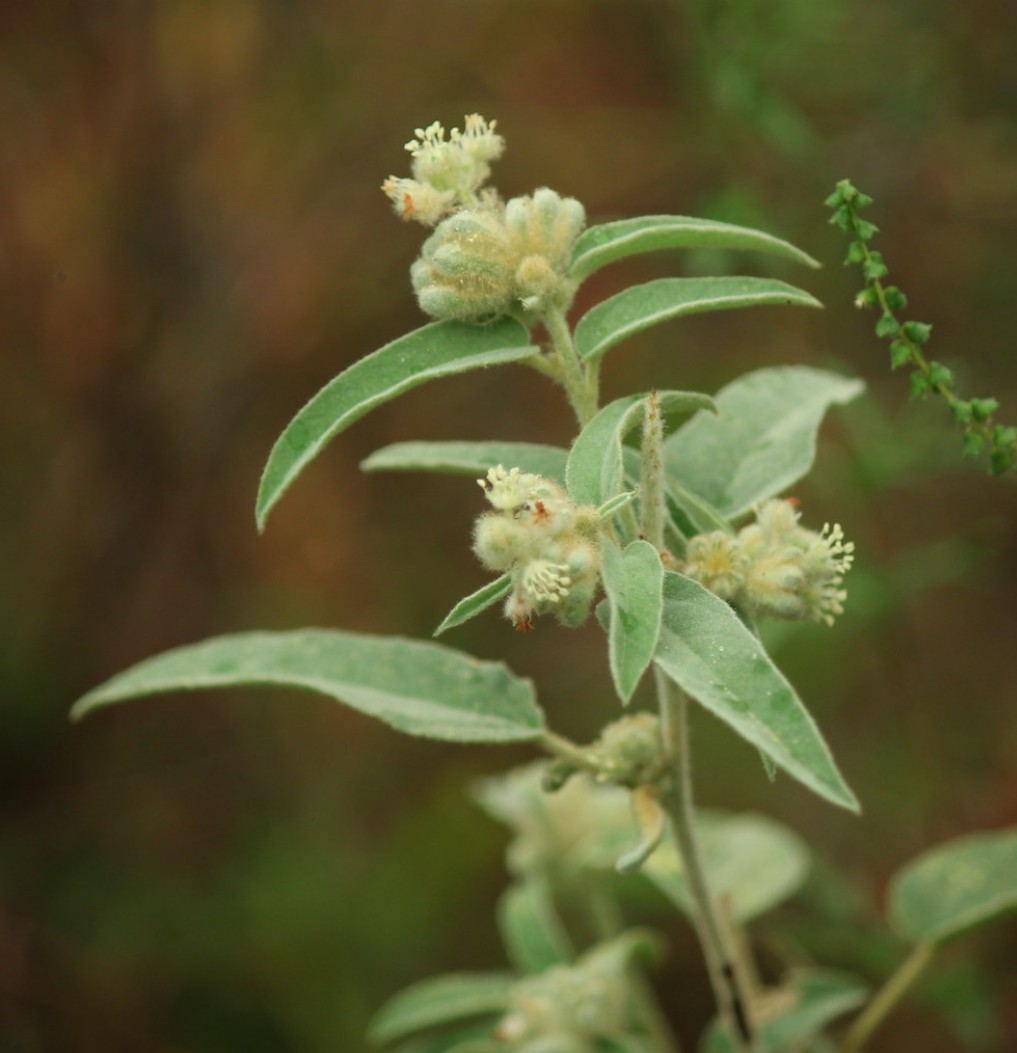
Woolly Croton
Korbin Singleton - Faulkner County Intern
Woolly Croton (Croton capitatus), also known as Goat weed, is a native summer annual that usually appears from May through July in Arkansas, usually on or after the first onset of rain. It thrives in areas with bare or exposed soil.
Unlike some summer annuals that germinate all at once, woolly croton can germinate in multiple crops after each rainfall. Due to its germination during rain and its long dormancy in the soil, you can see woolly croton multiple times during its growing season, especially when a lot of rainfall is present. Overgrowth of this weed can cause a serious problem as it grows quick and thick enough to shade out the forages that it covers. Its presence could indicate low fertility or overgrazed fields.
Luckily, woolly croton is one of the easier pasture weeds to control with the application of herbicide. The UADA recommends at the application rate of one qt/A the following herbicides provide excellent control: Cimarron Max, Grazon P+D, GrazonNext HL, Weedmaster, and 2,4-D. Metsulfuron 60DF can also be used to control woolly croton. The recommended spray time is in May or early June when weeds are less than 12 inches tall.
| |
Cattle Facilities and Safety
Mark Z. Johnson, Oklahoma State University Extension Beef Cattle Breeding Specialist
Profitability in the cow-calf sector over the past several years creates the potential to upgrade cattle working facilities. Good design and layout of pens, chutes and alleyways can lead to improved profit potential in cow-calf operations but requires intentionality and proper planning. Objectives of good cattle working facilities include reducing stress on the animals, increasing the efficiency of labor, and the safety of both cattle and humans alike. Proper facility design and good stockmanship skills are critically important to handling cattle as safely and efficiently as possible. A good working facility, understanding animal behavior and good animal husbandry skills all work in synergy with regard the safe handling of cattle. Consider the following when planning facility upgrades and layout:
- animal behavior
- site selection
- lighting
- drainage
- surface (dirt, rock, concrete)
- number of animals to be worked
- size of animals to be worked
- frequency of use
Effective stockmanship is typically the result of understanding the following aspects of cattle behavior:
- cattle want to see you
- cattle do not like to be alone, they will go to other cattle
- cattle typically have one thought at a time, they are motivated by fear and have a "fight or flight” mentality
- cattle want to remove pressure
- cattle have a flight zone
- cattle have a point of balance
The Human Element
For those of us who work in production agriculture, physical risks are inherent on a daily basis. Agricultural occupations are consistently ranked as one of the most dangerous. An OSU study done by researchers in the Department of Biosystems and Agricultural Engineering showed that over 50% of injuries sustained while working cattle were the result of human error. Equipment and facilities were perceived as the cause about 25% of the time. In most cases, a better understanding of how an animal may respond to human interaction and its immediate surroundings will help keep someone from becoming an injury victim. Human errors in judgement are due to a variety of reasons, but are more likely to occur when people are tired, hurried, upset, preoccupied or careless. Remember, the human factor greatly influences the occurrence of life-threatening accidents. Using this information in combination with good facilities and proper cattle handling techniques will reduce the risk of injury.
There is a link below to our Arkansas Extension Beef Cattle Handling Facilities website.
| |
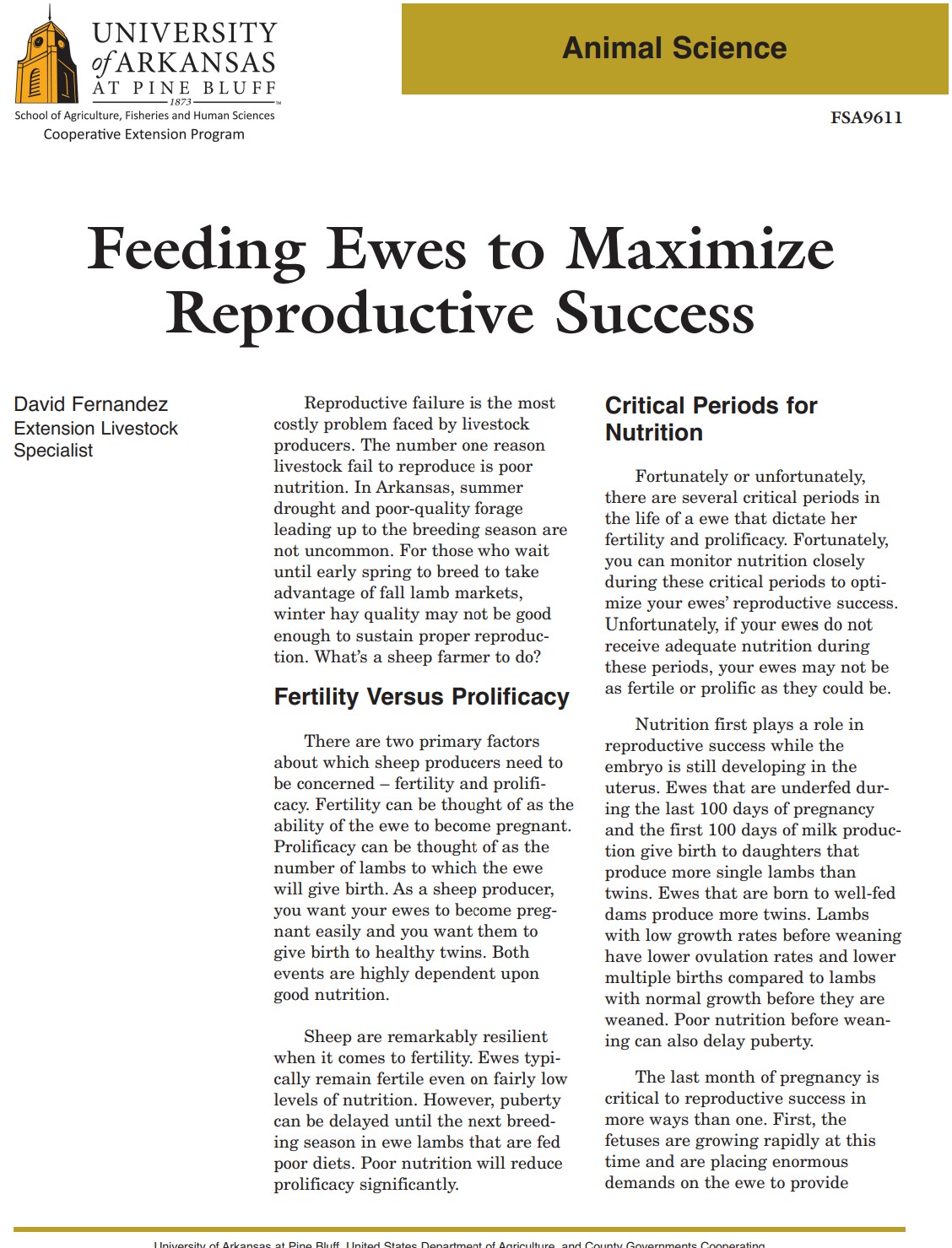
Feeding Ewes to Maximize Reproductive Success
Reproductive failure is the most costly problem faced by livestock producers. The number one reason livestock fail to reproduce is poor nutrition. In Arkansas, summer drought and poor-quality forage leading up to the breeding season are not uncommon. For those who wait until early spring to breed to take advantage of fall lamb markets, winter hay quality may not be good enough to sustain proper reproduction. What’s a sheep farmer to do?
Click on the link below to read more from our fact sheet.
| |
Arkansas Shepherds Association
The Arkansas Shepherds Association is an organization for sheep owners or businesses that want to support the Arkansas sheep industry. They will have lots of information for sheep owners and an annual educational workshop.
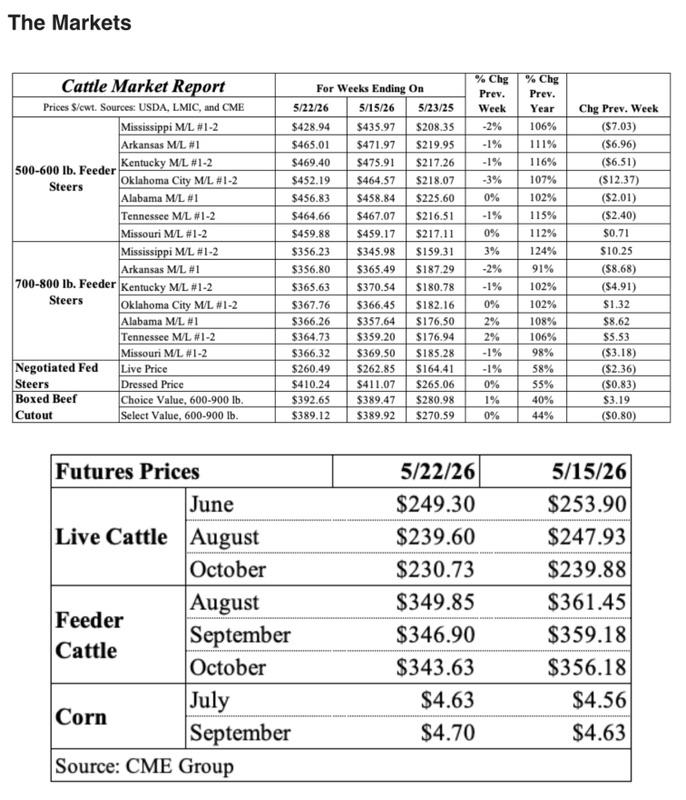
| | Here is this weeks Cattle Market Notes Weekly | | |
Pesticide Applicator Trainings
There will be no more in person Pesticide Applicator Trainings until this winter. If you need a license you can still do the training online. There is a link below for the online training and a link to check your license status.
| | |
Livestock Market Report
The following links are for the weekly livestock market report from the Arkansas Department of Agriculture website and the Livestock Auction Dashboard from USDA. Both sites have marketing data for all livestock sold at Arkansas Sale Barns.
| | |
2025 Faulkner County Agriculture Demonstration Summary
The 2025 Faulkner County Agriculture Demonstration Summary is now available at the link below.
The 2025 Faulkner County Demonstration Summary is a collection of on-site demonstration results conducted in Faulkner County by local County Agents. Demonstrations are the cornerstone of the University of Arkansas System Division of Agriculture Cooperative Extension Service’s mission which is:
“We strengthen agriculture, communities, and families by connecting trusted research to the adoption of best practices.”
On-site demonstrations allow producers and homeowners to see firsthand how Extension recommended varieties and best management practices work in their counties and surrounding area.
| | |
Sign up for Text Alerts
You can now sign up for text alerts from me throughout the year. I have two areas you can sign up for which includes Faulkner Livestock or Faulkner Ag (Row Crop Updates). To sign up you can follow one of these links or use the QR Codes below.
| | Pursuant to 7 CFR § 15.3, the University of Arkansas System Division of Agriculture offers all its Extension and Research programs and services (including employment) without regard to race, color, sex, national origin, religion, age, disability, marital or veteran status, genetic information, sexual preference, pregnancy or any other legally protected status, and is an equal opportunity institution. | | | | |