Faulkner County Agriculture Update
November 26, 2026
| | |
Happy Thanksgiving
I just wanted to take a moment to say Happy Thanksgiving to everyone. I appreciate and am thankful for all of you and what you do as farmers and leaders in Faulkner County. Take this time to enjoy your family and relax a little bit as we get ready for 2027. Thank you!
| | Faulkner County 4-H Foundation Ham Fundraiser | | |
Burn Ban
Effective immediately Wednesday, November 18, 2026, Faulkner County is under a Burn Ban until further notice. We appreciate your cooperation with this important safety measure for our citizens.
| | |
Weather
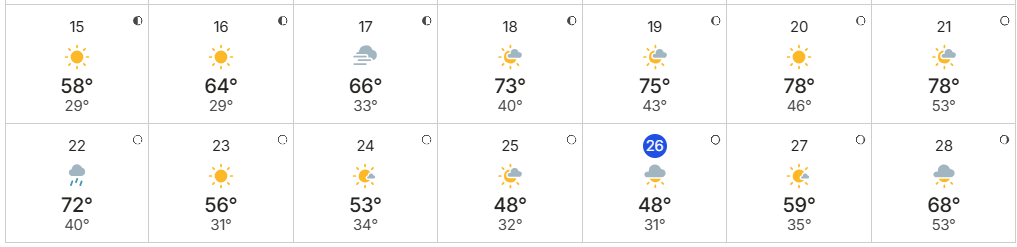
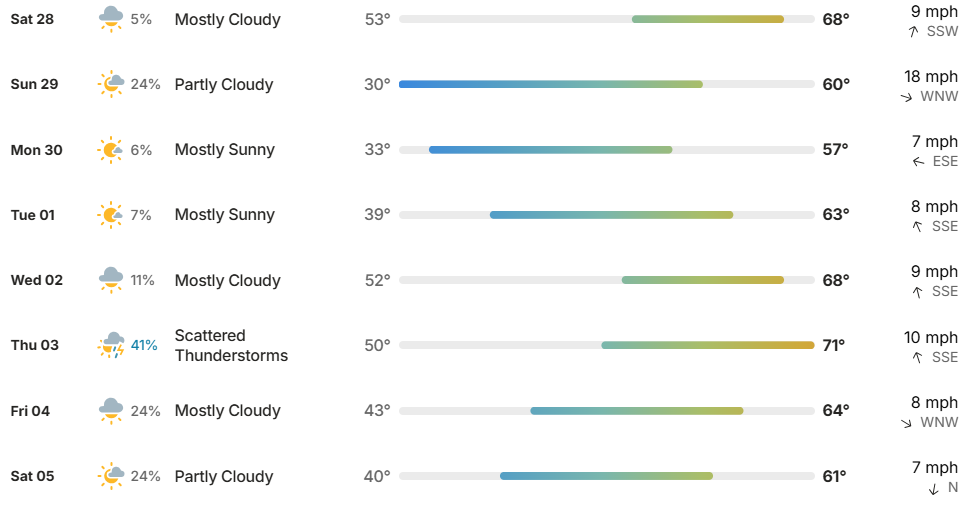
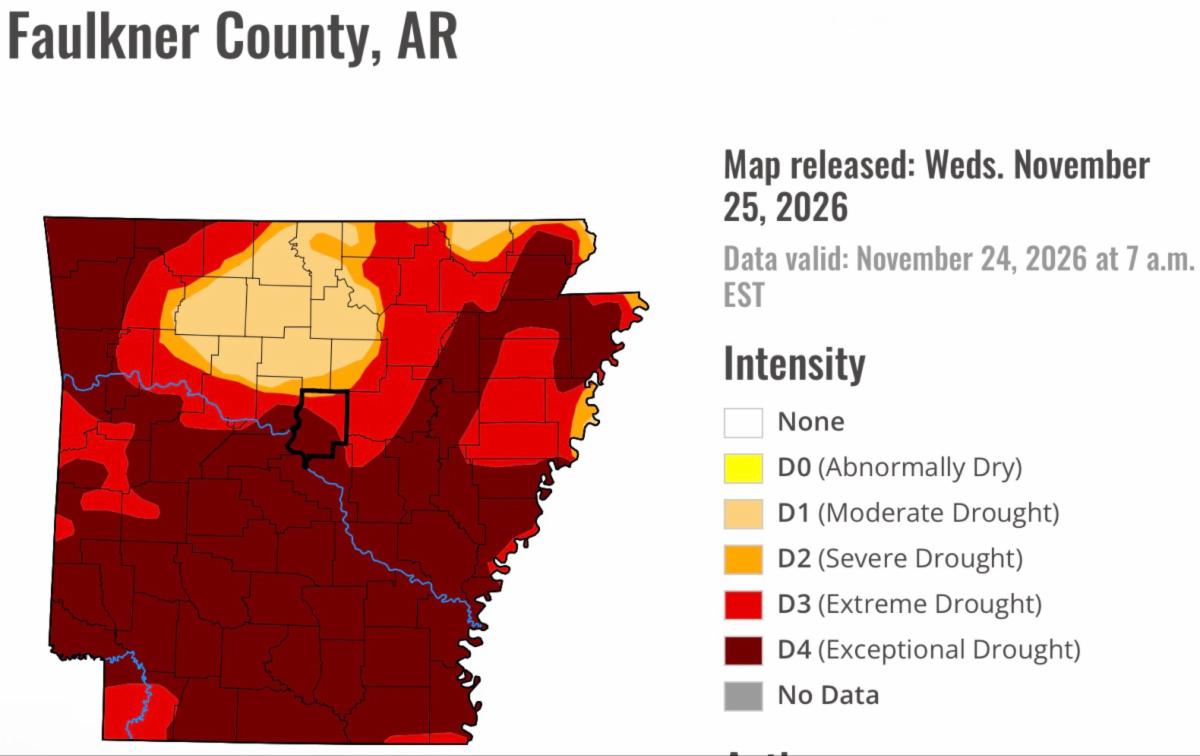
Sunday brought the first rain we have seen in awhile. Accumulations averaged between 0.25 to 0.50 inches across the county. It wasn't enough to do anything but clean the dust off everything. The ground soaked that rain up as soon as it hit the ground and there was no runoff. The forecast for next week is starting to look better for rain chances so maybe we can start getting out of this drought.
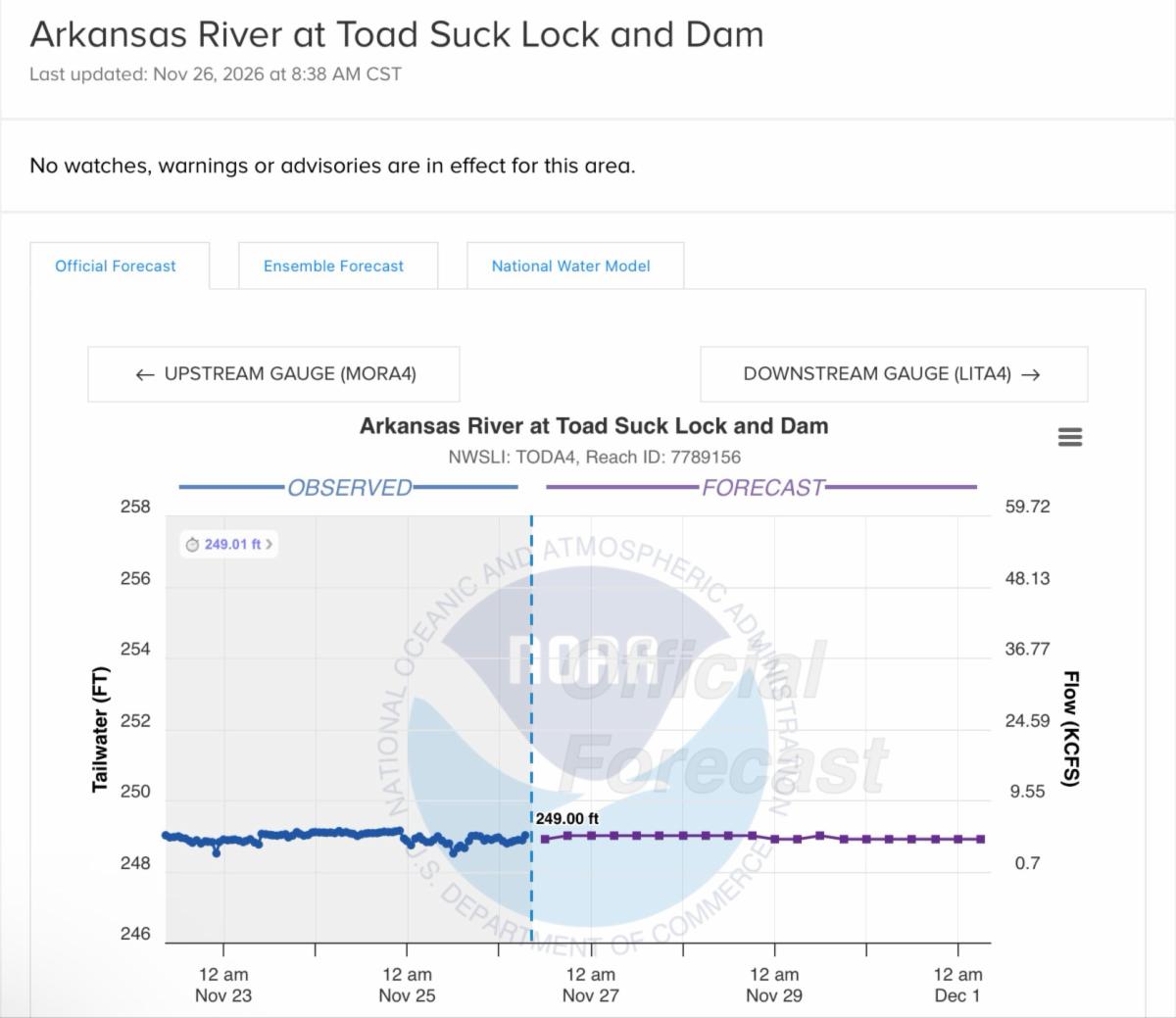
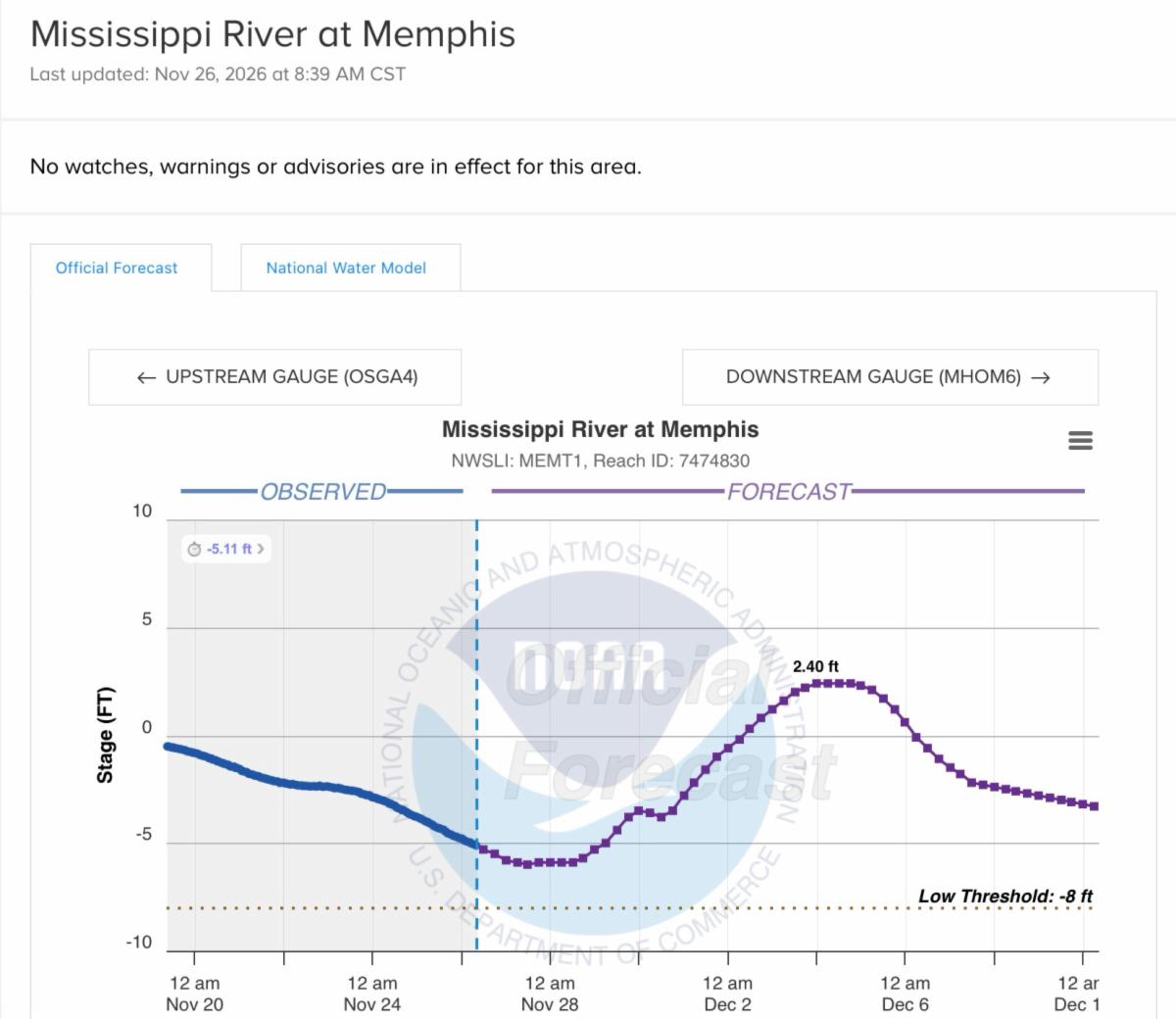
| | Arkansas and Mississippi River | |
Susceptibility and Yield Response of Fifty-three Selected Soybean Cultivars to Frogeye Leaf Spot and Southern Root-knot Nematode, 2026
by Michael Emerson, Brandon Baker, Nicole Emerson, Maxwell Sturdivant, and Travis Faske
The southern root-knot nematode (RKN; Meloidogyne incognita) is a major threat to soybean production and is the most yield-limiting plant-pathogenic nematode in the Mid-South. It is found in nearly all soybean-growing counties in Arkansas and can cause significant grain yield losses (>70%) when a susceptible cultivar is planted in a field with a high population density of southern root-knot nematode.
This report summarizes the susceptibility of 53 commercially available soybean cultivars to the southern RKN that are marketed as suitable for production in southern RKN fields. Varieties were divided into 6 experiments (Table 1 to 6) based on maturity group. Cultivars were planted in a randomized complete block design with four replications per entry. Plots consisted of 4 rows, 30 ft long, spaced 30 in. apart, and separated by a 5-ft fallow alley. Plots were planted on 21 May at a seeding rate of 140,000 seeds/A. Six root systems were arbitrarily sampled at the R5 growth stage to estimate root galling, which was used to determine susceptibility to the southern RKN. The final nematode population (Pf) density averaged 184 second-stage juveniles (J2)/100 cm3 soil at harvest across all experiments. This density is well above the fall damage threshold of 60 J2 per 100 cm3 soil in Arkansas.
| |
Field Performance of Ninety-Five Soybean Varieties Against the Southern Root-knot Nematode and Frogeye Leaf Spot, 2026
by Michael Emerson, Travis Faske, Brandon Baker, and Nicole Emerson
A comprehensive disease screening program has been conducted by the University of Arkansas System, Division of Agriculture, Extension Plant Pathology since 1990, thanks to support by the Arkansas Soybean Promotion Board. Field nurseries and greenhouse experiments are used to evaluate all varieties that are entered in the Official Variety Testing Program to major diseases of concern in Arkansas. The diseases evaluated and reported here during the 2026 cropping season were the southern root-knot nematode (Meloidogyne incognita) and frogeye leaf spot (caused by Cercospora sojina). Some 95 soybean varieties were planted on 21 May in single-row, 11-ft-long plots at 140,000 seeds per acre in a silt loam soil (37% sand, 55% silt, and 8% clay) field near Kerr, AR. The moderately root-knot nematode-resistant check, Pioneer P46Z53, and susceptible check Pioneer P48A14 were used. Varieties were arranged in a randomized complete block design with three replications. Three roots were arbitrarily sampled from each plot at the R4 to R5 growth stage to determine nematode susceptibility. Susceptibility was based on the percent root system galled where 1.1-4.0% = resistant (R), 4.1-9.0% = moderately resistant (MR), 9.1-20.0% = moderately susceptible (MS), 20.1-40.0% = susceptible (S), 40.1-100.0% = very susceptible (VS). Frogeye leaf spot severity was visually assessed on 21 August at R6 to R7 growth stage based on a 0-9 index scale (0-1 = R, 2-3 = MR, 4-5 = MS, 6-7 = S, and 8-9 = VS) in the upper 1/3 of the canopy.
| |
2027 Arkansas Crop Enterprise Budgets
The crop enterprise budgets are now available and they are made possible thanks to support from check-off funds administered by the Arkansas Corn and Grain Sorghum Board, Arkansas Rice Research and Promotion Board, and Arkansas Soybean Promotion Board as well as the University of Arkansas Division of Agriculture.
The crop enterprise budgets and calculator are developed by Breana Watkins, Instructor with the Agricultural Economics and Agribusiness Department (AEAB).
| | |
Variety Trial Information
All of the Faulkner County variety trial results can be found on our website listed below.
| | |
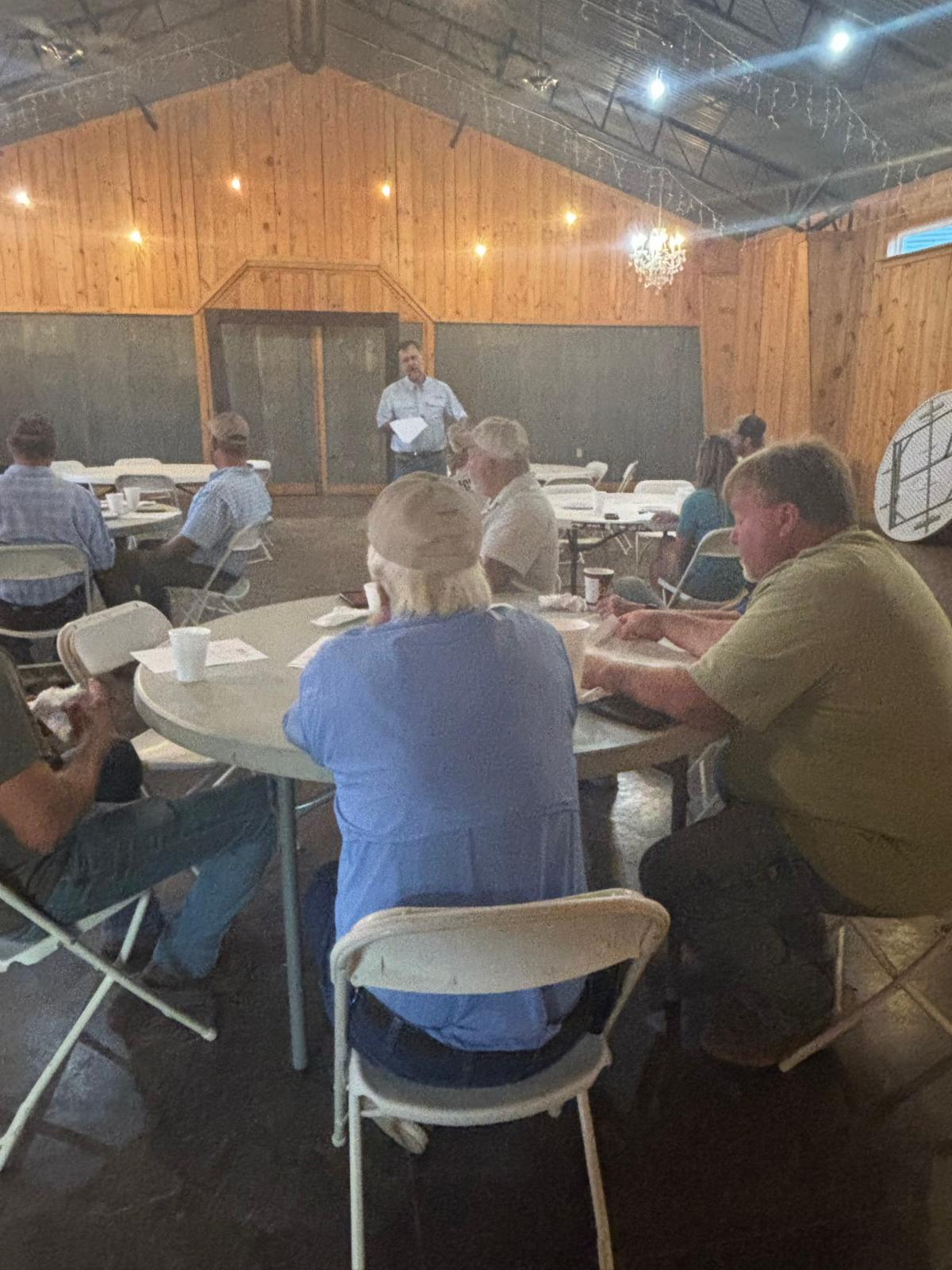
Winter Production Meetings
Save the dates for our upcoming Winter Production Meetings.
Soybean & Corn - January 29, 2027 - Conway County Extension Office
Rice - March 4, 2027 - The Barn at Lollie
| | |
Exploring Alternative 2026 ARC-CO and PLC Payments with Online Decision Tools
Dr. Hunter D. Biram, Assistant Professor and Extension Economist, University of Arkansas
Dr. Henrique Monaco, Assistant Professor, University of Minnesota
The December 11 deadline to choose between Agriculture Risk Coverage–County (ARC-CO) and Price Loss Coverage (PLC) for the 2026 crop year is approaching. With harvest complete, farmers have a clearer picture of how crops yielded in their counties. The One Big Beautiful Bill Act raised reference prices and updated program parameters, making it especially important to weigh which program offers better protection. Producers must make an election to be eligible for payments. To help producers make that choice, the University of Arkansas Division of Agriculture (UADA) and the University of Minnesota (UMN) recently released free online decision tools. Farmers, lenders, and advisors can compare estimated ARC-CO and PLC payments for a specific county and crop in minutes, with no spreadsheets or downloads required.
University of Arkansas Division of Agriculture (UADA) Decision Tool
There are a total of six tabs included in the UADA tool: PLC, ARC-CO, Comparisons, National Map, State Map, and Historical ARC-CO Yields. The PLC and ARC-CO tabs provide estimated crop-specific payments for the 2026 crop year using the Marketing Year Average (MYA) price published by the most recent USDA World Agricultural Supply and Demand Estimates (WASDE) report. The user may input various price and yield projections of their own to evaluate what-if scenarios. The Comparisons tab provides a look at which program has a higher estimated payment by using county-specific yield projections, as well as current MYA price projections, by comparing the columns “PLC Payment (Total)” and “ARC-CO Payment (Total).” The user can evaluate price triggers and required declines to see which program will trigger a payment first based on the final MYA price for the 2026-2027 marketing year by comparing the columns “PLC – MYA Price must fall by (%)” and “ARC-CO Trigger Price must fall by (%).”
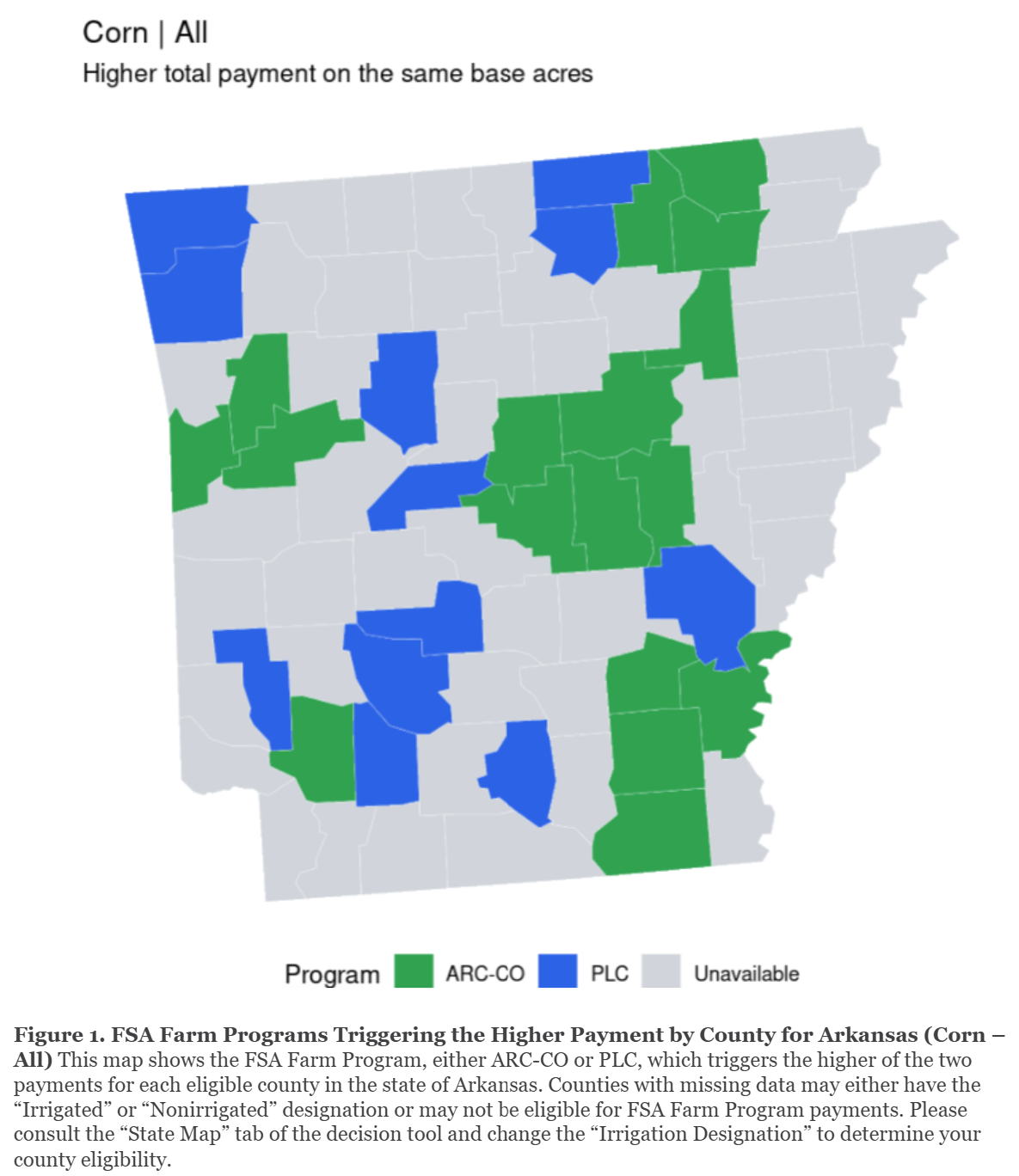
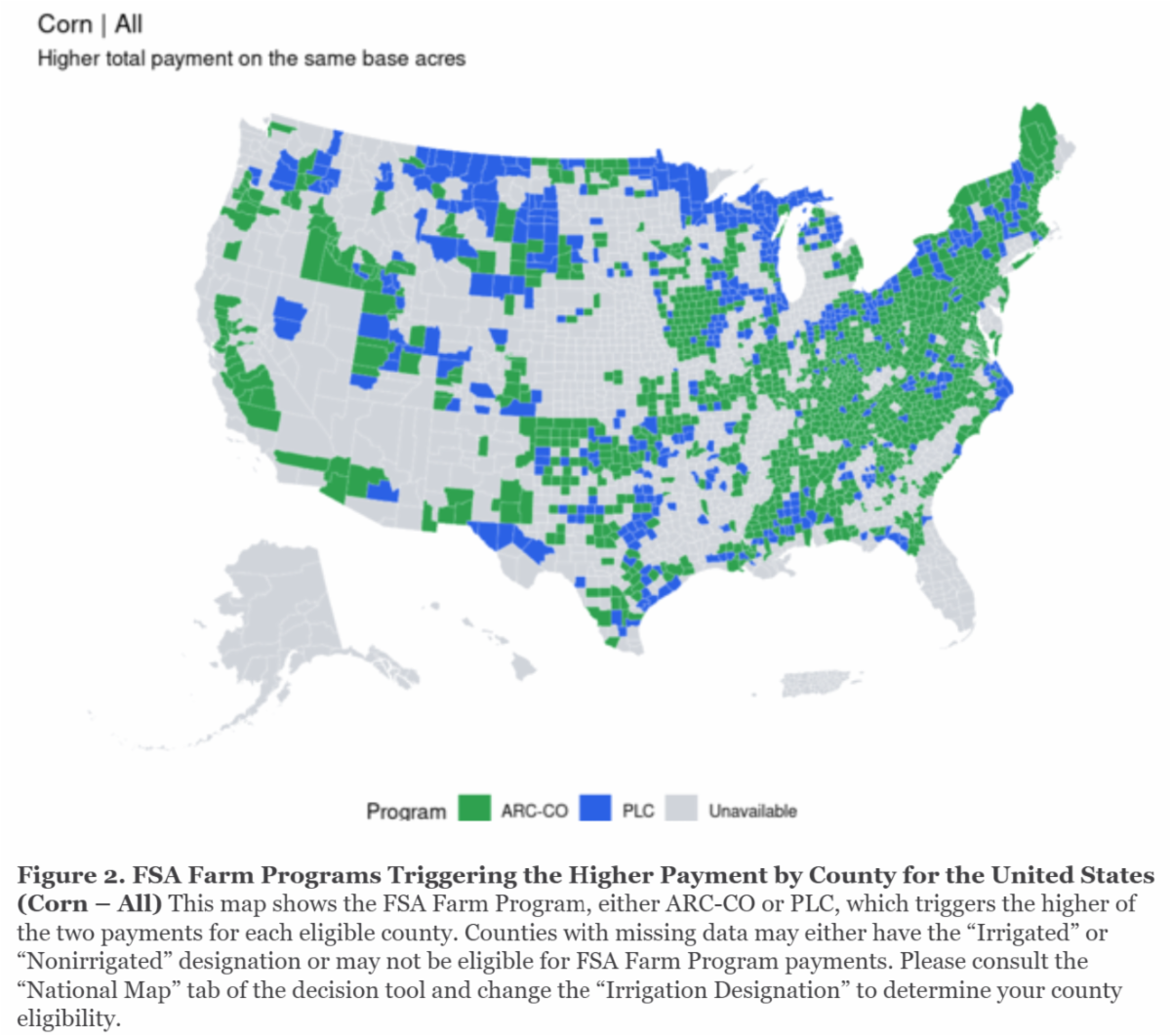
The National Map and State Map tabs provide a look at county-level payment rates for both ARC-CO and PLC and provide the higher payment of the two options based on selections for crop, irrigation practice, and assumptions for county yield and MYA price. The National Map shows county-level payment rates across all counties in the United States for which there is program coverage, while the State Map shows county-level payment rates for a chosen state. We provide examples of the state map for corn using Arkansas (Figure 1) and the national map for corn (Figure 2) below. We use the “All” irrigation designation for corn and recognize some counties with the “Irrigated” or “Nonirrigated” designation may be missing. We assume the MYA price falls by 6%, since both ARC-CO and PLC begin to trigger at that point, and that the actual county yield is equal to the county trend yield taken from the “Historical ARC-CO Yields” tab.
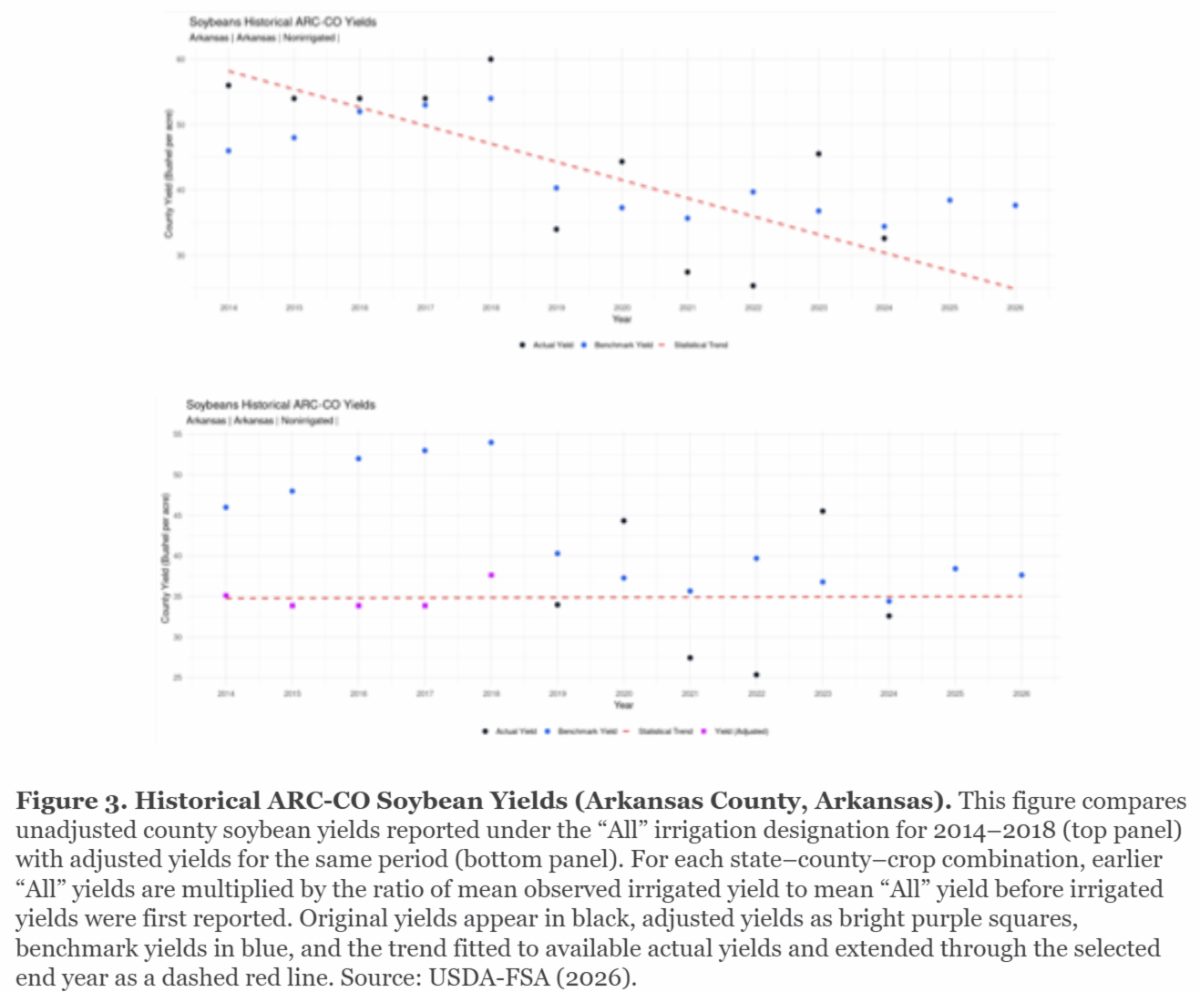
| | Lastly, the Historical ARC-CO Yields tab of the UADA decision tool provides a graph of county-specific yields for a chosen crop and irrigation practice over the span of 2014-2026. The user must select a state, county, crop, irrigation designation, and make a selection on how earlier yields may be adjusted to reflect changes in yield technology over time. More specifically, yields in earlier years do not necessarily reflect differences by irrigation practice, and the decision tool allows for the user to make an adjustment for irrigation practice in earlier years to arrive at a more accurate trend county yield projection for the 2026 crop year. Figure 3 below highlights the differences in using original yields that do not differentiate by irrigation practice and yields that have been adjusted to reflect these differences. The user may also select options to include 95% confidence intervals and show 90% of ARC-CO benchmark yields to provide insight into best- and worst-case scenarios and how often the actual county yield fell below the ARC-CO guarantee over time. | | |
University of Minnesota 2026 ARC-CO / PLC Calculator
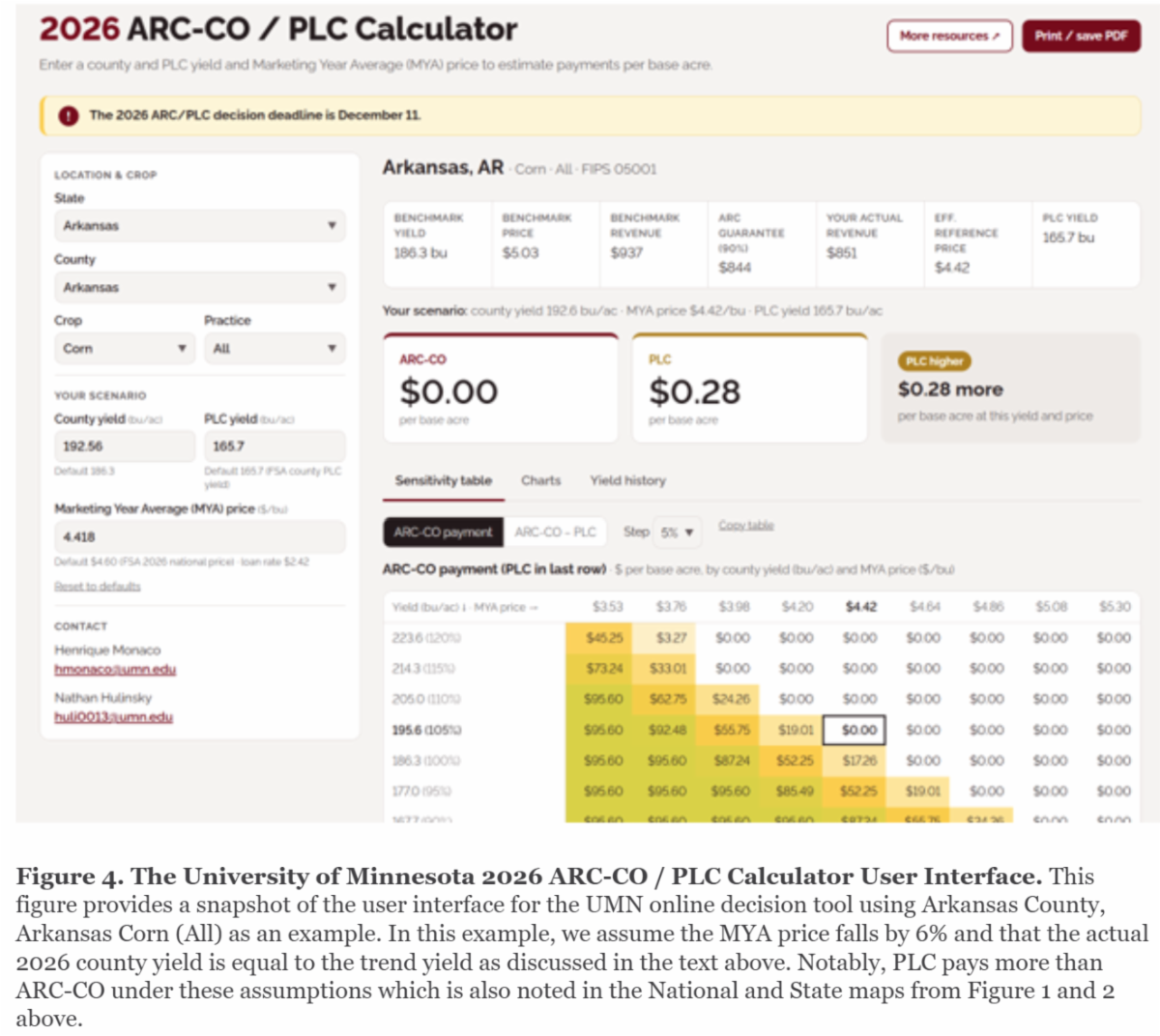
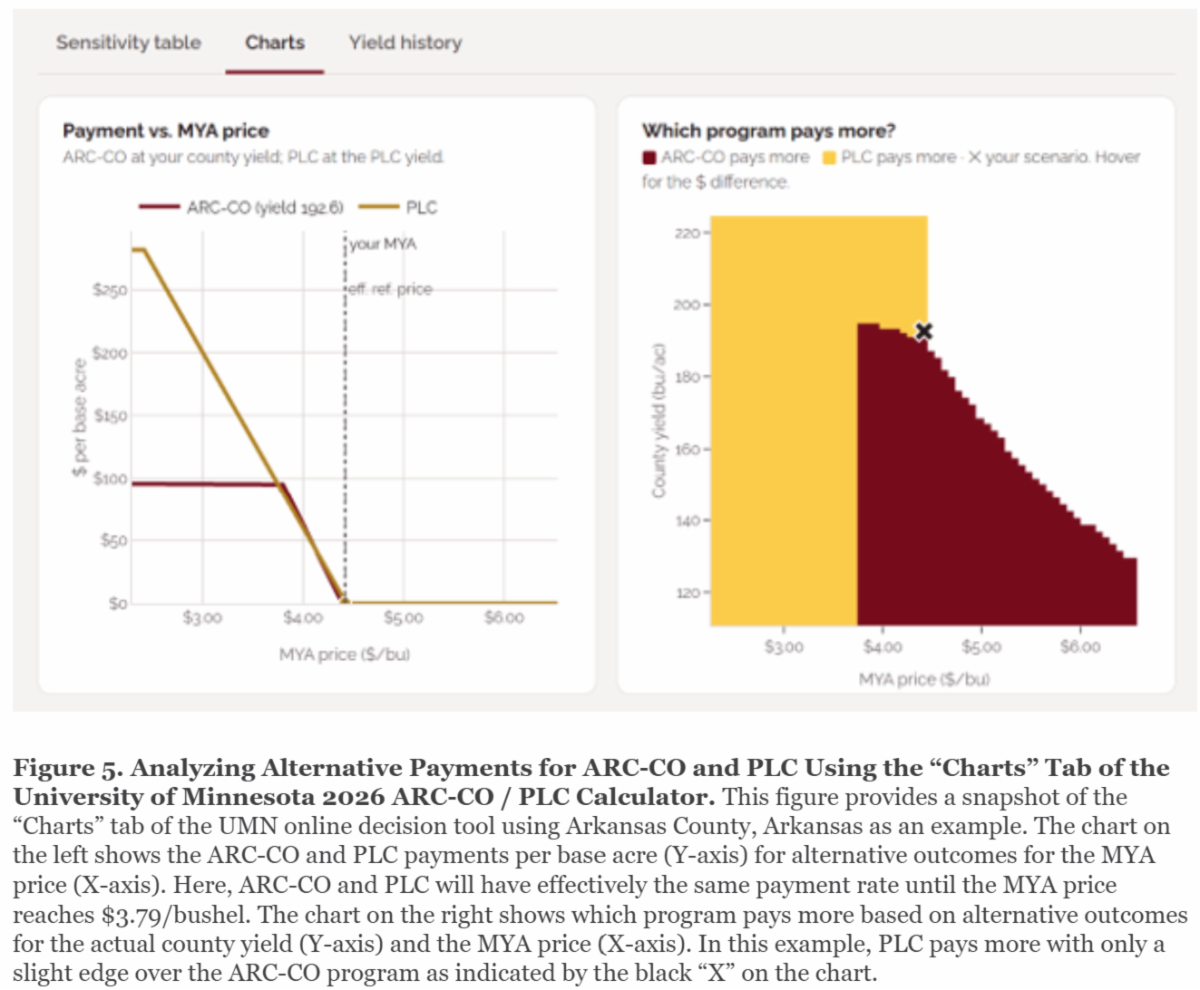
Using the UMN tool can be simple. Select your county, crop and practice, then enter your expected county yield, your FSA PLC yield and your expected MYA price. The calculator instantly estimates ARC-CO and PLC payments side by side (see Figure 4). A sensitivity table (see Figure 4) and charts (see Figure 5) show how those payments change across a range of prices and county yields, so users can see which program holds up best under different market scenarios, not just a single forecast. For corn, soybeans and wheat, the tool also reports expected payments and the probability that each program will pay using a simulation, based on current market conditions and yield uncertainty. Whether you’re preparing for program enrollment or planning cash flow, the UMN ARC-CO / PLC Calculator helps you evaluate possible payouts under different scenarios.
| | Beef, Small Ruminants, & Forages | | |
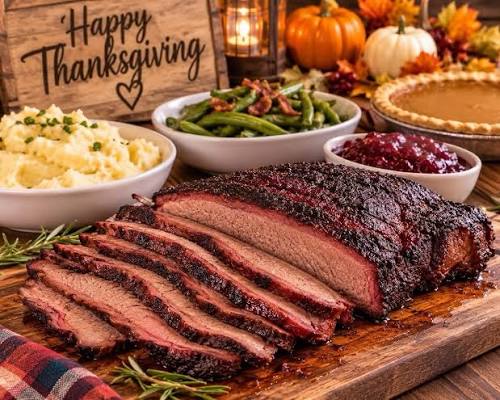
BEEF! IT’S WHAT’S FOR THANKSGIVING!
Mark Z. Johnson, Oklahoma State University Extension Beef Cattle Breeding Specialist
Thanksgiving is a time when American families come together to celebrate a holiday that connects each and every one of us. In the U.S., the holiday is truly rooted in agriculture. We may bring our own flavors and traditions to the table but Thanksgiving is a time for all of us to celebrate our nation’s harvest and ability to efficiently produce food, express gratitude for our blessings, and look ahead to the future.
The continued upward shift in beef quality, toward a more marbling-rich harvest mix is something for which all beef consumers are thankful. And, it creates ample supply for everyone to enjoy. Compared to turkey, or any of the protein options to consider for Thanksgiving dinner, beef holds several advantages. With regard to flavor, beef is generally more interlaced with marbling, the taste fat that translates to a more flavorful and satisfying eating experience. Beef can be aged to further intensify flavor, not an option with poultry products. Beef offers more variety of cuts, all of which result in the same satisfying eating experience. Beef can be served in a variety of “degree of doneness” options relative to what is most satisfying to your palate. Likewise, beef offers more options in the amount of time spent in preparation to better fit your schedule. Turkey requires long-term baking/frying/smoking preparation resulting in the option of white meat or dark meat. Consuming beef on Thanksgiving Day has the further advantage of improving the supply and demand equation thereby improving the profit potential for cattle producers. Because of the variety of advantages offered by beef, give consideration to the following when planning.
How much time do you have to spend cooking?
If your answer is not much, consider grilling or pan frying. Middle meats from the beef carcass like ribeye, strip loin, filet and sirloin steaks are very tender and can be cooked quickly at high temperatures on the grill or stove top to seal in the tenderness, juiciness and flavor. If you intend to grill or pan fry steaks remember to give them adequate time to thaw and reach room temperature before cooking. Burgers made from ground beef are also great when grilled or pan fried. Chicken fried steak using tenderized round steaks can be pan fried. If you have more time to spend in preparation, smoking or oven roasting can result in the same tender, succulent beef flavor. Roasts from the chuck or round can be seasoned and slow cooked to bring out “melt in your mouth” flavor. An intact rib roast or brisket is ideal for smoking or slow cooking.
What is your budget?
Typically steaks or middle meats will be the more expensive cuts to purchase. The cuts that require more cooking time (because they contain more connective tissue) can be purchased at a lower price per pound. Ground beef is also less expensive. Since beef is the preferred protein among most consumers, it will typically cost more per pound in comparison; nevertheless, the variety of options from a beef carcass leads to choices to fit any budget.
More information about cooking methods, recipes and beef cuts can be found at www.beefitswhatsfordinner.com. Regardless of the cut of beef you enjoy this Thanksgiving you will be eating a nutrient dense, delicious source of protein, B vitamins, iron and zinc that is a healthy diet choice.
Whatever we eat on Thanksgiving Day, it is the ingenuity, perseverance, efficiency, work ethic and “can do” attitude of America’s cattle men and women, and ag producers that permit us to enjoy the highest quality beef produced in the world and spend a relatively small percentage of our income on food. Thanksgiving arrives at a time when we, as cattle producers, continue to have a great deal to be thankful for.
| | |
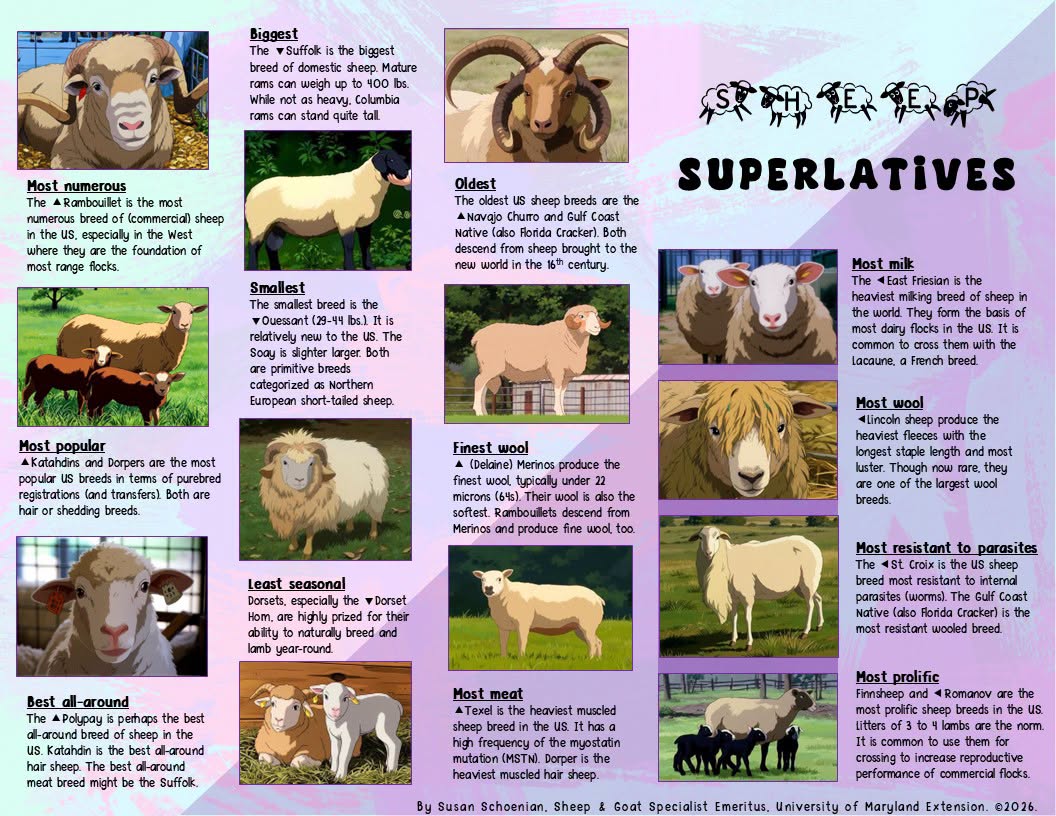
Sheep Success Series
The fourth and final meeting of our 2026 Sheep Success Series quarterly meetings has been scheduled for December 12 at the Faulkner County Extension Office. Just like the other three meetings we will be starting at 9:00 in the morning and going until 12:00. The theme for this meeting will be Finances and Marketing. We are still getting all of the speakers lined up but it should be a great one! Please call the Extension Office at 501-329-8344 and register.
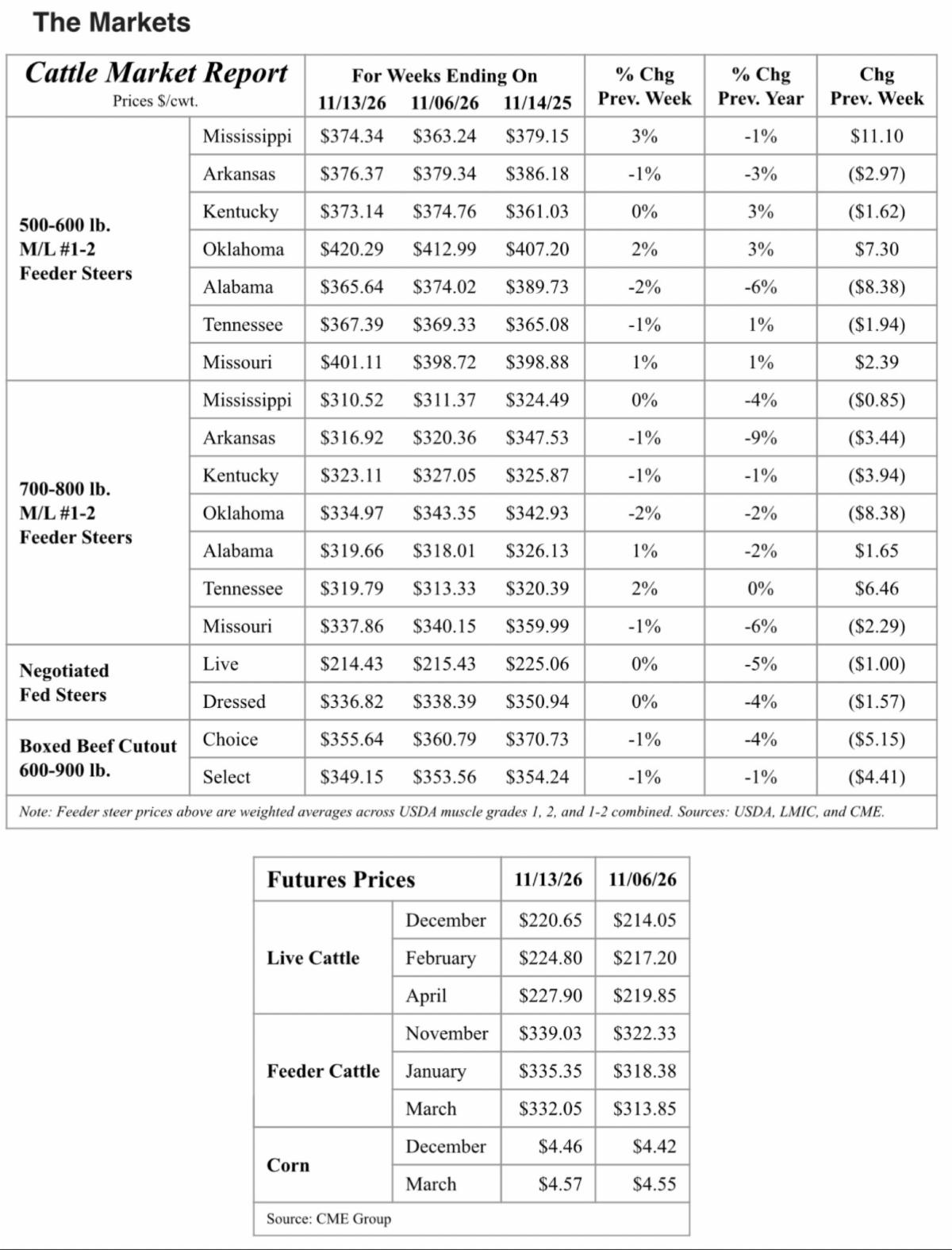
| | Here is this weeks Cattle Market Notes Weekly | | |
Pesticide Applicator Trainings
Pesticide applicator trainings for Faulkner County have been lined up and our first training will be in December. Private Pesticide Applicator Licenses are good for five years, so if your five years is up, you need to attend a class to get certified then send off to the Arkansas Department of Agriculture to get your license. To attend a training costs $20 the day of the training.
The 2026-2027 trainings will be held at the Faulkner County Extension Office and the dates and times are:
Tuesday December 15, 2026 starting at 2:00 PM
Thursday January 14, 2027 starting at 2:00 PM
Thursday February 11, 2027 starting at 5:30 PM
If you aren't sure if you need your license, you can click the Pesticide License Search button below and it will tell you if your license is still active or expired. There is also a link to the online training if you would rather do that than in person.
| | |
Livestock Market Report
The following links are for the weekly livestock market report from the Arkansas Department of Agriculture website and the Livestock Auction Dashboard from USDA. Both sites have marketing data for all livestock sold at Arkansas Sale Barns.
| | |
2025 Faulkner County Agriculture Demonstration Summary
The 2025 Faulkner County Agriculture Demonstration Summary is now available at the link below.
The 2025 Faulkner County Demonstration Summary is a collection of on-site demonstration results conducted in Faulkner County by local County Agents. Demonstrations are the cornerstone of the University of Arkansas System Division of Agriculture Cooperative Extension Service’s mission which is:
“We strengthen agriculture, communities, and families by connecting trusted research to the adoption of best practices.”
On-site demonstrations allow producers and homeowners to see firsthand how Extension recommended varieties and best management practices work in their counties and surrounding area.
| | |
Sign up for Text Alerts
You can now sign up for text alerts from me throughout the year. I have two areas you can sign up for which includes Faulkner Livestock or Faulkner Ag (Row Crop Updates). To sign up you can follow one of these links or use the QR Codes below.
| | Pursuant to 7 CFR § 15.3, the University of Arkansas System Division of Agriculture offers all its Extension and Research programs and services (including employment) without regard to race, color, sex, national origin, religion, age, disability, marital or veteran status, genetic information, sexual preference, pregnancy or any other legally protected status, and is an equal opportunity institution. | | | | |