Faulkner County Agriculture Update
October 24, 2025
| | |
Weather
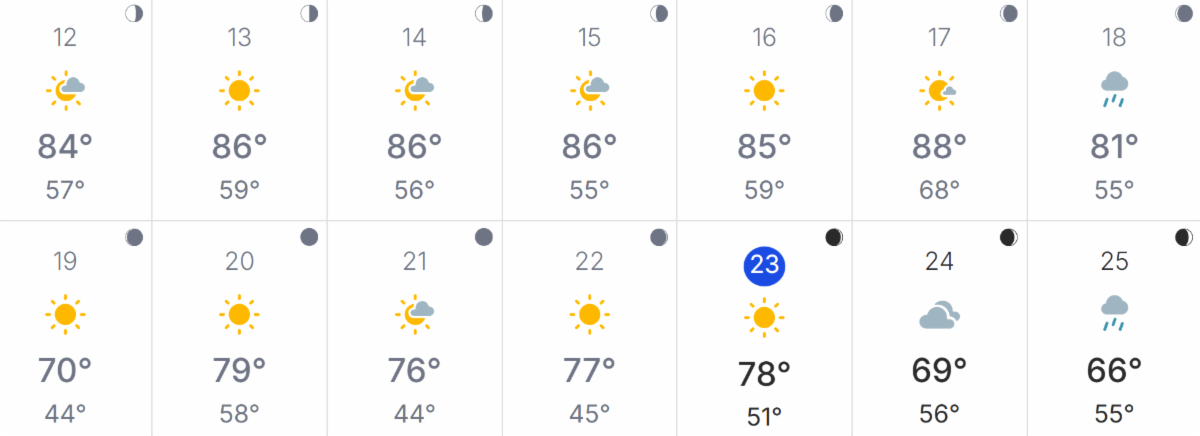
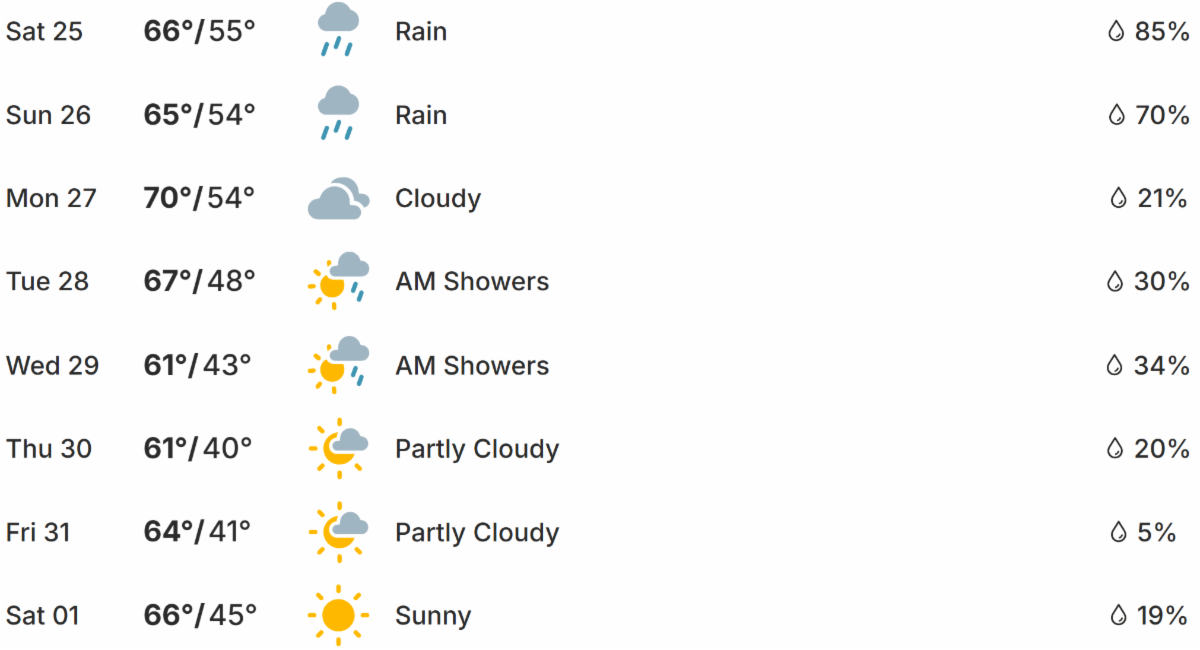
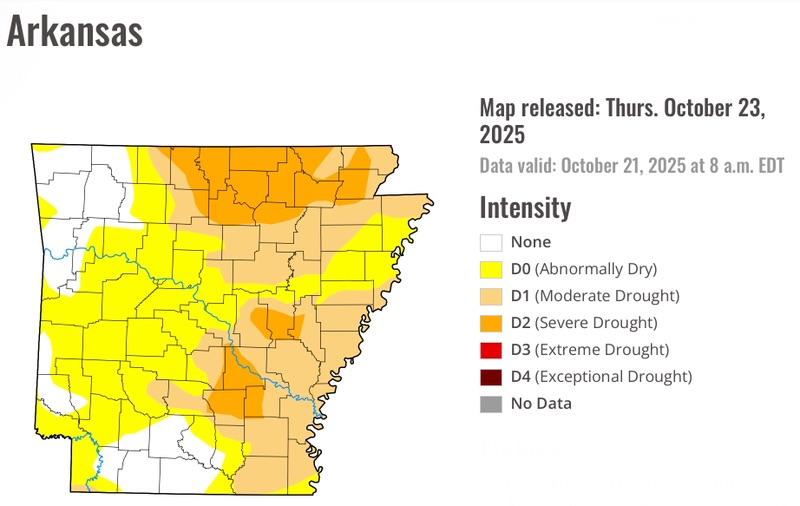
Last Saturday brought a little more than 0.75 inches of rain for most of the county. This brought a little relief but more would be nice. We are still showing most of the county in a D0 drought. Rain chances are back in the forecast this week with a good chance Saturday and Sunday. Temperatures are really cooling off this week with highs in the 60's for most of the week.
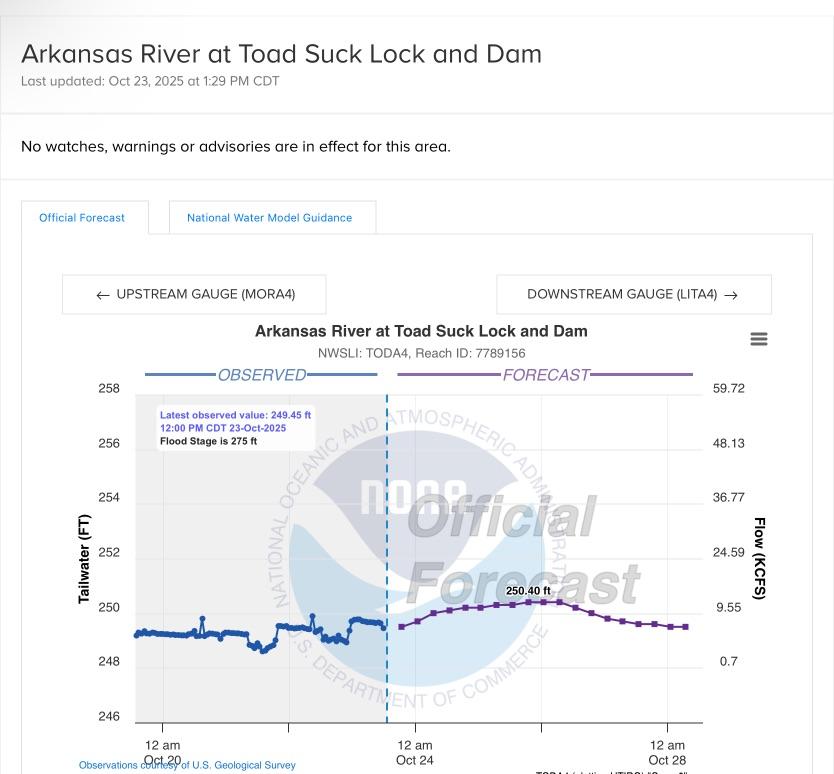
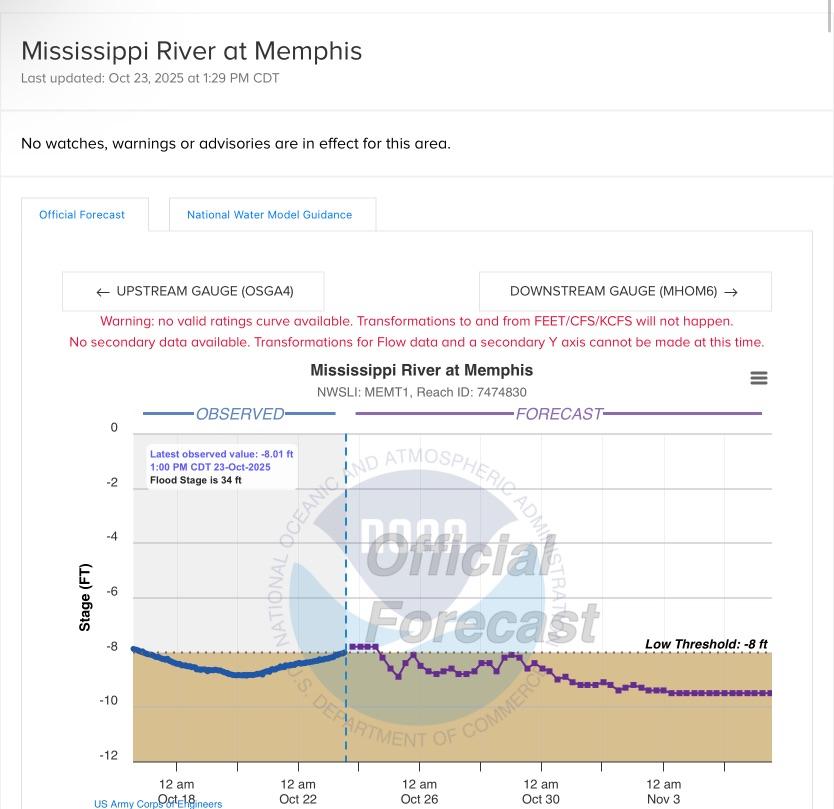
| | Arkansas and Mississippi River | | |
Harvest
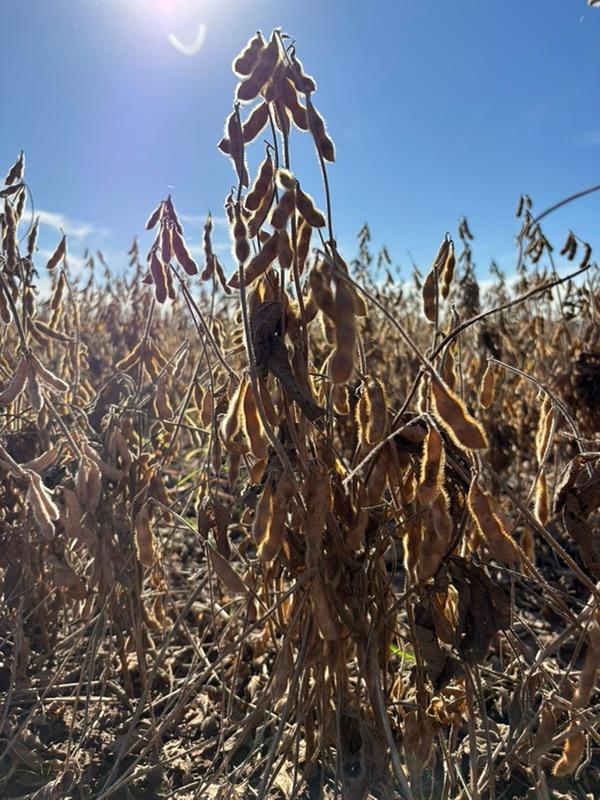
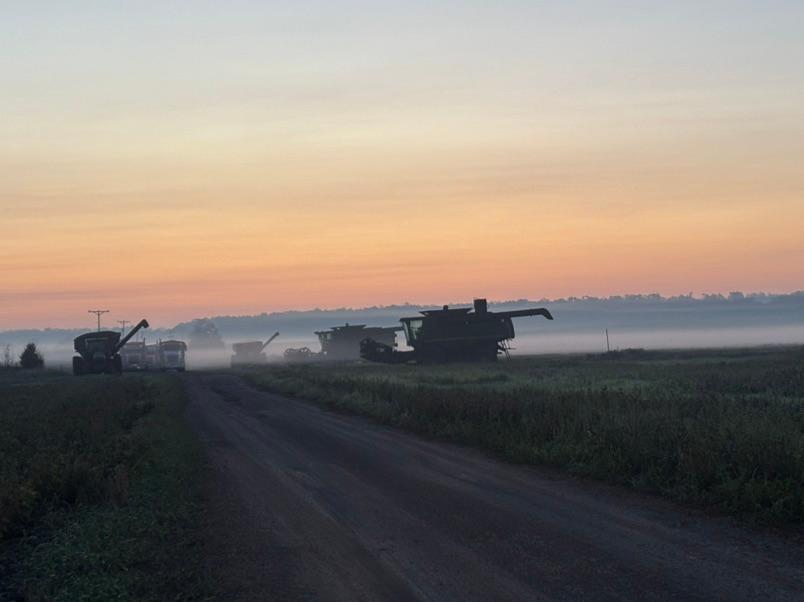
All we are down to is soybean harvest in Faulkner County. The predicted weather is going to slow down the fast progress we have had. I have heard several producers complaining about soybean moisture not coming down enough to harvest. Hopefully after these rains everything will dry on down and we can get done.
| |
Wheat
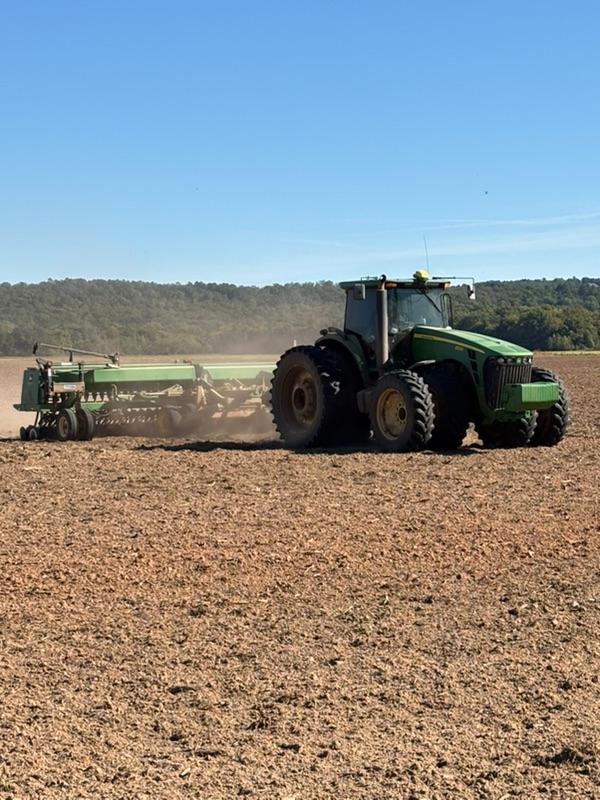
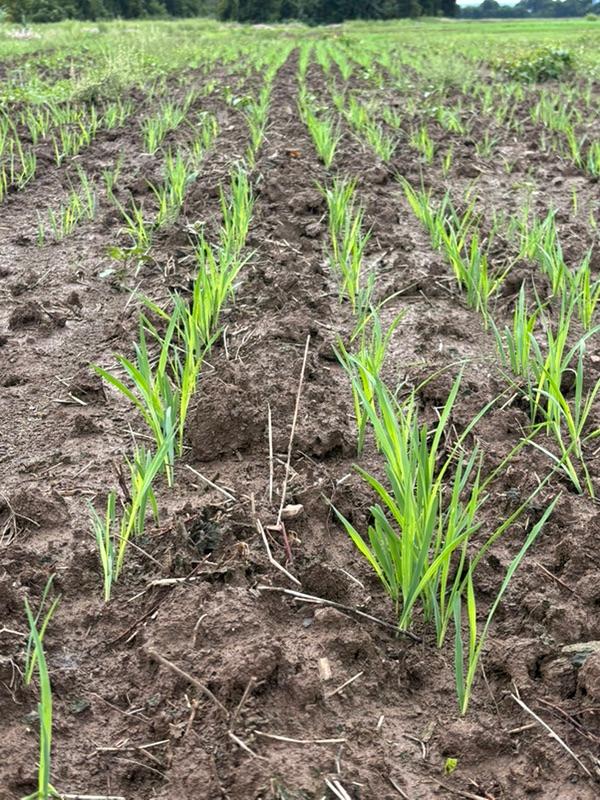
Several acres of wheat went in the ground this week. There were a few acres that went in early enough that the producers should be able to get Anthem Flex or Zidua sprayed before this rain. Make sure before you spray either of those herbicides that the wheat has imbibed water.
Even with the temperature drop coming on the wheat should still germinate and get some size before we hit the really cold weather. Hopefully we don't have too wet of a fall and we can get this crop up and healthy before winter.
| | |
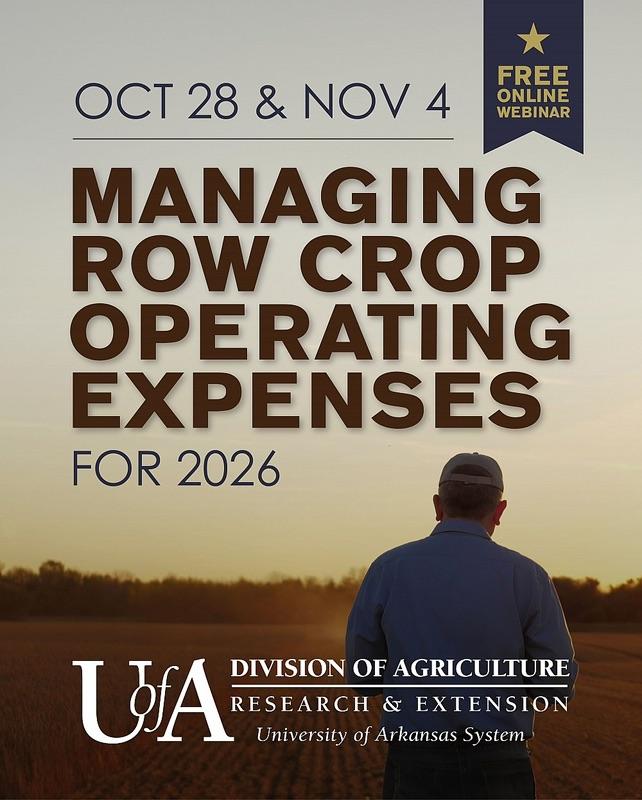
Managing Row Crop Operating Expenses Webinars
The University of Arkansas Division of Agriculture is offering two webinars focused on the 2026 crop year. I have a room reserved at the Extension office for anyone that wants to watch there.
Eleven UA Division of Agriculture Extension specialists are coming together to offer this two-part webinar series to discuss topics that could help with operating costs for this upcoming crop year. Although we are months away from next year's crops going into the ground, planning, and implementing some practices like weed management starts now. This webinar series covers topics including fall herbicide applications, using soil moisture sensors for irrigation management, pest control, seeding rates, and farm financial decision aids.
October 28th
Weed management, nematode management, and cost-effective crop management decisions in our major crops – Dr. Tom Barber – Dr. Travis Faske-Dr. Jeremy Ross-Dr. Jason Kelley-Dr. Zachary Treadway-Dr. Jarrod Hardke.
Topic: Managing Row Crop Operating Expenses - Part 1
Date: October 28, 9:00 AM
Registration: https://uada.zoom.us/webinar/register/WN_AzRM7zKaR1yyNjxtaWwuVw
November 4th
Weed management, soil moisture sensors, IPM in rice, new insects of concern, and farm financial web tools. – Dr. Bob Scott-Dr. Chris Henry, Dr. Nick Bateman-Dr. Ben Trash and Dr. Ryan Loy.
Topic: Managing Row Crop Operating Expenses - Part 2
Date: November 4, 9:00 AM
Registration: https://uada.zoom.us/webinar/register/WN_BL-LKCOkSRyf3x8kUwwqjw
| | |
Row Crop Production Meetings
Our annual row crop production meetings will be coming up in early 2026. Save theses dates and I will share more information as we get it.
Corn and Soybean Production Meeting - January 22, 2026 - Morrilton (Place TBA)
Rice Production Meeting - February 24, 2026 - The Barn at Lollie
| | Beef, Small Ruminants, & Forages | | |
2025 AFGC Fall Conference
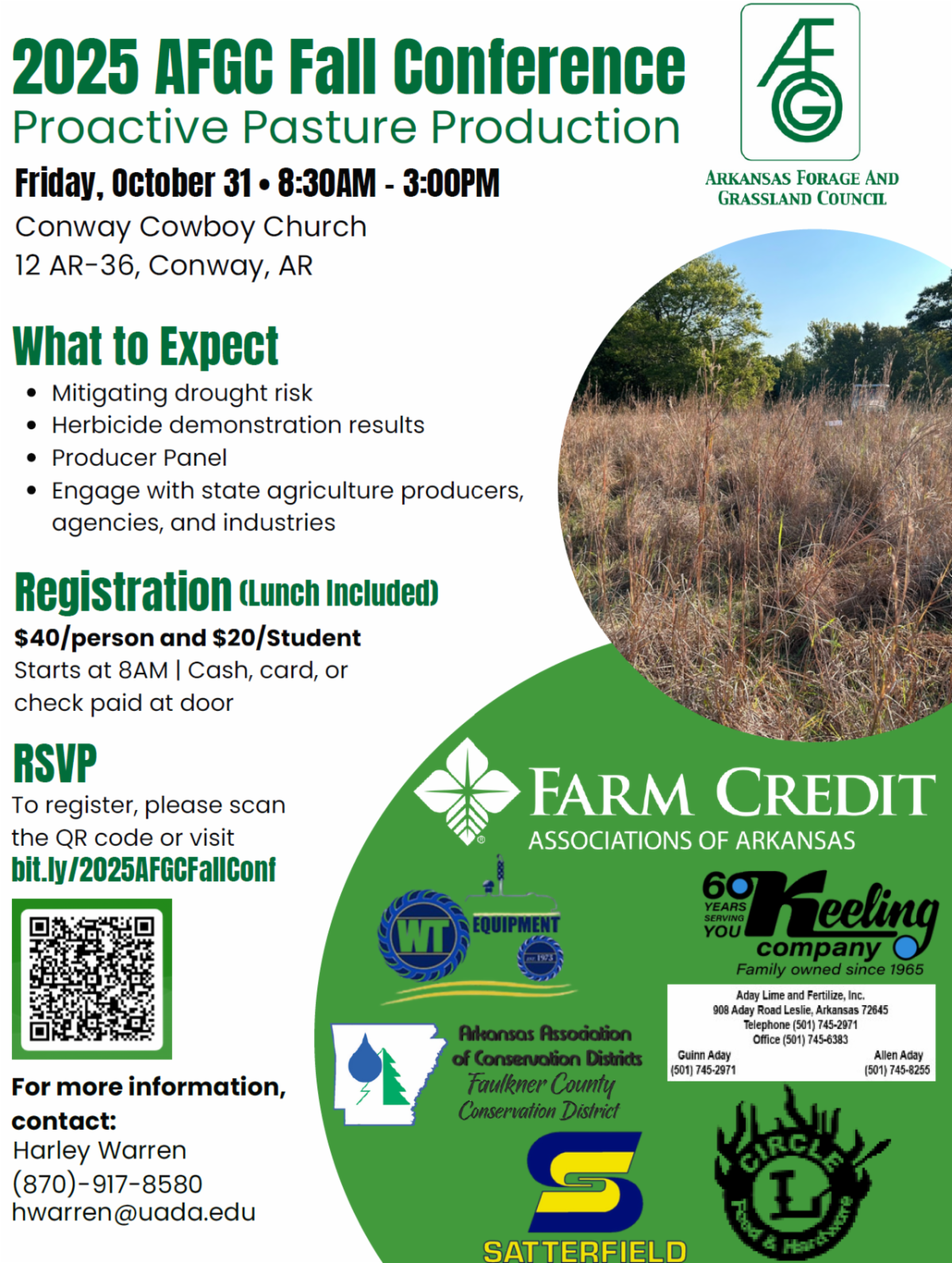
The 2025 AFGC Fall Conference will be next Friday October 31 at the Conway Cowboy Church across from the 8 Mile Store. This is always a great conference for producers to attend. Registration is $40 and you can register using the code below.
| | |
Optimizing PRF Insurance for Southern Forage Producers: Lessons from Arkansas
Mr. Walker Davis, Research Assistant, Oklahoma State University
Dr. Lawson Connor, Assistant Professor, University of Arkansas
Dr. Michael Popp, Harold F. Ohlendorf Professor, University of Arkansas
Dr. Hunter D. Biram, Assistant Professor and Extension Economist, University of Arkansas
Pasture, Rangeland, and Forage (PRF) insurance provides a financial safety net for forage producers, but its effectiveness varies significantly depending on regional precipitation patterns and the selected interval. Recent research in Arkansas highlights both opportunities and challenges for Southern producers considering PRF enrollment (Davis, Connor, and Popp 2025).
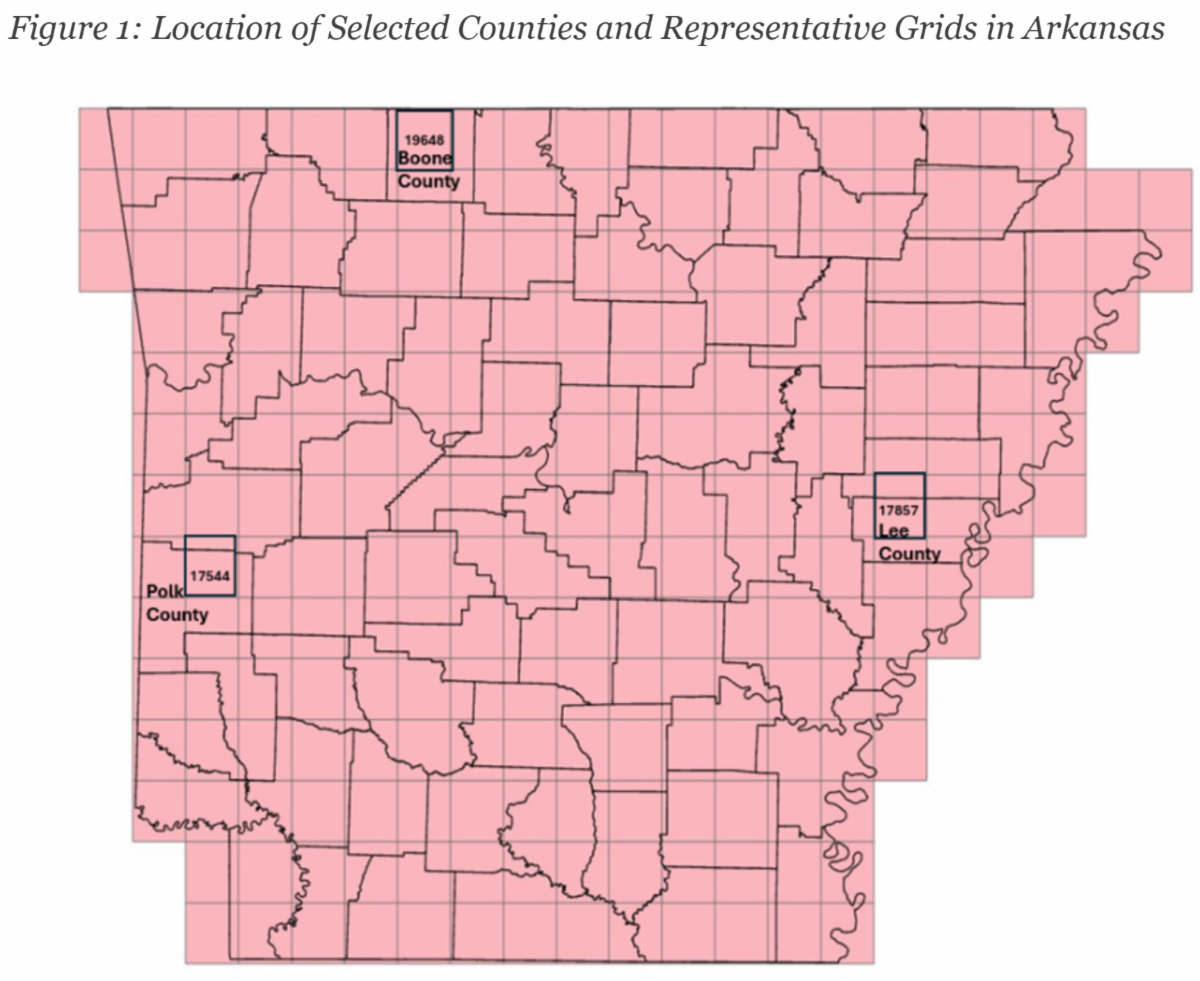
Our research examined three representative counties statewide: Boone (low rainfall), Lee (median rainfall), and Polk (high rainfall). We focused on the most representative grid by acreage within each county, as shown in Figure 1.
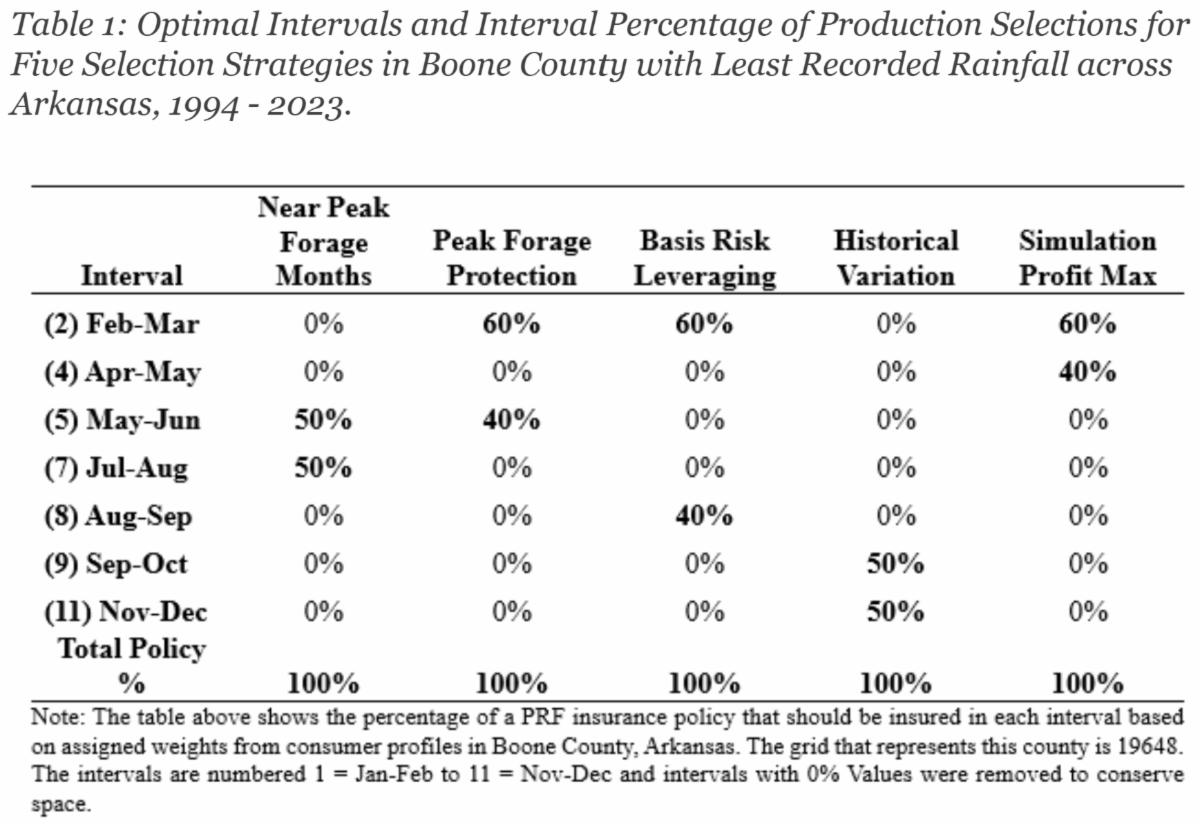
| Using 30-year rainfall and NDVI (Normalized Difference Vegetation Index) data, five PRF interval selection strategies were tested: Near Peak Forage Months, Peak Forage Protection, Basis Risk Leveraging, Historical Variation, and Simulation Profit Maximization (Keller and Saitone 2022). Near Peak Forage Months targets rainfall intervals around historical peak forage growth, while Peak Forage Protection selects intervals with the strongest statistical relationship to peak forage production. Basis Risk Leveraging balances false positives and negatives to optimize coverage, Historical Variation focuses on intervals with high rainfall volatility, and Simulation Profit Max uses gamma-distribution simulations to identify intervals likely to maximize profits based on historical rainfall patterns. These strategies were evaluated across five rainfall scenarios per county: driest, wettest, median, 25th percentile, and 75th percentile years. An example of this policy allocation across strategies is shown in Table 1. | |
In Boone County, Arkansas’s driest county over the past 30 years, the results in Table 1 show how different enrollment strategies prioritize rainfall intervals based on local conditions and producer goals. The Near Peak Forage Months strategy places coverage around May–August, when forage growth is at its strongest in Arkansas. Interestingly, the data show that rainfall in February–March and May–June has the greatest impact on summer forage growth, which explains the selected intervals for the Peak Forage Protection strategy. This lag between rainfall and forage response highlights the potential importance of selecting intervals that come before peak growth rather than overlap with it (Davis, Connor, and Biram 2025).
The Basis Risk Leveraging approach produces a similar outcome by identifying rainfall intervals that most closely align with actual forage growth on the ground, reducing the chance of “missed” coverage when forage losses occur. Historical Variation consistently selected late-year intervals such as September–December, which are the most variable rainfall periods across Arkansas. Meanwhile, the Simulation Profit Max strategy favored intervals where rainfall risk appears underestimated, aiming to identify periods most likely to trigger a payout, though not always tied directly to forage growth.
For producers, the key takeaway from Table 1 is that policy enrollment intention can influence interval choice, which, in turn, can significantly affect PRF performance. In regions like Boone County, insuring rainfall intervals before forage peak months may offer better protection than enrolling during the growing season itself. Producers should also consider the variability of local rainfall; intervals with greater historical fluctuations may increase the likelihood of a payout in drought years.
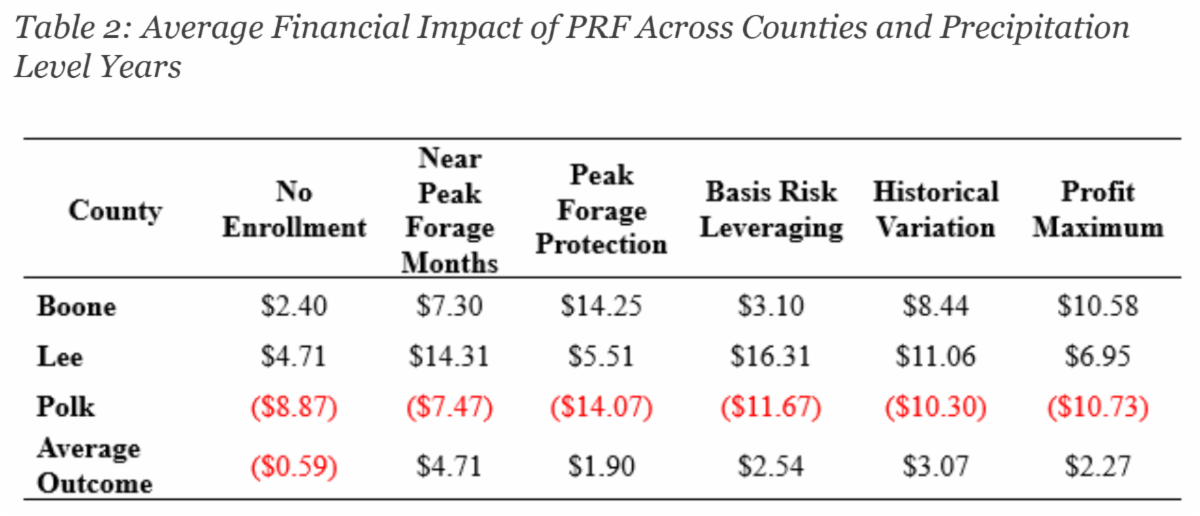
The study shows variability in PRF performance across different rainfall levels, as shown in Table 2.
| |
Among the three counties with different precipitation levels, the selection strategies revealed a notable pattern. On average, all five enrollment strategies resulted in higher financial gains compared to not enrolling. Interestingly, the Profit Maximum strategy performed poorly, suggesting that historical rainfall data may not be a reliable predictor of future rainfall and that changing weather trends could be influencing PRF policies. The most reliable strategies across the scenarios are Near Peak Forage Months and Historical Variation, which suggest that enrolling during the months closest to peak forage is effective, as is choosing intervals with the highest past volatility(Davis, Connor, Biram, et al. 2025).
For producers, these results have very practical implications. First, interval selection matters: aligning coverage intervals with local peak forage months can significantly increase profitability. Second, producers in drier regions are more likely to benefit from PRF, while those in wetter areas should carefully evaluate risk before enrolling. Finally, incorporating historical rainfall variability and county-specific data into decision-making can improve coverage outcomes.
| | |
Faulkner County Conservation District Office Shutdown
This message was on Facebook and for anyone looking to rent the county equipment please take note!
Our office is closed due to the government Shutdown. If you're needing to rent equipment. Call me at 501-450-2858. LaDonna Taylor District Coordinator.
| | |
Beyond Cheap Gain: Managing Stocker Calves for the Long-Run
Paul Beck, OSU Extension Beef Cattle Nutrition Specialist
The stocker phase sits at the crossroads of beef production—linking the cow-calf sector to the feedlot—and management decisions made during this stage echo all the way to harvest. A recent review of research from 1995 to 2024 in Applied Animal Science highlights how genetics, grazing management, supplementation, growth technologies, and health programs used in stocker systems influence later performance in the feedlot (Snider et al., 2025).
Most U.S. calves spend time in a stocker or backgrounding program before entering the feedlot. While we often think of this phase as just a way to add “cheap gain,” it also provides value by sorting cattle into uniform load lots, increasing resilience by getting calves through weaning and commingling stresses, and spreading calf inventory through the year. Stocker systems vary widely across regions, forage bases, and management goals—but research shows some consistent themes.
Genetics: U.S. calf populations are highly diverse due to regional adaptation of the cowherd. Grazing smaller-frame and early maturing calves prior to feedlot entry, can help them reach acceptable harvest weights with larger carcasses without becoming overly fat.
Grazing Management: Pasture strategies that boost grazing gain can have mixed effects during finishing. Restricted gain on pasture may lead to compensatory gain in the feedlot, but often reduces lifetime performance and marbling potential.
Supplementation: Supplements are used to correct nutrient deficiencies, manage grazing behavior, or increase stocking rates. Research shows variable effects on feedlot performance—some programs have no impact, while others can reduce efficiency during finishing.
Growth-Promoting Technologies: Ionophores improve stocker gain by 10% without affecting feedlot performance. Implants improve gain 10–20% in the stocker phase with little impact on finishing performance and efficiency, though some studies suggest reduced marbling with aggressive implant programs.
Placement weight, condition, and age entering the feedlot are strong predictors of finishing success. Stocker management isn’t just about adding cheap gain—it’s essential for preparing cattle for production in the feedlot and capturing value across the entire beef production chain.
Reference: M. A. Snider et al. 2024. Invited Review: Effects of management on performance of stocker cattle and subsequent feedlot performance. Applied Animal Science 41:329-349. https://doi.org/10.15232/aas.2024-02663
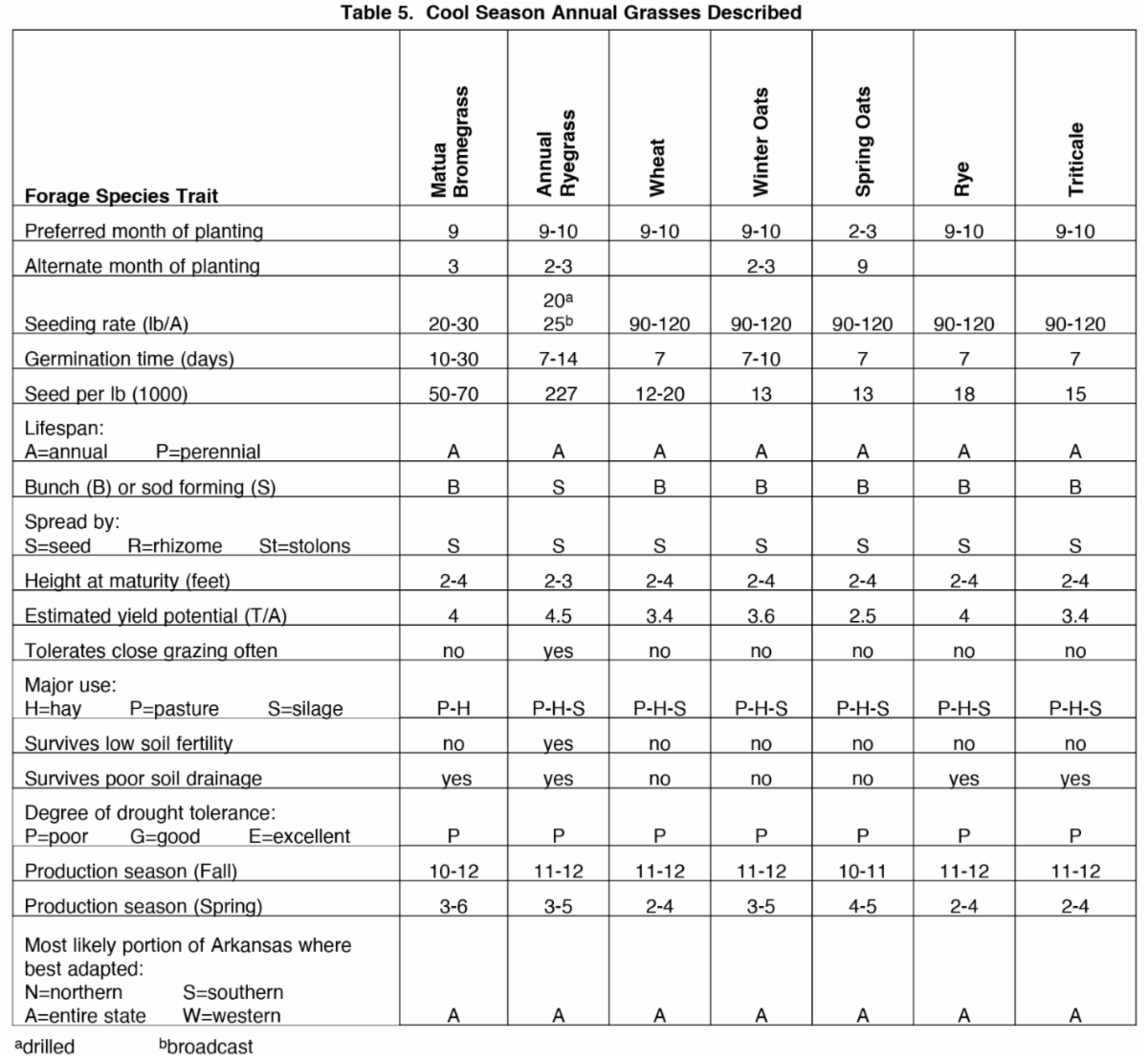
| | Cool Season Annual Resources | | |
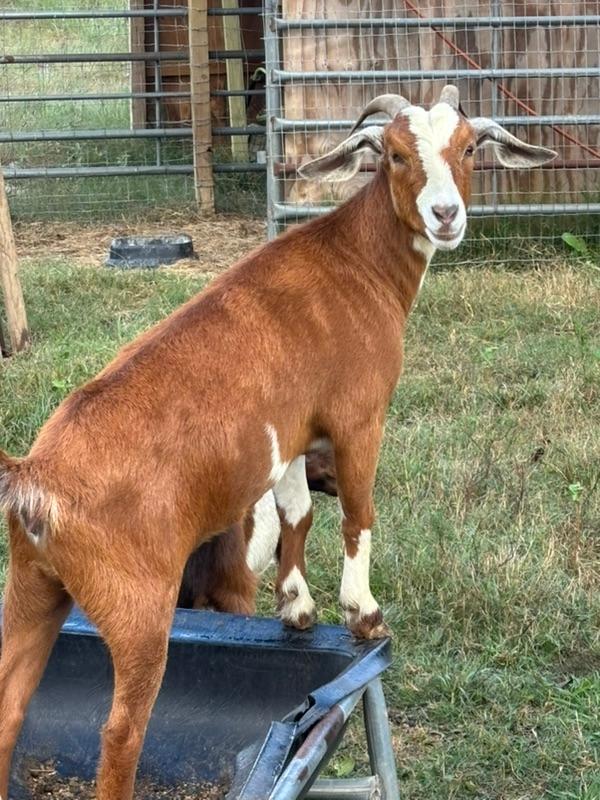
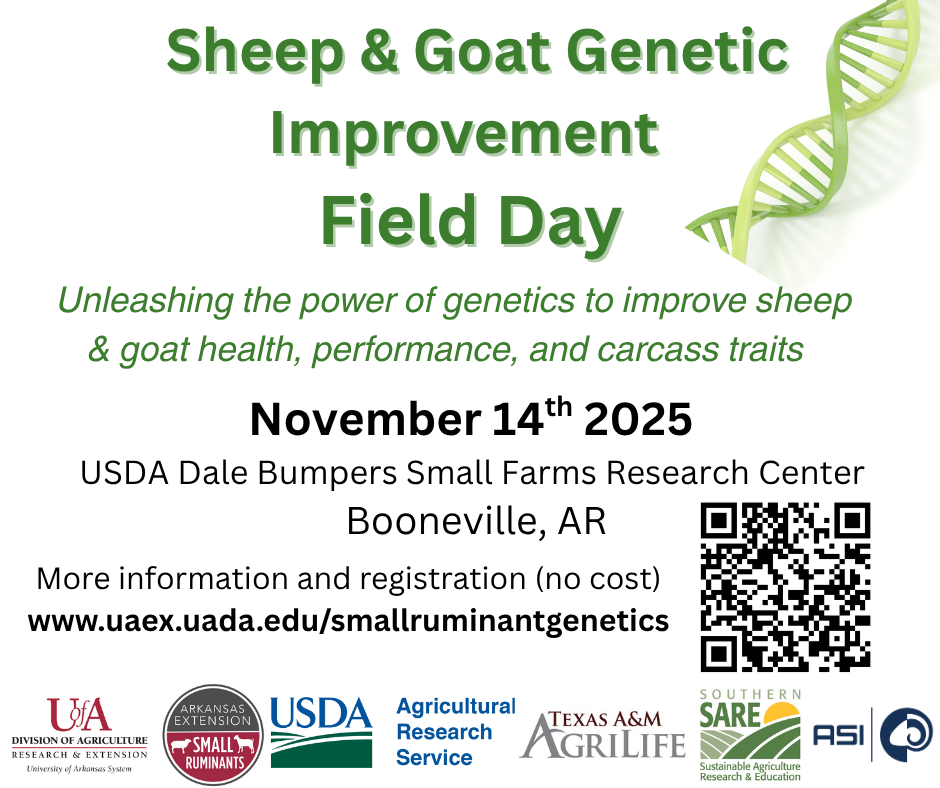
Sheep & Goat Genetic Improvement Field Day
Unleashing the power of genetics to improve sheep & goat health, performance, and carcass traits is the theme of the "Sheep & Goat Genetic Improvement Field Day", the best event about small ruminant genetics that has ever been held in Arkansas. Do not miss this opportunity: great speakers, hands-on opportunities, and lamb burgers! On November 14th at the USDA/ARS Dale Bumpers Small Farms Research Center (6883 South State Highway 23, Booneville, AR), from 9:30 am to 3:30 pm. In person only, lunch included, and no cost to attend; please register by November 11. More information and registration at: www.uaex.uada.edu/smallruminantgenetics
Tentative agenda
9:00 am: On-site registration, coffee and donuts
9:30 am: Welcome, Dr. Joan Burke, USDA/ARS
9:45 am: Economic benefits of using rams/bucks with EBVs, Dr. Murphy, USDA/ARS
10:30 am: Breakdown sessions I: Collecting and recording data
Parasites: FAMACHA system, Dr Joan Burke, USDA/ARS
Parasites: Collecting and submitting fecal samples, fecal egg counting methodology, body condition scoring, Dr. Dan Quadros, UADA and Dr. Susan Rohila, USDA/ARS
12:00 pm: Lamb burgers
12:30 pm: Implementing an on-farm genetic improvement program, Dr. James Morgan, Round Mountain Consulting
1:00 pm: Breakdown sessions II: Collecting and recording data
Growth performance: types of ID and RFID, number of lambs born/weaned, birth weight, weaning weight, postweaning weight and collecting tissue, USDA/ARS and Texas A&M University
Buying rams with good genetics: visual assessment vs. EBVs, Dr. Joan Burke, USDA/ARS
Using ultrasound for pregnancy check and carcass evaluation, Dr. Jake Thorne, Texas A&M AgriLife
2:30 pm: The future development of the NSIP, Dr. Murphy, USDA/ARS and Dr. Jake Thorne, Texas A&M AgriLife
3:00 pm: Producer Panel: Using Estimated Breeding Values (EBVs) to improve economically important traits
Christine Hernandez, Heifer Ranch
Lauri Cellela, Rockwall, TX
Tia Broderick, The Farmhouse on Persimmon Hill
Zac Vann, Rafter V Ozark Farms
3:30 pm: Adjourn
Optional, 3:30 p.m - 4:30 pm: Learn more about the National Sheep Improvement Program (NSIP)
Dr. Joan Burke, USDA/ARS
Dr. Jake Thorne, Texas A&M AgriLIfe
Dr. James Morgan, Round Mountain Consulting
Dr. Murphy, USDA/ARS
| | Upcoming Meetings and Field Days | | |
Pesticide Applicator Trainings
In order to purchase restricted use pesticides (herbicides, insecticides, fungicides, etc) you must have a private applicators license. The license is good for 5 years.
To obtain a license you must first attend a certification training. Certification trainings are done in person by a County Extension Agent or you can go online and be certified. Below is a link to the online training.
In person trainings this year will all be at the Faulkner County Extension Office and will be on:
December 11 - 2:00 PM
January 29 - 6:00 PM
March 12 - 6:00 PM
April 30 - 2:00 PM
A certification training costs $20 and is due the day of the training.
Once a producer is certified, they will go through the Arkansas Department of Agriculture to obtain the license which is $45.
Please call the Extension office at 501-329-8344 to sign up for one of these dates.
There will be other opportunities for trainings in Perry and Conway County and I will post those as soon as those dates are available.
If you have a question about your license, please follow the License Search and Verification link below to find your license.
| | |
Livestock Market Report
The weekly livestock market report is available on the Arkansas Department of Agriculture website.
| | |
Sign up for Text Alerts
You can now sign up for text alerts from me throughout the year. I have two areas you can sign up for which includes Faulkner Livestock or Faulkner Ag (Row Crop Updates). To sign up you can follow one of these links or use the QR Codes below.
| | Pursuant to 7 CFR § 15.3, the University of Arkansas System Division of Agriculture offers all its Extension and Research programs and services (including employment) without regard to race, color, sex, national origin, religion, age, disability, marital or veteran status, genetic information, sexual preference, pregnancy or any other legally protected status, and is an equal opportunity institution. | | | | |