|
Cancer News Digest, February 2024
Visit our website
CFC #11967
| |
|
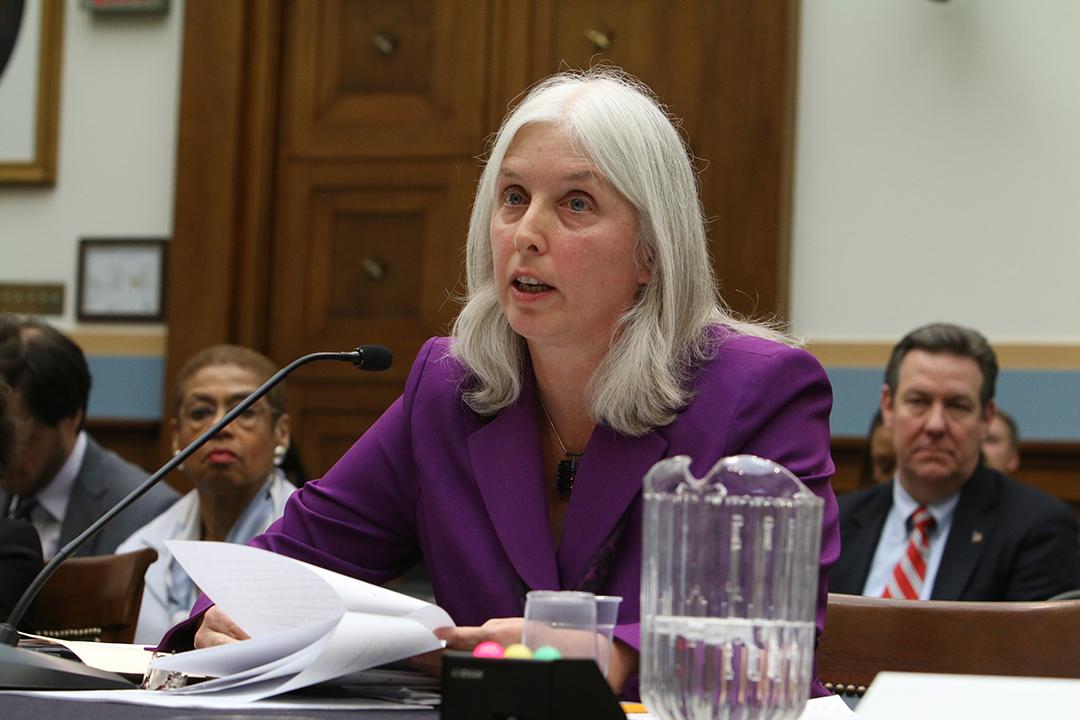
Honoring Dr. Susan Wood
Susan Wood is a distinguished figure in public health who has left an indelible mark on women’s health and will be honored with an internship named for her. Dr. Wood shaped policies related to reproductive health and the safety of medical products while working in the U.S. House of Representatives as Deputy Director of the Office of Women’s Health at the U.S. Department of Health and Human Services, as Director of FDA’s Office of Women’s Health, and on our Board of Directors at CPTF. After leaving the U.S. government, she was on the George Washington University School of Public Health faculty and is currently retired while being treated for cancer.
The Susan Wood internship will focus on women’s health and especially on the safety and effectiveness of medical treatments. If you would like to donate to the fund that covers stipends for this internship or know of anyone interested in applying you can check out more information at the links provided.
| |
|
FDA plans to ban hair straighteners that can cause cancer
Ten years after experts declared them unsafe, the FDA has finally announced that it will ban the use of hair-straightening products that contain or emit formaldehyde. These products include keratin treatments. Formaldehyde is a known carcinogen, and women who frequently use products that contain it double their chances of developing uterine cancer (also called endometrial cancer) compared to those who do not. It may also increase the chances of developing breast cancer types of cancer and can also cause immediate harm, especially to workers in constant direct contact with the chemical. Symptoms can include eye or skin irritation, asthma, frequent headaches, and allergic reactions. Even hair straightening products that claim to be “formaldehyde free", such as keratin treatments, usually contain methylene glycol, which turns into formaldehyde gas when in contact with air. If you use hair-straightening products or keratin treatments, avoid using any that contain formaldehyde or methylene glycol.
The ban is expected to start in April. If you’d like more information about the FDA's decision click here and check out our article on the risks of Keratin and other straighteners here.
| |
|
Are breast self-exams beneficial? What about clinical breast exams?
We reviewed the conflicting information from healthcare professionals and advocates on performing self-breast exams and clinical breast exams so that you and your doctor can make the best decisions for you. For many women, monthly self-breast exams have been considered an essential part of their health routine. However, conflicting advice over the years has left women of all ages feeling uncertain about whether they should continue this practice.
Research shows that breast self-exams rarely benefit women for 2 reasons: 1) Mammograms can detect cancer earlier, and 2) By the time a lump is found on a breast self-exam, it will soon be obvious enough to detect by the woman while showering, dressing, or in other daily activities. Unfortunately, self-exams have risks, often resulting in anxiety, unnecessary biopsies, or a false sense of security when small lumps are not detected and women do not bother to get a mammogram. Recent studies also suggest that even regular clinical breast exams performed by a physician may not be as beneficial as assumed, especially for women who undergo regular mammograms. For example, women who have been treated for breast cancer with lumpectomy often are scheduled for clinical breast exams every 6 months, but recent research indicates that it rarely detects breast cancer. You can use our article as a starting point to discuss with your doctor which screening strategies are right for you.
| |
|
Medicare has different standards than the FDA. That’s how it should be
Our President, Dr. Diana Zuckerman, penned an Op-Ed in STAT News discussing the disconnect between the FDA and the Centers for Medicare and Medicaid Services (CMS) in protecting the health of aging Americans. The FDA approves drugs and devices that it considers “safe and effective,” but does that mean Medicare should cover all drugs the FDA approves? What’s not taken into account is that the FDA doesn’t require testing of drugs or devices to ensure safety and effectiveness for people aged over 65. Since most U.S. cancer patients are over 65, the lack of research on older patients is a major problem. Instead, many drugs are tested on younger, healthier patients who are not representative of the Medicare population. Older people tend to metabolize drugs differently, take a multitude of medications, and have serious health problems that can affect how safe and effective new drugs are. If you want to know more about the possible solution, you can read the article here.
| |
We're Speaking Out For You | |
|
BRCA gene testing and improving genetic counseling
We recently made recommendations to the U.S. Preventive Services Task Force (USPSTF) regarding testing and genetic counseling for BRCA cancers. BRCA gene mutations can increase the chances of men and women developing breast cancer and women developing ovarian cancer. We generally supported CMS' plans but strongly urged them to also evaluate how to best communicate with patients who are considering testing or who are receiving their test results. We explained that "In our interviews with patients, we have found that when information is given about the lifetime risks of breast and ovarian cancer for women with BRCA-1/BRCA-2 genetic mutations, most women become frightened. However, they are relatively reassured when they are also given information about the risks of breast and ovarian cancer in the short-term, such as within the next 5 to 10 years. Since the risk of developing breast and ovarian cancer is much lower in the short-term, women are less frightened and less likely to feel that they must urgently undergo surgery that will have major implications on their quality of life or life plans, such as the ability to bear children."
We also emphasized that any statistics on risks or risk reduction for surgery or other treatments should include the benefit to the specific patient. For example, if a patient with a BRCA mutation has a risk of developing breast cancer during the next 5 years is 10% instead of 5% for other women, she should be told there is a 5% difference, rather than being told her risk is "twice as high." You can read our full comment here.
| |
|
CPTF president provides testimony to the Maryland House of Delegates in February
House Bill 457 would require any new installations of artificial turf to provide a "chain of custody" that indicates where the artificial turf was installed, when it was removed, and where it went after it was removed (to a landfill, recycling plant, etc.) Dr. Diana Zuckerman explains "This bill is the first step to make sure that the carcinogenic materials used in artificial turf are not getting into our water supply, where they can endanger entire communities. Of course, we are also concerned about the children and adults that play on these fields, but we have been unable to convince Maryland legislators to restrict their use." You can read her testimony here.
House Bill 1147 would more directly protect children from carcinogens, by banning the use of any playground surfaces that contain PFAS and other carcinogenic materials. She explains that "Many playgrounds in Maryland and across the country are covered in colorful rubber surfaces that are very attractive but contain chemicals that can contribute to obesity, early puberty, attention problems in childhood, and cancer as these children get older." You can read her testimony here.
| |
|
Rural hospitals cut chemotherapy services
If you have cancer, where you live may help determine how long you live. Many rural hospitals all over the U.S. have stopped providing chemotherapy, with Texas the worst –no longer providing chemo services in almost half their rural hospitals. Mississippi and Tennessee are not far behind. This concerning trend occurs as the demand for chemotherapy services also increases, since the number of people diagnosed with cancer from 2000 to 2019 has increased by 13%. To learn more and see where your state falls within the ranking, click here.
| |
|
Patients see first savings from the Inflation Reduction Act
After the passing of the Inflation Reduction Act in 2022, patients are seeing tremendous savings. The law caps out-of-pocket spending on brand-name drugs for Medicare beneficiaries at about $3,500 as of 2024. This Act represents the first step in curbing U.S. drug prices that are often up to 10x what people pay in other countries for the same medicine. Cancer drugs are among the most expensive treatments, resulting in major financial problems for patients. This new law is part of a larger effort by the Biden Administration to give Medicare patients immediate financial relief and implement more regulations on the surging prices of the drug industry. Read the article here.
| |
|
FDA takes action against e-cigarette companies that target youth
Earlier this month, the FDA issued a warning letter against 14 online retailers that have been illegally selling flavored e-cigarette products to children. You may be surprised to learn that more than half the youth who use e-cigarettes (which is illegal!) bought Elf bar in 2023. When that information was made public, the company changed its e-cigarette’s name to EB Design to avoid getting in trouble. If the warning letters don’t work, FDA can fine the companies for advertising their products to children and teens who are too young to legally buy them. This is part of a larger effort by the FDA to help curb the rate of smoking among young people, as addiction starts in youth and increases the risk of cancer. Read the FDA's statement here.
| |
Check us out!
Did you know that artificial turf and rubber playground surfaces contain carcinogens? Are your children or grandchildren getting exposed when they play? Follow us @safe.to.play
| |
|
|
Cancer Prevention and Treatment Fund
Facebook: @CancerPreventionAndTreatmentFund
| |
|
|
Your Contribution Can Make a Difference
We do not accept any funding from drug companies, device companies, chemical companies, or other sources that could influence our work and compromise our integrity. That's why so many people turn to us when they need help. Donations of any size are greatly appreciated (and tax deductible.)
Please consider giving to the Cancer Prevention and Treatment Fund online or by mail to the address below.
| |
To sign up for these monthly updates, click here.
| |
Cancer Prevention and Treatment Fund | 1001 Connecticut Ave NW, Suite 1100
CFC# 11967
| | | | |