|
February is Black History Month, so here's a solid list of Black authors, nonfiction and fiction, to spark your reading
Nonfiction
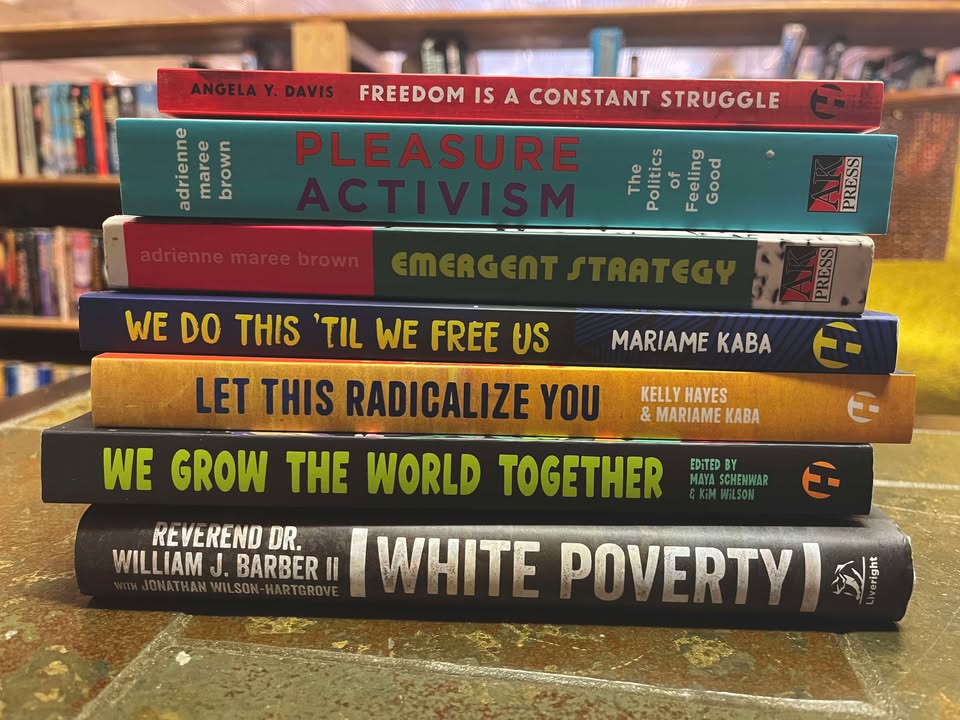
adrienne marie brown, Emergent Strategy and Pleasure Activism
If I were limited to one word about adrienne marie brown, it would be "cool," because her work is that. Cool. Both Emergent Strategy and Pleasure Activism are blends of literary study (she loves Octavia Butler, often setting her own writing to ride in the wake of Butler's fiction), the study of pleasure, and of growth, personal and political. She mentions somatics at the outset of Pleasure Activism, a concept of holistic/whole transformation, and that's how her writing feels: whole (as well as intelligent, pragmatic, thoughtful, and funny). Her work as an activist/writer is truly inspiring.
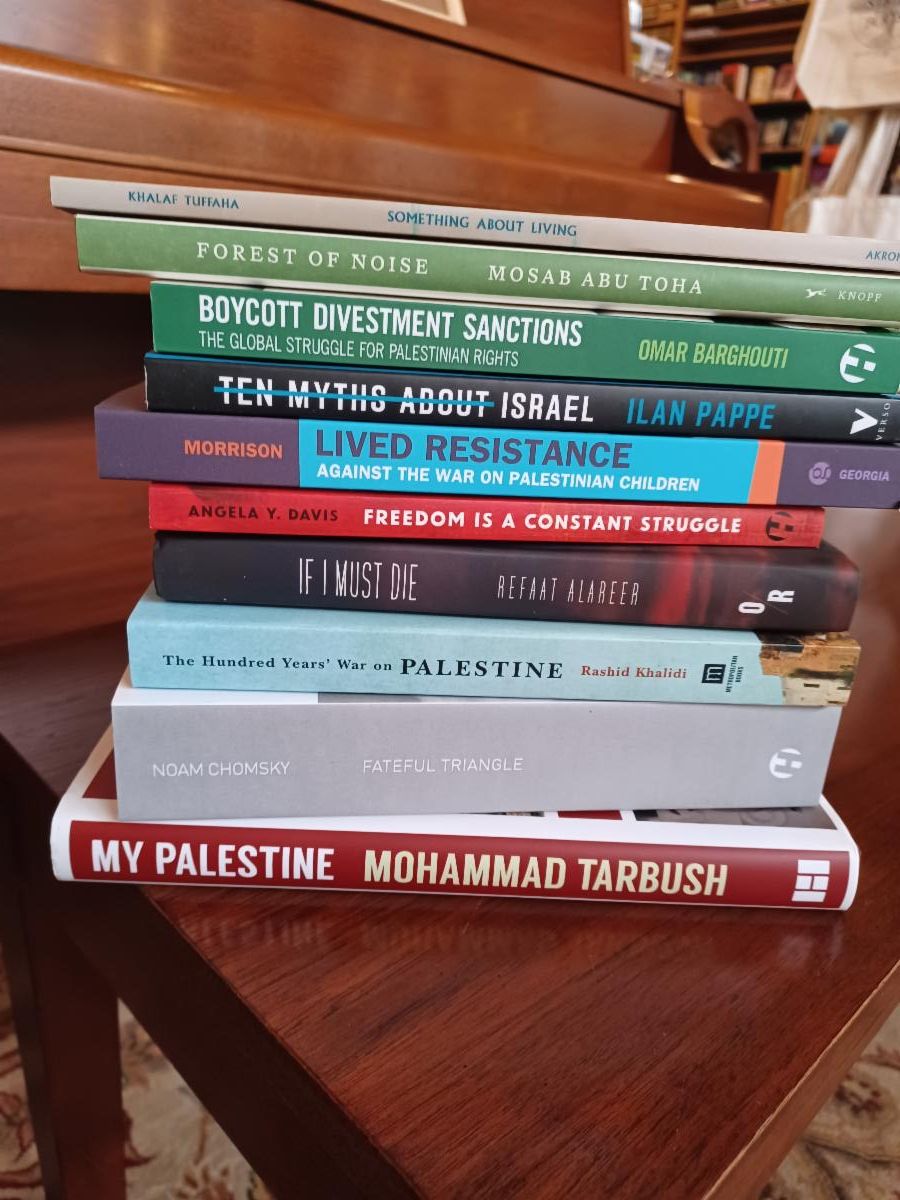
Angela Davis, Freedom is a Constant Struggle
And speaking of inspiring activists...you gotta read Davis. If you ever lament these modern times, just remember you live in the time of Angela Davis, and that is something. Hers is a long life of profound political experiences, and reading this book, often styled as an interview, feels like an intimate conversation with a wise elder. It simultaneously reads like you should be taking notes, because such wisdom is rare, and like you should just listen, because to truly listen is also rare. Luckily, it's a book, so you can come back as often as you like, for optimal listening.
Mariame Kaba, Kelly Hayes, and myriad others, Let This Radicalize You, We Do This 'Til We Free Us, and We Grow the World Together
This is not a series, but I'm grouping them together because they're all published by Haymarket Books (Pearl Street has a solid collection of Haymarket Books, FYI), and circle in the spheres of abolition, political organizing, and transformative justice and care. Mariame Kaba is often the author, but these books are all clearly collective works, which is a refreshing experience when reading, and further evidence that when the authors talk about transformation, they mean it. These are all eye-opening, accessible, and necessary books.
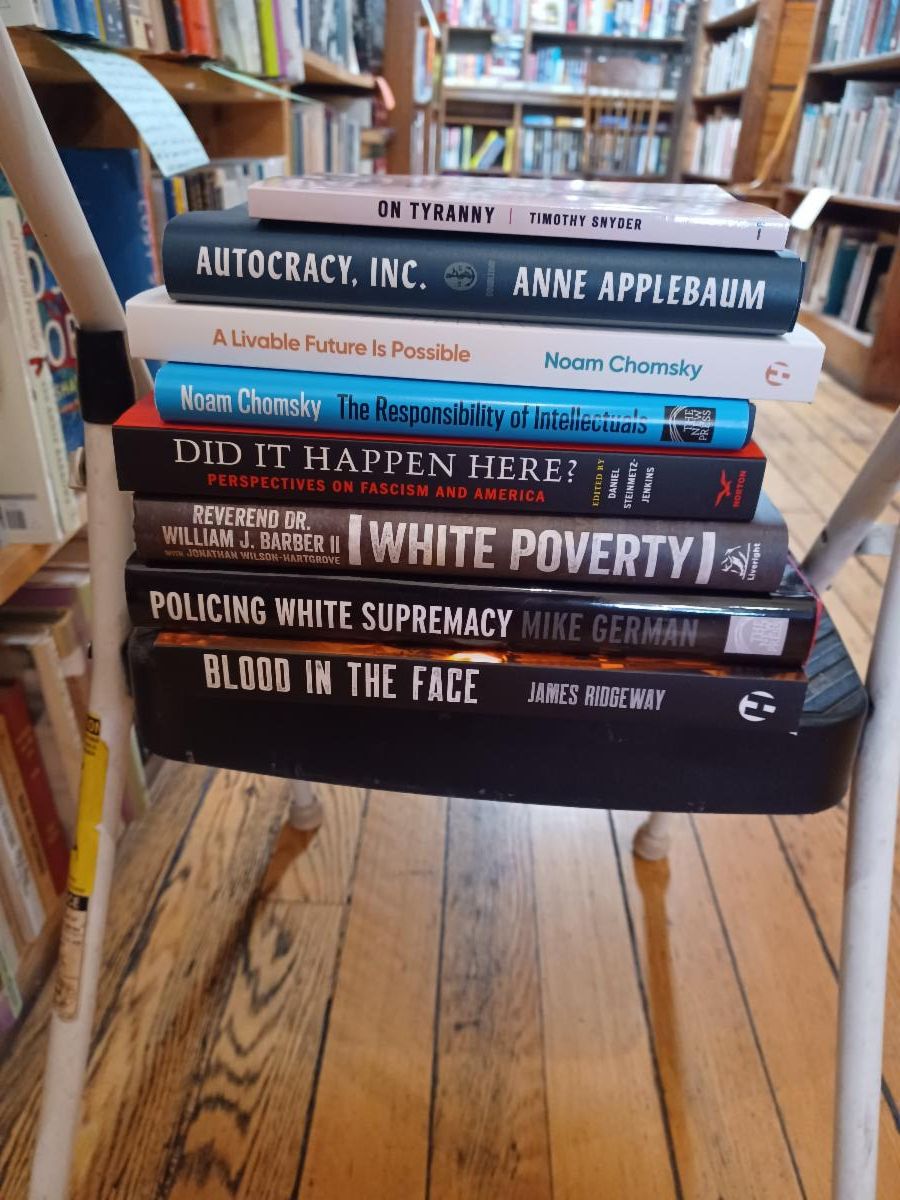
Reverend Dr. William Barber II (with Jonathan Wilson-Hartgrove), White Poverty
From the book's preface: Humans do not have the capacity to see everything the eye beholds, so we develop ways to focus our attention. Myths are the shared stories that tell us what to see. With this in mind, Barber introduces the goal of the book, to change the myth that equates poverty and blackness, and to focus on a more accurate representation of race and class, offering the clarity to more accurately address American poverty.
Fiction
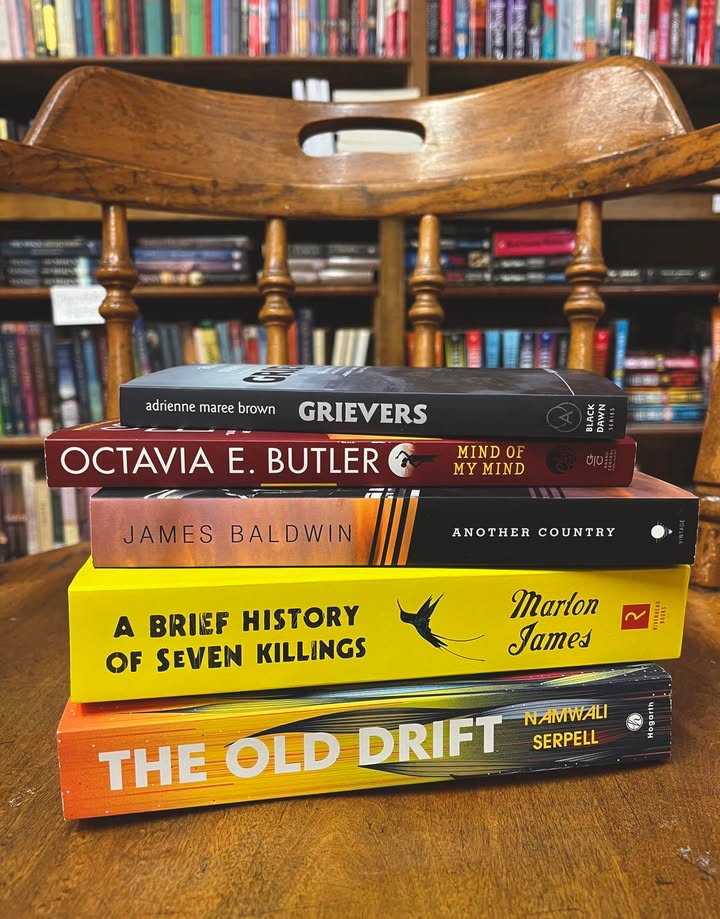
adrienne maree brown, Grievers (Grievers Trilogy, Book #1)
brown writes fiction as well (again: cool), and the third in her Grievers trilogy--Ancestors--comes out this June, so that gives you plenty of time to read the first two (Grievers, Maroons). Grievers is a dystopian sci-fi novel set in Detroit during a mysterious pandemic. The novel takes a heavy, serious tone, more than her nonfiction, but her writing remains compelling and grounded in realistic transformations, on both a personal level and within communities.
Octavia Butler, Mind of My Mind
I've mentioned Butler in relation to brown's work, so it just made sense to highlight her (besides the fact that her work has come up repeatedly in prophetic relation to the recent fires in Los Angeles). Mind of My Mind is the story of Mary, a young woman with telepathic abilities, daughter of Doro, an immortal, body-changing being. Eventually, Mary will challenge Doro's power with her own, and through shifting perspectives, Butler propels the story forward with solid tension and the pace of a thriller. This is actually a prequel to the original Patternmaster, even though Patternmaster ends up the final novel in the Patternist series, so you can get into the series any way that suits you.
James Baldwin, Another Country
Baldwin once described this book in the words of Henry James (who he also quotes at the outset of the narrative): perception at the pitch of passion. It's such a beautiful thing when a book feels intrinsic to it's moment in time and space, and this novel, written in the early 1960s, has that feel, immediately, when you meet Rufus Scott in a movie theater, and then wandering the late-night streets of New York with nowhere to go. It's a heavy novel, but an essential one, written at the pitch of passion.
Marlon James, A Brief History of Seven Killings
James was born in Jamaica, but he's been living in Minneapolis for a long while; I was introduced to his work what feels a million years ago, when bartending; a young man at the bar had James as a professor, and was praising his books. He spoke so highly that I had to take his word, so I read this novel and The Book of Night Women (also incredible). A Brief History of Seven Killings is set in Jamaica, the story of the attack on Bob Marley in his home, in 1976. It's an incredible novel, written in a distinctly Jamaican dialect, which takes a little adjusting, but makes for a fantastic reading experience.
Namwali Serpell, The Old Drift
I read this book a few years ago, but if I had to pick a favorite "new" book, I still think I'd pick this one (it was published in 2019). It's such a sweeping epic, and so well-composed; I can't say enough good. The novel is set in Zambia, and moves through generations, shifting perspectives, weaving families and stories together through time. There are elements of magical realism and Afrofuturism, some so profound and surreal that I can still vividly conjure certain scenes in my mind's eye. This is one of those novels that really carries you away, and maybe you don't come back all the way.
--reviews by RM
Image below: stack of novels by Black authors
|