CAFB Legal Services Division assisted Lake County Farm Bureau with a recent flurry of activity regarding the Clear Lake Hitch, a minnow that is listed as threatened under the California Endangered Species Act. The hitch, native to Clear Lake, once spawned with abundance in several local creeks. It is claimed by local tribes as a traditional food source. The hitch can achieve quite a high population during wet years but, over the drought, their population has fallen to historic lows. This decline has raised concerns of potential extinction. After an “intergovernmental summit” between several local tribes and various state and federal agencies, it was suggested that the State Water Board adopt emergency regulations to restrict pumping, for essential frost protection, by local vineyards. The Water Board, however, later acknowledged that it lacks sufficient data to fully understand any possible effect agricultural water use may have on the hitch.
CAFB and Lake County Farm Bureau, via the local Bureau’s Board and Executive Director, submitted written comments and made in-person remarks at a Lake County Board of Supervisors’ meeting on February 7, 2023. CAFB’s comments and concerns addressed the County’s proposed Emergency Proclamation regarding the hitch. Their proclamation described various remedial activities and included a litany of “asks,” including requested action by the Water Board. Prior to the County Emergency Proclamation, and in an effort to preempt regulatory action, local growers committed to conduct a range of voluntary monitoring and reporting activities to help inform, and hopefully avoid shortsighted action by, the Water Board. The Farm Bureau supports an alternative program described in a previously released and quite robust Draft Conservation Strategy for the hitch. Farm Bureau is coordinating with growers in the area and various wine industry groups to design a voluntary program to better illustrate that the decline of the hitch may be more closely tied to various habitat stressors unrelated to agricultural water use and vital frost protection in the area.
|
|
CENTRAL VALLEY REGIONAL WATER BOARD HEARING TO EXEMPT UPPER FEATHER RIVER SUB-WATERSHED FROM IRRIGATED LANDS REGULATORY PROGRAM |
|
The Central Valley Regional Water Board will be holding a hearing on February 23, 2023 to consider exempting growers located in the Upper Feather River Watershed from the Irrigated Lands Regulatory Program. Irrigated agricultural operations in the watershed include irrigated pasture and/or alfalfa. There are approximately 70 operations in the watershed, covering a little over 30,000 acres. Justification for the exemption include irrigated pasture and alfalfa’s low- to zero-use of pesticides and fertilizers, permanent vegetative cover, and low economic returns coupled with continually rising compliance costs. CAFB submitted a comment letter supporting the exemption on January 11, 2023.
|
|
NET ENERGY METERING AGGREGATION (NEMA) WORKSHOP |
|
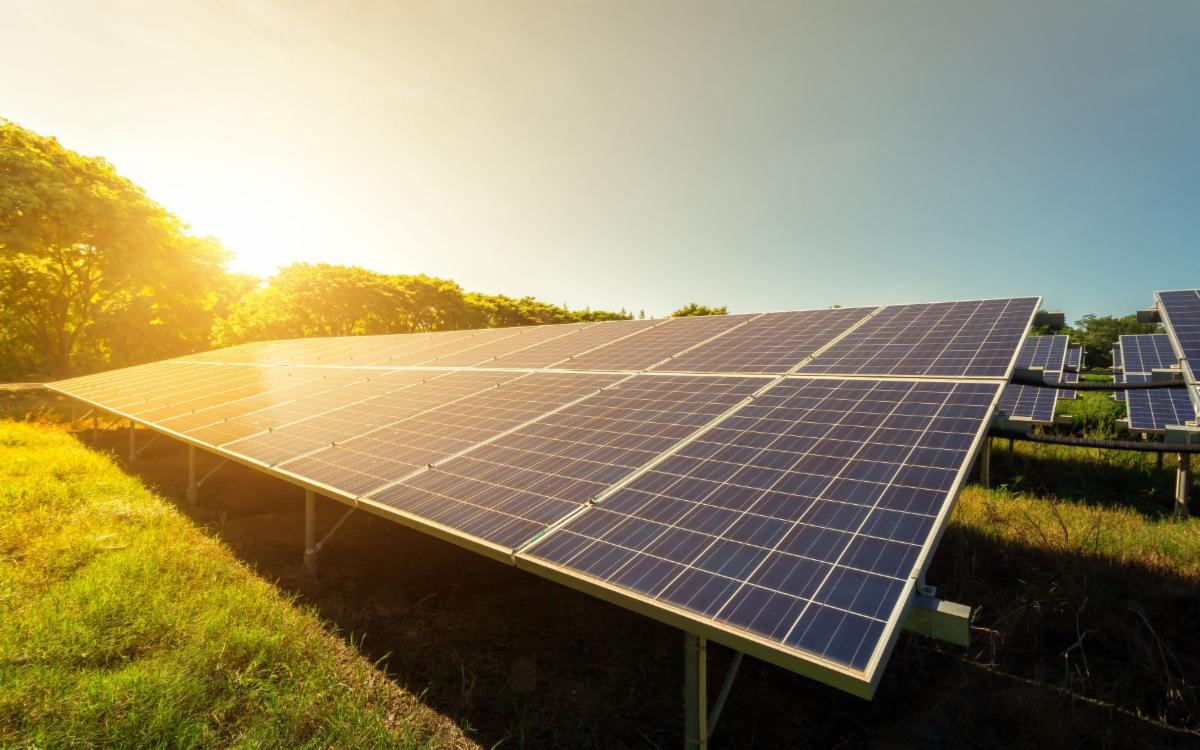
The Public Utilities Commission held a workshop seeking additional information regarding the VNEM and NEMA subtariffs on February 8, 2023. The workshop was intended to “obtain information on the current VNEM and NEMA subtariffs and to discuss how to synchronize the subtariffs with related statutes and California climate policies and objectives.” Farm Bureau coordinated with the preparation of Dr. Richard McCann who provided information on how agricultural customers use NEMA and the necessity of maintaining NEMA as is in order to continue agricultural participation in on-site renewable generation. An upcoming ruling will invite responses to additional questions to complete the record on the remaining open issues in this proceeding which Farm Bureau will participate in.
The workshop recording can be viewed here and the workshop slides can be viewed here.
|
|
PG&E ELECTRIC RATE INCREASES |
|
On February 15, Pacific Gas and Electric Company (PG&E) filed an advice letter updating its electric rates effective March 1, 2023. The update includes the result of various Commission-approved revenue requirements and rate design changes. As a result of the changes, the total authorized revenue requirement in rates will increase by a total of $972.9 million, or 6.2 percent, effective March 1, 2023. The change in revenue requirement results in an increase to the system average bundled rate of 4.4 percent and an increase to the Direct Access (DA) and Community Choice Aggregator (CCA) average rate of 8.7 percent.
For agricultural customers, the average rate increase is 4.5% or $0.013 per kilowatt hour (kWh). Ag-A customers will see a 5.9% increase or $0.026 per kWh, Ag-B will see a 5.1% increase or $0.02 per kWh, and Ag-C customers will see a 4.1% increase or $0.011 per kWh. The total average rate for the Agricultural Class is $0.31 per kWh. (Rates are averages based on present revenue and individual customers may have variations).
The advice letter requires approval by the Public Utilities Commission.
|
|
CALIFORNIA GOVERNOR NEWSOM SIGNS EXECUTIVE ORDER TO INCREASE RESILIENCY AND FLEXIBILITY IN WATER MANAGEMENT |
|
Governor Gavin Newsom signed an executive order last week that was calibrated to increase resiliency and flexibility in water management, in the wake of a very wet period in early January that left huge volumes of runoff coursing directly to the ocean without capture. The executive order came during a dry February, amid pressure from agricultural and other water users to take better advantage of increasingly concentrated atmospheric river systems, which are expected to increase in intensity at the same time they become more sporadic with a changing California hydrology. The executive order contained direction to state agencies that relaxes otherwise-applicable Delta outflow standards, which may allow the state to retain more runoff behind key reservoirs such as Lake Shasta and Lake Oroville. It also refers to specified actions to facilitate groundwater recharge projects and expedite their permitting, and directs state agencies to review and provide recommendations on the state’s response actions by the end of April, including the possibility of terminating some emergency provisions that are no longer needed, once there is greater clarity about the hydrologic conditions this year.
|
|
COLORADO RIVER MANAGEMENT REMAINS IN UNCERTAINTY AS STATES AND FEDS FAIL TO AGREE ON ACTION |
|
|
|
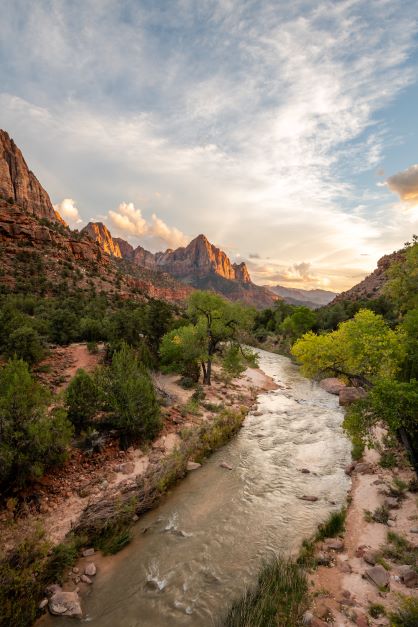
Amid prolonged and historic drought conditions throughout the Colorado River watershed in the American Southwest, and faltering storage in Lake Powell and Lake Mead, the federal government has sought agreement among the seven Colorado River basin states for voluntary conservation solutions to enable large reductions in water use to avoid dangerously low reservoir levels. Recently, the State of California rejected a call by the other six basin states to join a conservation plan that would reach targeted levels of water use that are consistent with current water availability by seeking major cuts in California’s entitlements under the Law of the River. The Newsom Administration, in declining to join the draft plan, offered its own solutions to meet necessary cuts in water use throughout the basin, stating that the six-state plan unfairly and disproportionately shifted burdens in conservation to California in view of California’s senior water rights and long-established historical use.
|
|
CALL 811 BEFORE YOU DIG ON YOUR FARM |
|
In California anyone who plans to move ground must call 811 or go to USA North for Northern California or Dig Alert for Southern California before digging to request that the approximate location of buried utilities be marked with paint or flags so that you don’t unintentionally dig into an underground utility line, such as communications or natural gas lines.
According to the California Underground Facilities Safe Excavation Board website agricultural operators (excavators) can utilize Area of Continual Excavation (ACE) locate request tickets which are valid for one year as compared to the standard ticket length of 28 days. Excavators may continue to utilize the standard ticket request for one-time activities. A 2016 change to CA law created the new ACE ticket which is available to farmers and certain flood control operators. The process prioritizes safety through communication, consistency, and reasonable accommodation of all parties.
Pursuant to Government Code 4216.10 and CCR Title 19 Division 4 Chapter 4, an excavator working an area of continual excavation (ACE) for agricultural or flood control operations may request a continual excavation ticket valid for a year and renewable on an annual basis.
For areas of continual excavation that include or are within 10 feet of a high priority subsurface installation, an onsite meeting between a representative of the excavator and the operator of the high priority subsurface installation is required and must be facilitated by using an Area of Continual Excavation Agreement downloadable below.
If there are contrary understandings of the exact location of the high priority subsurface installation, the utility operator must demonstrate a conflict with the area of continual excavation by providing documentation of the exact location of the facility or by exposing the facility with hand tools or vacuum excavation at a mutually agreed upon date and time.
Click below to download:
If the ACE does not contain a high priority subsurface installation and is more than 10 feet away from any high priority subsurface installation, then the operator or excavator may request an optional onsite meeting regarding using the Area of Continual Excavation Optional Agreement downloadable below.
Click below to download:
|
|
AVOID COPYRIGHT INFRINGEMENT |
|
From time to time, a county Farm Bureau needs to produce flyers, letters, solicitations, and other such material for myriad purposes. The material may be reproduced on paper for distribution, or it may be posted online—or both.
In creating the material, you might be inclined to take a short cut by using in it a photo, drawing, writing, or other creative work found online or elsewhere.
But if that other creative work is not in the public domain, your use of it is not a “fair use,” or you don’t have the copyright owner’s permission (a license) to use it, you are infringing on the copyright owner’s rights in and to that work.
Some copyright owners and their enforcement agents use reverse-image search technology to detect online infringements. At least two county Farm Bureaus have received claims that their use of images copied from online sources infringed the owners’ copyrights.
Copyright infringement can have expensive consequences: Federal law provides for damages ranging from minimum statutory damages of $750 up to actual damages (if proved) of $30,000 (although a court may award up to $150,000 for willful infringement or reduce an award of statutory damages to a sum as low as $200 if the infringer was not aware and had no reason to believe that his or her acts constituted an infringement). The prevailing party may also be awarded costs and reasonable attorney’s fees.
|
|
Legal Services Division | (916) 561-5665 | Contact us
|
|
Karen Norene Mills
Director
Kari Fisher
Senior Counsel
Collin Chandler
Associate Counsel
|
|
Carl Borden
Senior Counsel
Kevin Johnston
Associate Counsel
Jules Tran
Paralegal/Secretary
|
|
Christian Scheuring
Senior Counsel
Justin Fredrickson
Environmental &
Water Policy Analyst
|
|
|
|
|
|
|