MNCAR will host its annual State of Brokerage on March 5, where heads of brokerage shops will share the latest news and trends in the industry.
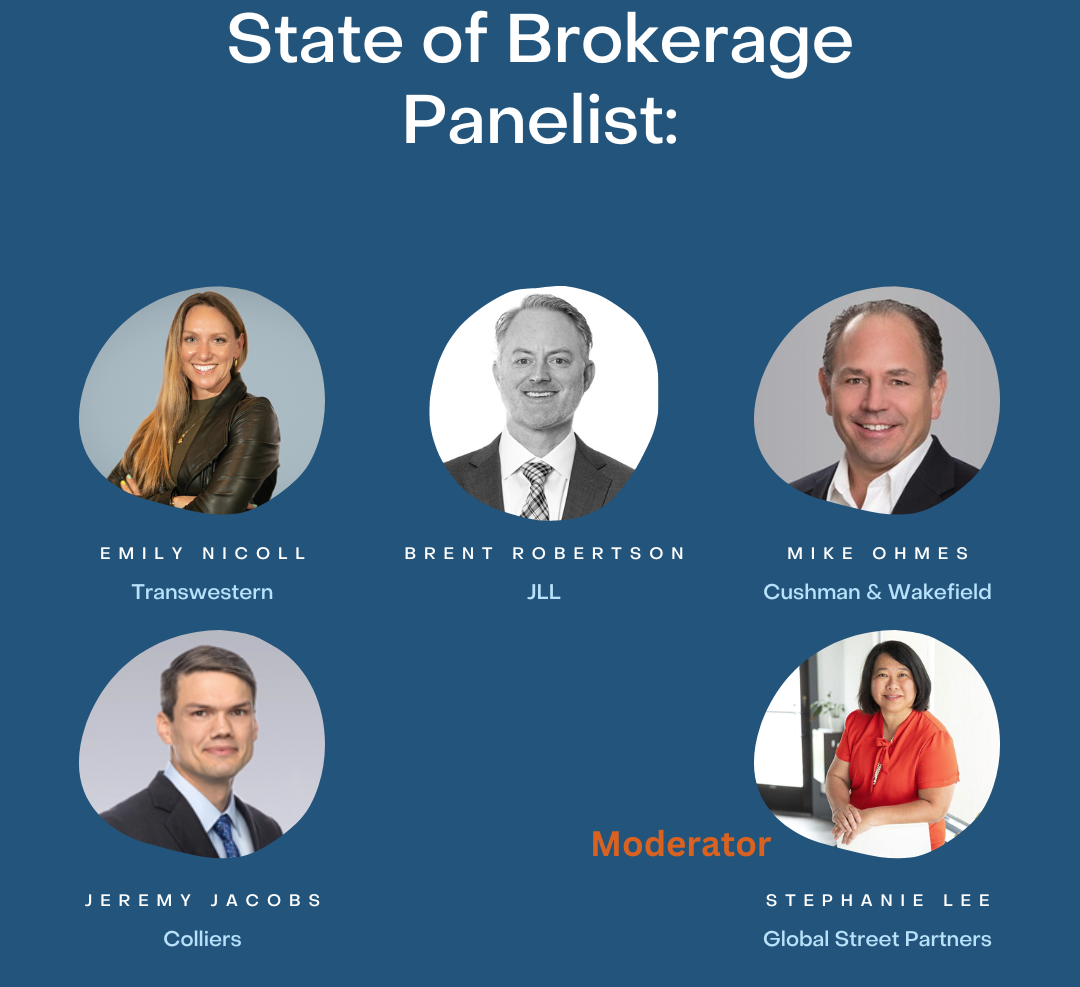
We reached out to the program’s moderator and a couple of the panelists to offer a sneak peek into issues that are top of mind. Will 2024 be the year that commercial real estate takes cautious steps forward? Will it be a bumpy road to recovery? Tune in on March 5 to see what the experts have to say, but here’s a teaser!
• When will the capital markets rebound?
“The back half of 2022 and 2023 were pretty tough when it comes to investment sales, so we're all hopeful that 2024 will be a bit of a bounce-back year, leading into a much stronger recovery in 2025,” says panelist Jeremy Jacobs, managing director/market leader at Colliers MSP.
He says, perhaps, the biggest sign is the talk within the U.S. Federal Reserve. While the agency hasn't made a definite indication that rates will be cut this year, signs are pointing in that direction.
Additionally, a lot of capital has been sitting on the sidelines over the past 18 months, pointing to stronger activity as conditions rebound and deals make sense again.
“Really what that means is the bid-ask gap has been too significant to overcome,” Jacobs explains. “This year, we'll see that gap close, and next year, I think we'll have a lot more balance in the market. A thesis for a lot of owners over the past 18 months has been ‘Survive ‘til ‘25.’
• Finding value in distressed assets
Minneapolis/St. Paul remains No. 1 in the U.S. for its distressed commercial real estate debt rate. More than 50 percent of commercial real estate loans in Minneapolis are in distress. That’s more than double that of Chicago, which had the second-highest share of distress, according to a November 2023 report by CRED iQ, a commercial real estate data, analytics and valuation firm.
Many of these loans were taken out when interest rates were far lower. Since then, rates have risen significantly, and office values have underperformed as vacancy rates soared.
“The distressed assets are on everyone’s mind because there is uncertainty,” says Stephanie Lee, managing director at Global Street Partners and the program’s moderator.
“The normalization of hybrid work environments, the higher-than-ever interest rate and uncertainty if it’s coming down or not, and the escalating construction prices -- when you put all that together, we must address the commercial real estate distress in Minneapolis,” Lee notes.
Panelist Emily Nicoll, city leader for Transwestern Real Estate Services' Minneapolis office, agrees.
She says there's been a lot of news about distressed assets, particularly in Minneapolis, “but it's across the country as we look at assets that are going to be facing some type of a decision – whether it's a note coming due or a need to refinance or pressure from lenders.
“My big mantra to the team so far here has been looking for the opportunity in that,” Nicoll continues. “There are certainly going to be assets that require a lot more time and creativity, and some might not be able to be resuscitated for a while, if at all. But I choose to focus more on those opportunistic moments where some of the correction in the market can be seen as a necessary climb,” she says.
“There will be some pent-up traction and activity that comes out of it, and we’ll have the ability to actually transact… So, I think there's opportunity there. I think there's some healthy correction there.,” Nicoll adds.
• What will the new normal look like for the office sector?
One thing for certain is companies are right sizing, meaning the same number of tenants are occupying fewer square feet. That could lead to redevelopment or repositioning of existing assets, or buildings taken out of the inventory altogether, so over time, the market comes back into balance.
“Now we have far more supply than the market wants,” Jacobs notes.
Flight to quality for office space continues. With elevated vacancy rates and record-high concessions, tenants can shrink their footprints and upgrade to smaller, but higher quality and more amenitized spaces. This is one strategy companies are using to attract employees back to the office. After all, employers are competing with the couch.
• Hybrid work is here to stay
“We're running up against the same challenges as our clients and nobody's got the code cracked yet,” says Nicoll of return-to-office strategies.
“I don't know if Taco Tuesday is going to get everybody back on a Tuesday, but you do what you can do to make sure that the time spent in the office feels impactful and worth it; that it’s a positive experience that wants you coming back for more,” she explains.
Nicoll says Transwestern is helping owners manage their buildings thoughtfully and do whatever it takes to stand out as an environment where workers want to return. And it’s not just what the employer is doing within their four walls; it starts when you walk into the building.
“It starts when you drive up. It starts when you park,” she says. “It's kind of holistic. It has to be infused into everything that the building is doing – all the way down to security guards knowing your name. It’s a completely infiltrated mindset instead of just creating some fancy space.”
• Industrial activity slowed yet demand continues
“We've had this 10-year run in industrial where every year, people thought, are we in the seventh, eighth and ninth inning? Where are we in this industrial cycle?” Jacobs notes. “Industrial just got better and better every year. That was a function of a lot of new supply coming online, a lot of demand and buildings filled up.
“Now because of interest rates, and so forth, there's almost no new supply coming to the market,” he continues. “For the first time in over a decade, there's just not much going on in the industry. There's still activity. There’s still demand. There's just no space.”
Limited options exist for tenants with space requirements that must make a decision, and despite the macro environment, they're paying more now than they've ever paid, Jacobs says. It’s still very much a landlord’s market.
• How to recruit and retain talent?
Top-of-mind for brokerages are expanding and diversifying their talent pools. While it’s vital to build entry-level talent and invest in young professionals, many young people aren’t familiar with commercial real estate as a career. Additionally, a big obstacle to diversity in the industry has been not making minorities aware of opportunities.
Also, the hybrid workplace poses challenges. “We don’t have senior brokers in the office nearly as much to train and develop young brokers,” says Jacobs. ’Learning through osmosis that used to happen, almost isn't even something we can offer anymore.”
Also, how does commercial real estate win the battle for top talent in a tight labor market when competing with other industries?
• How are brokerages responding to deal slowdown as a business?
Brokerages are companies, too, and deal with many of the same headwinds as their clients, notes Lee. The decline in capital markets activity, the slowdown in leasing activity, and a slowing economy and tight labor market curbed transaction activity. That led to cost-cutting measures and layoffs by large, publicly traded brokerages across the country.
“What are Twin Cities brokerage offices doing to mitigate their risk and drive operational efficiencies?” Lee asks. “Obviously, what’s occurring in the economy and markets puts stress on all kinds of companies. So, how are brokerages dealing with themselves as a business?”
Find out more on March 5!