|
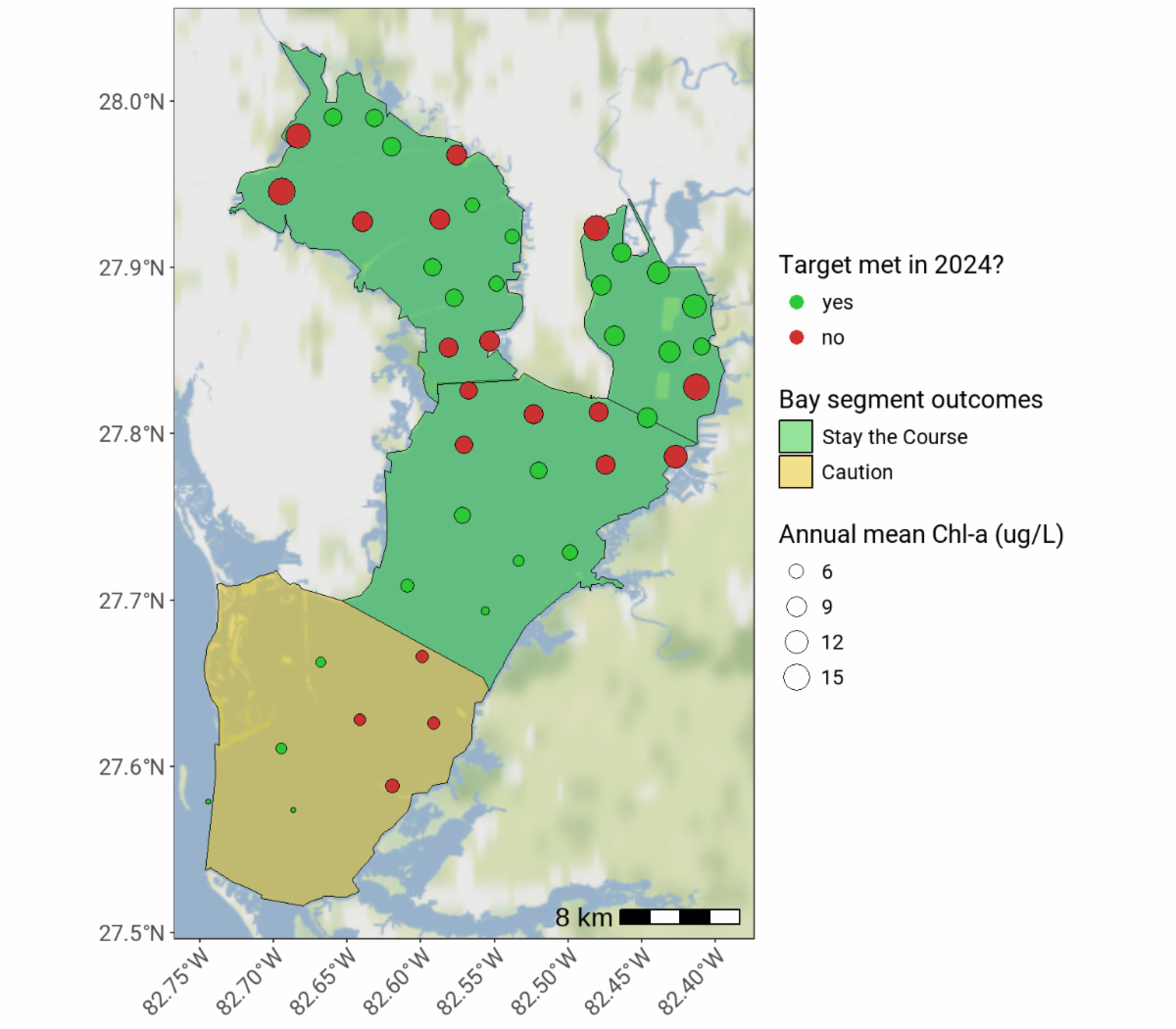
After back-to-back years of below normal rainfall, 2024 was one of the wettest years on record for the Tampa Bay region. Extreme summer storms and tropical systems were responsible for most of the record-setting rainfall. Heavy rainfall increased stormwater runoff into the bay, which affected water quality, especially during late summer and into fall. Additionally, several major hurricanes caused sanitary sewer overflows that contributed even more nutrients and bacteria to Tampa Bay.
These effects were reflected in the annual water quality summary, which declined slightly compared to the drier years of 2022 and 2023. With this runoff came nutrients that fed nuisance algae blooms, especially in Old Tampa Bay, Middle Tampa Bay, and Lower Tampa Bay. Despite these short-term challenges, the light environment in all bay segments, excluding Lower Tampa Bay, remained supportive of seagrass growth.
After the setbacks of 2024, meeting water quality management goals in 2025 may be even more challenging. Seagrass monitoring results could show if these changes in water quality affected seagrass growth. Researchers are especially keen to see how seagrass meadows in Old Tampa Bay respond to these improvements in water quality, especially after several consecutive years of losses. Stay tuned for results in the next couple months.
Water Quality Dashboard
|