|
USDA Announces Payments Under Farmer Bridge Assistance Program
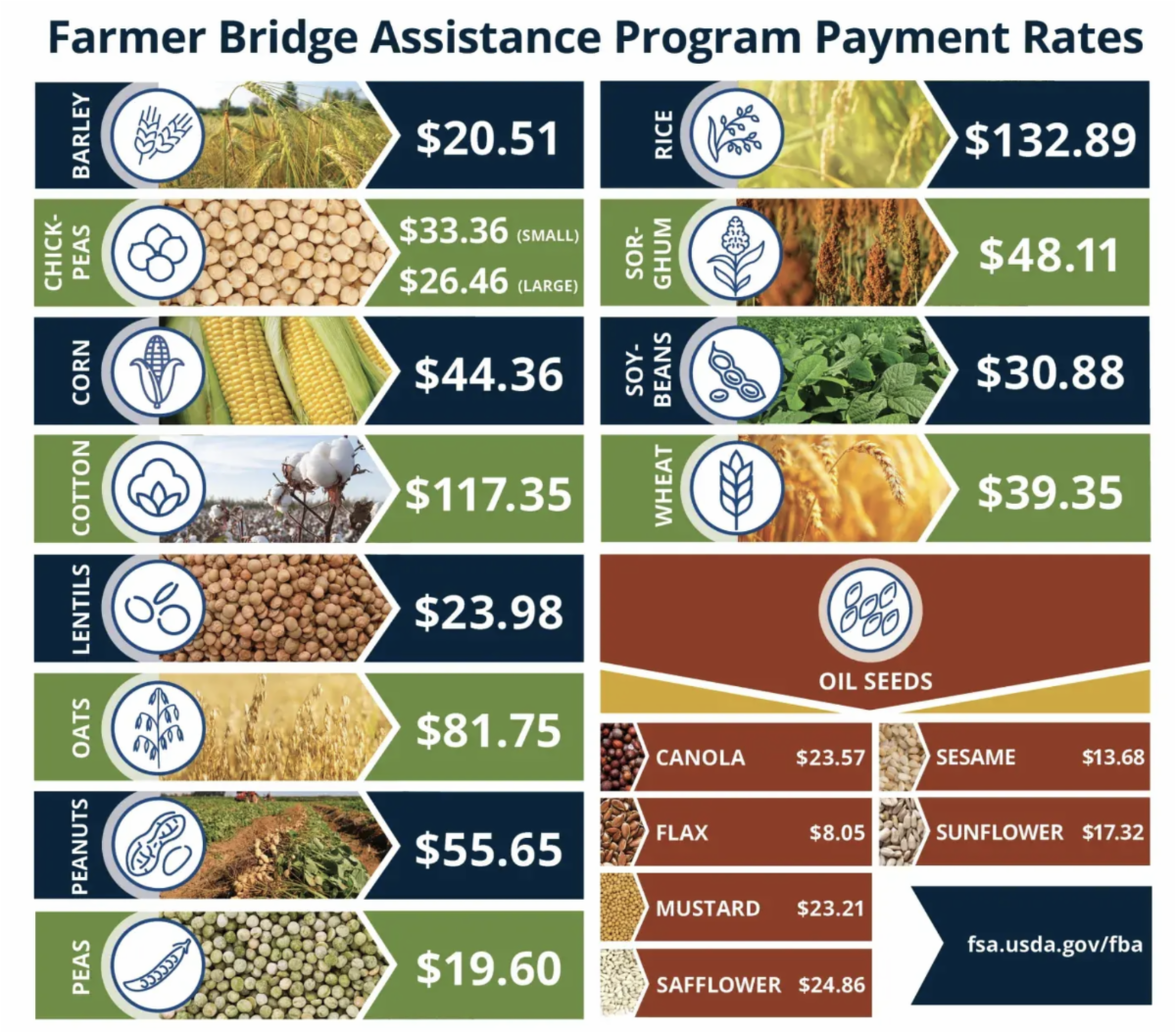
As part of the Farmer Bridge Assistance (FBA) program, USDA has announced the per-acre payment rates for eligible crops. Canola will receive $23.57. per acre. These one-time payments, part of a $12 billion program for American farmers in 2026, are intended to provide immediate financial relief and help producers plan for the spring planting season.
The USDA announced that payments are based on 2025 planted acres, cost of production, and global supply and demand data. Double-cropped acres are eligible, while prevent plant acres and certain non-production uses are not. While crop insurance is not required to receive FBA payments, USDA encourages farmers to take advantage of expanded federal crop insurance options under the One Big Beautiful Bill Act to manage future risk.
Producers can expect FBA payments to their bank accounts by February 28, 2026. More information is available on the USDA FSA-FBA website or through local USDA county offices.
| | | | |
USCA Signs-On to Farm Relief Letter
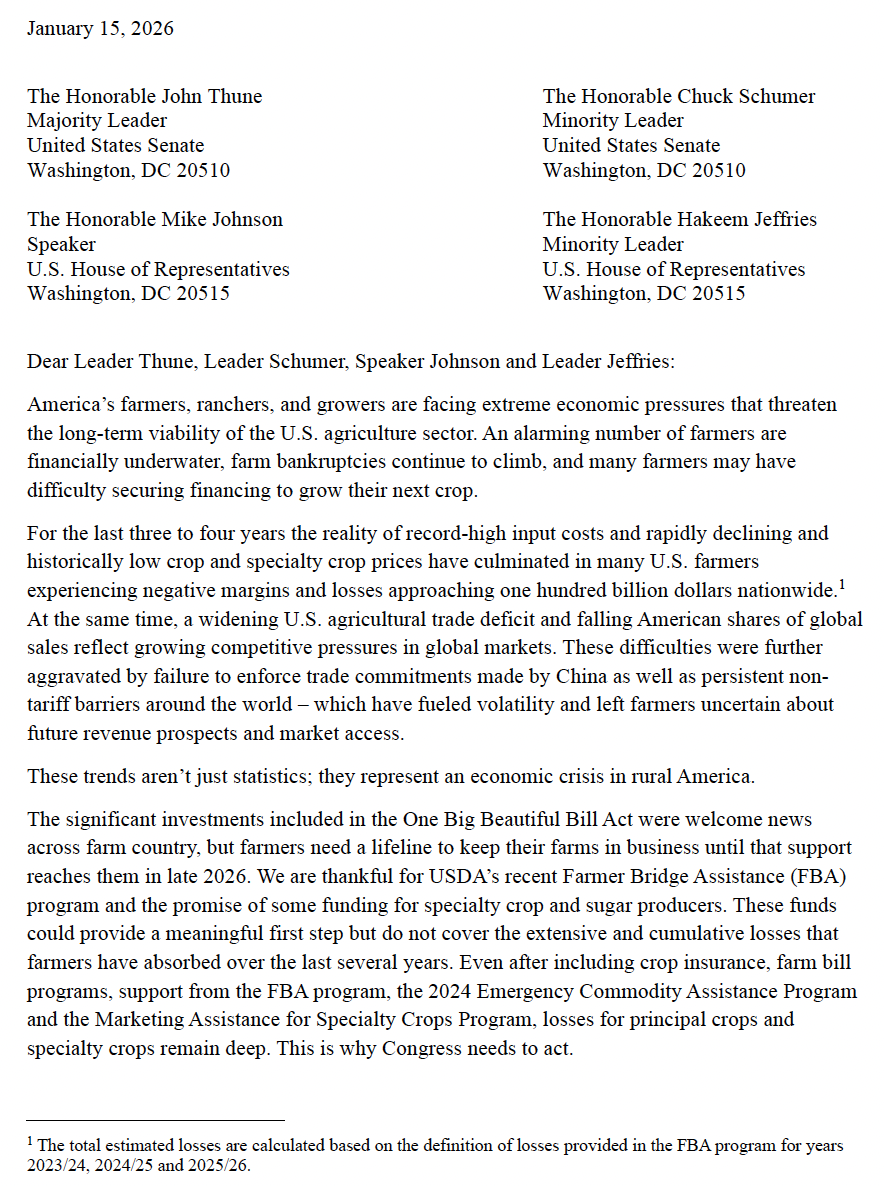
The USCA recently signed on to a letter led by the American Farm Bureau Federation urging congressional leadership to take immediate action to address the ongoing economic crisis facing America’s farmers and ranchers. The letter highlights the severe financial pressures caused by record-high input costs, historically low commodity and specialty crop prices, rising farm bankruptcies, and growing uncertainty in global trade markets. Together, these challenges have resulted in widespread negative margins and significant losses across U.S. agriculture, threatening the long-term viability of family farms and rural communities.
While recent federal investments and USDA assistance programs provide some relief, they do not fully address the cumulative losses farmers have absorbed over the past several years. The letter calls on Congress to deliver meaningful, near-term economic support to bridge the gap.
Read the Farm Relief Letter: https://bit.ly/4qew6av
| | |
|
USDA Releases Farm Program Implementation Rule
On January 12, USDA published the Rule implementing changes to farm programs that were enacted by Congress in 2025 in the Budget Reconciliation bill (H.R. 1), also known as the One Big Beautiful Bill Act (OBBBA). The USDA rule amends the provisions of the ARC and PLC programs and the Dairy Margin Coverage program to implement changes made by OBBBA. There is no timetable yet for enrollment in ARC and PLC for the 2026 crop year and USDA has indicated that the sign-up will be later in the year, after planting season.
FSA is making the following mandatory changes to implement the OBBBA provisions:
- Revising the ARC guarantee calculation
- Revising the effective reference price calculation for the 2025 crop year forward
- Updating reference prices for the 2025 through 2030 crop years, with a further modification for the 2031 crop year
- Allocating up to 30 million additional base acres, based on a farm’s planting history, to eligible farms beginning with the 2026 crop year
- Specifying that the higher of ARC-CO or PLC payments will be issued for the 2025 crop year, regardless of whether the producer elected ARC CO or PLC
- Requiring an election of ARC or PLC for crop year 2026
- Updating the payment rate calculation for ARC-CO for the 2025 crop year forward; and
- Increasing the payment limitations.
-
Base Acre Expansion - OBBBA provides the one-time opportunity to allocate an additional 30 million base acres nationwide in crop year 2026. The additional acres are automatically allocated to eligible farms, unless the owner requests not to receive additional base acres. Allocation of new base acres will be in proportion to the ratio of the 5-year average of planted and considered planted covered commodities calculated for acreage history purposes.
| | |
USCA Submits Comments Opposing Elimination of Prevent Plant Buy-Up Coverage
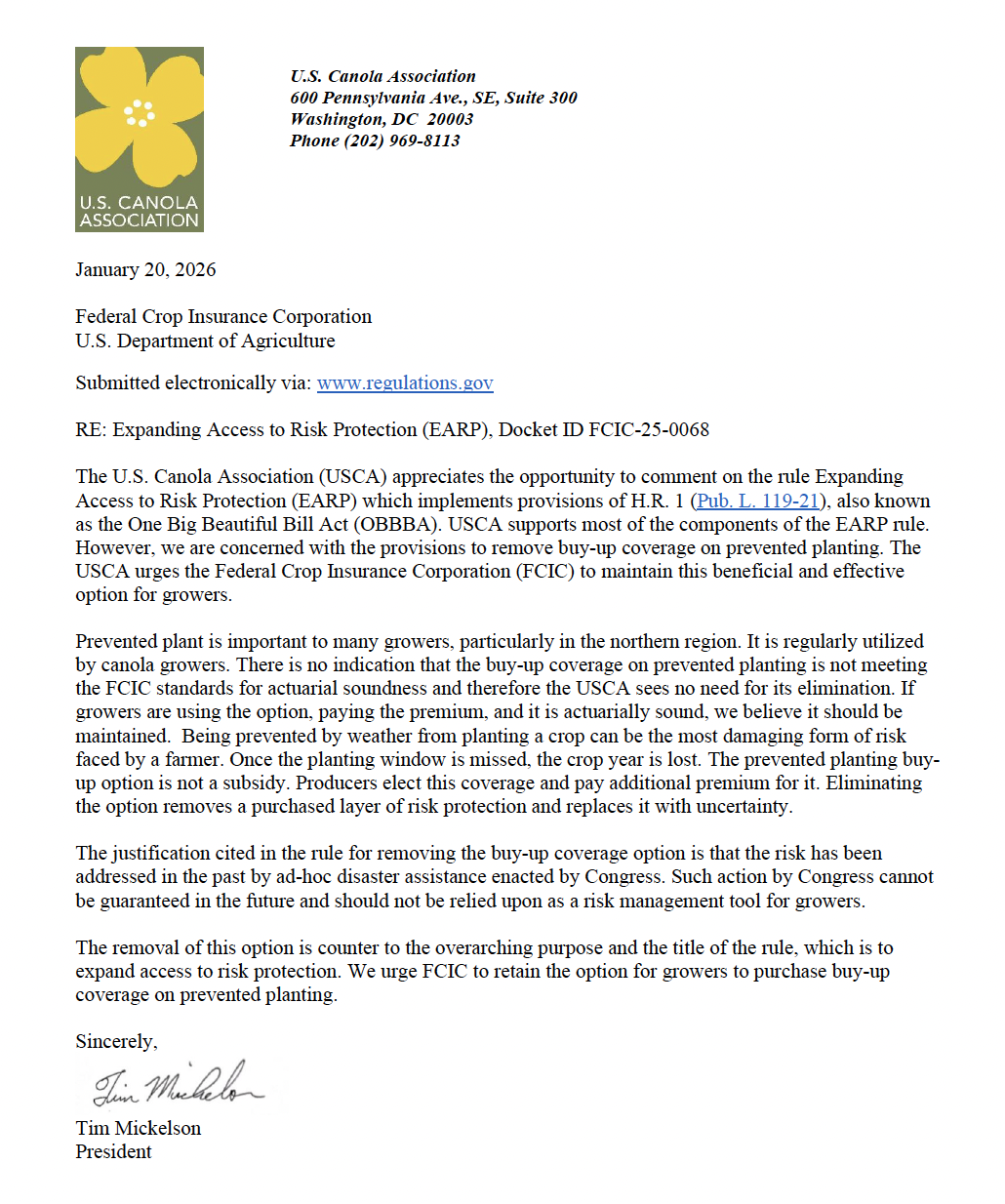
In response to the crop insurance rule issued in December, the USCA submitted comments opposing the elimination of the Prevent Plant Buy-Up coverage option. The USCA comments can be viewed here.
USDA Federal Crop Insurance Corporation (FCIC) issued updated regulations in the form of a final rule titled Expanding Access to Risk Protection (EARP). The EARP regulations implement changes enacted by Congress in July as part of the Farm Bill provisions in the Reconciliation bill as well as additional items. Notable items include clarifying harvest price methods, removing barriers to direct marketing and getting rid of buy-up coverage for prevented planting in the program. Also included was a provision to eliminate a farmer's ability to purchase buy-up prevent plant coverage.
| | |
|
2025–2030 Dietary Guidelines for Americans Released
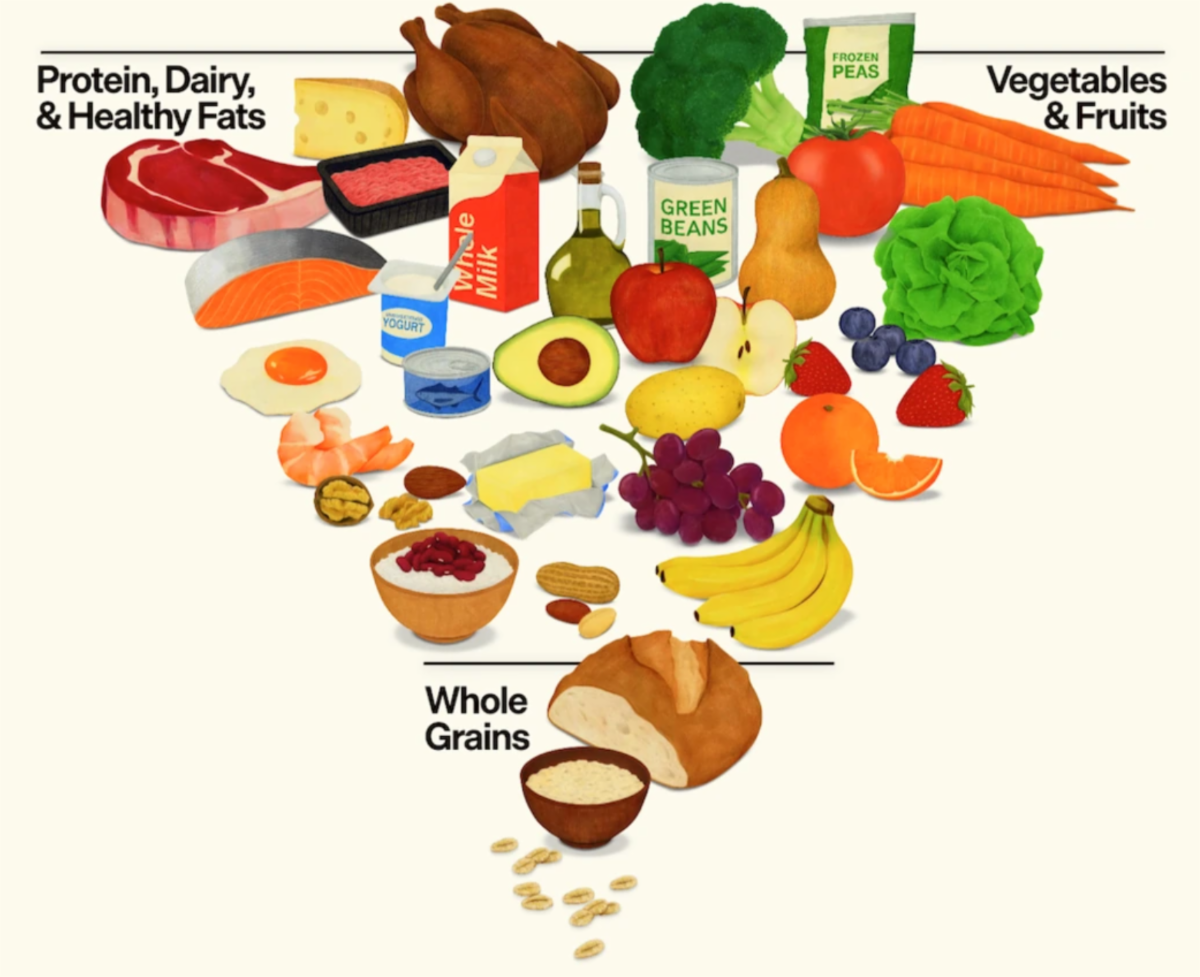
The USDA has released the 2025–2030 Dietary Guidelines for Americans. The main document is a concise 10-page overview, complemented by a much larger technical appendix of roughly 500 pages. The main document does not contain any major changes or concerning guidance regarding seed oils. However, it emphasizes using oils rich in essential fatty acids, such as olive oil, as well as alternatives such as butter or beef tallow. The guidelines also feature a redesigned food pyramid and updated messaging on healthy dietary patterns. The official DGA website is now Eat Real Food.
The technical appendix includes more detailed discussion of dietary fats and food processing, with attention to seed oils. However, the appendix clearly notes that the available evidence is limited. Most studies are short in duration, focus on intermediate markers rather than health outcomes, and do not establish clear cause-and-effect relationships. While the appendix provides additional context, the main 10-page DGA document will remain the primary resource.
| |
Trade Updates
IEEPA
On November 5, the Supreme Court heard arguments considering whether the use of IEEPA tariffs is lawful. The Court is now officially in session, which means that while we are still awaiting a ruling, one should not be expected before February 20. Although the decision is highly anticipated, the Court is only required to issue a ruling before the end of the session this summer. The length of deliberations suggests that the justices may be divided, which could result in a partial ruling allowing IEEPA tariffs only under certain circumstances, or at minimum, a decision that is not unanimous. While a ruling is still pending, the Administration has already prepared contingency plans to implement tariffs through other means, including relying on Section 122 of the Trade Act of 1974, which allows tariffs of up to 15 percent for 150 days. Additionally, members of Congress are considering codifying aspects of the Trump administration’s trade and tariff agreements, which could include certain current IEEPA-related tariffs.
Canada/China Trade Relations
Canada and China have agreed to provide significant tariff relief for Canadian canola seed and meal. Tariffs on canola seed imports to China are expected to drop to 15%, while the current 100% tariffs on canola meal are expected to be removed until at least the end of the year. Canadian exports of canola and canola products to China were valued at approximately $5 billion in 2024. Following the implementation of U.S. tariffs on “Liberation Day,” many countries have begun seeking to diversify their markets through trade negotiations, aiming to reduce dependence on a single market.
| | |
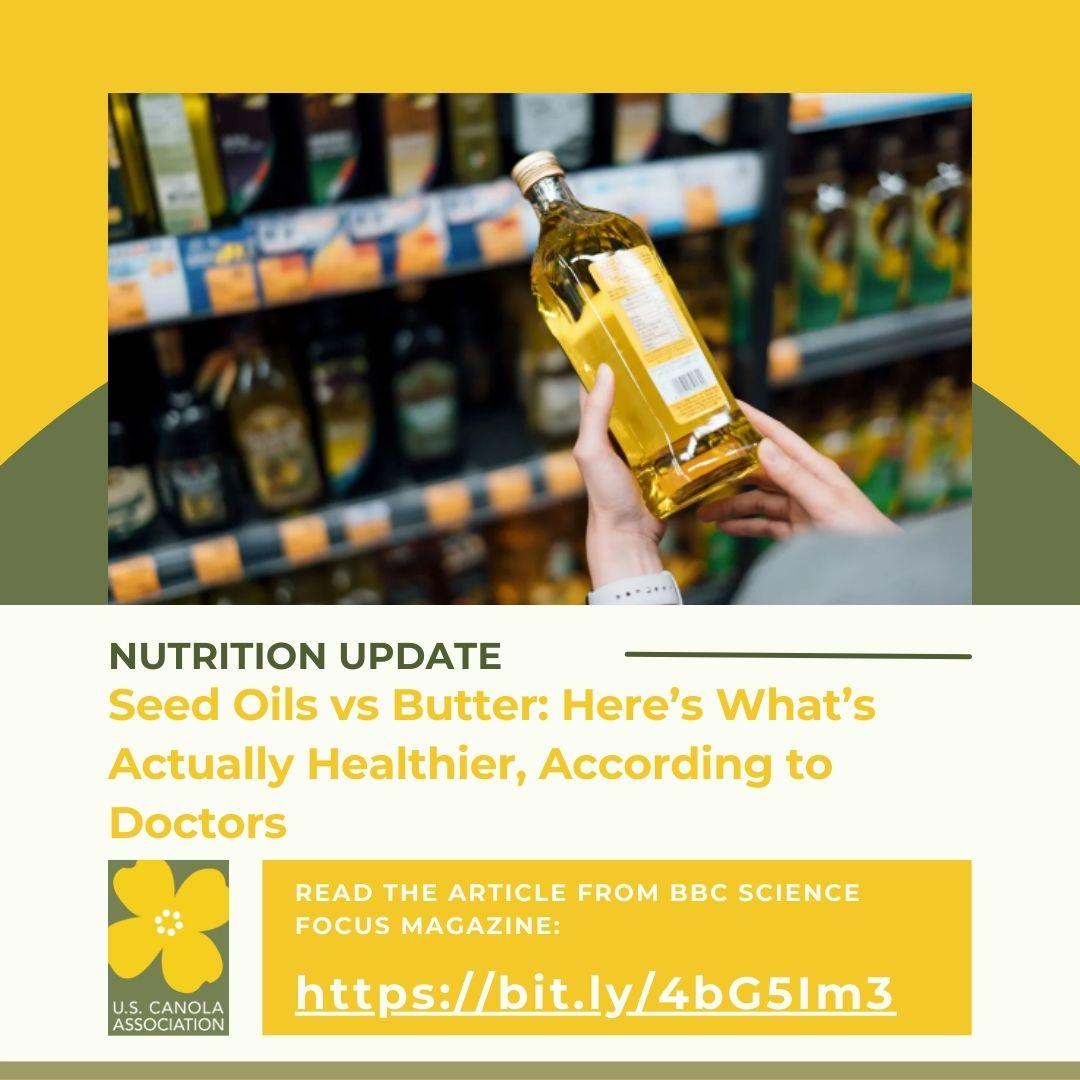
Despite the Hype, Science Still Favors Seed Oils
According to nutrition scientists interviewed by BBC Science Focus Magazine, decades of research consistently show that seed oils are a healthier choice for heart health. Randomized controlled trials and large population studies have linked unsaturated fats in seed oils to lower cholesterol and reduced heart disease risk.
The article also tackles common claims that seed oils are inflammatory or “unnatural.” Researchers explain that omega-6 fats, often blamed for inflammation, are essential nutrients and are not associated with higher inflammation or heart disease risk in real-world studies. While many seed oils are refined, experts note that modern processing methods are safe and result in stable, healthy oils. The bottom line: enjoy butter occasionally, but for everyday cooking and heart health, the science still points to seed oils as the better choice, especially when paired with an overall balanced diet.
Read the article from BBC Science Focus Magazine: https://bit.ly/4bG5Im3
| | | | |
Protein Efficiency in Dairy Diets: Where Canola Meal Fits
New insights shared by Feed Strategy, drawing on recent work highlighted by the Canola Council of Canada, underscore a key shift in dairy nutrition: cows don’t benefit from excess protein, but from protein that is properly balanced. Historically, rations often included a buffer of extra crude protein to avoid deficiencies. However, updated NASEM models and on-farm research indicate that surplus protein increases maintenance energy use, as cows must break down and excrete unused nitrogen, diverting energy from milk and fat production.
The article points to canola meal as a protein source well aligned with the amino acid needs of high-producing dairy cows. Its profile supports efficient microbial protein synthesis, helping close nutritional gaps without unnecessary nitrogen overfeeding. As nutritionists and producers pursue tighter rations, improved energy efficiency, and precision feeding, ingredients that naturally support ruminant metabolism, such as canola meal, can help deliver more output with less waste, making protein efficiency a practical and economic priority.
Read the article from Feed Strategy: https://bit.ly/4qPf43Q
| | |
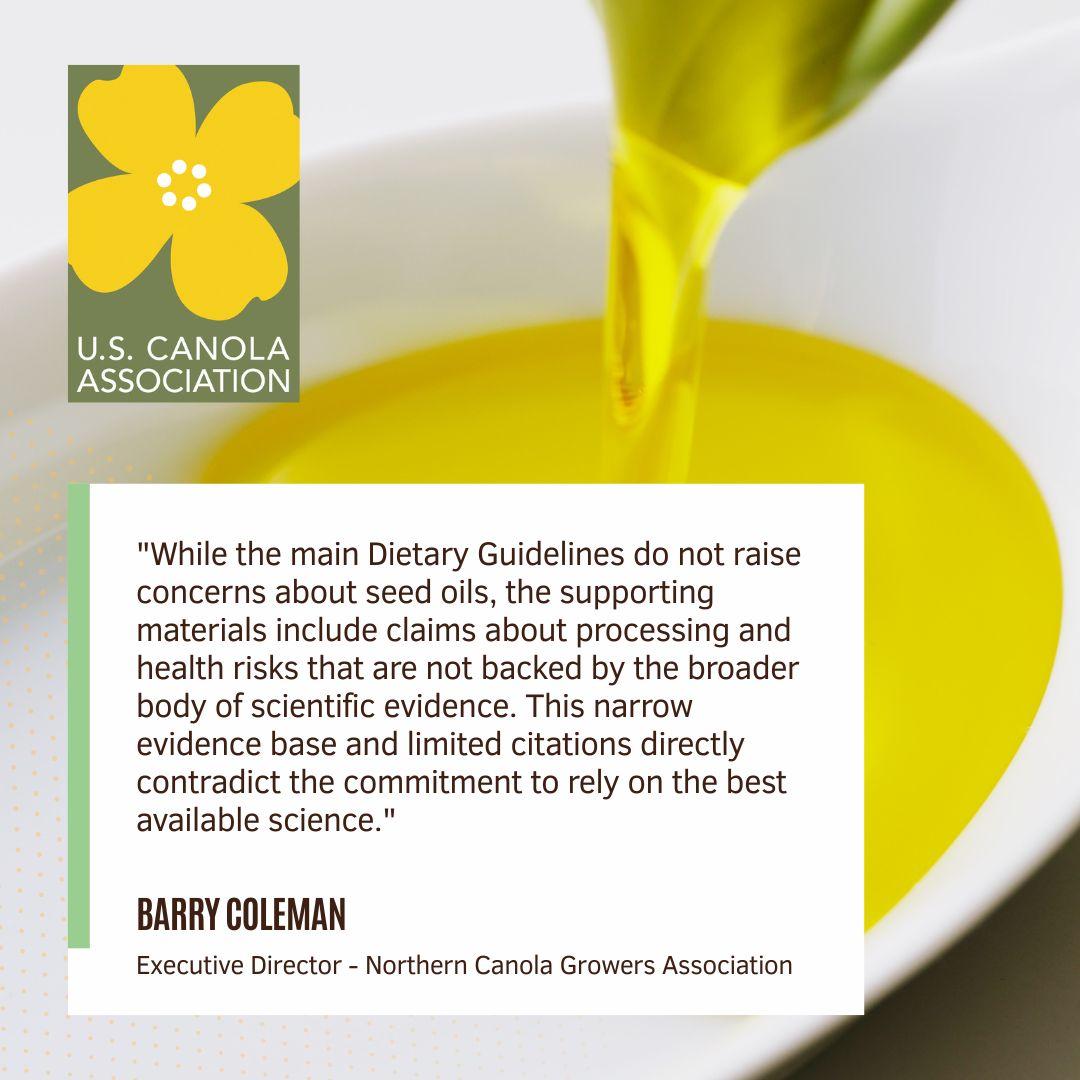
Canola Growers Emphasize Science-Based Clarity Following USDA Guidelines Update
The U.S. Department of Agriculture recently released its new Dietary Guidelines for Americans, stating the recommendations are based on the "best available science." However, canola growers have raised concerns about how some information is presented in the supporting materials.
The canola industry will continue to closely monitor this issue as additional research and guidance are released, ensuring science-based information remains front and center.
Listen to the Red River Farm Network Canola Minute, brought to you by the Northern Canola Growers Association: https://bit.ly/4jCcMSB
| | | |
Seeing Inside the Seed: How New Research Could Transform Canola’s Value
Researchers at the University of Saskatchewan are using advanced X-ray imaging to explore a new way of processing canola seeds, one that could significantly expand the crop’s value beyond traditional oil production. By separating the seed’s hull from its kernel before crushing, the team believes canola could yield multiple high-value products, including plant-based protein for human food, premium animal feed, and rare omega-7 oil used in nutrition and cosmetics.
Using the Canadian Light Source synchrotron, scientists observed microscopic changes within the seed that enable the hull to detach cleanly without damaging the kernel. Importantly, the process relies on equipment already familiar to the canola industry, improving its potential for real-world adoption. While further work is needed to scale the technique, researchers report that the approach could help producers capture more value from each canola seed—strengthening Canada’s canola industry and its $43.7 billion annual economic impact.
Read the article from SeedWorld: https://bit.ly/3Z5F2DS
| |
PNWCA Annual Member & Board Meetings
February 26, 2026
Moscow, ID
A canola seed company roundtable, vendor tables featuring industry members, and research posters on canola, soil health, and cropping systems research are planned.
For more information, please visit: https://bit.ly/4krqc4F
|
Washington Oilseed Commission and WSU Oilseed Cropping Systems Research & Extension Program Annual Meeting
February 27, 2026
Pullman, WA
Reports from projects funded with checkoff monies and legislative funding (WSU) will be presented, along with presentations about new research proposals.
For more information, please visit: https://bit.ly/4khU6Ij
| |
Inaugural PNWCA–NPGA Workshop Draws Strong Attendance in Montana
The inaugural Pacific Northwest Canola Association (PNWCA) and Northern Pulse Growers Association (NPGA) workshop, held December 1 in Great Falls, Montana, was a strong success, attracting 115 attendees.
Speakers included canola and pulse crop growers from across Montana, along with Shaun Haney (Real Agriculture), Jim Elliot (CROPLAN Seed), Dale Flikkema (USCA), Todd Schulz (USA Pulses), and Brian Jenks (NDSU).
Following the overwhelmingly positive response to this collaborative event, PNWCA is in discussions with NPGA a top partner again on a similar workshop this fall in Billings, Montana.
|
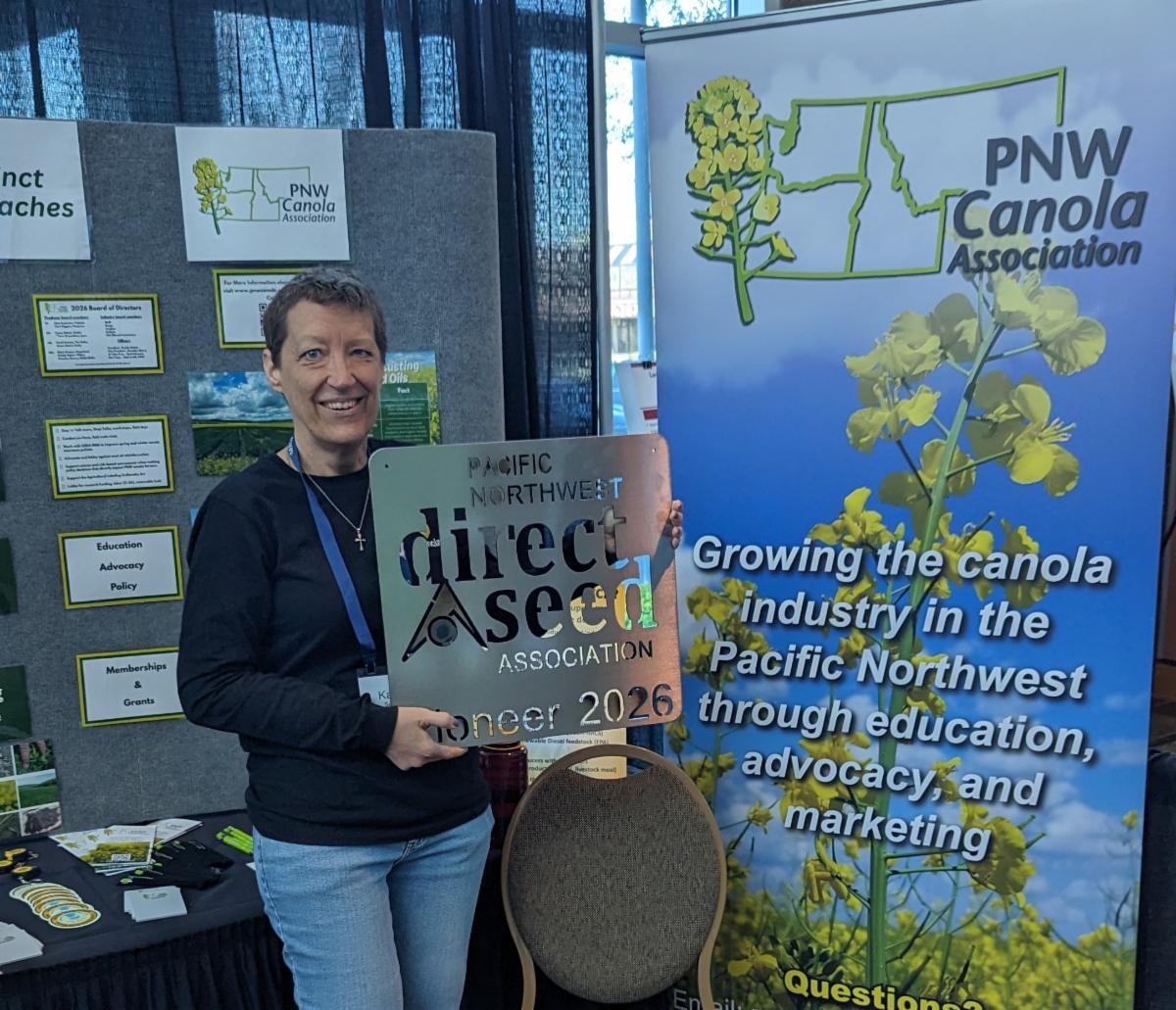
Karen Sowers Honored with Pioneer Industry Award for Advancing Canola in the Pacific Northwest
Congratulations to PNWCA Executive Director Karen Sowers, who received the Pioneer Industry Award at the 2026 Pacific Northwest Direct Seed Association Conference in Kennewick, WA.
“This award is presented to individuals who have helped advance direct seed farming in the Pacific Northwest,” said Don Wysocki of Oregon State University. “Karen’s contribution has been advancing the use of canola in our cropping systems. She has done more than any other individual to increase canola acreage in the PNW.”
Wysocki noted that during Sowers’ years of service, first as a Washington State University oilseed extension specialist and later as executive director of the Pacific Northwest Canola Association, regional canola acreage has grown from just a few thousand acres to well over 250,000 acres.
“Please join me in congratulating Karen on this outstanding accomplishment and her exceptional service to producers,” Wysocki added.
| |
Canola Back in the Conversation as Trade Access Improves
After months of uncertainty, canola is moving back into the market conversation as reports indicate China has eased restrictions on Canadian canola imports. According to AgWeek, some Chinese buyers have already begun making purchases ahead of a final anti-dumping ruling expected in early March, signaling renewed interest from a key historical customer.
While large supplies continue to weigh on the market, improving trade access has shifted sentiment and supported futures prices. Analysts note that sustained export activity, not headlines alone, will determine whether this shift becomes a lasting demand recovery or a short-term rally. Either way, canola is no longer trading without a story, and volatility is likely to increase as spring approaches.
Read the AgWeek article: https://bit.ly/4a3mGbR
| | |
USCA works to support and advance U.S. canola production, marketing, processing, and use through government and industry relations. Since its establishment in 1989, the association has helped domestic canola acreage grow from virtually zero to about 2 million. To learn more about USCA, go to: www.UScanola.com
Want to promote your products or services to canola producers and industry members? Visit our advertising pages to find specs, deadlines and rates to advertise in the Canola Quick Bytes monthly e-newsletter.
| | | | |