Newsletter | February 2026 | | | Latest Updates on Children's Care | | | Global Campaign on Children’s Care Reform Update | | | | | |
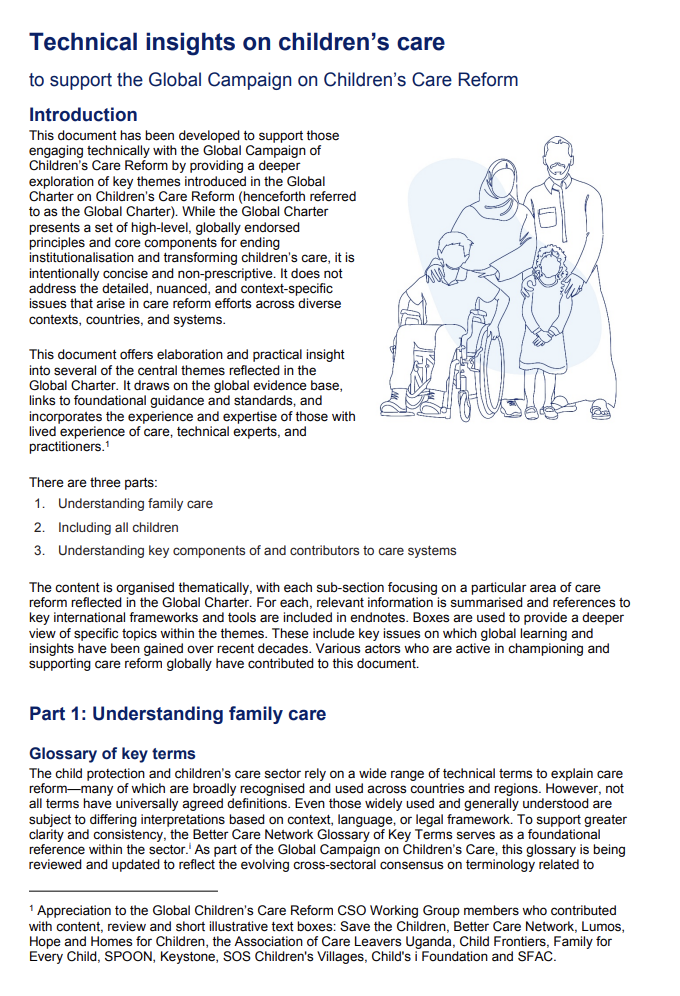
Technical Insights on Children’s Care to Support the Global Campaign on Children’s Care Reform
A new resource provides a deeper exploration of key themes introduced in the Global Charter on Children’s Care Reform. While the Global Charter presents a set of high-level, globally endorsed principles and core components for ending institutionalisation and transforming children’s care, it is intentionally concise and non-prescriptive. It does not address the detailed, nuanced, and context-specific issues that arise in care reform efforts across diverse contexts, countries, and systems. This document offers elaboration and practical insight into several of the central themes reflected in the Global Charter.
View all resources associated with the Global Campaign
| | |
Wilton Park Dialogue
From January 27 to 29, representatives from 16 signatory countries to the Global Charter on Children’s Care Reform, alongside care-experienced leaders, and practitioners, convened in Wilton Park, UK to discuss how the Campaign can build on the progress already made and catalyze greater momentum through collaborative actions. Building on the Charter’s launch at the 2025 UN General Assembly, participants specifically discussed recommendations for six key accelerators for change that can move the needle for children's care at national, regional, and global levels. These include social norms and behaviour change, accountability for children’s care, coordinated action addressing the inter-sectoral nature of children’s care, financing for children’s care, data-informed and evidence-based approaches, and community and child-centered transformation. The outcomes of these discussions are being used to inform the forthcoming Campaign Roadmap. An official report of the event is forthcoming, as well as an opportunity for civil society to contribute to the Campaign Roadmap.
| | Transforming Children's Care Collaborative Update | | | |
New Kafaalah Community of Practice
A new Community of Practice is being established within the Transforming Children's Care Collaborative to exchange knowledge around efforts to strengthen Kafaalah and integrate it into national and cross-border child protection and care reform efforts.
The International Social Service (ISS) has agreed to serve as a convenor, and organizations and practitioners from Kenya, Egypt, and other countries where Kafaalah is practised are working to design and launch the group.
We are seeking additional organisations and individual practitioners with experience in contexts where Kafalah is practised as part of children’s care arrangements who are interested in:
- Contributing to the initial design and priority-setting of the Community of Practice
- Helping shape its learning agenda and collaborative activities
- Potentially serving in a co-facilitation role
If you or your organisation have experience with Kafalah and would like to contribute, please send an email to contact@transformcare4children.org with a brief overview of your experience and how you or your organisation could contribute to this new Community of Practice.
| | Resources on Ukraine Response | | | This section includes resources, news and other key documents related to children's care in the context of the current humanitarian crisis affecting Ukraine. For more resources, visit the growing collection of documents in the BCN Ukraine Response Repository. | | | | |
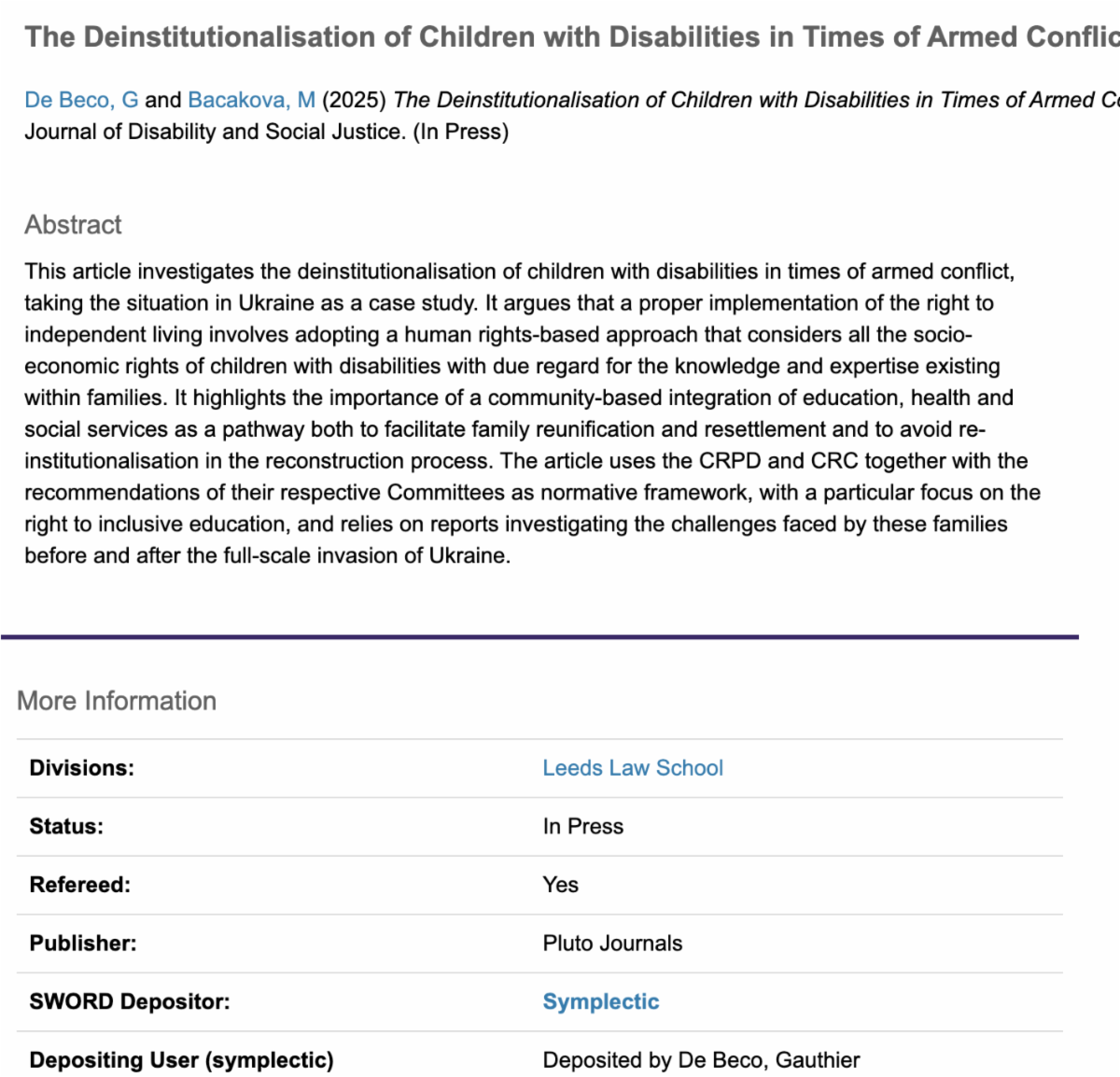
The Deinstitutionalisation of Children with Disabilities in Times of Armed Conflict: The Russian Full-Scale Invasion of Ukraine
This article investigates the deinstitutionalisation of children with disabilities in times of armed conflict, taking the situation in Ukraine as a case study. It argues that a proper implementation of the right to independent living involves adopting a human rights-based approach that considers all the socio-economic rights of children with disabilities with due regard for the knowledge and expertise existing within families.
| | Understanding the Situation | | | | |
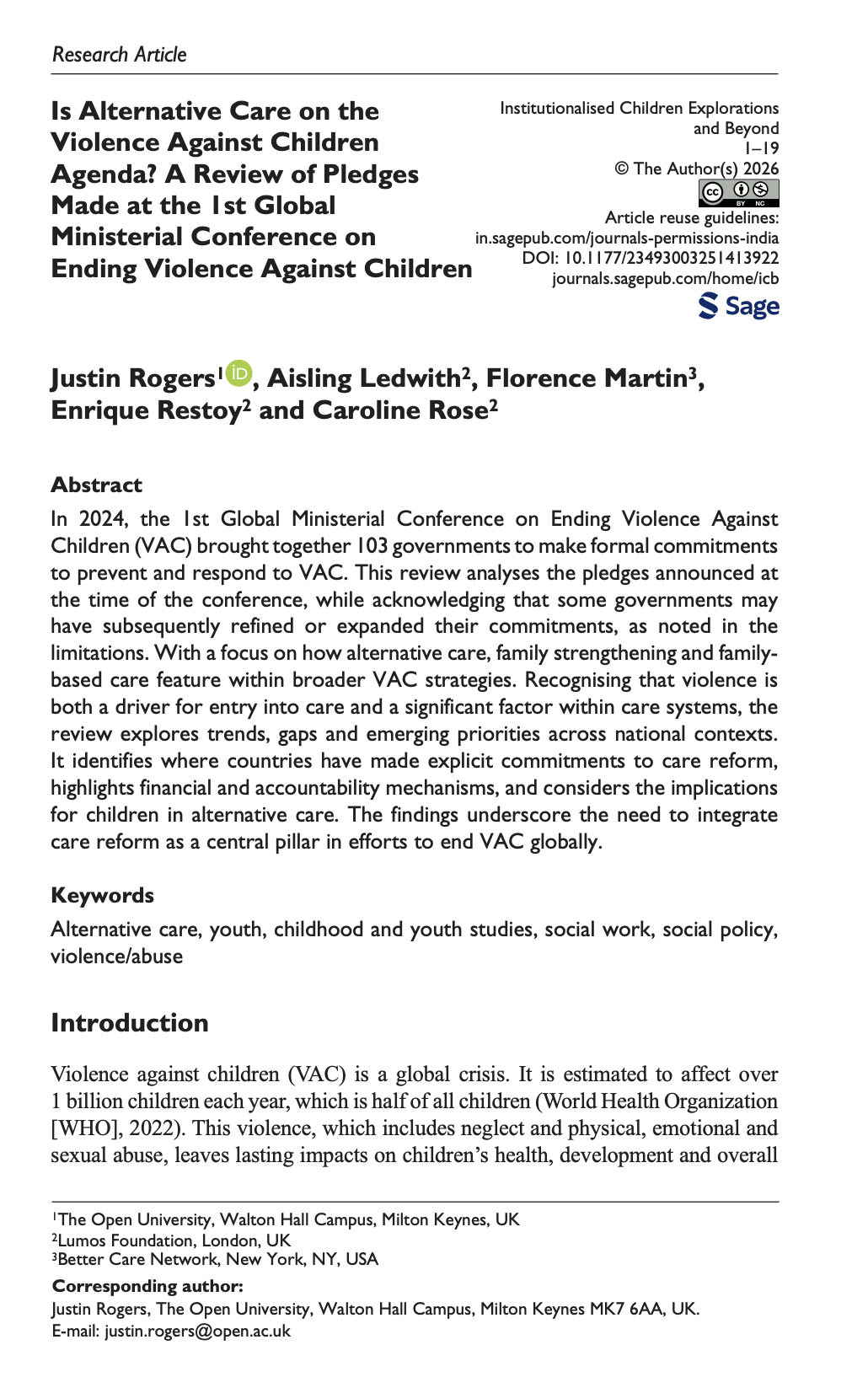
Is Alternative Care on the Violence Against Children Agenda? A Review of Pledges Made at the 1st Global Ministerial Conference on Ending Violence Against Children
In 2024, the 1st Global Ministerial Conference on Ending Violence Against Children (VAC) brought together 103 governments to make formal commitments to prevent and respond to VAC. This review analyses the pledges announced at the time of the conference, with findings underscoring the need to integrate care reform as a central pillar in efforts to end VAC globally.
| | | | |
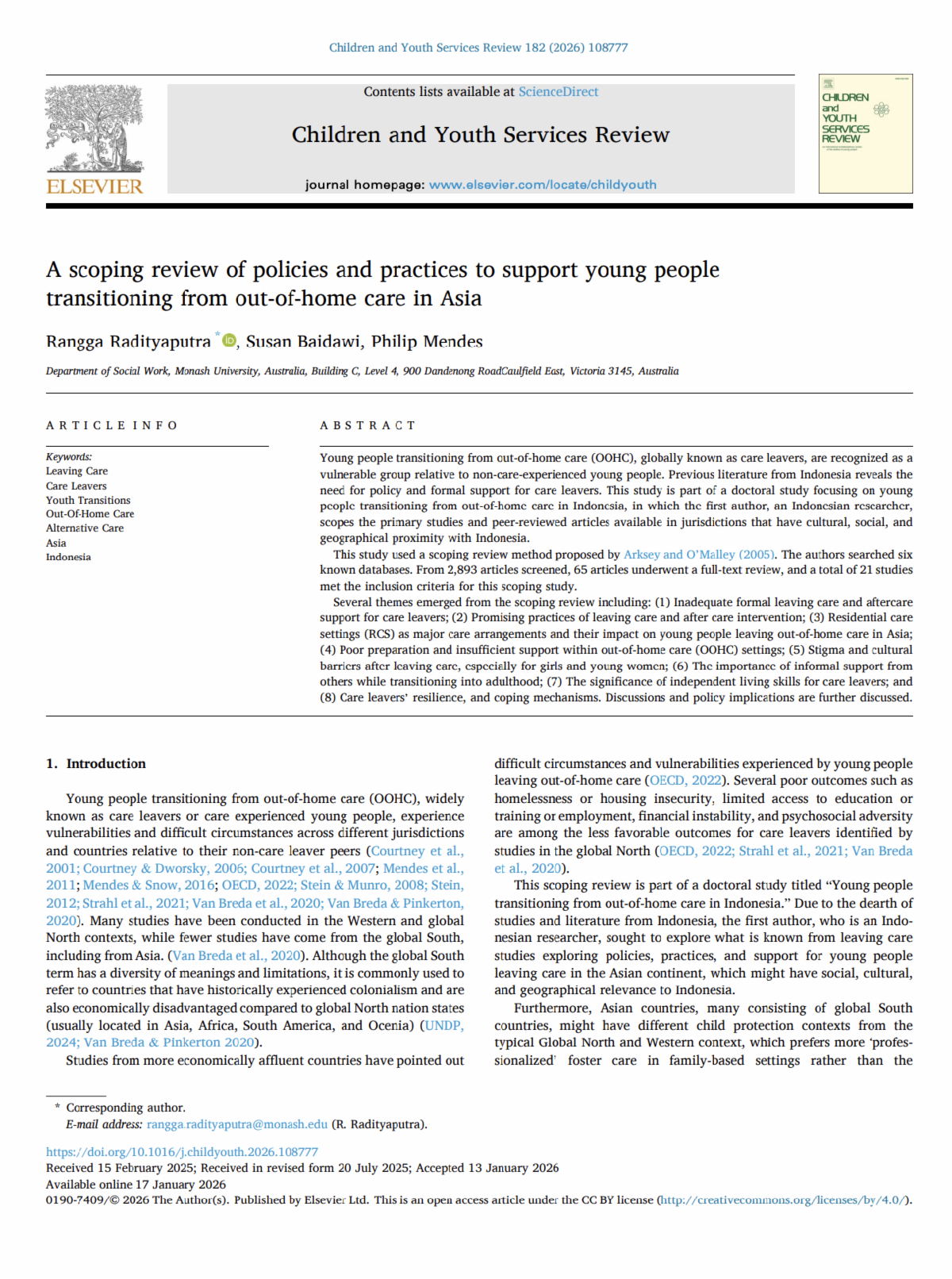
A Scoping Review of Policies and Practices to Support Young People Transitioning from Out-of-Home Care in Asia
This scoping review examines evidence from Asia and culturally comparable contexts to understand the experiences and support needs of young people transitioning from out-of-home care, with a particular focus on Indonesia. The findings highlight widespread gaps in formal leaving-care and aftercare support, alongside promising practices, the importance of informal networks and independent living skills, and the influence of stigma, gender, and resilience on care leavers’ transitions to adulthood.
See also:
| | | | |
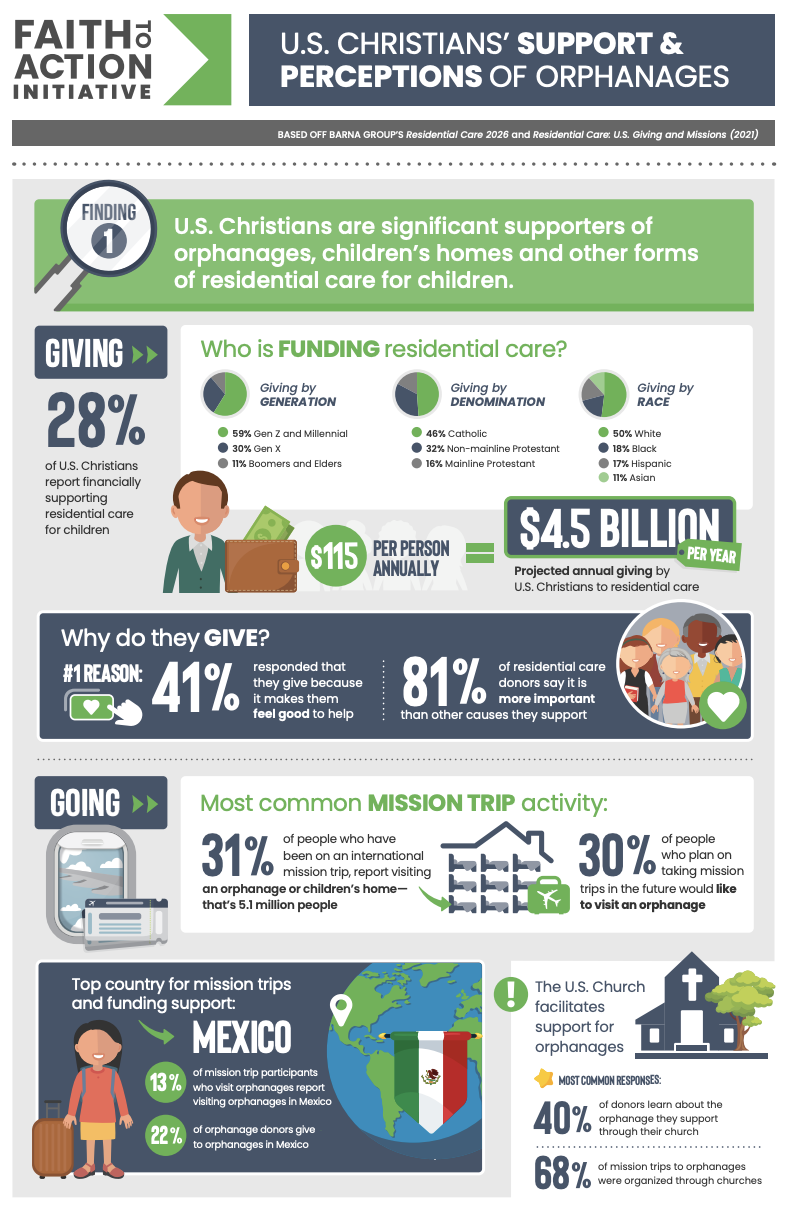
Residential Care: U.S. Christian Giving and Missions
This report, and the accompanying infographic, contains the findings from a nationally representative study conducted in 2025 by Barna Group of U.S. Christians to better understand U.S. Christian beliefs around and support for orphanages, children’s homes and other forms of residential care for children. It includes data on the amount of funding given to residential care, as well as visits and short-term missions to orphanages, and compares new data to the data collected in 2020.
| | | | |
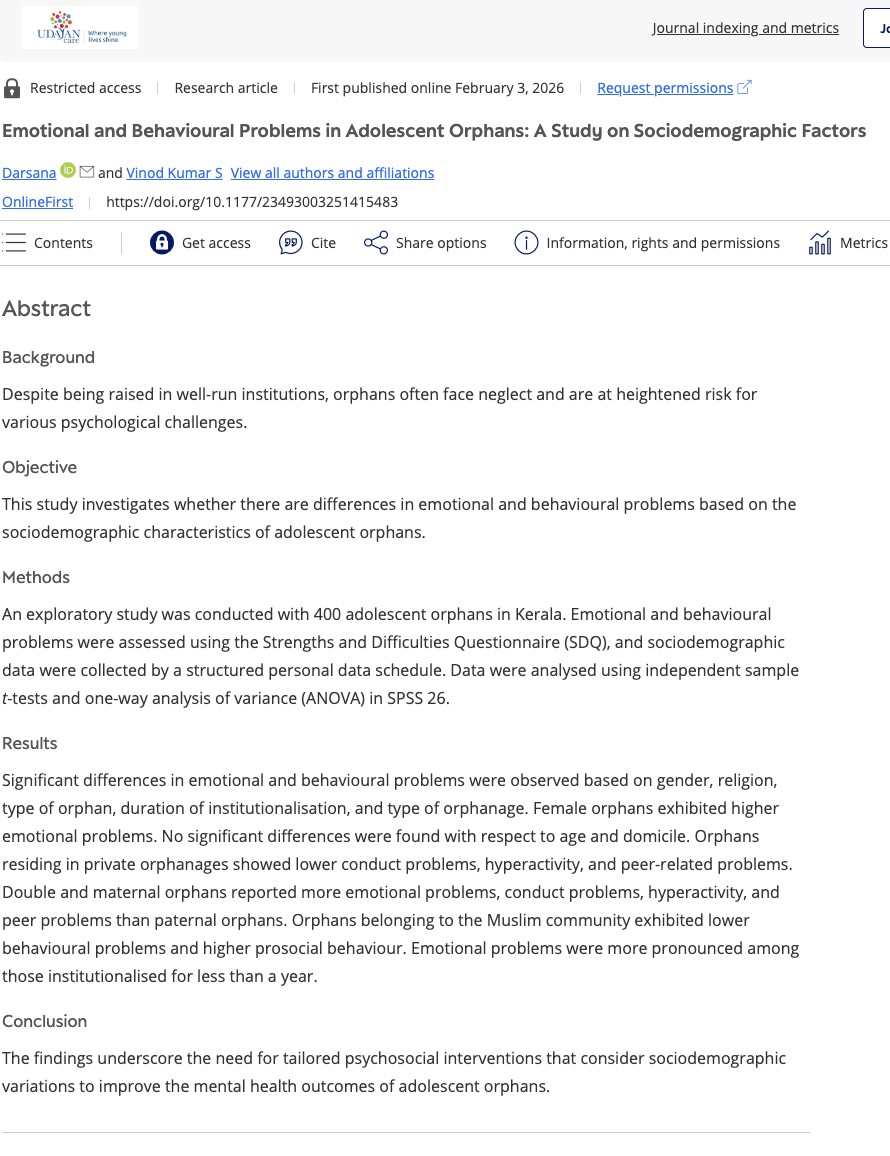
Emotional and Behavioural Problems in Adolescent Orphans: A Study on Sociodemographic Factors
This study examined differences in emotional and behavioural problems among 400 adolescent orphans in Kerala, India using the Strengths and Difficulties Questionnaire to assess how sociodemographic factors shape mental health outcomes. The findings revealed significant variations by gender, religion, type of orphanhood, length and type of institutional care, underscoring the need for tailored psychosocial interventions that reflect these differences.
| | | | |
The Reality of Caring for Children of Unknown Parentage in Contemporary Society and a Future Sociological Perspective on Their Care: A Content Analysis
This study examines how children with unknown parentage are cared for in modern society within Saudi Arabia and the societal risks they face, using analysis of existing research. It finds that factors such as religious beliefs, economic conditions, and post-birth abandonment—along with stigma and discrimination—significantly shape these children’s experiences, and calls for stronger reforms and increased investment in child welfare programs.
| | | | |
Hiding the Origins of Adopted Children
This article examines the legal status and consequences of concealing the ancestry of adopted children under Indonesian criminal law and Islamic law. It analyzes how such practices are addressed in statutory law and Islamic legal principles, highlighting the importance of lineage clarity, transparency, and the protection of children’s rights in adoption.
| | | | |
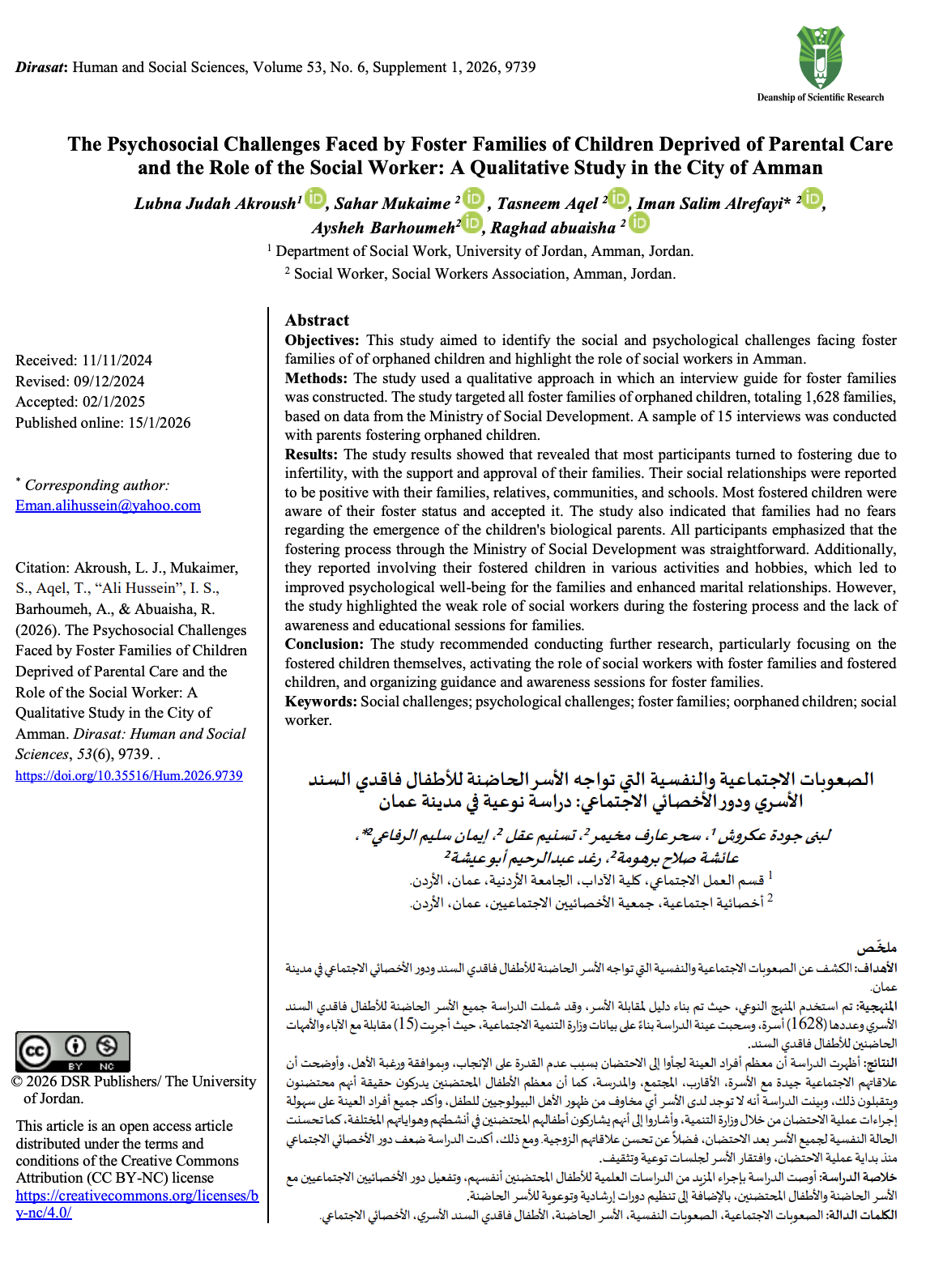
The Psychosocial Challenges Faced by Foster Families of Children Deprived of Parental Care and the Role of the Social Worker: A Qualitative Study in the City of Amman
This qualitative study of 15 foster families in Amman found that most pursued fostering due to infertility, reported positive social relationships and child adjustment, and described the fostering process as straightforward, with perceived benefits to family well-being. However, the study highlighted a limited role for social workers and a lack of guidance and awareness support, recommending stronger professional engagement and further research, particularly including fostered children’s perspectives.
| | | | |
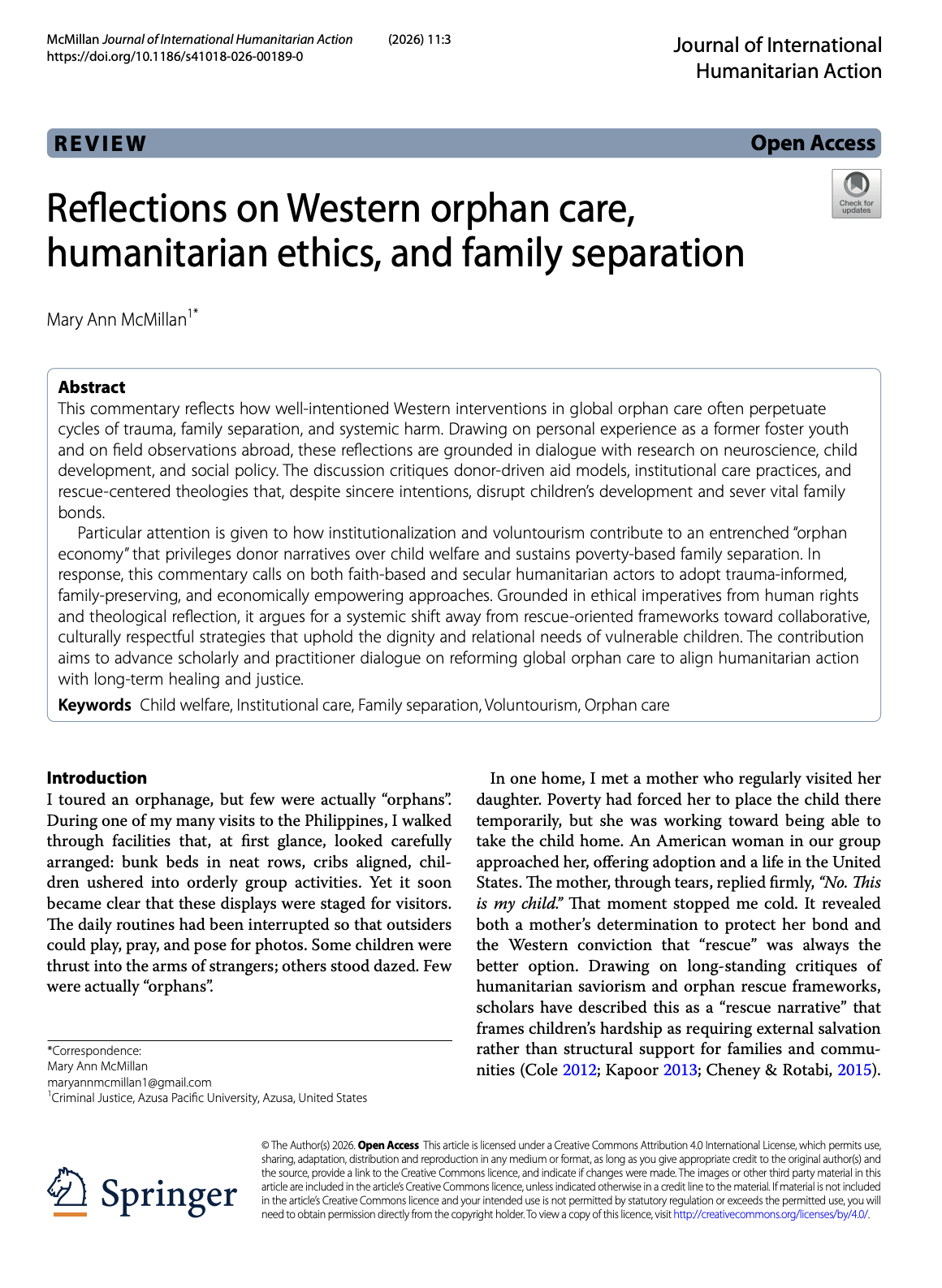
Reflections on Western Orphan Care, Humanitarian Ethics, and Family Separation
This commentary critiques Western-led global orphan care interventions, arguing that donor-driven aid, institutionalization, and voluntourism often perpetuate trauma, family separation, and an “orphan economy” despite good intentions. Drawing on lived experience, research, and ethical reflection, it calls for trauma-informed, family-preserving, and culturally respectful approaches that prioritize children’s rights, dignity, and long-term well-being.
| | | | |
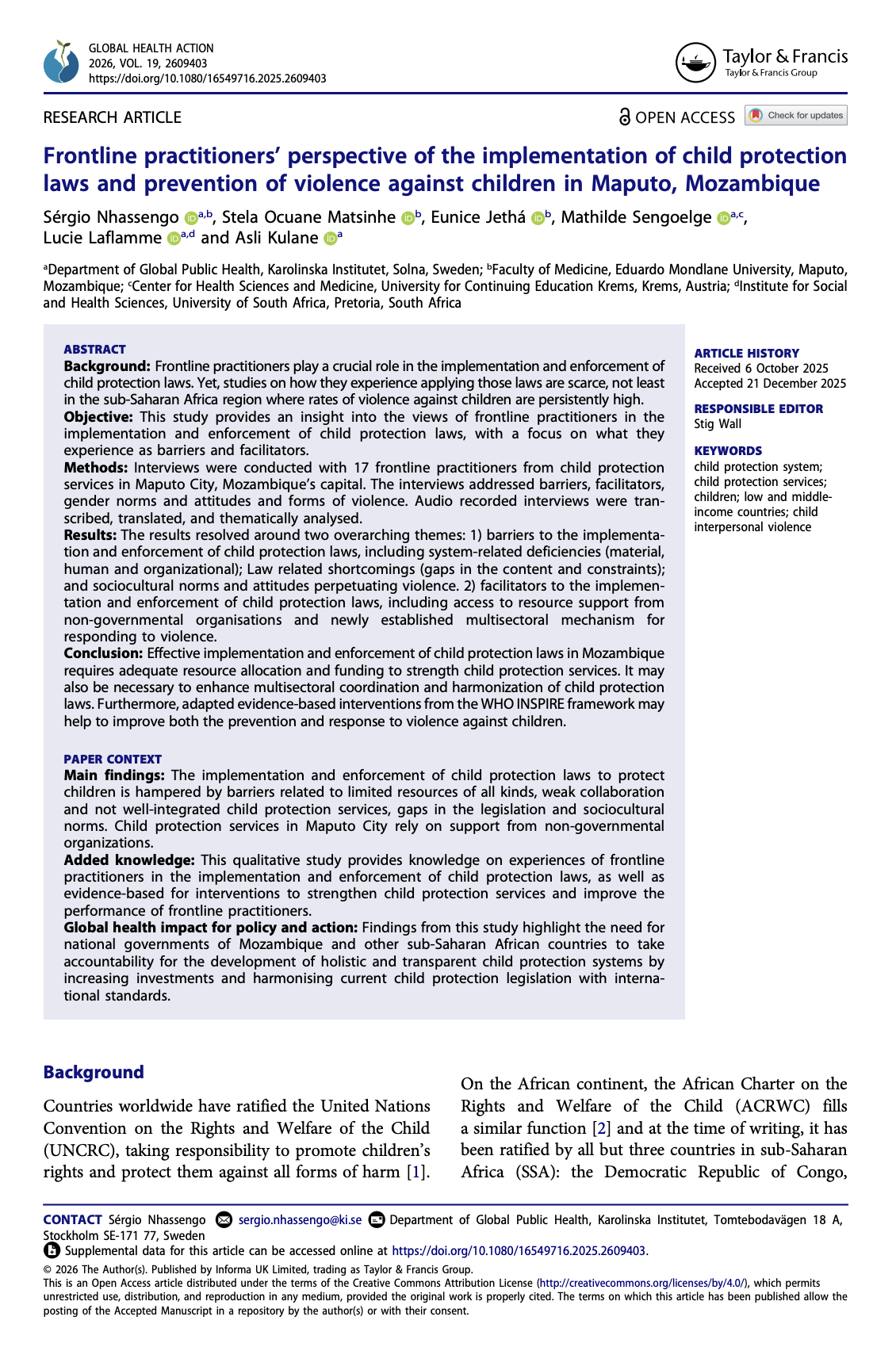
Frontline Practitioners’ Perspective of the Implementation of Child Protection Laws and Prevention of Violence Against Children in Maputo, Mozambique
This article examines how frontline child protection practitioners in Maputo City, Mozambique experience the implementation and enforcement of child protection laws, focusing on perceived barriers and facilitators. It finds that resource constraints, legal gaps, and sociocultural norms hinder effective enforcement, while NGO support and multisectoral coordination act as key enablers, highlighting the need for increased funding, legal harmonization, and evidence-based interventions to prevent violence against children.
| | | | |
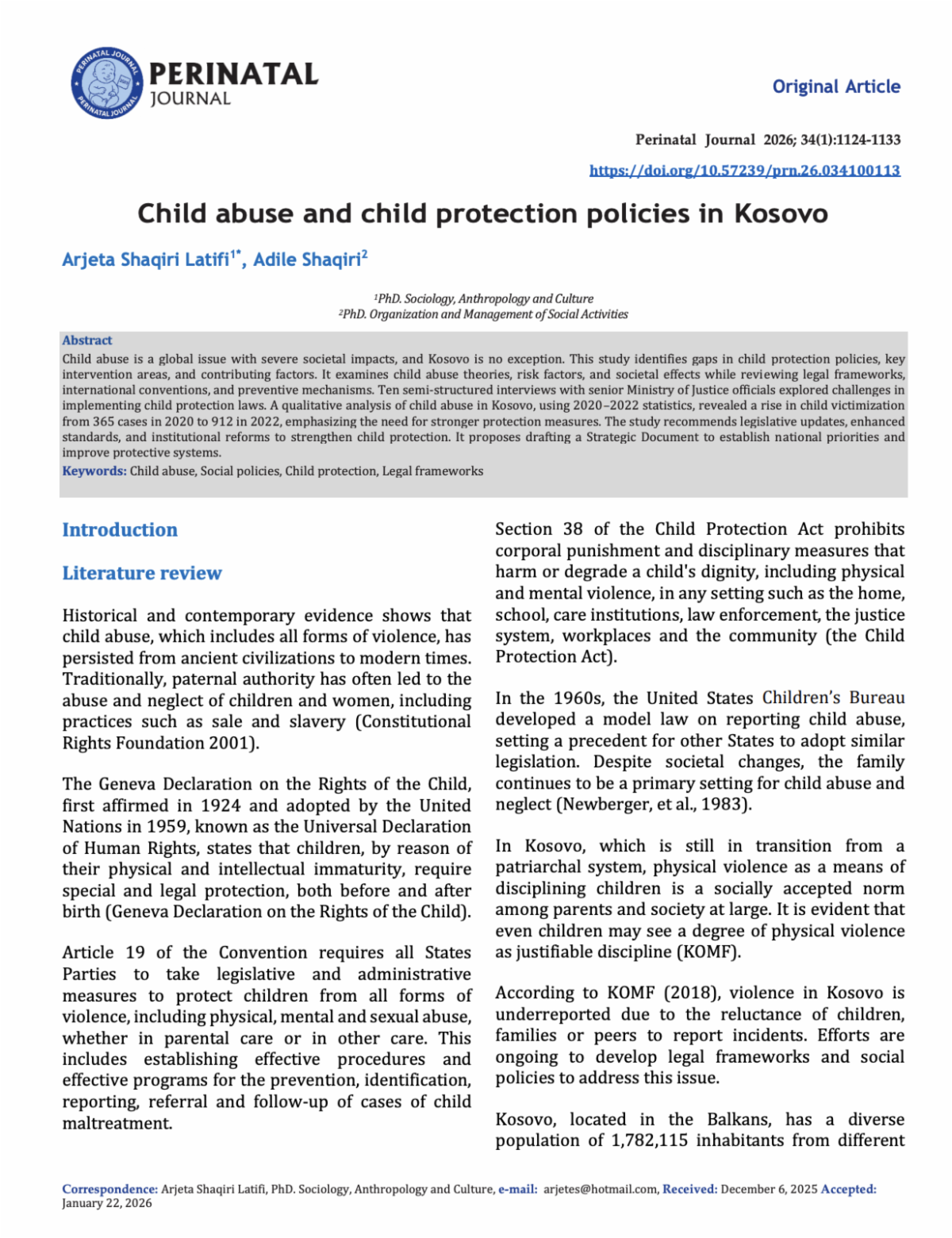
Child Abuse and Child Protection Policies in Kosovo
This article examines child abuse in Kosovo by analyzing policy gaps, risk factors, legal frameworks, and challenges in implementing child protection laws, drawing on interviews with senior Ministry of Justice officials and national data. It highlights a significant rise in child victimization between 2020 and 2022 and recommends legislative updates, institutional reforms, and the development of a national strategic document to strengthen child protection systems.
| | | | |
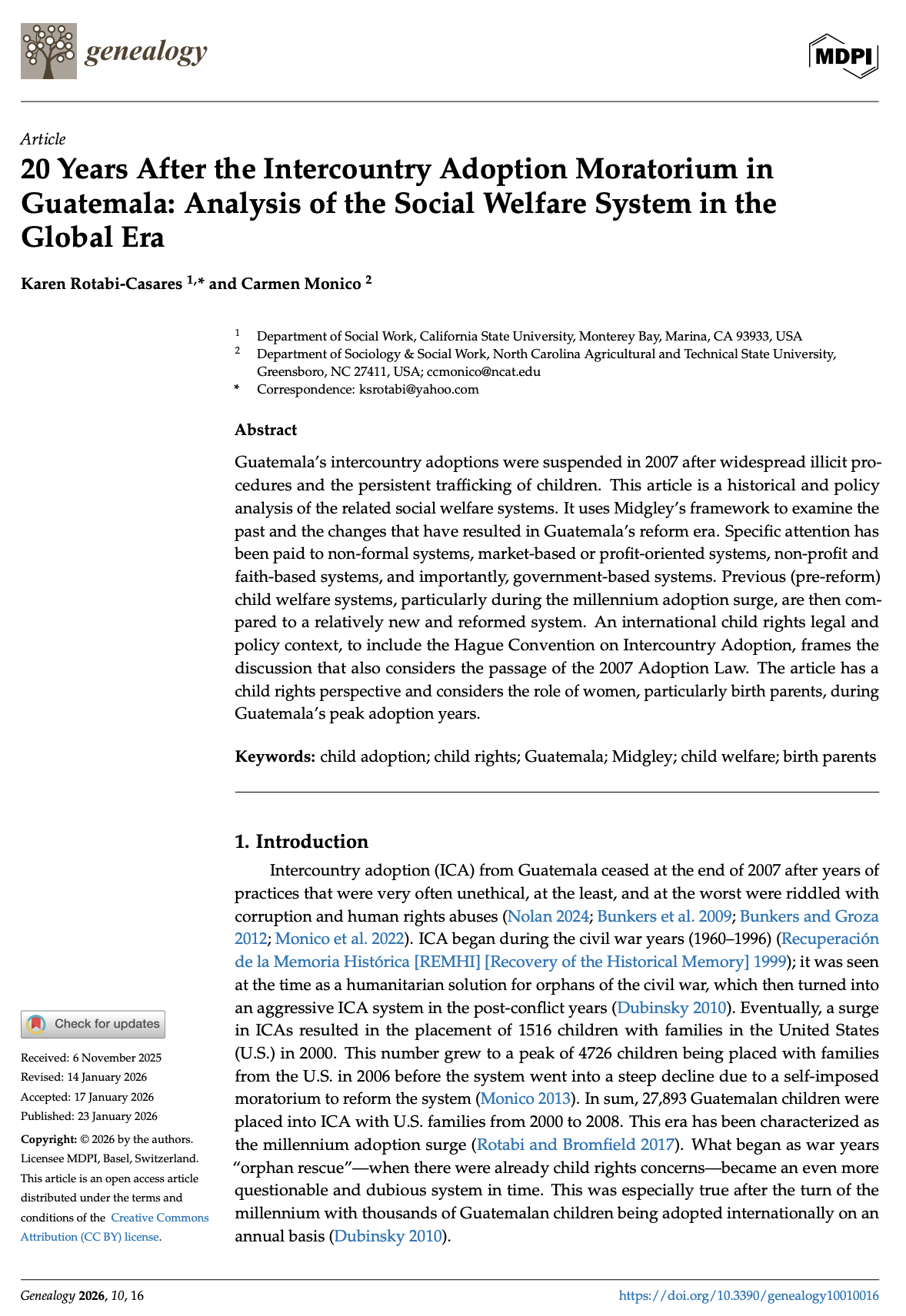
20 Years After the Intercountry Adoption Moratorium in Guatemala: Analysis of the Social Welfare System in the Global Era
This article analyzes Guatemala’s child welfare and intercountry adoption systems before and after the 2007 suspension, using Midgley’s framework to examine reforms across non-formal, market-based, non-profit, faith-based, and government systems. Framed by international child rights law, including the Hague Convention, it highlights the shift from illicit, profit-driven adoption practices toward a reformed system while centering child rights and the experiences of birth mothers during the peak adoption era.
| | | | |
Contemporary Perspectives on Child and Youth Welfare From Different European Countries
This book offers a comparative analysis of child and youth welfare systems across eight European countries, highlighting how diverse legal, historical, and institutional contexts shape responses to young people with complex support needs. Through contributions from researchers and practitioners, it reveals shared tensions—such as care versus control and participation versus coercion—while providing a multi-perspective foundation for transnational learning and policy reflection.
| | | | |
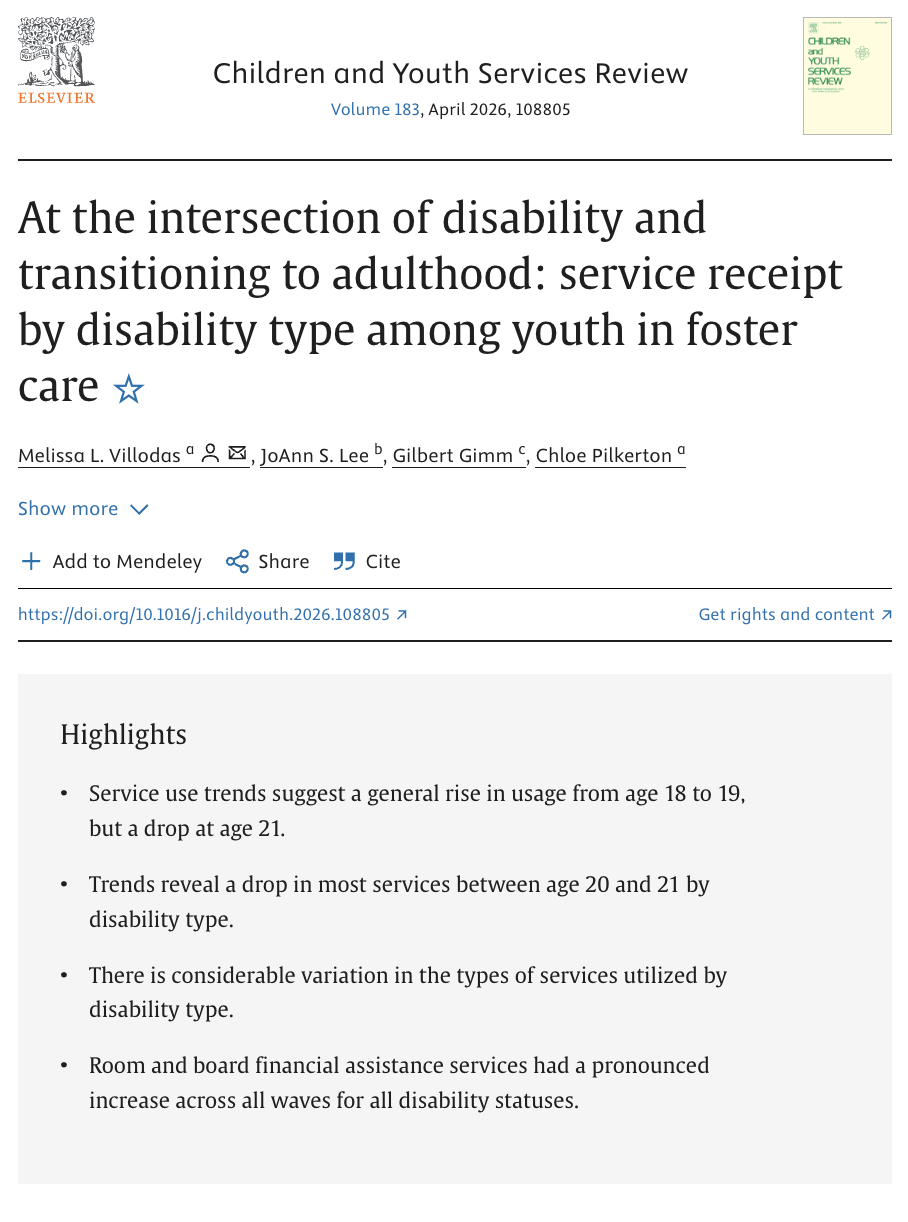
At the Intersection of Disability and Transitioning to Adulthood: Service Receipt by Disability Type Among Youth in Foster Care
This study examined the relationship between disability type and service receipt among U.S. transition-age youth aging out of foster care, a population in which 53% have a diagnosed disability, across all U.S. states, Washington, DC, and Puerto Rico.
| | | | |
Inclusive Care Reform in India: Analyzing States’ Readiness and Responsiveness
This report documents the findings of an exercise undertaken by the Children and Families Together (CAFT)-India consortium to assess how Indian states are positioned for disability-inclusive care reform. Drawing from data across States, this highlights each State’s existing care systems and inclusion practices, offering valuable insights for policymakers, practitioners, and organizations advancing inclusive child protection and care reform in India.
| | | | |
Digging Deeper: Further Examination of the Association Between Out of Home Care Experience and Poor Outcomes, Focusing on Mental Health and Wellbeing
This report builds on previous research highlighting the multiple challenges facing children of mothers with out-of-home care (OHC) experience in the UK. It draws on data from young people born in 2000 who are part of the UK Millennium Cohort Study (MCS) to deepen understanding of the association between maternal OHC experience and poor behavioural and mental health outcomes.
| | | | |
Children Living in Illegal Children’s Homes
To understand how many children are being placed in illegal children's homes, the UK Children’s Commissioner’s office requested data from all local authorities in England about this practice. It found 669 children living in unregistered children’s homes as of 1 September 2025—a 12% decrease from the previous year. While the reduction is welcome, these placements highlight an ongoing failure to adequately protect vulnerable children.
| | | | |
From Institutional Care to Family-Based Alternatives: A Narrative Synthesis (2009–2025) and Policy Implications for Ogun State, Nigeria
This article reviews global evidence on the impacts of institutional care versus family-based alternatives and examines how these findings inform foster care reform in Ogun State, Nigeria. It synthesizes research from 2009–2025 to identify key developmental outcomes, implementation lessons, and policy priorities for transitioning away from institutional care.
| | | | |
Profiles of Protection Trajectories Among Children in Residential Care
This study examined protection trajectory patterns among 49 children who experienced residential care in Spain, identifying three distinct profiles of case-file and psychosocial assessment data. The findings reveal diverse pathways—ranging from early transitions to family-based care, to unstable trajectories marked by multiple placements and higher adversity, to prolonged but stable residential care often involving diagnosed illnesses or disabilities—offering important insights for strengthening child protection decision-making and promoting stable, secure care experiences.
| | | | |
United and Unique: Amplifying the Voices of Care Leavers in South Africa and Northern Ireland – Youth Report
This paper brings together care-experienced young people from South Africa and Northern Ireland, along with researchers and practitioners, to share experiences and advocate for improved systems for those transitioning from alternative care. Through reflection and collective learning, it highlights the issues that matter most to care leavers and offers ideas for strengthening policies, practices, and support.
See also:
| | | | |
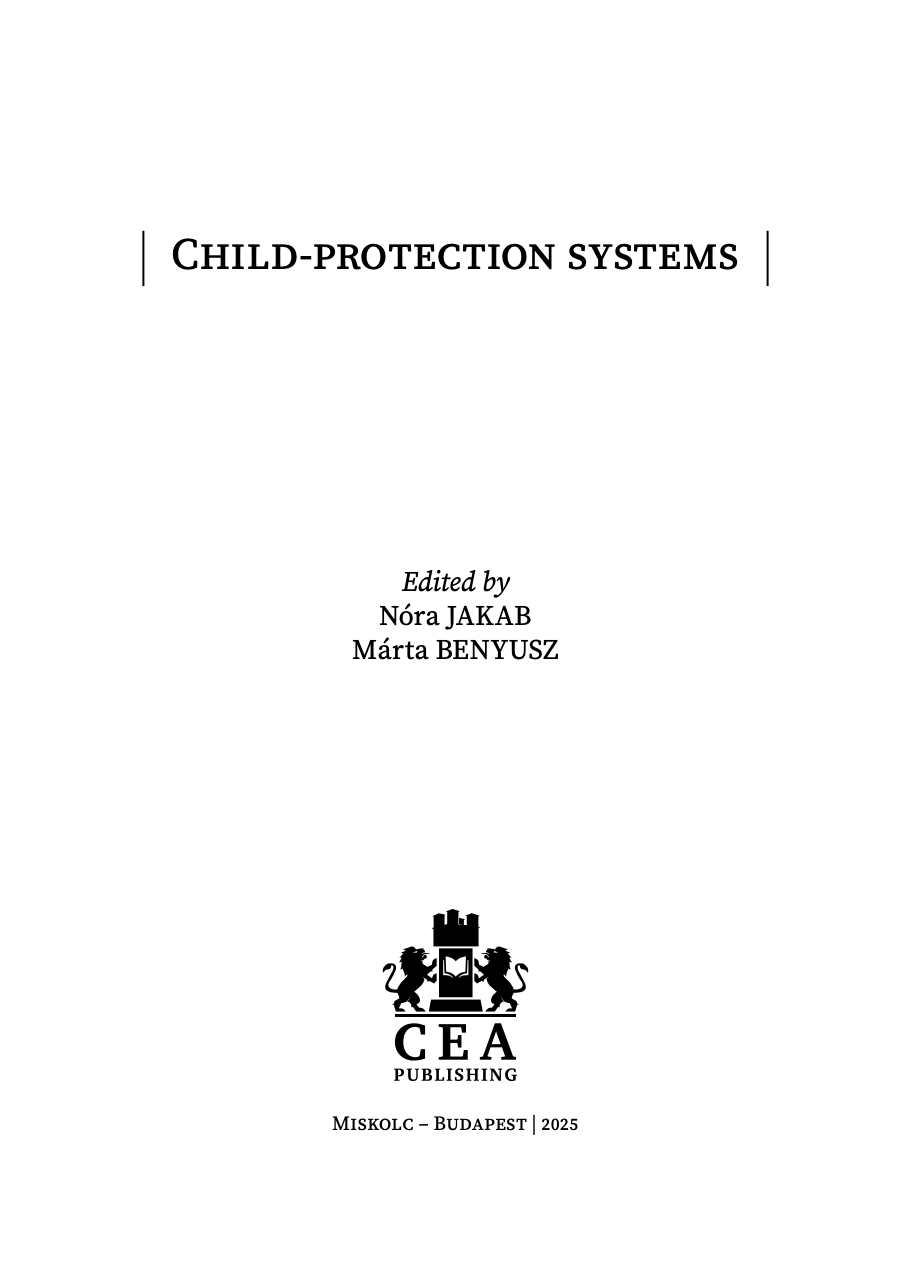
Child-Protection Systems
This book provides a comprehensive examination of how child-protection systems are structured, governed, and implemented across different legal and social contexts in Eastern Europe. The book explores the theoretical foundations of child protection, comparative legal frameworks, institutional responsibilities, and the practical challenges of safeguarding children’s rights, with particular attention to European developments.
| | | | |
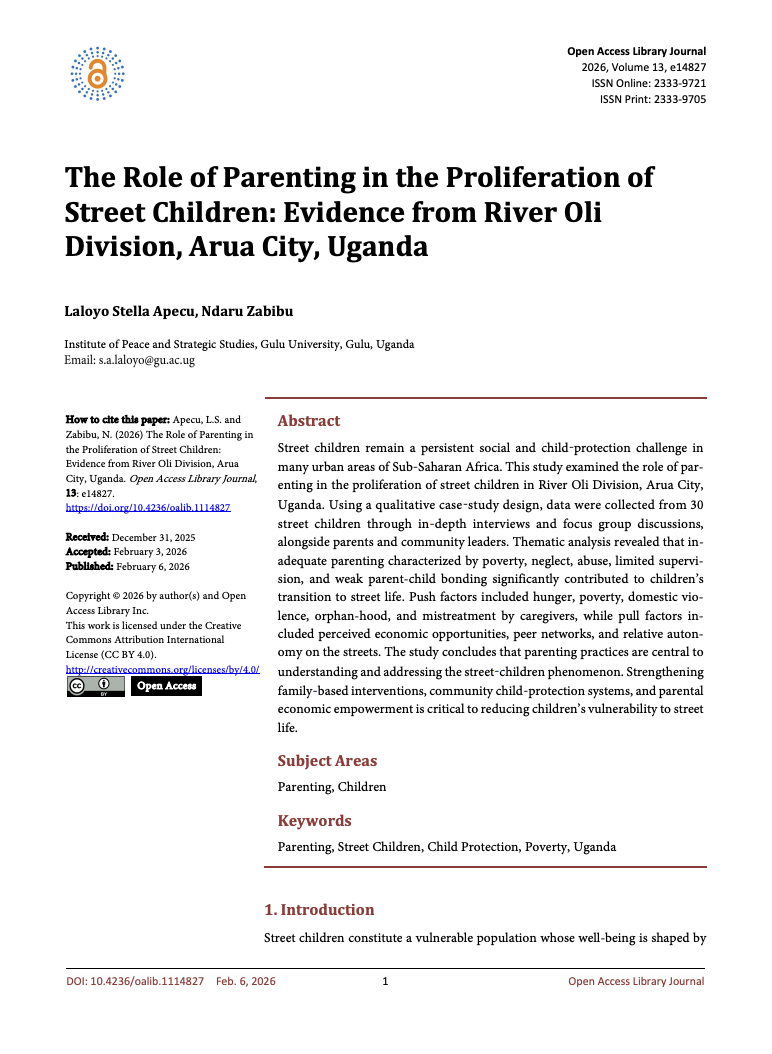
The Role of Parenting in the Proliferation of Street Children: Evidence from River Oli Division, Arua City, Uganda
This qualitative case study in Arua City, Uganda, explores how parenting practices contribute to the persistence of street children, drawing on interviews with 30 street-connected children as well as parents and community leaders. Findings show that poverty, neglect, abuse, weak supervision, and family breakdown—combined with push factors like hunger and domestic violence and pull factors such as peer networks and perceived economic opportunity—drive children to the streets, underscoring the need for strengthened family support, community protection systems, and parental economic empowerment.
| | | | |
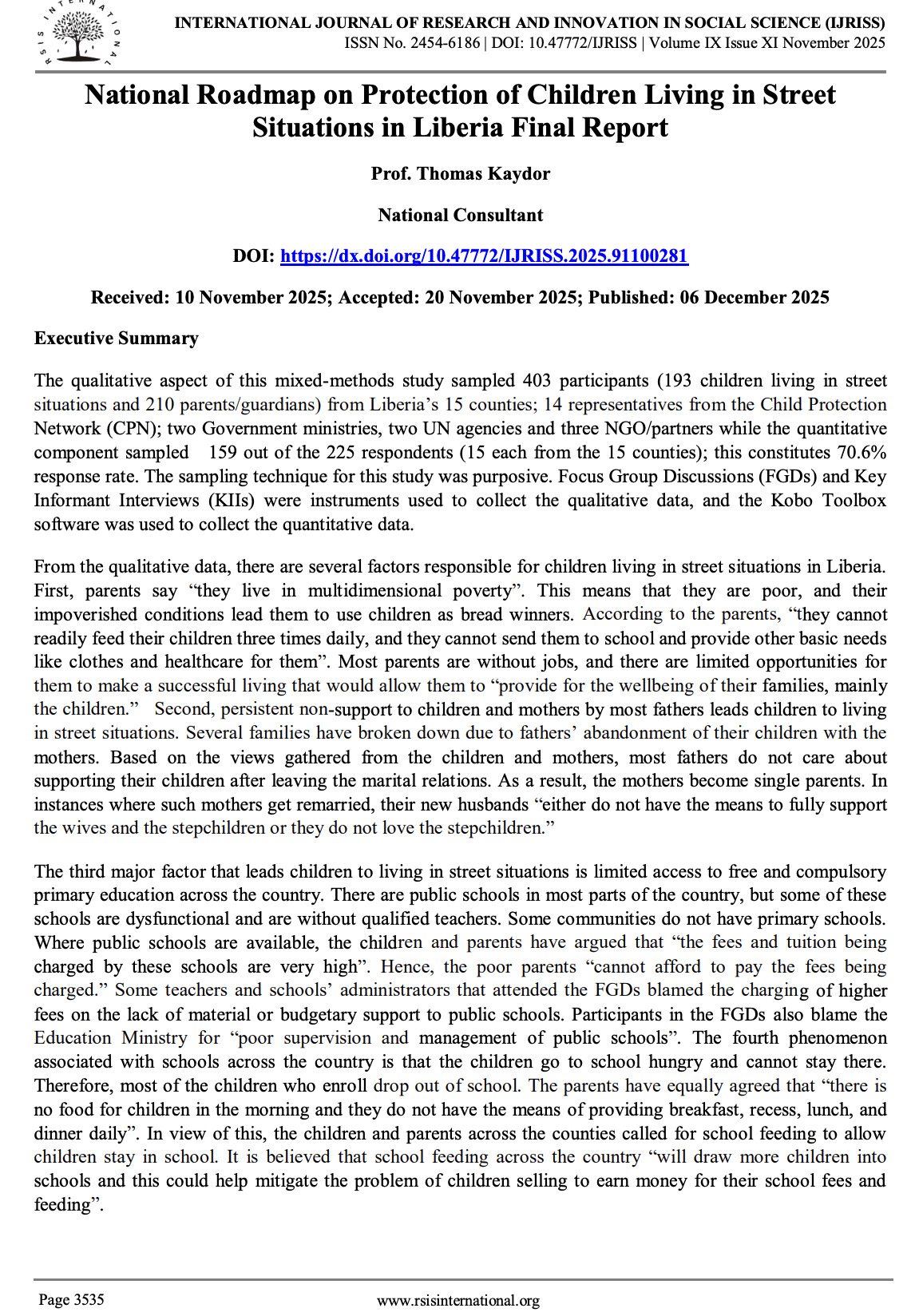
National Roadmap on Protection of Children Living in Street Situations in Liberia Final Report
This mixed-methods study, drawing on qualitative and quantitative data from all 15 counties in Liberia, examines the drivers and scale of children living in street situations through interviews with children, parents, government, UN, and civil society actors. The findings identify multidimensional poverty, family breakdown, lack of access to affordable and functional education, hunger, orphanhood and abandonment, drug abuse, teenage pregnancy, and child labor as key interconnected factors pushing children onto the streets, with additional risks including exploitation, abuse, and social exclusion.
| | | | |
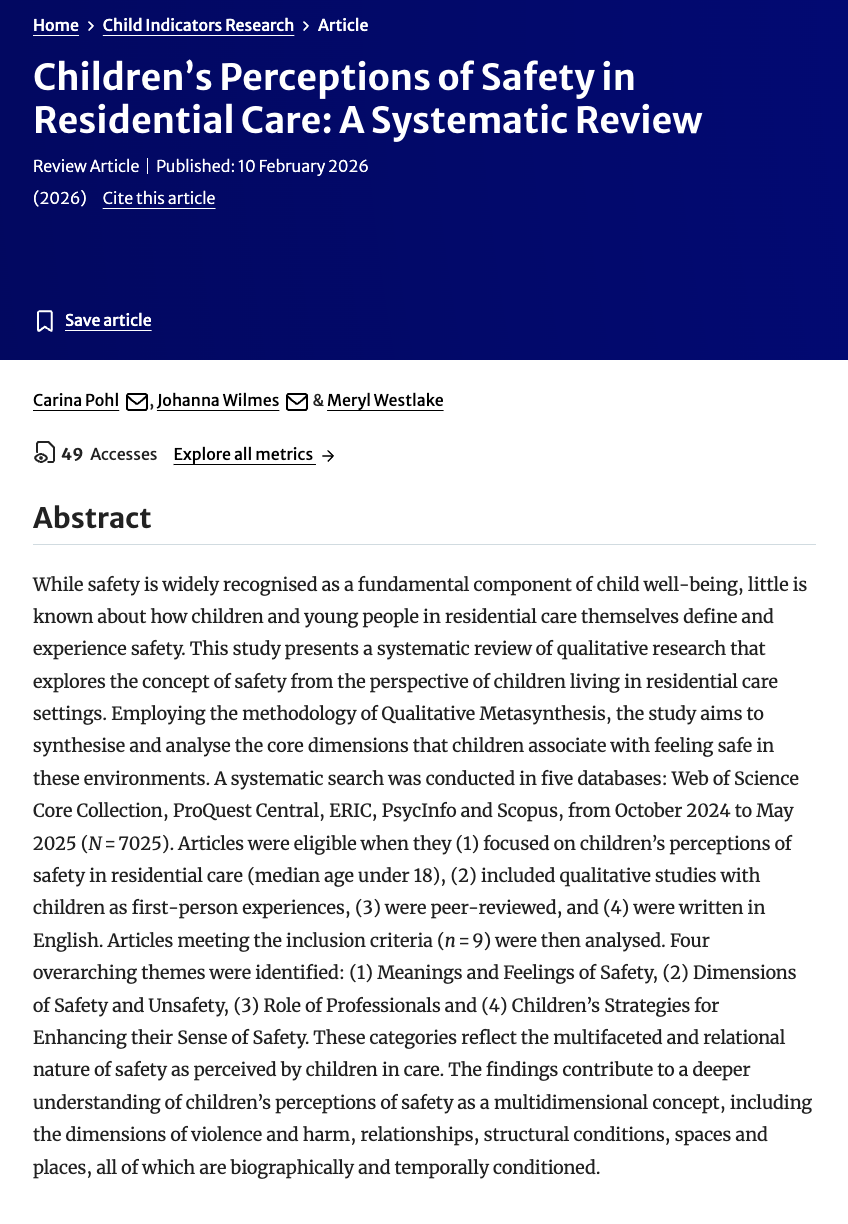
Children’s Perceptions of Safety in Residential Care: A Systematic Review
This study systematically reviews qualitative research on how children in residential care perceive and experience safety, analysing nine studies to identify core dimensions of feeling safe. Findings reveal that safety is multifaceted and relational, encompassing violence and harm, relationships, structural conditions, and spaces, with children actively employing strategies to enhance their sense of security.
| | | | |
Institutional Representatives’ Perspectives on Violence and Child Abuse in Residential Child Protection Centers: A Document Analysis
This qualitative study analyzes institutional narratives between 2002 and 2024 to understand how violence and child abuse have persisted in residential care centers in Chile, drawing on interviews and public statements from child protection authorities. The findings identify systemic deficiencies, structural problems, negligent practices, concealment, and sexual exploitation networks as key factors perpetuating abuse.
| | | | |
Factors Associated with Recent Physical Violence Against Orphaned and Vulnerable Children (OVC) in Namibia: A Cross-Sectional Analysis of Programmatic Data from 2023 to 2024
This study assessed the prevalence and factors associated with physical violence against orphaned and vulnerable children (OVC) in Namibia, using data from 16,507 participants in the Reach program. Findings show that 10% of OVC experienced recent physical abuse, with variation across districts and age groups, highlighting the need for targeted violence‑prevention campaigns, community-level behavior change initiatives, and regular regional assessments to address localized drivers of violence.
| | | | |
Nurturing Futures: Foster Carer Perspectives on Looking After Unaccompanied Asylum-Seeking Children With Histories of Trafficking
This article explores the experiences of foster carers supporting unaccompanied asylum-seeking and trafficked children (UASTC) in the U.K., highlighting challenges such as limited specialist training, the emotional toll of managing risk, and navigating the asylum process. Despite the small sample, findings suggest the need for trauma-informed care pathways, tailored training and supervision, peer support networks, and further research into UASTC experiences across different placements.
| | | | |
Care Proceedings with an International Element
This book analyzes 100 care cases to examine how jurisdiction and cross-border information sharing operate in child protection, drawing on the first empirical study of Brussels IIa and the 1996 Hague Convention in England. It highlights how children's welfare can be compromised in international care proceedings while offering recommendations to improve the interpretation and application of private international law to better safeguard their best interests.
| | | | |
Youth in Transition: An Exploratory Comparative Analysis of Outcomes for Youth Placed in Kinship and Non-kinship Foster Homes
Despite growing knowledge of kinship care, little is known about its impact on transition-age youth. This study from the USA found that while educational attainment and homelessness risk were similar for youth in kinship and non-kinship foster homes, those in kinship care faced higher incarceration risks, with placement stability significantly influencing all outcomes.
| | | | |
Trends and Developments in Large-Scale Residential Care for Children in Eastern Europe and Central Asia
This chapter, in the book Children and Family Social Work, reviews the reform of children’s care systems in Eastern Europe and Central Asia, tracing the historical reliance on large-scale residential institutions under communism and the subsequent shift toward community-based alternatives after the Soviet Union’s collapse. While institutionalization has significantly declined and community services have expanded, challenges remain in funding, workforce development, and preventing family separation while protecting children from harm.
| | Policies, Standards, and Guidance | | | | |
Kusamala+ Toolkit to Reduce Stigma for Children with Disabilities
The Kusamala+ Stigma Reduction Toolkit is the product of a 10-year community-based program in Zambia to reduce stigma for children with disabilities living in family-based care in low-income compounds and improve family quality of life. The program successfully identified families with a child with a disability, engaged in program activities, reduced community-based stigma, and improved the quality of life for families who have a child with a disability. This toolkit is provided to expand the program in a way that is accessible for many locations and institutions.
| | | | |
Investing in Disability Inclusive and Gender-Responsive Care and Support Systems Across the Life Cycle in Kenya
This resource presents a costed policy study on investing in disability-inclusive and gender-responsive community care and support systems across the life cycle in Kenya, developed by the Ministry of Labour and Social Protection. Grounded in Kenya’s obligations under international and regional disability rights instruments, the study reviews existing care and support systems, identifies gaps in demand and supply, and develops detailed, costed policy scenarios to promote autonomy, inclusion, and community-based support for persons with disabilities.
| | | | |
Adaptation of Case Management Tools Under the Juvenile Justice System for Disability Inclusion
The Juvenile Justice (Care and Protection of Children) Act, 2015 (JJ Act) provides the legal framework that guides child protection in India. It includes tools to guide case work to support children in need of care and protection. This report presents suggested adaptations to include disability-related questions across three key case management tools under the JJ Act – the Social Investigation Report, Individual Care Plan and Case History Form. It also documents the consultative process undertaken for these adaptations and offers practical recommendations to help child protection systems better identify, support, and include children with disabilities.
See also:
| | | | |
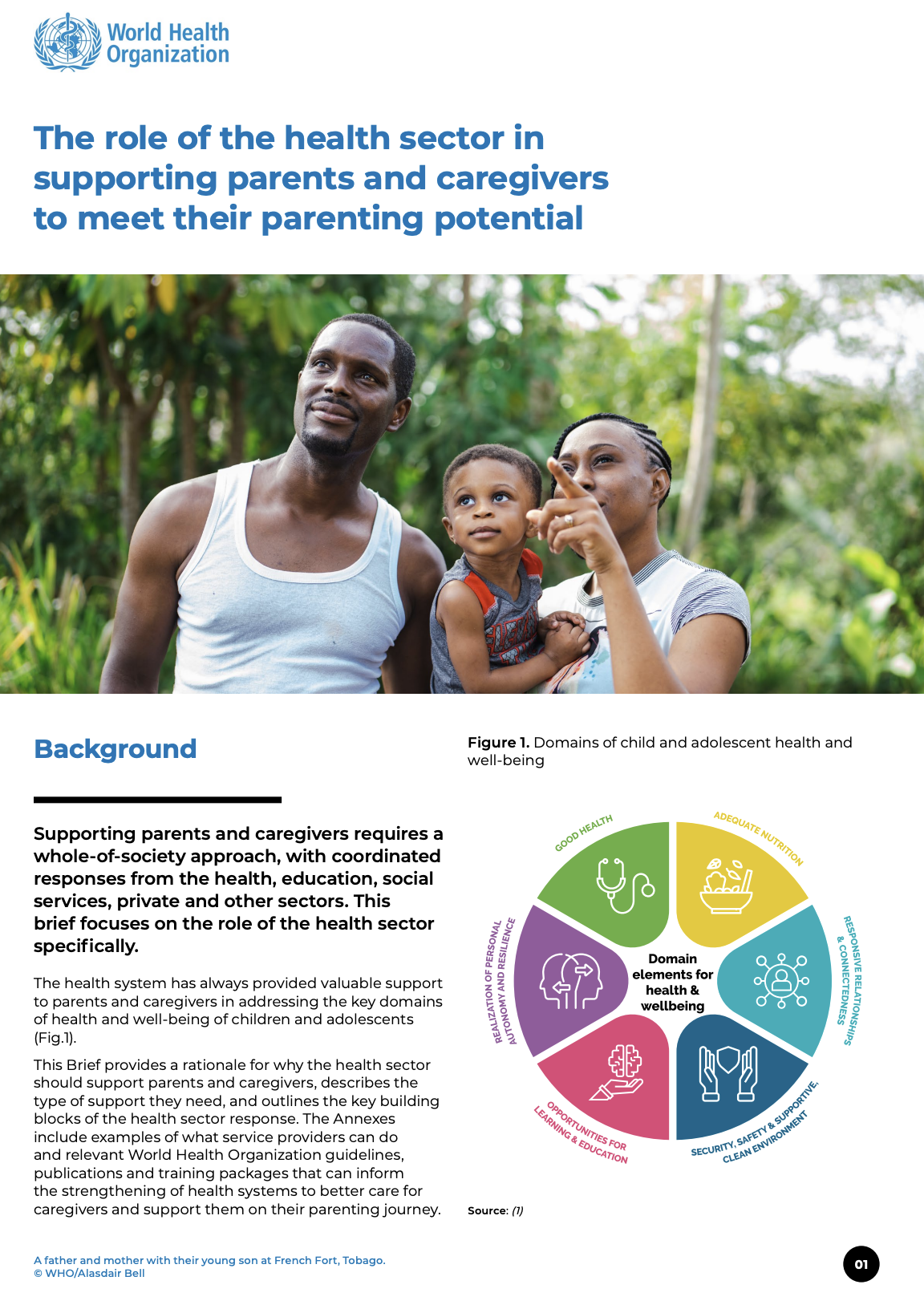
The Role of the Health Sector in Supporting Parents and Caregivers to Meet their Parenting Potential
Supporting parents and caregivers requires a whole-of-society approach, with coordinated responses from the health, education, social services, private and other sectors. This brief focuses on the role of the health sector specifically. It explains why the health sector should support parents and caregivers, describes the type of support they need, and outlines the key building blocks of the health sector response.
| | | | |
Practical Guide to Establishing Children’s Advisory Boards within Territorial Social Assistance Structures
In Moldova, child participation in decisions that affect them is a core element of a rights-based child protection system, and Advisory Boards of Children (ABCs) provide a structured local mechanism to ensure their meaningful involvement in shaping policies and services. This practical guide offers tools and recommendations to support the safe, effective, and equitable establishment and strengthening of ABCs, building on 15 years of experience and aligning with UN recommendations in Moldova. This resource is available in Romanian.
| | | | |
Advocacy for Children in Care
This chapter from Participatory Approaches in Child and Family Social Work examines the role of advocacy in promoting the rights and well-being of children in care, outlining the relevant legal and policy frameworks and presenting research findings from a local authority in England. Through case examples, ethical analysis, and discussion of future directions, it highlights the impact of effective advocacy and calls for a more comprehensive approach beyond individual casework.
| | | | |
Rights-Based Social Work with Unaccompanied Children and Young People
This chapter in The Routledge Handbook of Social Work and Migration focuses on social work with children and young people who have experienced forced migration and become separated from family members, known as unaccompanied minors. It explores the possibilities of rights-based practice with unaccompanied children and considers what might be needed to develop and sustain this.
| | | | |
From Vulnerability to Strength: The Impact of Thrive Scale™ on Family Strengthening and Child Separation Prevention in Urban and Rural India
This study addresses the urgent need for family-based care for children without parental care, as emphasised by the UN General Assembly’s 2019 resolution, India’s Juvenile Justice Act 2015, and Mission Vatsalya. The primary aim is to evaluate the effectiveness of the Thrive Scale™ tool developed by Miracle Foundation India in generating measurable, data-driven decisions to plan and implement suitable interventions for family strengthening.
| | | | |
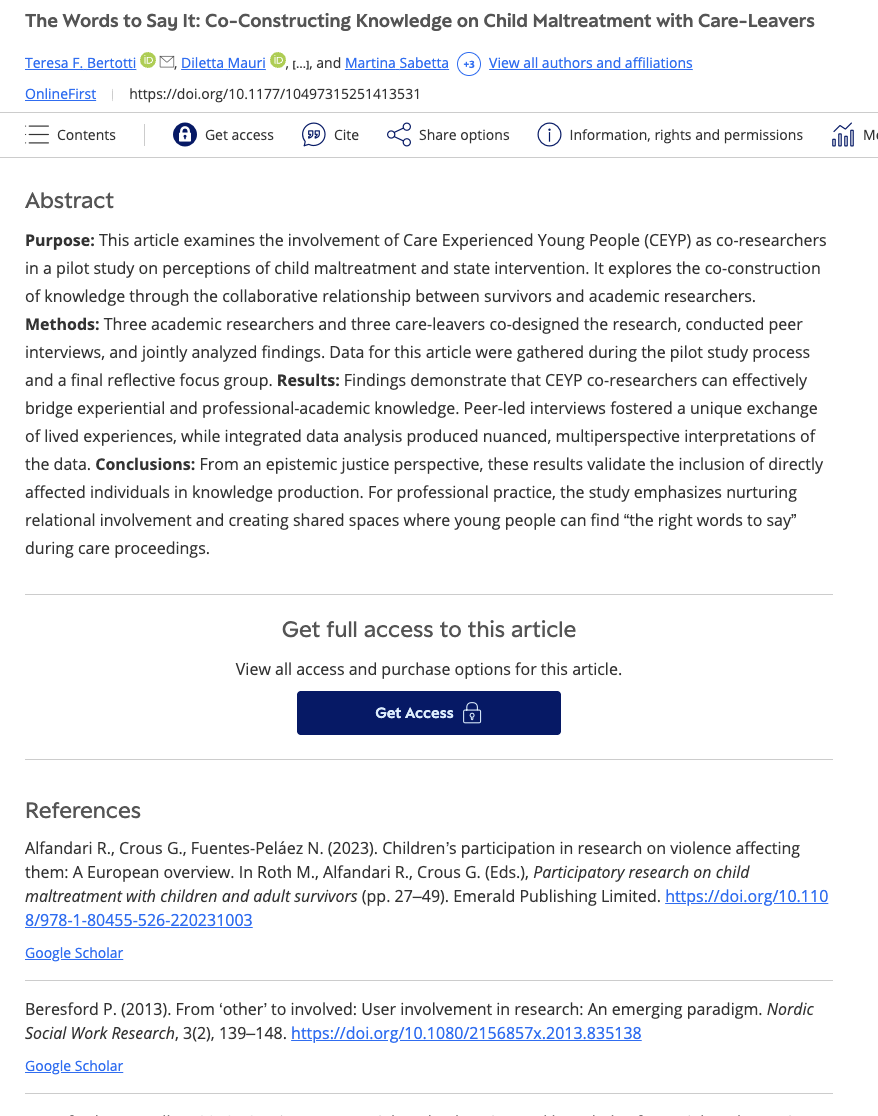
The Words to Say It: Co-Constructing Knowledge on Child Maltreatment with Care-Leavers
This article explores a pilot study in Italy in which care-experienced young people acted as co-researchers to examine perceptions of child maltreatment and state intervention, focusing on the co-construction of knowledge between survivors and academic researchers. It finds that peer-led research strengthens epistemic justice and professional practice by integrating lived experience with academic analysis and fostering relational, supportive spaces for young people’s voices in care proceedings.
| | | | |
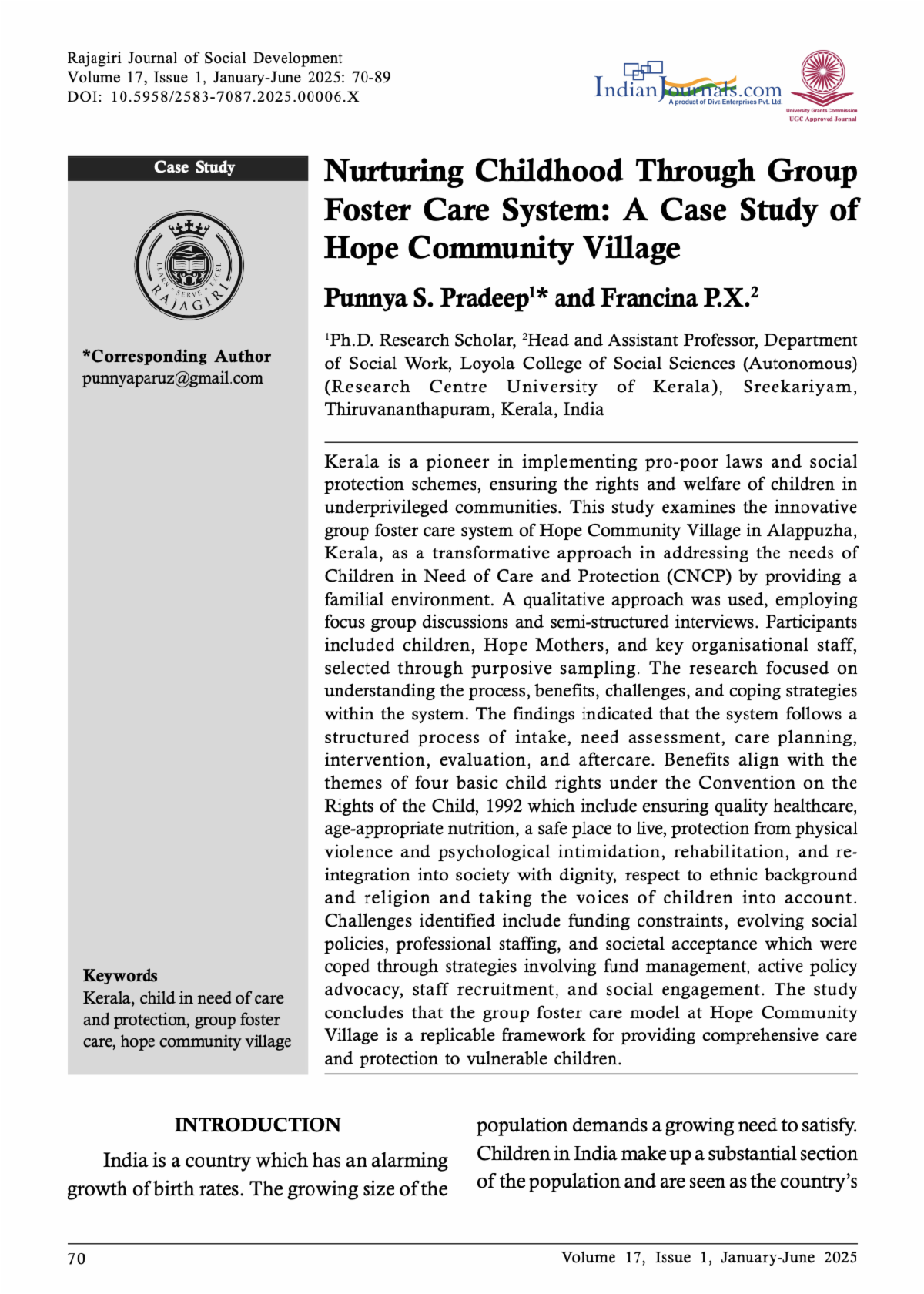
Nurturing Childhood Through Group Foster Care System: A case Study of Hope Community Village
This study examines the group foster care model at Hope Community Village in Kerala, India as an innovative, family-based approach to supporting children in need of care and protection. Findings show the model delivers rights-based, comprehensive care aligned with the Convention on the Rights of the Child, while highlighting challenges related to funding, policy, staffing, and social acceptance, and demonstrating its potential as a replicable framework for child protection.
| | | | |
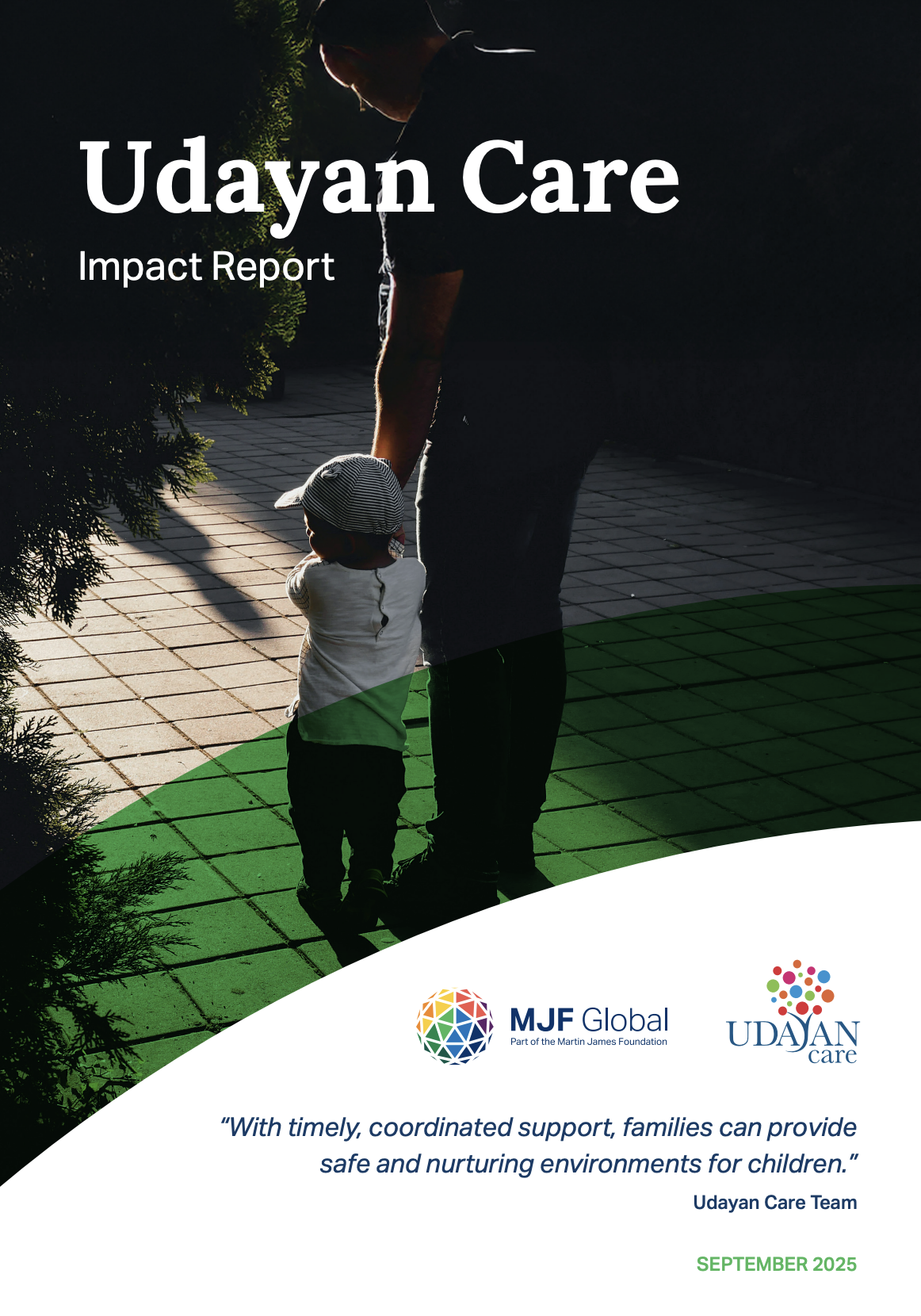
Udayan Care – End of Project Report
This Impact Report showcases the results of the FiT Families Together project, delivered by partner Udayan Care. This three-year initiative focused on strengthening family reintegration and preventing unnecessary child separation in Delhi. The report outlines key milestones and lessons learned from the collaboration.
| | | | |
We would love to learn more about your work as a practitioner so that your local, national and/or regional lessons and experiences in the field can be shared with other practitioners.
| | | | |
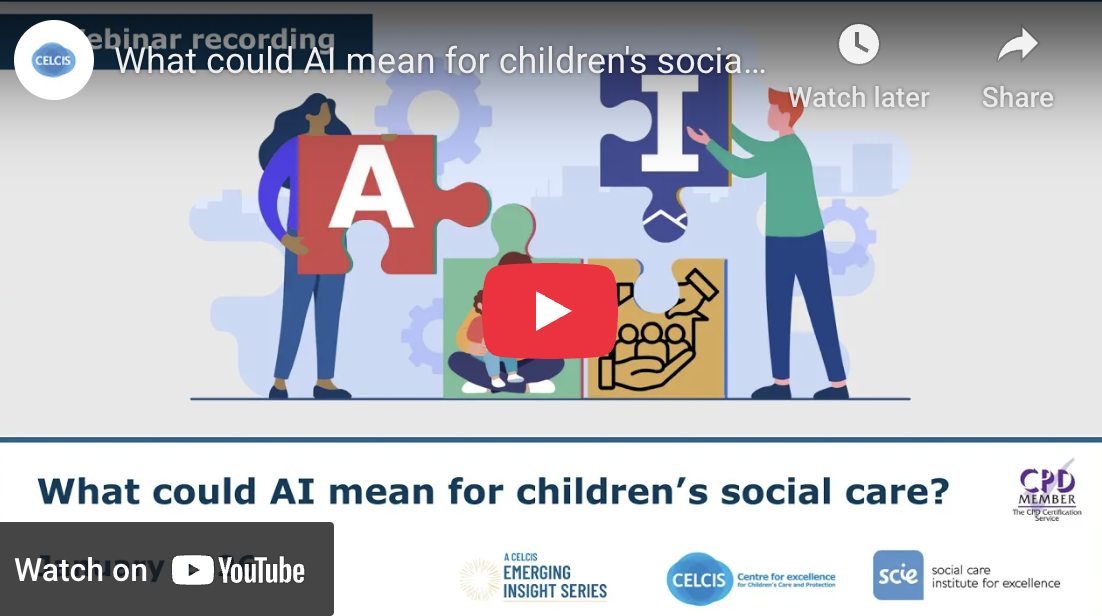
A CELCIS Emerging Insight Series Webinar: What could AI mean for children's social care?
To launch a new Emerging Insight Series of webinars from CELCIS, this session set the scene by considering what AI might mean for children’s social care. It explored fundamental questions, potential opportunities, and challenges related to how AI is being used in practice; its role in responding to the care and protection needs of children and young people and supporting their families; and emerging understanding of the influences and impacts of AI on children’s and young people’s lives.
| | | | |
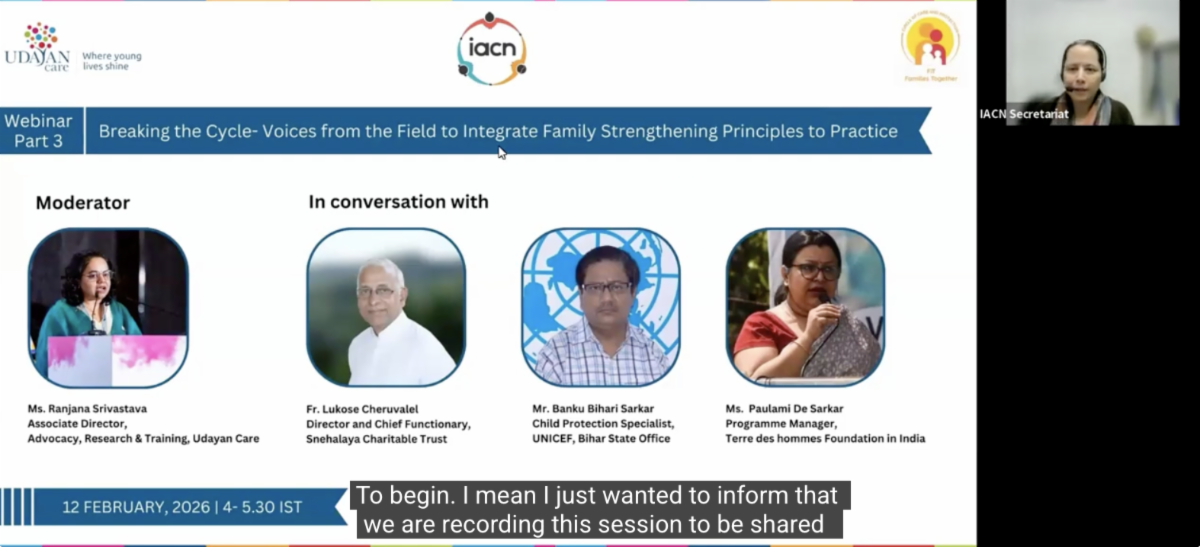
Breaking the Cycle: Voices from the Field to Integrate Family Strengthening
In this webinar, speakers shared the principles, practices, and innovative initiatives in family strengthening across the East and North-Eastern regions of India. Speakers reflected on evolving family vulnerabilities, the role of family-based care in care reform, and what it truly takes to embed family-strengthening principles into everyday practice.
| | |
Newsletter participants, currently 3,375 in total, work on issues related to the care and support of vulnerable children across Europe, Africa, the Middle East, Asia and the Americas. The purpose of the newsletter is to enable members to exchange information on matters of mutual concern. If you would like to share a document, raise a specific issue, request a newsletter subscription, or reach out in any other way to the Network, please send the information to us at contact@bettercarenetwork.org or visit our website at www.bettercarenetwork.org.
Thank you!
| | | | |