|
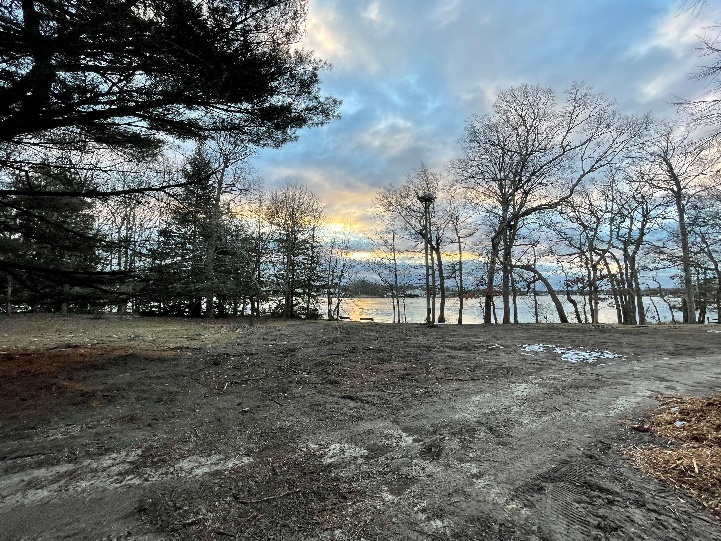
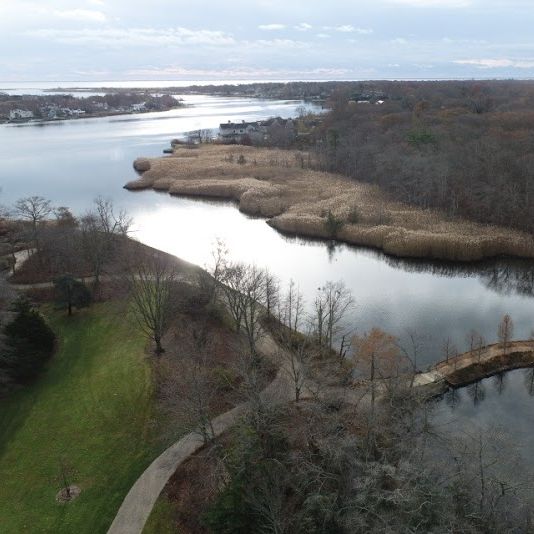
Each year we embark on new projects to reveal, rejuvenate, or completely renovate the landscape. One of our projects this year focuses on the Carriage House, a hub of activity for plant societies, educational classes, and holiday crafting. In the 1970s, a long Taxus baccata hedge was planted to separate the Carriage House from the Old Pinetum. Although we don’t definitively know the reason for this planting, as of late, it had become dark, overgrown, and a habitat for unruly and unwanted vines. We decided to completely remove the hedge vines to make room for a new vision. In doing so, we revealed one of the only sloped topographic features at the Arboretum, and yet another stunning view of the Connetquot River.
| | |
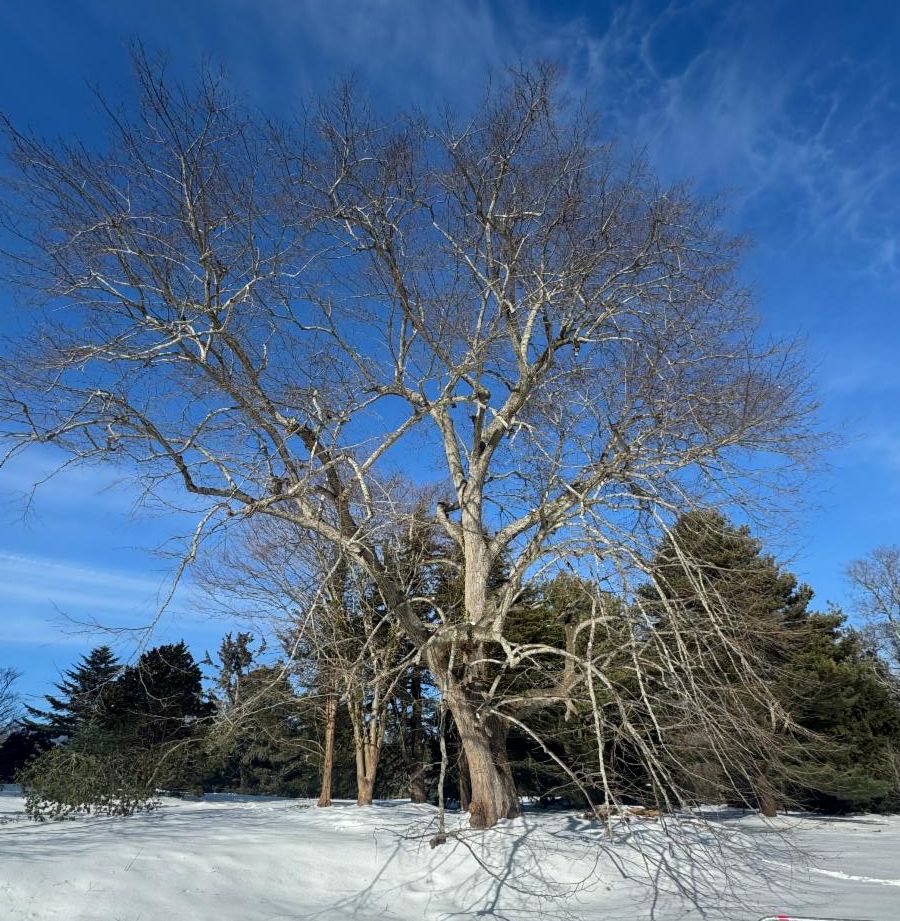
Another overlooked feature of the area is a large, beautiful, Tilia x europea, aka
European linden aka common lime as they call it in the UK. The European linden is a
cultivated hybrid between two native European species, Tilia platyphyllos (large-leaf
linden) and Tilia cordata (small-leaf linden). Our most prominent specimen is on the
Great Lawn (U-FL76), previously mentioned in a 2022 newsletter. Although I declared
my love for lindens in that newsletter article, I still drove by this one day after day
without notice, despite its 40-inch diameter and 50-foot height. It was truly a
hidden gem. After a major landscape cleanup, the Arboretum team revealed a
magnificent specimen tree that was concealed for too long.
| | |
These projects are always a team effort, not only among staff but with outside
contractors as well. For this project we called in Anderson Tree Care to prune
deadwood from the linden, as well as remove the large trees we were unable to remove ourselves. Right now, the area is a blank canvas, but we have a vision of junipers, hollies, and native shrubs to tie the Old Pinetum and the River Walk together in this newly revealed space. This area will be evolving over the next few months, so I urge you to visit and witness the evolution firsthand!
| | Jessica O'Callahan, Grounds Supervisor | | |
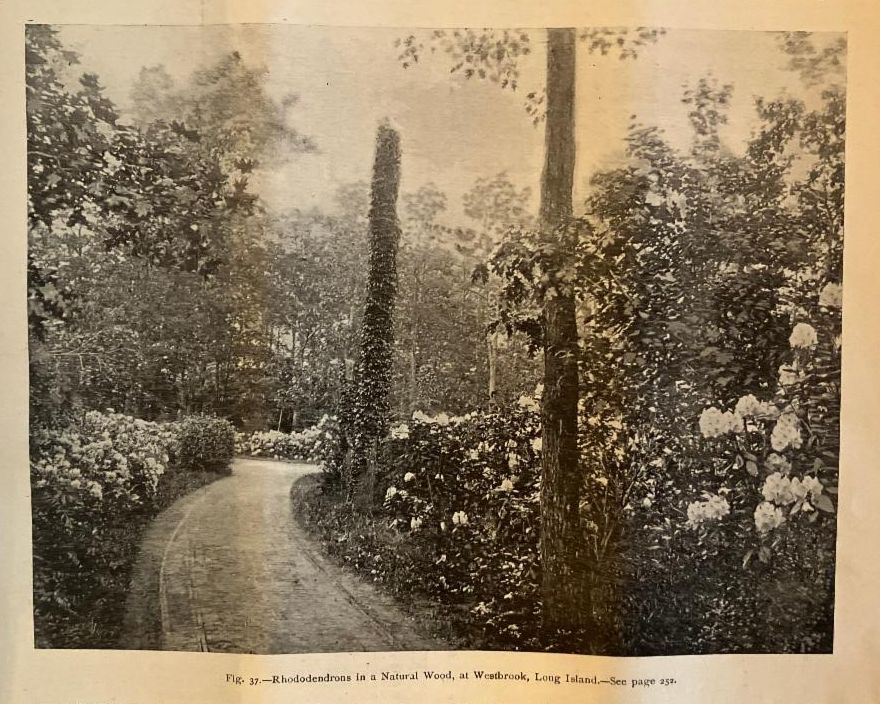
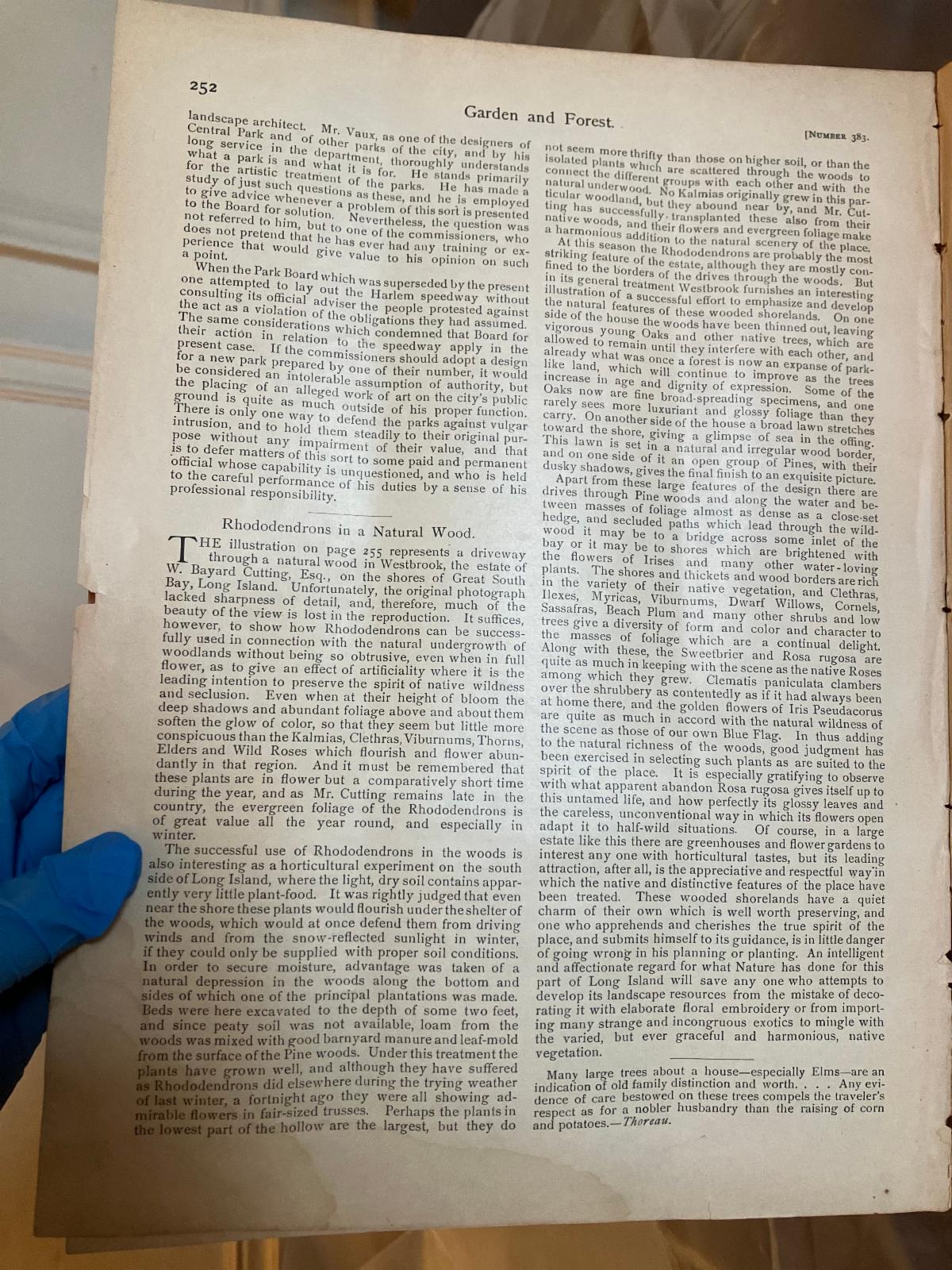
While our house curator, Stefanie D’Erasmo, was inventorying the archives, a photocopy of an article and image regarding Westbrook titled, “Rhododendrons in a Natural Wood” by Professor Charles Sprague Sargent dated June 26, 1895, was uncovered. Where was this article published, and could there be more? Thanks to those who saved pieces of the past, including the Cuttings, we would soon find answers.
The founding director of the Arnold Arboretum, Charles Sprague Sargent, was a friend and advisor to Mr. & Mrs. Bayard Cutting, especially as they were planning Westbrook. Interestingly, Sargent established the first American Journal devoted to horticulture, botany, landscape design and preservation called Garden and Forest: A Journal of Horticulture, Landscape Art, and Forestry. This was a weekly magazine that ran from the years 1888-1897 in which Sargent independently published 10 volumes. While each issue varied on subject, they contained scholarly articles, guidance into horticultural practices and designs, and correspondence sections devoted to their readers.
| | |
Throughout the journal series, we came across numerous mentions of and correspondence between the Cuttings and Sargent. Though in need of conservation, a complete set of the first publication of each volume of Garden and Forest was found in the Manor House. Thanks to modern technology, their digital companion is accessible through the Library of Congress. What started as a standard inventory led to a rediscovery of invaluable information for the Bayard Cutting Arboretum. Reviewing the archives serves as a reminder that the past is always present – you just need to know where to look.
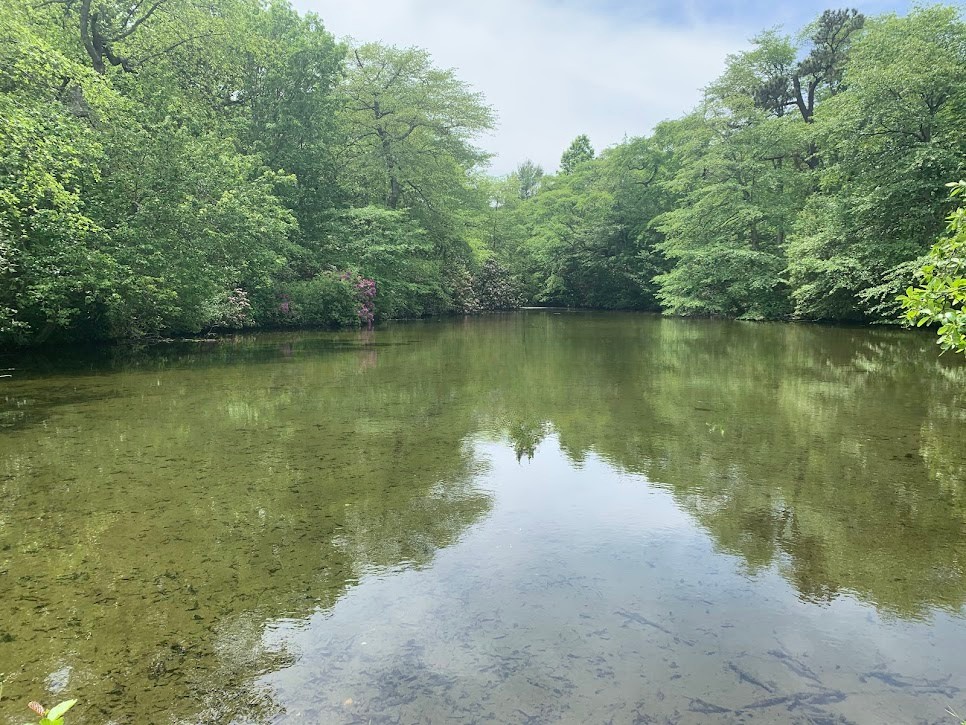
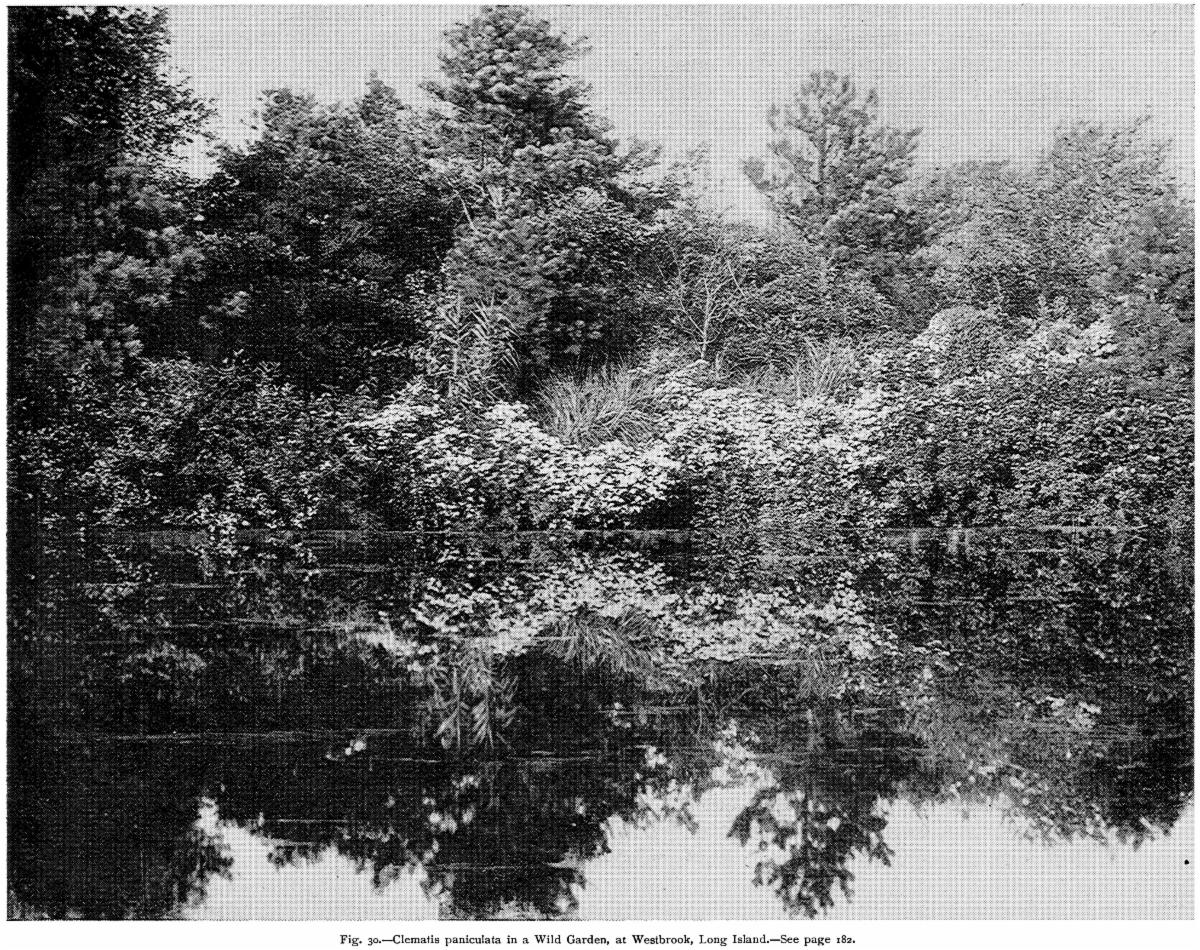
| | With the help of these archival documents, we can piece together history and comprehend the Cutting family’s vision for the landscape. The correspondence between William Bayard Cutting and Sargent add depth and purpose to our modern contributions. One of the articles I found invaluable focused on Westbrook titled, “Clematis paniculata in a Wild Garden” by Sargent dated May 6, 1896. In the article we get an incredibly visual description and photo of the Olmsted designed ponds and surrounding plant palette. Many of the plants listed correspond to Olmsted's initial plant list from just ten years prior (1886). The text does a beautiful job defining the contradictory nature of designing and maintaining a “wild” garden. Sargent writes, “These shores at Westbrook furnish many suggestions for a wild garden, by which we do not mean a garden left to run wild, but one planted and tended so as to give that appearance of untamed luxuriance, of careless and unstudied grace which suggests perfect freedom.” I love this quote as it perfectly captures the legacy Mrs. Cutting left behind in her deed of gift. The delicate curation of informal plantings displaying rare and unique specimens is what makes our landscape so special. It seems that 130 years ago, Sargent felt the same way. | | The photo of the pond surrounded by rhododendrons, Eastern white pines, oaks, and grasses is comparable to what we still see today. However, the clematis no longer exists around the ponds. I wonder how and when this decision was made. Was it removed due to its invasive nature, inability to maintain, or simply a design choice? Was it a decision at all or did the clematis just peter out (unlikely). These shifts in our landscape are a consistent reminder that nature ultimately makes the decisions. Our management of a “wild” yet tended landscape is just a dance we choose to participate in. Decisions are made by following nature's lead and knowing when to intervene. We see this now along the Arboretum’s coastline. The same ponds and shoreline that Sargent so eloquently characterizes as "untamed luxuriance" are under stress due to our changing environment. We are making decisions to form possible solutions to preserve this “luxuriance” while honoring the Cutting’s legacy and respecting nature’s main role. You can learn more about the challenges and solutions of regarding the coastline at our 8th Annual Symposium, Evolution of the American Landscape: Making the Coastal Connection. | | |
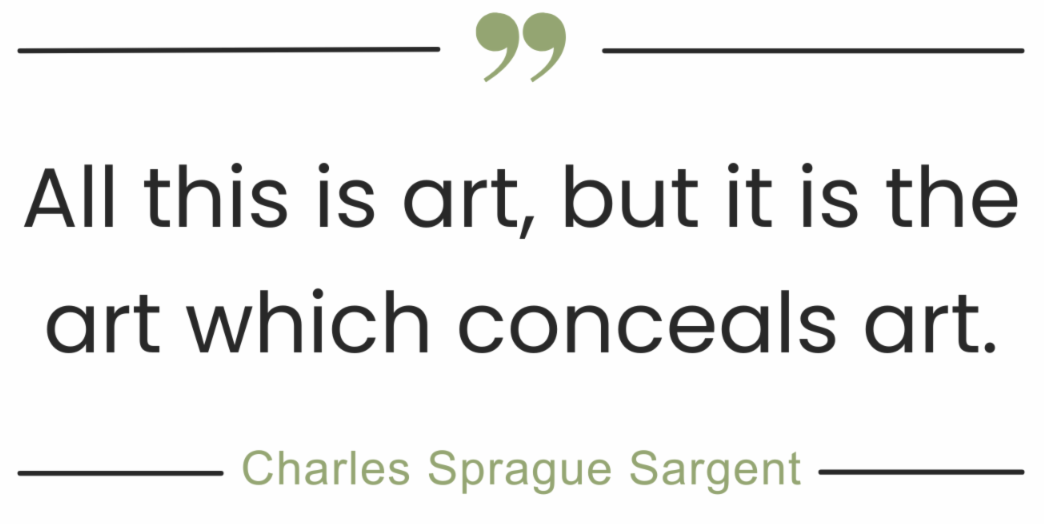
Sargent understood the vision of Westbrook and noted the beauty of creating such a landscape. On behalf of the Cutting family, I felt a sense of pride when reading his conclusion of Westbrook. “All this is art, but it is the art which conceals art. To create such a scene requires patience, a knowledge of plants and the prophetic eye of taste.” We are so fortunate to have Bayard Cutting Arboretum as a place to visit and enjoy. Even 130 years later, we strive to approach our landscape as the Cutting family once did. The correspondence between Sargent and Mr. Cutting was an exciting glimpse into their horticultural passion and simple desire to enjoy the world around us. The volumes of Garden and Forest: A Journal of Horticulture, Landscape Art, and Forestry add a layer to our understanding of the landscape and strengthens our purpose in stewardship of this wonderful Arboretum.
| | Joy Arden, Landscape Curator | | |
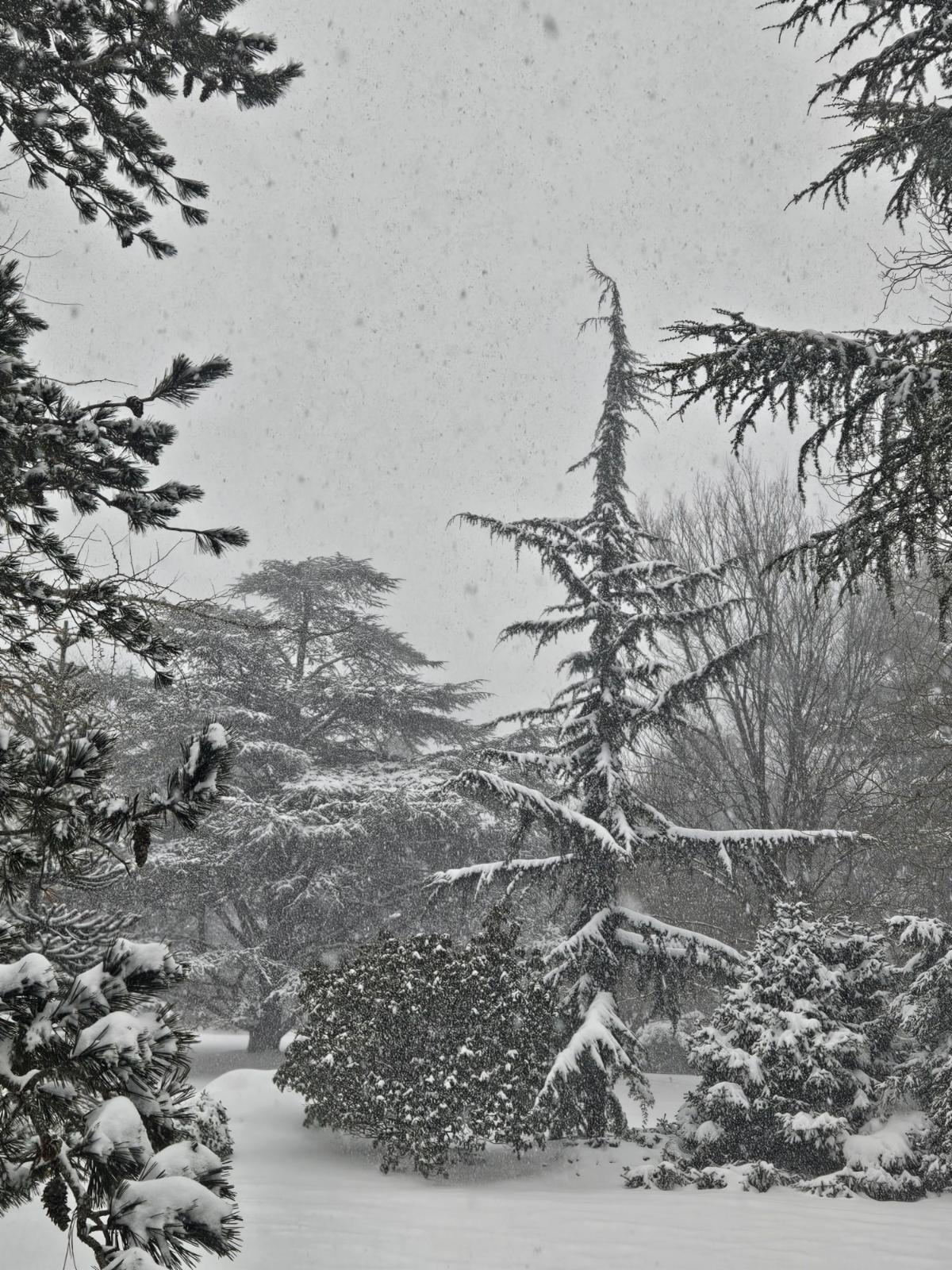
The Pinetum Extension covered in a blanket of snow.
Kevin Wiecks, Director
| | Bayard Cutting Arboretum Symposium 2026 | |
Bayard Cutting Arboretum Horticulture Symposium Evolution of the American Landscape: Making the Coastal Connection
Monday, February 23, 2026
This year’s symposium will be held at the Bayway Arts Center, 265 East Main Street, East Islip, NY. A shoreline tour and discussion will follow at the Bayard Cutting Arboretum, 440 Montauk Highway, Great River, NY.
Information and Registration!
| | |
Join certified forest therapy guide, Linda Lombardo of Wild Heart Nature Connection, on a walk to reconnect with the natural world around us. We’ll slow down, wander, and notice what most of the world simply walks past; the beauty of nature in any season. We’ll do some grounding, connect with the trees and water, and even create some nature art together.
Saturdays
Fee: $45 per person.
Please wear comfortable, sturdy shoes and warm clothing for walking outdoors. Register here!
| | Find More Educational Programs on our Website! | | Help Support Bayard Cutting Arboretum | |
Tax deductible donations can also be made by check payable to
Natural Heritage Trust and mailed to
Bayard Cutting Arboretum, PO Box 907, Great River, NY 11739
| | | | |