Image of the seal of UConn Office of Outreach and Engagement

February 2026 Newsletter

The sun sets on the UConn campus in Storrs on Monday, Sept. 1, 2025. (Sydney Herdle/UConn Photo)

The sun sets on the UConn campus in Storrs (Sydney Herdle/UConn Photo)

2026 Service Learning Fellows

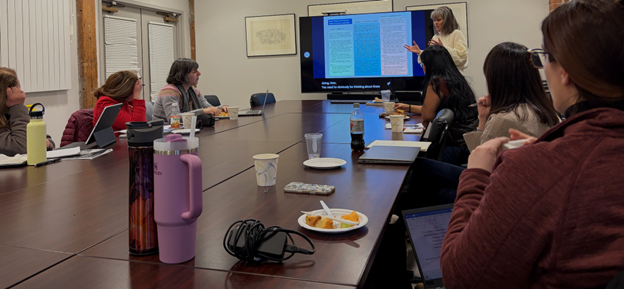
Picture of a woman talking to people sitting on a rectangular table

The Service Learning Fellowship Program is a year-long faculty development opportunity offered by UConn’s Office of Outreach and Engagement for faculty who seek to design, enhance, or teach community-engaged courses.


Through training, mentorship, peer learning, and community partnership support, Fellows learn best practices in service learning and community engagement and how to integrate these approaches into their teaching, research, and public service. Participants also build leadership capacity and become recognized campus leaders in service-learning pedagogy and community engagement.


The 2026 Service Learning Fellows program officially launched this past Saturday, January 31, with a retreat held at Hands On Hartford. The retreat was designed to deepen faculty understanding of community-engaged teaching and to strengthen university–community partnerships. Hands On Hartford staff facilitated discussions about their work in Hartford, local community needs, and best practices for meaningful collaboration between universities and community organizations. Hosting the retreat on site supported direct engagement with a key community partner and advanced the program’s educational and professional development goals.

This year’s Fellows include:

Alexandra Lamiña, PhD

Assistant Professor, Department of Geography, Sustainability, Community, and Urban Studies


Professor Lamiña received a Provost Common Curriculum Grant for a new course she is developing, WGSS3XXX: Gendering Améfricas. Through this support, she is designing the course as a community-engaged learning experience that brings students and research partners into Indigenous and Black socio-spatial content while fostering skills in ethnography, cartographic archival analysis, and geovisualization. Grounded in Indigenous and Black feminist, decolonial, and anti-racist frameworks, the course integrates her long-term collaborative research in Amazonia and the work of her Indigenous Geographies Lab to connect theory with practice.


Aviana Rosen, PhD

Assistant Professor in Residence, College of Agriculture, Health and Natural Resources, Department of Allied Health Sciences


Professor Rosen is developing AH 4010: Sexual and Reproductive Health, an upper-level course to be offered on the Waterbury campus beginning Spring 2026. Designed for junior and senior Allied Health Sciences students, the course uses a project-based learning model in which students design and deliver tailored sexual and reproductive health promotion lessons for specific populations. Her goal is to evolve the course into a service-learning, community-engaged experience in partnership with local organizations.


Daphne Aguirre, PhD, and Fatma Selampinar, PhD

Associate Professor and Professor in Residence, Department of Chemistry


Professors Aguirre and Selampinar received a Provost Common Curriculum Grant for CHEM 2XXX: Introduction to Forensic Chemistry. This multidisciplinary course connects core chemical principles to real-world applications in the justice system through hands-on, empirical inquiry. The faculty plan to incorporate community-engaged learning through forensic science outreach, including educational modules for K-12 audiences and partnerships with local forensic laboratories.


Ellen Smith, PhD

Associate Professor in Residence, UConn School of Social Work


Professor Smith received a Provost Common Curriculum Grant for SOWK 2XXX: Social Work Perspectives on Gender-Based Violence. The course centers gender-based violence as a social justice issue and emphasizes reflective learning, dialogue, and applied practice. Plans include a service-learning component connecting students with community organizations working to prevent and respond to gender-based violence in the Hartford area.


Kimberly B. Price-Glynn, PhD

Associate Professor of Sociology, UConn Hartford and Storrs


Professor Price-Glynn seeks to use the Service Learning Fellows Program to adapt her long-standing Sociology of Carework course into a fully developed service-learning model and to support the development of a sociology graduate teacher training program. Her work emphasizes ethical, inclusive, and sustainable community partnerships that strengthen undergraduate learning and prepare graduate students for engaged college teaching.


Tamara Kaliszewski, MSHS, PA

Associate Professor in Residence, Department of Allied Health Sciences


Professor Kaliszewski aims to revise and strengthen her undergraduate course Health Education and Promotion, connected to the Hands on Health project at UConn Waterbury. Through the Fellows Program, she plans to incorporate best practices in service learning by adding a structured classroom component, refining learning objectives, and strengthening students’ roles as facilitators in a community-engaged health education program.


Sarah King, MAT

Adjunct Instructor, UConn Hartford

Professor King seeks to integrate service learning more intentionally into ENGL 1007 First Year Writing. Her goal is to expand a long-standing research and writing project into a service-oriented learning experience that connects writing, inquiry, and activism with community engagement. Drawing on her experience with museum-based learning and environmental activism, she aims to help students see service learning as a meaningful extension of rhetorical and civic practice.

Webinar Series: '25 Winners of Provost’s Awards for Excellence in Community Engagement

This special webinar series spotlights the 2025 recipients of the Provost’s Awards for Excellence in Community Engaged Scholarship, honoring their collaborative efforts to address pressing societal challenges through research, teaching, and service.


Through inspiring conversations, awardees will share insights into their community partnerships, innovative approaches to engaged scholarship, and the real-world impact of their work. Whether you’re an educator, student, community member, or engagement professional, these sessions offer a unique opportunity to discover how UConn continues to advance its land-grant mission and strengthen its commitment to the public good.


Peter Chen: 2025 Emerging Faculty Research Award

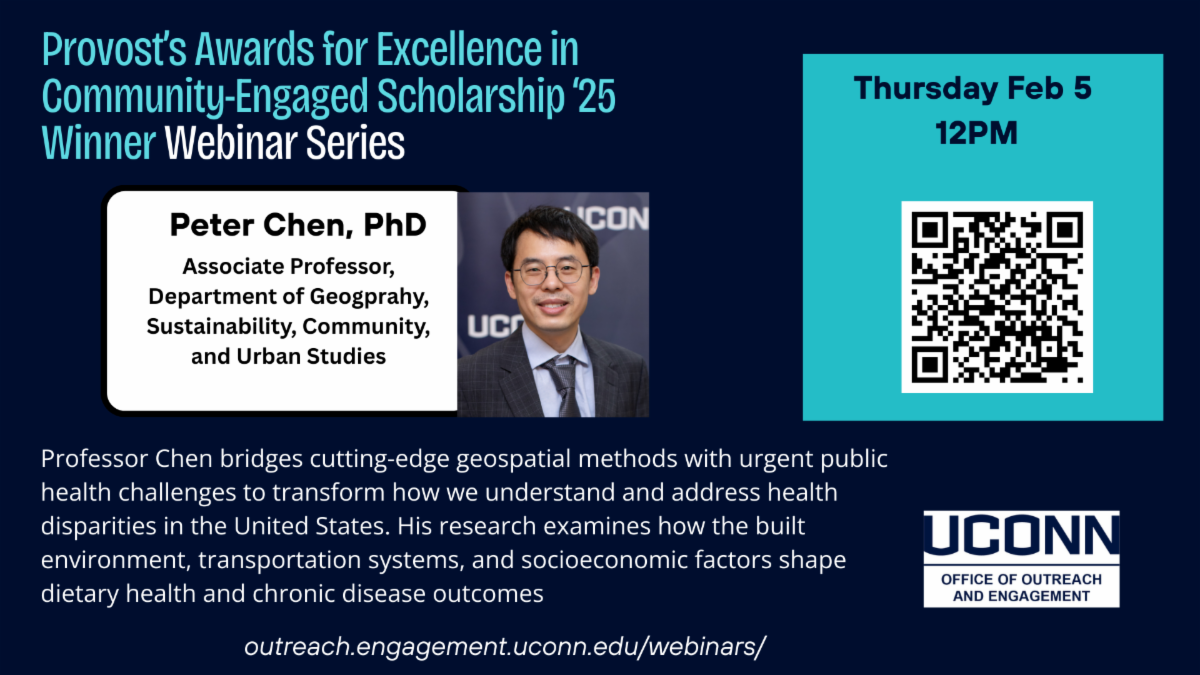
Professor Peter Chen is an award-winning scholar whose research uses cutting-edge geospatial methods to advance health equity and food access in underserved communities.


Professor Chen’s work examines how food environments, transportation, and socioeconomic factors shape health outcomes across the U.S. He is the creator of the Retail Food Activity Index (RFAI)—a groundbreaking, GPS-based measure of food access published in Nature Communications, and a leader in town-level COVID-19 forecasting that supported local public health decision-making.


With 64 peer-reviewed publications, major federal and state-funded projects, and deep community partnerships, Professor Chen translates data into real-world impact, from food access tools to policy-relevant dashboards.

Flyer of the webinar for Peter Chen

Date and Time

Name

Award Category

Registration Link

Thursday, February 5, 2026 at 12PM

Peter Chen

Emerging Faculty Research Award

Registration Link

Laura Cisneros: 2025 Distinguished Faculty Community Impact Award

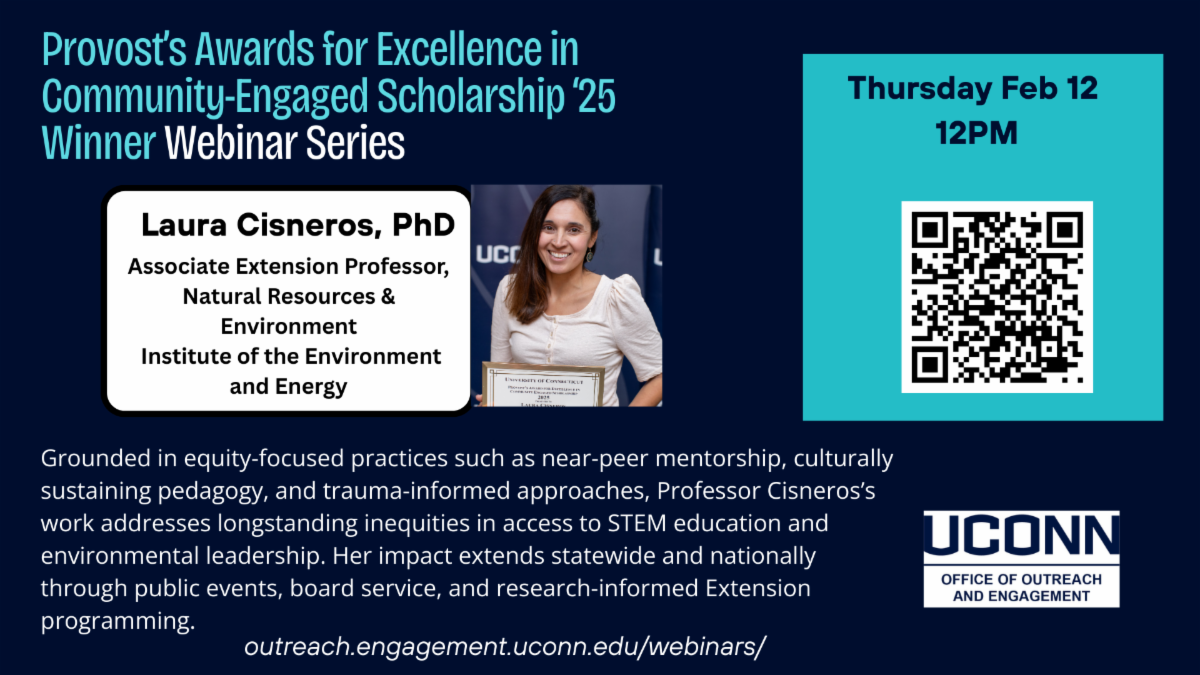
Professor Cisneros is a leader in community-centered environmental education and the Director of the Natural Resources Conservation Academy (NRCA). Her work redefines how science connects with communities, making it accessible, inclusive, and action-driven.


Under Professor Cisneros’s leadership, the NRCA has supported more than 200 environmental action projects across 125 Connecticut towns, engaging more than 570 participants—including teens, educators, volunteers, and undergraduate mentors. These programs empower communities to take meaningful action while cultivating the next generation of environmental leaders.

Flyer of the webinar for Laura Cisneros

Date and Time

Name

Award Category

Registration Link

Thursday, February 12, 2026 at 12PM

Laura Cisneros

Distinguished Faculty Community Impact Award

Registration Link

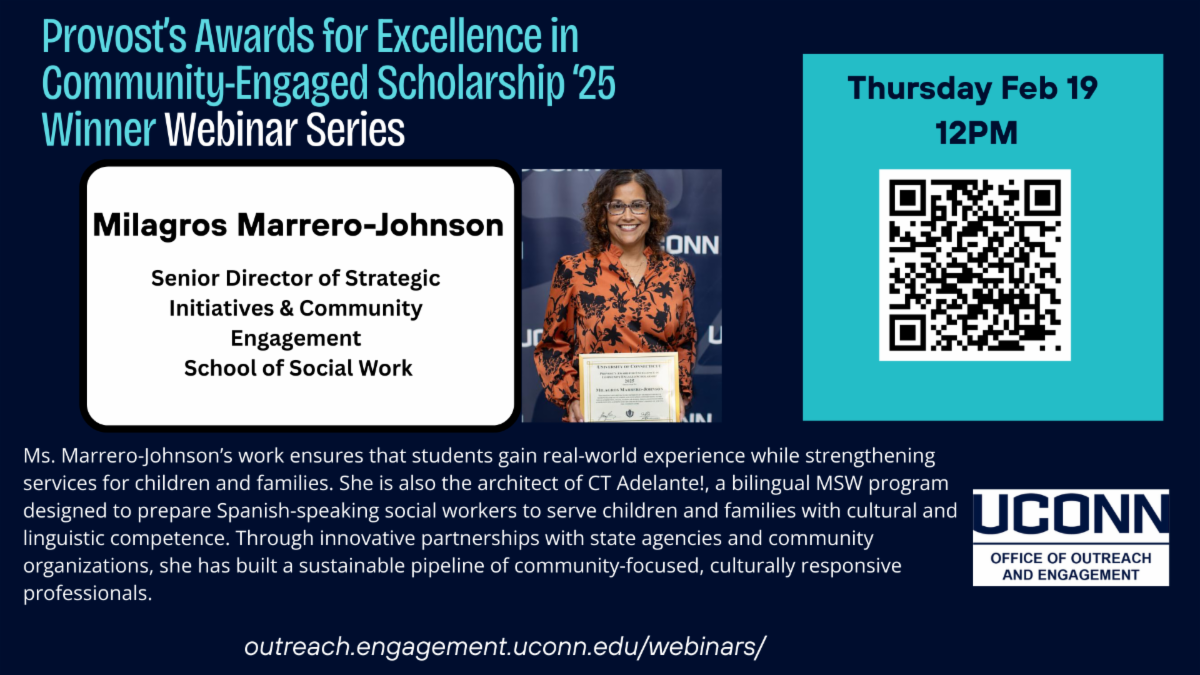
Milagros Marrero-Johnson: 2025 Distinguished Staff Award

Milagros Marrero-Johnson is a visionary leader whose work bridges higher education, community partnerships, and equity-driven workforce development. For more than 20 years, she has been a powerful force connecting UConn’s School of Social Work with communities across Connecticut.


Ms. Marrero-Johnson has led and managed multi-million-dollar state and federal initiatives, including a $3.1M U.S. Department of Education grant supporting school social work and youth behavioral health in Hartford, New Britain, Vernon, and Waterbury. Her work ensures that students gain real-world experience while strengthening services for children and families.

Flyer of the webinar for Milagros Marrero-Johnson

Date and Time

Name

Award Category

Registration Link

Thursday, February 19, 2026 at 12PM

Milagros Marrero-Johnson

Staff Award

Registration Link

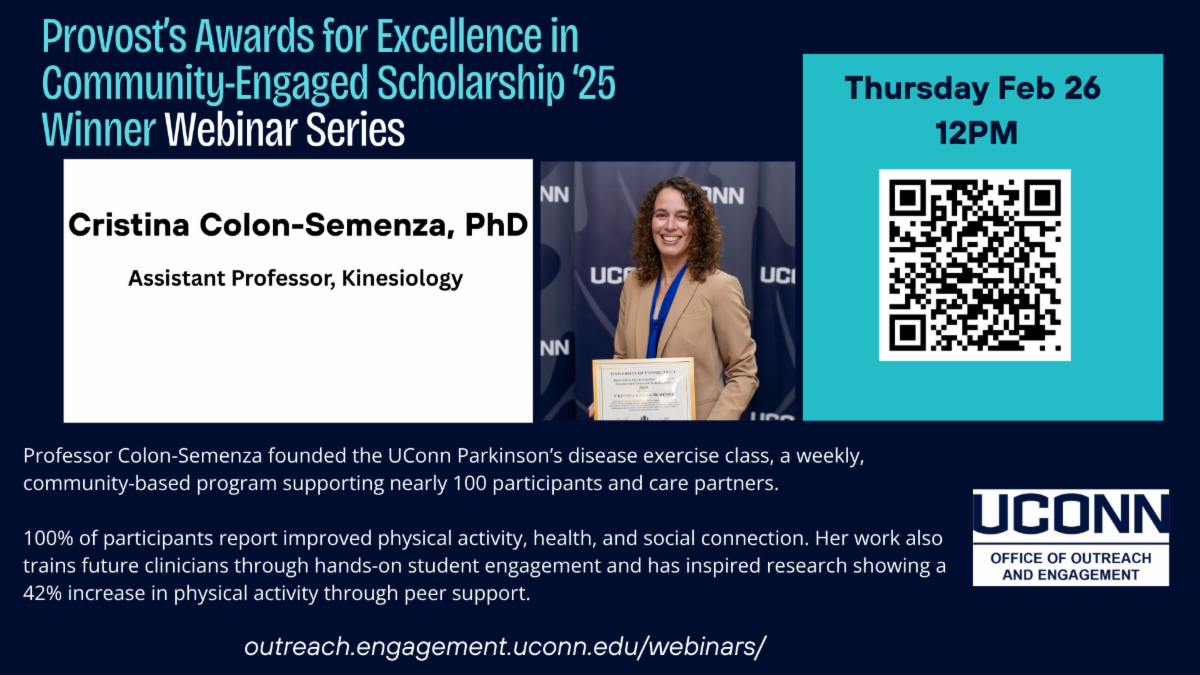
Cristina Colon-Semenza: 2025 Emerging Faculty Community Impact Award

Cristina Colón-Semenza is an emerging leader whose work blends research, education, and community engagement to improve the lives of people living with Parkinson’s disease.

Recognizing that exercise can dramatically slow disease progression but is often inaccessible,

Professor Colón-Semenza created the UConn Parkinson’s disease exercise class, a weekly, community-based program that supports long-term physical activity and social connection. What began as a small initiative has grown into a thriving community impacting nearly 100 individuals with Parkinson’s disease and their care partners, with 100% of participants reporting improved physical activity, health, and social connection.


Her program also provides powerful experiential learning for UConn students, training future clinicians through hands-on engagement with people living with Parkinson’s disease. These community partnerships have directly inspired impactful research, including studies showing a 42% increase in high-intensity physical activity through peer support.

Flyer of the webinar for Cristina Colon Semenza

Date and Time

Name

Award Category

Registration Link

Thursday, February 26, 2026 at 12PM

Cristina Colon-Semenza

Emerging Faculty Community Impact Award

Registration Link

Spring '26 Workshops

This workshop will focus on ethical dilemmas that may arise while conducting community-based research. Participants will learn how to navigate these issues and how to work with the Institutional Review Board.   


Register

This workshop will provide a broad overview of community-engaged scholarship and how faculty who engage in community-based research and teaching can make the best case for their promotion and tenure. This workshop would include a panel of faculty from different disciplines who have received PTR.   


Register

Recap: "Understanding the Opioid Crisis: A Frontline Perspective"

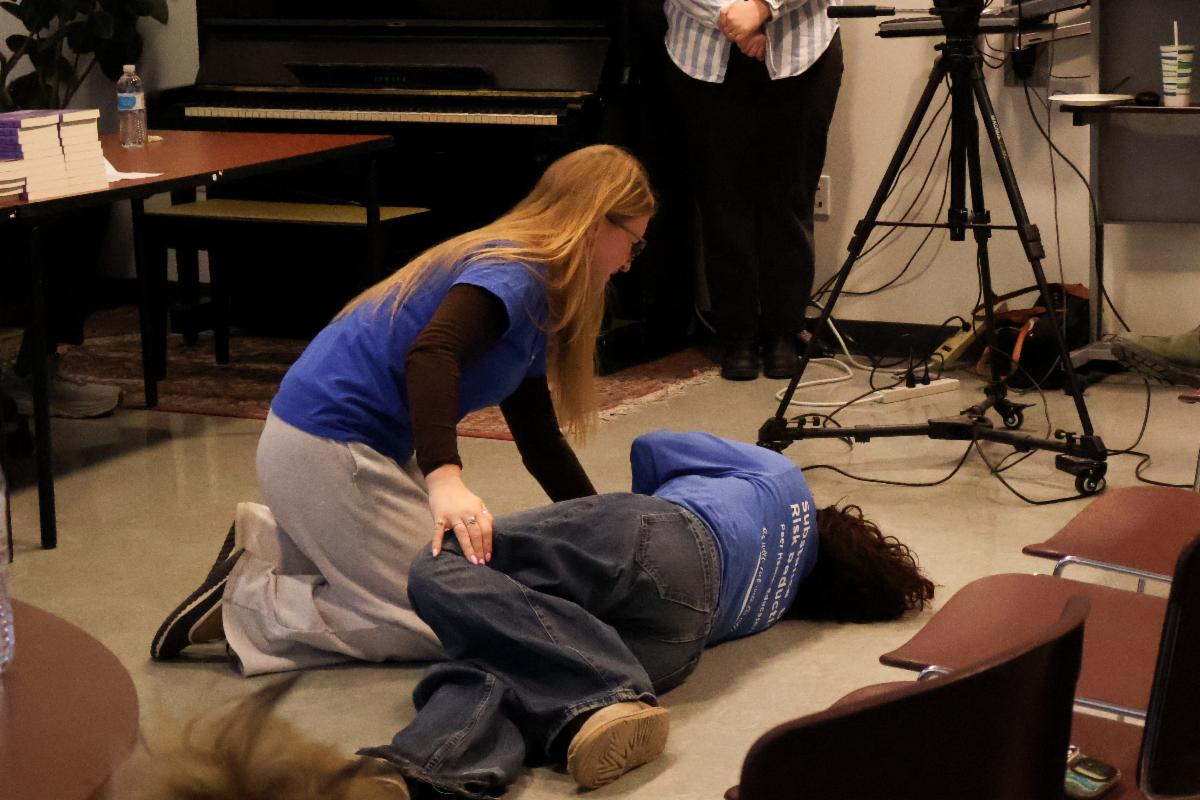
UConn student demonstrating how to provide Naloxone. It's two females.

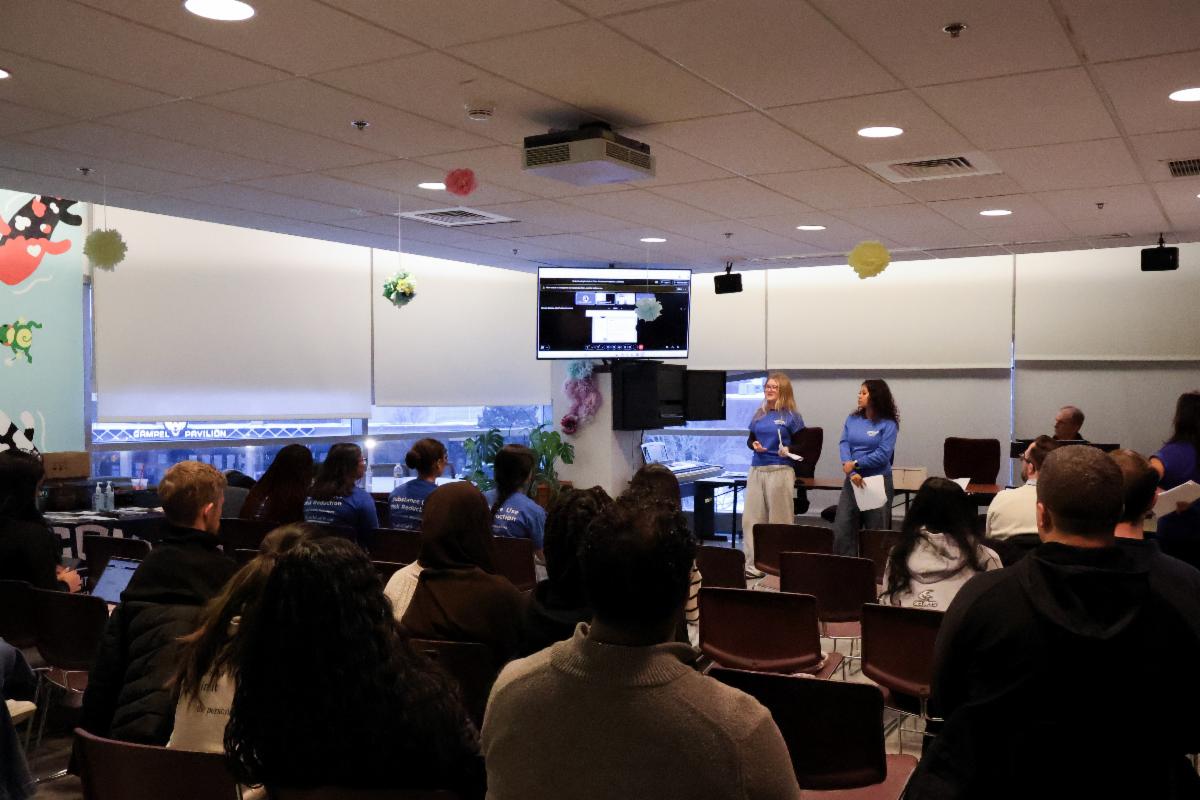
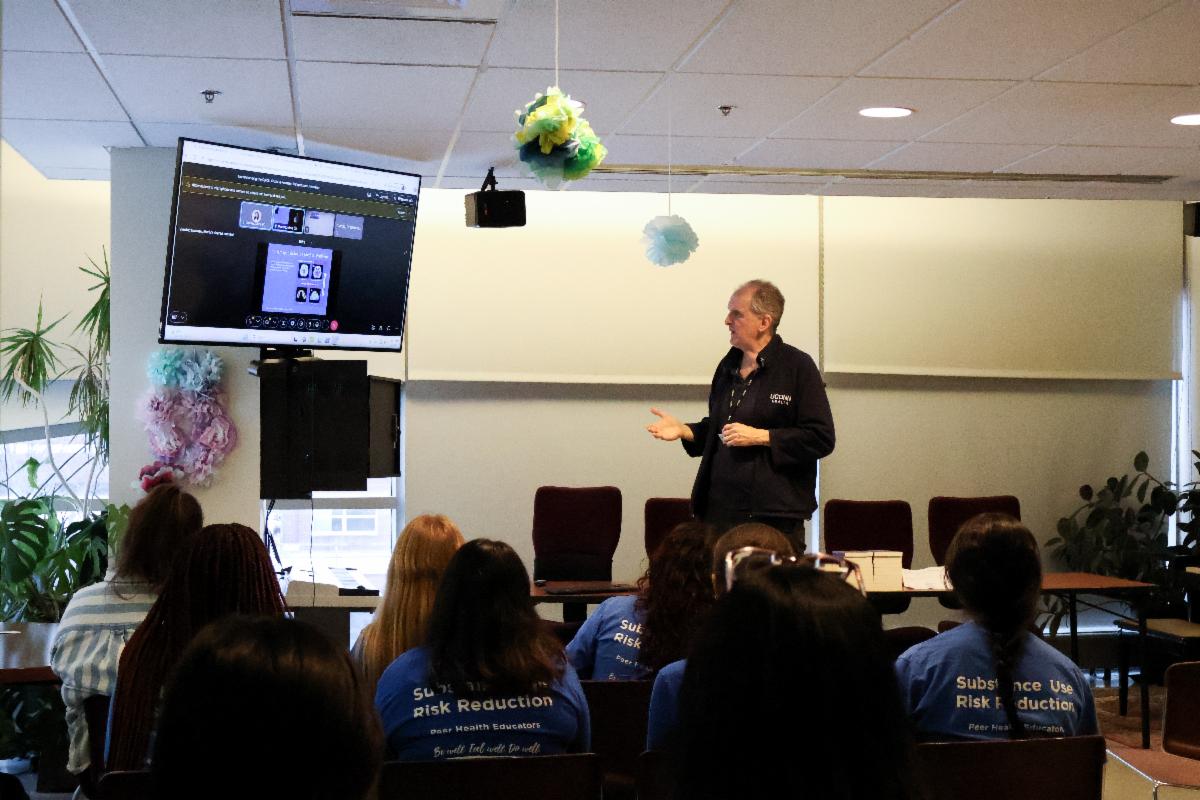
On January 28, 2026, the Office of Outreach & Engagement hosted a compelling hybrid event, “Understanding the Opioid Crisis: A Frontline Perspective,” at the Asian American Cultural Center, with livestream access.


Participants heard firsthand from UConn Health Paramedic and Public Health Advocate Peter Canning, who shared real-world experiences from decades on the front lines of emergency response. The session illuminated the roots of the opioid epidemic, highlighted the dangers of fentanyl, and explained life-saving harm reduction strategies, including recognizing overdose signs and administering naloxone.


Attendees also received practical training from UConn Student Health and Wellness peer health educators, who demonstrated naloxone administration and distributed harm-reduction resources.


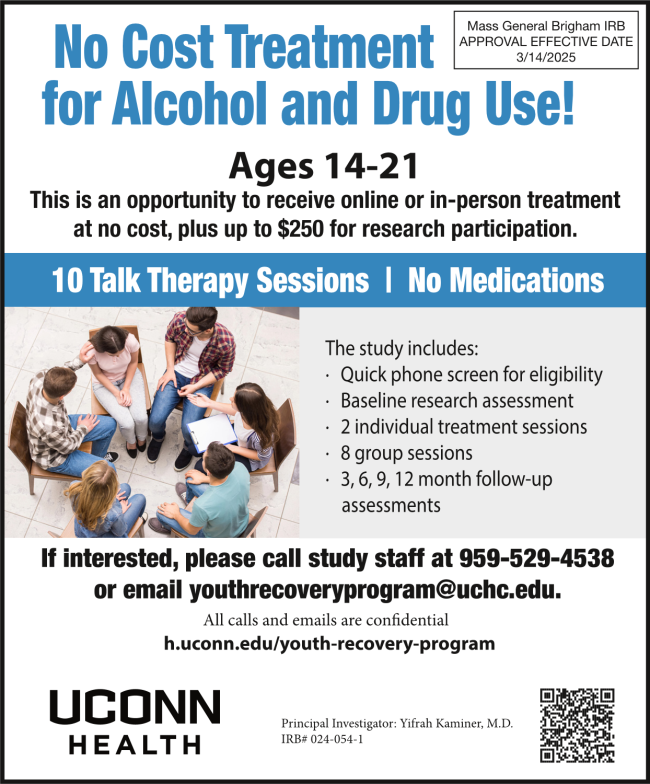
Dr. Yifrah Kaminer, Professor Emeritus of Psychiatry at UConn Health, discussed post-overdose care during the “Beyond Naloxone” segment, including a free treatment program for 14-21-year-olds, which he leads under his leadership. (Flyer at the bottom of this newsletter).


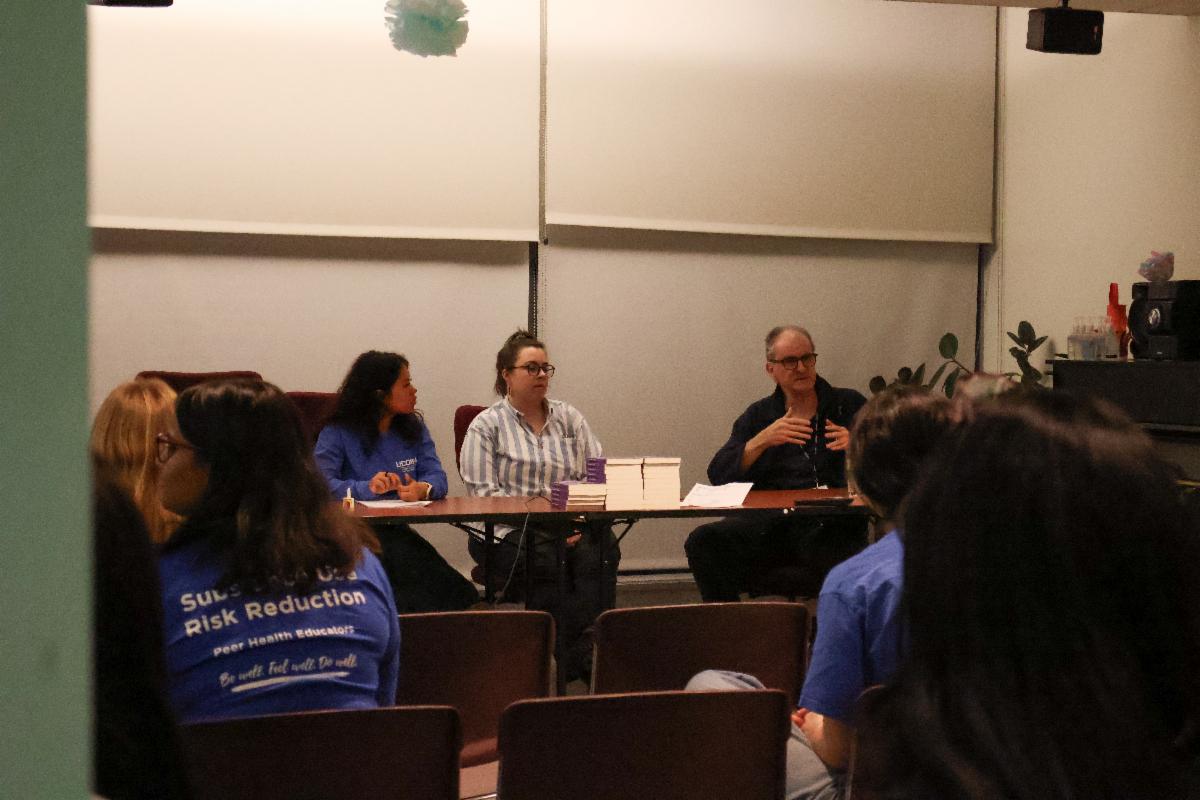
The event concluded with an engaging panel discussion that included insights from campus community partners.


Speaker Panel Contact Information


Peter Canning

canning@uchc.edu

UConn Health


Audrey Jean-Guillaume

audrey.kelley@uconn.edu

Student Health and Wellness (SHaW)


Yifrah Kaminer, M.D.

kaminer@uchc.edu

UConn Health


Sgt. Justin Cheney

justin.cheney@uconn.edu

UConn Police and Safety


If you'd like more information, please contact engagement@uconn.edu.


There are tree people in the panel list. Two females on the left and one male on the right.
Picture of a speaker and an audience
Picture of a speaker looking at a screen and an audience looking at him.

Campus Compact

Nominate an engaged student for the

2026-2027 Newman Civic Fellowship

Campus Compact is now accepting nominations for the 2026-2027 Newman Civic Fellowship, a yearlong program that recognizes and supports outstanding community­-committed students at Campus Compact member institutions.


The fellowship is an in-depth opportunity for undergraduate and graduate students to nurture their passions, engage in collaborative action, and address issues that matter to them. Through the fellowship, Campus Compact provides in-person and virtual learning opportunities to build the skills fellows need to serve as effective agents of change.


Nominations due April 27th, 2026!

Please contact Vincent Moscardelli at vin.moscardelli@uconn.edu for more information

Campus Compact 2026 Annual Conference

Picture of a building in Chicago

March 16-18, 2026| Hyatt Regency Chicago, Chicago, IL


Each year, Campus Compact hosts an annual conference that brings together Compact members and supporters from across the country for learning, networking, and coalition-building.


Campus Compact national conferences are the largest and most inclusive national conferences focused on the role of higher education in building healthy communities and fostering a just and equal democracy.


Register

Campus Compact and Engaged Scholarship Consortium Event Calendar

Take advantage of these workshops and events offered exclusively to university members.

Don’t miss this opportunity to learn, connect, and grow.

Date


Event

Registration

Institution

February 10, 2026

12:00–1:00 p.m.

A Comprehensive Promotion and Tenure Toolkit for Engaged Universities

Register

Engaged Scholarship Consortium

February 11-12, 2026 - All Day

Presidential Summit; Washington, DC

Register

Campus Compact

February 16, 2026

3:00PM-4:00PM

The Dream Lab: Cultivating Hope, Creativity, And Community

Register

Campus Compact

March 2, 2026

2:00PM-3:00PM

The Dream Lab: Cultivating Hope, Creativity, and Community

Register

Campus Compact

March 11, 2026

Campus CoGenerate Affinity Network: Sustaining & Scaling

Register

Campus Compact

March 16, 2026

Compact 2026 Annual Conference

Register

Campus Compact

March 18, 2026

1:00–2:00 p.m.

Community Engagement and Impact, Impact, Impact: a Co-Curricular Model for Co-Creating Change

Register

Engaged Scholarship Consortium

April 10, 2026

11:00 a.m.–12:00 p.m.

Building Capacity for New Faculty/Graduate Students for Community Engaged Research

Register

Engaged Scholarship Consortium

Engagement Scholarship Consortium

Call for Proposals Now Open

The Engagement Scholarship Consortium seeks proposals for its 2026 annual conference, Changing Lives and Improving Society: Data-Driven Engagement and Innovation. The conference will be held October 7-8, 2026, with pre-conference activities on October 5-6, 2026, in Knoxville, Tennessee. 


The 2026 ESC Conference will be a place for us to gather and learn about the different ways that we bring together academic expertise and community wisdom to co-create a brighter future. We invite proposals that explore how engaged scholarship transforms communities, drives innovation, and builds lasting, mutually beneficial partnerships to tackle society's grand challenges through deep, pervasive, and integrated initiatives with local, regional, national, and global communities. 


Who Should Submit a Proposal? 


Individuals, teams, and transdisciplinary collaborators across the educational spectrum, including: 


·   Undergraduate and graduate students involved in community/university engagement and/or studying the impacts of service-learning and community engagement. 

·   Representatives of community, educational, government, and/or corporate organizations working in partnership with colleges and universities. 

·   University and college faculty and staff involved in the study or practice of engaged scholarship, the scholarship of engagement, the implementation of engagement programs, or service-learning.  

·   Higher education administrators, including community engagement professionals and student affairs professionals who foster institutional support for community engagement. 

·   Community members and other critical stakeholders who play key roles in community/university partnerships and their impacts. 


For scheduling and accessibility purposes, please note that the conference committee reserves the right to limit the number of accepted sessions per presenter. 


Presentation Formats 

Proposals may be submitted in any of the following formats: 


Research and Partnership Presentations – 30 minutes 


This multi-presentation format offers a focused opportunity to advance our collective knowledge of community engagement by sharing best practices, lessons learned, and research findings. Each session will consist of two 30-minute presentations, with at least 5 minutes of active discussion with the audience. To the degree possible, the conference program committee will pair individual research and project presentations around a common focus area or closely related topic. 


Interactive Workshop – 60 minutes 

Workshops are designed with an intentional focus on skill and knowledge development. Presenters should plan to share information about a particular body of knowledge, evidence-based practice, engaged teaching or research techniques, assessment or research results, or methodologies. Active discussion between the audience and presenter(s) should be encouraged throughout the session. Workshops will be scheduled for 60 minutes total, comprising 40 minutes of active discussion and 20 minutes of interactive Q&A with the audience. 


Roundtables – 60 minutes 

Roundtables are highly interactive sessions focused on a common theme or area of interest. The presenter(s) should begin the Roundtable session with a brief presentation of the results of a research study, or a rich description of a translational, educational, service-learning, clinical, or other program of engaged scholarship or evidence-based practice. The presenter(s) should then facilitate an engaging conversation with participants to answer questions, share ideas, and discuss best practices or innovative approaches. Roundtables are scheduled for 60 minutes. 


Panels – 60 minutes 

Panels are designed to exchange information about a particular body of knowledge, evidence-based practice, engaged teaching technique, assessment, research instrument, or methodology. Panels typically include three or four panelists and feature active discussions from diverse perspectives on the topic. Panels will be scheduled for 60 minutes, comprising 40 minutes of active panel discussion and 20 minutes of audience Q&A. These proposals should identify all panelists and a moderator for the panel discussion. 


Posters 

Posters are best suited for reporting the results of research studies, assessments, and evaluations, as well as for presenting translational, educational, service-learning, clinical, or other programs of engaged scholarship or evidence-based practice. Posters presented will be displayed continuously during an open viewing period. Also, to encourage networking and discussion of the displayed work, at least one presenter is expected to be present at the poster during the formal session. 


All presenters of accepted proposals will be expected to register for the conference. Preferences for the presentation format may not be feasible; however, the review team may consider an alternative format. In these cases, the review team will contact the presenter to suggest an alternative format for consideration. 


The submission deadline is Tuesday, March 31, 2026.  Click on this link to submit your proposal! 


For any further questions regarding the proposal requirements, contact info@engagementscholarship.org.  


UConn Health

FREE Substance Use Counseling: Virtual Youth Program

Flyer regarding free treatment for 14-21 year olds for substance abuse

Open to all CT residents, UConn Health is offering 10 weeks of free counseling for alcohol and/or other substance use (including marijuana), from occasional to chronic use, for ages 14-21. 


This free, confidential, evidence-based substance use counseling is offered in person (Farmington, CT campus) and virtually.


It does not require health insurance and provides up to $250 in compensation.


Treatment may begin as soon as 1–2 weeks after a quick 15-minute phone screening.


 Program Eligibility


  • Connecticut residents ages 14–21


  • Ability to speak and read English (parents/guardians don't need to be fluent)


  • Use of alcohol and/or other substances (including marijuana), from occasional to chronic use


Free Treatment Includes Virtual & In-person Options:


  • 2 individual MET (Motivational Enhancement Therapy) therapy sessions before 8 weekly group sessions using CBT (Cognitive Behavioral Therapy)


  • OR 10 weeks of MET and CBT with twelve-step treatment incorporated 


  • Facilitated by licensed, experienced clinicians (LCSWs) using a structured manual 


Additional Details


  • Participants complete baseline and follow-up research assessments at 3, 6, 9, and 12 months for a total compensation of up to $250 in gift cards.


  • Treatment may begin within 1-2 weeks after the first call/phone screen to determine eligibility (about 15 minutes)


  • No study medications, bloodwork, or invasive procedures


Dr. Yifrah Kaminer directs this program. Dr. Kaminer is happy to provide presentations/workshops, podcasts for your organization or school at no cost.


Dr. Yifrah Kaminer was featured in the media recently: Fentanyl is in Our Backyard - Connecticut and Parents Take Action - UConn Today


Apply Now! Cohen Student Leadership Scholarship

The Cohen Student Leadership Scholarship is one of UConn’s largest scholarships. Cohen recognizes undergraduate students (from all UConn campuses) who are active members of registered student organizations and have shown a strong commitment to advancing inclusion on campus.


This scholarship is awarded to students who have taken meaningful action to challenge bigotry, prejudice, and discrimination and who, through their leadership, foster understanding and respect within the campus community.


Applications are open now until February 3rd, 2026


Learn more and apply here: cohenscholarship.uconn.edu


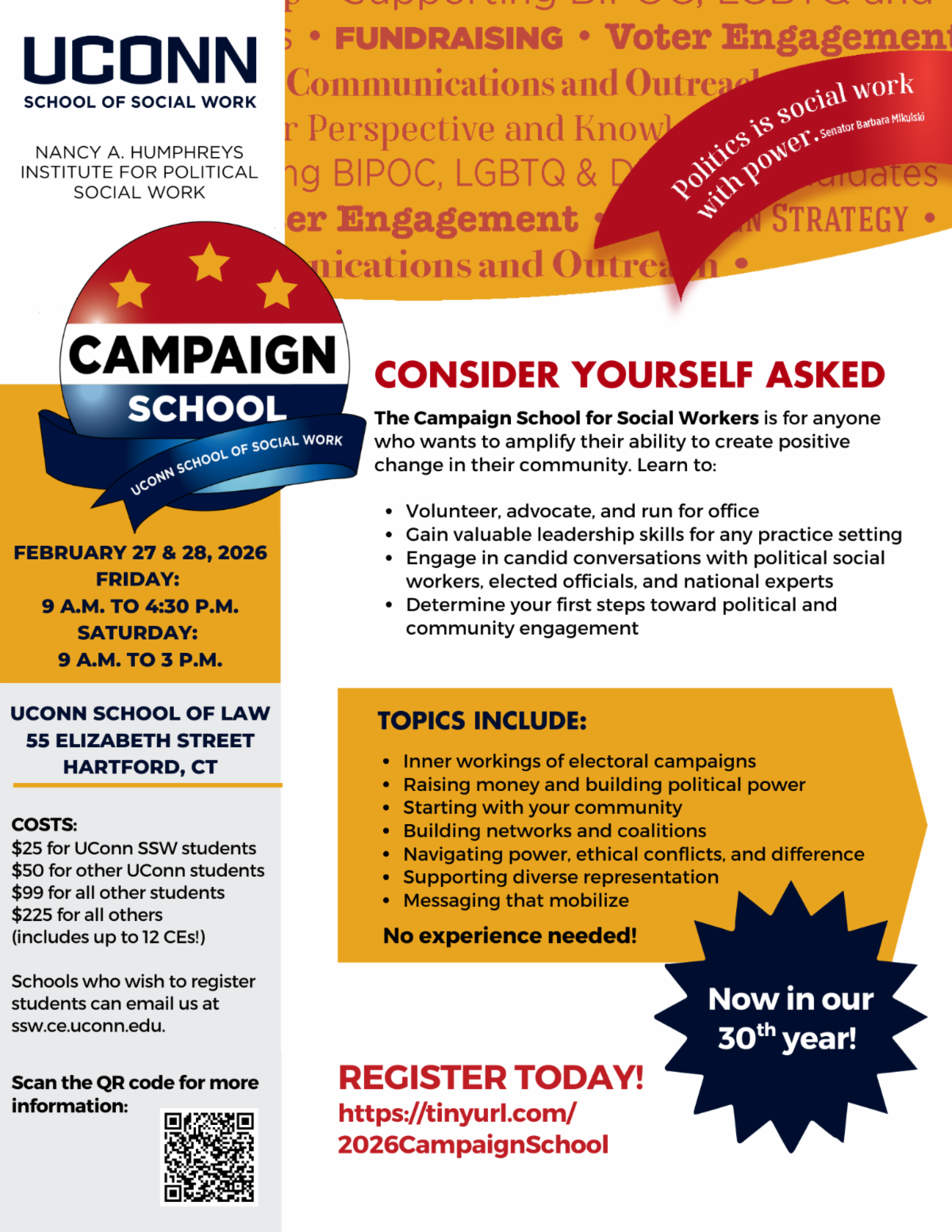
The Campaign School for Social Workers

The School of Social Work just opened registration for our annual Campaign School for Social Workers in February. We would love to welcome members of the UConn community, including faculty, staff, and students.


https://events.uconn.edu/event/1650663-campaign-school-for-social-workers

Flyer from School of Social Work

UConn Today #Community Impact


Making a Difference, from Classroom to the Community

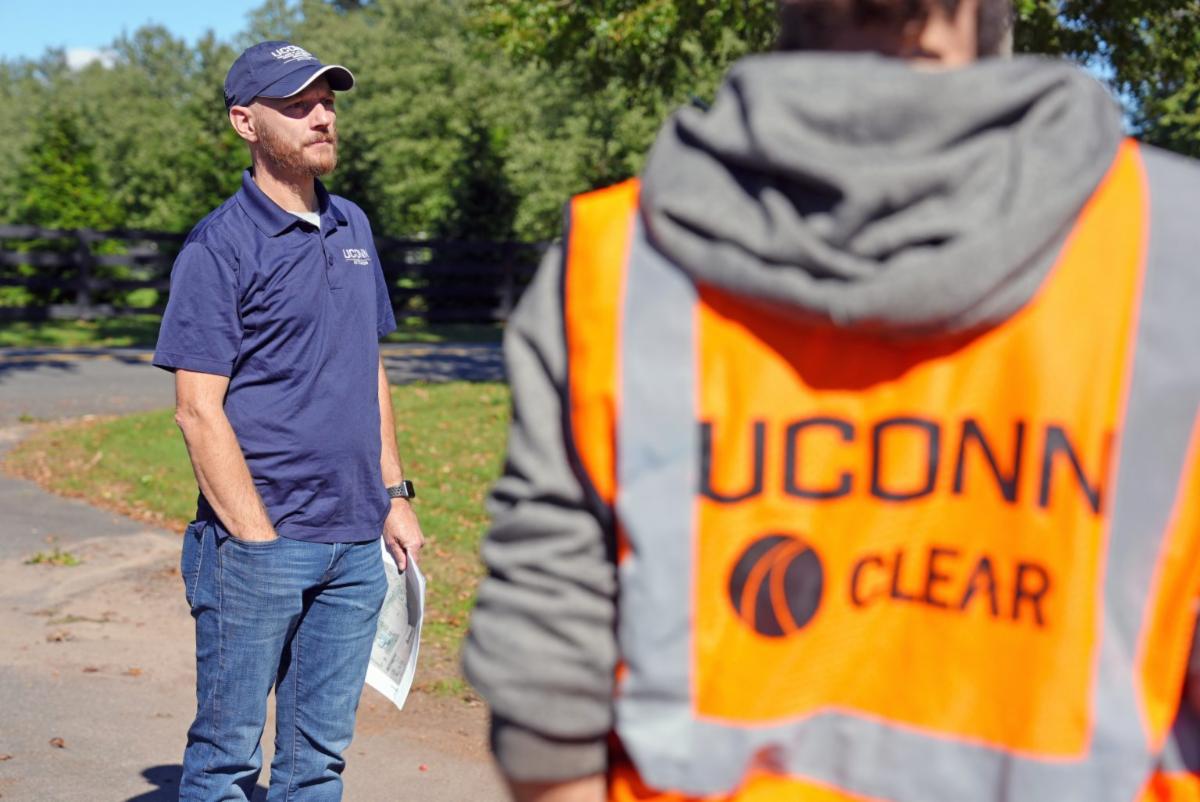
A gentleman standing with his hand on his pocket.  In front of him there is another gentleman wearing an orange UConn CLEAR sweatshirt.

(Jason Sheldon/UConn Photo)

Land grant universities, like UConn, were established with the goal of broadening the scope of education to respond to societal needs and serve the public good. One of many stellar examples of this in practice at UConn is the Environment Corps (E-Corps), which demonstrates the powerful role land grant universities play in their home states.

E-Corps had its start about 10 years ago when an interdisciplinary group of UConn researchers and educators identified a need; with the growing list of issues Connecticut’s towns and municipalities are responsible for, many were falling behind on implementing projects to enhance sustainability or climate adaptation.


Read more here.