A regional resource for climate advocates
"All the news that fits"
February 25, 2022
|
|
We Watched Two Decades of Super Bowl Ads. Here’s What They Say About Climate Change.
By Kyla Mandell, Time, February 14, 2022
Toyota debuted its hybrid Prius for the first time at the Super Bowl in 2005, calling it “good news for planet Earth.” In 2006, there were two Super Bowl ads for new hybrids: one for Toyota’s Camry hybrid, and one ad for Fords’ new Escape hybrid in which Kermit the Frog concluded that maybe it was easy being green, after all. But it’s taken 17 years and over 900 total ads for climate change to finally break through at the Super Bowl.
The majority of all green-focused Super Bowl ads over the years have been for cars—a trend that’s been increasing recently. In past years, such ads were more typical car-marketing fare, touting clean diesel and fuel efficiency, or throwing “and it’s a hybrid/electric” in at the end. See, for example, this Kia Optima ad from 2012. Read more.
|
|
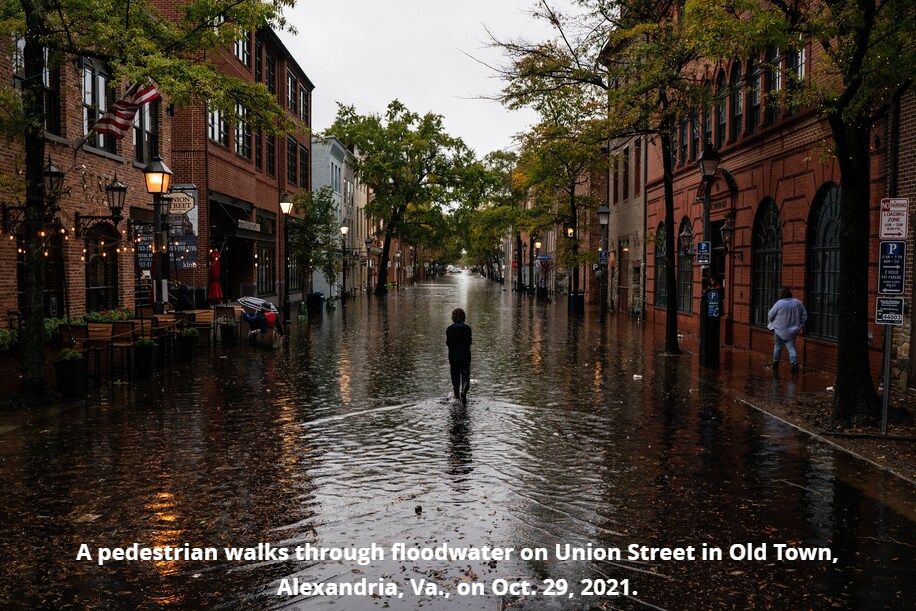
Sea level to rise one foot along U.S. coastlines by 2050, government report finds
‘There will be water in the streets,’ said the nation’s top sea-level scientist
By Sarah Kaplan and Brady Dennis, The Washington Post, February 15, 2022 | Photo credit Salwan Georges/The Washington Post
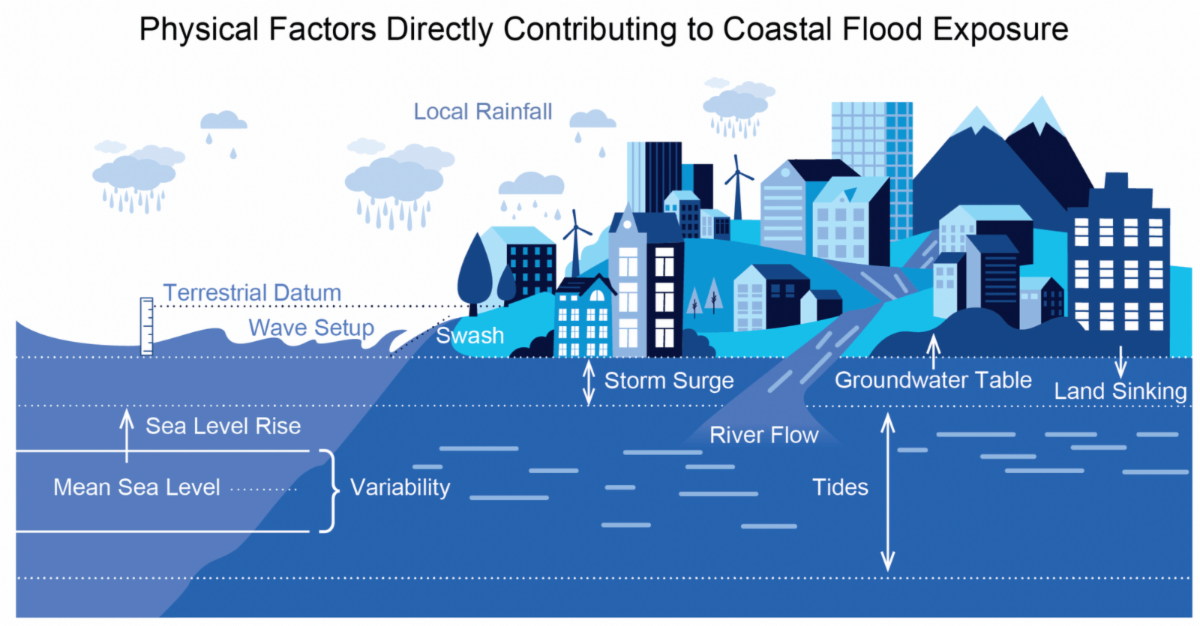
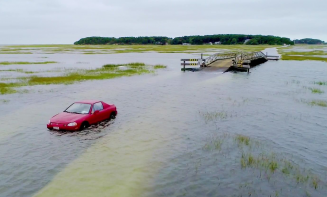
The shorelines of the United States are projected to face an additional foot of rising seas over the next three decades, intensifying the threat of flooding and erosion to coastal communities across the country, according to a report released Tuesday by the National Oceanic and Atmospheric Administration.
for saving changes
Human-caused climate change, driven mostly by the burning of fossil fuels, has accelerated global sea-level rise to the fastest rate in more than 3,000 years. The report by NOAA and other federal agencies — updating a study from 2017 — predicts that ocean levels along U.S. coasts will increase as much by 2050 as they did over the past century.
This amount of water battering the coasts “will create a profound increase in the frequency of coastal flooding, even in the absence of storms or heavy rainfall,” NOAA said. “We’re unfortunately headed for a flood regime shift,” said William Sweet, an oceanographer at the NOAA National Ocean Service and the nation’s top scientist on sea-level rise. “There will be water in the streets unless action is taken in more and more communities." Read more.
|
|
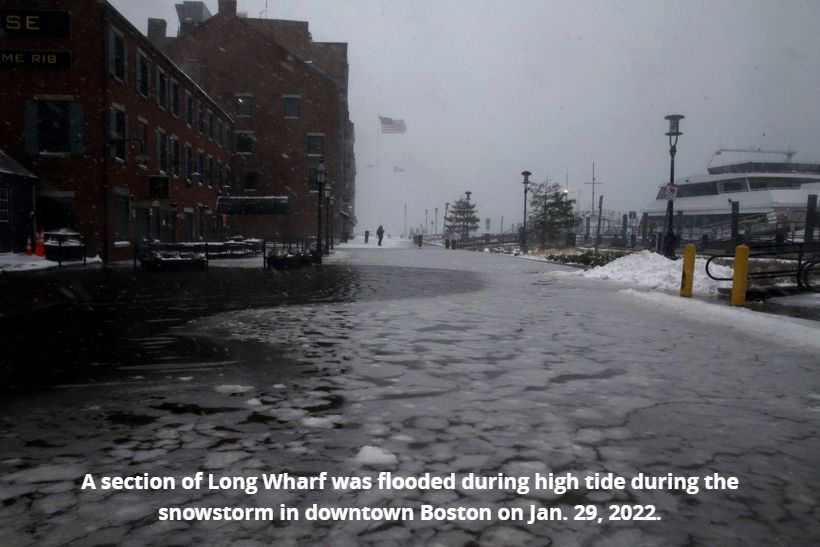
Northeast is likely to experience more than a century’s worth of sea level rise from 2000 to 2050, report finds
By David Abel, The Boston Globe, February 15, 2022 | Photo credit: Craig F. Walker/Globe Staff
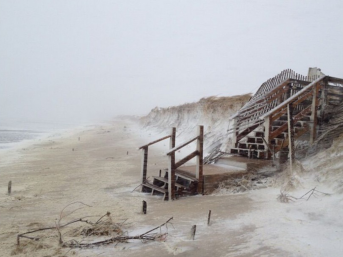
By the middle of the century, sea levels in Boston and elsewhere in the Northeast are likely to be about 16 inches higher than they were in 2000 — a much more significant increase than over the previous century, according to a new federal report.
The report also found that the region will likely experience significantly higher tides and so-called sunny-day flooding than much of the rest of the US coastline, imperiling more coastal homes, roads, and drinking water and sewer systems.Read more.
|
|
2022 Sea Level Rise Technical Report
Updated projections available through 2150 for all U.S. coastal waters.
The Sea Level Rise Technical Report provides the most up-to-date sea level rise projections available for all U.S. states and territories; decision-makers will look to it for information.
This multi-agency effort, representing the first update since 2017, offers projections out to the year 2150 and information to help communi-ties assess potential changes in average tide heights and height-specific threshold frequencies as they strive to adapt to sea level rise.
|
|
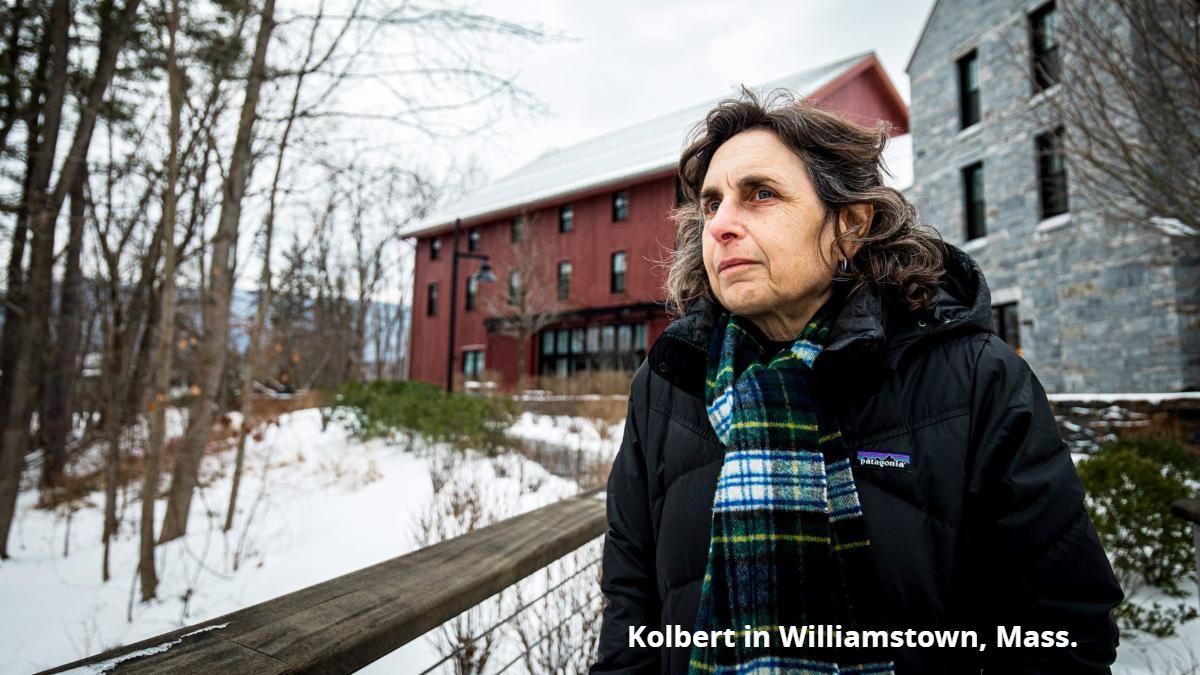
Elizabeth Kolbert on ocean-based carbon removal
Climate writer takes supportive but cautionary stance on intervention strategies
By Evan Lubofsky, Oceanus, February 17, 2022 | Photo by Daniel Hentz, Woods Hole Oceanographic Institution
Thwapp!
A silver carp weighing as much as a sack of potatoes hurled itself nearly 10 feet into the air, slamming straight into Elizabeth Kolbert’s shin.
Kolbert, a Pulitzer prize–winning author and environmental reporter for the New Yorker, experienced the stinging encounter while on a 30-foot skiff with two fishermen, venturing down the Illinois River south of Chicago. The offending carp was just one of dozens that were thrusting their bodies out of the river toward the boat—possibly spooked by its outboard motor—only to be caught midair and hauled aboard.
“They came flying out of the water. It happened very fast,” says Kolbert. “I was lucky that it was not very painful—I’ve heard alarming stories of people who ended up in the hospital with a broken eye socket or broken nose.” Read more.
|
|
Cape Cod Commission Low Lying Roads Project Moving Forward in Ten Cape Cod Towns
Cape Cod Commission, February 2022
This fall, the Cape Cod Commission and the Woods Hole Group began working with ten Cape Cod towns to prioritize the most critical road segments and develop alternative solutions for sea-level rise and storm surge adaptation. The potential for sea-level rise threatens many of Cape Cod's roadways. In addition, flooding could cut off access to and from critical areas.
Over the past few months, residents in eight Cape Cod towns have attended virtual workshops hosted by the Cape Cod Commission and the Woods Hole Group. Read more.
|
|
In the "Say Whaaat?" Department
|
|
State Lawmakers Seek To Punish Firms For Planning For Climate Change
Nexus Media News, February 16, 2022
Legislators in multiple fossil fuel-producing states are seeking to prohibit state entities from investing in or doing business with firms that account for climate change in their own risk assessments or are moving to remove fossil fuels from their investment portfolios, Politico reports. At least some of the state bills are backed by fossil-fuel backed, and climate science-denying, outside groups including ALEC, the Texas Public Policy Foundation and the Heartland Institute. The legislation could expose state assets and pension funds to climate risks, while also creating a chaotic patchwork of regulation for asset managers, all while the federal regulators at the SEC and Federal Reserve are creating guidelines for firms’ disclosure of climate risk. (Politico)
|
|
Model coastal resiliency bylaw to be presented at annual environmental conference
Bylaw dentifies natural resource protection, flood protection, and land use strategies that provide coastal and climate resiliency through mitigation and adaption to protect the natural, built, and community systems of Cape Cod.
Cape Cod Commission, February 2022
The Cape Cod Commission has developed a model coastal resiliency bylaw in partnership with the Urban Harbors Institute (UHI) at the University of Massachusetts Boston; Noble, Wickersham, and Heart, LLP; Woods Hole Group; and the towns of Bourne, Sandwich, Brewster, and Eastham. The bylaw serves as a resource to towns seeking to improve coastal resilience. “Responding to Climate Change: Promoting Resilient Local Action” was funded by a Massachusetts Executive Office of Energy and Environmental Affairs Planning Assistance Grant. Learn more here.
|
|
The energy transition is sparking America’s next mining boom
Can critical minerals be secured without wrecking the environment and sacred tribal lands?
The Economist, Feb 19, 2022 | Photo credit: The Economist/AB
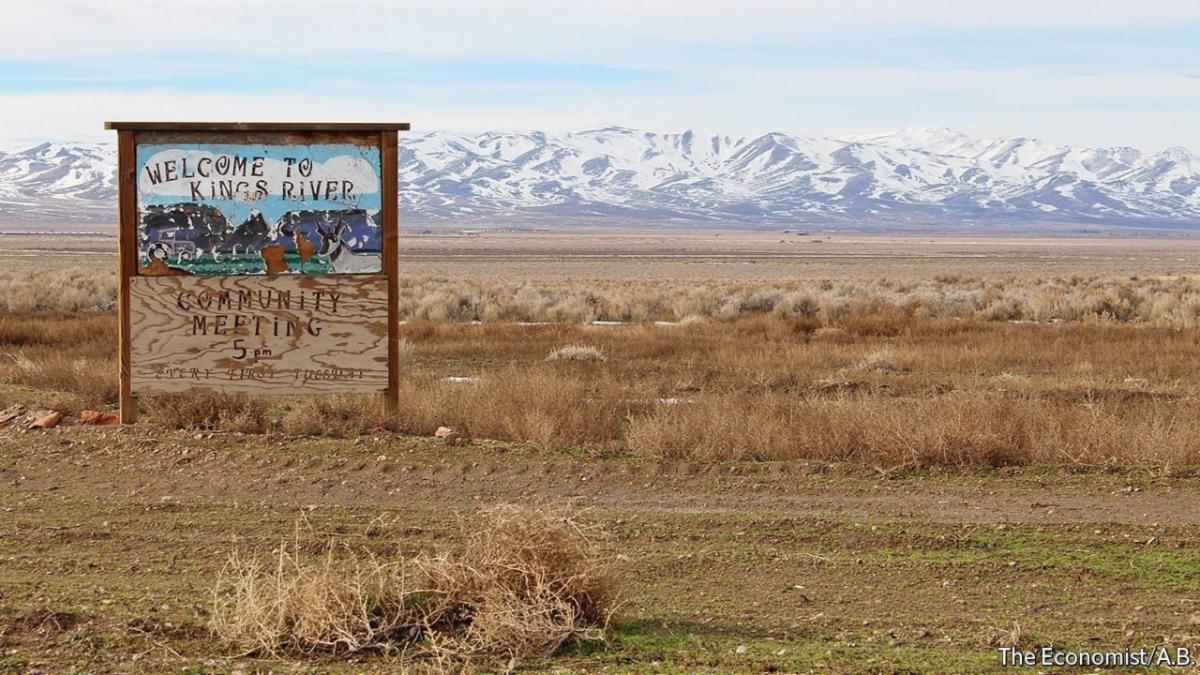
About 16m years ago, a supervolcano that straddled the borders of what is now Oregon and Nevada erupted, forming the McDermitt Caldera. The volcanic activity pushed lithium-rich rock up near the Earth’s surface, creating the largest known lithium deposit in the United States. Today, the same terrain around the Montana Mountains is carpeted with sagebrush, and coyotes are heard more often than people. But that may soon change. Lithium Americas, a Canadian company, has plans to build a mine and processing plant at Thacker Pass, near the southern tip of the caldera in Nevada. It would be America’s biggest lithium mine. Read more.
|
|
How Bad Is the Western Drought? Worst in 12 Centur-ies, Study Finds.
Fueled by climate change, the drought that started in 2000 is now the driest two decades since 800 A.D.
By Henry Fountain, The New York Times, Feb. 14, 2022 | Photo Credit: Justin Sullivan/Getty Images
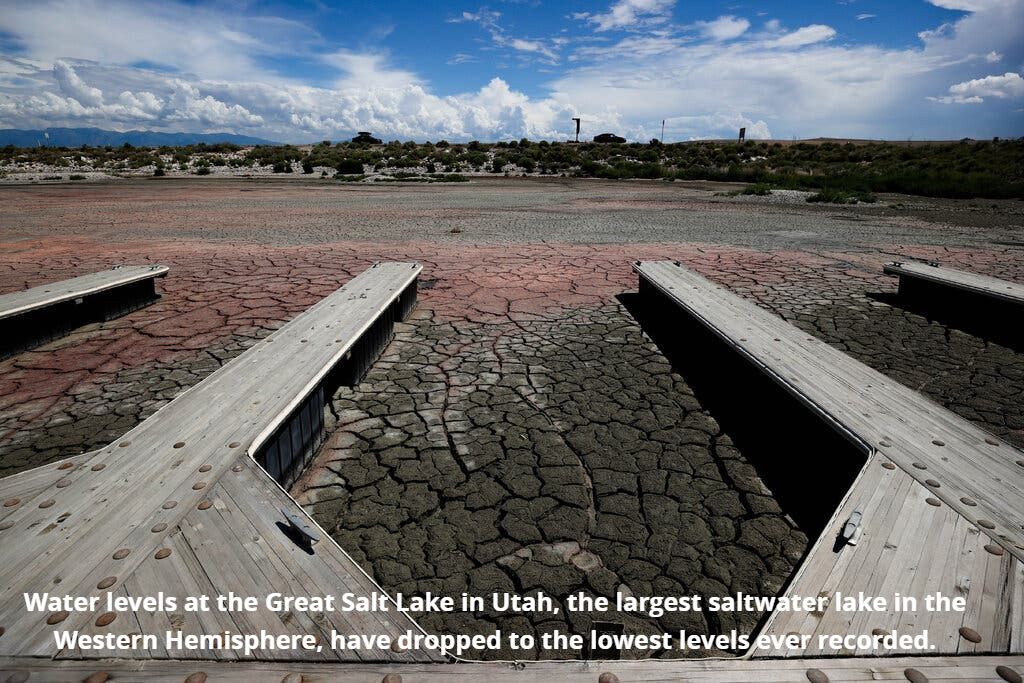
ALBUQUERQUE — The megadrought in the American Southwest has become so severe that it’s now the driest two decades in the region in at least 1,200 years, scientists said Monday, and climate change is largely responsible.
The drought, which began in 2000 and has reduced water supplies, devastated farmers and ranchers and helped fuel wildfires across the region, had previously been considered the worst in 500 years, according to the researchers.
|
|
Protecting older trees is a simple climate solution, groups tell Biden
A Sitka spruce in Alaska's Tongass National Forest on Prince of Wales Island last summer. (Salwan Georges/The Washington Post)
More than 70 environmental groups today launched a campaign that calls on President Biden to protect mature trees and forests on federal lands from logging.
While many policymakers look to shiny new technologies to solve the climate crisis, advocates say that safeguarding trees has long been a simple way to store carbon dioxide, preventing the potent greenhouse gas from entering the atmosphere and warming the planet.
"We often call it the climate solution you don't have to invent," Ellen Montgomery, public lands campaign director for Environment America, told The Climate 202.
|
|
Events, Webinars & Trainings |
|
Orleans Citizens Forum presents
Climate Change in Orleans: What We Can Expect?
Monday, February 28, 2022
4:00 – 5:30 p.m.
Research indicates Orleans is a location and economy that will continue to be impacted by developing sea level, temperature, and weather patterns. How is the Town of Orleans responding and preparing, and what can individuals do to deal with the challenge? The February Forum will review what research indicates for Orleans’ future, as well as what the Town of Orleans is and will be doing to prepare. Speakers for the February 28th forum will include:
-
Richard Delaney, President & CEO, Cape Cod Climate Change Collaborative
-
Steve Tupper, Deputy Director of the Cape Cod Commission
-
Kevin Galligan, Orleans Select Board member
-
Susan Chandler, Chair of the Orleans Energy and Climate Action Committee
|
|
EOEEA to hold public meeting series
on Commission on Clean Heat work and related building decarbonization policies
Tuesday, March 1, 2022
The Massachusetts Executive Office of Energy and Environmental Affairs will hold a series of virtual public meetings in March and April on the work of the Commission on Clean Heat. Each meeting will include a short presentation, followed by a period for public comment. Attendees are encouraged to pre-register for the meetings by clicking on the links for each respective meeting times below. During registration you can also indicate if you wish to provide comments during the meeting, which is helpful for planning purposes. The first Commission on Clean Heat public meeting date is below:
|
|
Mayflower Wind to hold Virtual Tour of the Falmouth, Mass. project
Thursday, March 3, 2022
6:30 – 7:30 PM EST
Join Mayflower Wind for a virtual tour of its Falmouth offshore wind energy project. Attendees will walk through its proposed offshore-to onshore-connection; with the use of three-dimensional modeling and animated sequences, the tour will provide a realistic visual experience of:
- Offshore wind lease area
- Underground onshore cable installation and infrastructure in Falmouth
There will be opportunities to ask questions.
|
|
Health is the New Wealth: Healthy Building, Active Design and Sustainable Techologies
Friday, March 4, 2022
8:00–9:00AM
Healthy green buildings address our escalating climate crisis, reduce ongoing operating costs and improve human health. Join the Cape Cod Technology Council in its Virtual First Friday with Joyce Lee, who will focus on the intersection of healthy building, active design and sustainable technologies. Joyce is a Fellow of the American Institute of Architect, WELL Accredited Professional and a LEED Fellow. She serves as president of IndigoJLD, which provides green health, benchmarking and planning services for exemplary projects.
|
|
Falmouth Climate Action Network offers virtual discussion of film "Don't Look Up"
Friday, March 4, 2022
7:00 - 8:00 PM
Falmouth Climate Action Network (FalCAN) invites you to join an online discussion of the entertaining film with a very serious message, Don't Look Up! Participants are asked to watch the 2-hr and12-minute film available on Netflix.com prior to the discussion.
Don’t Look Up! is a satirical comedy that tells the story of two astronomers, (played by Leonardo DiCaprio and Jennifer Lawrence), who attempt to warn humanity about an approaching comet that will destroy human civilization. An obvious allegory for climate change, the film provides a critical and thought-provoking look at government, political, and media indifference to the climate crisis.
|
|
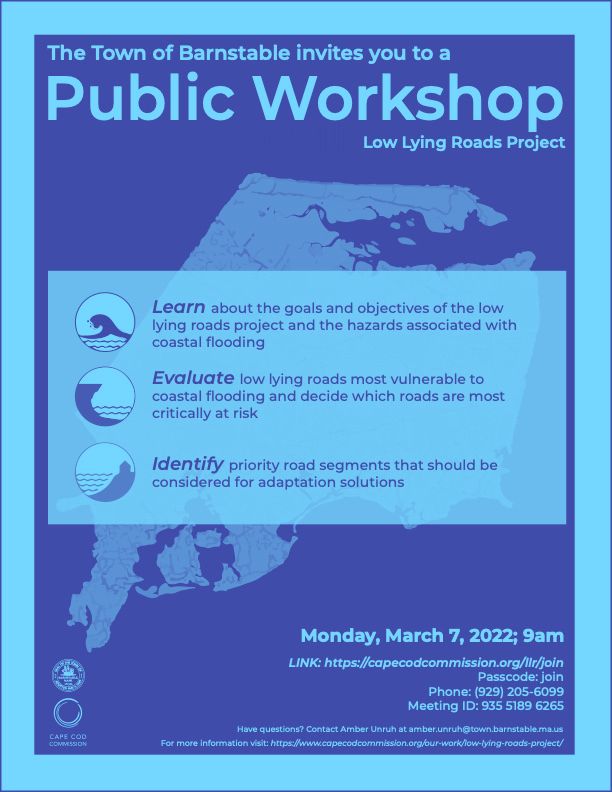
Barnstable Low Lying Roads
Virtual Public Meeting
Monday, March 7, 2022
9:00-11:00 AM
Passcode: join
Meeting ID: 935 5189 6265
Join by Phone: (929) 205-6099
The Cape Cod Commission and the town’s consulting partner, the Woods Hole Group, will present their findings as part of the Low Lying Roads Project, a collaboration by the Town of Barnstable and the commission to evaluate low lying roads vulnerable to coastal flooding and identify segments of road for adaptive measures.
Local residents, workers and commuters are invited to join the workshop, which will provide an agenda, a list of at-risk road segments, and an interactive map as the town seeks input to craft an action plan moving forward.
|
|
DOER to hold 5 virtual public hearings on Straw Proposal for Stretch Code Update, New Specialized Stretch Code
Tuesday, March 8
3:00 pm – 5:00 pm
The Massachusetts Department of Energy Resources (DOER) will hold five virtual public hearings* to receive comment on its Straw Proposal for Stretch Code update and New Specialized Stretch Code released on February 8th. The following information can be reviewed in advance of the hearings at DOER's new Stretch Code Development webpage:
-
The Straw Proposal
-
Recording of February 8 Webinar
- Summary of stretch code analysis informing straw proposal
To submit questions or to sign up to give public comment at a hearing please send an email to stretchcode@mass.gov with the title ‘Comment for Public Hearing’ and include your name, organizational affiliation and municipality where you work or reside, as applicable. Written comments will be accepted until 5 pm EST on March 9, 2022.
*Visit this DOER webpge for additional regional hearing dates.
|
|
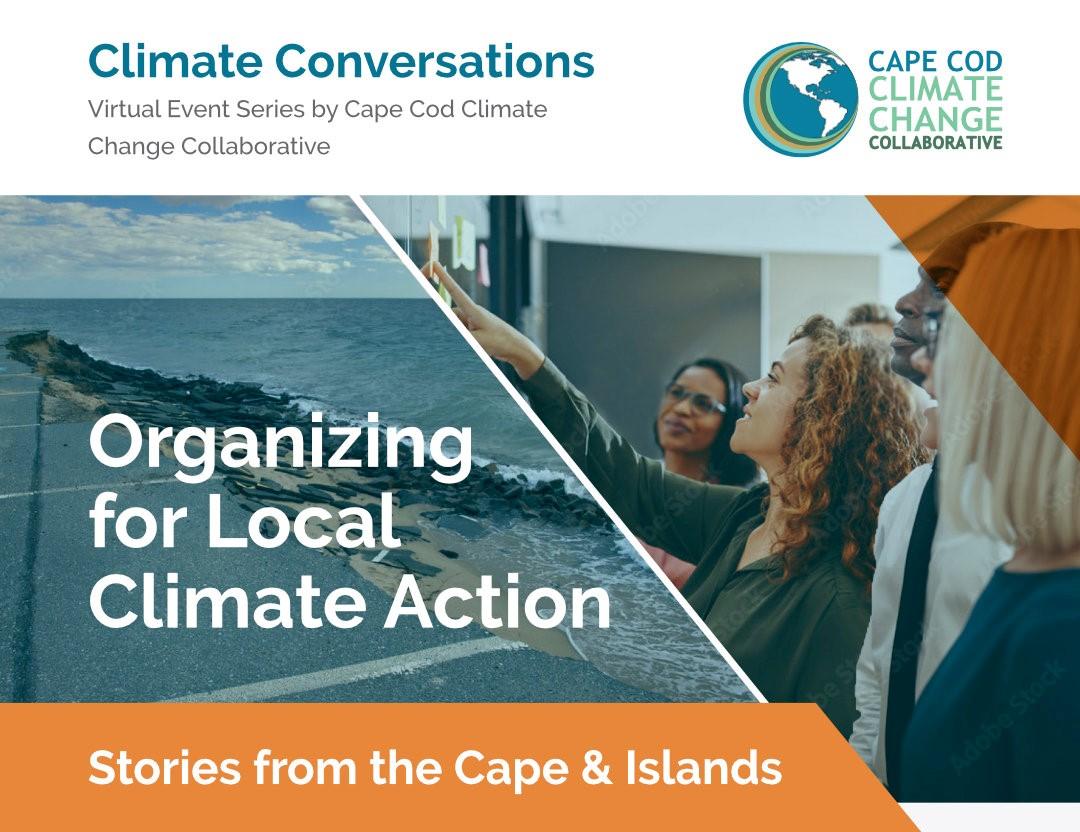
Organizing for Local Climate Action: Stories from the Cape & Islands
Friday, March 18, 2022
12:00 - 1:30 pm
Join the Cape Cod Climate Change Collaborative's conversation with citizen climate action leaders throughout the region. Hear how they got started, what they've accomplished and how you can start or join the effort.
|
|
Conservation Law Foundation & Harvard's American Repertory Theater announce world premiere of their newest production, Ocean Filibuster
Dive beneath the waves and discover the intimate, critical relationship between humankind and the ocean. An integrated design immerses audiences inside the Senate chamber of a global governing body, where Mr. Majority introduces an “End of Ocean Bill” designed to shrink Earth’s oceans into a more manageable (and marketable) collection of inland seas. When the floor is opened for debate, the Ocean arrives to speak in its own defense…and so begins an epic showdown. Ocean Filibuster fuses myth, song, stand-up, and science to explore the vast depths crucial to our daily survival.
|
|
Food, Agriculture, Aquaculture |
|
Climate Change is Messing with the Food You Love and Need, Big Time.
By Michael Hoffmann, via Climate XChange State Climate Policy Network, February 17, 2022 | Photo: Michael Browning/Unsplash
Most of us are fortunate to be able to go to a restaurant and order dinner from a long list of choices on the menu. There are delectable beverages to wet the appetite, salads aplenty, main courses and sides, and dessert and coffee options.
However, climate change is affecting the foods we love and need in subtle and sometimes ominous ways, and it all starts with a plant — the basis of life. That is what Our Changing Menu: Climate Change and The Food We Love and Need is all about. Whether it’s a tomato vine, giant redwood, or apple tree, a plant needs water, the right temperature, soil, air, and sunlight to flourish and grow. However, all of those are changing, except sunlight. Read more.
|
|
By Joseph Winters, Grist, February 22, 2022 | Photo credit: Grist/Getty Images
A pilot project in the U.K. is giving a second life to used diapers — by turning them into a road.
More than 100,000 disposable diapers are being used to help resurface a 1.5-mile stretch of highway in Llanarth, Wales, as part of an effort to reduce the amount of municipal waste that is sent to the landfill. The project is a public-private collaboration between the Welsh government and a company called NappiCycle, whose aim is to repurpose used diapers — or “nappies,” as the British call them — into roadways, building insulation, and other products. Read more.
|
|
Energy & The Built Environment |
|
How electric stoves are poised to dethrone the mighty gas range
By Meg St-Esprit McKivigan, The Washington Post, February 17, 2022
Tanuj Deora works in the energy industry — specifically to decarbonize energy systems. That’s the technical term for efforts to reduce the reliance on fossil fuels. It’s a vast and complex problem, but Deora and his family try to do their part. At their home in Northwest Washington, they have solar panels, LED lightbulbs and a hybrid minivan. In the kitchen, though, the issue of fossil fuel usage was more personal. Their natural gas cooktop was making Deora sick. “I would get a headache whenever the gas was running,” he says, so he started looking into replacing their gas stove. But first, he had to sell his wife, Amy, on the idea. Read more.
|
|
ACT TODAY!
Massachusetts "Net Zero" Stretch Code and Allocation of American Rescue Plan Act (ARPA) Funds
Please ask your state legislators to allocate $250 Million for the
Zero Carbon Renovation Fund
In March 2021, Congress passed the American Rescue Plan Act (ARPA), which provided $5.286 Billion to Massachusetts to be allocated by the State Legislature. In December, legislators allocated the first round of ARPA funds, a total of $2.55 Billion. To the dismay of those concerned about climate, health, and affordability, they allocated only $6.5 Million for zero carbon retrofits (.1% of total ARPA funds!), which will decarbonize ONLY 250 of the 1 million homes that need to be renovated by 2030! By comparison, Maine allocated 5% of its total ARPA funds to accelerate weatherization, electrification and ventilation improvements.
The Massachusetts state government is currently reviewing proposals for allocation of remaining ARPA funds, which present a tremendous opportunity for the Commonwealth to mitigate some of the effects of the pandemic while advancing critical needs across many sectors. This Zero Carbon Renovation Fund would:
-
Result in deep carbon savings by transforming existing buildings to be super energy efficient, all electric, powered by clean renewable energy, and renovated with low-embodied carbon materials
-
Help ensure that the Commonwealth has healthier and more affordable places for people to live and work
Contact your legislators to request they allocate $250 Million of ARPA funds to create a Zero Carbon Renovation Fund to help renovate existing buildings in Massachusetts to zero carbon. View sample letter and instructions here.
Source: Passive House Massachusetts
|
|
Climate Collaborative, partners endorse New England for Offshore Wind letter responding to ISO-NE delay
Source: New England for Offshore Wind
The Climate Collaborative joined New England for Offshore Wind partners in responding to the ISO-NE delay in the
Minimum Offer Price Rule (MOPR).
The MOPR is a pricing mechanism that blocks offshore wind from participating in the electricity capacity market. This delay means that offshore wind cannot participate in the market for at least 2 more years – if not more – thus prolonging our reliance on fossil fuels AND adding unnecessary costs for ratepayers for the additional capacity that is not needed. Here is a memo that explains the recent history regarding the MOPR.
|
|
A decision made behind closed doors may set clean energy back by two years
By Sabrina Shankman, The Boston Globe, Feb. 5, 2022
At a time when New England should be racing to bring as much clean energy online as possible to green its electricity supply, the grid moved this past week to effectively discourage major wind and solar projects for at least another two years.
Like other regional power suppliers, New England’s grid operator has been asked by the Federal Energy Regulatory Commission to remove or change a mechanism that makes it harder for clean energy projects to enter the competitive market. But after months of saying it supported such a measure, ISO-New England reversed its stance last week and aligned with a proposal from the natural gas industry that would slow-walk any such change.
“It’s another example of not meeting the moment to usher in the clean energy transition,” said Jeremy McDiarmid, of the Northeast Clean Energy Council. “It is an example of the system not being equipped to change as fast as we need it to.”Read more.
|
|
 |
Taking aim at environmental racism, without mentioning race
By Lisa Friedman, The New York Times, February 156, 2022 | Photo credit: Sarahbeth Maney/The New York Times
Black, Latino and other people of color are disproportionately exposed to environmental hazards. President Biden has vowed to address the problem, but his strategy to identify areas that need help will be colorblind: Race will not be a factor. Read more.
|
|
|
|
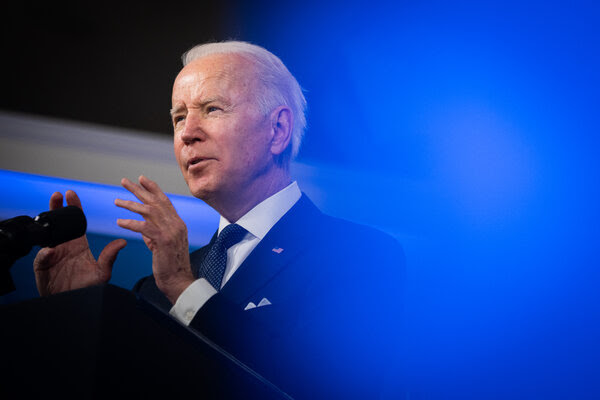
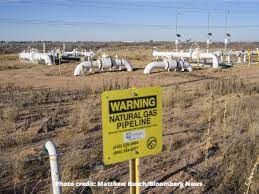
Federal Energy Regulat-ory Commission will consider climate change in assessing gas projects
By Maxine Joselow,Vanessa Montalbano, The Washington Post, February. 18, 2022
The Federal Energy Regulatory Commission will now consider how pipelines and related natural gas projects affect climate change and environmental justice communities, the commission ruled in a 3-to-2 vote on Thursday. Read more.
|
|
|
|
NZ-21 CONFERENCE
Missed the conference?
Not to worry!
|
|
|
|
We are an all-volunteer 501(c)(3) organization whose mission is to reach carbon neutrality — or net zero — on Cape Cod and the Islands of Massachusetts by enhancing communication, collaboration, and activism among organizations, programs, and individuals committed to mitigating the climate crisis. We depend upon the generosity of our stakeholders to conduct our work. All donations are tax deductible as allowed by law
|
|
The Climate Action Alerts newsletter is curated and produced by Fran Schofield, Co-Vice President, Cape Cod Climate Change Collaborative Board of Directors.
Got news? Please send me your climate stories from home, school, workplace,
town or organization. And don't forget to share this action alert with
|
|
|
|
|
|
|