A Roundup of Recent Ulster County Business-Related News, Views, and More
February 25th, 2026
| | |
(Pictured - Ulster Savings Bank President and Ulster Strong member Bill Calderera, and Jonah Schenker, Ulster BOCES Superintendent at Ulster County Chamber Mixer in the new Ulster BOCES iPark 87 location)
Given that the country is so frustratingly divided these days, reaching consensus on even some of the most straightforward issues is an opportunity to cheer. Business organizations across the political spectrum from conservative to progressive are in general agreement - the Supreme Court of the United States (SCOTUS) ruling on tariffs are applauded, and stand to bring stability in an area of turbulence for most businesses. It's a good thing, not just for large corporations and exporters, but for smaller, local business and consumers.
This month's edition of the Ulster Strong Business Bulletin brings to our readers a diverse range of business and development news. In addition, we share opportunities that should be of interest to local businesses including news from the Hudson Valley Venture Hub and an upcoming jobs fair. There's much more this edition of the Ulster Strong Business Bulletin!
| | |
This newsletter includes the following:
Kingston’s Proposed Occupancy Tax Raises Bigger Questions About Fairness and Process
Feed the need - The Granary in Accord seeks to build on the hamlet’s momentum towards economic growth
An Update From Hudson Valley Venture Hub: The region’s hub for founders, startups, and innovation
BESS & BEERS - Battery Energy Storage in Ulster County TONIGHT @ Blue Duck Brewing Company
Kingston mayor appoints city’s first business liaison
Rent control leads to loss of buildings, displacement and homelessness
QUICK BUSINESS NEWS UPDATES
Kingston Consolided School District Employment and Career Fair
| | |
Kingston’s Proposed Occupancy Tax Raises Bigger Questions About Fairness and Process
| | |
Kingston’s proposed 5% city occupancy tax is about more than just hotel stays—it raises important questions about fairness and how our city makes decisions.
First: Do we impose a similar, industry-specific tax on other types of businesses in Kingston? Retailers, restaurants, and service providers already collect the standard 8% sales tax. Lodging businesses collect that same sales tax, plus the 4% Ulster County occupancy tax. If this proposal passes, the total tax on a hotel stay in Kingston would rise to 17%—higher than anywhere else in the state.
If other sectors don’t face a similar surcharge, why single out hospitality? Tax policy should be broad and predictable. Singling out one of our most visible and economically important industries sets a troubling precedent. When the city faces fiscal pressure, should one industry be the first to pay more?
Second: Major tax policy changes deserve robust discussion, particularly with the businesses most directly affected. Good governance requires transparency, deliberation, and collaboration—not speed.
Tourism and hospitality are vital to Kingston’s economy. This proposal comes just two years after Ulster County doubled its occupancy tax. Adding another 5% risks putting Kingston at a disadvantage compared to nearby towns, potentially hurting reservations, events, and visitor spending.
We should be supporting one of our strongest industries—not isolating it. Before moving forward, the city should pause, engage with stakeholders, and ensure both the policy and the process are fair and economically sound.
We encourage concerned businesses and citizens to write letters to the mayor and Common Council, and/or attend a public hearing on the proposed occupancy tax on Monday March 2 at 6:45 PM in Council Chambers.
| |
Feed the need
The Granary in Accord seeks to build on the hamlet’s momentum towards economic growth
by Zac Shaw for Ulster Strong
| | |
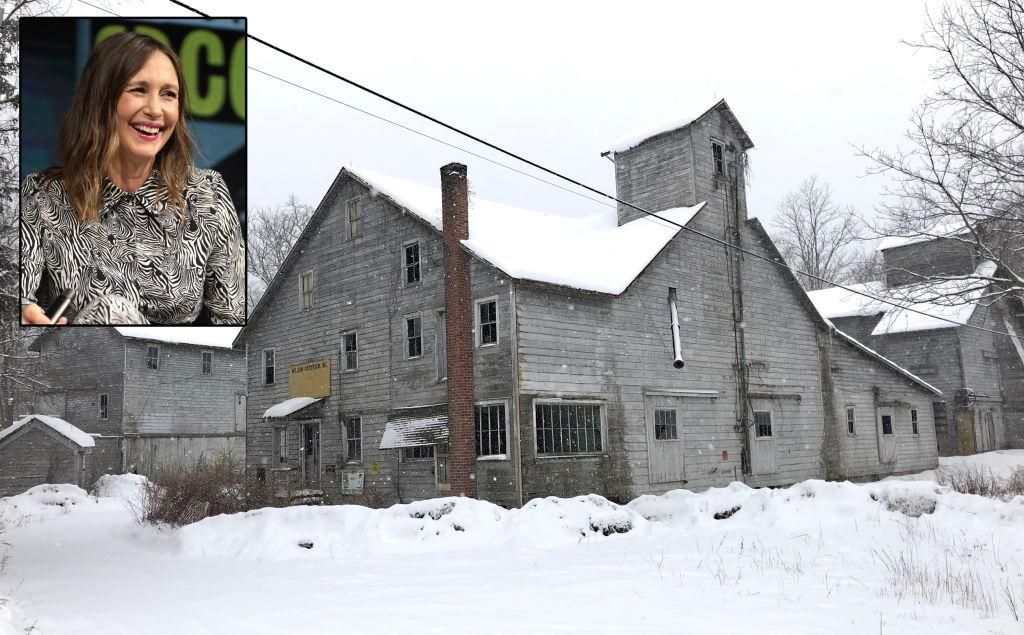
Five years in the planning, The Granary is a mixed-use hospitality development seeking to revitalize the long-neglected former Anderson Feed Mill and Supply Complex in Accord. The feed mill’s demise is linked to Accord’s fall from economic grace in the 1980s, hastened by an earlier shutdown of rail service. Fortunately, the hamlet has recently been revitalized by a fresh wave of transplants and upscale attractions like Inness and Skate Time.
The vision for The Granary is a kaleidoscopic new addition to Accord’s economic landscape. It’s been proposed as a 16-room bed-and-breakfast, a 75-seat restaurant and bar with an outdoor beer garden, an event space, a garden space, a bike shop with rentals and repairs, a café, a coworking space and a community center.
“We would love to be open for next spring/summer,” said Henry Rich, a managing partner in the development. “People have been brainstorming ways to revitalize the main commercial sites for decades, but during this time the building has fallen into greater disrepair, and two of the buildings on site have fallen down,” he said, reflecting on the long path toward launching the project.
The attempt to turn blight into an economic boom has turned heads for a few reasons, not the least of which is its high-profile backers: Film and TV star Vera Farmiga and accomplished musician/producer Renn Hawkey are partners in the development.
Besides the celebrity backing, some locals are scrutinizing the project for concerns all too familiar to developers in Ulster County’s rural regions. Will there be more traffic? More noise? Will the historic, rustic character of the hamlet be impacted? Will tax exemptions offered to developers be similarly fruitful for local taxpayers?
“The point of the project is to revitalize the hamlet with more activity, so we are hoping for more traffic,” Rich said. “The activity will never reach the historic level when more than 100 people worked at the site and hundreds got off the train for the weekend, but we hope that the restaurant will be full every night.”
He said traffic analysis has been part of the process. “Traffic studies have been done by the county,” Rich said. “The additional traffic is minimal compared to the traffic coming off of 209 going to Granite or Towpath and is significantly less than other commercial sites in town that feed onto 209, which have shown no adverse effects to traffic.”
Noise, he said, is being handled with a stricter limit than nearby residences. “As far as noise goes, we were asked to follow a stricter code than neighboring homes, five decibels above ambient at the property line,” Rich said. “There will be more people walking, biking; the point of the project is to revitalize these buildings and Main Street with more life, activity and local businesses similar to other towns’ hamlets and Main Streets.”
Whether you would describe such a development as a boon, or as one resident put it, a “carnival,” is a subjective matter.
And the debate becomes even more philosophical. Some residents are asking government boards to treat the hamlet’s residential character as the priority, and to limit what the project can do outdoors. Rich, by contrast, points to planning language about revitalization.
“This was the state of Main Street historically,” he said. “As far as whether this is an adverse impact depends on your point of view, but this kind of historic revitalization is taken more or less line by line from the town comprehensive plan, Ulster County sustainable development goals and the mission of NY Restore.”
“Once this site is revitalized,” he said, “not only will it create jobs for the people who live in the community, but we hope Main Street will become filled with foot traffic that can support local business in the other commercial storefronts, most of which are currently boarded up.”
“Rochester also has a shortage of small (or large) local businesses and places to work for its residents,” Rich said. “Compared to neighboring towns that have invested in their hamlets and seen local makers, farmers and artisans flourish from Rosendale to Marbletown to Wawarsing, there are very few jobs on offer for locals.”
“We’re creating 15–20 jobs depending on how busy we are,” he said. This is in addition to an estimated 40 construction jobs the project will require to be built.
“Eighty-five percent of the population has to leave the town to find work,” Rich said, “a condition different from most towns in the county, so Rochester has a unique need for revitalization and jobs, especially in the hamlet.”
With noise, traffic, character and jobs covered, there’s one remaining area of skepticism, and a perennial one at that: Will local taxpayers benefit from the payment in lieu of taxes (PILOT), which at the time of writing is still under review by the Ulster County Industrial Development Agency (IDA)?
“The Granary is financed through a combination of equity, debt and economic development grants,” Rich said.
“The idea behind the PILOT is to support the project financially in the initial years after launch,” he said. “I agree that a project needs to justify its PILOT application in terms of community benefit.”
In his view, the site’s baseline contribution is unusually low because of its condition, and that the proposed schedule would still increase what the project pays. “When it comes to this site, the property spent most of the past few decades paying no taxes at all and was sold at tax auction,” Rich said. “Our taxes are currently extremely low, reflecting the derelict nature of the site.”
The IDA application includes a 15-year abatement schedule. In year one, it shows estimated PILOT payments of $5,590, with an “estimated total with PILOT” of $13,681, increasing each year as the abatement steps down. Over the full 15 years, the schedule totals $902,081 in estimated PILOT payments, alongside $1,041,998 in “estimated total with PILOT,” with a much higher “without PILOT” projection.
“In the first year of our program, our taxes will more than double and go up every year from there,” he said. “At the end of the program, we’re projected to be paying more than 20 times what the current assessment is. As far as PILOTs go, we believe this one is a good investment in terms of paying into the town coffers.”
| | |
An Update From Hudson Valley Venture Hub:
The region’s hub for founders, startups, and innovation
By Bailey Burke,Venture Hub Director,
| | |
The Hudson Valley Venture Hub (HVVH) has become a cornerstone of entrepreneurial growth and innovation across the Mid-Hudson region. The Hub serves as a regional connector and accelerator, bringing together founders, investors, educators, and support organizations to help early-stage companies start, scale, and succeed. Its recently published 2025 Impact Report highlights a year of significant momentum, including showcasing more than $2M in economic impact for the Hudson Valley region last year.
HVVH exists to connect, accelerate, and grow entrepreneurial success throughout the Hudson Valley. The Hub connects the ecosystem by bringing founders, investors, and partners together through high-impact events, referrals, and warm introductions that unlock opportunity and accelerate collaboration. HVVH delivers hands-on education in innovation and entrepreneurship, equipping founders and community members with the skills, tools, and mindset to build and scale successful companies. The Hub also provides direct founder support through the Entrepreneur-in-Residence Program and the Accelerator, offering personalized mentorship, expert guidance, and tailored resources at critical stages of growth. Together, these pillars create a connected, educated, and empowered startup community across the Hudson Valley.
The 2025 Impact Report shows that the Venture Hub played a major role in strengthening the region’s startup ecosystem by connecting founders with mentorship, education, capital, and strategic partnerships, while delivering measurable economic results. In 2025, HVVH supported 19 companies through its Accelerator, generating more than $2 million in non-job economic impact, including revenue growth, private investment, grants, and operational savings, while helping create 28 new jobs and retain 35 more. The launch of the Entrepreneur-in-Residence Program further expanded hands-on founder support, providing personalized guidance to 12 companies across industries ranging from SaaS and IT to retail and manufacturing. Through gatherings, investor meetups, and educational programming, HVVH strengthened regional collaboration and positioned the Hudson Valley as an increasingly vibrant center for innovation, entrepreneurship, and long-term economic growth.
The Venture Hub is excited to host the upcoming Demo Night, scheduled for March 5, 2026, at Senate Garage in Kingston, New York. Demo Night is designed as the region’s premier startup showcase, bringing together founders, investors, operators, and ecosystem leaders for an evening of live pitches, networking, and inspiration. Selected startups will take the stage to share their products, traction, and vision, offering attendees a firsthand look at the innovative companies emerging from the Hudson Valley and win cash prizes.
Looking ahead as the Hub continues to expand its programs and partnerships, it is positioning the Hudson Valley as a compelling place to launch, grow, and invest in bold new ideas.
To connect with the Hub, check out the website, join the mailing list, and connect with Venture Hub Director, Bailey Burke at burkeb2@newpaltz.edu.
| |
BESS & BEERS - Battery Energy Storage in Ulster County
TONIGHT @ Blue Duck Brewing Company
February 25th, 5:3p-7:30pm
| |
Kingston mayor appoints city’s first business liaison
(By Daily Freeman)
| | |
Mayor Steve Noble has appointed local tech entrepreneur Stew Meyers as the city’s first Municipal Business Liaison.
Noble’s office said as the city’s Business Liaison, Meyers will held build and maintain relationships between various city government departments, city and state agencies, business owners and nonprofit organizations. “In this role, he will foster communication and advocate for the needs of the local business community and identify opportunities for City government to strengthen its support for business owners,” officials added.
Summer Smith, the city’s director of communications and community development, said Monday that Meyer’s role is a volunteer position.
(NOTE: Stew Meyers is a member of Ulster Strong - congratulations Stew!)
| |
Rent control leads to loss of buildings, displacement and homelessness
Guest Opinion by Richard Lanzarone, Ann Heaney-Korchak and Lisa Damiani
| | |
On his first day in office, New York City Mayor Mamdani headed to 85 Clarkson St. in Brooklyn to start his “Rental Ripoff” tour, where he went apartment to apartment showing press and his social media following collapsing ceilings, crumbling plaster walls, broken bathtubs and unspeakable squalid conditions.
The building in Mamdani’s first day exposé was a bankrupt rent-stabilized building, scheduled to be auctioned off in a few days; while visiting, he ordered his housing agency to initiate legal action to stop the bankruptcy sale. Then he got his first lesson.
When the city correspondingly filed suit in federal court, the city’s own attorney in their brief unwittingly admitted that the low rents – enforced by rent-stabilized regulations – mean the owners of the building cannot support its upkeep and expenses. As they write in their brief, given its current income stream, the “building might fall into even greater disrepair and the burden for addressing emergency repairs might fall upon the City” leading to “a state of financial and social chaos … and it is predictable that such displaced tenants may need to seek shelter at great human cost and at the City’s expense.”
This admission begs the question: is this truly a case of a “bad landlord”, or does the city’s admission reveal that it is actually the state’s system of rent control that has systematically starved the building of the funds necessary to keep it afloat and keep tenants in safe, clean, and livable conditions?
Given that the building cannot support itself on an ongoing basis, since 2019, state rent control laws confirmed that there is no criteria for removing the rent-stabilized tag from apartments, how could it possibly afford the now millions of additional investment dollars needed to bring the building back to a state of habitability?
It can’t, and the building is doomed, in a state of irreparable disrepair and all its tenants will soon be displaced and forced to confront a housing market with vacancy rates sitting around 1.4%. And this is a problem repeating itself across New York, pushing housing stock even lower.
This is rent control’s endgame: the destruction and loss of buildings, displacement and homelessness. In the State Legislature’s progressive zeal in 2019 to return rent control laws back to their oppressive 1974 version, buildings are not burning down as they did in the ’70s, they are just crumbling down around the tenants. The results are the same.
Code enforcement can’t work in these financial conditions. This building is a canary in the coal mine as the number of New York buildings in a state of squalor has skyrocketed, particularly since 2019, with now over 300,000 NYC bankrupt rent-stabilized apartments and growing.
Enter the REST Act, a bill currently sponsored in the Assembly by Democratic Socialist Sarahana Shrestha. The REST Act seeks to spread this destruction of housing far and wide across New York state’s upstate cities by making it easy for upstate municipalities to adopt the failed policy of NYC rent control.
In addition to the deterioration of tenants’ living conditions, rent regulation drives away those who would build the additional housing that would actually lower costs through competition.
This was shown recently when St. Paul, Minnesota, adopted rent control. Builders put their pencils down and moved en masse across the river to Minneapolis, where a building boom kept rents in check.
The governor’s solution of “Let Them Build” is the solution to lowering housing costs, as cities like Austin, Phoenix and locally in New Rochelle have shown. In some cases, rents have even lowered.
The State legislature should reject additional regulations that strangle the housing market, reject the REST Act, and get behind the governor’s plan to cut red tape and produce more housing.
Kingston and other upstate cities should take heed of Mayor Mamdani’s hard lesson and look warily at NYC ideas that pose as solutions to upstate problems.
Richard Lanzarone is Executive Director of the Housing Providers of New York State. Ann Heaney-Korchak is Board President of Small Property Owners of New York. Lisa Damiani is Executive Director of the Western New York Property Owners Association.
| | | |
Support local independent journalism - subscribe to a local news outlet today
Supporting local journalism is essential for maintaining transparent local government, fostering community identity, and strengthening democracy. Local outlets hold officials accountable, provide crucial information on schools and businesses, and encourage civic engagement, acting as a vital, verifiable counterweight to polarized national media.
| | | QUICK BUSINESS NEWS UPDATES | | |
Grocery store proposed for former Rite Aid site in Kingston
(Daily Freeman)
A new supermarket could be coming to the former Rite Aid location at 485 Broadway, according to plans submitted to the city’s Planning Board.
The submitted plans call for a full-service CTown supermarket to come to the former drugstore location. The Rite Aid store closed in the summer of 2025 after the drugstore chain declared Chapter 11 bankruptcy in May of that year and subsequently shuttered all of its stores nationwide. CTown has 140 stores throughout New York City and downstate as well as in New Jersey, Pennsylvania, Connecticut, and Springfield, Massachusetts.
(HV1)
"A Feb. 17 Town Board vote will correct a decades-old zoning map error and decide the fate of a planned redevelopment of the former Woodstock Public Library and Lasher Funeral Home properties owned by Lizzie Vann.
Residents were largely supportive of Vann’s plan but also skeptical of what could happen if she sells it.
Vann, who saved the Bearsville Theater complex from decay and transformed it into the Bearsville Center, calls herself an ethical builder and entrepreneur.
“I’m not looking to take any money out of the community in any way,” Vann said at a Feb. 3 public hearing on the zoning change.
“My vision for these three properties, which are all next to each other, is to create three acres of beautiful parkland with the buildings that sit on them to provide low-rental housing for locals to live and work. My plan is to provide 5%, which doesn’t sound like very much, but it’s 15 units of the 300 units that Woodstock needs, and that’s the most that we can get there, and to provide commercial buildings that create local jobs,” Vann said.
Plans for the commercial space include a co-working space and a business incubator."
Kingston sales tax revenue for 2025 will exceed budgeted estimate
(Daily Freeman)
Sales tax has now exceeded property tax as the largest source of income for the city.
Both (City Comptroller) Tuey and Mayor Steve Noble had warned throughout 2025 that sales tax revenue was leveling off after years of rapid growth that saw sales tax revenues rise from $14,637,515 in 2020 to $20,119,650 in 2024.
DiNapoli: Projected N.Y. spending estimated to outpace expected revenues while federal actions add to uncertainty
(Spectrum News)
NYS is spending more than it can sustain, according to state Comptroller NiNapoli. Forecast - budget cuts or raising taxes UNLESS the state can generate more revenue through economic growth (meaning becoming more business-friendly).
"New York state Comptroller Tom DiNapoli warns the trajectory of projected state spending is estimated to increase at a rate faster than expected revenues, creating cumulative outyear budget gaps estimated by the state Division of Budget to total $27.5 billion through the state’s fiscal year 2030, according to a report he released Wednesday on Gov. Kathy Hochul’s executive budget proposal.
DiNapoli said projections for spending are higher than those for revenue over the state budget period. State operating funds disbursements are projected to grow 21.5%, outpacing projected growth of 8.7% in receipts. General Fund receipts are expected to grow 9.8% compared to disbursements that are projected to grow almost twice as fast, 18.5%. Consequently, outyear budget gaps are forecast to be $6 billion in state FY 2028, $9 billion in SFY 2029, and $12.5 billion in SFY 2030."
| | Kingston Consolided School District Employment and Career Fair | | |
We are excited to invite you to participate as a vendor in the Kingston High School Employment & Career Fair, taking place on Monday, April 27, 2026, from 5:30–7:00 PM in the Kingston High School Main Gymnasium.
This community-wide event connects students, recent graduates, families, and community members with local, regional, and national employers, training programs, unions, and service organizations. Our goal is to create meaningful pathways to employment, career exploration, internships, and post-secondary opportunities.
Event Details
Date: Monday, April 27, 2026
Time: 5:30 PM – 7:00 PM
Location: Kingston High School, Kate Walton Field House
403 Broadway, Kingston, NY 12401
Audience: High school students, alumni, families, and the greater community
Vendor Capacity: Limited to 75 vendors
Vendors are encouraged to share:
Job openings, internships, and seasonal opportunities
Career pathways and industry insight
Workforce development and support services
Training, certification, or educational programs
Space is limited to 75 vendors, and tables will be filled on a first-come, first-served basis. Once capacity is reached, a waitlist will be created.
If you are interested in reserving a table or would like more information about vendor participation, please complete the vendor sign-up form or reach out directly.
VENDOR FORM: Kingston High School Employment & Career Fair – Fill out form
| | |
Ulster Strong is a non-profit advocating a pro-growth agenda that balances good jobs and investment opportunities with the environment and sustainability.
ULSTER STRONG SUPPORTS
Adding good-paying jobs;
Diversifying the local economy so it’s more resilient;
Encouraging new investment;
Balancing the environment with local economic needs;
Growing local tax base to support community services including schools, infrastructure and emergency services;
Updating planning and development procedures to be more
transparent and timely.
MEMBERSHIP INQUIRIES
| | Our Company | Contact Us | FAQs | Privacy Policy |
| | | |