This Week: Call for submissions from Princeton Journal of East Asian Studies; Virtual Japan Summer Internship Program application deadline; Harvard Language Exchange website goes live!
|
|
Concentration Announcements & Opportunities |
|
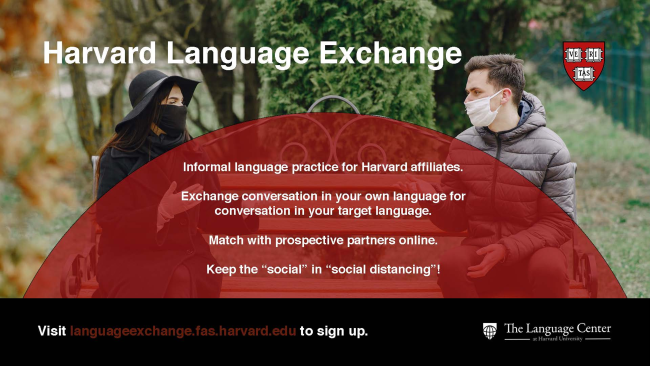
The Harvard Language Exchange website is now live!
Exchange conversation in your own language for conversation in your target langauge. Match with prospective partners online. Keep the "social" in "social distancing"!
Any Harvard affiliate, including alumni and retired faculty/staff, is welcome to participate.
Click the image below to learn more.
|
|
|
|
Struggling with a research paper, need feedback on a draft, or just want to improve your writing?
|
|
Publication Opportunities |
|
Princeton Journal of East Asian Studies (PJEAS) Call for Submissions
Priority deadline: February 26, 2021, 11:59 PM EST (North America)
Final deadline: March 12, 2021, 11:59 EST (North America)
PJEAS is a student academic journal with the official support of the East Asian Studies Program at Princeton University which publishes works of scholarship written by both undergraduate and graduate students from around the world on political, economic, social, and cultural issues pertaining to the East Asian region (China, Korea, Japan, Mongolia, etc.). PJEAS aims to foster an intellectually rigorous student discourse, while promoting an atmosphere of mutual learning and the development of leadership in these fields.
PJEAS invites interested students to submit their academic work for publication in our Spring 2021 Volume (XV), scheduled to be published in May 2021.
Submission guidelines:
PJEAS invites original contributions to East Asian studies that meet the journal’s aim and scope from both undergraduate and graduate students in the United States and abroad.
● Submissions should relate directly to at least one of the countries or subregions in East Asia,
i.e. People’s Republic of China (and its autonomous regions), Japan, Korea, Mongolia, and Republic of China.
● Articles submitted to PJEAS should not have previously been accepted for publication or review at another undergraduate or graduatelevel publication.
● Submissions should be at minimum 3000 words, excluding the abstract, subheadings, and citations.
● Submissions should contain complete citations and references, which must follow the “notes and bibliography” system as presented by the Chicago Manual of Style.
● The article should include on its first page a short abstract that concisely summarizes its main arguments and findings. The abstract should be no less than 150 words and no more than 200 words in length.
● The document should be formatted for “US Letter” size, with 12point font, single-spaced lines, and one-inch margins on all sides, and must be submitted as a Microsoft Word document.
● To ensure anonymity of the evaluation process, any information identifying the author should be
removed from the Word document that contains the article
● Authors will be informed of whether their article has been accepted for review at latest 4-6 weeks after initial submission. Should their article be accepted, part of the responsibility falls upon the authors to communicate promptly with their respective editor to allow for effective and efficient revision process. The assignment of editor(s) will be specified in the initial acceptance email.
NOTE: At any point during the process of evaluation, revision, and publication the PJEAS Executive Board reserves the sole right to publish an article or refuse publication.
|
|
Monday, February 8
Monday, February 8, 12:00 p.m. - 1:00 p.m.
Connor Mills, Postdoctoral Fellow, Program on U.S.-Japan Relations. PhD, Department of History, Princeton University
Yoshiaki Kubo, Associate Professor, Faculty of Humanities and Social Sciences, University of the Ryukyus
Sadamasa Oue, Senior Fellow, Harvard University Asia Center; Lt. Gen. (retired), Japan Air Self-Defense Force
Discussant: Sherry L. Martin, Acting Asia Division Chief, Office of Opinion Research, U.S. Department of State
Moderator: Christina Davis, Harvard University
Monday, February 8, 12:15 p.m. - 1:30 p.m.
Science, Technology and Society Seminar: STS Circle at Harvard
Makoto Takahashi, Lecturer, Technical University of Munich
Chair: Sheila Jasanoff, Harvard Kennedy School
Monday, February 8, 3:30 p.m. - 7:30 p.m.
The annual Harvard Korean Security Summit brings together top researchers of Korean security issues, senior ROK and U.S. practitioners, and next generation scholars.
Tuesday, February 9
Tuesday, February 9, 4:00 p.m. - 6:00 p.m.
Eddy U, Professor of Sociology, University of California, Davis
Tuesday, February 9, 7:00 p.m. - 8:00 p.m.
Linda Hoaglund, director and producer
Rachel Saunders, Abby Aldrich Rockefeller Curator of Asian Art, Harvard Art Museums
Wednesday, February 10
Wednesday, February 10, 12:30 p.m. - 1:45 p.m.
Critical Issues Confronting China Lecture Series
Eswar Prasad, Tolani Senior Professor of Trade Policy, Cornell University; Senior Fellow and New Century Chair in International Economics, Brookings Institution; Research Associate, National Bureau of Economic Research
Wednesday, February 10, 7:00 p.m. - 8:00 p.m.
David L. Eng, Richard L. Fisher Professor of English, University of Pennsylvania, discusses race, mental health, and Asian American identity through the lens of his latest book, Racial Melancholia, Racial Dissociation: On the Social and Psychic Lives of Asian Americans, co-authored with Shinhee Han.
Thursday, February 11
Thursday, February 11, 8:00 a.m. (EST)
Prof. R. Michael Feener, Center for Southeast Asian Studies, Kyoto University, Japan
Dr. Weihsin Gui, English, University of California-Riverside
Dr. Tansen Sen, History, NYU Shanghai, China
Dr. Hideaki Suzuki, National Museum of Ethnology, Japan
Moderator: Dr. Anto Mohsin, Liberal Arts Program, Northwestern University, Qatar
Convener: Dr. Phoebe Musandu, Georgetown University-Qatar
Thursday, February 11, 6:00 p.m. - 7:00 p.m.
Korean Treasures at Harvard Series III
Maya Stiller, Associate Professor, Korean Art and Visual Culture, University of Kansas
Chaired by Sun Joo Kim, Harvard University
Friday, February 12
Friday, February 12, 12:00 p.m. -1:30 p.m.
Borders in Modern Asia Seminar Series
Joseph McQuade, RCL Postdoctoral Fellow, Asian Institute, University of Toronto
Chair: Sugata Bose, Harvard University
Friday, February 12, 4:00 p.m. - 5:00 p.m.
Reischauer Institute Japan Forum Lecture Series
Michaela Kelly, Reischuaer Institute Postdoctoral Fellow (PhD Cultural Anthropology, University of Tokyo, 2016)
Moderator: Mary C. Brinton, Harvard University
|
|
Work and Internship Opportunities |
|
Virtual Japan Summer Internship Program
Application Deadline: February 8, 2021
The Edwin O. Reischauer Institute of Japanese Studies (RIJS), in partnership with the Program on U.S.-Japan Relations at the Weatherhead Center for International Affairs and John A. Paulson School of Engineering and Applied Sciences (SEAS), coordinates a wide array of summer internship opportunities in Japan for Harvard students of any concentration who are in good academic standing and are returning for the fall semester as full-time students. As interns, students learn about the workplace culture and have the opportunity to learn and practice Japanese while contributing to a project defined by the host organization. Since 1988, over 400 students have contributed their skills and applied their knowledge to consulting and financial firms, tech and startup companies, international and local newspaper offices, design and architectural firms, research think tanks and educational organizations, offices of parliamentary members and NGOs, and even to a traditional luxury ryokan. For Summer 2021, in accordance with the University's ban on travel abroad, the Summer Internship Program will be conducted virtually.
Internships last a minimum of 8 weeks, usually from early June until early August. RIJS has limited internship positions available and cannot guarantee placement. Acceptance is contingent on finding a fit between available positions and applicants. Some Japanese language ability is preferred by most organizations. Preference is given to students enrolled in Japanese language courses and to first-time Japan internship holders.
Learn more and apply here.
|
|
Harvard China Student Internship Program
Application Deadline: February 26, 2021
The Harvard China Student Internship Program (HCSIP) is offered in partnership with Chinese corporations, NGOs/NPOs, and multinational companies in China. Students experience modern China through their internship placements and gain an introduction to Chinese history and culture, all while learning first-hand about life in the workplace. The structure of the program includes a nine-week internship, a week-long field trip (not taking place in 2021), and numerous cultural events.
The 2021 iteration will continue with the hybrid model where interns physically located in Greater China may be able to participate in person where possible, and those who are not, will intern virtually with the assistance of web conferencing platforms and messaging apps of their host institutions' choice. Please note that the plan is subject to change due to the evolving COVID-19 pandemic situation.
Learn more and apply here.
|
|
Korea Institute Undergraduate Research Assistantship
Applications due: February 28, 2021, 11:59 p.m. EST
The Korea Institute offers remote Research Assistantships for Korea focused projects supervised by Harvard faculty for summer 2021. There will be a range of opportunities for Harvard undergraduates to work on faculty research projects in a variety of capacities. RAships are a great opportunity for students with little research experience to get hands-on exposure to the research world. Research Assistant positions offer unique possibilities for intellectual growth, while providing students with invaluable skills and experience. Work is arranged and directed by faculty members, who will directly supervise student RAs. The specifics of the intellectual goals for the student and the research tasks involved will vary. The student and faculty member will discuss and clarify in advance the research responsibilities and outcomes. Students may assist with data collection, data analysis, literature reviews, or other aspects of a faculty project. If awarded a KI Research Assistantship, the student will be paid $20 per hour (up to $2,000 total summer stipend per Assistantship) over 5-10 weeks, based on the needs of the faculty project.
Learn more and apply here.
|
|
Conference/Presentation Opportunities |
|
Princeton US China Coalition Global Governance (Virtual) Forum 2021
Conference Dates: April 17-18
Location: Online
Application Deadline: February 15, 2021
This forum invites thirty promising students from around the world to hear from top journalists, leaders, and politicians, engage in dialogue and discussion on pressing issues, and network with future leaders in the China field. Past speakers have included New York Times Beijing Bureau Chief Edward Wong, Human Rights Watch China director Sophie Richardson, and former American diplomat Susan Thornton.
|
|
Call for Papers for the Eleventh International Conference on Religion & Spirituality in Society
University of Córdoba, Córdoba, Spain
Conference Dates: 3-4 June, 2021
Location: Online
Proposal Submission Deadlines:
Regular: March 3, 2021
Late: May 3, 2021
The Religion in Society Research Network explores the relationship between religion in society and the changing nature of spirituality. We seek to build an epistemic community where we can make linkages across disciplinary, geographic, and cultural boundaries. As a Research Network, we are defined by our scope and concerns and motivated to build strategies for action framed by our shared themes and tensions.
2021 Special Focus—Modeling Traditions from the Margins: Non-Canonical Writings in Religious Systems
|
|
Call for Papers for the Fourteenth Global Studies Conference
Concordia University, Montreal, Canada
Conference Dates: 5-6 June, 2021
Location: Online
Proposal submission deadlines:
Regular: March 5, 2021
Late: May 5, 2021
The Global Studies Research Network is devoted to mapping and interpreting past and emerging trends and patterns in globalization. We seek to build an epistemic community where we can make linkages across disciplinary, geographic, and cultural boundaries. As a Research Network, we are defined by our scope and concerns and motivated to build strategies for action framed by our shared themes and tensions.
2021 Special Focus—Life after Pandemic: Towards a New Global Biopolitics?
|
|
Call for Papers for the Sixteenth International Conference on the Arts in Society
University of Western Australia, School of Design, Perth, Australia
Conference Dates: 16–18 June, 2021
Location: Online
Proposal submission deadlines:
Regular: March 16, 2021
Late: May 16, 2021
The Arts in Society Research Network offers an interdisciplinary forum for discussion of the role of the arts in society. It is a place for critical engagement, examination and experimentation, developing ideas that connect the arts to their contexts in the world – on stage, in studios and theaters, in classrooms, in museums and galleries, on the streets and in communities. We seek to build an epistemic community where we can make linkages across disciplinary, geographic, and cultural boundaries. As a Research Network, we are defined by our scope and concerns and motivated to build strategies for action framed by our shared themes and tensions.
2021 Special Focus—Voices from the Edge: Negotiating the Local in the Global
|
|
Call for Papers for the 14th International Conference on e-Learning & Innovative Pedagogies
University of the Aegean - Rhodes, Greece
Conference Dates: 5–6 May, 2021
Location: Online
Proposal submission deadline:
Late: April 5, 2021
The e-Learning & Innovative Pedagogies Research Network is brought together around a common concern for new technologies in learning and an interest to explore possibilities for innovative pedagogies. We seek to build an epistemic community where we can make linkages across disciplinary geographic and cultural boundaries. As a Research Network we are defined by our scope and concerns and motivated to build strategies for action framed by our shared themes and tensions.
The Fourteenth International Conference on e-Learning & Innovative Pedagogies features research addressing the following annual themes and special focus:
2021 Special Focus - Transcending Social Distance: Emerging Practices in e-Learning
|
|
Study Abroad/Language Program Opportunities |
|
Middlebury Summer Language Schools
Application Deadline: Rolling
One of the nation’s preeminent language learning institutions, Middlebury has been offering immersion language learning from beginner to graduate level for more than 100 years. They offer Japanese, Chinese, and Korean courses. Learn more about how the program works here.
|
|
TFAS International, Asia 2021 will take place at the National University of Singapore (NUS) July 2 – 24, 2021. The 2021 program will bring together outstanding young leaders from across Asia and the U.S. for a three-week study of the principles of a free society. Through educational, cultural and social exchange, these student leaders will form life-long friendships and learn how America’s founding principles can help them advocate for freedom in their home countries. Apply Now
|
|
Asia Center Virtual Programs
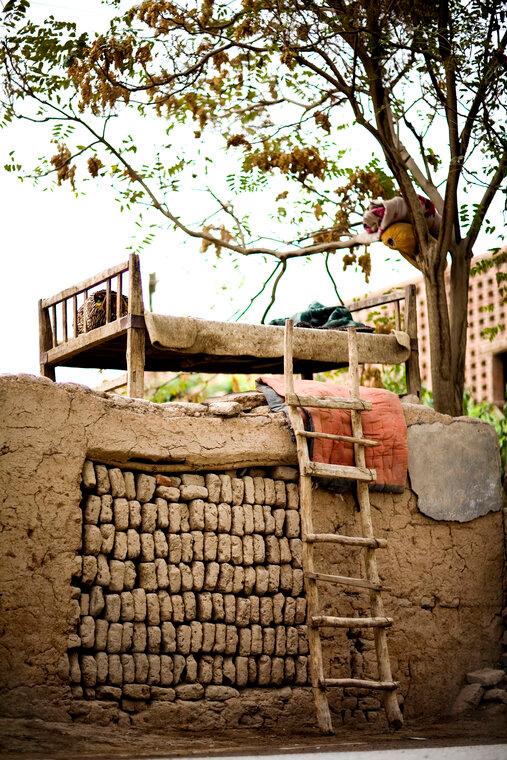
Left: Photo from "Elegy to a Uyghur Dreamscape" (ongoing virtual exhibition)
|
|
Student Groups
*Please be aware that some student groups may not be active while courses are being held online.
|
|
Build Your Community with the Campfire Initiative!
This new project aims to provide a means for greater connectivity between students to allow for tailored support and more explorative interactions. Through this online interface, students learn and bond via the experiences and interests that they share with one another. Serious topics provide arenas for support that allow students to be heard, whereas lighthearted topics provide areas for exploration - both are important, and they often have areas of overlap. Campfire’s systems of tags allow students to focus on either serious or lighthearted topics, or to engage with both at once if they so choose.
|
Asian American Business Association
The Asian American Business Association (AABA) provides a forum for the promotion, understanding, and cross-cultural exchange of East Asian and Asian American business, social, academic, cultural, political, and community-related initiatives. Visit their website here.
Asian American Dance Troupe
For over twenty years, the Asian American Dance Troupe (AADT) has sought to spread an appreciation and awareness of Asian culture through the medium of dance. Our repertoire includes a diverse range of dance forms including traditional, ethnic minority, fusion, martial arts, modern, and hip hop. Membership in this organization shall be open to all students in good standing currently enrolled in Harvard College. Visit their website here.
Asian American Studies Working Group is a space of interdisciplinary collaboration between faculty, graduate students, and undergraduates pursuing scholarships in Asian American and Pacific Islander (API) histories, experiences, and intellectual traditions. Its goals are to build scholarly community, to explore major debates and developments in API Studies, and to enrich the research pursued by its members across Harvard University. To contact the organizers, see when the group meets next, or to learn more, visit:https://emr.fas.harvard.edu/asian-american-studies-working-group
China Education Symposium
The China Education Symposium seeks to increase the understanding and awareness of China's education issues among the Harvard community and the greater Boston Chinese community through information sharing and discussions, and to search for feasible approaches to improve China's education. Visit their website here.
China Forum
Founded in 1998, Harvard College China Forum (former Harvard China Review Annual Conference) is currently the largest China-focused conference in the New England area and annually attracts audiences from all over North America. Every spring the forum invites influential business leaders, policy shapers, and leading scholars to Harvard to address current trends and events in a wide range of topics relevant to the development of China today. Operating under the Harvard China Review framework, HCCF works together with the Harvard China Review and runs a series of sub-programs, including monthly seminars as well as an annual cultural exchange program in the summer. Visit their website here.
CinEncounters
Established in 2012, CinEncounters is a forum for critical engagement with lesser-known masterpieces of Japanese cinema from the 1960s, 1970s, and beyond. From the Japanese “New Wave” to Pink, from Anime to Documentary, screenings will foster a collective exploration with the unexpected, the uncharted and the unusual currents of Japanese film. Monthly showings will offer an opportunity to gather, discuss and enjoy new encounters with films, filmmakers and the histories and stories behind them. Moreover, screenings will invite critics, filmmakers and others related to the films to join our discussions over Skype, when possible. All films are shown with English subtitles and no prior knowledge of Japanese is required.
The 2018-19 series is organized by Alexander Zahlten (EALC) and Julia Alekseyeva (RIJS Postdoctoral Fellow). If you are interested in receiving more information about the respective CinEncounters screenings, please send a brief email to: cinencounters2018@gmail.com.
Contemporary Japanese Politics
The Contemporary Japanese Politics Study Group was established in 1999 with the goals of better understanding key trends in politics and foreign policy in Japan and focusing a scholarly eye on key issues. This group enables advanced Ph.D. students to circulate their works-in-progress (conference papers, draft dissertation chapters, etc.) and receive feedback, as well as faculty and postdoctoral fellows to present their research.
Chaired by Susan Pharr and Daniel Smith of the Department of Government and co-sponsored by the Program on U.S.-Japan Relations (USJRP) at the Weatherhead Center for International Affairs, the group includes over fifty faculty, graduate students, and others, both at Harvard and across the greater Boston and New England region.
For more information, please contact Shinju Fujihira, Executive Director of the Program on U.S.-Japan Relations. For details about study group events, visit their website here.
Gaongil (Harvard College Modern Korean Studies Society)
A tight-knit organization that meets once a week to discuss various economic, social, political, cultural issues related to modern Korea. As the Korean word "Gaongil" means "Middle-Path," the organization is committed to remaining nonpartisan while encouraging free and unhindered discussion.
Anyone who is interested in joining Gaongil can come and check it out! No prior experience with Korean language or culture is needed, and the meetings are entirely in English.
Fill out the interest form here to be included in their e-mail list.
Harvard Asian American Women's Association
The Asian American Women's Association recognizes the need for a unified, open community at Harvard concerned with the issues facing women of Asian descent in Western society. The purpose of the Asian American Women's Association is to address these needs by creating a collective voice and promoting the prominence and concerns of the female Asian-American population, both within the community and without, particularly through regular discussion of pertinent issues. Visit their website here.
Harvard Buddhist Community
The HDS Buddhist Community (HBC) is a nondenominational Buddhist group serving the Harvard and Cambridge communities throughout the school year. In addition to hosting weekly meditation sittings, HBC also organizes Buddhist film screenings and discussion groups, as well as the annual Buddhism & Race Conference. HBC generally meets weekly in Andover Chapel at the Harvard Divinity School.
Harvard Chinese Students and Scholars Association (Harvard CSSA)
Harvard CSSA is dedicated to the goal of promoting social, intellectual, and cultural activities of Chinese students and scholars at Harvard and for other interested members in the Harvard community. It facilitates communication among its members and acts as a liaison between itself and other organizations on campus. The group works to facilitate the exchange of information between China and the United States. Its activities include sponsoring and co-sponsoring social, intellectual, and cultural events, films, and seminars. President Xu Zhang. Group e-mail is harvardcssa@gmail.com. Visit their website here.
Harvard College Japan Society
The Japan Society promotes the culture and spirit of Japan at Harvard through cultural experiences, social interaction, and community bonding. Visit their website here.
Harvard Hong Kong Society
The HHKS is dedicated to promoting unique aspects of Hong Kong culture and society, and bringing together all students who are interested in Hong Kong. Visit their website here.
Harvard-Radcliffe Chadō Society
The Chadō Society is a group of Harvard students dedicated to learning chanoyu (in English, commonly known as “Japanese tea ceremony”). Though the organization is officially an undergraduate organization, they also welcome graduate students, non-student Harvard affiliates, and non-Harvard students to learn tea in the tradition of the Urasenke school. The organization’s instructors are all members of Urasenke Boston, the local affiliate of the Kyoto-based Urasenke organization. The head of the international organization is Sen Soshitsu XVI, who is a direct descendant of one of the first Japanese tea masters, Sen no Rikyu. The current club president, Jaden Freeze, can be reached at harvardchadosociety@gmail.com. Visit their website here.
Harvard Tai Chi Tiger Crane Club
The Harvard Kung Fu Club and the Tai Chi Club are two divisions of the Harvard Tai Chi Tiger Crane Club, a club sport registered at the Malkin Athletic Center with the Harvard Department of Athletics. For more information, visit their website here.
Harvard Taiwanese Culture Society
TCS is a student-run organization at Harvard College dedicated to promoting the culture and heritage of Taiwan and of Taiwanese-Americans. From cultural events like making muaji to social events like karaoke to special events like our annual winterfest: a taste of Taiwan, our goal is to enhance awareness of Taiwanese culture and to provide a place for those interested in learning about Taiwan to meet and to discuss their interests. Visit their website here.
Harvard Vietnamese Association
The Harvard Vietnamese Association is dedicated to fostering an awareness of Vietnamese culture on campus and within the Greater Boston area, and promoting the interests of the Vietnamese student body at Harvard. Visit their website here.
Korea Caucus
The mission of Korea Caucus is to actively raise the awareness of Korea within the KSG community by sharing the country's cultural heritage through social events, serving as a bridge and resource to non-Korean students who are interested in learning more about the country. They also aim to provide a forum to address key issues facing Korea and the implications for the rest of the world through activities and events. Visit their website here.
Korean Association
The Korean Association leads the undergraduate Korean-American community's efforts to teach and learn about Korean culture and political issues. The KA additionally provides a social outlet for Korean-American students who are interested in meeting others with a shared heritage and common interests. The KA supports cultural groups including YISEI the magazine, the fan dance troupe Chunsa, and the Korean drumming group (poongmul pae) Han Ma Eum. Visit their website here.
Organization of Asian American Sisters in Service
OAASIS currently consists of 25 members who are committed to each other in three aspects: commitment in sisterhood, commitment in service, and commitment in exploring the diverse experiences of Asian and Asian American women. Our comp process for Spring 2019 will be starting soon! Please visit our website at www.oaasis.info, or our Facebook page at http://facebook.com/harvardoaasis. Any questions can be directed to compoaasis@gmail.com. OAASIS is an officially recognized student organization that welcomes students of all gender and ethnic identities.
Rakugo Club
The Rakugo Club is a group for anybody interested in learning the Japanese traditional art form of Rakugo, a style of comic storytelling. Under the tutelage of professional Edo-style Rakugo performer Yanagiya Tozaburo, the club will practice everything from reading and memorizing Japanese stories to voice projection and gestures. Minimum third-year level Japanese is required. Contact Sky Russell for more details: srussell@college.harvard.edu
|
Chinese Art Media Lab (CAMLab)
CAMLab explores innovative ways of showcasing Chinese art and culture through immersive installations, exhibitions, films, digital publications, curatorial projects, and other multimedia forms. For more information, visit their website and Instagram.
Explore Asia at Harvard Map (Harvard Asia Center)
The Fairbank Center for Chinese Studies provides undergraduates studying China with a myriad of opportunities and resources, including funding to travel to China, information about programs in China, and opportunities to do research with respected scholars of Chinese studies. Visit their undergraduate resources page: https://fairbank.fas.harvard.edu/resources/undergraduate/
Free Peer Tutoring for Undergraduates
A new program implemented to replace the former Bureau of Study Council. Read more here.
The Harvard Asia Center generates and shares knowledge about Asia from a transnational and transregional perspective. With its core lectures, seminars series, and conferences, the Center engages with topics critical to Asia and its connections with other regions, bringing in notable academics, government officials, business leaders, and other specialists as featured speakers and panelists. Learn more about Asia Center lectures, events, and student grants here: https://asiacenter.harvard.edu/programs-events
The Harvard-Yenching Institute is an independent foundation dedicated to advancing higher education in Asia in the humanities and social sciences, with special attention to the study of Chinese culture. Learn more here.
Korean Studies Portal
Japan Digital Research Center (Reischauer Institute of Japanese Studies)
Japan Disasters Digital Archive
The Radcliffe Institute for Advanced Study is dedicated to creating and sharing transformative ideas across the arts, humanities, sciences, and social sciences. Visit their events page here: https://www.radcliffe.harvard.edu/calendar/list
The Reischauer Institute of Japanese Studies is an excellent resource for EAS concentrators studying Japan. Find a calendar of Japan-related events and lectures, undergraduate grant information, and internship opportunities on their website: rijs.fas.harvard.edu
|
Have an event/group you'd like featured in this newsletter? Contact Naia Poyer (EALC Program Assistant).
|
|
|
|
|
|
|