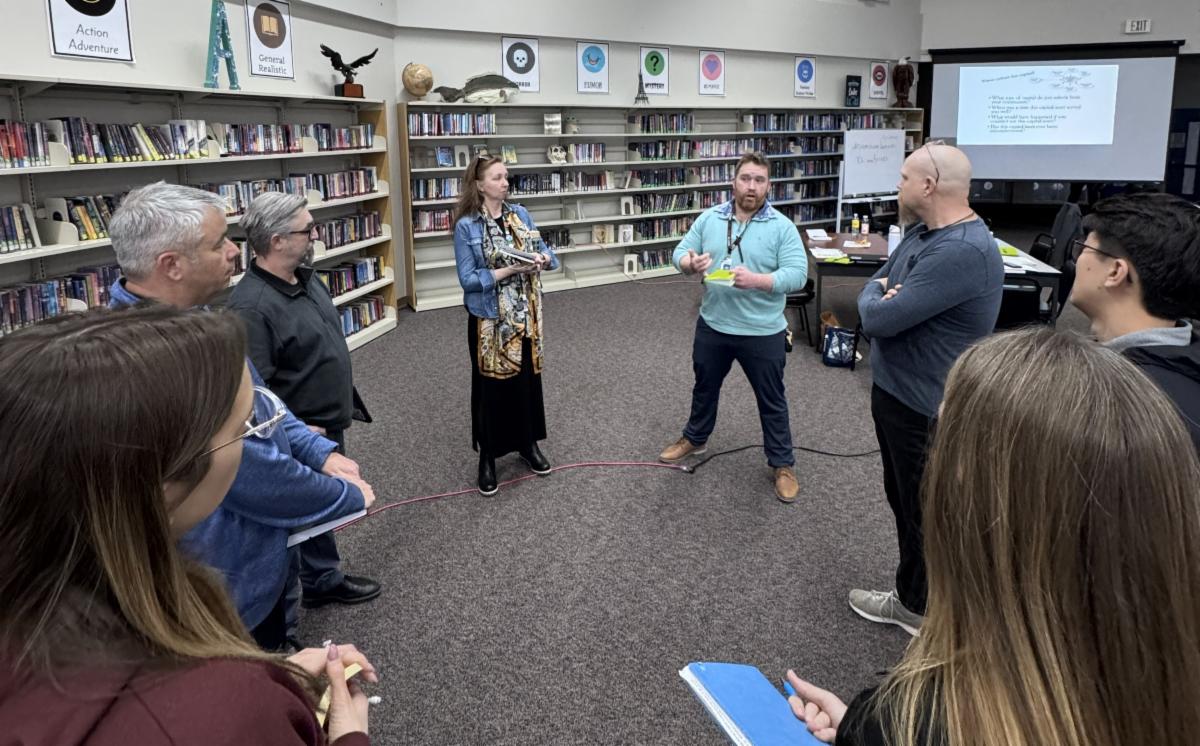
Secondary teachers in Nine Mile Falls learn with Dr. Yemi Stembridge about how to create culturally responsive classrooms, unpack cultural identity, and cultivate student assets. | | Student Growth Goal Colloquium WEST: Registration is Still Open! Reserve Your Spot Now! | | |
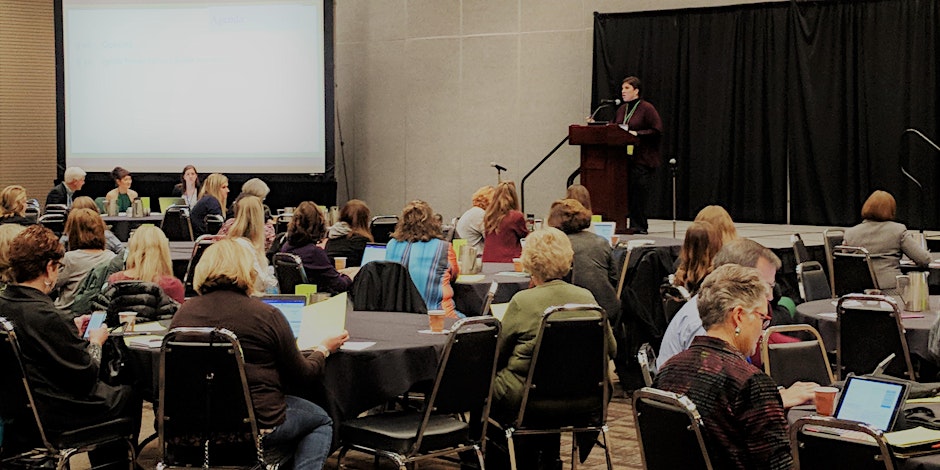
CSTP is hosting a Student Growth Goal Implementation Colloquium on February 26 in the Seattle area. We will be learning and discussing the continued use and implementation of Student Growth Goal rubrics. We will hear from building administrators, classroom teachers, and more. Don’t miss this opportunity to get your questions about student growth answered and learn how others have best used the student growth rubric language!
Register for SGG Colloquium WEST.
Location: DoubleTree Southcenter, Tukwila
Cost to Attend: $25
Who Should Attend: District Administrators, Principals, Instructional Coaches, PLC Leads, Teachers and Educational Leaders
Draft Agenda:
8:30 - Check in & Networking
9:00 - Welcome & Framing the Day
9:15 - Student Growth Stories
11:15 - Q & A
11:30 - Lunch & Networking
12:30 - Small group discussion - Job Alike
1:45 - Alignment of goals to FW
2:30 - Team time
3:00 - Closing Reflections & Call to Action
| | Washington's 2026 Legislative Session Continues | | |
Our 2026 legislative session is now in week 5! CSTP continues to provide information on all bills that educators should keep an eye on. Every Friday, our Legislative Update Coordinator, Samantha Miller, will recap the week's events and what bills are still in play.
You can stay updated and catch up on past weeks (and even updates from past years) here on our Stories From Schools blog! We will also be sending out updates via email.
| | Bring CSTP Expertise to Your School or District's Professional Learning | | |
As the school year continues on and you are considering what professional learning you need for the year, CSTP is ready to collaborate with you! We provide consultation, facilitation, and coaching to support teacher leadership, teamwork, and customized professional learning in your school or district.
We bring expertise in:
-
Teacher Leadership Development, helping educators step into influential roles and contribute meaningfully at the school and district level.
-
Supporting Teacher Teams, offering structures and strategies that enhance team communication and empower collaborative, equity-focused reflective practice
-
Culturally Responsive Pedagogy, equipping educators with tools and mindsets that support all students to access rigorous, engaging work while honoring all students’ identities
Let CSTP help you design meaningful learning experiences, launch leadership frameworks, or amplify teacher-led initiatives—whether virtual or in-person. Interested in exploring how CSTP can support your school or district? Reach out to Linsdey@cstp-wa.org. We’re ready to collaborate with you!
| | Partner with CSTP to Offer Clock Hours at Your Next Training | | |
Are you running a course, professional development or book study and want to offer Washington State clock hours? CSTP is an approved Washington State clock hour provider and can approve your courses for clock hours. It is free for the instructor to apply for the course with participants paying a nominal fee.
Learn More and Apply for Clock Hours
| | WEA National Board Information and Support | |
All WEA sessions are available for WEA members only. Visit the WEA National Board Certification webpage for more information and more course availability.
National Board Information Session Series
Session 1: Overview
- Wednesday, April 29, 2026 - 4:30 to 6:30 pm
Session 2: Standards & Process
- Wednesday, May 6, 2026 - 4:30 to 6:30 pm
Session 3: Support & Next Steps: Session 3
- Thursday, February 12, 2026 - 4:30 to 6:30 pm
- Wednesday, May 13, 2026 - 4:30 to 6:30 pm
Certification Winter Support Series
- Saturday, February 21, 2026 - 9 am to 12 pm: Component 1 - Assessment Center
| National Board Writing Webinars | | |
Register today for OSPI's National Board Writing Webinars!
Who: Any National Board candidate working toward National Board Certification in 2025-2026
What: These one-hour webinars are designed to support writing for the National Board portfolio. Candidates should expect to examine their own writing and work with peers on the selected topic. These sessions DO NOT replace cohorts nor conditional loan requirements.
When: Winter-Spring, always Tuesdays, 4:30 PM-5:30 PM
Series B (Winter-Spring) REGISTER HERE!
- Feb 24: Identifying and Writing about Goals
- March 10: Using Evidence in Written Commentary
- March 17: Integrating National Board Standards
- April 7: Writing Tips: Convincing, Clear, Consistent
Where: Zoom – Register above and select the sessions you’d like to attend. You will need an account with https://zoom.us/ and an electronic device to join. A Zoom link will follow in an email after completing the registration survey. Each session per series uses the same Zoom.
RSVP is required – registration will close day-of event. Contact OSPI National Board Program Specialist, Steven Mueller, at Steven.Mueller@k12.wa.us for any questions
| | Interview with Washington School Counselor of the Year | | |
ReadyWA recently spoke with Washington School Counselor of the Year, Ms. Stefa Chow, about the critical role school counselors play in helping students feel supported, informed, and confident as they plan for life after high school.
Ms. Chow is a school counselor at Juanita High School in Kirkland, where she supports multilingual learners and students across a range of learning environments. In our conversation, she emphasized that trust, consistency, and belonging are the foundation of student success.
“When students believe that adults know them, see them, and will show up when things get hard,” Ms. Chow reminds us, “it’s likely that a sense of belonging follows.”
Read the full interview here.
| | Podcast with State Superintendent of the Year | | |
In this episode of the LEV podcast, CEO Arik Korman interviews Michelle Whitney, the 2026 Washington state Superintendent of the Year, who has served as Superintendent of the Pasco School District for the past 10 years. Michelle discusses what makes Pasco’s dual language, highly capable, and career technical education (CTE) programs special, what worked and what didn’t work in her personal education journey, and how she would change Washington’s education system if she were in charge and there were no budgetary constraints.
Listen to the episode here.
| | February is Black History Month | | |
From blackhistorymonth.gov:
"As a Harvard-trained historian, Carter G. Woodson, like W. E. B. Du Bois before him, believed that truth could not be denied and that reason would prevail over prejudice. His hopes to raise awareness of African American's contributions to civilization was realized when he and the organization he founded, the Association for the Study of Negro Life and History (ASNLH), conceived and announced Negro History Week in 1925. The event was first celebrated during a week in February 1926 that encompassed the birthdays of both Abraham Lincoln and Frederick Douglass. The response was overwhelming: Black history clubs sprang up; teachers demanded materials to instruct their pupils; and progressive whites, not simply white scholars and philanthropists, stepped forward to endorse the effort.
By the time of Woodson's death in 1950, Negro History Week had become a central part of African American life and substantial progress had been made in bringing more Americans to appreciate the celebration. At mid–century, mayors of cities nationwide issued proclamations noting Negro History Week. The Black Awakening of the 1960s dramatically expanded the consciousness of African Americans about the importance of black history, and the Civil Rights movement focused Americans of all colors on the subject of the contributions of African Americans to our history and culture.
The celebration was expanded to a month in 1976, the nation's bicentennial. President Gerald R. Ford urged Americans to “seize the opportunity to honor the too-often neglected accomplishments of black Americans in every area of endeavor throughout our history.” That year, fifty years after the first celebration, the association held the first Black History Month. By this time, the entire nation had come to recognize the importance of Black history in the drama of the American story."
Read more here.
| | |
Join us for fun facts, obscure knowledge, and exploration of physics, genetics, etymology, art, and more!
| | |
Groundhog Day is a holiday wherein, on February 2nd, the people in the United States and Canada look towards a rodent to say how much cold weather there is left in the season. If the groundhog sees its own shadow and retreats into its den, then we are consigned to 6 more weeks of winter. If the groundhog sees no shadow, then we are looking for an early spring. How in the world did it get started?
It begins with a superstition surrounding Candlemas, a Christian feast day that takes place in February. If Candlemas was a sunny day, then winter would continue. This fed into a Germanic tradition called “Dachstag,” or Badger Day. If a badger were observed out of its den and the day was sunny–thus, making the badger cast a shadow–then it would mean more winter. Regionally, Dachstag was observed with other den animals like foxes and bears.
Large numbers of Dutch immigrants came to the Americas in the 17th-19th centuries and settled either near Ontario, Canada, or in Pennsylvania. This group largely came to be known as the Pennsylvania Dutch. They brought Dachstag with them, and adapted it to fit the native fauna of the region–namely, the woodchuck, otherwise known as the groundhog.
In the United States, we focus on one particular groundhog who resides in the town of Punxsutawney, Pennsylvania. Their focus on this superstition acted as a tourist draw for Punxsutawney starting around 1886; they claimed they had the single groundhog who could correctly predict the weather. The special groundhog of note was given the name Phil in 1961, possibly in honor of Prince Philip, husband of Queen Elizabeth II.
Through the rest of the 1900s, the Groundhog Day shadow ceremony–reach into the box, draw the guy out, let him look around a bit, confer with him, then put him back–drew decent crowds from the surrounding Pennsylvania area. Starting on Groundhog Day 1994, tourism skyrocketed, thanks entirely to the romantic comedy/fantasy film Groundhog Day that was released in February 1993. This film forever cemented Punxsutawney as a great place to get stuck in a daily time loop and learn to be a better person.
Alongside the comedic stylings of Bill Murray and Andie MacDowell, it is only tradition that brings people back every year, as it’s certainly not accurate meteorology. Estimates put Phil’s accuracy rating at around 30 percent, which is worse than flipping a coin and guessing. It turns out that a rodent looking at the sun isn’t the most correct predictor of the coming weather after all.
Then again, ask me on a different day. It’s possible I will have just spent years reliving the same day over and over again. Maybe I need to learn to have more faith in Punxsutawney Phil and all the other foxes and bears that we can use to divine the future. Once my faith in badgers is restored, then I will be able to enjoy tomorrow.
| | Your gift ensures that CSTP continues to support student achievement through a focus on teaching excellence. With you as a partner in CSTP’s mission, you directly make a difference in the lives of youth across Washington State schools. Donations are tax deductible and essential as CSTP works to support educators navigate unique models of student engagement and teacher leadership. | | Liking and sharing our posts on social media is another way you can support CSTP during these times. Thank you for sharing our message. | | | | |