|
The 502 program features a single loan closing, construction to perm loan ideally suited to self-help housing. Other essential qualities include no down payment requirement (which self-help families earn through sweat equity), no required mortgage insurance payments, and crucially, a sliding scale subsidy that brings the payment down to an effective interest rate as low as 1%. Borrowers owe back the difference between a market interest rate and the rate they qualify for, known as subsidy recapture. This results in a win / win scenario where low-income families follow the only viable path to ownership, while the government doesn’t lose a dime over the long term.
So how and why would such a successful program be derailed with the stroke of a pen in a procedure notice? The why is elusive, but this is the how: by reducing the allowable loan limits from 80% down to 60% of the FHA loan limits. To make a bad situation worse, USDA practice is to use these loan limits as value limits – meaning regardless of whether the loan request is less than the limit, if house simply appraises higher than the new limits in your county, you can’t access the program.
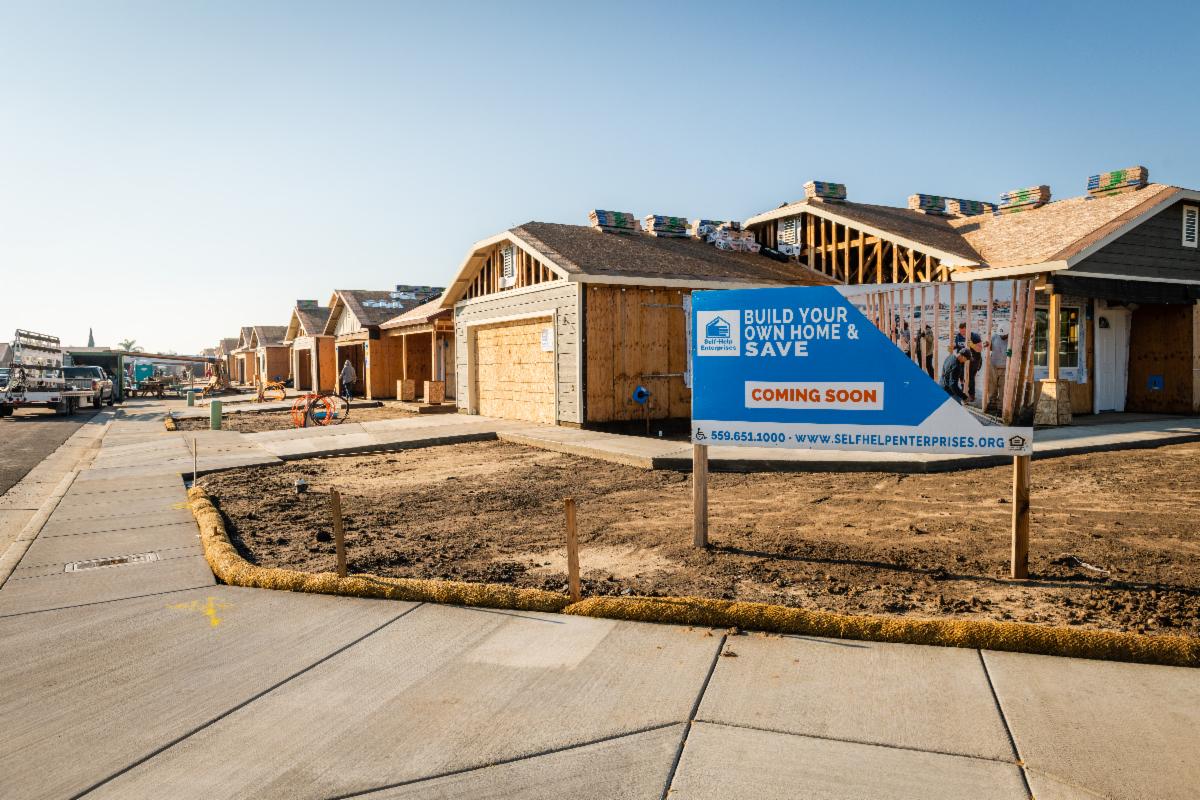
The new appraisal value limits for our area is $324,772. Our modest houses – built by hardworking families – regularly appraise for $340,000 or higher, depending on the local market. That leaves our families out of the program, even though our families average 502 loan is for less than $225,000.
| |
In the San Joaquin Valley, the FHA limits are consistent throughout the region, and they represent the floor nationally. This means we are dealing with the same loan limits as rural Kentucky, where comparable homes are valued at $170,000 or less.
How does any of this make sense? And why would anyone want to limit access to homeownership when we should expand it, especially for our working families who are growing their households?
There are other changes that make it more difficult to access the program and will add to the delays that have become a prominent feature in California since over 50% of the single-family housing staff were downsized last year.
If you are so inclined, do as hundreds of families that are waiting for a homeownership opportunity are doing – call your Congressional representative and tell them to force USDA to undue these changes immediately. This redlining of the 502 lending program hits both red and blue states alike. Our neighbors are counting on us.
Take action: Contact your members of Congress about the 502 Direct Program using the official Congress contact page here.
| | Planada in Focus: National Housing Leaders Visit Farmworker Community | | | |
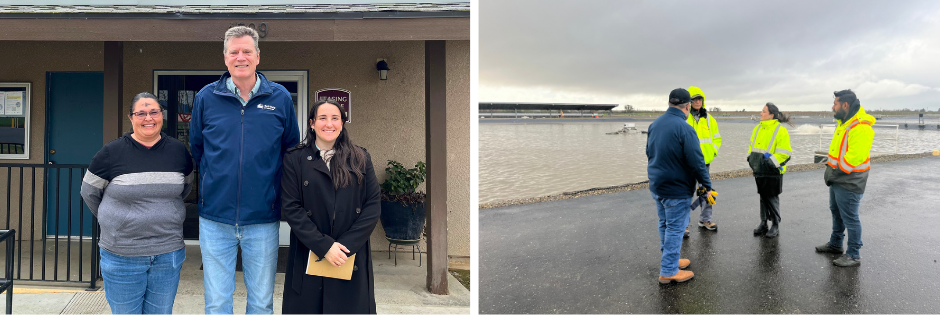
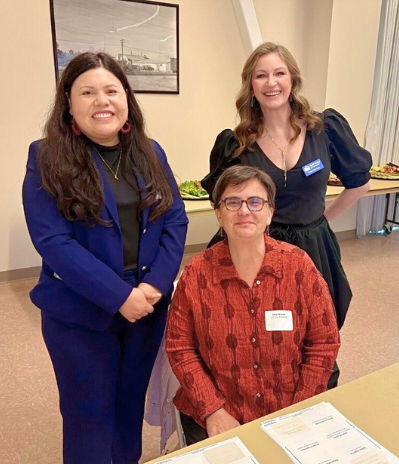
Self-Help Enterprises recently welcomed a research team (Lance George and Manda LaPorte) from the Housing Assistance Council for a two-day visit to Planada to explore housing and infrastructure challenges facing farmworker communities.
Led by SHE Board Member and local Planada leader Olivia Gomez, the tour highlighted both the history and future of community development. The group visited Bear Creek Apartments, SHE’s first ever rental housing effort dating back to 1980, as well as the ongoing Mutual Self-Help Housing construction site and areas still recovering from recent flood damage.
On the second day, the team toured the Planada wastewater treatment facility, a critical project completed by SHE staff in partnership with the Planada Community Services District after years of funding and development challenges.
The visit offered valuable on-the-ground insight into the realities facing rural communities and showcased the collaborative work required to support long-term resilience and growth.
| | |
Strengthening Rural Infrustructure in
North Central Valley
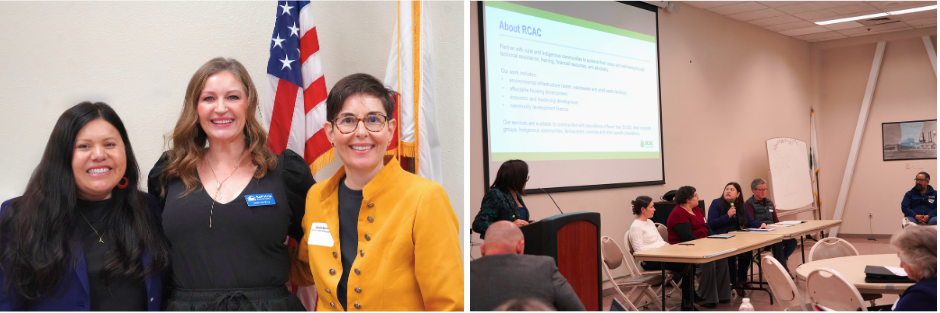
| | | On February 18, Self-Help Enterprises staff joined local, state, and federal partners at the North Central Valley rural infrastructure convening in Modesto, including representatives from the Rural Community Assistance Corporation (RCAC) and the Federal Reserve Bank of San Francisco. The event focused on funding opportunities, technical assistance, and long-term solutions to strengthen rural communities. | | |
Representing SHE were members of multiple teams, including Tami McVay, Director of Emergency Services; Jessi Snyder, Community Development Director; Eva Dominguez, Assistant Director of Community Development; and Eddie Ocampo, Director of Public Affairs, among others. Eva shared insights highlighting the ways our teams support rural infrastructure and resilient communities.
Participation in these regional discussions reflects SHE’s ongoing commitment to expanding access to resources, strengthening infrastructure, and supporting communities throughout the Central Valley.
| | |
Family Bingo & Disaster Preparedness Nights
at SHE Communities
| | | |
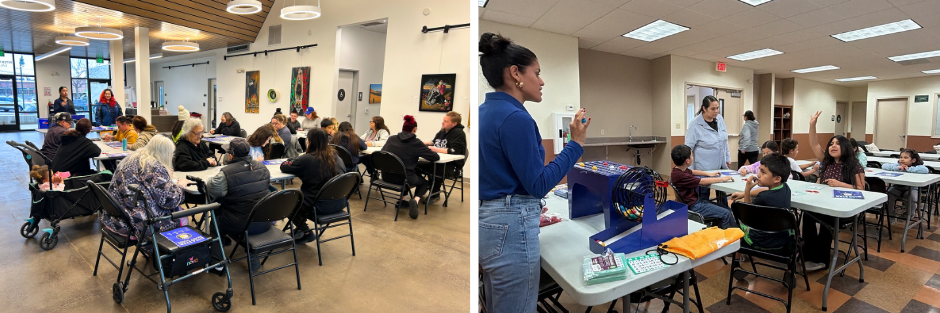
Our Emergency Services team recently partnered with Listos California to host Family Bingo Nights at SHE communities. Events included The Lofts and Sequoia Commons in Visalia as well as Biola Village in Kerman, as well as other SHE sites.
Each evening combined fun with learning. Families played Bingo while also hearing practical tips on emergency preparedness and household safety, giving them tools to protect themselves and their homes during unexpected situations. Attendees had a chance to meet neighbors, engage with staff, and take home useful resources for their households.
These events are part of SHE’s ongoing commitment to supporting and empowering our communities, blending educational outreach with opportunities for connection and engagement. By sharing important preparedness knowledge in an interactive, family-friendly setting, SHE continues to help residents feel ready and supported.
| | Don't Miss Out! Applications Due Soon | | |
Priority Deadline: March 27, 2026
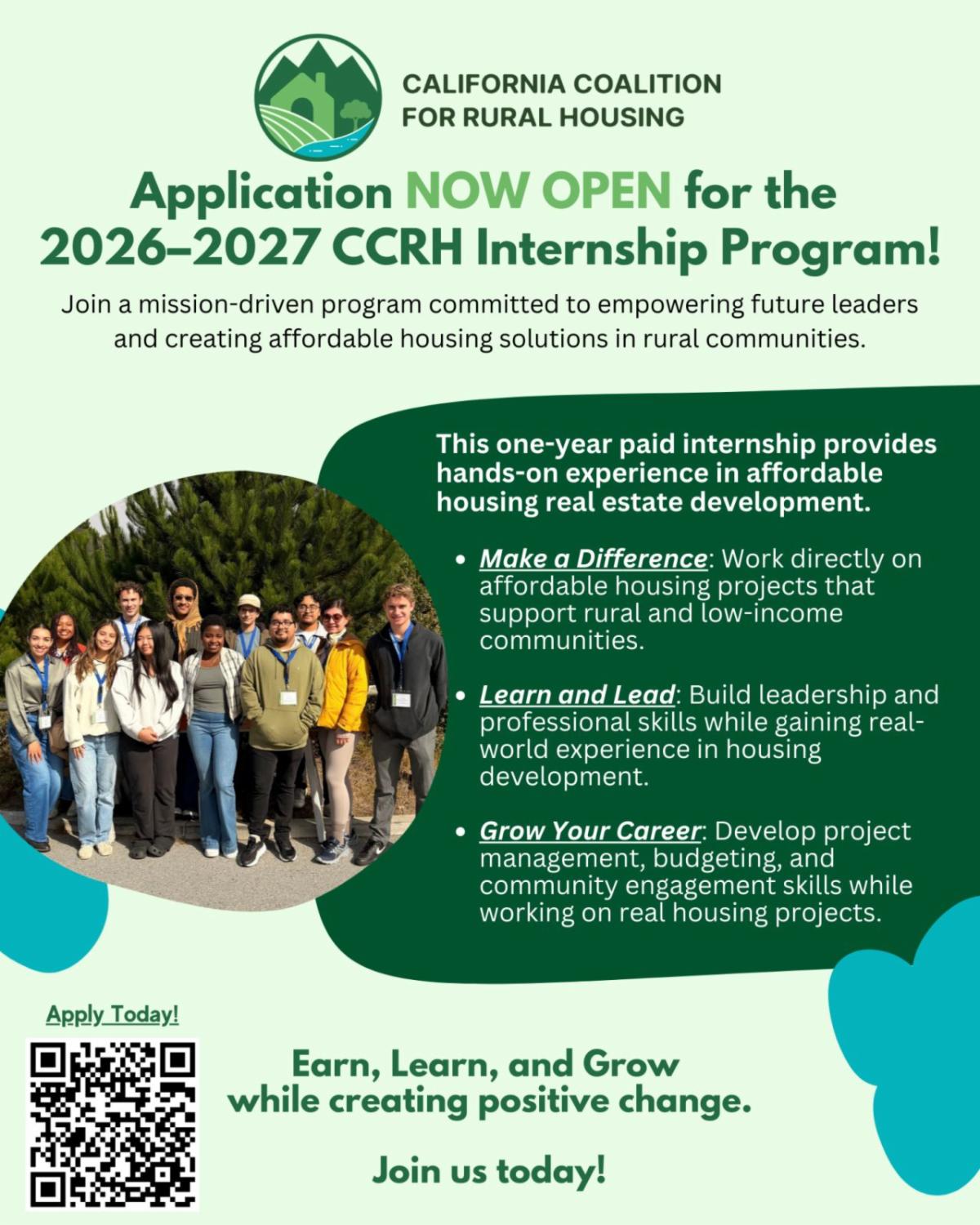
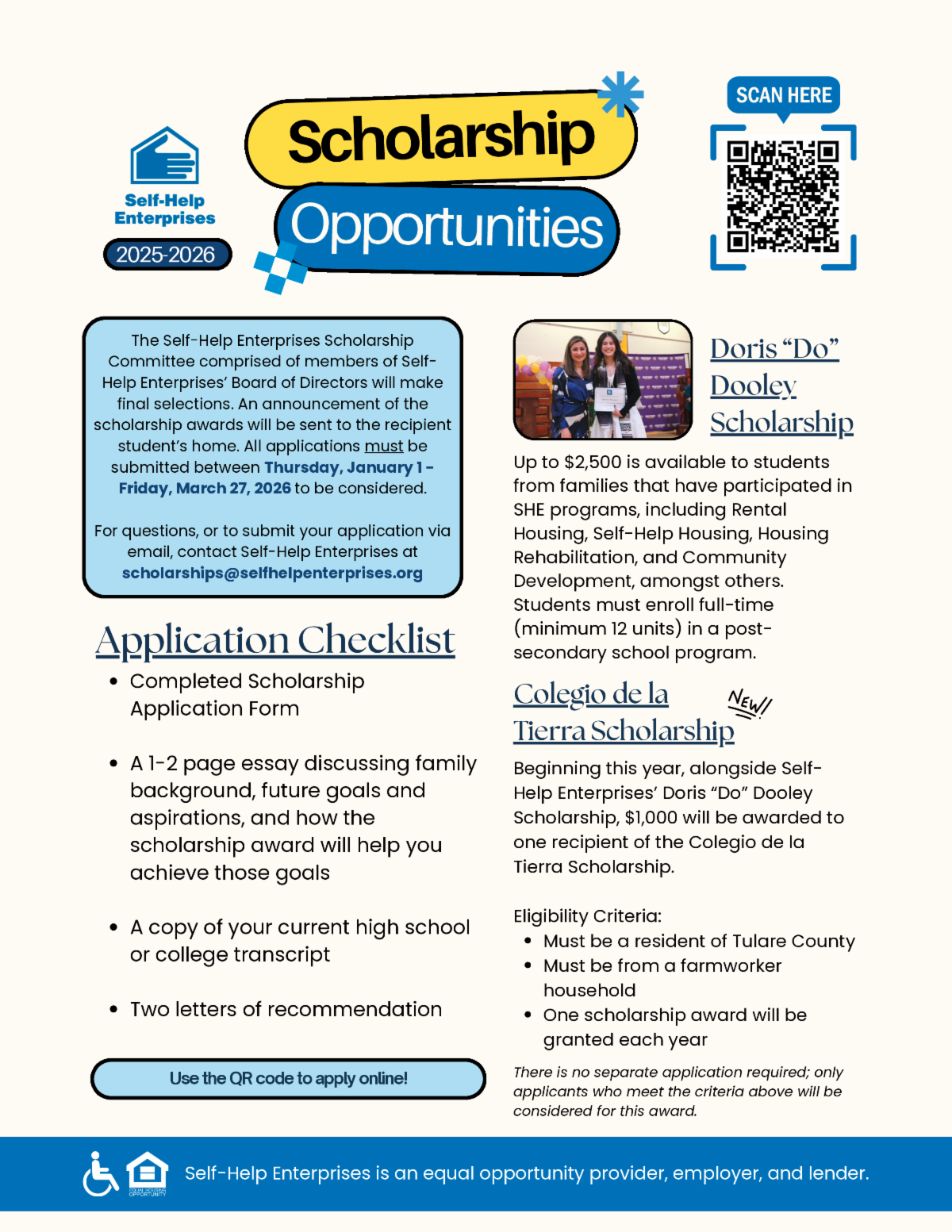
| We’re seeking our next intern at SHE through our longtime partner CCRH. This paid, one-year internship placement at SHE offers hands-on experience in affordable housing development, along with mentorship and professional training. Apply Here! | |  | The Doris “Do” Dooley Scholarship and the Colegio de la Tierra Scholarship are now open for participants in any SHE program. Last year we awarded $22,500 to support multiple students. Don’t wait — apply online here to be considered! | | | Exciting Career Opportunities | | | Our team of 200+ people share a mission of working with families to build and sustain healthy homes and communities. You can too! | | | | |