RNDC Receives Grant from the Mankato Clinic Foundation to Support Food Rescue Efforts | | |
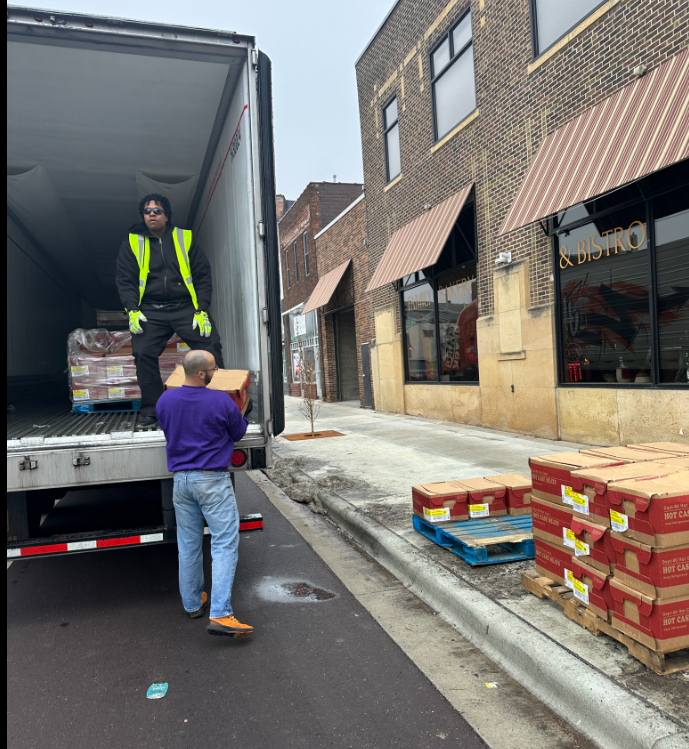
RNDC has received a $10,000 grant from the Mankato Clinic Foundation to be used to develop more consistent routes to food access partners, expand options for the Mankato Clinic Produce Place Fridge program, and support work to begin collaboration with area landfills.
The food rescue program was started with a generous grant from the Taylor Family Farms Foundation and the Mankato Area Foundation (MAF) that allowed RNDC to hire Regional Food Rescue Coordinator Tom Polich. Since launching the food rescue initiative, RNDC has helped distribute a significant amount of surplus food to families across South Central Minnesota. In 2025 alone, RNDC coordinated the rescue of 109,365 pounds of food, valued at approximately $181,526, which was distributed regionwide through partner organizations. This work continues to grow in 2026, with seven food rescues completed so far, saving 8,664 pounds of food. The support from the Mankato Clinic Foundation is expected to help expand these efforts and increase the amount of food rescued and distributed throughout the region.
"We are very excited to have this opportunity through the Mankato Clinic Foundation, and their team has been wonderful to work with in serving our community. RNDC participates in a partnership with Mankato Clinic for the fresh produce refrigerator program known as Produce Place, and it has turned into one of the greatest successes in our region's food rescue efforts," said Tom. "With this funding, we look forward to expanding our efforts and rescue a larger variety of options for Produce Place as well as our regional food access partners such as ECHO, SCMNFR, FOCP, and the St. Peter Food Shelf. Thank you to the Mankato Area Clinic Foundation for the generous funding to this program, as well as all the efforts they have supported in our community."
The Mankato Clinic Foundation provides grants to organizations and initiatives that promote and improve health and wellness in the communities the clinic serves. The physicians at the Mankato Clinic provide the majority of the Foundation's funding as a means to give back to the community and support organizations that strive to improve health and wellness.
| |
Get Involved! Help Shape
South Central Minnesota’s Future
| | |
RNDC is kicking off the 5‑year update of the Comprehensive Economic Development Strategy (CEDS). This regional plan sets priorities that guide investments in jobs, education, infrastructure, housing, childcare, broadband, and quality of life across our nine counties.
Why this matters:
- Helps us compete for funding for local priorities.
- Aligns local priorities on a single shared regional plan.
- Makes us stronger and accountable with clear, public measures.
- Shows progress in ways we can all see.
How you can participate
- Take one of our short surveys found below.
- Join an event—forums, roundtables, and pop‑ups coming soon.
- Invite us to a meeting or event in your community.
- Partner with us and co-host a roundtable in your town.
- Share this to neighbors, colleagues, boards, and councils.
First focus: People & Talent (“Human Capital”)
We’re starting our engagement with Human Capital, which simply means the people side of our economy (our skills, education, health, and ability to participate in work and community). In this phase, we'll be gathering feedback on:
- Education & training (K–12, CTE, adult ed, college)
- Workforce development (skills, hiring, retention)
- Wellbeing at work (job quality, paid leave, work–life balance)
- Retention & belonging (why people stay/leave)
- Future skills (technology, AI, automation readiness)
| | |
All responses are anonymous, unless you choose to share contact info. The surveys will be also be made available in Spanish.
What’s next?
- Spring/Summer: Topic forums on housing and childcare, plus local sessions across the region.
- Fall: Create the initial draft of the CEDS.
- Winter: Final draft shared for public review and feedback.
- All year: We’ll keep the CEDS web page updated with new surveys, events, and materials.
Questions or ideas?
Contact Alejandra Bejarano at alejandra@rndc.org
| |
Last Chance to Apply for
EDA Disaster Supplemental Funding
| | |
Time is running out for communities seeking disaster recovery funding through the U.S. Economic Development Administration’s (EDA) FY 2025 Disaster Supplemental Grant Program. Applications must be submitted by March 3, 2026, marking the final opportunity to access this significant source of federal investment.
The program makes approximately $1.45 billion available to communities impacted by federally declared disasters, including hurricanes, wildfires, severe storms, flooding, and tornadoes that occurred during calendar years 2023 and 2024. The program goes beyond rebuilding damaged infrastructure, with a strong focus on strengthening local economies, improving long-term resilience, and positioning regions for sustainable growth after a disaster.
The Disaster Supplemental Grant Program emphasizes local engagement and encourages projects that actively involve private industry in recovery and economic renewal efforts. Applicants may select from three funding pathways based on local capacity, recovery stage, and long-term development goals:
Readiness Path supports non-construction projects that build local capacity and prepare communities for future implementation efforts. Eligible activities include recovery strategies, disaster recovery coordinators, and pre-development work, with anticipated awards ranging from $250,000 to $500,000.
Implementation Path funds construction and non-construction projects that advance disaster recovery while improving economic outcomes. Expected awards range from $2 million to $20 million for construction projects and $100,000 to $5 million for non-construction projects.
Industry Transformation Path supports coalition-led, multi-project portfolios designed to transform regional economies through targeted industry development. These awards may range from $20 million to $50 million and can include both construction and non-construction activities.
Eligible applicants include Tribal nations, state and local governments, public and private nonprofits working in partnership with government, economic development organizations, institutions of higher education, Economic Development Districts (EDDs), and public-private partnerships focused on public infrastructure.
Additional information and application details are available at https://www.eda.gov/strategic-initiatives/disaster-recovery/supplemental/2025 or by clicking the button below.
| | Grant Writing Services Directory Available | | |
Are you looking for help writing a grant for your community or organization?
The Association of Minnesota Counties has released an updated list of organizations that offer grant writing services. View the list at https://ow.ly/llht50Y1qR2.
If you need grant writing help in Region Nine, RNDC is here to help! Contact us today!
| | Save the Date: Managing Future Floods and Droughts in Minnesota – Workshop 2 | | |
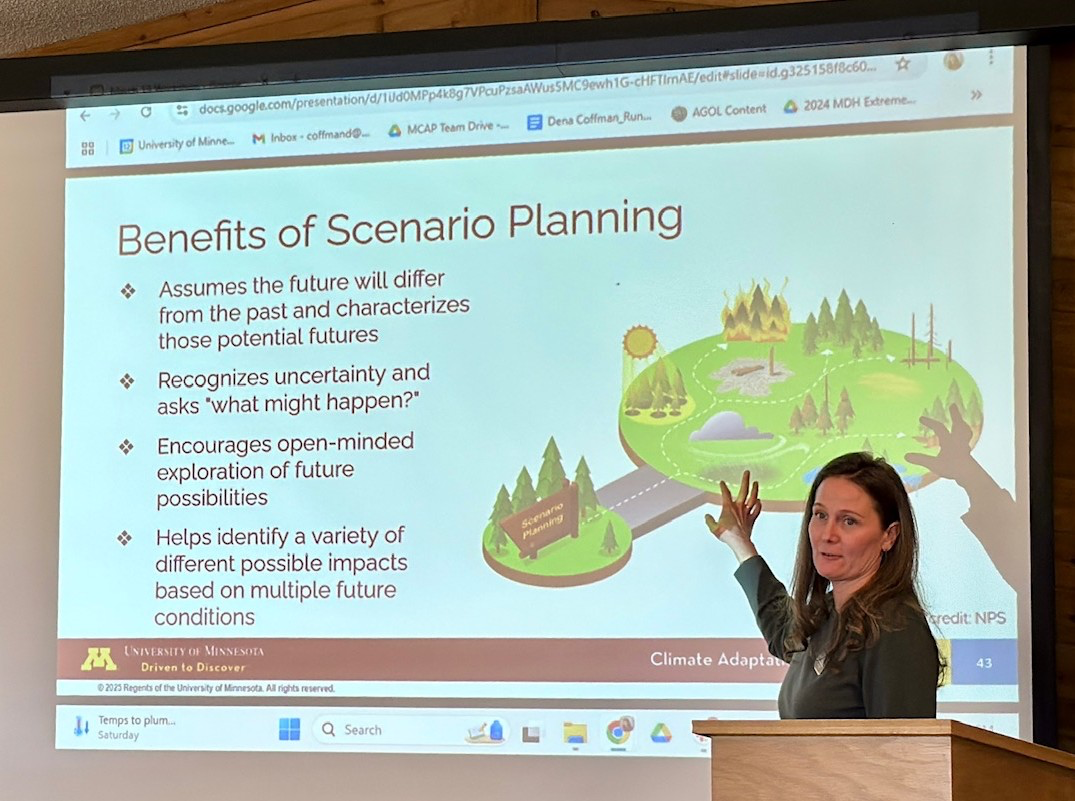
As Minnesota’s climate continues to grow warmer and wetter, communities are facing more frequent and intense flooding and drought conditions. Great River Greening and the University of Minnesota Twin Cities Climate Adaptation Partnership (MCAP) are studying how these changes are affecting watersheds, natural resources, and land management decisions across the state.
Workshop details:
Date/Time: February 25, 2026 - 9:00am - 3:30pm
Location: St. Peter Community Center, St. Peter, MN
| | |
Participants can expect to:
- Learn what the project team has discovered through climate data analysis and modeling over the past year
- Take part in interactive discussions about applying this data to land management and conservation decisions
- Explore which current strategies may remain effective in the future—and where adjustments may be needed
This workshop is designed for land managers, conservation practitioners, farmers, and others directly involved in flood and drought risk assessment and mitigation.
RSVP anytime using this form: https://forms.office.com/r/Qrq4XKx3LS or clicking the button below.
A detailed agenda will be shared closer to the event. Mileage funding is available upon request.
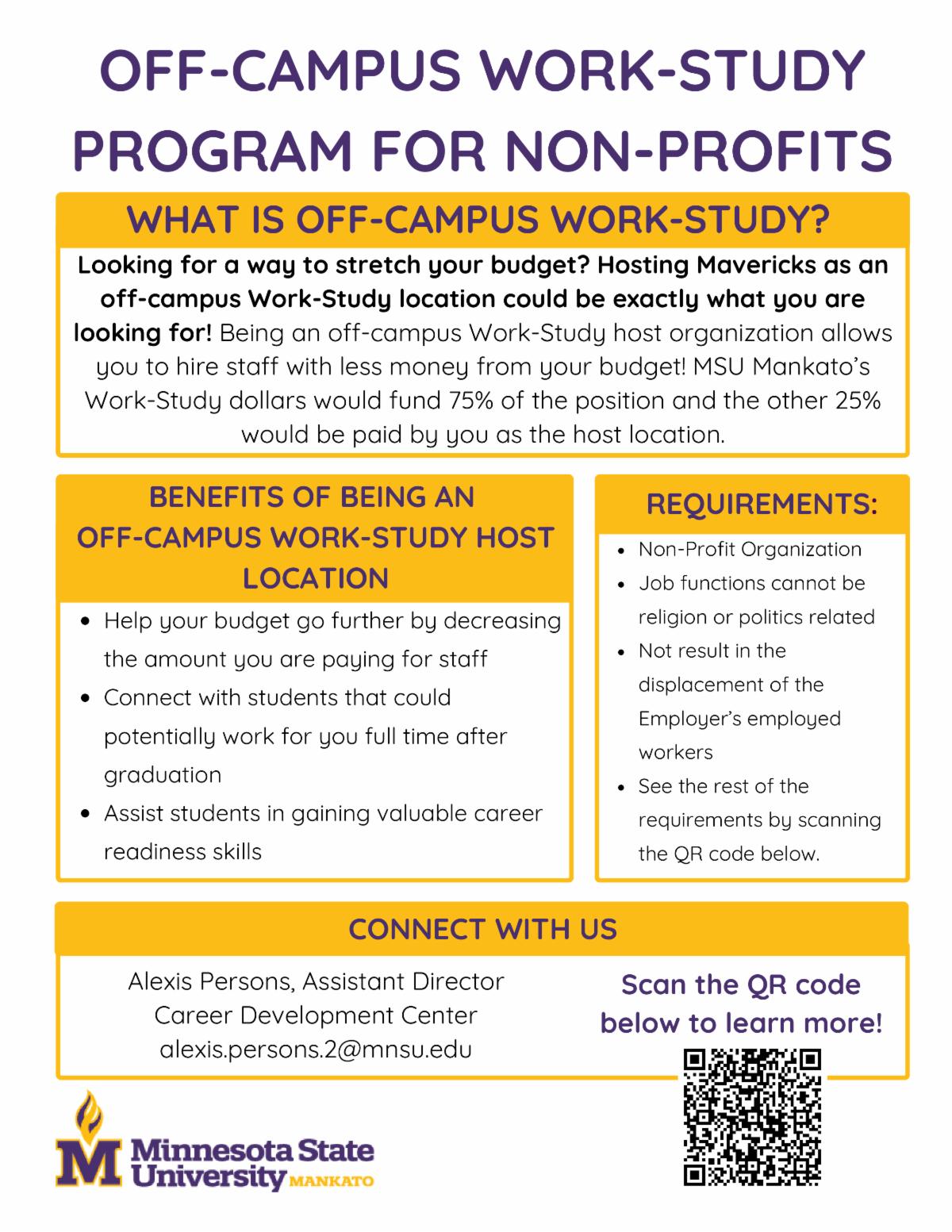
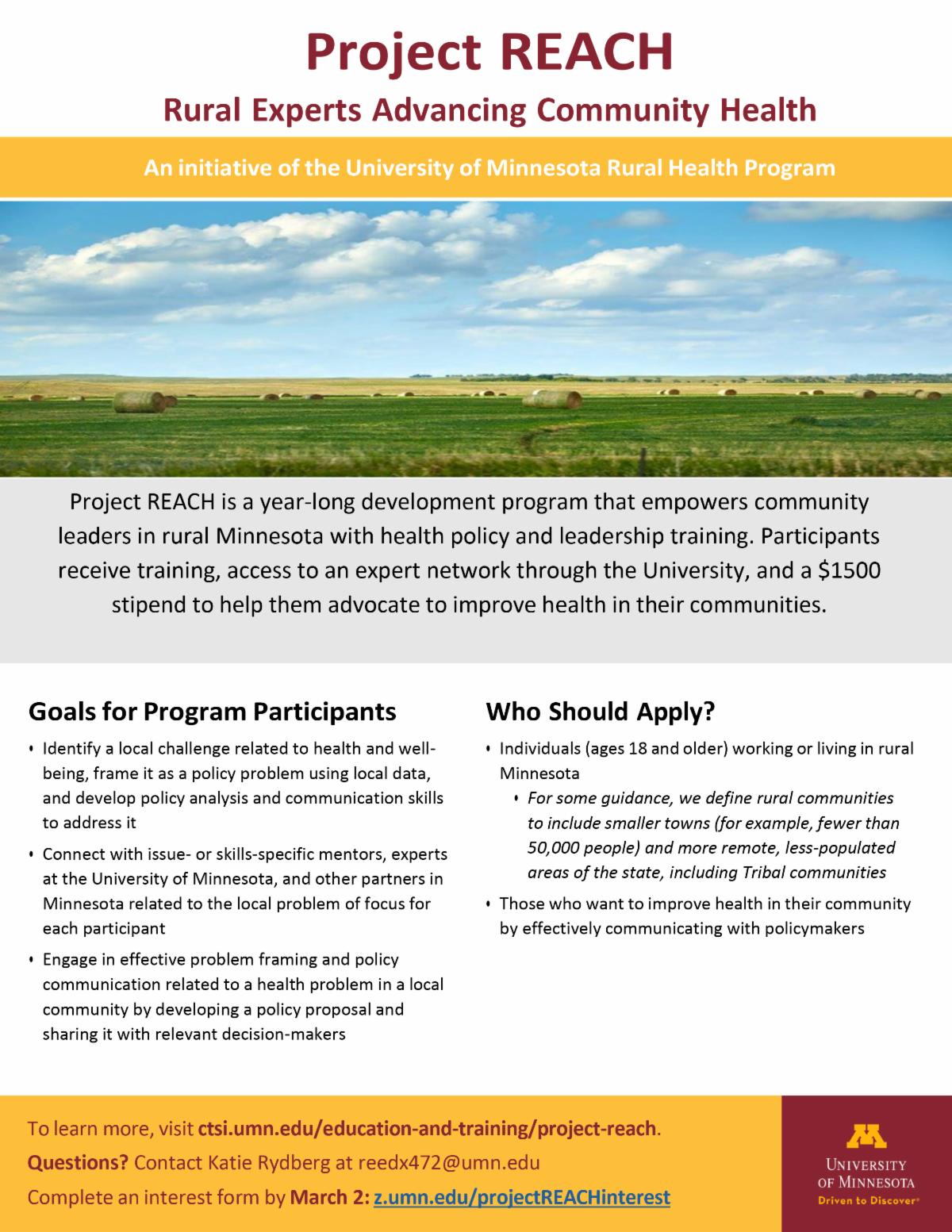
| | Nonprofit Organizations: Are you looking for a cost-effective way to add capacity to your team? | | Rural Community Leaders: Project REACH is accepting applications until March 2nd! | | |
2026 Beginning Farmer Tax Credit
The Minnesota Department of Agriculture’s (MDA) Rural Finance Authority (RFA) will start accepting applications for the 2026 Beginning Farmer Tax Credit on January 1. This is an annual program available to landlords and sellers (asset owners) who rent or sell farmland, equipment, livestock, and other agricultural assets to beginning farmers.
There is $4 million available for the program. The credits are funded in a first-come, first-served manner, so applicants are highly encouraged to apply early before the stated deadlines. Funds ran out in late January for the 2025 tax credit.
Both asset owners and beginning farmers must submit applications with lease and/or sale documents to be eligible for funding and to hold their place in line. They may apply before sales close with a valid purchase agreement, if needed.
Beginning farmers are also eligible for a nonrefundable Minnesota tax credit equal to the amount paid for FBM tuition, up to a maximum of $1,500. This tax credit is available for up to three years.
Full eligibility requirements and other materials can be found on the Beginning Farmer Tax Credit webpage. Questions may be directed to Jenny Heck at mda.bftc@state.mn.us or 651-201-6316.
Deadline: First-come, first-served
| | |
Certified Local Government (CLG) Grants
Certified Local Governments are invited to apply for federal matching grants that support local historic preservation efforts. Funding is provided through the Historic Preservation Fund and administered by the State Historic Preservation Office (SHPO). For Fiscal Year 2026, approximately $120,000 is anticipated to be available statewide.
Eligible projects may include:
• Historic resource surveys
• Preparation of local or national designation forms
• Historic preservation plans
• Building reuse studies
• Cultural landscape inventories
• Design guidelines for property owners
• Public education initiatives
Please note: CLG grants do not fund capital improvement (“bricks and mortar”) projects.
Priority will be given to projects that align with statewide preservation goals, strengthen preservation planning through surveys and historic context development, result in local designations, or highlight properties connected to underdocumented groups or communities.
Deadline: Feb. 20, 2026
| |
Region Nine Development Commission takes great pride in working with and on behalf of counties, cities, townships, and schools throughout South Central Minnesota. Since 1972, being a partner for progress has led to the development of programs and identification of solutions in the areas of economic development, business development, healthy communities, transportation, community development, and leveraging regional resources. To learn more about our work and mission, visit www.rndc.org.
| | | Follow RNDC on social media to stay up-to-date on events, news, and more! | | | | |