|
Monthly newsletter from the City of Chula Vista
Office of Sustainability
| |
|
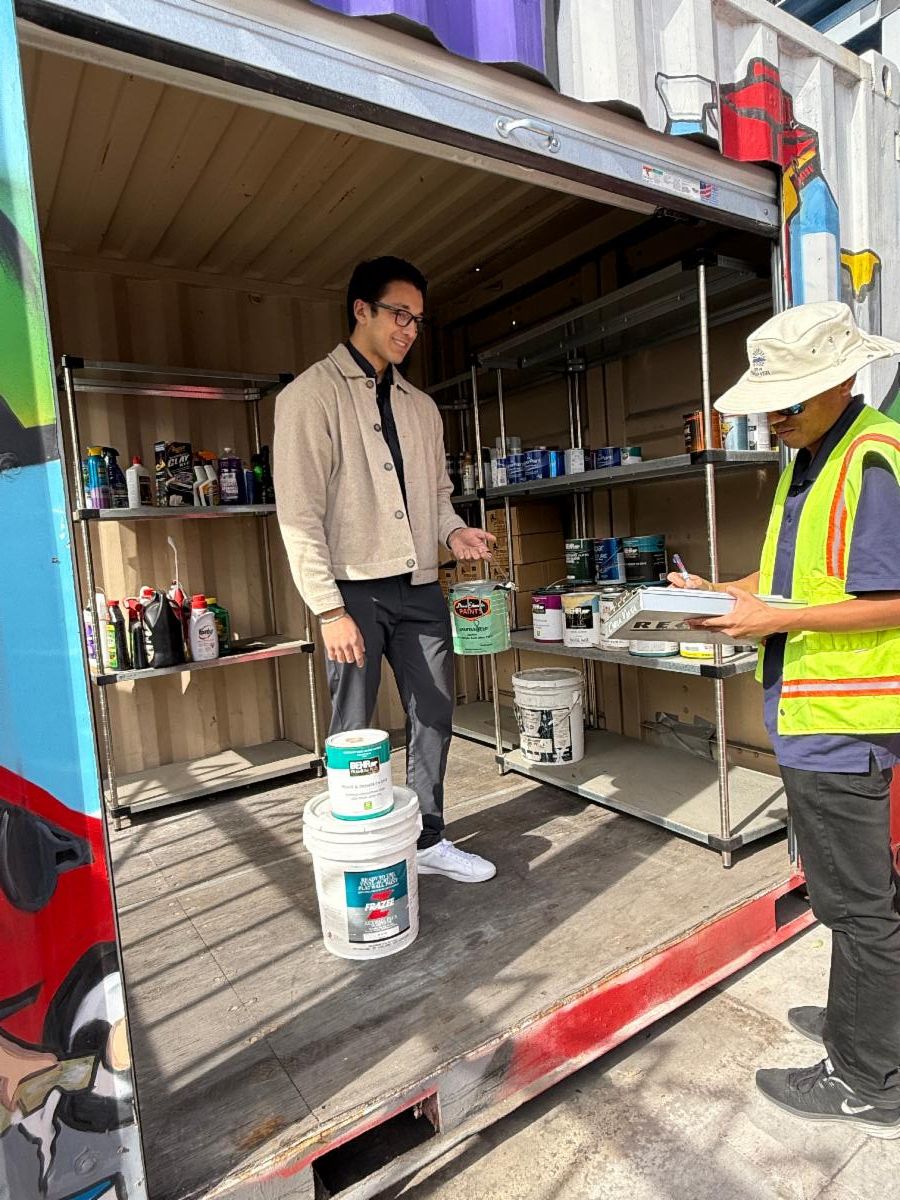
Reuse Center is Now Open!
The City of Chula Vista’s Environmental Services team is pleased to announce the opening of the Chula Vista Reuse Center, where residents can get lightly used paint as well as a variety of household chemicals. Residents can select up to 15 gallons of paint and 5 items of household chemicals and are limited to 1 visit per calendar month. Supplies are limited and items are on a first-come, first-served basis. The Reuse Center will be open on Saturdays only from 9:30 a.m. to 12:30 p.m. and is located at 1800 Maxwell Road, Chula Vista, CA 91911.
Questions? Call us at (619) 691-5122 or email environmentalservices@chulavistaca.gov.
| |
|
|
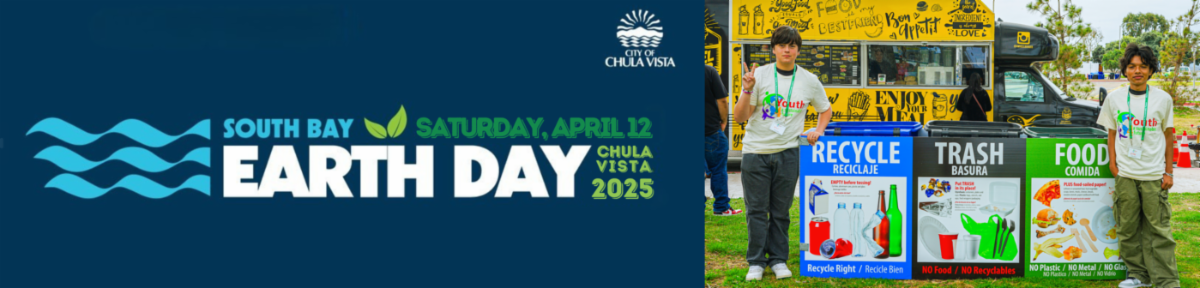
South Bay Earth Day April 12
Please save the date for the seventh annual South Bay Earth Day happening on Saturday April 12 from 11 a.m. to 3 p.m. at Chula Vista Bayfront Park. The event offers opportunities for education and engagement. Whether you’re looking to upcycle your clothes at the tie-dye workshop or get a broken device or furnishing repaired for free at the Fix-It Clinic, South Bay Earth Day vendors and exhibitors will help participants become more earth-friendly. Also, bring your dancing shoes and get ready to get down to the awesome musical acts that will entertain all in attendance.
More than 50 green booths will display and sell sustainable and eco-conscious items alongside live entertainment. Families can learn about what food waste turns into—compost that is so helpful to gardens and greenspace. You can even take home a small sample of the compost! An Artist Alley will include live artists presenting their earth-friendly art. Those riding their bicycles will receive royal treatment with a free bike valet. Let's not forget the delicious food - there will be a great variety of food and drink vendors available. True to our calling, the event will run on clean energy and off the grid. The stage, food trucks and other event electrical needs will be powered by battery systems rather than exhaust-producing diesel generators.
We look forward to seeing you at South Bay Earth Day!
Please email all event inquiries to environmentalservices@chulavistaca.gov.
| |
|
Zero Waste Academy Course Coming this Spring
The City of Chula Vista's Office of Sustainability is offering a 4-session course to educate residents on the concepts and practices of Zero Waste and to promote understanding of the City's Waste Reduction Strategic Plan (Zero Waste Plan) and the City's goal of achieving 90% waste diversion by 2035. The Academy will be open to Chula Vista residents and will focus on the premise that "wastes" are actually "resources" that can be used again until their useful life is no more. The Academy will promote an overall understanding of Zero Waste thinking and practices with the intention of benefitting our community and the region.
Academy participants will be provided opportunities to gain knowledge and will be highly encouraged to implement Zero Waste actions into their lives. Tours of the Otay Landfill, EDCO’s Materials Recovery Facility (MRF) for recyclables and a Construction and Demolition (C&D) Debris facility are being included. Those that complete the course will be recognized as “Chula Vista Zero Waste Champions.” The Academy begins on March 15, 2025 and concludes on April 5, 2025.
If you are interested in the Academy, please register here: https://www.chulavistaca.gov/departments/sustainability/trash/zero-waste/zero-waste-academy-course-application. If you have any questions, please call Environmental Services 619-691-5122
| |
|
Apply Today for a No-cost Energy Audit to Fulfill Conservation Requirements
Do you own a building in Chula Vista that is 20k square feet or larger? If so, you may be required to obtain an energy audit as a part of the Chula Vista Building Energy Saving Ordinance requirements. The City of Chula Vista is offering on-site American Society of Heating, Refrigerating and Air-Conditioning Engineers (ASHRAE) Level 2 energy audits at no cost to selected participants. These audits will fulfill the Building Energy Saving Ordinance audit requirements. Audits are anticipated to take place mid-late 2025. The quantity of no-cost audits is limited, so apply today! The first review of applications will be March 24.
Program Requirements:
- Building must be located within the City of Chula Vista and 20k square feet or greater
- Building must have submitted energy benchmarking data previously
- Building owner or representative must be willing to participated in pre and post audit surveys
Apply today: https://forms.office.com/g/nzr2nZDacC or email benchmark@chulavistaca.gov for additional information.
| |
|
Nominations For Sustainability Champion Awards Open Through March 31
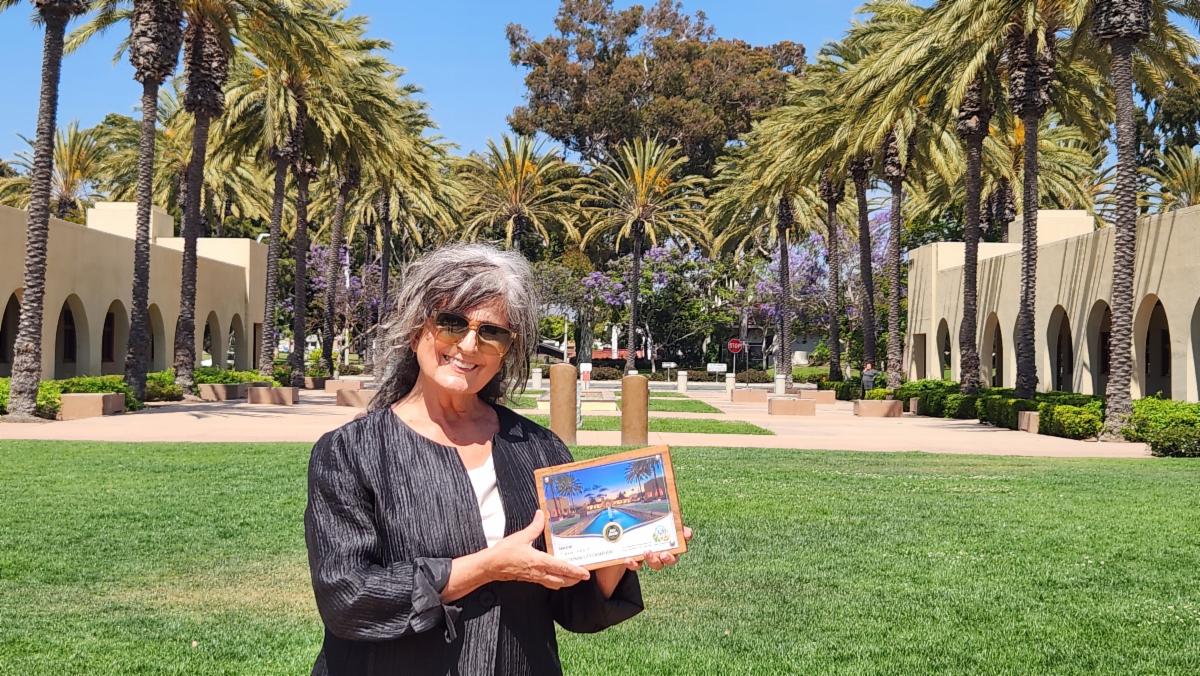
Do you know a person or group doing amazing things for sustainability in Chula Vista? Let’s celebrate them! Nominations for the Chula Vista Sustainability Champion Awards are now being accepted. Any person or group living or working in Chula Vista is eligible to be nominated for an award and potentially recognized for their local sustainability achievements. The Sustainability Champion Awards – an initiative of the City of Chula Vista’s Sustainability Commission and the Office of Sustainability – are designed to recognize those who are helping to achieve clean air, clean water and clean land for future generations within Chula Vista.
Nomination forms can be completed and submitted from the City of Chula Vista’s website at https://www.chulavistaca.gov/departments/sustainability/sustainability-forms/sustainability-champion-awards-nomination-form. Nomination forms are due by 5:00 pm on March 31, 2025. Award winners will be recognized at a City Council meeting in April and at South Bay Earth Day on Saturday April 12.
The Sustainability Commission hopes that the annual awards help celebrate local sustainability champions and inspire others to make eco-friendly choices in their everyday actions. More information on the City of Chula Vista’s environmental programs and services can be found at www.chulavistaca.gov/clean.
| |
|
Celebrate Love Sustainably This Valentine’s Day
Valentine’s Day is a time to express love and appreciation for the special people in our lives, but it’s also a perfect opportunity to show love for our planet! Traditional celebrations can often lead to waste: from disposable gift packaging to store-bought flowers that last only a few days. This year, Chula Vista residents can make a positive impact by choosing thoughtful, sustainable alternatives that help protect the environment while spreading love.
Choose Living Gifts Over Cut Flowers
Flowers are extremely popular during Valentine’s Day season, but they often have a significant carbon footprint due to transportation and packaging. Instead, opt for potted plants like succulents, herbs or indoor greenery. A notable plant, the snake plant, is not only a sustainable gift option, but also a natural air purifier for your home! It’s easy to care for and inexpensive. Living gifts are not only long-lasting but also contribute to better air quality and symbolize growth and sustainability.
Craft Your Own Valentine’s Day Cards
Store-bought cards can be wasteful, but creating your own cards using recycled or upcycled materials adds a personal touch and reduces reliance on commercially produced options. Take account of what you already have available at home or utilize recycled materials! This simple, creative act is a meaningful way to show you care while keeping waste to a minimum.
Gift Experiences, Not Things
Instead of material items, consider giving the gift of shared experiences. Tickets to a local event, a romantic nature hike or a DIY workshop are excellent ways to create lasting memories without adding to landfill waste. Not only will this be more of an impactful experience, but also gives way for you to better connect to your loved ones. Chula Vista offers many eco-friendly activities that align perfectly with this idea, from scenic trails to community events.
Support Local and Sustainable Businesses
Shopping locally is a great way to reduce the carbon footprint of your gifts. Many local Chula Vista businesses offer sustainable and handmade products, from eco-friendly jewelry to organic treats. Explore all that the community has to offer and support new business to better thrive our city! Supporting these businesses not only reduces environmental impact but also strengthens the local economy.
Learn More About Sustainable Living
The City of Chula Vista’s Office of Sustainability offers numerous resources to help residents adopt eco-friendly practices year-round. Visit the city's sustainability website to explore tips on waste reduction, energy efficiency and green living!
Dispose of Packaging Properly
If your Valentine’s Day gifts come with packaging, be sure to recycle correctly. Please remember that film-type clear or colored plastic wrap or packaging unfortunately is not recyclable and must be placed in your trash container. A Better idea is to avoid buying products wrapped in film plastic altogether and opt for those offered in cardboard. For specialty items like batteries or electronics, utilize the City’s Household Hazardous Waste collection facility at 1800 Maxwell Road, open Wednesdays and Saturdays from 9 a.m. to 1 p.m.
By making small changes, we can celebrate Valentine’s Day in a way that honors both our loved ones and the planet. Let’s make this year a celebration of sustainable love in Chula Vista!
| |
|
Incentives Available for Small Multifamily Heat Pump Water Heaters
TECH Clean California small multifamily incentives of $3,100 to $4,185 per unit are available for replacing existing multifamily water heaters with heat pumps. The $4,185 incentive is reserved for units serving low-income residents. The incentives will be available to TECH Clean California contractors across the state supporting multifamily properties/buildings servicing 10 or less units. The incentives will be available on a first-come, first-served basis. Projects must be completed within four months from date of reservation approval. For more information or to apply, please visit: https://techcleanca.com/incentives/multifamily-information. To find a qualified contractor that can offer these incentives, please visit: www.switchison.org.
| |
|
Free Energy Efficiency Courses
The LEARN Program is a free online educational platform offering interactive courses, live webinars, and certifications designed to empower individuals with valuable skills in energy efficiency and electrification. Learn about home electrification, building design and construction, lighting, and more! Power up your knowledge by visiting sandiegolearn.com to take courses.
| |
|
Applications Now Being Accepted for Community Clean Energy 2025 Grant Program
The Community Clean Energy Grant Program is now accepting applications for the 2025 grant cycle. A partnership between San Diego Foundation and San Diego Community Power (Community Power), the Community Clean Energy Grant Program awards funding to new and existing projects that move communities towards a healthier, more sustainable, clean energy future. Grants will be made to nonprofits to support local clean energy projects and programs that provide economic, environmental and health benefits to Community Power’s communities. The program will award more than $600,000 in grants, with grant sizes ranging from $25,000 to $100,000. Grant funds must be expended by grantees within 24 months of their award date. For those interested in submitting a funding application, please note the deadline of Friday, March 14, 2025 at 5:00 p.m. For more information or to apply, please visit: www.sdfoundation.org/nonprofits/apply-for-a-grant/community-clean-energy-2025-grant-program.
| |
|
New California Recycling Facility Will Turn Food and Beverage Cartons into High Tech Building Materials
The Lodi, California facility is in development through a partnership with the Carton Council, Elof Hansson USA Inc. and the Upcycling Group, and is expected to be completed by the end of this year.
The facility is designed to turn postconsumer food and beverage cartons into durable, sustainable building materials and, according to the partners, will support regional recycling efforts and help meet what they consider to be a growing demand for sustainable construction materials.
The manufacturing method involves shredding used gable-top and aseptic cartons and bonding them into large, durable sheets. The partners say the high-pressure and heat treatment process eliminates the need for water, formaldehyde glues and hazardous chemicals and relies entirely on cartons and other materials collected for recycling.
“The carbon footprint of our boards is at least 80 percent lower than the traditional building materials that we replace,” Upcycling Group co-founder and CEO Jan Rayman says. “No mining, no tree cutting and no water used or contaminated, creating a variety of boards that can be used for roofing, wallboard and other building materials, all produced more sustainably than their traditional counterparts.”
Jason Pelz, vice president of recycling for the Denton, Texas-based Carton Council, says the partners believe the new facility will play a crucial role in supporting California’s efforts to expand recycling by providing a new, regional end market. “By using collected, sorted and baled cartons from California and bordering states, we are not only making recycling more efficient for West Coast communities, but also ensuring these materials stay in use and out of landfills,” Pelz says.
Once fully operational, the facility is expected to recycle approximately 750 tons, or 1.5 million pounds, of food and beverage cartons each month and employ an estimated 15 people. The facility will source cartons from California and other parts of the West Coast.
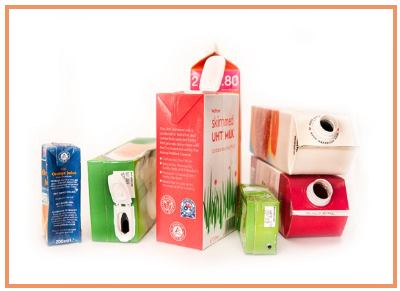
What can you do? Remember to place all cartons into your recycling container, everything from the small juice cartons to the larger ones that contain soups/broths and even soaps and cleaners. Some cartons have a plastic spout or re-sealable “zipper” top but despite being made up of multiple materials, cartons are recyclable. Many of our everyday products are now offered in cartons and more are expected for their recyclability, compatibility and ease of shipping so expect to see more of your favorite products in a carton during your next shopping trip.
| |
|
Sweetwater Authority Community Workshops on PFAS
The folks at Sweetwater Authority began a campaign aiming to advance community knowledge on federal U.S. Environmental Protection regulations surrounding per- and polyfluoroalkyl substances (PFAS). These are man-made chemicals that are found in everyday household items that can end up in our watershed. Because of the impact of these harmful chemicals, the EPA issued new federal standards for six types of PFAS that are requiring public water systems to complete their initial monitoring by 2027.
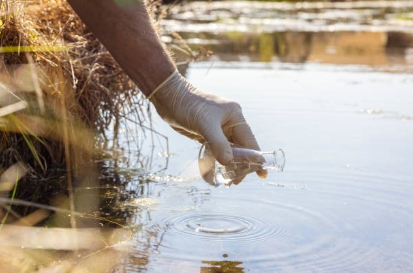
In October 2024, the Sweetwater Authority began quarterly testing with results for Q2 showing that PFOA was detected, a synthetic chemical that's part of a group of chemicals (PFAS), and PFHxS, a chemical used in many consumer products and industrial processes and a member of the PFAS group of chemicals.
As a result, Sweetwater Authority launched a public outreach campaign with workshops beginning in December 2024. There are two remaining workshops that residents can attend to ask questions and learn more about EPA updates on PFAS, testing results, mitigation and funding strategies, and steps the Sweetwater Authority is taking against PFAS manufacturers. See the remaining workshop dates, times, and locations below:
- Thursday, Feb. 13, 2025, 5:30 to 7:30 p.m.: Chula Vista Public Library Civic Center Branch: 365 F St., Chula Vista, CA 91910
- Wednesday, Feb. 19, 2025, 5:45 to 7:45 p.m.: Bonita-Sunnyside Library: 4375 Bonita Road, Bonita, CA 91902
See if your place of residence falls within the Sweetwater Authority service areas here.
Read more about PFAS Education on Sweetwater Authority’s website.
| |
|
Nature Spotlight: Birdwatching at Sweetwater Reservoirs
Did you know there's an invisible highway in the sky? It's called the Pacific Flyway, and the South Bay sits directly beneath it. This avian interstate is used by migratory birds every fall and winter as they journey from north to south in search of warmer breeding and feeding grounds. We're incredibly fortunate to be a prime rest stop along this epic journey, making our community a birdwatcher's paradise.
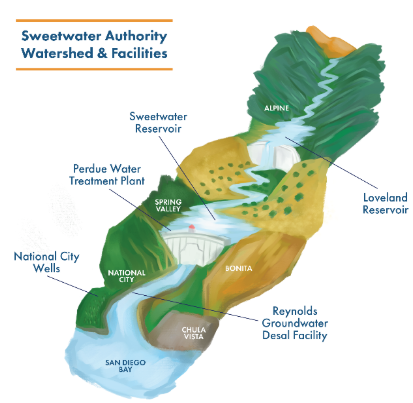
Two fantastic locations for spotting these feathered travelers are the Sweetwater and Loveland Reservoirs, both which are part of the Sweetwater watershed. With an astounding 250 bird species recorded at Sweetwater and 125 at Loveland, you're in for a treat. Keep an eye out for federally and state endangered birds like the least Bell's vireo and the federally threatened California gnatcatcher – you might just get lucky! Whether you're a seasoned birder or just beginning your avian adventures, free resources like the Merlin Bird ID app can help you identify what you see. Or simply come and enjoy the beauty of these incredible creatures in their natural habitat.
Public access areas around the Sweetwater Reservoir offer fantastic viewing opportunities. A gentle reminder: when you're out birding, remember your trail manners. Keep your voice down, stay on designated paths and leave only footprints.
Don’t forget your binoculars and happy birding!
| |
|
The Intersection of Climate Change and Social Justice: How Marginalized Communities are Disproportionately Affected by Environmental Issues
The intersection of climate change and social justice reveals how marginalized communities are disproportionately affected by environmental issues, a reality that brings both ethical and practical challenges to the forefront of climate action. While climate change impacts everyone, its effects are often more severe for low-income and marginalized communities, who have fewer resources to adapt and recover. In San Diego, communities such as Barrio Logan, National City, and parts of Chula Vista experience heightened vulnerability to climate impacts due to historical underinvestment, industrial pollution, and limited access to resources. These neighborhoods, which are home to many low-income residents and communities of color, face environmental hazards daily- which range from poor air quality to increased flood risks, compounding issues of health, safety, and economic stability. This unequal burden highlights the need for a climate justice approach, ensuring that the voices and needs of vulnerable populations are prioritized in environmental policies and solutions.
Marginalized communities are often located in areas most susceptible to environmental hazards. In San Diego, areas like Barrio Logan are located near industrial sites and highways, exposing residents to high levels of air pollution that can lead to respiratory illnesses, cardiovascular diseases, and other health issues. Studies show that rates of asthma and other respiratory conditions are significantly higher in these neighborhoods compared to more affluent areas. This exposure to pollution not only impacts health but also limits educational and economic opportunities, perpetuating cycles of disadvantage and vulnerability within San Diego’s marginalized communities.
As climate change intensifies, these communities also experience extreme weather events. Rising temperatures are a concern in San Diego, where many low-income households cannot afford air conditioning, leaving residents vulnerable during extreme heat waves. Additionally, neighborhoods with inadequate infrastructure and fewer green spaces experience the “urban heat island” effect, where temperatures rise higher than in surrounding areas due to heat-absorbing concrete and asphalt. This exposure to extreme heat poses serious health risks, especially for elderly residents, young children, and those with preexisting health conditions. These effects underscore how climate change exacerbates existing inequalities, as marginalized communities in San Diego face mounting challenges with limited systemic support and funding.
Addressing these issues requires a commitment to climate justice, an approach that centers the needs and rights of those most affected by environmental injustices. Policy changes alone are not enough; climate justice also involves amplifying the voices of marginalized communities in decision-making processes. Historically, these communities have had limited influence over policies that affect their environment and health. By including them in the conversation, policymakers can create more inclusive solutions that reflect the unique experiences and needs of those on the frontlines of climate change. Community-led initiatives, such as urban gardens, local clean energy projects, and grassroots advocacy, demonstrate how marginalized communities in San Diego are already contributing to climate resilience, often with limited resources. Supporting and scaling these efforts is crucial to building a more equitable and sustainable future.
When addressing the intersection of climate change and social justice, we have to acknowledge that environmental issues are also human rights issues. Protecting vulnerable communities from the impacts of climate change is not only a matter of environmental stewardship but also a commitment to equity and fairness.
If you are interested in learning more, check out the links below:
Environmental Health Coalition (EHC)
www.environmentalhealth.org
California Environmental Justice Alliance (CEJA)
www.ceja-usa.org
| | | | |