|
Black History Month
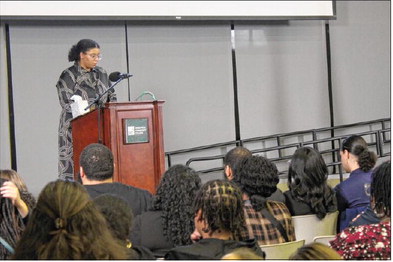
Beyond Policy: A Call for Reflection
by Traci Talbert
| |
|
During Black History Month many concerns and questions arise about race, personal agency, and executive orders' impact on the national discourse. But beyond policy and politics, I ask a more profound question: Are we genuinely engaging with the essence of Black history, or are we simply reacting to written mandates?
As a Black woman, an Adjunct Professor, and the Racial Justice and Community Engagement Director for the Franklin County Community Development Corporation, I wrestle with the purpose of our collective efforts. Affirmative Action, signed into law 60 years ago, was meant to ensure fairness—giving people the freedom to exist without fear of being judged or denied based on race, culture, or gender. And yet, has the spirit of justice and equity truly been embraced, or have we settled into complacency, relying on policy to do the work?
History is meant to be more than a timeline of past events—it's an evolving transformation narrative. It is the lens through which we examine social, economic, and cultural shifts. But when we look at Black history—not just slavery, but the systemic structures that followed—what do we see? On the surface, much has changed. Yet, when we look deeper, we recognize that racism has become more covert, embedded in systems that often go unquestioned.
At the Franklin County CDC, we remain committed to racial justice—not as a checkbox or a performative gesture, but as an intentional, ongoing effort. Black History Month is not just about acknowledgment; it is about introspection. How are we each showing up in this work? How are we challenging ourselves, our workplaces, and our communities to move beyond rhetoric and into action?
So, I ask you:
- Who will you be in the work of racial justice?
- What daily self-reflection will you commit to?
- Are you waiting for policy to tell you what's right, or will you take responsibility for creating change?
For me, the question remains: What's Law Got To Do With It?
True transformation does not begin with legislation—it starts with us.
As you reflect, remember this: most policies and laws were historically designed to exclude. Let's ensure that our actions—individually and collectively—work to dismantle exclusion, not reinforce it.
Traci Talbert is the Racial Justice and Community Engagement Director at the Franklin County Community Development Corporation.
| |
Registration Now Open for the Entrepreneurship Accelerator | |
|
Registration is now open for the spring Entrepreneurship Accelerator. From ideation and assessing start up costs to pricing, budgeting, market research, feasibility, racial justice issues, business ethics, and marketing your business, this comprehensive class offers students a supportive community of learners who are moving toward business ownership or already run a business.
Classes alternate from content presentation to using tools together in a workshop format. Participants can also sign up to attend bi-weekly office hours for one-on-one and small group meetings with Business Assistance Manager Iris Alma. The free 14-week class meets on Thursdays at 9:30 to 11 a.m. on Zoom. Apply here. Income-eligible business owners with a business in Greenfield (or who plan to open in Greenfield), may be eligible for a mini-grant investment in their business.
"I have been and will continue to collaborate with many of the experts, creatives, and entrepreneurs that I had the pleasure of connecting with through the Franklin County CDC's Entrepreneurship Accelerator. If you are starting a business, I would put this course on your priority list."
| |
Grant to Pay Restaurants to Provide 50,000 Meals for Food Insecure Residents | |
|
The FCCDC and other state-wide partners are piloting a program that supports restaurants as they provide meals to nonprofits that work with food insecure communities. The Food Insecurity Grant Program for Independent Restaurants is funded by the Massachusetts Legislature through the Massachusetts Growth Capital Corporation and is co-administered by the Local Enterprise Assistance Fund in Eastern Massachusetts and, in the five western and central counties of the Commonwealth, the FCCDC.
The FCCDC worked with meal sites and other nonprofit organizations that serve residents facing food insecurity. In the counties of Franklin, Hampshire, Hampden, Berkshire and Worcester, the program is investing $450,000 to serve roughly 50,000 meals in its first year.
FCCDC Program Manager Hannah Sobel partnered with 10 food access organizations identified by the Food Bank of Western Massachusetts and the Worcester Food Bank, including the Amherst Survival Center, the Franklin County Community Meals Program, and Ludlow Veterans Services. Each organization nominated one or more restaurants, 19 in all, to participate in the program. Those restaurants prepare complete meals that are then served at the organization or boxed and distributed.
"Combining financial support for local restaurants, which faced tremendous headwinds during COVID and have still not fully recovered, with increased access to meals for folks struggling with food insecurity: this is a win-win," said Sobel.
| |
We ❤️ the Local Food Trade Show | |
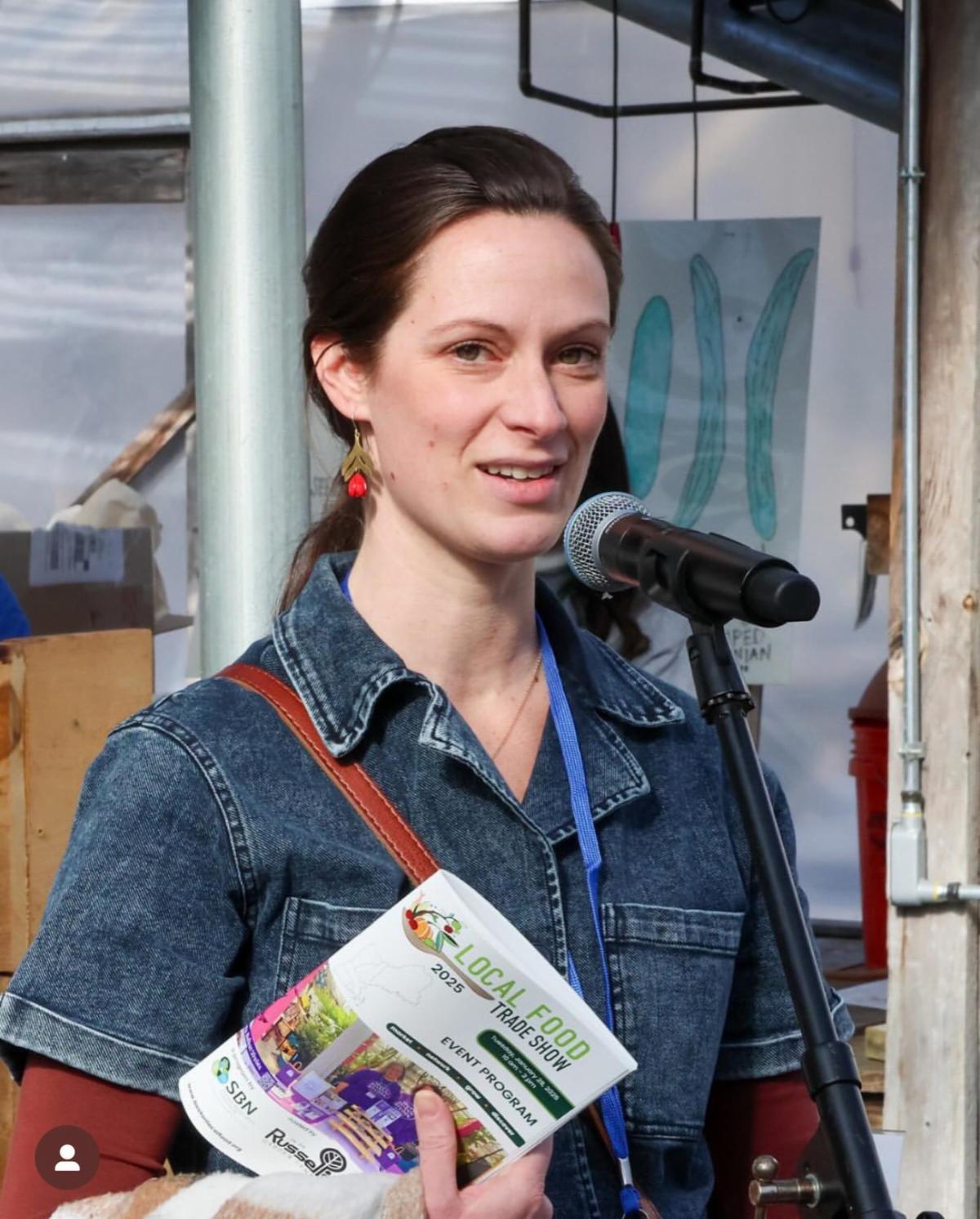
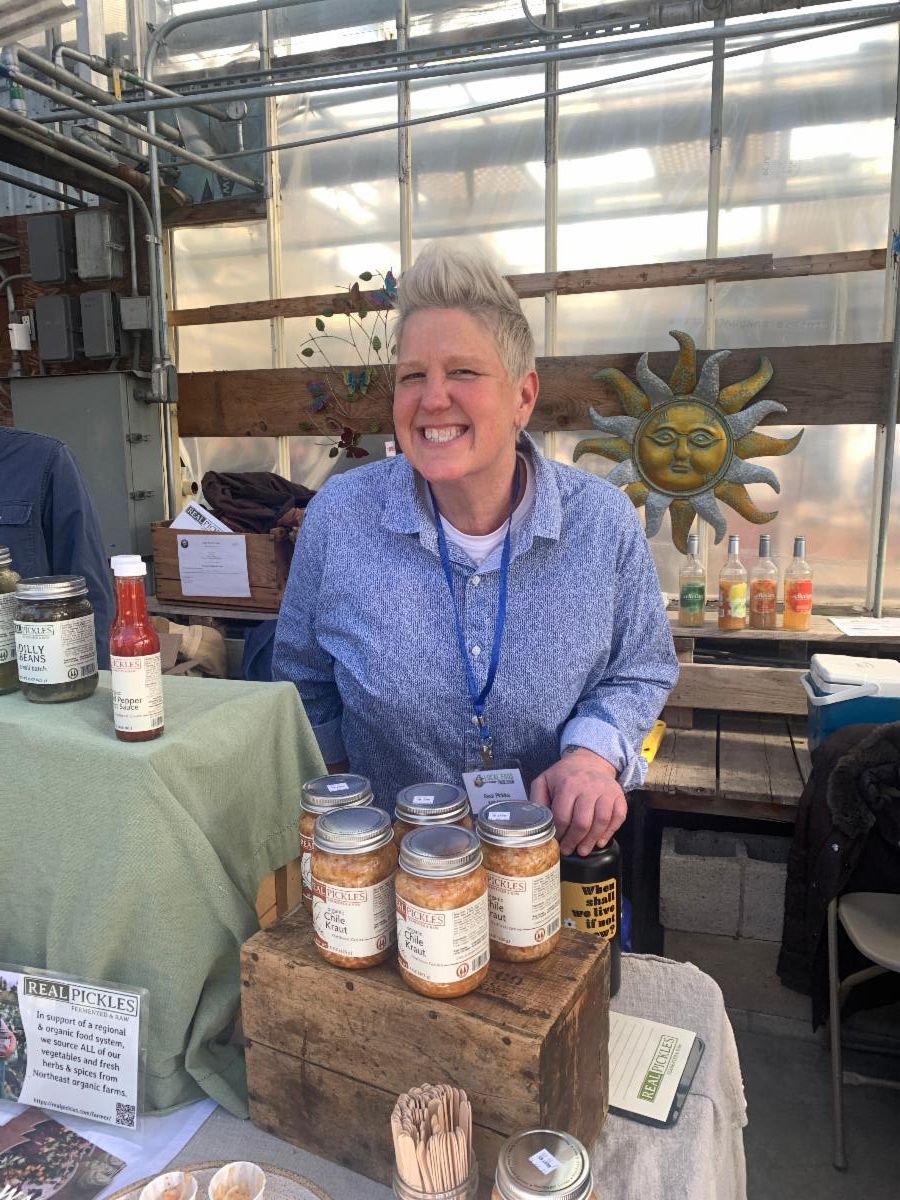
The Local Food Trade Show was *the* place to be for networking and learning about the amazing products from enterprising entrepreneurs! Thanks to our partners at the Sustainable Business Network Massachusetts (SBN Mass) for pulling together a great program highlighting the owners of consumer packaged goods (CPGs). We ran into many of our clients and former clients at the event and Farm & Food Products Program Director Kate Minifie addressed the crowd at Russell's Garden Center in Wayland. SBN Mass is our partner in the Wholesale Readiness Program, a 10-week course for early-stage but established CPG business owners. Interested in learning more about making your product at the WMFPC? Register for our food business information session. | |
FCCDC Farm & Food Products Program Director Kate Minifie | |
|
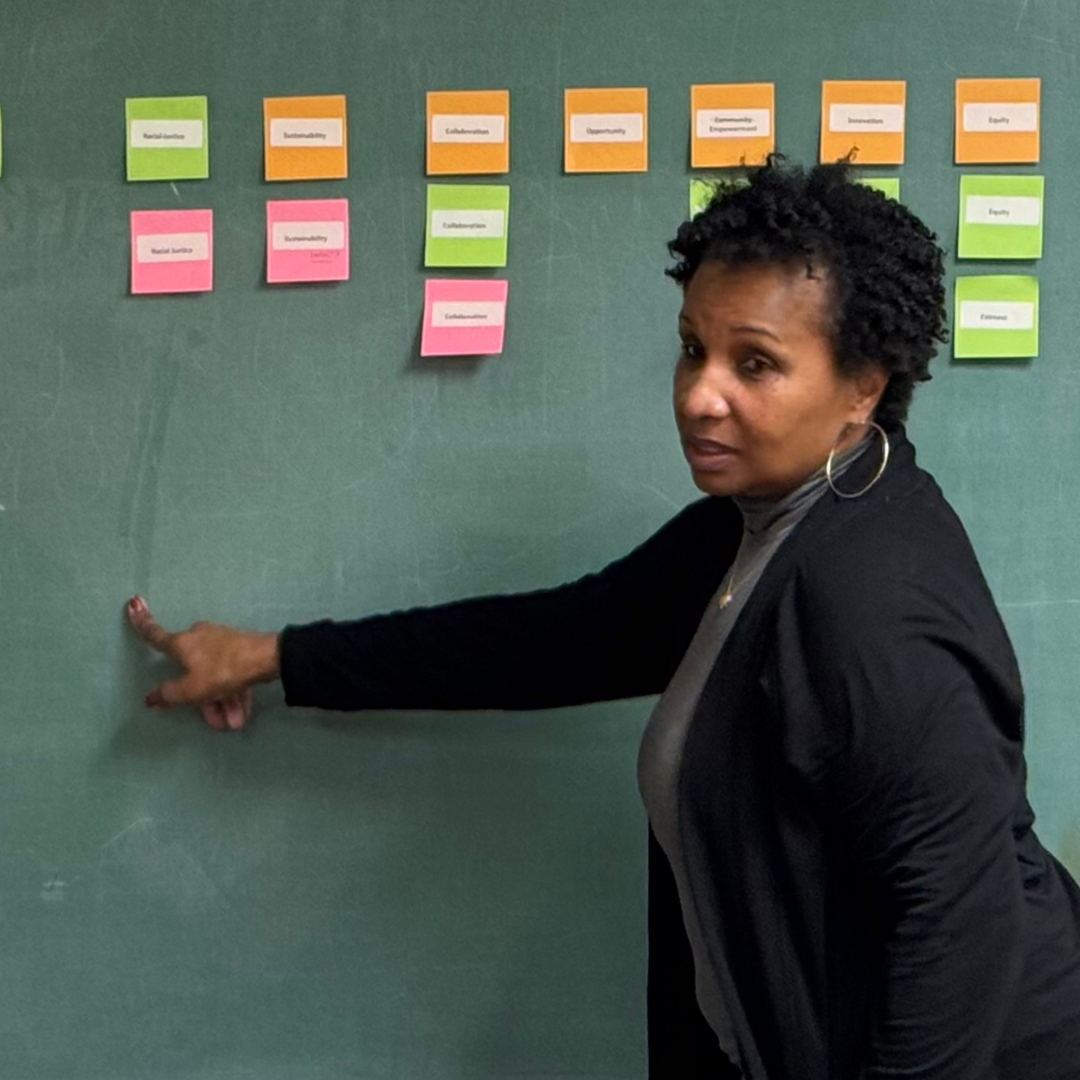
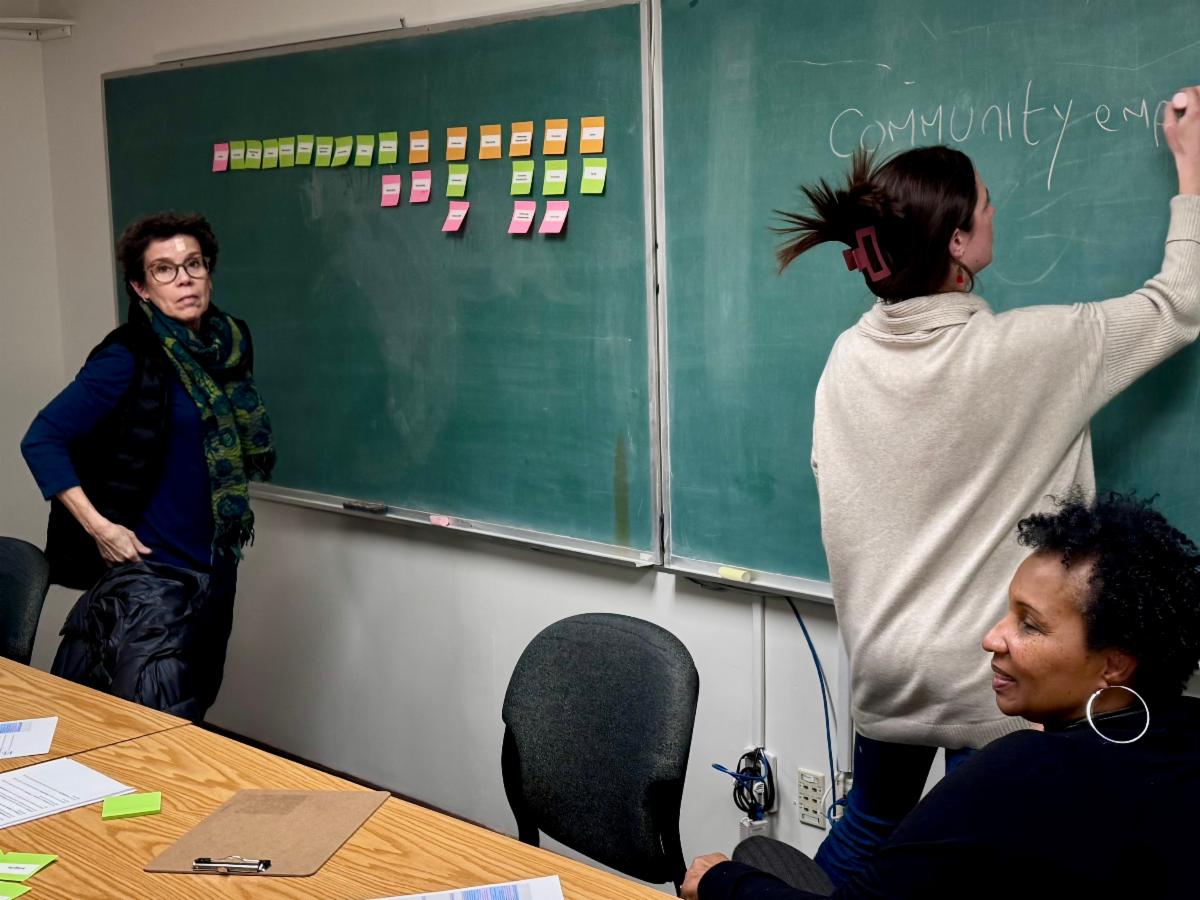
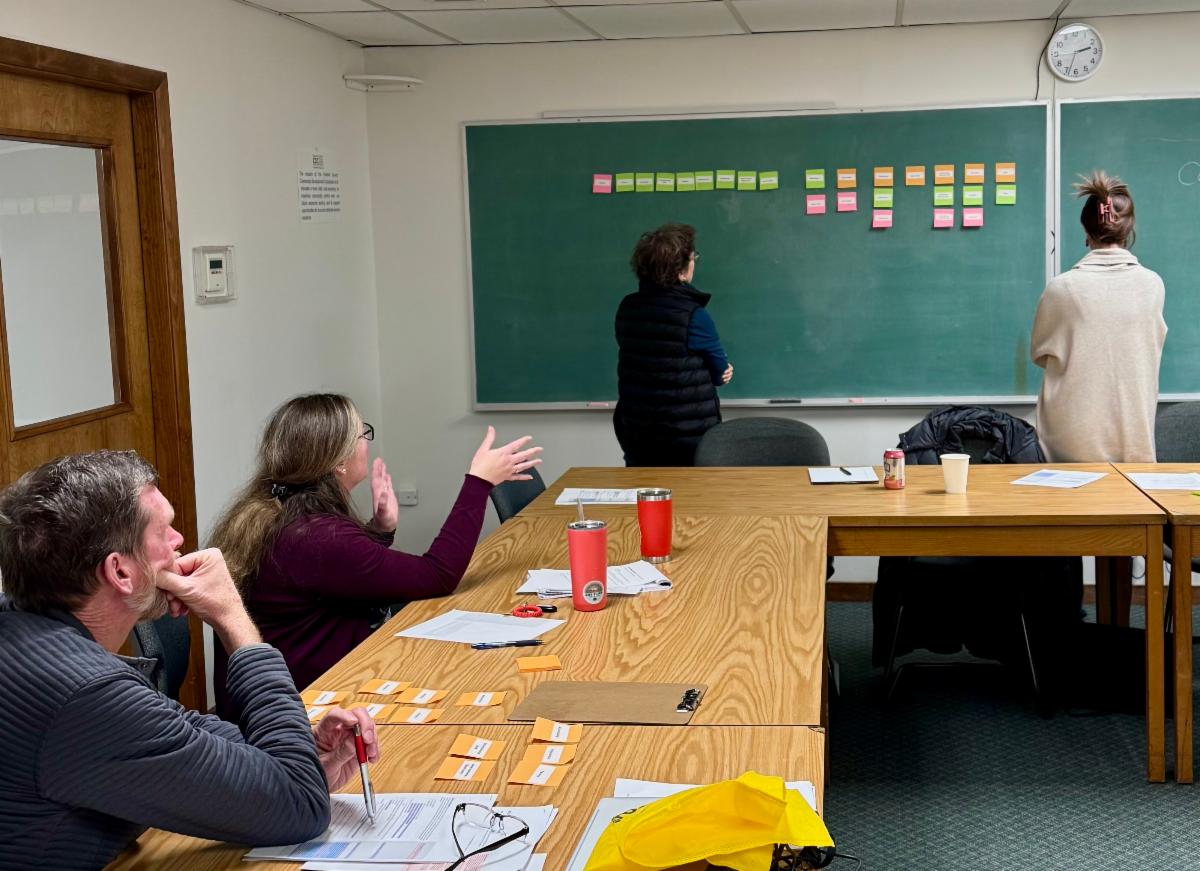
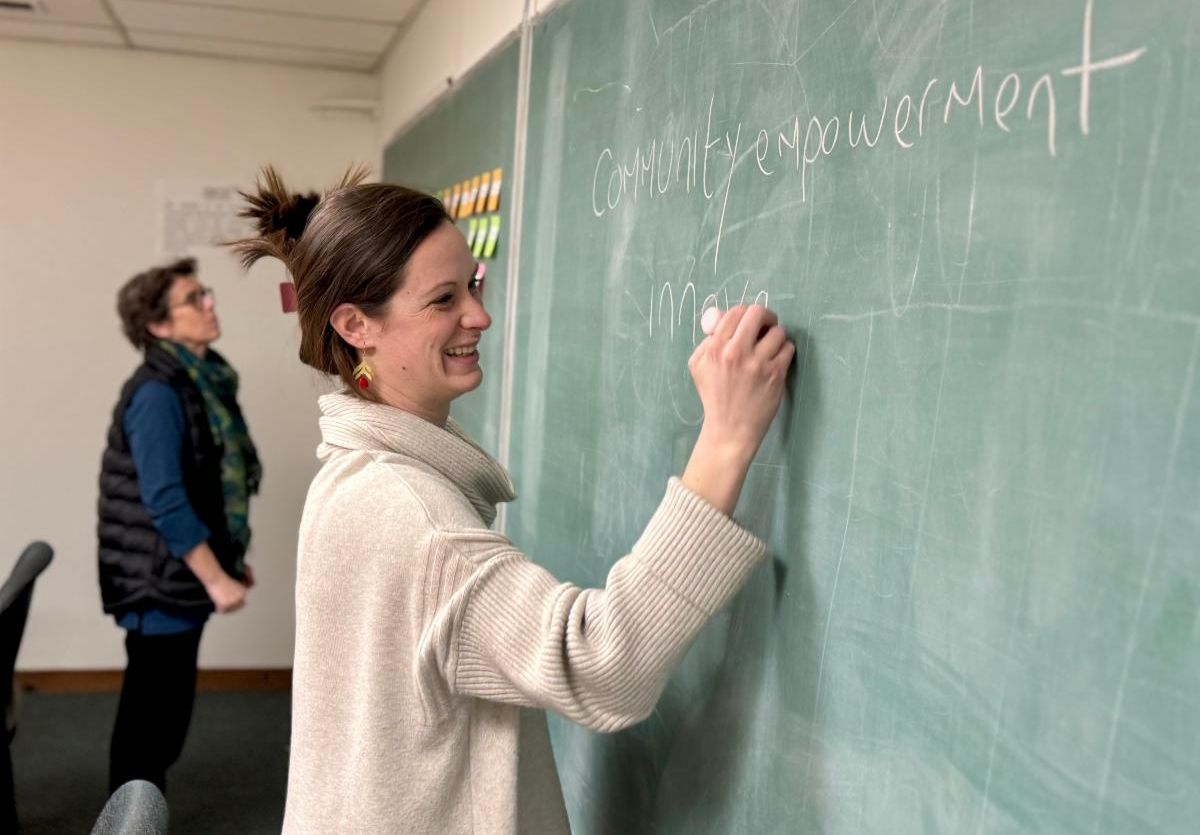
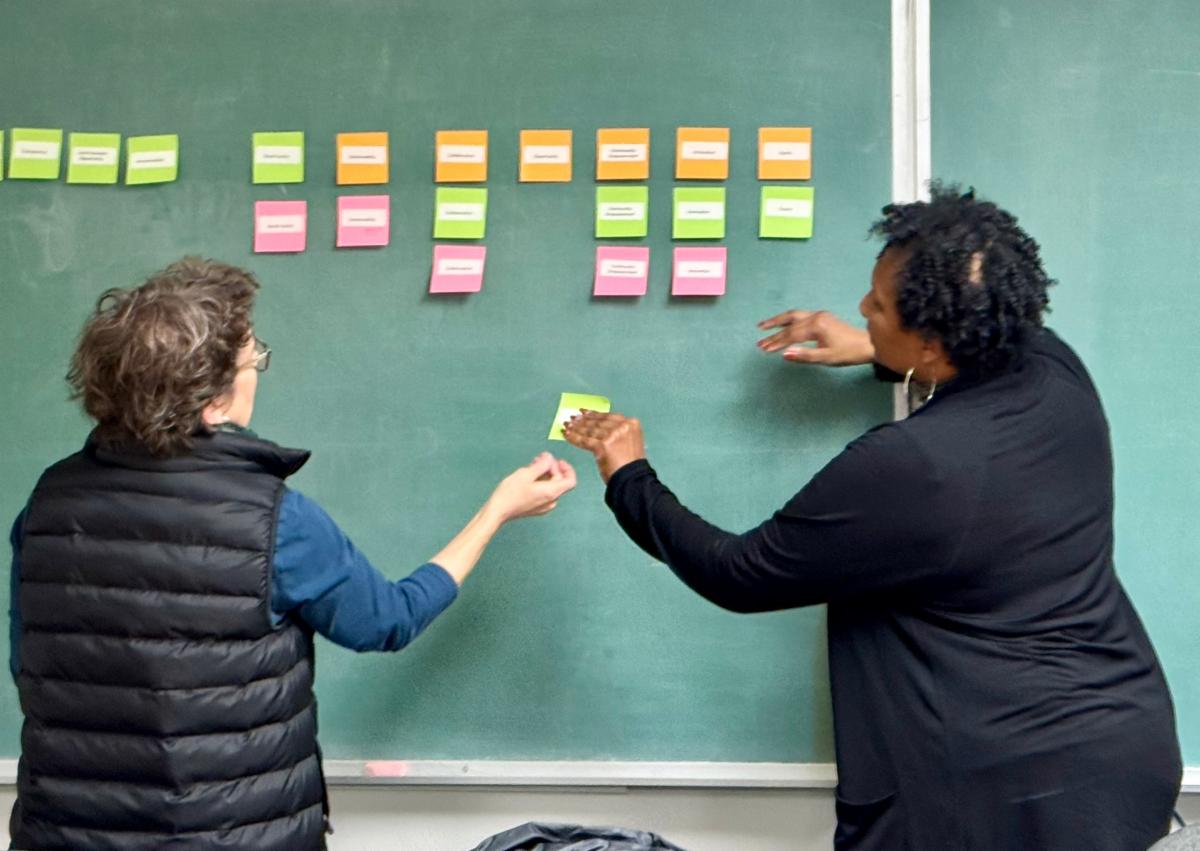
As you may have read in earlier newsletters, the FCCDC has embarked on a process to create a Strategic Framework for the next several years. Recently, the committee shepherding the process participated in an exercise to work toward words and statements that express our vision and core principles. |
|
Board Member Tina Stevens, Farm & Food Products Program Director Kate Minifie (at board) and Racial Justice Community Engagement Director Traci Talbert | |
Executive Director John Waite, Finance and Administration Director Shannon Martineau, Tina, and Kate | |
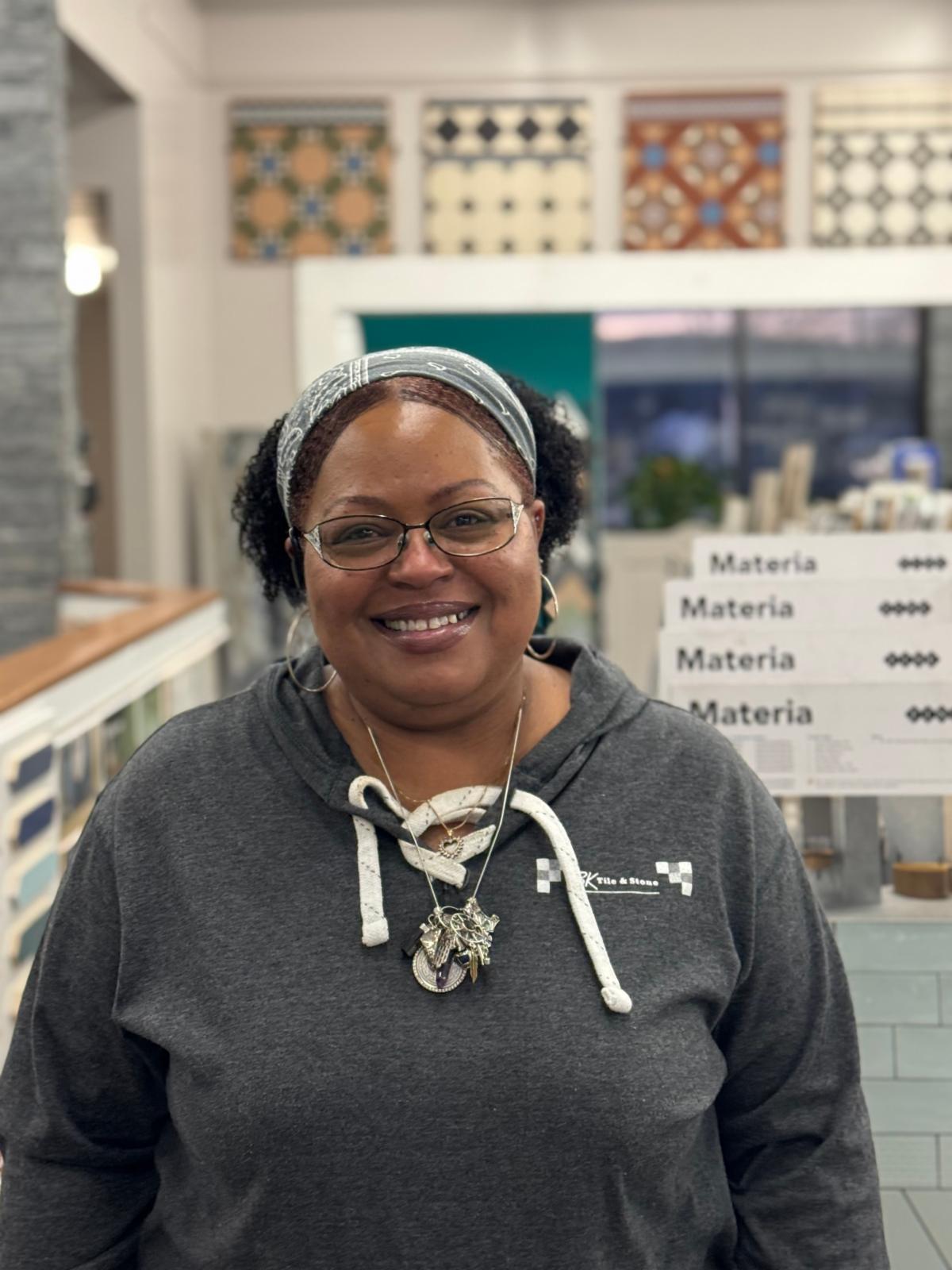
Client Focus: BK Tile and Stone | |
|
The owners of BK Tile and Stone, a fixture on Federal Street in Greenfield for the last 12 years, have transformed commercial businesses and residences with their installation of tile and stone products. Over the span of their careers, they have similarly seen their business transform as they adapted to changes in the economy and the pandemic, and as they navigate being a Black-owned business in Franklin County.
BK Tile and Stone is owned by husband-and-wife team Billy and Kelly Whitaker. Billy has a deep background in managing the installation of commercial tile and marble and CEO Kelly manages the storefront, guiding clients through the process of choosing materials and remaking their space.
The two have a combined 40 years’ experience as design and installation professionals and their sunny downtown showroom carries an impressive array of tile, natural stone, glass, and handmade ceramics. “I love the creative part of this work,” she said. “I have a love of design, and I love to work with people!”
We spoke to Kelly during Black History Month and asked how she and Billy, as two of the only Black business owners in Greenfield, were doing.
Kelly said she’s lived all over the U.S. and travelled to many states and has been surprised to have experienced the most racism right here in Massachusetts. Her children experienced repeated racially motivated attacks in Franklin County schools. In addition, tile distributors who she knows well ask her why they see her white neighbors shop for tile elsewhere and not in her store. She doesn’t have an answer. That said, “Customers and clients who want to work with us do,” she offered. “Since 2013, it’s all been word of mouth. I think there are good people in the area. That’s what keeps me going.”
BK Tile and Stone is now branching out again, back into the commercial tiling world they began their careers. They recently inked contracts with a mall in Cambridge and a national retail store in Boston. A loan from the Franklin County CDC is helping them prepare for this work.
“We’re still here,” she said, smiling.
Read the full story here.
|
|
A Regional Approach to Downtown Economic Development | |
|
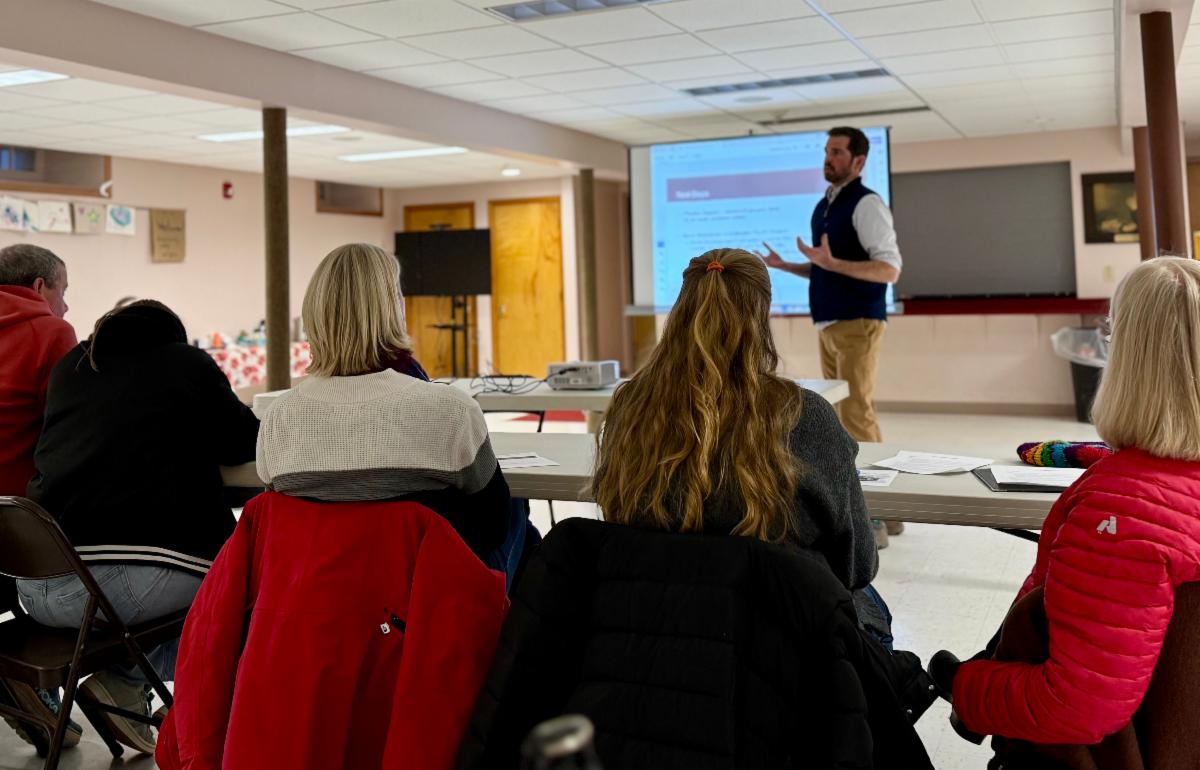
Business owners and community members came out to Trinity Church in Shelburne on January 28 to hear the results of a study on downtown economic development for the village of Shelburne Falls. The study, commissioned by the Franklin Regional Council of Governments (FRCOG), in partnership with the Franklin County Chamber and the Franklin County Community Development Corporation, and conducted by BSC Group, looked at ways to promote three downtowns in the county: Shelburne Falls, Turners Falls, and Northfield center. An earlier meeting was held in Turners Falls.
The study found that the towns, while unique, have similarities, and could benefit from a regional approach to drive business and community vitality. While hiring a dedicated staff person for each town would be costly, FRCOG applied for and was awarded a Rural Development grant for one year that will provide funding for a pilot program that would hire a single regional coordinator who would serve all three villages.
Attendee reactions varied, with some proposing the role be split into three part-time positions for each community. Others favored a balanced approach to promoting the village to both locals and visitors, while some viewed tourism as extra revenue and wanted to focus on encouraging local business support.
The regional coordinator would work with groups in each district to enhance and expand on work already happening there. Currently in Shelburne Falls, Cate Chadwick has been serving in a similar role—organizing events, managing the ShelburneFalls.com website—mainly as a volunteer.
Franklin County Chamber President Jessye Deane said she applauds the work of Chadwick and of Whit Sanford, who has written grants to fund projects in the village, also as a volunteer. “Maybe this phase will help reinforce and move forward the need for a full-time or part-time coordinator/manager here in Shelburne Falls,” Deane said. “It’s a start. Let’s see where we end up.” The Franklin County CDC is the fiscal sponsor of the Shelburne Falls Initiative, the organization under which Chadwick and Sanford have initiated several projects.
| |
|
Client Focus: Farm Store 99
and Agric Organics
| |
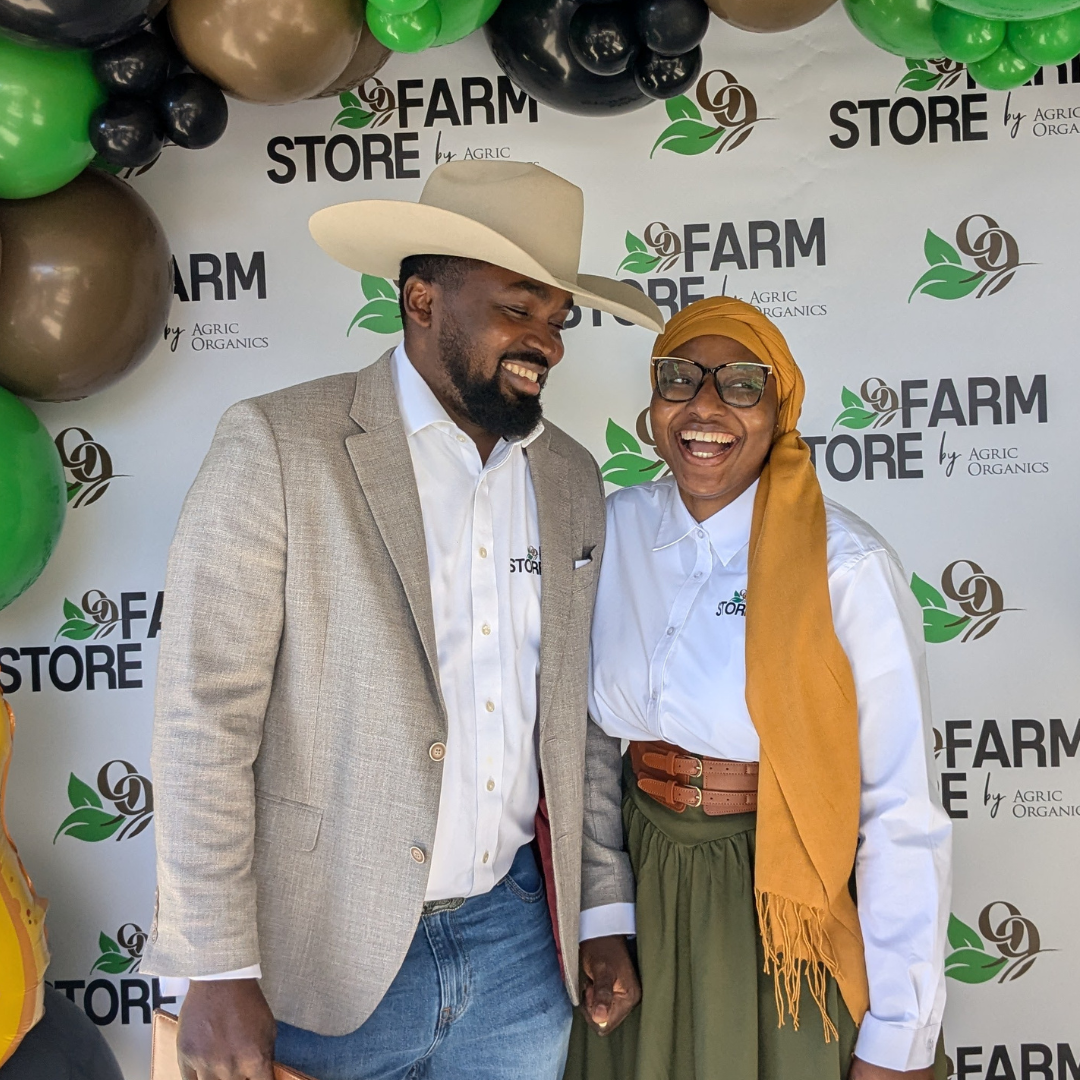
Hameed and Ayo Bello at the opening of Farm Store 99 in October 2024 | |
|
Hameed Bello and his wife Ayo founded the organic farm Agric Organics in Springfield in 2020, and subsequently moved their operation to a 10-acre plot in Wilbraham. In October 2024, building on their mission to bring fresh food to people who need it, they opened Farm Store 99 in downtown Springfield.
The store carries produce from the farm as well as items you’d find in any grocery store. With financing from the Massachusetts Food Trust, a program that provides low-interest loans and grants for projects that bring healthy food to communities where residents earn lower incomes and there are fewer grocery stores, the Bellos were able to fill a need for affordable food in a densely populated area, magnifying their impact.
The Massachusetts Food Trust Program is funded by the Massachusetts Legislature through the Massachusetts Department of Agricultural Resources and co-administered by the Franklin County CDC and the Local Enterprise Assistance Fund. We talked with Hameed about this new venture.
FCCDC: You’ve had some tremendous successes, starting with your farm, Agric Organics, and now Farm Store 99. How does that feel?
Hameed Bello: I feel committed to serve. That’s always a good thing. Any time I get the opportunity to be of service to my community, I always feel blessed.
FCCDC: Have there been challenges with growth?
HB: We have the right team in place. That makes everything manageable. It’s a team effort.
FCCDC: Zooming out a bit, these are turbulent times. What are you feeling about being a Black man owning a business in 2025?
HB: There’s a saying, “It’s important to keep the main thing the main thing.” That’s the mantra right now. Focus on what we can control, on who we are. Don’t let this cloud your judgement. How to continue to serve your community. We will pivot if we have to, rather than over-anticipate. That can create a scenario that takes you away from the main thing, which is service to the community through food.
FCCDC: As you say, your focus has been on feeding the community with healthy farm-fresh products. How has the community responded to your efforts?
HB: The reception has been great. Over the moon. People come into the store and they’re excited. They always say, “Thank you for being here. We truly needed this.” And part of it is we didn’t just open a store, we opened a store that met people’s needs. We asked the community what they need and because of that, we are open 8 a.m. to 8 p.m. There’s access after work hours. When people come in, they are truly appreciative.
FCCDC: How has it been working with the Franklin County CDC and the Massachusetts Food Trust Program?
HB: It’s been smooth sailing. We’re very appreciative of the organization. Sometimes we wish it could be a shorter timeline, but we understand, that’s the business landscape. There are a lot of variables. But we thoroughly appreciate this organization and the Mass Food Trust Program.
FCCDC: Anything else you’d like to add?
HB: The remembrance that we are one community. We’re here together. If we continue to help one another, we will persevere. If we keep that in mind, the sky is just the foundation.
Read the full interview online.
| | |
La Wanza Lett-Brewington Remembered | |
|
La Wanza Lett-Brewington's daughter Maya Brewington
reads a poem about her late mother. Photo by Paul Franz of The Recorder.
| |
|
Activist and community connector La Wanza Lett-Brewington was remembered at Greenfield Community College on February 10 as a "force of nature" and a strong advocate for those in need. Lett-Brewington served as a Title IX coordinator for GCC and Berkshire Community College. She died unexpectedly Feb. 2.
She founded the Pioneer Valley’s Discrimination Prevention Project and worked with her late husband Dwayne Brewington, who died in January 2024, to start the GCC Martin Luther King Jr. Day celebration, a tradition that celebrated its 25th year this past January. She had served as Executive Director of Northampton-based domestic violence support agency Safe Passage and as Director of the Five College Consortium’s Violence Prevention Project at the University of Massachusetts Amherst. She previously served as Director of Shelter programs for the New England Learning Center for Women in Transition (NELCWIT).
We send condolences to her family and appreciation for all she and Dwayne have done for Franklin County.
Read The Recorder's coverage of the service.
| |
Grant Oppotunities for Farmers | |
|
Looking for business planning help for your farm? The Massachusetts Department of Agricultural Resources (MDAR) is now accepting applications from Massachusetts farm owners who wish to participate in one of these Department Farm Viability grant programs in Fiscal Year 2026 that provide business planning assistance.
The due date for all three of these applications is 4 p.m. on Thursday, April 10, 2025. Those who need paper applications mailed to them can contact the program coordinator listed with each grant program.
Farm Viability Enhancement Program (FVEP)
This program provides business planning and technical assistance to owners of established commercial farms that own and operate on farmland that is not protected by an APR or other restriction. The RFR with FVEP details and application is available at: Farm Viability Enhancement Program (FVEP) | Mass.gov or contact Laura Barley at Laura.Barley@mass.gov or 857-507-5548.
APR Improvement Program (AIP)
This program helps sustain active commercial farming on land that has already been protected through the state’s Agricultural Preservation Restriction (APR) Program. The RFR with AIP details and application is available at: APR Improvement Program (AIP) | Mass.gov or contact Jess Camp at Jessica.Camp@mass.gov or 617-823-0871.
Matching Enterprise Grants for Agriculture (MEGA)
MEGA assists beginning farms in business at least one (1) and no more than 10 years with the goal of developing their farm into a commercially viable operation. For more information and a MEGA RFR with application, go to: Matching Enterprise Grants for Agriculture (MEGA) | Mass.gov or contact Jess Camp at Jessica.Camp@mass.gov or 617-823-0871
| |
Free Workshops at the FCCDC | |
|
Are you dreaming of launching a packaged food product? Are you a farmer looking to turn your harvest into a value-added food product, but not sure where to begin? We can help!
Zoom with the food product experts from the Western Massachusetts Food Processing Center to begin a conversation about your food product idea. Discussion topics will include product development, shelf life, packaging, labeling, food safety, regulatory compliance, manufacturing, and distribution. Additionally, we have flexible financing available for farm and food entrepreneurs using locally grown ingredients. Join us on the third Tuesday of the month at 10am to learn more! Sign up here. Upcoming session is on March 17.
| |
|
|
Learn how some common words and expressions in use today have origins in slavery and racism. We'll talk about how to recognize these words and what to do when you hear them said by others. By understanding the resonance and eliminating these phrases, we can work toward environments where everyone feels welcome.
Join us quarterly on the third Wednesday of the month at 2 p.m. to learn more. Sign up here. Upcoming session is on March 19.
| |
| |
Partner Offerings and Updates | |
|
Resources
University of Michigan
The MSU Center for Regional Food Systems shares the 11th
edition of An Annotated Bibliography on Structural Racism Present in the U.S. Food System. This edition includes a total of 728 references—to scholarly articles, books, videos, and more—that explore structural racism both across the national food system and in specific food sectors and geographies.
Classes and Workshops
Greening Greenfield
Sharing Your Yard with Birds: What You Can Do to Keep Them Healthy and Happy. Greenfield ecologist Pat Serrentino suggests actions including providing water, bird houses, bird feeders, preventing birds from striking windows, and decreasing the use of pesticides.
Monday, February 24, 6:30 p.m., Second Congregational Church, Court Square, Greenfield. This is the second in a workshop series. A recording of the first session, How to Choose Bird-Friendly Plants, can be seen here.
Mass Dep, NRCS, and MDAR
Farmers Forum: Working with Weather Extremes
Agricultural exemptions under the Wetlands Protection Act and funding opportunities will be discussed. Two dates:
- Tuesday, February 25, 5:30-7:30 p.m., Sunderland Public Library
- Thursday, February 27, 5:30-7:30 p.m., Monson Memorial Library
Contact mark.stinson@mass.gov or zoraia.dejesusbarros@usda.gov
Legal Food Hub
Food Safety Liability Basics: It’s every farmer or rancher’s worst nightmare: Someone claims to have gotten sick from the food they produced. No matter how safe the operation is, the risk is always there. The good news is there are ways to manage and mitigate the impacts of this risk. We’ll discuss the best practices every farmer or rancher can adopt to get a foothold in managing their food safety liability exposure. Wednesday, February 26, noon. On Zoom.
Register.
Berkshire Agricultural Ventures
Meat Literacy Workshop Series
Participants will walk away from the workshops with meat cutting diagrams, a written basic intro to butcher and meat cooking terms, and a primer on meat processing regulations. All sessions held at the Berkshire South Community Center.
- Beef: March 6, 10 a.m.-1 p.m.
- Pork: March 13, 10 a.m.-1 p.m.
- Small ruminants: March 20, 10 a.m.-1 p.m.
To register, email Jake Levin with your farm or organization name: jake@berkshireagventures.org
| |
|
No Matter What, We Will Be Here,
Helping Small Businesses
| |
|
In a changing national landscape, one thing will remain the same: we are here for small businesses. And to quote Hameed Bello, who you read about above, "It's important to keep the main thing the main thing." While the FCCDC receives some federal funding (primarily from the U.S. Department of Agriculture), our services for small businesses will not change in the short term. We have worked hard to ensure we have multiple funding streams, and will continue to expand sources of revenue as we work to create thriving small business throughout western Massachusetts. In particular, we will be a source of support for people with low and moderate incomes and people that have not been able to build wealth due to injustices in our society.
We will continue to work with our Massachusetts legislators to ensure the federal government does its part in supporting local economies and people who have not had opportunities to participate in the dream of entrepreneurship. If you feel moved to donate to show your support for small business development, you can do so here or, to avoid fees, send an old fashioned check to the Franklin County CDC, 324 Wells Street, Greenfield, MA 01301.
| |
Franklin County CDC | 324 Wells Street, Greenfield, MA 01301 | 413-774-7204 | | | | |