Volume 2 Issue 3 2nd Quarter 2026

In this Issue

Welcome to Fiber Foundations for 2nd Quarter 2026, exclusively sponsored by Kadant Black Clawson.

Kadant Black Clawson


True Value of Mill Process Audits

Types of mill visits


Across the range of mill visits they range from a system review which is typically a light touch that can be started remotely by reviewing DCS screens for abnormal conditions. On the other end there is subsystem optimization which starts at 3 to 5 days depending on objectives and can really stretch out from there. An audit is in the middle, focusing on the stock prep equipment installed and what could be done better / differently, depending on mill objectives.


What is an audit?


Audits start with a pre-visit meeting for discussion on audit goals and information that may be available (DCS Screens, P&IDs, Flowsheet, Equipment list, Balance, test data, etc).


The audit is generally conducted by two applications engineers or product managers. These engineers have a wide range of experience in a lot of mills can aid in project justifications.


At the mill site there is a kick-off meeting and the audit starts. Equipment installation is reviewed to check for issues that could affect operation. The control scheme is reviewed.  


Why an audit


Mills can run for years with often little physical change to their fiber recycling process. However, there are many other changes that happen: 


  • operators retire (knowledge lost)
  •  slow wear of components
  • Instrumentation failure
  • operational changes are made to address symptoms (not the root cause)
  • furnish changes
  • mill objectives like tonnage and quality change.


Operator retirement may be a bigger issue than many recognize. Decades ago, there was less distraction, in the control room and out on the floor. Having covered for operators in one mill I knew all the automatic valve positions, agitator motor loads and other values. This is being lost – yes it can be trended easier, but it’s easier to troubleshoot when the operator can tell you everything that has changed leading up to an event.   


In many mills, typically with larger organizations, there is a considerable amount of scheduled meeting times. One process engineer we know had 60% of his time scheduled for meetings & training. While there are more and better tools for troubleshooting – there is less time to do it in. Having an external viewpoint can help.


We like to hear directly from the operators where the problems are, but we work on troubleshooting to get to the root cause.


Audit results have included:


  • Mill bottlenecked at beginning & end of process, the audit determines simple way to debottleneck thickener with minor process change.
  • Older mill with a lot of equipment capacity, but poorly instrumented (& controlled) gets a path forward to mill expansion with limited additional equipment required.
  • Mill addressing specific issue of Styrofoam with new equipment
  • Mill had pulping & detrashing issues, audit determined that equipment was incorrectly installed, recommendations made for correction at very low cost


Getting the most from a process audit


Having an independent look at your system from someone with knowledge of stock preparation equipment capacities and capabilities can be eye-opening. In addition, sampling of the process can often confirm system weaknesses.


The more the mill can provide in terms of data; lab testing, balances, flowsheets and operational difficulties the faster we can focus in on problem areas.


Audit objectives always include looking for low-cost wins that aren’t always realized by mill employees. Objectives from there can include recommendations on:


  • Operational issues
  • Control improvements
  • Debottlenecking
  • Tonnage upgrades
  • Quality improvements
  • Yield improvements
  • Where to add equipment coming from “sister” mills


On going benefits from a process audit


When we get calls from customers with operational issues, it can be possible to start remote troubleshooting when they’ve had an audit in recent years. If they haven’t had an audit recently troubleshooting remotely is difficult at best.


Pitfalls from a bad process audit


Missed opportunity(s) or projects without expected payback are two pitfalls of a bad process audit. Opportunities that mills don’t capitalize on can threaten long term viability as projects do without payback.


Conclusions 


Process Audits are an excellent tool for helping uncover opportunities or providing solutions for challenges in the mill.

Author:

Neale Fetterly,

Senior Application Engineer

Kadant Black Clawson LLC

Kadant HomePage


https://fiberprocessing.kadant.com


Upcycling Plastic Rejects

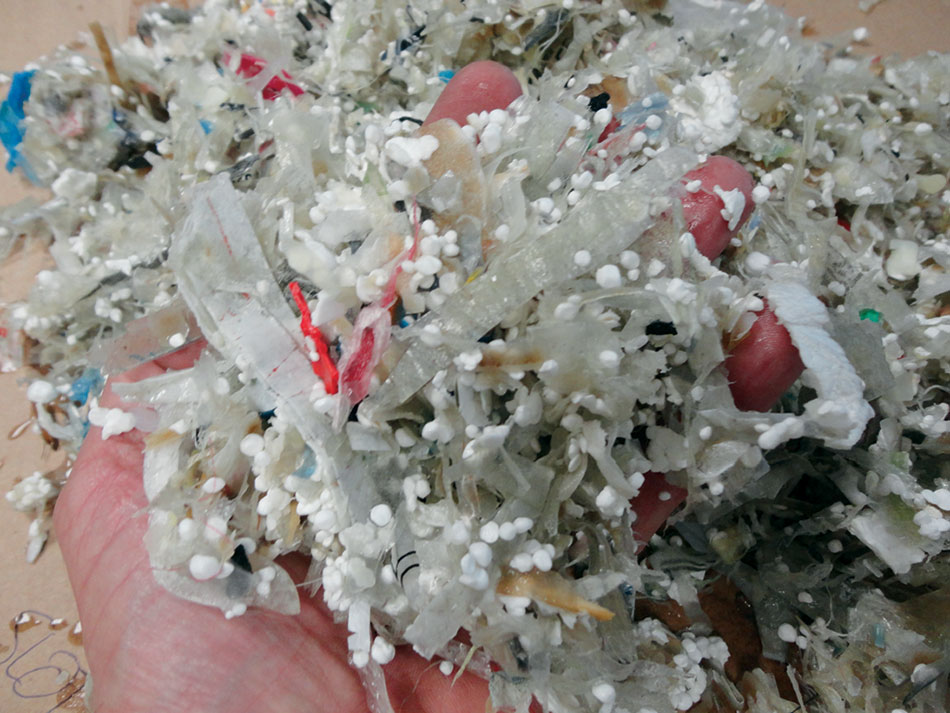
The pulper and coarse screening reject material from a stock preparation system is a stream that previously has not provided any revenue to a paper mill and is a constant operating cost. This coarse reject material primarily consists of plastics and other lightweight materials. In the last 5 to 10 years, Europe has developed the technology and process to handle and treat this stream. There are multiple end uses which can turn this operating expense into a revenue stream. As sustainability continues to become a focus in North America, paper mills are reviewing how they handle this stream and how it could be improved in the future.


This reject stream can be upcycled to transform low-value waste from paper mills into material streams that could be used in other applications. This will reduce disposal costs and supports a circular economy.


The Upcycling process begins with mechanical sorting of this stream which includes plastics, metals, and other contaminants. Kadant Black Clawson supplies a complete end-to-end system that can recover valuable metals from this stream while sorting the various plastic grades into streams that have different end uses.


The core upcycling module mechanically recycles the plastic fraction—primarily polyolefins—from these rejects. The process includes shredding, followed by sorting to separate light (PE/PP) from heavy (PET/PVC) plastics and metals. The light fraction, typically about 80% of the plastic stream, is ideal for pelletizing. The washing of this material helps to remove fiber and other contaminants in the plastic stream.


After the separation stages, the washed plastic is formed into dry plastic pellets through a low energy process. These pellets can be used for multiple applications instead of being sent to a landfill. They can be used as a portion of the feed furnish in a plastic injection process or used as RDF (refuse derived fuel) to produce energy in power plants. They can even be utilized as a substitute for carbon coke content in the steelmaking process. All these streams have the potential to provide an environmentally sustainable route for handling this material that was once sent directly to landfill.


It’s true that the recycling (and upcycling) of plastic has proven an industry-wide challenge globally. The segregation of plastic from the fiber stream has come into it’s own and can save landfill cost and some fiber as it stands. But on a wider scale, the importance of tackling this fast growing problem is such that it behoves us to do our part in the development and implementation of solutions aimed at closing the circle in sustainable industrial processing.

By Drew Kinsel

Upcycling Product Manager

Kadant Black Clawson, LLC

https://fiberprocessing.kadant.com/en/products/detrashing


https://fiberprocessing.kadant.com/en/products/detrashing/hydraflow-continuous-lights-detrasher


https://fiberprocessing.kadant.com/en/

Fiber Quality Demands


In my 56 years in the industry, I have never seen any mill say, "We need poorer quality fiber." I have heard people say, "This [unit operations device] is rejecting too much fiber." This is a totally different statement. Kadant Black Clawson has been on a continuous quest to improve quality and reduce rejects.


How have they done this? With CAD (Computer Aided Design), better computer controlled machine tools, and robotic additive manufacturing. Techniques that barely existed back when I started--but at the time, only in aerospace, not in a "backwater" area such as pulp and paper manufacturing.


What is coming next?


Camera systems that can see sheet formation in real time on the fourdrinier coupled with AI which will learn on its own, the upstream parameters to change in order to improve sheet formation.*


Things are about to get exciting.


*This statement is an amalgamation of matters I am learning from many suppliers. I am making no statement about Kadant Black Clawson's own advanced R & D.


By Jim Thompson, CEO


Talo Analytic

International &

Paperitalo Publications


jthompson@taii.com

A recap of global paper industry trends

By Recycling Product News

The global paper industry has faced ongoing structural changes as declining demand and higher operating costs have reshaped production. The consumption of newsprint, uncoated, and certain coated papers continued to decline, driven by the shift to digital formats in publishing, advertising, and corporate communications. This decline reduced operating rates, particularly at older mills dedicated to graphic papers, and exerted significant pressure on profit margins.

AF&PA seeks injunction on Oregon EPR, defends paper recycling

By Resource Recycling, Inc.

The American Forest & Paper Association (AF&PA) has filed a request for a temporary injunction on Oregon’s Recycling Modernization Act, joining a legal effort already underway by the National Association of Wholesale Distributors.

Recovered paper prices show signs of rebound

By Recycling Today

After a downward trend in the second half of 2025, prices for old corrugated containers (OCC) and other recovered paper grades appear to be enjoying upward momentum in the United States.

CEPI says recycling sector ready for 'Made in Europe' policy

By Brian Taylor

The Brussels-based Confederation of European Paper Industries (CEPI) has released a statement indicating the forests and “state-of-the-art recycling system” of Europe stand ready to serve European Union policies supporting “Made in Europe” objectives.

Fiber Foundations™ is a joint production of Paperitalo Publications and Kadant Black Clawson, LLC and is exclusively sponsored by Kadant Black Clawson, LLC