Volume 2 Issue 4 3rd Quarter 2026

In this Issue

Welcome to Fiber Foundations for 3rd Quarter 2026, exclusively sponsored by Kadant Black Clawson.

Kadant Black Clawson


The Importance of Lime Slaking in Pulp Mill Recausticizing

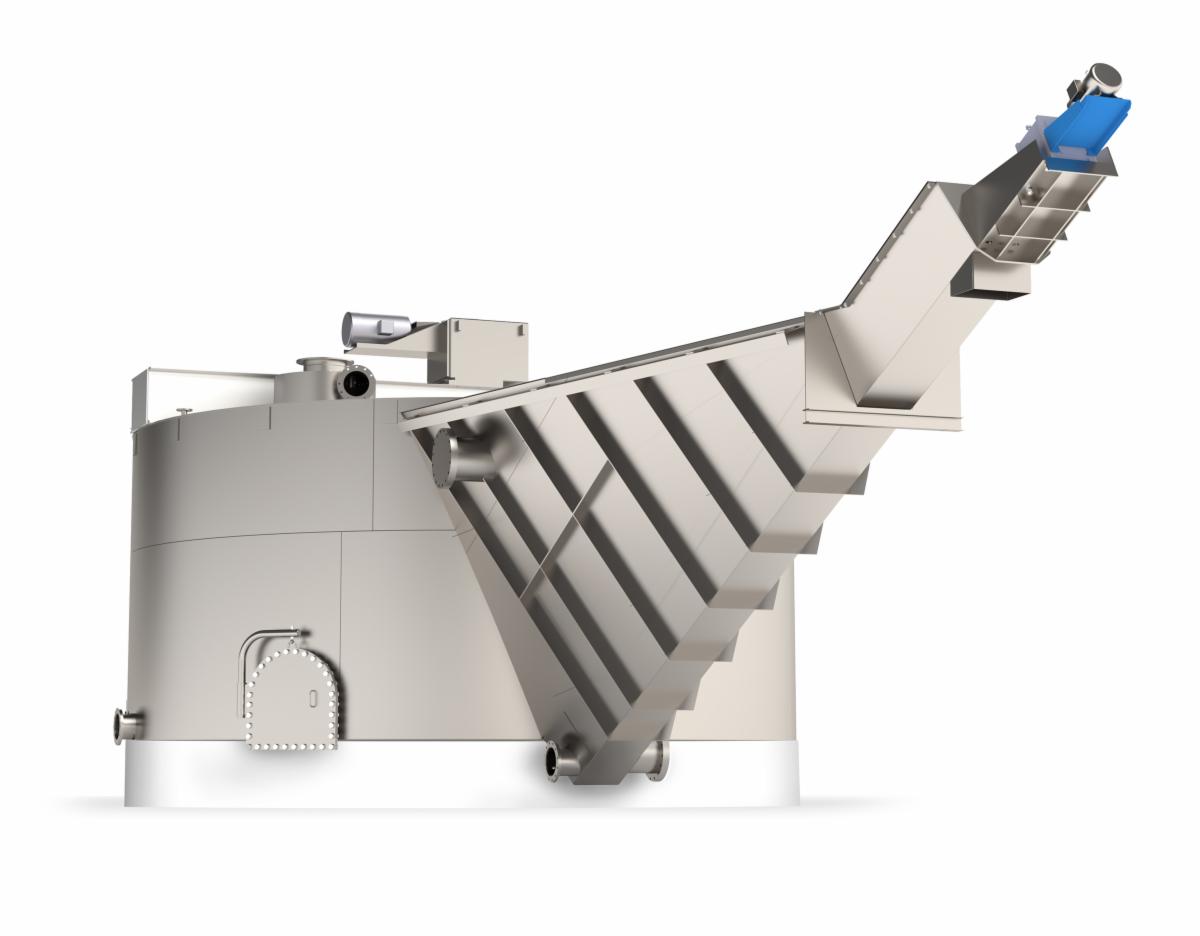
If you think of the recausticizing plant as a living system, the lime slaker is its heart. It’s where the most important action happens, transforming incoming chemicals into the active form needed for the next stage of production. When the slaker runs well, everything else tends to fall into place. When it doesn’t, problems can ripple throughout the entire plant. Let’s break down why this single unit is so critical.


What Does the Slaker Actually Do? 


At its core, the slaker takes two main inputs, lime and green liquor, and turns them into something much more useful: white liquor. In simple terms: 

  • Green liquor arrives with chemicals that aren’t yet in the right form. 
  • The slaker reacts and mixes those materials to become white liquor, the active ingredient needed for kraft pulping. 
  • At the same time, it produces the byproduct lime mud, which gets recycled later. 
  • Most of this conversion happens right inside the slaker. By the time the mixture leaves, it’s already close to its final state. This positions the slaker as the main driver of chemical efficiency in the whole process. 


Why the Slaker Matters So Much? 


It Does Most of the Heavy Lifting 

The slaker handles the majority of the chemical conversion. Think of it as the main processing engine of the recausticizing plant. If the job isn’t done well here, downstream equipment has little chance of fixing it. 


It Sets Product Quality 

The slaker doesn’t just help create white liquor it also determines its quality. How well the slaker operates affects the strength the white liquor and how easily the lime mud settles and filters. These qualities are crucial because they directly impact later stages such as clarification, filtration, and kiln performance. 


It’s Responsible for Mixing, Heat, and Cleanup 

The slaker also plays several practical roles: 

  • Blends materials thoroughly so reactions can happen efficiently 
  • Generates heat naturally, helping drive the process 
  • Removes waste material such as unreacted lime or grit, keeping the system clean and preventing damage to upstream equipment


What Happens When the Slaker Isn’t Running Well? 


Because the slaker sits at the center of the process, poor operation can create widespread issues: 


Lower Efficiency 

If conditions aren’t right, the conversion to white liquor drops. That can lead to increased chemical losses and excess water load to the digester & evaporators. 


Operational Problems 

A poorly controlled slaker can cause several headaches: 

  • Overliming: 

Leads to poor settling in the clarifiers and poor filtration in the disc filter, pressure filters, and lime mud precoat filter 

  • Boiling inside the slaker: 

Creates safety concerns and produces very fine particles that do not filter well

  • Poor-quality lime mud: 

Inhibits settling, washing, and filtration 


Downstream Issues 

Everything that leaves the slaker flows into other equipment. If the slurry quality is off, it can impact downstream operations with causticizers, clarifiers, filters, and the lime kiln. All too often, too much unreacted lime can plug filters and slow down production, costing both time and money. 


What Does Good Slaker Operation Look Like? 


Running a slaker efficiently requires careful control of a few key factors. The right balance of lime and green liquor is critical, as is proper temperature control, consistent feed quality and a stable process condition. Additionally, modern plants often rely on advanced tools such as online sensors and automated controls to keep everything in check and respond quickly to changes. 


Bottom line, the slaker is much more than just another piece of equipment, it is a foundational component in the recausticizing process. Good slaker operation maximizes efficiency, produces high-quality white liquor, and keeps downstream systems stable to increase runtime. When it’s not, the effects are felt everywhere.

Author:

Chris Knollman,

Application Manager

Chemical Pulping Group

Kadant Black Clawson LLC

Slakers and Causticizers:

https://fiberprocessing.kadant.com/en/products/recausticizing/slakers-and-causticizers


Recausticizing:

https://fiberprocessing.kadant.com/en/products/recausticizing


“What’s Inside a Great Clarifier?” Video

 https://vimeo.com/488566779


“Chemical Pulping Recaustisizing Loop” Video

https://vimeo.com/687232391


Kadant Fiber Processing:

https://fiberprocessing.kadant.com/en/


Six Quick Questions with an Expert:

Mining Data in the Mill

Describe data analytics. And what that might encompass?


I would say the easiest way to describe it (data analytics and data science as a whole) is solving problems and answering questions, using data. That's the most succinct way to describe it. Whether we're identifying trends, forecasting future performance, or diagnosing process issues, the goal is always to use data to answer questions and improve outcomes. Get data and try to answer those questions.


How do you see data analytics being integrated into manufacturing? And product development in general?


Well, we're already trying to do some of that now. Especially on the R&D side, how can we take mill data and develop models, forecasts or predictions? Okay, we take all this data, we run modeling through it. This is how this process works, these are our assumptions, and we can help prove those out using data. That's a good piece of it.


Anomaly detection, how do we show that there's some sort of problem in a machine or a process? Use data, figure out when the data is acting abnormal. Use alerting and say, hey, there's issues, things happening, we need somebody to investigate and fix these problems.


So, there's a few different routes and it's interesting and there's still more we want to do, you know, predictive maintenance, time to failure, process improvements, that type of stuff. Ultimately, we’re trying to improve reliability, product quality and efficiency for our customers.


Most modern mills already produce and collect a lot of data. What kind of challenges does that pose?


I would say it's two-part. There's once we get the data, there's a ton of it, yes. It's figuring out what's noise and what isn't. There's also, you know, papers been around for 100s of years and these plants, some of them are 70, 80 years old. So the data availability, actually being able to collect that data, store it, and then analyze it is also a challenge. There are all sorts of challenges in the mill, let alone logistics, accessibility, security and all this stuff.


Then every mill is different. Some of them have one pulper or two, some have multiple lines, some are missing pieces of machinery that we have for other ones. It's kind of just understanding each one separately and understanding the whole process and how they play a part in each other. That’s also where data doesn’t tell the whole story. Without the context of the mill, or without the help of the engineers we have here, we wouldn’t be able to understand what’s happening. That context is important, and without we don’t know what the data means.


What are some common mistakes made by organizations when bringing the mechanical into the digital/analytical domain?


Well, I will say going too slow and too cautious. Organizations may wait for the perfect data and 100% certainty, but that’s not always possible. Analytics should be approached as a learning exercise. You're going to make mistakes. It’s just going to happen.


There’s always going to be some of those issues where you're going to find a better way to do it. But that's part of the scientific process. Right? You have got to try it. Sometimes with analytics you may hit a dead end or find something you or the mill thought is not the case. That doesn’t make the endeavor a failure.


Part of analytics is the learning process and understanding what works and what doesn’t and trying again until you’ve solved the problem. So don’t be afraid of failure and the unknown.


How are manufacturers adapting and excepting the dramatic changes this digitization brings upon them? Early adopters, fast followers, or wait-and-see?


A bit more behind if you compare it to some of the larger players and more digitally enabled industries, but again, some of these things have been out and around for so long. 30, 40 years and they worked just fine. A lot of it is why break what's been working for us for 40 years? And then there's all the, there's a lot of data security questions too.


The biggest challenge is probably security. Yep, you have security getting mills on the same page of what data we need and how to make sure it's secure, but still accessible for us. That's been a challenge that we've tried to start through. That said, we’re seeing progress. Mills are open to change, provided you show the value clearly.


What do you see as the biggest benefit in applying data sciences to a manufacturing environment?


The biggest selling point is we have extremely talented, intelligent engineers that are able to see data and understand everything that's going on in the mill. They can help them run better and more efficiently.  And that's something that without the data, we can certainly do, it's just much harder.


Someone must go to the mill, must see it at the right time, see it acting up, understand exactly what's going on. Maybe they need 30, 40 years of experience to be able to do that. Our goal is to enable our experts here to be able to help diagnose problems in mills hundreds of miles away without having to step foot outside of our building.


Of course, you need to see the machinery and understand it firsthand, no technology will be able to replace that. But once you understand the system and the process, and you’ve seen a mill firsthand. When you have the data right in front of you, you can make much better, more informed decisions. That’s our goal and where I think data science can be most useful. 

By Cody Constable

Product Data Analytics Manager

Kadant Black Clawson, LLC


Cody Constable serves as Product Data Analytics Manager for Kadant Black Clawson, where he leads the development of data-driven solutions for the pulp and paper industry. His work focuses on transforming manufacturing data into actionable insights through predictive analytics, process modeling, anomaly detection, and operational optimization. Working at the intersection of engineering, manufacturing, and data science, Cody helps mills better understand process performance, reduce variability, and make more informed operational decisions. He holds degrees in Economics and Applied Economics and specializes in applying advanced analytics to real-world industrial challenges.

https://fiberprocessing.kadant.com/en/products/detrashing/intelligent-grapple-hoist

The hazards of ignoring the "back end" of the mill


We are all thinking about the tragedy that took place out in Longview, Washington back in May. That is immediately what came to mind when I was reading the article above about slakers. The back end of the mill is often neglected. Buy quality equipment. Learn how to operate it. Keep it maintained.


Let's not have any more accidents in the back end of the mill.


By Jim Thompson, CEO


Talo Analytic

International &

Paperitalo Publications


jthompson@taii.com

AF&PA Releases 66th Annual Paper Industry Capacity and Fiber Consumption Survey

By AF&PA

The American Forest & Paper Association (AF&PA) today released the 66th Annual Paper Industry Capacity and Fiber Consumption Survey. The report provides detailed data on U.S. paper industry capacity and production compiled by the AF&PA statistics team.

Longview mill tragedy raises broader questions for fiber, recycling sectors

By Resource Recycling, Inc.

A deadly explosion and chemical incident at Nippon Dynawave Packaging’s Longview, Washington facility has sent shockwaves through the pulp, paper and packaging industries, while also prompting questions about how disruptions at major mills can affect recovered fiber markets, packaging supply chains and the broader recycling sector.

Recovered paper prices receive boost

By Recycling Today

Shippers of recovered paper in the United States have been receiving higher prices for several grades of the material this month, with steady demand and supply factors being cited as leading causes.

Challenges across the recovered paper sector push recyclers to get creative

By Recycling Product News

The demand for sustainable raw materials and circular solutions is evolving alongside disrupted supply chains and complex regulations.

Fiber Foundations™ is a joint production of Paperitalo Publications and Kadant Black Clawson, LLC and is exclusively sponsored by Kadant Black Clawson, LLC