|
|
The Newsletter of Fig Tree Books | |
February 2024: Issue #51 --- Fredric D. Price, Founder & Publisher | |
|
SHORT STORY: The Demon of Riverside Drive,
by Jennifer Anne Moses
| |
|
Ah! How bitter Zosia was! So bitter it was as if she’d been born bitter, but she hadn’t been born bitter: what child is born anything other than innocent? But now she was almost seventy and her life had been swallowed up by black bile, by regret, by fury and rage and most of all, deep and bitter resentment: at her ex-husband for having turned out to be a drunk; at a favorite lover for having turned out to be a snob; at Hitler for killing the aunts and uncles, grandparents and cousins she never knew; at her mother for having gotten out of Warsaw only to meet and marry her father, also a refugee, who raged and stormed at the upending of his musical career before dying of an untreated heart ailment. At both of them for raising her and her two little sisters in a terrible, cramped apartment in Sheepshead Bay; and at the next of her two sisters for being a violinist of such renown that in classical music circles her name was as magic.
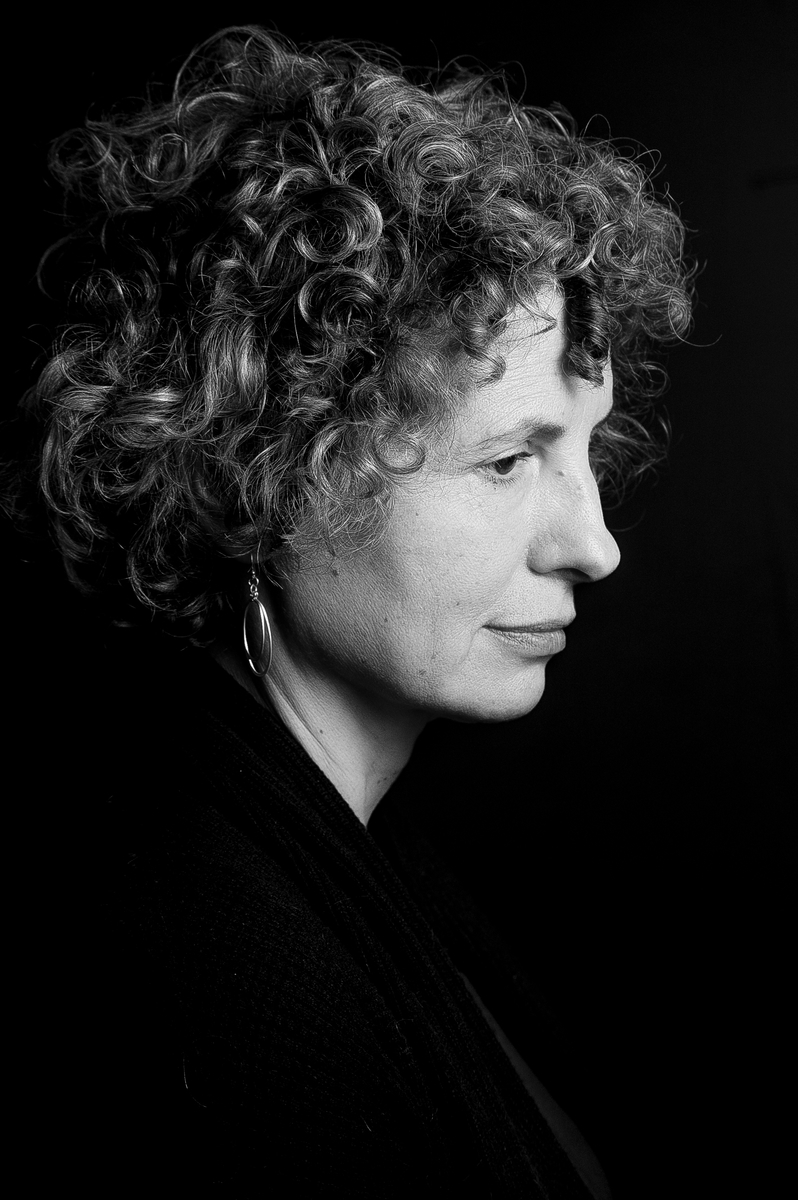
| | Jennifer Moses’ short stories have additionally been published in The Sun, The Pushcart Prizes, New Stories from the South: The Year's Best, Story, New Letters, Nimrod, The Southern Review, The North American Review, ACM, Arkansas Review, The Florida Review, Tikkun, Commentary, Feminist Review, Glimmer Train, the Antioch Review, The Gettysburg Review, Michigan Quarterly Review and others. I'm also a working painter. | |
GUEST COLUMNIST - EVE BARLOW, Think Like Your Enemy | |
|
A while ago, a wise friend told me that when you’re trying to understand people’s motivations, or the state of play, and you’re overwhelmed and confused by trickery, the best thing to do is to think like your enemy. Put the enemy’s hat on, and ask: if you were them, what would you do?
Last week I listened to a brilliant podcast. It is one of the best explanations I've ever heard about why Islam is obsessed with Israel. It explains the wider conflict with the Arab world in a way I had never heard before courtesy of Haviv Rettig Gur of The Times of Israel.
| |
Eve Barlow is an LA-based music and pop culture journalist. Shepreviously served as Deputy Editor of the New Musical Express(NME) and currently contributes to New York Magazine, TheGuardian, Billboard, LA Times, Pitchfork, and GQ, among otherpublications. Barlow is also an outspoken voice on Jewish identity,Zionism, and fighting antisemitism on social media, and has alsoshared her views in publications such as Tablet. Barlow was alsonamed one of The Algemeiner’s Top 100 People Positively InfluencingJewish Life in both 2020 and 2021. She is the creator of Blacklisted, aSubstack newsletter.
Eve Barlow
@Eve_Barlow
"The interrupter" Journalist. Zionist. Feminist. Scottish.
evebarlow.substack.com/subscribe
| |
|
JEWS OF DIFFERENT HUES: Inventing Zacharias:
Writing Mizrahi Stories by Jasmin Attia
| |
|
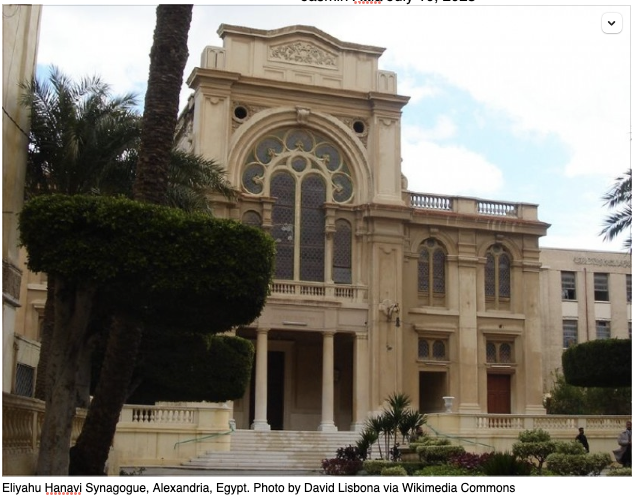
In my sepia-toned memories, I am four years old, and it’s my first visit to Cairo. We are staying with my aunt in her luxury apartment in the Zamalek neighborhood overlooking the Nile, but I have no appreciation for it. I long for McDonald’s, Sesame Street, and pizza, the kind that is so saucy and cheesy, my mother must wash my clothes after I eat it. I’m afraid of the man’s voice that stretches over the city in the belly of the night. My uncle patiently explains to me that it’s not the sound of a King Kong – sized giant roaming the streets, but rather something called Fajr prayer, a Muslim prayer amplified by microphones and performed by a muezzin. My anxieties and homesickness are palpable, so my grandmother, whom I’ve just met, decides to take me out for a day. I’m to spend the night at her place, a smaller, quainter apartment in an old neighborhood of Cairo called Daher.
| |
BOOK: Streams of Shattered Consciousness,
by Rabbi David-Seth Kirshner
| |
On October 7, Rabbi David-Seth Kirshner woke up to celebrate his 50th birthday. It was meant to be a momentous day, a new chapter in the accomplished community leader’s life. He was looking forward to an upcoming vacation, exhaling after the High Holiday season, and enjoying some cake.
However, upon waking up and hearing the most-gut-wrenching news, he found himself comforting community members while dealing with his own anger, rage, shock, fear, anxiety, and grief over what was one of the most devastating attacks in Jewish history.
| | |
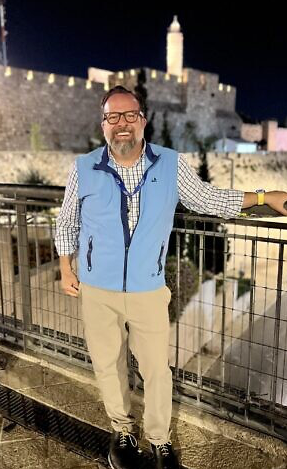
| Kirshner is the Past President of the New York Board of Rabbis and the NJ Board of Rabbis and was selected among 50 rabbis to participate in the inaugural class of the Kellogg School of Rabbinic Management at Northwestern University. | |
SHORT STORY: The Wonder Hitter, by Larry Lefkowitz | |
He did not have the build associated with a home-run hitter. He was plump in a youthful way, attractive rather than handsome, with a beautiful singing voice which he would exercise in private and occasionally in the dressing room after a game. Sometimes during his singing, his voice would waver strangely, and he would suddenly enter into an ecstatic trance, only returned to his taciturn normality by a cold shower. He possessed a changeable character, marked by fits of deepest gloom vying with moments of exaggerated joy. Sometimes he doted on company; mostly he sought isolation. | | |
| Larry Lefkowitz's stories, poetry, and humor have been widely published. His Jewish story collection "Enigmatic tales" is published by Fomite Press. His just published book "The Varieties of Jewish Experience" also just published by Fomite Press contains stories, a novella, and a humorous Yiddish glossary. The 17 stories are about golems, nun, rabbis, giant shrimp and woody Allen. The novella is about the trials of a writer in love with a woman who wants him to finish a novel of her late husband. | |
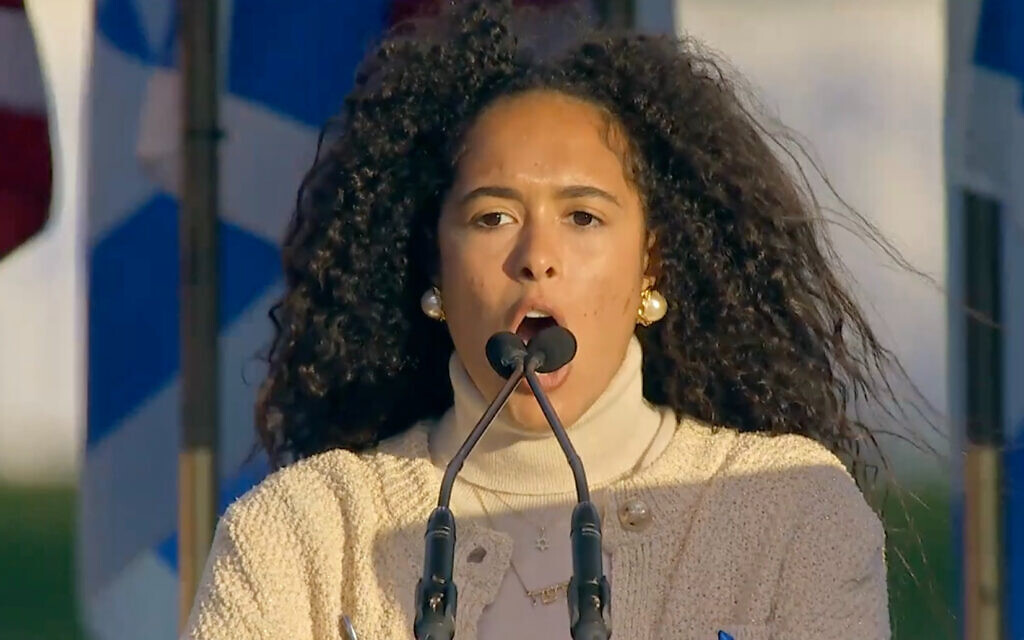
SPEECH: Columbia Student, Noa Fay | |
“The people not buying that Jews are indigenous to Israel? I don’t know how they can say that or justify that,” said Fay, who is Black, Native American and Jewish. | |
|
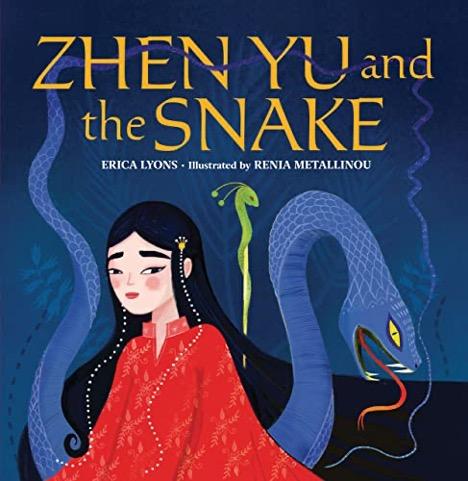
BOOK: Zhen Yu and the Snake,’ by Erica Lyons
In ‘Zhen Yu and the Snake,’ author Erica Lyons adapts a well-known story about Rabbi Akiva’s daughter while also highlighting China’s rich Jewish history.
Rabbi Akiva’s daughter was destined for death on her wedding day, at least according to the star-gazers. So the early Jewish sage seemed resigned to his daughter’s fate.
But on the wedding day, Rabbi Akiva’s daughter offered a poor old man her portion of the wedding feast. That night, before going to bed, she removed her hairpin and stuck it in the wall. In the morning, she discovered that the hairpin had pierced the eye of a poisonous snake, which trailed after the pin as she pulled it from the wall.
“Charity saves from death,” Rabbi Akiva declared.
| | |
|
|
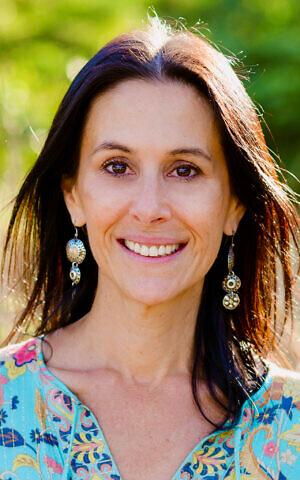
Erica Lyons is a Hong Kong-based children’s book author and National Jewish Book Awards Finalist. | |
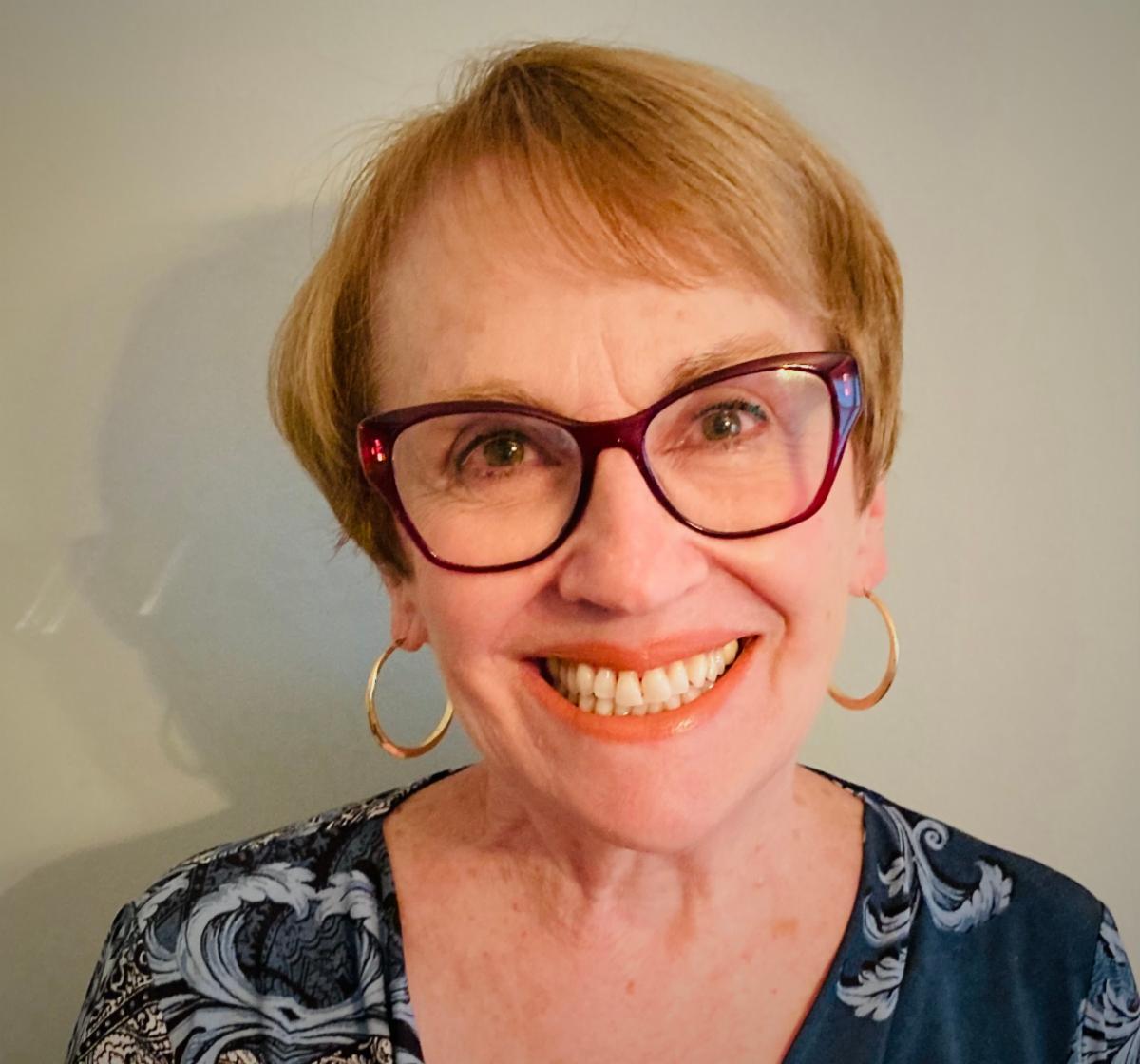
Carol Solomon previously explored literature with high school students and taught writing in corporations and government agencies. Her novel IMAGINING KATHERINE was designated a Notable Book by the Association of Jewish Libraries, and her short story collection LOVE, LOSS, AND GHOST earned an Arts and Humanities grant from Arts and Humanities Counciul of Montgomery County, Maryland. Her work has also appeared in LILITH, JEWISHFICTION dot net, PERSIMMON TREE, JEWISH LITERARY JOURNAL, LITTLE PATUXENT REVIEW, BETHESDA MAGAZINE, PEN IN HAND, and the WASHINGTON POST. | |
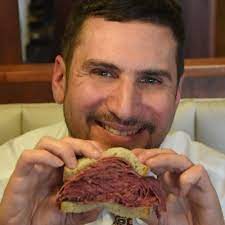
SHORT STORY: Senior Day, by Carol Solomon | |
This month I go to Seven Mile Market in Baltimore for my kosher meat on a Friday, a day to be avoided if at all possible, but my calendar leaves me no choice. Past the poultry cases, the deli counter, and the hot buffet of Israeli specialties, I make my way among Orthodox women in sheitels and long black skirts, shopping before the sabbath begins. I am wigless, dressed in forbidden pants, like a visitor to a foreign land.
The checkout lines grow longer by the minute with a few secular Jews like me interspersed between Shabbos-shoppers and their impatient children. My line moves slowly, freezing while the checker packs and repacks bags to an older woman’s precise specifications.Keep the meat separate from the dairy, the fish far away from the lettuce, the bag not too heavy but not too light. Suddenly I feel a tap on my back from the cart behind me.
“Oy, s’lach li. So sorry,” says a deep voice.
I turn to see a bearded man in a black hat, his ritual fringes dangling beneath his white dress shirt.
| |
GUEST EDITORIAL: The Folly of Ceasefire, by Thane Rosenbaum | |
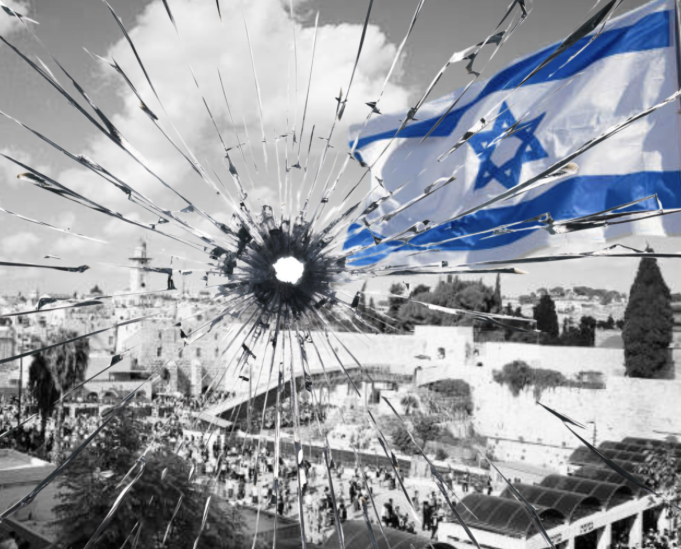
Soon after Israel began its counteroffensive, the United Nations General Assembly adopted a resolution calling for an immediate ceasefire. It declined to make any statement condemning Hamas. | | |
Thane Rosenbaum is a novelist, essayist, law professor and Distinguished University Professor at Touro University, where he directs the Forum on Life, Culture & Society. He is the legal analyst for CBS News Radio. His most recent book is titled “Saving Free Speech … From Itself.”
| |
Fig Tree Lit welcomes responses to this guest editorial; decisions to publish are exclusively within the domain of Fig Tree Lit. To respond, send an email to Info@FigTreeBooks.net. | |
|
ESSAY AND BOOK:
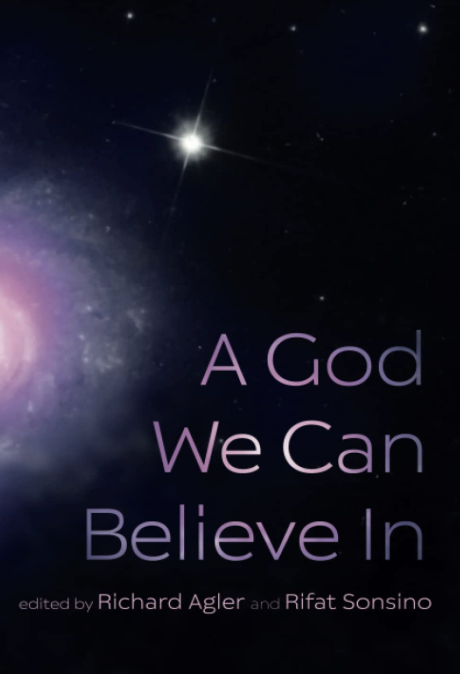
The Case for the Next Siddur, by Richard Agler
| |
|
Gates of Prayer was published in 1975. By 1985, ten years later, a “Siddur Discussion Group,” which eventually led to the publication of Mishkan T’filah in 2007, convened. Mishkan T’filah is now in its fourteenth year. It may be time to envision the next Siddur Discussion Group.
There has been much praise, and criticism, for MT, the volume that serves as the official siddur for the Reform movement. We would scarcely expect otherwise. This article will focus on one aspect of MT, and it is a critical one.
| |
ESSAY: The Road to a Second Kristallnacht, by Bret Stephens | |
|
I’ve always been fond of a line from George Orwell: “To see what’s in front of one’s nose needs a constant struggle.” It sums up the job of a newspaper columnist.
My colleagues in the news department, the reporters and editors and bureau chiefs there, are in the business of revealing — of revealing what’s new, what’s different, what you didn’t know the day before.
Those of us who work on the opinion desk are largely in the business of reminding — of reminding readers of what they once knew or should have known, applying those reminders to new cases, giving them fresh expression. That’s the business I’m in.
We’re now in a season of reminders, and it’s fitting that this ceremony takes place on the 85th anniversary of Kristallnacht. We commemorate the event not because, in and of itself, it represents a particularly great tragedy: Ninety-one or so murdered that night is almost minor in the long history of Jewish calamities, including what befell us last month.
| |
BLOG: With commentary and Guest Blogs on culture & current events, plus mini-reviews of books not published by Fig Tree Books
CLICK on the BLOG image to READ, REPLY to what we've written, COMPOSE something on your own about the state of literature (Jewish or otherwise), book publishing in general, culture & current events, or a specific book that you want to let others know about. And to SIGN UP, so you don't have to wait to read our blogs once a month when Fig Tree Lit is published.
| | | | |