| | The Newsletter of Fig Tree Books | | May '25: Issue #66 --- Fredric D. Price, Founder & Publisher | |
JEWS OF DIFFERENT HUES: Typical Scottish Jewish girl makes home in Zambia after dumping legal career in UK
| |
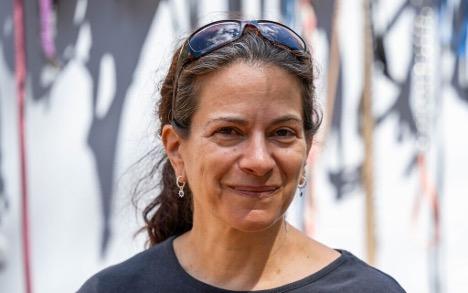
A 57-year-old former lawyer who describes herself as a “typical Scottish Jewish girl” dumped her round-the-clock professional lifestyle in the United Kingdom for a small town in Zambia, where she works (round the clock) running one of the country’s few animal rescues.
Lynne Mendelsohn attended schools in Glasgow and Buckinghamshire and studied at Newcastle University. She took a law conversion course and worked mainly in London for construction and engineering firms.
In her later years, she focused on offshore wind projects, which involved much traveling and an average working day of 12 to 13 hours, six and a half days a week.
“Then a litigation case was settled before a trial, and for the first time, I had three weeks to take a break,” Mendelsohn recalled.
“I got a friend to come with me to climb [Tanzania’s Mount] Kilimanjaro, go on safari, and visit Zanzibar. Those three weeks made me realize how burnt out I was and how much I didn’t want to spend the rest of my life doing this.”
“I was coming up to my 40th birthday, which is when you’re prodded to evaluate things,” she said.
| |
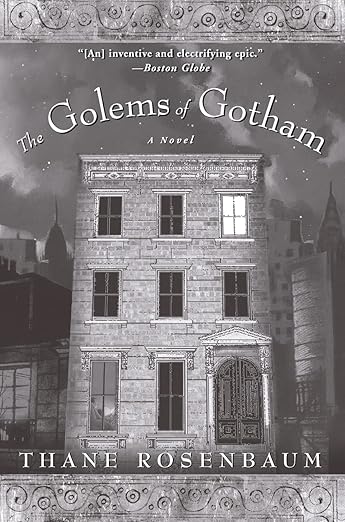
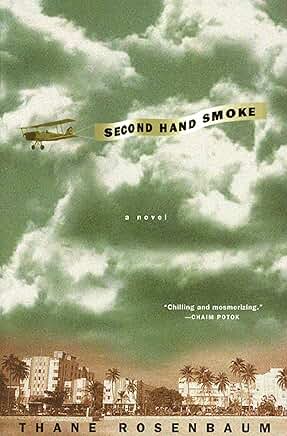
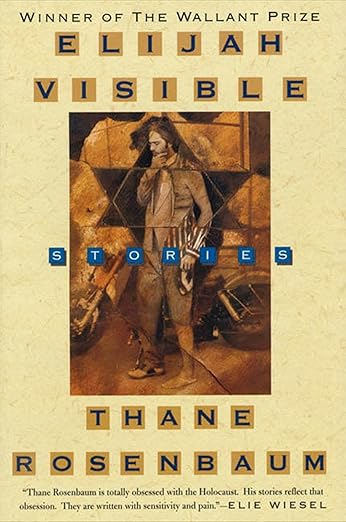
BOOKS: the post-Holocaust trilogy - The Golems of Gotham, Second Hand Smoke, and Elijah Visible, by Thane Rosenbaum
In honor of Yom HaShoah - 27th of Nisan April 25
| | | | |
Thane Rosenbaum is a law professor, legal and Middle East analyst, novelist, essayist, talk show host, and Distinguished University Professor at Touro University
| | |
REVIEW: 'The Message' by Ta-Nehisi Coates,
by Mike Coté - Coates the Charlatan
| |
Ta-Nehisi Coates, the author and thinker who has served as the avatar of the progressive racial movement since he began blogging at the Atlantic during the Obama administration, has reemerged after a hiatus spent writing comic books. His new work of nonfiction, The Message, harkens back to his 2015 bestseller, Between the World and Me, as both books discuss social politics and history through a highly personal lens. Coates’s earlier work earned him a MacArthur “genius grant,” literary accolades, and rare standing as a celebrity intellectual. As such, he has largely been immune from criticism by the liberal media establishment. This protective cover has been put to the test by Coates’s return to the spotlight.
The Message, like much of Coates’s work, is a Rorschach test: If one is already primed to agree with him, the book likely seems a staggering work of genius. But for those who are skeptical or neutral, it is clearly lacking as a persuasive or even accurate portrayal of the issues it discusses. The book is set up like a travelogue, collecting Coates’s political, historical, and cultural takeaways from trips to Senegal, South Carolina, and, finally, Israel. The last section, which takes up more than half of the book, has received the most attention, but The Message is shaped throughout by an approach and vision characterized by narcissism, parochialism, factual errors, deliberate decontextualization, incuriosity, and deep-seated bias. Any one of these flaws would deal a severe blow to any claim for The Message, but combined, they should be fatal to Coates’s reputation.
| |
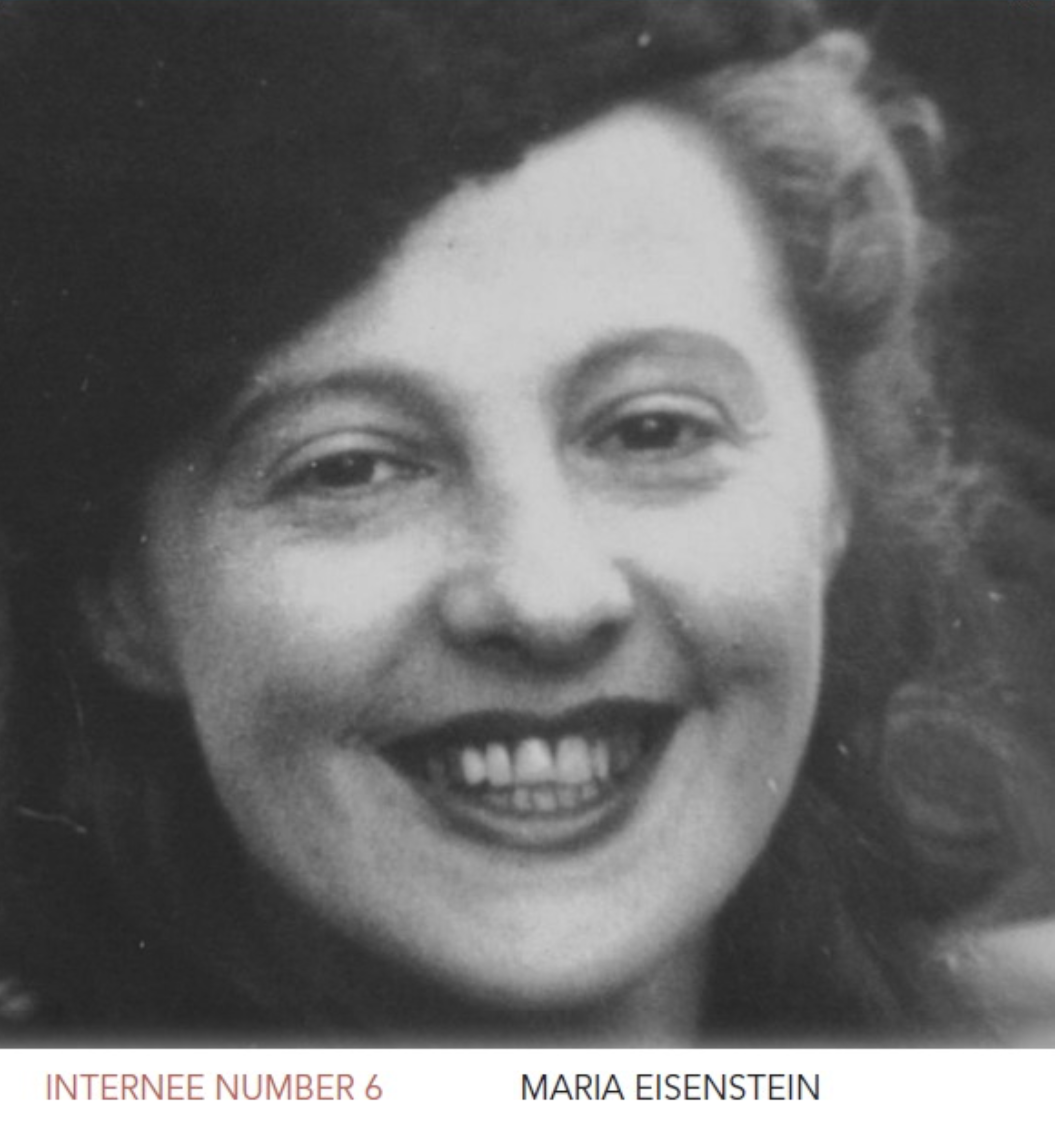
MEMOIR: Internee Number 6, by Maria Eisenstein
| | |
Published when the war was still raging north of Rome, Internee Number 6 is the first memoir of the fascist internment of foreign Jews. Although known to scholars, for decades it has remained buried in a few bibliographies, while nothing was known of its author. Maria Eisenstein’s authorship is elusive and ironic, worldly, and unapologetic. She wrote beautifully in Italian to the point that her diary, first published after she crossed the Allied line and fled South, was once considered fiction. For many years, the author’s fate remained the topic of speculation. In 1989, historian Carlo Spartaco Capogreco identified her and traced her story.
Eisenstein’s diary is an extraordinary document on the sudden incarceration of “foreign Jewish civilians” in fascist Italy. It paints a subtle fresco of the cultural and psychological atmosphere in which wellmeaning men and women performed the ideals of morality, strength, and valor that gave Fascism its foundation.
| | |
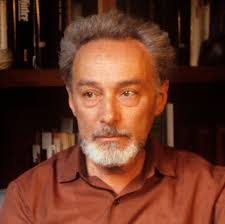
Centro Primo Levi is a New York based organization inspired by the humanistic legacy of writer and chemist Primo Levi, who survived Auschwitz and
contributed significantly to the post-World War II debate on the role of memory in modern societies. CPL cultivates education and debate on Primo Levi’s work and Italian Jewish history.
| The Center works closely with many Italian organizations, particularly with the Center for Contemporary Jewish Documentation in Milan and the Primo Levi International Research Center in Turin. | | About the Author Born in Vienna to Polish-Jewish parents in 1915, Maria Eisenstein was studying literature in Florence when Mussolini ordered the arrest of all Jews without Italian citizenship. After her imprisonment in Lanciano from 1940 to 1941, she fled to the mountains following the 1943 armistice and eventually reached Allied-controlled territory. She later worked for the Allies' Psychological Warfare Branch before emigrating to America in 1948, where she lived until her death in 1994. About the translator Will Schutt is a poet and translator. His most recent translations include Fabio Pusterla's Brief Homage to Pluto and Other Poems and Andrea Marcolongo's Starting from Scratch. He lives in Rome, Italy. | | ESSAY: In search of Maria Eisenstein, by Carlo Spartaco Capogreco | |
In 1944 the Second World War was still raging through Europe. In Rome, recently liberated by the Allied armies, Donatello De Luigi inaugurated his publishing house with two promising book series: “Political Notebooks” and “Books of the Day.” One of the first titles in the latter series was Maria Eisenstein’s book, IInternata numero 6, first published in October 1944.
IInternee Number 6 is the first published eyewitness account of life in an Italian Fascist concentration camp, whose existence fell into oblivion after the war. These elements and the author’s mastery of Italian (not her native tongue,) make Internee Number 6 an invaluable document of significant literary and historical impact.
| |
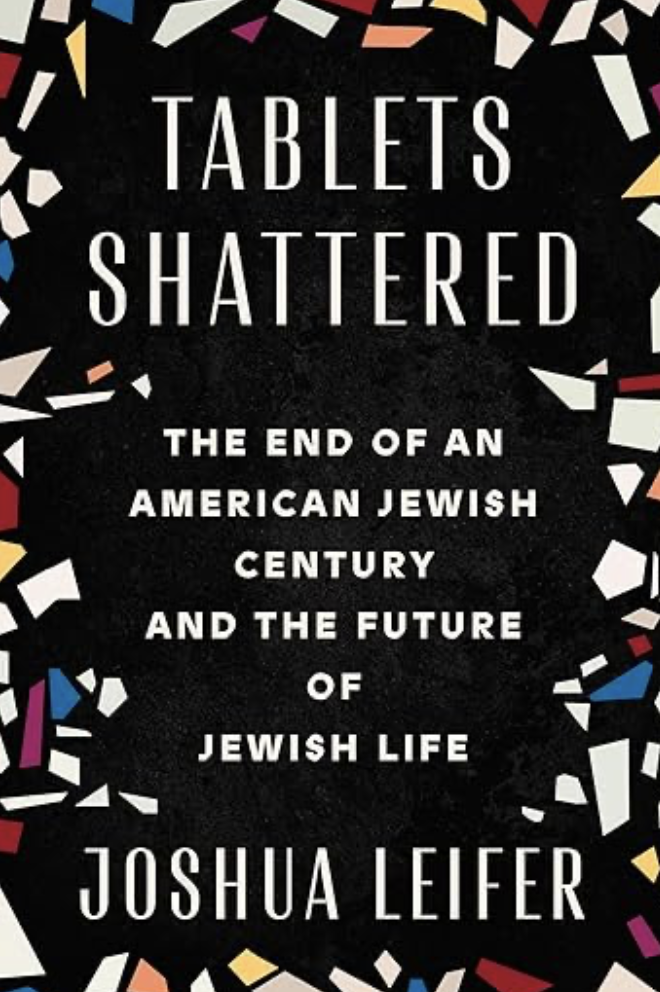
REVIEW: Tablets Shattered: The End of an American Jewish
Century and the Future of Jewish Life, by Joshua Leifer
| | |
By Marc Katz – August 12, 2024
Part memoir and part journalistic exploration, Tablets Shattered by Joshua Leifer looks critically at the contemporary American Jewish political scene. Beginning with his ancestors’ story of immigration to the US, Leifer charts how American Jewry got to where it is now, focusing especially on the differences between the various movements and ideologies that make up American Judaism today.
Leifer does not pull his punches. He is critical of everything from knee-jerk support of Israel’s policies to the replacement of Judaism with social activism. He admires the communal nature of ultra-Orthodoxy while also taking issue with its insularity. He likes that liberal Judaism is open, but worries that it will lose the thing that makes it distinctly Jewish. One leaves the book with the feeling that Leifer doesn’t fit neatly in any camp — that he wrote the book, in part, as a way to process the ways in which he feels both embraced and alienated by the diverse communities and ideologies of Jewish life.
| |
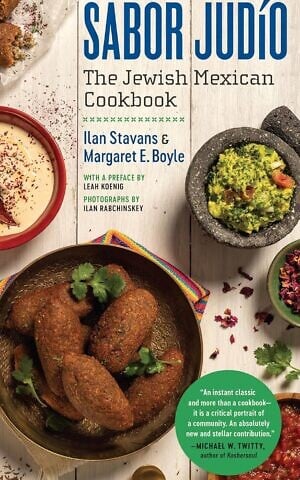
COOKBOOK: Sabor Judio: The Jewish Mexican Cookbook,
by Ilan Stavans and Margaret Boyle
| | |
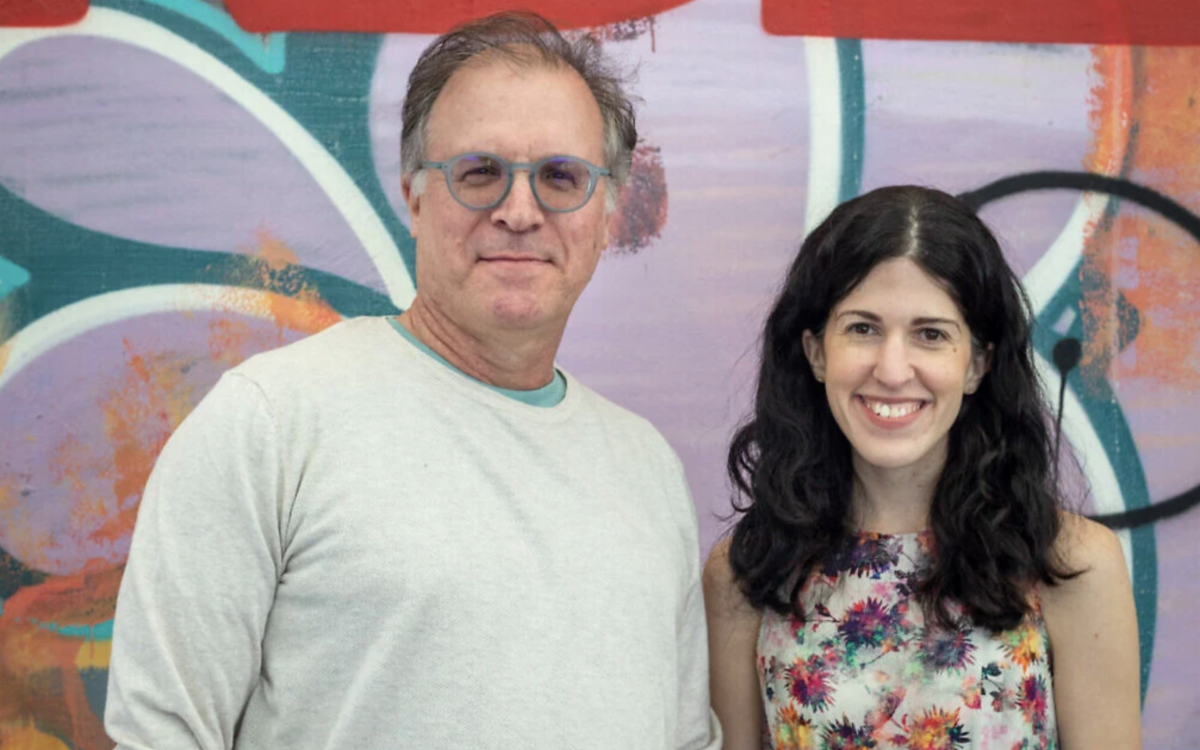
SOMERVILLE, Massachusetts — In the early decades of the last century, Miriam Slomianski, a Jewish woman who immigrated to Mexico City from a Polish shtetl, began writing a recetario — a recipe book — of the foods she prepared for her family.
Written with exquisite penmanship, her recipes and notes flowed from margin to margin in the softbound notebook.
The mother of three was among a wave of Eastern European Jewish immigrants during the 1920s who fled antisemitic persecution and left family and friends to seek better prospects.
In Mexico City, Miriam and thousands of others found a safe haven at a time when they were not welcome in the United States, which had imposed strict immigration quotas.
Miriam’s recipes ranged from the every day to the festive, with special meals she prepared for Shabbat and holidays, including Hanukkah.
| |
BLOG: With commentary and Guest Blogs on culture & current events, plus mini-reviews of books not published by Fig Tree Books
CLICK on the BLOG image to READ, REPLY to what we've written, COMPOSE something on your own about the state of literature (Jewish or otherwise), book publishing in general, culture & current events, or a specific book that you want to let others know about. And to SIGN UP, so you don't have to wait to read our blogs once a month when Fig Tree Lit is published.
| | | | |