| | The Newsletter of Fig Tree Books | | October '26: Issue #83 --- Fredric D. Price, Founder & Publisher | | JEWS OF DIFFERENT HUES: We Are Not Meant to Separate Ourselves from Our Community | | |
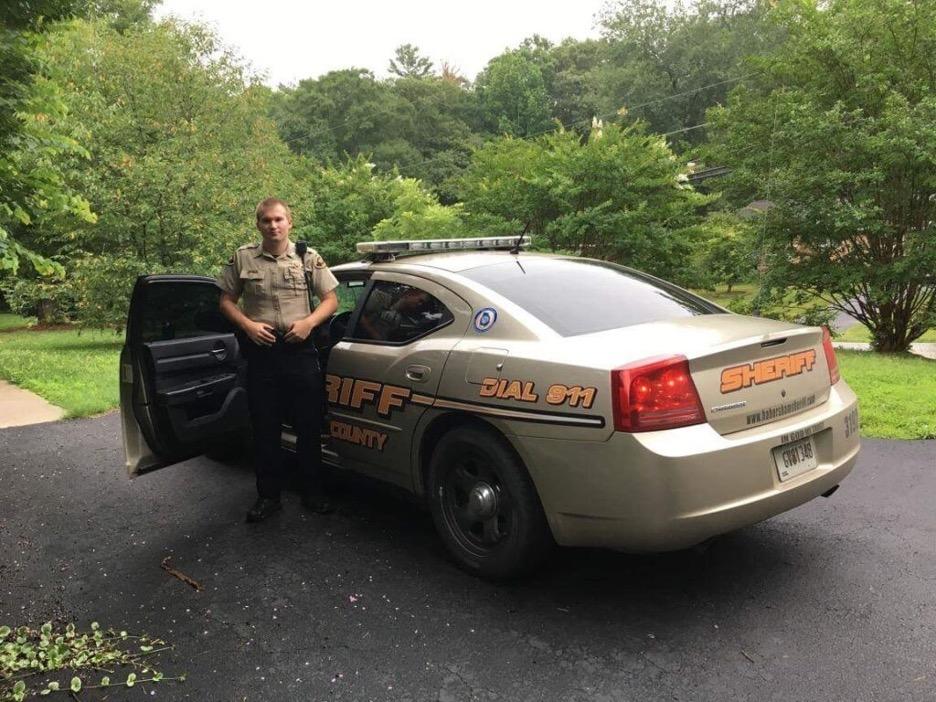
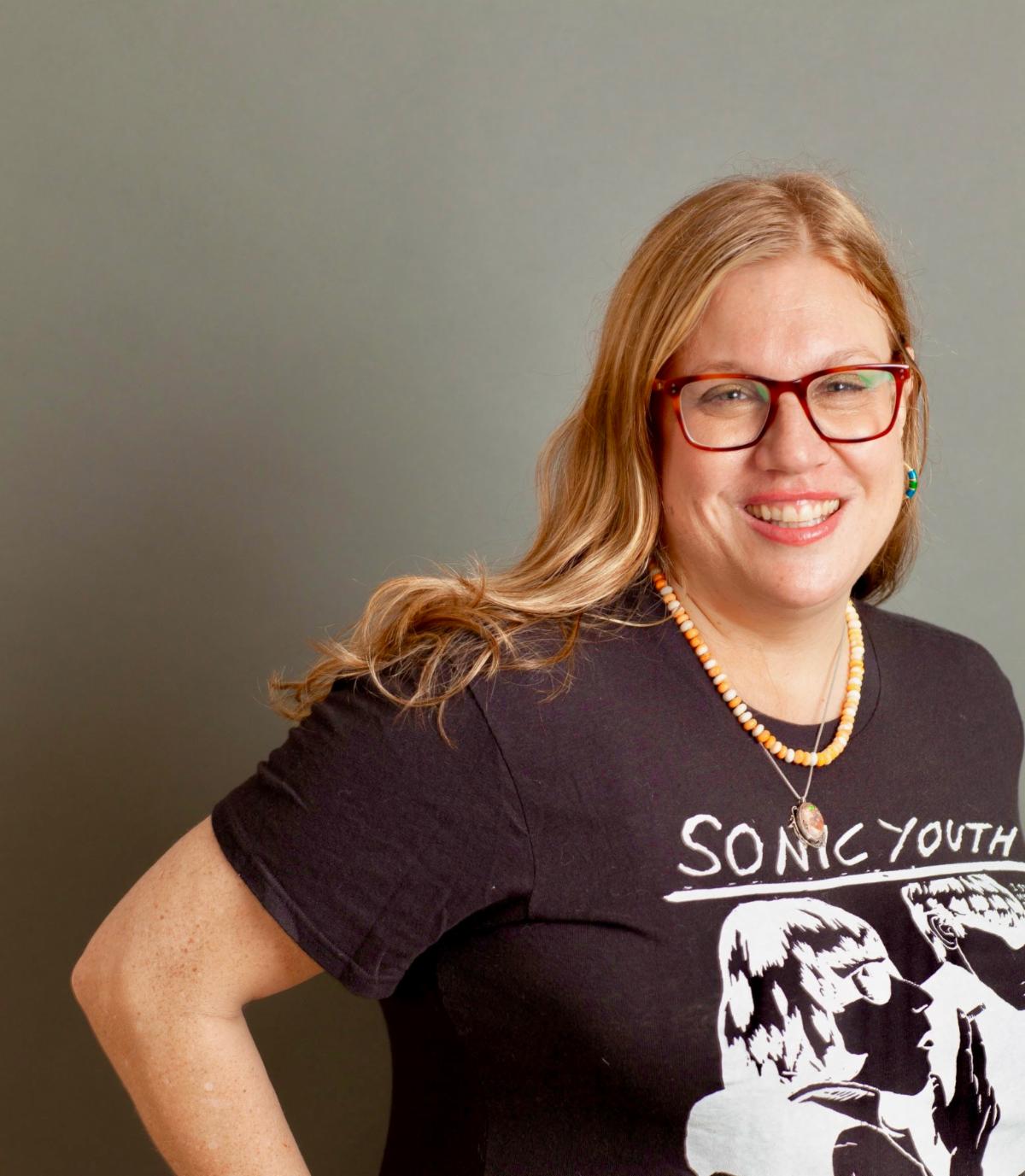
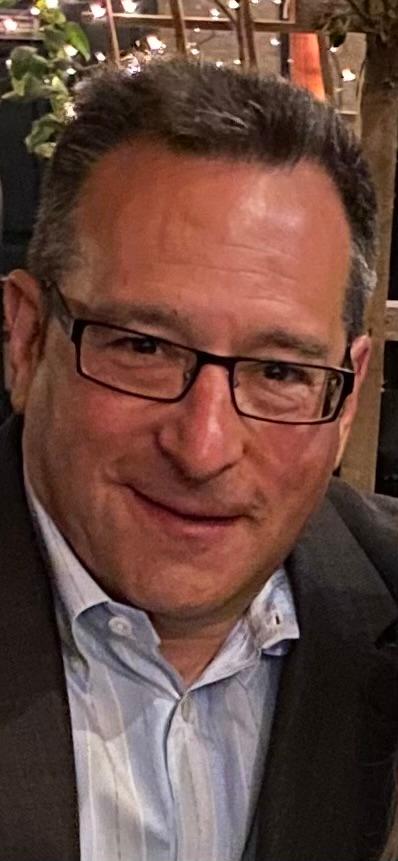
The head of security at a Jewish day school shares his post-October 7 conversion story
...three experiences, in fairly short succession, set me on the path back toward organized religion. I could not fully make sense of the connection between the moments when I felt the Divine, but I was eager to draw those lines. After graduating from Goucher in 2018, I secured a job as a federal police officer and moved to Baltimore with Madison. There, I became a regular attendee at a Presbyterian church, in line with the faith in which I was raised. It was a small rowhouse church off of Light Street, and I became a member in 2021. I participated actively, but the community, responsibility and connection to the Divine that I had glimpsed in those earlier moments did not come together in the way I was searching for.
| |
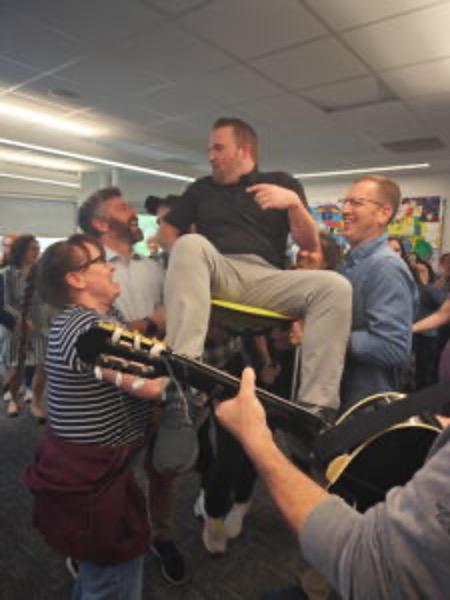
THE JEWISH VOICE PROJECT: A global creative movement for Jewish people reclaiming authorship of our lives, our identities, and our collective story.
| | You may not have even heard it yourself yet. In this writers' sanctuary, a real community built for exactly your deepest and best personal exprssion, it will. | |  | | |
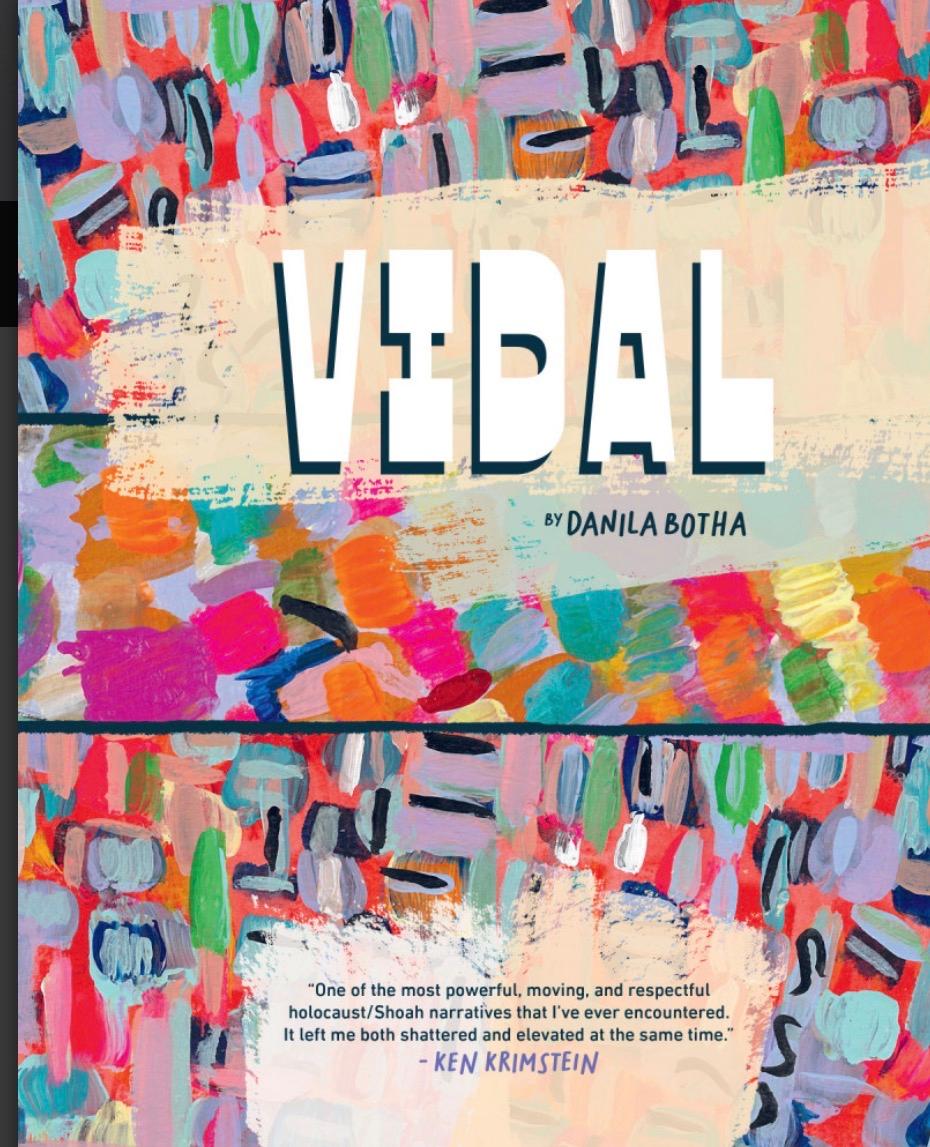
BOOK REVIEW AND EXCERPT: Vidal, by Danila Botha
| | |
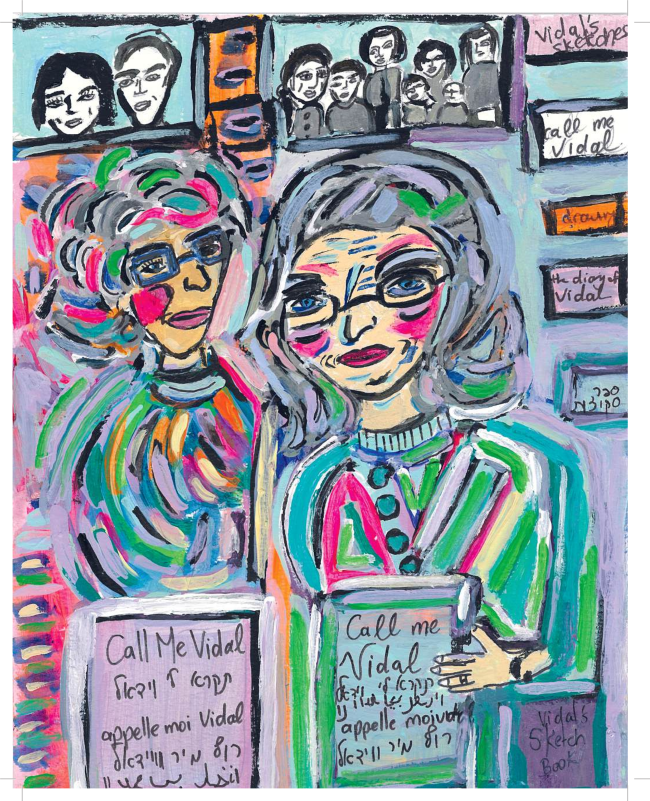
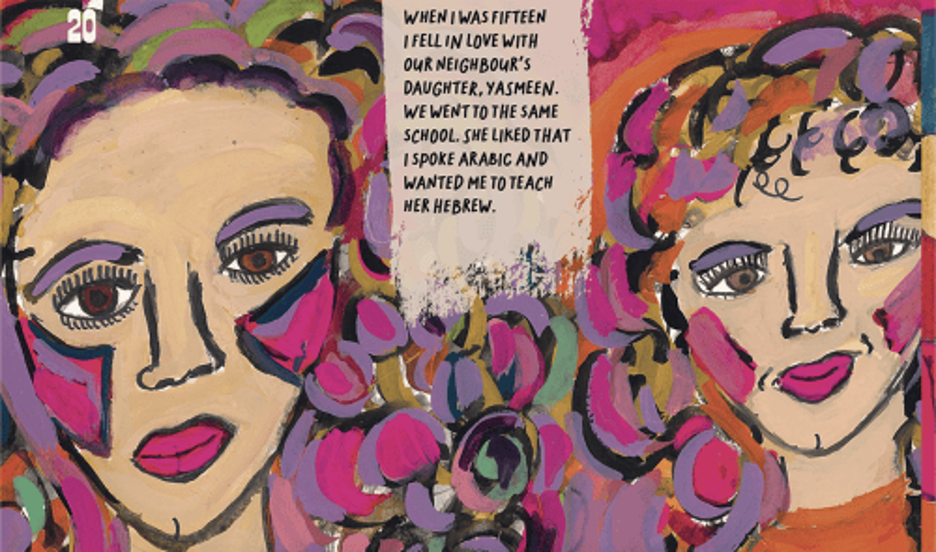
The greatest strength to Danila Botha’s new book is in its prose narrative followed closely by her passionate paintings. The plot to this work is following the life struggle of our main character, one Vidal Ben Soussan. Young Vidal grows up in Tiberias (Ottoman Empire and then British Mandate Palestine) and moves to Paris to pursue his art and freedom and gets trapped there during World War II. Botha traces the steps of Vidal’s life with a combination of her poetic prose laid over her paintings that evoke Chagall. The reader goes back and forth between the paintings and the prose that present the life of Vidal Ben Soussan, from his Sephardic upbringing in Tiberias to studies in the Technion in Haifa, his artistic life in Paris, his work with the underground resistance, and his ultimate arrest and time in Auschwitz.
| | | | | Danila Botha is the author of the short story collections, Got No Secrets, For All the Men (and Some of the Women) I’ve Known, which was a finalist for the Trillium Book Award, The Vine Awards and the ReLit Award and Things that Cause Inappropriate Happiness. The collection won an Indie Reader Discovery Award for Women's Issues, Fiction, and was a finalist for the Canadian Book Club Awards, the Next Generation Indie Book Awards, and the National Indie Excellence Book Awards. She is also the author of the award-winning novels Too Much On the Inside and A Place for People Like Us which just won an Independent Press Award for Contemporary Novel. | | |
MONTHLY BLOG: Antisemitism Charges Plague the Literary World. New Publishers Are Pushing Back
| | |
Jews may be known as “the people of the book” for religious reasons, but the phrase also captures a strong literary tradition. Many notable editors and founding publishers of the past century have been Jewish. Books by Anne Frank and Elie Wiesel have long been assigned in American schools. For decades, bestseller lists and prestigious literary awards have featured Jewish novelists from Philip Roth to Michael Chabon.
Yet today, many Jews believe that publishing is biased against them.
Jewish authors, agents, scouts, editors and other book professionals describe an ecosystem from big publishers to #BookTok that is suppressing Jewish and Israeli voices. Agents and scouts say it’s become impossible to sell foreign rights to works by Israeli writers. Established authors say their recent projects have been inexplicably turned down. Published writers with overtly Jewish books say their agents have dropped them from their roster; writers are being asked by editors to purge Jewish or Israeli elements from their books.
| |
EXCERPT FROM A COMPLETED BOOK LOOKING FOR A HOME: 1002 Chadwell Lane: Jewish Suburbia in the Midcentury; The Abelmans and the Stricks, by Neil Davison
| Our next-door neighbors to the left were the Ablemans. They were a family of Orthodox Jews who already had four children when we first moved in that September. Mrs. Ableman’s mother also lived in the house, making it a very crowded place with all sorts of weekly activities and visitors. On any given summer night, and with windows wide open, men could be heard arguing Talmud and women engaging in loud conversations while intermittently reprimanding children. All of this went on in a manner oblivious to the fact that we lived close enough to get a constant earful, or that such behavior was a betrayal of the suburbanite commitment to private spaces. Perhaps the worst of this was the annual night during the week after the closing service of Yom Kippur when Mr. Ableman and his two sons would begin to build their Sukkah; they would hammer until midnight right under my parents’ bedroom window, the old man shouting exasperated instructions in a high-pitched, raspy voice. Unlike our home, their model had a side porch that lurched impudently close to our yard. This area of their domain was forever strewn with curious objects—from used tires to broken shelf units lined with gardening tools, to picnic-table benches and rusty bicycles, to another set of shelves with a host of kitchen and household detritus that appeared to have been banished permanently from the house. In all, it looked like a country rummage sale. My father was forever bemoaning this mess, especially because his Wednesday evening, local patients had to walk by this refuse on their way to his office entrance at the back of our home. | | | | Neil Davison is Professor Emeritus of Modernism, Irish Studies, and Jewish Cultural Studies at Oregon State University, a position he held for the thirty years. A scholar of Literary Modernism, he has authored three critical monographs: James Joyce, Ulysses, and the Construction of Jewish Identity (Cambridge, 1996; paperback edition, Foreword by Sir Anthony Julius, 1998), Jewishness and Masculinity from the Modern to the Postmodern (Routledge, 2010), and An Irish-Jewish Politician, Joyce’s Dublin, and Ulysses: The Life and Times of Albert L. Altman (Univ. Press of Florida, Joyce Series, 2022), and has published critical essays in professional journals for over forty years. Before completing his PhD at University Maryland in 1993, he earned an MFA in Creative Writing from Columbia University and has placed poetry in several small-press magazines such as Cimarron Review, Ironwood, Abraxas, West Branch, and Small Pond. | |
NON-FICTION BOOK: New Psychological Thriller Explores the Lure of Destructive Cults for Some of the Jewish Community’s Most Idealistic and Accomplished Young People
(from Red Adept Publishing)
| | |
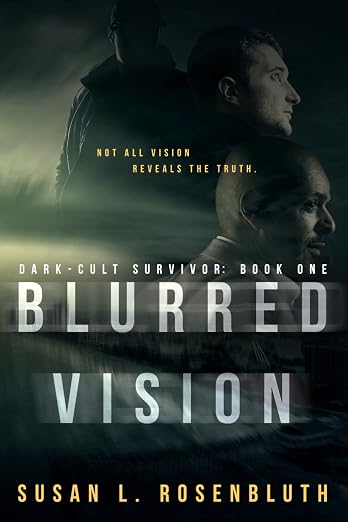
Throughout history, cults have captivated the public imagination. These spiritual communities offer a total sense of belonging—along with equally total enthrallment. My newly released novel, Blurred Vision (Red Adept Publishing), explores why Jews, in numbers out of proportion to their representation in the general population, seem especially drawn to these destructive groups that demand all-consuming passion for the strangest of doctrines.
As the award-winning editor of The Jewish Voice and Opinion, I spent years interviewing former cult members and their families, as well as rabbis, psychologists, deprogrammers, and law-enforcement officials. My series on cult recruitment, deprogramming, and recovery appeared in my publication and others affiliated with the American Jewish Press Association.
Those true-life stories became the foundation for Blurred Vision.
| | Susan L. Rosenbluth is the award-winning editor of the New Jersey–based Jewish Voice and Opinion and The Jewish Voice And Opinion dot com. Her reportage and fiction appear regularly in newspapers and magazines across the United States and in Israel, and she is a frequent guest on numerous radio and television programs and podcasts. Susan is a graduate of New York University, and much of her fiction is inspired by subjects and true stories she’s encountered as a journalist. | | | | |
LETTERS TO THE EDITOR: Jewish Democrats' Points of View
| From time to time readers send emails to the editor; these two were interesting in that they reflect the angst that is being talked about in the Jewish community regarding the November mid-term elections. | |
I'M A JEWISH DEMOCRAT WHO WON'T LEAVE THE PARTY BUT...the main reason I am not registering as an Independent is that I can vote in Democratic primaries against the Democratic Socialists (DSA) and what I call the 'hyper-progressives.' It appears that the majority of voters in Democratic primaries have anti-Israel views, and many seem to use this as a convenient shield for their anti-Semitism. What I find alarming is both the extraordinary ignorance about Israel (it is the opposite of an apartheid state and has committed no genocide) as well as the absence of criticism about actual genocides (Central Africa) and state-sanctioned citizen murders (Iran). The moderates in our party deserve a voice. If the Democrat on the ballot in November is a DSA or hyper progressive, I will likely leave my ballot empty or, if a non-MAGA Republican appears, he or she will get my vote. F.S. New Jersey
*************************************************************************
| |
Sam Harris’ August 2026 essay in Fig Tree Lit, entitled “Why I Won’t Debate Critics of Israel,” defends his position in part by declaring that “Militant Islam is ten times worse than you think it is.”
Substitute “progressive Democrats” for “Militant Islam” and the position--progressive Democrats are a serious threat to the American Jewish community–is one that has riven that community.
That position assumes its most politically consequential form among Jews who, in the service of their position on Israel/Gaza, maintain their formal party affiliation as Democrats but vow to oppose progressive Democrats in primaries and the general election, meaning that if a progressive Democrat is the party’s choice, they are very likely to vote Republican. Such Democrats are: (a) poseurs--pretending to be loyal party members when they are not; (b) much closer to reactionaries than progressives, because they have adopted a strategy that allies them with Republicans on many matters, ranging from securing voting rights to reproductive rights to support for USAID, far beyond Israel/Gaza. Robert Lehrer, Chicago
|
BLOG: With commentary and Guest Blogs on culture & current events, plus mini-reviews of books not published by Fig Tree Books
CLICK on the BLOG image to READ, REPLY to what we've written, COMPOSE something on your own about the state of literature (Jewish or otherwise), book publishing in general, culture & current events, or a specific book that you want to let others know about. And to SIGN UP, so you don't have to wait to read our blogs once a month when Fig Tree Lit is published.
| | | | |