|
Science tells us "the world’s oceans have become increasingly acidic. The main drivers of ocean acidification in Massachusetts are (1) global increases in atmospheric carbon dioxide resulting from anthropogenic emissions, and (2) local nutrient pollution leading to the eutrophication of coastal waters."
In other words, what we're doing on land is harming the ocean.
If we continue building an economy dependent upon fossil fuels as its source of energy while favoring coastal development over conservation and preservation of natural resources, "Massachusetts will be disproportionately affected by ocean acidification due to the relative importance of its coastal economies and environments" (MA Report 2021).
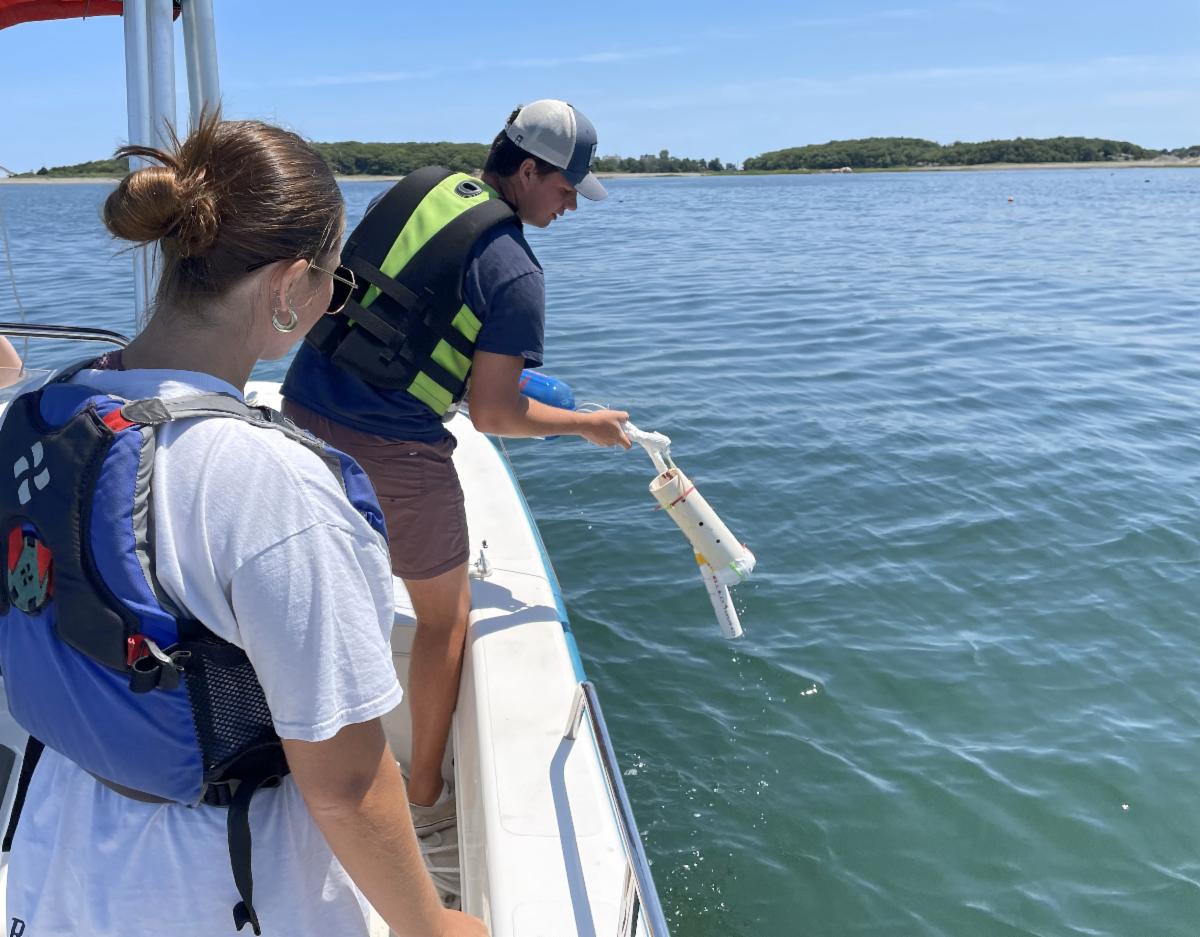
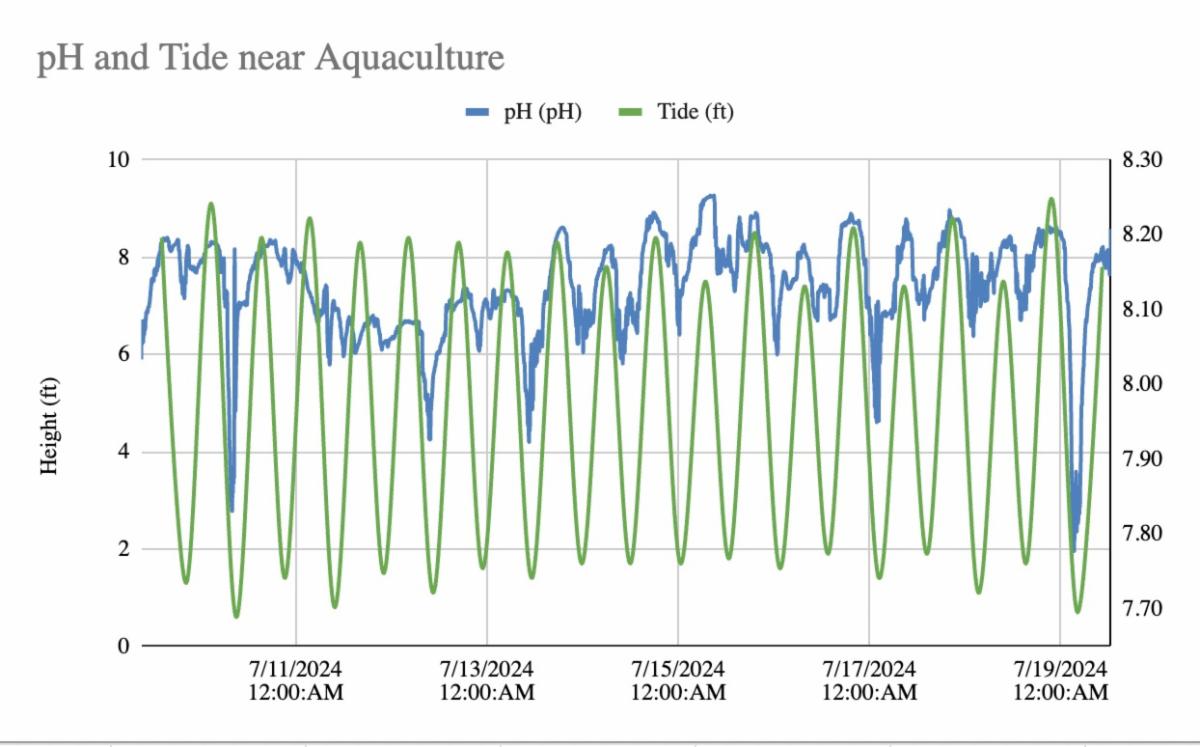
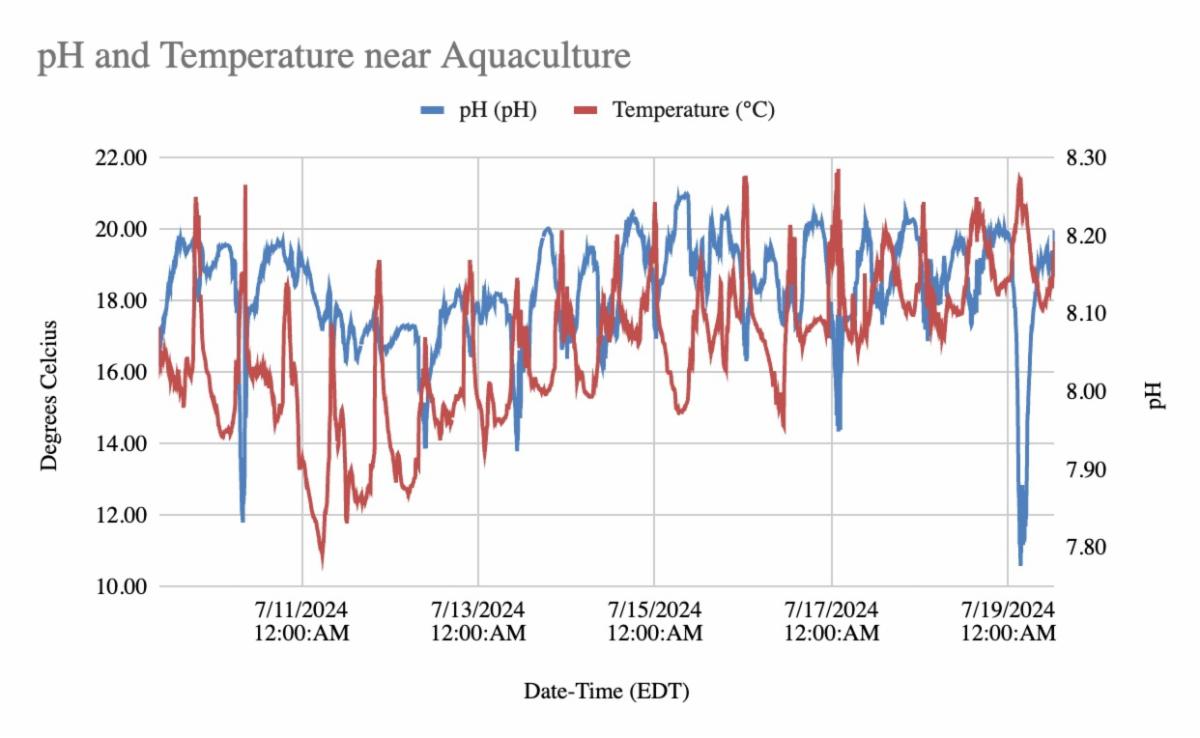
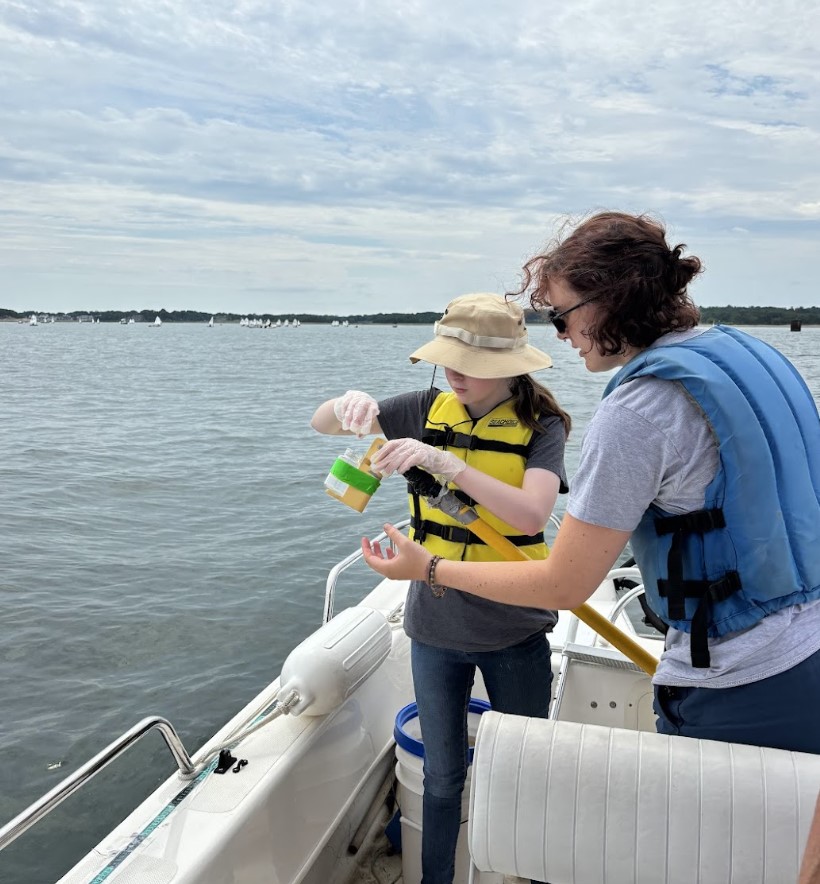
CSCR students are working to better understand this threat to our local waters. Using HOBO data loggers, pH, temperature, and conductivity fluctuations are under study. Preliminary data shows an interesting relationship between pH, temperature, and tide that students will continue to monitor. Rising and falling tides bring warming and cooling waters in and out of the Greater Bassings Beach Basin; pH rises and falls with the tides, yet inversely rises and falls as waters warm and cool.
While data needs to be collected over the course of more than one season, pH values that remain above 8 are what we need to see in our local waters.
|