|
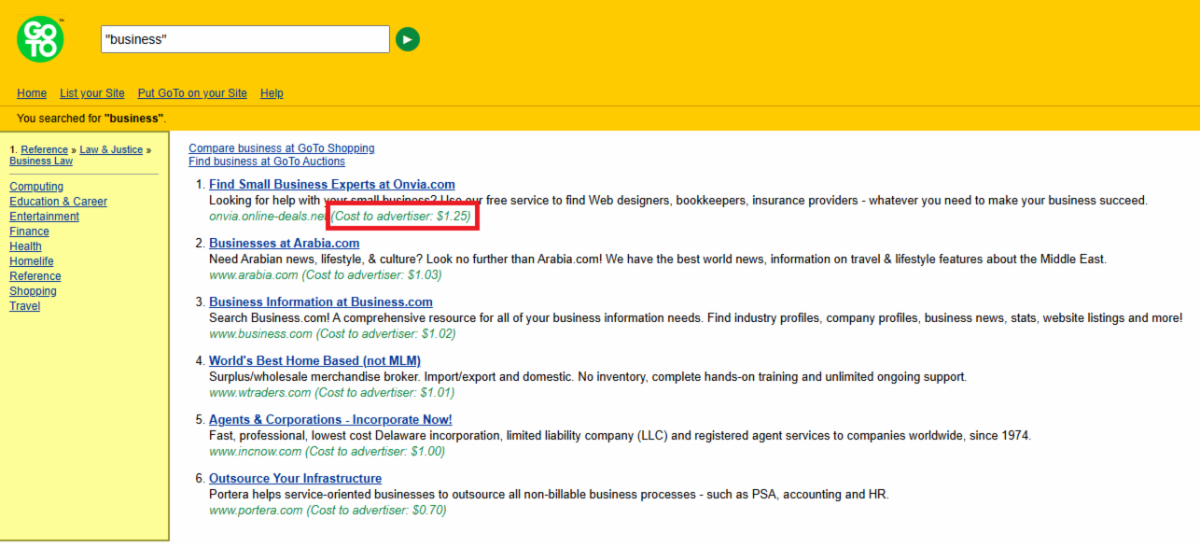
Not only were the search results pay to play, users could see what advertisers paid!
It was stone-age primitive: Bids started at a penny per click. The bids were publicly visible (!), and if another advertiser outbid you, GoTo would email you so you could raise your bid and reclaim your position.
In short, whoever paid the most got the best placement.
Not surprisingly, plenty of people thought this was a terrible idea. But it did help cut down on spammy sites that were beginning to infiltrate search results, since now website owners had to "pay to play."
The model became wildly profitable, as GoTo began syndicating its results across other high-traffic sites like AOL and Yahoo. Eventually it became the model that Google copied, with substantial improvements, for its own AdWords engine.
As clunky as the system was, GoTo had a critical insight for marketers: What people search for reveals what they want.
GoTo eventually rebranded itself as Overture, got rid of the public search, and focused exclusively on serving paid ads. The company was acquired by Yahoo in 2003 for over a billion dollars. (Here's the full, fascinating story.)
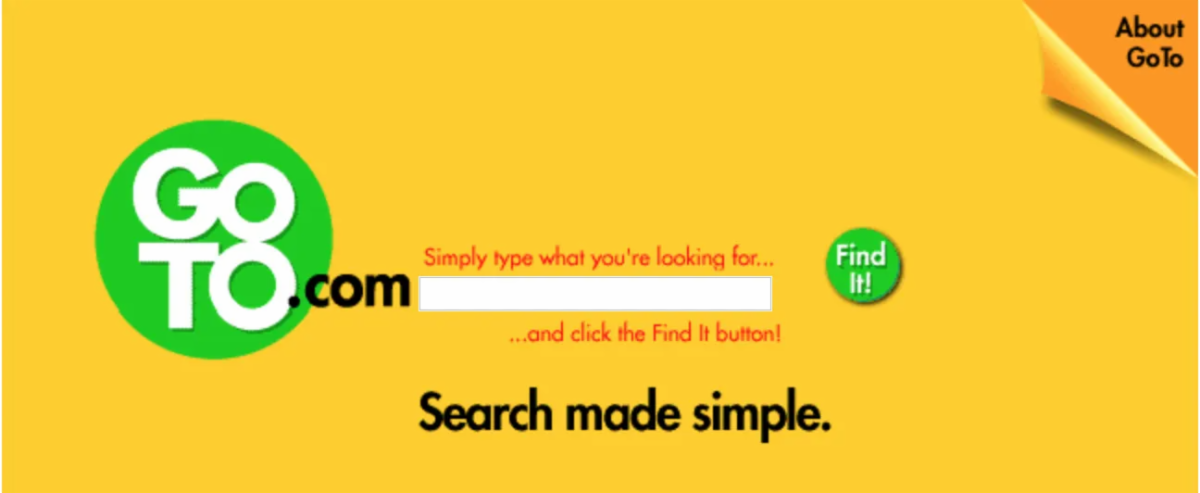
Today, ChatGPT Ads feel a little like GoTo.com in 1998.
They're clunky. The targeting and reporting aren't great. And for B2B marketers especially, the audience is limited because most ChatGPT business users are on paid plans (which don't have any ads).
Even though ChatGPT Ads are not ready for prime time, don't dismiss them.
The lesson of GoTo.com is that new advertising channels often look awkward and clumsy. ChatGPT Ads are probably not right for your business, right now.
But as you're planning next year's marketing budget, AI is almost certainly going to deserve its own line item.
In our full guide below, we break down how ChatGPT Ads are working today for real marketers, where they fall short, and where they're likely headed.
AI advertising may not be ready for your budget. But your budget should be getting ready for AI advertising.
|