June 2026

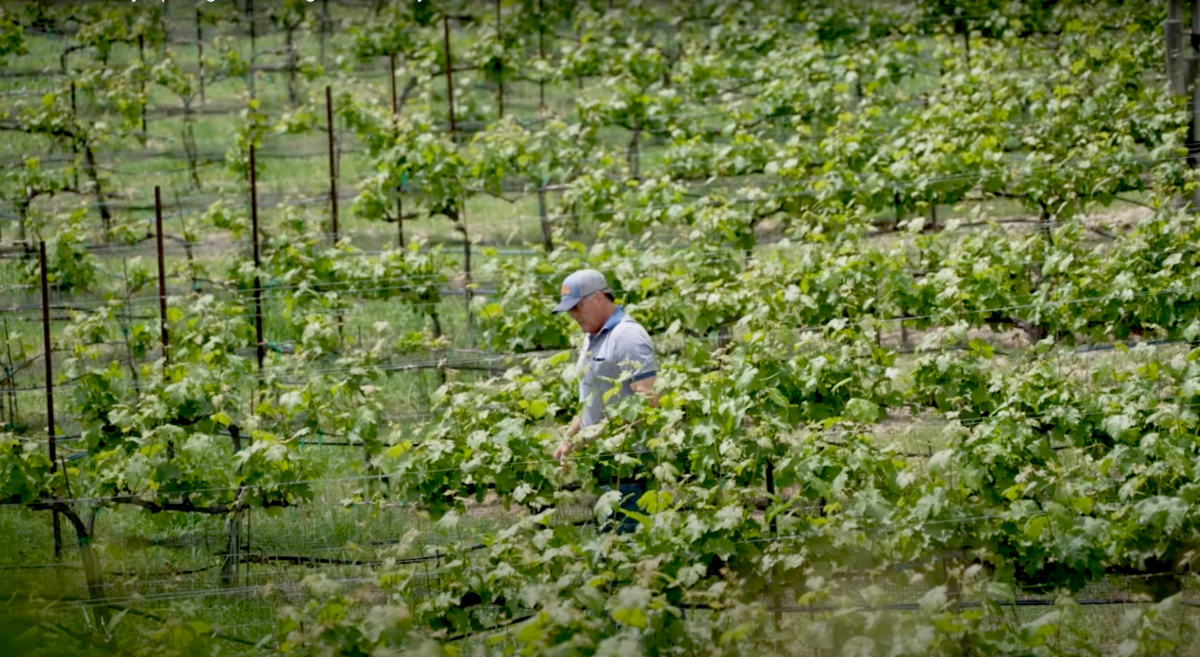
A vineyard slope in Idaho's Eagle Foothills AVA*

A FIVE-ALARM FIRE

There’s a five-alarm fire smoldering in the U.S. Federal Register. The White House Office of Management and Budget (OMB) seeks to overhaul the rules whereby federal grants for scientific research are given. Among the changes, the proposed rule “pre-issuance review” of grant awards by political appointees, superseding industry relevance and scientific merit reviews and undoubtedly slowing the administration of monies awarded. It also prohibits the use of grant funding to cover the costs of journal submissions or speaking engagements, limiting the mechanisms by which scientists learn about potential collaborators and industry hears about innovations and the people bringing them to life. It gives the government full reign to terminate grants without cause, which creates uncertainty for scientists—especially vulnerable post-docs, graduate students and lab technicians—who risk losing valuable income and experience when their topics of study or academic institutions come under scrutiny by the Administration. In the words of many of the nearly 70,000 people who have commented on the rule so far, “This is insanity.”

What’s in This Issue?

Scroll down for these stories and more

  • EU adopts historic NGT plant rules
  • What are clean plants and why do they matter?
    New videos explain.
  • Several states awarded research grants
  • California puts research funding on the ballot

Those who’ve shared their thoughts also note that the 45-day comment period is too short for a good-faith effort at generating public input. And they remark that the effective date of the final rule—October 1, 2026, less than three months from the close of the comment period on July 13—is too short a runway to make such sweeping changes, both within government funding agencies and at non-federal grant-seeking entities. As one commenter writes, “Rather than enforcing an arbitrary start date of October 1, OMB should delay implementation by at least one full fiscal year. This would allow institutions to transition smoothly without risking the continuity of critical public programs. The better idea would be to drop the proposed rule change entirely.”


As multiple media have observed, the proposed rule is an end-around for the Administration’s previously unsuccessful attempts to limit or halt federal funding for scientific research and academic independence. These changes endanger the American scientific enterprise and threaten our ability to generate new knowledge to advance the industries—like grape-growing and wine- and juice-making—that fuel the U.S. economy.


History tells us that science is the engine of our nation’s cultural advancement and economic prosperity. And recent events have shown that suspicions of government fraud and waste have been disastrously overblown. It is likely that there are efficiencies to be gained in federal processes and that grant dollars could be stretched further and do more good if thoughtfully applied. But what is there to be gained by second-guessing scientists, prioritizing “solutions” that fit political narratives and short-changing rule-making purported to benefit us all?

NGRA strongly opposes this incendiary rule. The damage these changes could ignite could take decades to burn out. We will submit our opposition online and urge you to weigh in, too. Comment here by July 13, 2026.


Donnell Brown
President

*ABOUT THE IMAGE

Situated within Idaho's Snake River AVA, the Eagle Foothills region has a slope and aspect that play important roles in sunlight reception, cold air drainage, frost and wind protection and make for wines with lots of character. "If only science were this delicious all the time," writes the Idaho Wine Commission, which provided this photo. Boise hosted the NGRA Mid-Year Board Meeting on June 15, 2026.

AROUND THE INDUSTRY

EU Adopts New NGT Rules

The European Union this month officially adopted the amended rules regulating plants developed using new genomic techniques (NGTs). The new EU rules were provisionally agreed to in December 2025. They enable the regulation of plants on the basis of their genetic makeup, not how they were made, and pave the way for new, more sustainable plant materials that are climate and pest resistant, require fewer pesticides, and have higher yields.


The rules create two categories for NGT-altered plants:

  • NGT-1 plants have a limited number and type of genetic changes that could have occurred through conventional breeding. At Parliaments request, plants engineered for herbicide-tolerance or to produce insecticidal substances are ineligible for this category.
  • NGT-2 plants have undergone more extensive or complex genetic modification. They are covered by existing GMO rules and subject to risk assessment.


The rules apply to plants originating in Europe and to those that are imported.

UC Sponsors Bill To Place Bond for Research on the Ballot

The University of California says its facing one of the most significant disruptions to its research enterprise in its 157-year history, so is sponsoring State Senator Scott Wiener’s Senate Bill (SB) 895 that would place a $23 billion bond to fund scientific research across California on the November 2026 ballot. To date, 31 members of the State Legislature are co-authoring the bill. If passed by voters, the measure would establish the California Foundation for Science and Health Research to fund competitive research grants, low-interest loans and modernized research facilities focused on urgent statewide priorities. For every $1 the State of California invests in UC, the university reports, $21.04 is generated in total economic activity and $14.32 is added in real economic value.

CA Winegrape Community Mourns the Passing of John Ledbetter

The California Association of Winegrape Growers (CAWG) announced the passing of former CAWG Chair John Ledbetter on June 23, 2026. John was a respected leader, visionary grower, and tireless advocate whose influence helped shape California’s winegrape industry for decades. A memorial service will be held on July 2, 2026, in Lodi.


Throughout his career, he championed innovation and sustainability, working closely with the Lodi Winegrape Commission to advance integrated pest management practices and playing a pivotal role in developing the groundbreaking Lodi Rules for Sustainable Winegrowing Program. He served as Chair of the CAWG Board of Directors from 1987 to 1989 and held numerous leadership positions throughout the industry, including President of the Lodi District Grape Growers Association, Chairman of the Lodi Winegrape Commission, Vice Chair of Winegrape Growers of America, Board Member of the Wine Market Council, and Supreme Knight of the Knights of the Vine.

Congrats, Michael Kaiser

Michael Kaiser became Executive Director of WineAmerica, a longtime NGRA member-organization, in May 2026 after nearly 20 years with the organization. As Executive Director, he will continue in his roles as the director of government affairs and principal administrator while adding responsibilities for membership development and strategic planning execution. Michael is the main voice of WineAmerica on Capitol Hill and with the Alcohol and Tobacco Tax and Trade Bureau (TTB) and other federal agencies. Listen in as Michael shares insights on market dynamics, and complex regulatory challenges such as hemp-derived beverages and tariffs. 

UC Cooperative Extension Moves to Area Director Model

UC Agriculture and Natural Resources (ANR) is transitioning to regional administrative leadership of its UC Cooperative Extension offices. The UC ANR Area Director model is designed to strengthen collaboration, optimize resources and improve administrative efficiency across multiple county UC Cooperative Extension offices, and is intended to allow ANR scientists to focus on research and extension. Historically the UCCE offices in each county were led by UCCE advisors who split their time between administrative duties and research and extension work. This new model features an Area Director with a 100% administrative appointment who oversees organizational efficiency, physical infrastructure, personnel, budget management, partnership development and strategic growth for multiple counties. By handing off administrative tasks, Glenda Humiston, UC vice president for agriculture and natural resources, hopes the academics will become more engaged in leadership and public service roles such as boards, commissions, initiatives related to their research and science-to-policy activities. We aim to have this transition fully completed and the new leadership model implemented across all counties by the end of 2027, Glenda said.

Napa Valley Grapegrowers Breaks Ground on New Facility

On May 27, 2026, Napa Valley Grapegrowers (NVG) held the official groundbreaking of its Patrick Foley Center for Grapegrowing and Farmworker Education, the organization’s first permanent home and community hub for training and professional growth in the wine industry. The $9.5 million project on the site of the historic 2.2-acre of the Oakville train station will feature hands-on training space, a demonstration vineyard, and classroom and community meeting facilities, all supporting NVG’s work in industry research, advocacy and education. “It will be a place where the next generation of growers can learn the craft and science of viticulture in a changing climate,” said NVG Executive Director Caleb Mosley. The center is expected to open in late 2027. NVG is an NGRA member-organization.

Texas Grape Seeds Launch to Space for Research Mission

Researchers from Texas A&M AgriLife this month launched hundreds of grape seeds to space. The seeds will spend six months aboard the International Space Station, where extended exposure to space radiation could induce genetic mutations. After returning to Earth, they will be planted in the AgriLife Research vineyard alongside control seeds. Scientists will study differences in plant growth, vine and wine grape performance, and genetics. The project could produce what researchers believe to be the first wine made from grapes grown from seeds that traveled through space.


The experiment is part of the Texas A&M/Aegis Aerospace Multi-Use Space Platform Integrating Research and Innovative Technology (TAMU-SPIRIT) research mission, a first-of-its-kind orbital research platform planned for deployment aboard the International Space Station. It is designed to serve as a “satellite campus in space,” supporting a wide range of research and technology projects.

New Research Grant Awards Announced in OR, WA and VA

Three states with research funding programs announced grants for new and continuing projects this month.


The Virginia Wine Board awarded grants totaling $421,271 to 13 projects. Two projects are marketing initiatives, four are education grants supporting industry outreach, and the bulk of the funds go to seven research projects. Researchers continue to investigate vineyard pests (spotted lanternfly, downy mildew, and testing for fungicide resistance); compare under-vine cover crops to optimize production goals; and assess the impacts of variety, vineyard and vintage on phenolics to inform winemaker decisions. Plus, a Virginia-specific sustainability program enters its second pilot year.


The Oregon Wine Board (OWB) and the Erath Family Foundation (EFF) are collaborating to support scientific research advancing grape growing and winemaking in Oregon. The organizations awarded nearly $400,000 to eight research projects. OWB is providing $192,000 in funding to support three continuing projects; EFF will fund five new research initiatives totaling $206,000. The projects span emerging challenges and opportunities in vineyard management, sustainability, pest and disease control, and wine quality.


The Washington State Wine Commission awarded $655,000 in support of 11 projects. A major focus of the research is to improve sustainable vineyard management strategies with topics spanning modeling the lifecycle of grape mealybug; managing sour rot; understanding how virus diseases compromise vineyard longevity; identifying soil health measures appropriate for inland Northwest vineyards; and optimizing late season irrigation to prepare vines for winter. A collaborative outreach project with the California Association of Winegrape Growers Foundation will support the industry-facing resources maintained online by the West Coast Smoke Exposure Task Force.


These projects are tallied in NGRA’s database of funded grape research. 


The Virginia Wine Board, Erath Family Foundation and Washington State Wine Commission are NGRA member-organizations.

New York Releases Research Reports

The New York Wine & Grape Foundation (NYWGF) released the research reports for the projects it funded last year (2025-2026). They represent a body of new science-backed findings to help New York’s growers, winemakers and industry professionals navigate the challenges and opportunities defining the industry right now. The topics span viticulture, enology and business, with findings that range from managing spotted lanternfly and contamination thresholds in wine and juice, preparing for a future without broad-spectrum fungicides, ongoing varietal development, increasing automation of weed and sucker control, and improving canned wine quality. The NYWGF is an NGRA member-organization.

Decadal Survey for Earth Observations from Space

At the request of NASA Earth Science Division, the National Academies of Sciences, Engineering and Medicine is initiating the Decadal Survey for Earth Science and Applications from Space 2028-2037. Building on the 2018 decadal survey, the survey aims to identify and address the highest priority Earth science and applications challenges to advance through space-based observations in the coming decade. A request for information invites input on a broad range of topics, including science and applications priorities, observational needs, implementation approaches and related contextual issues. Comments are due by July 20, 2026. Click to learn more and share your thoughts. 

Share Your Perspective on Consumer Trends

Researchers at USDA-ARS, UC Davis and Arizona State University are collaborating to understand and address research needs bridging consumer science, economics and industry practice. They are inviting vineyard managers, winemakers, winery owners and other industry stakeholders to take part in a short survey on current and emerging trends in wine consumption, market challenges and economic pressures. The goal is to identify key industry priorities and use them to co-design research initiatives and decision-support tools to help navigate this period of significant change. Click to participate by Aug. 1, 2026.

RESEARCH FOCUS

New Videos Demystify Clean Grapevine Material and Certification

By Lauren Port, UC Davis Foundation Plant Services

Editor’s Note: In the wake of the debacle unfolding this month in California in which Costco Wholesale stores received and sold grapevines infested with glassy-winged sharpshooters, the importance of clean plants cannot be overstated. We encourage you to share these new videos broadly!


The National Clean Plant Network for Grapes (NCPN-Grapes) has launched a four-part educational video series to clear up confusion about and emphasize the importance of clean plant material. Produced by Penn State Extension with support from NCPN-Grapes, the series helps grape growers, nursery managers and industry stakeholders understand the critical processes behind clean plant production, grapevine certification and virus disease management—and why they matter.


Establishing a vineyard requires a significant long-term financial investment. Introducing destructive viruses like grapevine leafroll-associated virus-3 or grapevine red blotch virus can drastically reduce vineyard profitability and vine longevity. These short videos break down the science and nuance of clean plant centers, explaining how growers can protect their investments from the ground up by utilizing certified planting material.


The complete four-part series is now available to stream for free. Click the titles below to view the videos now.


How Do Clean Plant Centers Produce Clean Grapevine Stock?

Ever wondered what goes on behind the scenes at a clean plant center? Featuring appearances by the team at Foundation Plant Services (FPS), this video takes you inside the lab and the vineyard. Learn about the rigorous processes of propagation, testing and therapy required to produce clean grapevine stock.


What is a Clean Grapevine?

Shopping for clean grapevines comes with some important nuances. A clean grapevine is tested and found free of specific, harmful pathogens—but it doesnt mean it is free of all microorganisms, which would be an impossible and cost-prohibitive standard. In this video, Cornells Marc Fuchs explains what certification truly means and what viruses of concern are targeted.


Why Grapevine Certification Matters

Starting a new vineyard venture without compromising on vine health is essential for long-term success. Cain Hickey of Penn State details why grapevine certification is a growers best defense against profit-stripping viruses. Discover how certification programs protect G1 foundation and nursery blocks by keeping major viruses out.


Why Some Grapevine Diseases Aren’t Tested

Testing grapevines requires immense resources: time, money and highly skilled workers. Because of this, certification programs focus strictly on Economically Relevant Viruses—pathogens that cause severe harm to vine health and production. In the final video of the series, Dr. Marc Fuchs discusses this targeted approach and answers a frequently asked industry question: Why dont certification programs test for crown gall?


Want to bookmark these resources for future reference? Find this story and links to the videos on the NCPN website.


Lauren Port is Assistant Director of UC Davis Foundation Plant Services and Grapes Coordinator for the National Clean Plant Network.

Funding Opportunities

Crop Protection and Pest Management

The USDA-NIFA CPPM program provides funding to colleges and universities for research, extension, and education activities to address high-priority agricultural pests—especially invasives—and their management. Deadline to apply is July 6, 2026.


The Heising-Simons Foundation – Science Events and Gatherings

The Heising-Simons Foundation invites applications for grants supporting meetings, workshops, conferences, summer schools, research collaboration gatherings, or other events in astronomy, planetary science, cosmology, fundamental physics, climate change science, and efforts to increase the representation and retention of a broad range of perspectives within these fields. Up to $800,000 in total grant funding is available, with individual grants ranging from $20,000 to $80,000. Applications are due by July 10, 2026.


Research Facilities Act Program

The USDA and U.S. Department of Education this month announced the new Research Facilities Act Program, which provides $125 million in annual funding to help address decades of deferred maintenance and accelerate modernization of agricultural research facilities across the country. The USDA-NIFA will administer this competitive program supporting renovation, expansion and construction projects that strengthen research capacity at land-grant and agricultural universities. A 1:1 match is required. Projects will be funded at four levels, from planning grants to large-scale/new construction. Applications are due by July 17, 2026.


NSF Faculty Early Career Development (CAREER) Program

This prestigious National Science Foundation (NSF) program recognizes early-career faculty who have the potential to serve as academic role models in research and education, and lead advances in the mission of their department or organization. Also, NSF annually selects nominees for its Presidential Early Career Awards for Scientists and Engineers (PECASE) from among the most meritorious CAREER awardees. Applications are due by July 22, 2026.


Specialty Crop Multi-State Program

This federal grant program is offered by the USDA’s Agricultural Marketing Service and administered by State Departments of Agriculture. It aims to fund collaborative, multi-state projects that address regional or national level specialty crop issues, including food safety, plant pests and disease, research, crop-specific projects addressing common issues, and marketing and promotion. Proposals must include at least two partners located in two different states. Approximately $14.3 million is available; awards will range from $250,000 to $1 million. Cost share contributions of 25% are required. Proposals are due by Aug. 31, 2026.

Applying for a grant? Request a letter of support!

NGRA is pleased to provide letters of support for research projects that directly address our industry research priorities. Request a letter via our online request form at least two weeks prior to the grant deadline (or any internal deadline you may have). Late requests are not accepted.

IN THE NEWS

Minnesota Aims To Breed Fruit for All

June 23, 2026 | Good Fruit Grower

The University of Minnesota launched a new licensing arm last fall called Superior Fruit Innovations to direct-market exclusive U of M fruit varieties to growers in the U.S. and Canada. The program is currently focused on three new table grape and three apple varieties. The grapes are cold-hardy seedless table grapes marketed as the Northern Glo series. Specifically, they are MN1369 (now named LumiGlo), MN1296 (EmberGlo) and MN1325 (ShadowGlo). 


BIENESIS Begins Deploying 800 Robotic Vineyard Canopies in France and Italy

June 17, 2026 | Vinetur

A French agritech startup called BIENESIS is deploying more than 800 “La Canopée” retractable robotic canopies in vineyards across France and Italy this year to help growers protect grapes from frost, hail, heat waves and heavy rain. The tech is designed to cover vine rows only when weather conditions require it. Two robotic arms deploy a technical fabric above the vines in less than one minute and retract it once the risk has passed. The company says the tech remains out of sight 95% to 98% of the time and can be controlled remotely by smartphone. 


April Freeze Stunts 2026 Local Wine Season

June 12, 2026 | The Frederick News-Post

The late-season freeze that set in the early morning of April 21 was one of the worst in Maryland history, said Sara Kidd of the University of Maryland Extension, Frederick County. In the hardest hit vineyards, the stunted growth left behind means the vines will produce no crop. “It will be very difficult for our members to source enough grapes from Maryland because the entire Mid-Atlantic was impacted,” said Janna Howley, the executive director of the Maryland Wineries Association. In response, the state temporarily waived the requirement that Maryland wine be made from at least 51% Maryland fruit.


Researchers Inch Closer to Rapid Smoke-Impact Detection Tool, Seek Grape Sensory Thresholds

June 11, 2026 | WineBusiness Monthly

At the West Coast Smoke Exposure Task Force Annual Smoke Summit on June 8, USDA-ARS Research Chemist Arran Rumbaugh shared several promising research advances. The team has identified a commercial technology that can identify smoke-impacted wines from samples within five minutes. They are also establishing sensory thresholds for smoke-marker compounds in grapes, and using on-the-vine simulated exposures to better correlate with real-world fire events. And ARS, UC Davis and InnoVint are partnering to create a database that will provide baseline levels of volatile phenols and glyco-conjugates by cultivar for comparison. It should be accessible by next season.


There’s Something in the Substrate

June 7, 2026 | Offrange

From compost to soil enhancement to bio-enthanol, pigment and packaging, researchers are finding that spent mushroom-growing substrate may have beneficial uses. “It’s early in the process for repurposing this material at scale. But work so far suggests that a solution to many intractable issues may already be there, buried in the substrate,” Offrange reports.


Mothballing vs Removal: Vineyard Decision Guide and Workshop

June 5, 2026 | Bragato Research Institute

The need to remove or mothball vineyards isn’t unique to the U.S. New Zealand’s Bragato Research Institute has developed a yes-no decision tree and model economic analysis to help kiwi winegrowers evaluate the full range of considerations when deciding what to do about their vineyard in a down wine economy.


Innovative Strategies the Wine Industry Is Using To Adjust to Climate Change

June 5, 2026 | ABC News

As excessive heat threatens 70% of the world’s wine-growing regions, producers are finding new ways to adapt. A vineyard in the Willamette Valley is preserving its Oregon white oaks and, at the same time, replenishing mycelium populations in their vineyard’s roots and increasing biodiversity. A California estate adheres to regenerative practices, practicing no-till farming and maintaining cover crops to enhance soil health and improve water-holding capacity.


Interception of Copper-Based Fungicides by Cover Crops: A Way To Prevent Soil Contamination in Vineyards?

June 5, 2026 | Ives Technical Review

The use of copper (Cu) fungicides in viticulture has led to the accumulation of Cu in vineyard topsoils, threatening soil health and the sustainability of vineyard ecosystems. This study examines the potential of cover crops as “umbrella” plants to intercept Cu from Cu fungicides before it reaches the soil, and investigates the mechanisms by which Cu might be retained by leaves exposed to these fungicides. Sourced from the research article: “Interception of copper fungicides by cover crops as a way to prevent soil contamination in vineyards?” (Journal of Environmental Management, 2026). 


Scientists Retire ‘Implausible’ Worst-Case Climate Scenario

June 5, 2026 | Science Friday

An international team of researchers released a study finding that a worst-case climate scenario considered in past Intergovernmental Panel on Climate Change (IPCC) reports is now “implausible.” The scenario, known as RCP8.5, posited that temps would rise 4 degrees C (8 degrees F) by the end of the century. The revision came after years of criticism from climate scientists, a recognition that some of the elements in the scenario (like coal-fueled cars) were ridiculous and the fact that some progress has been made. But even though this may seem like good news, “there’s an important caveat,” says an environmental correspondent on this podcast. “We are still targeting pretty extreme climate change that’s going to have dire effects on the planet.”


Climate Change and Wine Grapes: Go, Stay or Change?

June 4, 2026 | Cornell Chronicle

Researchers at Cornell developed a framework to help winegrape growers better understand their options for an evolving climate, using Napa Valley as a model. Should growers use shade cloth to adapt their vines to hotter temps, switch to heat-tolerant grape varieties that might not fetch the same price, or move production to a cooler region? The team surveyed wine consumers to see how such business decisions affected what people would pay. Consumers “appear to be willing to pay a price premium as winemakers adjust to their new normal”…at least temporarily.


Doing More with Less: Vineyard Automation Becomes Lifeline for Growers Under Pressure

June 1, 2026 | WineBusiness Monthly

“Across California and the Pacific Northwest, vineyard operators are making hard decisions about which acres to keep, which to pull and how to farm what remains at a cost structure that pencils out,” reports WineBusiness Monthly. “Automation has increasingly become a central part of that answer, not as an investment in some future efficiency but as a practical, near-term tool to survive a brutal market cycle.” Even just a few cents per vine can add up to huge savings.


OSU Research Identifies Native Microbes That May Protect Wine Grapes

June 2026 | OSU Extension Service

Oregon State University researchers have discovered that two types of naturally occurring bacteria slowed the growth of the fungus that causes Botryosphaeria dieback more substantially than a commercially available product used as a comparison. The native strains worked well across all temperatures tested, including 50°F. That matters because pruning often happens in cooler weather, when available disease-management products may be less effective.


Study Guides Magnesium Decisions in Oregon Vineyards

June 2026 | OSU Extension Service

A three-year study of Pinot noir vines in Oregon’s Willamette Valley found that magnesium sprayed on leaves reduced visible symptoms of magnesium deficiency but did not improve vine growth, yield or fruit composition. The study also found that leaf blades collected at veraison were a better indicator of vine magnesium status than leaf petioles collected at bloom, which are more commonly used for nutrient monitoring in the U.S. By helping growers avoid unnecessary inputs, this research can support more efficient nutrient management while reducing costs and environmental risk.


Trellis Talks: Understanding Napa’s Unusual Growing Season with Daniel Swain

May 28, 2026 | Grown in Napa Valley

Tune in to this podcast to hear climate scientist Daniel Swain explain California’s unusual 2026 growing season and its record-breaking spring heat. He explains the complex relationship between climate change and extreme weather. He also delves into the developing El Niño, which he predicts could be historic. Daniel encourages farmers to see the shifts as opportunities to rethink water management through groundwater recharge, floodplain restoration and capturing excess winter runoff.


The Science Behind Dry Farming

May 25, 2026 | SevenFifty Daily

“As the practice has gained traction across the wine industry, our understanding of dry farming and what it takes to make it work has flattened almost to the point of distortion,” reports SevenFifty Daily. Doing it successfully requires knowledge of annual rainfall thresholds, soil depth and composition, vine age and rooting capacity of the varieties and rootstocks grown. “With climate change making it harder to predict when and where sufficient rainfall will occur, dry farming has only become an increasingly more complex system for winemakers to navigate.”


ViViD-5K: Vineyard Vision Dataset for Field-Based Berry Detection and Segmentation and Grape Cluster Closure Estimation

May 23, 2026 | Cornell arXiv

The rate and relative tightness of cluster closure can significantly impact disease risk, but efforts to track this progression using visual scoring methods are labor-intensive, subjective, lack temporal resolution and therefore aren’t useful for deep learning models. Researchers at Cornell have assembled ViViD-5k, a large-scale in-field Vineyard Vision Dataset containing 5,000 densely annotated images spanning 13 grape varieties. Building on this dataset, they also introduced GrapeSAM, a two-stage visual pipeline that enables automated, in-field estimation of cluster closure with minimal supervision, supporting high-throughput grape phenotyping with enhanced spatial detail.


In the War Against Lanternflies, East Coast Wineries Are Getting Creative

May 22, 2026 | Wine Enthusiast

The Loudoun County, VA, Scrape for the Grape initiative enlists local wine enthusiasts to scrape spotted lanternfly egg masses from vineyards and surrounding areas. Over three years of the program, 2,300 volunteers have participated. Based on self-reports of the number of SLF egg masses destroyed, at an average of 30 SLF eggs per mass, volunteers have eliminated nearly 20 million lanternflies, organizers say. But whether or not scraping makes a difference in SLF populations, participants go home with a personal, tangible stake in the success of the winery for whom they’ve done battle…and often a wine club subscription. Scrape for the Grape organizers are preparing the event as a blueprint for other regions.


Do Plant Growth Regulators Have a Place in Winegrapes with Dr. Matthew Fidelibus

April 28, 2026 | Vineyard Underground

Tune in to this podcast as UC Davis’ Matt Fidelibus breaks down the use of plant growth regulators (PGRs), such as gibberellic acid, abscisic acid and ethephon, in table, raisin and wine grape production. PGRs can influence berry size, cluster architecture, color development, and ripening, and are commonly used in table grape production. But in winegrapes, their application is more nuanced. Even small misapplications potentially can affect fruit set, bud development or yields across multiple seasons. 


Climate Change and the Future of Hybrid Grapes

April 1, 2026 | WineBusiness Monthly

“Hybrid grape varieties, particularly the cold-tolerant ones, can play a strategic role in the future of our wine industries and help buffer the effects of extreme weather on production and revenue,” reports WineBusiness Monthly. But that doesn’t mean that, as the climate changes, all vineyards must be converted to hybrid varieties. Many producers are working to identify a mix of vinifera and hybrid varieties that tracks with their climate vulnerabilities, ensuring they will “always have a crop and always be able to produce a new vintage of wine that will sustain them into the next year.”


UC is Leading the Sunpreme and Other Natural DOV Raisin Research with More Research Needed

Feb. 25, 2026 | UCCE San Joaquin Valley Trees and Vines

Sunpreme was the first of a new generation of raisin grapes bred to naturally dry on the vine, a genetic trait that enables completely mechanized production. However, this promising DOV variety also is prone to preharvest fruit drop (shatter), making it potentially difficult to fully dry the fruit in years with heavy crops or poor drying conditions. UC scientists are studying the underlying physiology of both traits to identify management strategies that can help.


Find these stories and more, published every weekday on our Facebook and LinkedIn accounts.

UPCOMING EVENTS

July 28, 2026

University of Arkansas Division of Agriculture and Arkansas Association of Grape Growers

Native and Hybrid Grape Field Day

Little Rock, AR


July 29, 2026

Napa Valley Grapegrowers

Organic Winegrowing Conference

Napa, CA


Aug. 20-21, 2026

Michigan State University

Dirt to Glass Conference

Traverse City, MI


Nov. 10-11, 2026

Sustainable Ag Expo

San Luis Obispo, CA


Nov. 12, 2026

NGRA Year-End Board Meeting

Virtual event


Nov. 17-18, 2026

Northwest Center for Small Fruits Research Annual Conference

The Dalles, OR


Dec. 3, 2026

WIN Expo

Santa Rosa, CA

Find all upcoming events on the NGRA website.

National Grape Research Alliance


The monthly NGRA newsletter is provided as a service to the US grape and wine industry.

Not a member of NGRA? Please consider joining us.

Facebook  X  LinkedIn