|
A Conversation About Water
If there’s one topic I hear about more than almost anything else right now, it’s water: water plants, water bills, water meters and how we’re preparing for Groveland’s future.
The truth is our city is making the largest infrastructure investment in its history to modernize and expand our water and wastewater systems. It involves building new facilities, refurbishing existing plants and replacing everything from equipment to meters to water mains to miles of intricate pipelines delivering water from our plants to every existing and future home and business in Groveland – and back again.
These projects are focused on two things: 1) increasing capacity and 2) improving reliability and service for our customers.
I’m dedicating this issue to exploring the infrastructure project and its components, why it’s important and how it's being funded.
| | | | 1) Progress Update: Capacity | | |
One of the biggest challenges facing Groveland today is ensuring our water infrastructure keeps pace with demand, not just from current residents and businesses, but from future development already approved by previous city councils. In fact, we have to plan for nearly 20,000 entitled homes that have been approved over the past two decades, even while many of those neighborhoods have not yet been built.
We've made some good progress, here:
| |
A New Drinking Water Plant for North Groveland
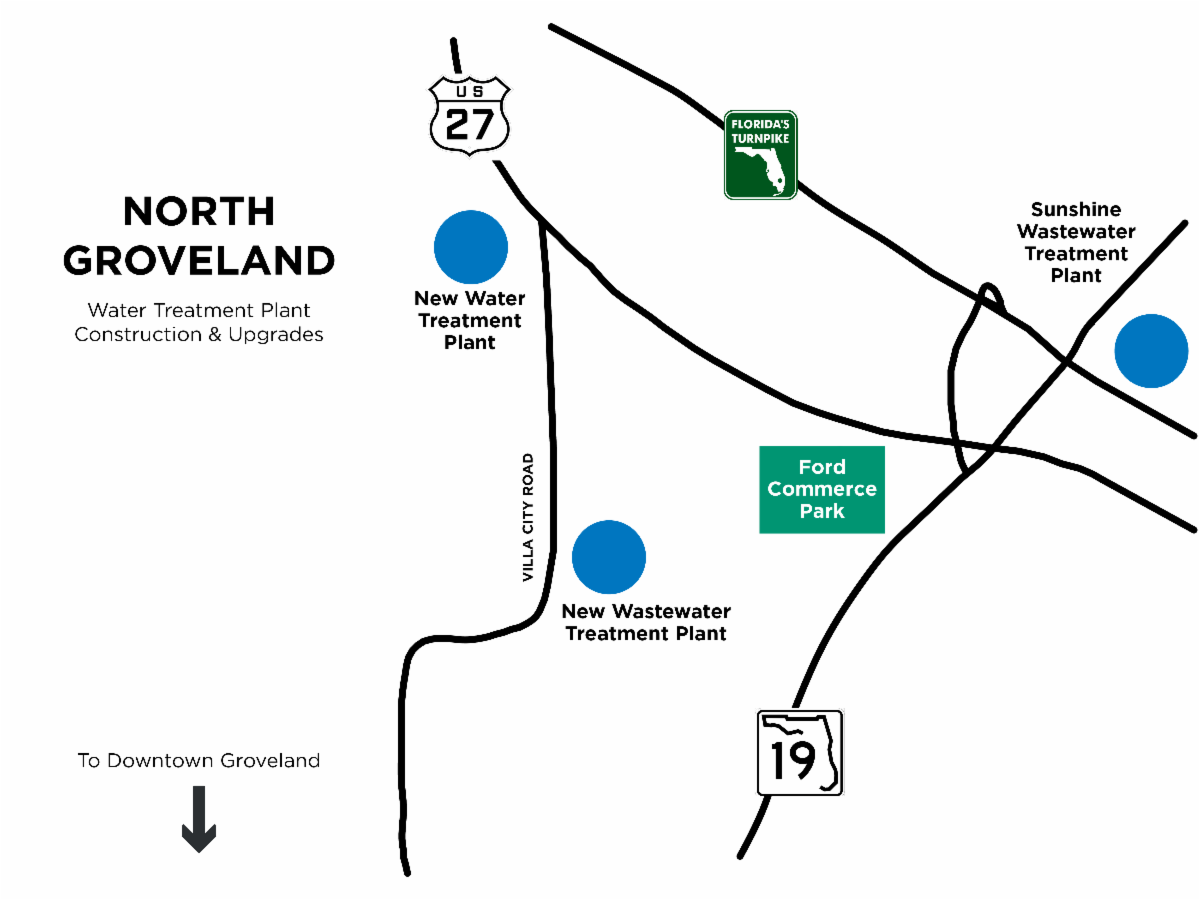
Construction begins next month on an all-new potable water treatment plant near Villa City Road. Potable water is the water we use every day for drinking, cooking, bathing and cleaning.
To support the Villa City plant, the city has already drilled two new potable water wells, with the city and state splitting the $4 million price tag. The cost is significant because the St. Johns River Water Management District required us to drill 800-foot wells to reach the lower aquifer.
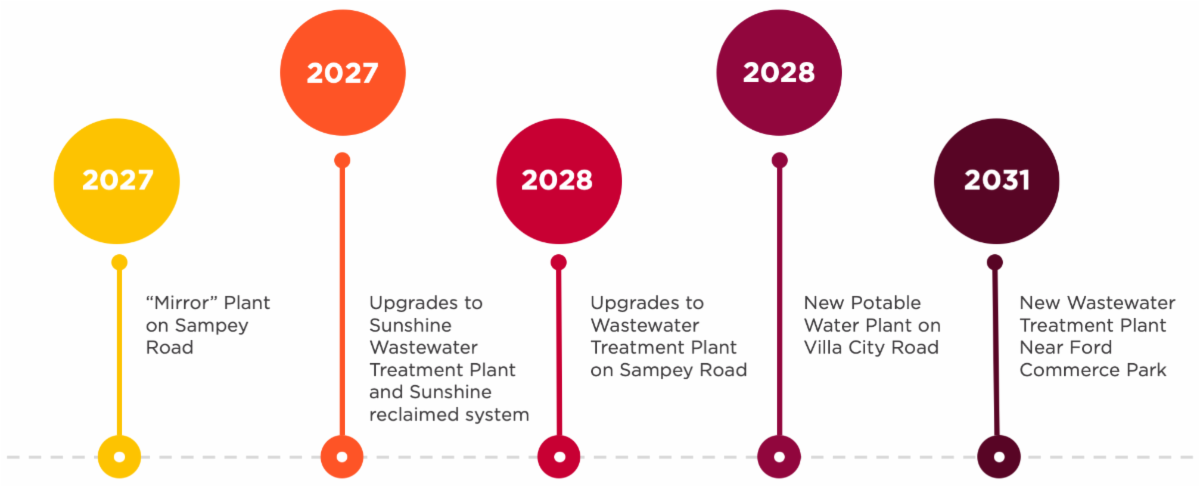
The new facility is expected to come online in early 2028.
|
Expanding Wastewater Capacity
Wastewater infrastructure may not be glamorous, but it’s one of the most important systems any city operates.
Right now, the Sunshine Wastewater Treatment Plant is operating at about 63% capacity and is projected to reach 90% capacity within five years. The plant currently processes about 1 million gallons of wastewater per day.
To prepare for the future, the city plans to construct a second 1-million-gallon-per-day wastewater treatment plant near Ford Commerce Park. Once complete, the two facilities together will provide a total of 2 million gallons per day of wastewater treatment capacity for north Groveland.
The current estimated cost to expand to that capacity is approximately $119 million. That investment is needed not only to serve existing residents and businesses, but also commercial development already underway and additional approved development that has not yet begun construction.
At the same time, the city is actively exploring creative solutions to reduce costs and minimize borrowing while still meeting long-term infrastructure obligations responsibly.
| |
Modernizing the Sampey Facility
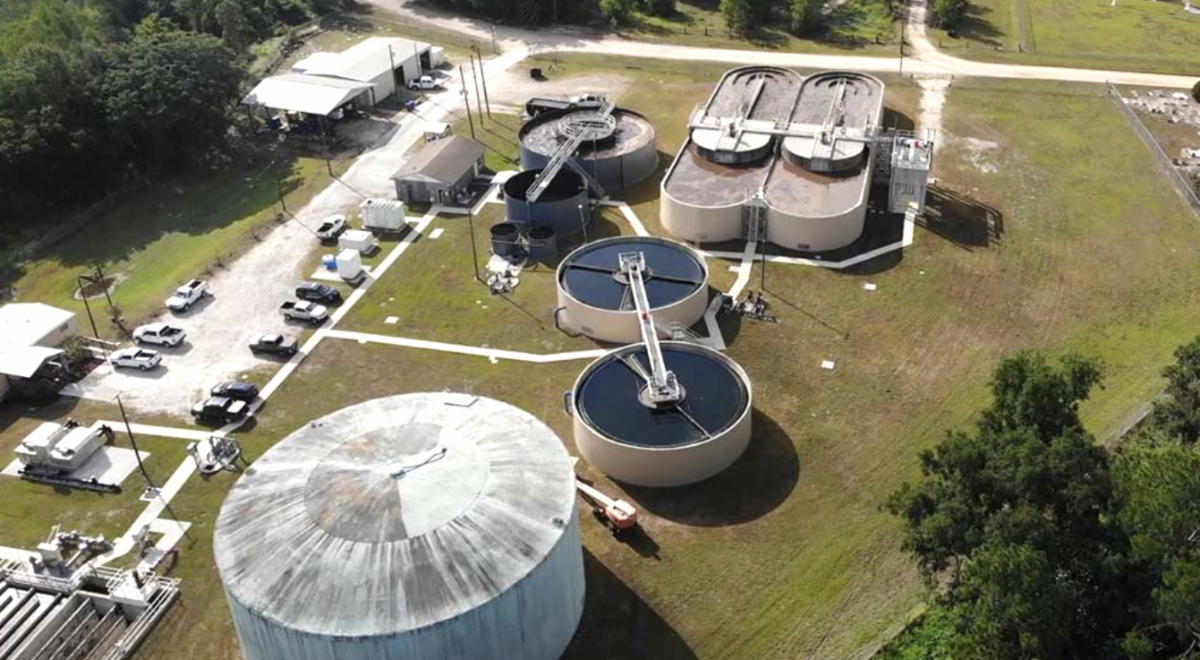
A major modernization project is underway at the Sampey Wastewater Treatment Plant on Sampey Road.
The city is constructing a new “mirror” plant alongside the existing facility using modern treatment technology and equipment, including new oxidation and clarifying systems and expanded reclaimed water storage.
When the new facility opens in September 2027, the older plant will temporarily shut down for a full refurbishment. Once both facilities are operating together, treatment capacity at Sampey will have doubled.
| | 2) Progress Update: Reliability & Customer Service | |
Connecting Two Wastewater Systems
One of the less visible (but most important) projects completed recently is a new $6.5 million pipeline connecting the Sampey and Sunshine wastewater facilities.
This connection creates flexibility across the system, allowing the city to shift capacity between plants during construction, maintenance or emergencies. In simple terms, it creates a stronger and more resilient utility network.
| |
Replacing Aging Meters
Many residents have noticed crews replacing water meters throughout the city.
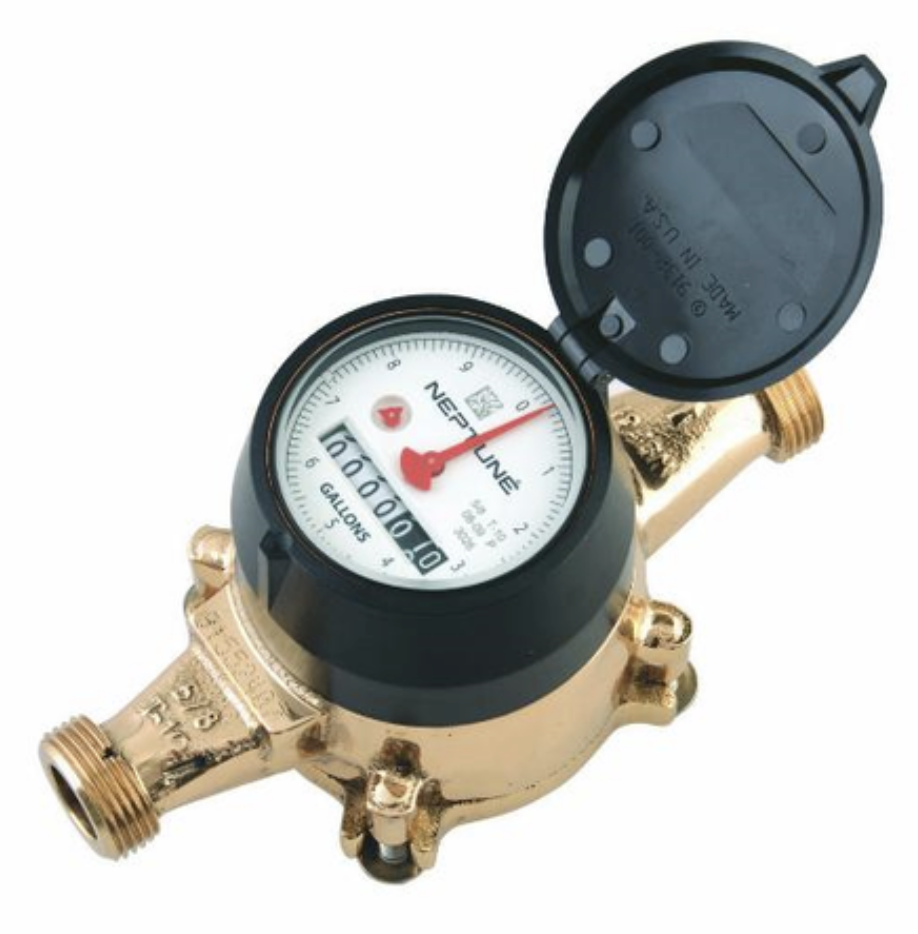
Over the years, the city had been gradually replacing older meters, many of which were more than 20 years old and increasingly unreliable. As part of the infrastructure project, we accelerated replacement efforts for approximately 5,000 remaining customers.
The new system includes upgraded transmission towers and automated technology that collects readings four times per day, replacing the older process that relied on monthly manual readings and occasional re-checks.
The goal is straightforward: more accurate readings, faster troubleshooting and fewer billing errors
| | *Subject to change due to weather and other delays | |
How Are We Paying For These Upgrades?
So, how is all of this being funded?
The answer is through a combination of:
- state grants
- low-interest loans
- developer impact fees
- and utility revenue
So far, the city has secured:
- $91 million in low-interest state loans, many below 2% interest
- approximately $70 million in state grants for utility construction and wastewater upgrades
Developers are also contributing more toward infrastructure costs. Residential impact fees increased from approximately $6,900 per home to $13,900 per home to better ensure growth-related infrastructure is funded appropriately.
About 8% of the total project cost is being funded through utility rate increases. Those increases were required in order for Groveland to qualify for more than $161 million in state loans and grants tied to these infrastructure improvements.
Why This Matters
These are not easy projects, and they certainly are not inexpensive ones. But strong infrastructure is the foundation for everything else we want Groveland to be.
Clean drinking water. Reliable wastewater systems. Modern technology. Long-term planning.
That’s what we’re building, not just for today, but for the future of our community.
| | |
Helping Residents Trouble-Shoot Higher Usage
The most frequent billing inquiries we receive involve unexpectedly high water bills due to increased water usage. Customers don’t know where the extra usage is coming from or what to do next. Our customer service team is trained to help residents troubleshoot those issues.
Sometimes the problem may involve the meter itself. That’s why the first step is often sending a technician to your home to inspect and test the equipment to ensure it is operating properly.
| |
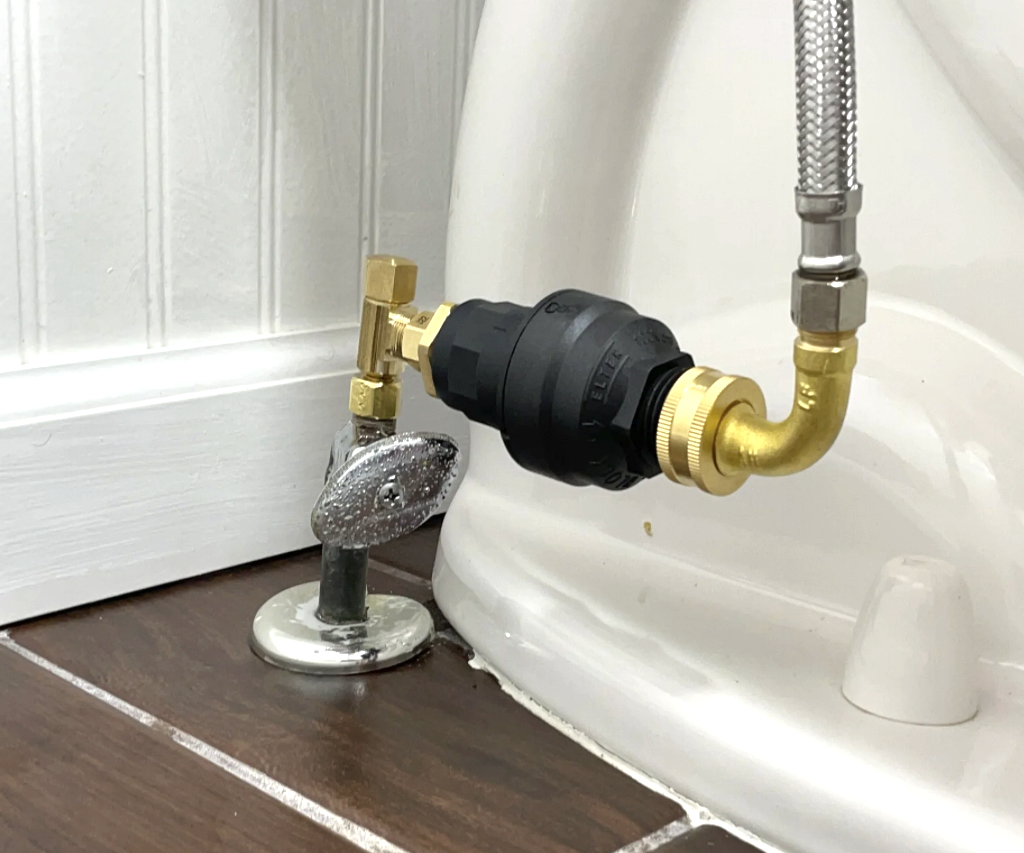
In other cases, the issue may be a leak, which can be small and difficult to notice. Leaks can be from running toilets, damaged sprinkler heads or underground irrigation leaks. Staff members help guide customers through basic troubleshooting steps at home and may recommend contacting a plumber or irrigation contractor for a more detailed inspection. Residents living in apartments or rental homes are encouraged to contact their landlord immediately if they suspect a leak.
| |
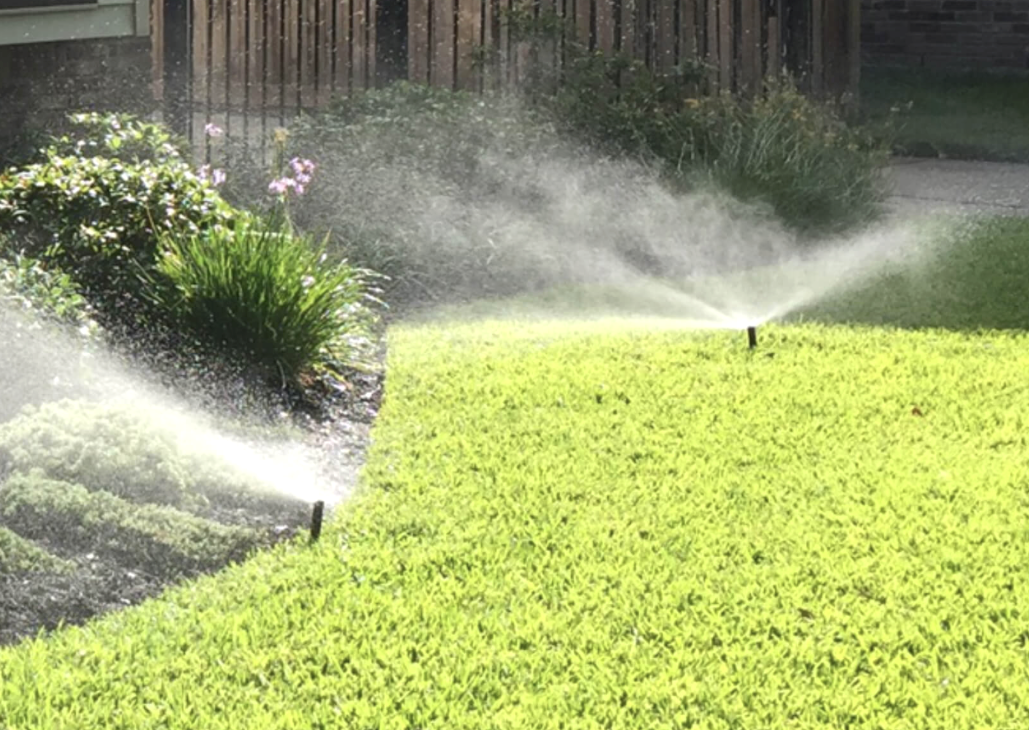
Seasonal factors can also play a role. During Florida’s hotter months, pools evaporate faster and require more frequent refilling. But the most common cause of higher bills continues to be irrigation.
Irrigation water rates are higher than regular potable water and the tiers are steeper. For instance, the base irrigation charge is currently $5.53 per 1,000 gallons. If you use more than 16,000 gallons a month, you start paying $7.98 per 1,000 gallons; if you use more than 50,000 gallons, the rate then jumps to $12.69 per 1,000 gallons.
When lawns begin turning brown during dry weather, many residents naturally increase watering frequency, sometimes without realizing how quickly those gallons add up.
To better support residents, the city added a new position for a dedicated water conservation specialist who works directly with homeowners. She visits homes, inspects irrigation systems, teaches customers how to monitor and adjust their meters and shares practical water conservation tips that can help lower usage and reduce monthly bills.
To learn more about leaks, water usage and irrigation, click the button below.
| | |
How It Started (Hint: Not Well)
I want to talk about something many of you experienced firsthand: the difficult rollout of the new utility rate structure. And for those new to Groveland, this may help fill in some gaps.
The council voted to secure state loans for the infrastructure project in May 2024 and new utility rates went into effect in October 2024. Unfortunately, several billing anomalies occurred during the first cycle, and most residents were overcharged. A few customers saw significant – and alarming – increases.
The city immediately began investigating and found multiple contributing factors, including:
- an unusually long billing cycle
- paused meter reading during hurricane preparation
- older malfunctioning meters
- and manual reading limitations
It took roughly three months for affected accounts to receive adjustments and credits. Since then, the city has made major personnel, policy and process improvements to ensure those mistakes are not repeated. We've added customer service staff, increased training and upgraded phone and email systems.
| | |
Stay Engaged with Us!
If you're interested in:
| | |
Cooling Off With the Kids
Join us this summer for Wacky Wednesday Water Day from 11 a.m. - 1 p.m. at a different location each week. This free family event features inflatable water slides, live zoo animals, Icee-licious treats, games and plenty of summer fun for all ages. Check out locations here.
Groveland City Management
Join our next City Council meetings Monday, June 1 and Monday, June 15 at 7 p.m. at the Puryear Building. Council workshops will take place Thursday, June 18 (10 a.m.) and Wednesday, June 24 (9 a.m.) at the Puryear.
| | Please share this with your friends and neighbors! | | | | |