|
|  |
Support NICOA with a gift to help us continue our mission! | |
Happy New Year from the
National Indian Council on Aging, Inc.
| |
|
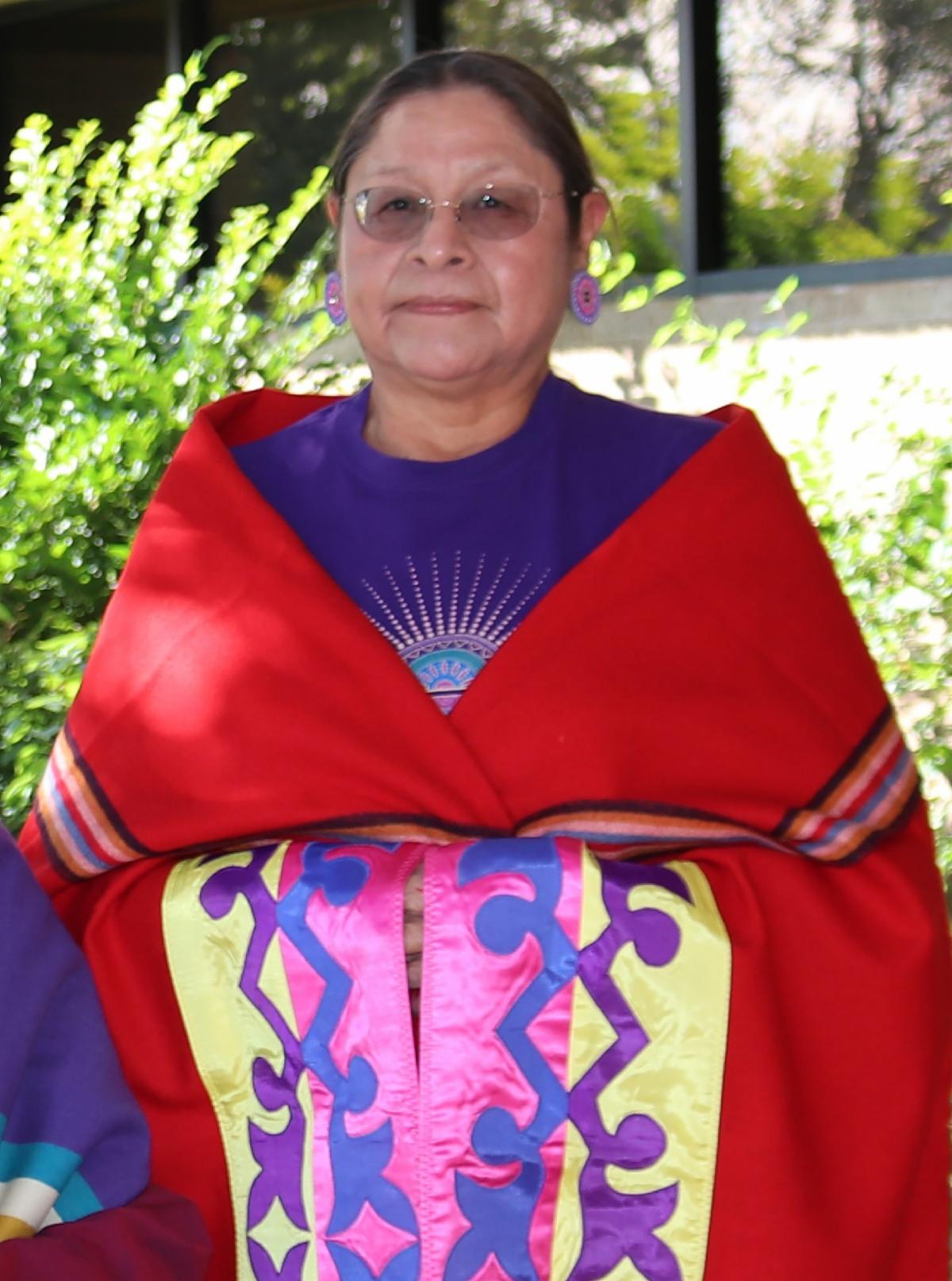
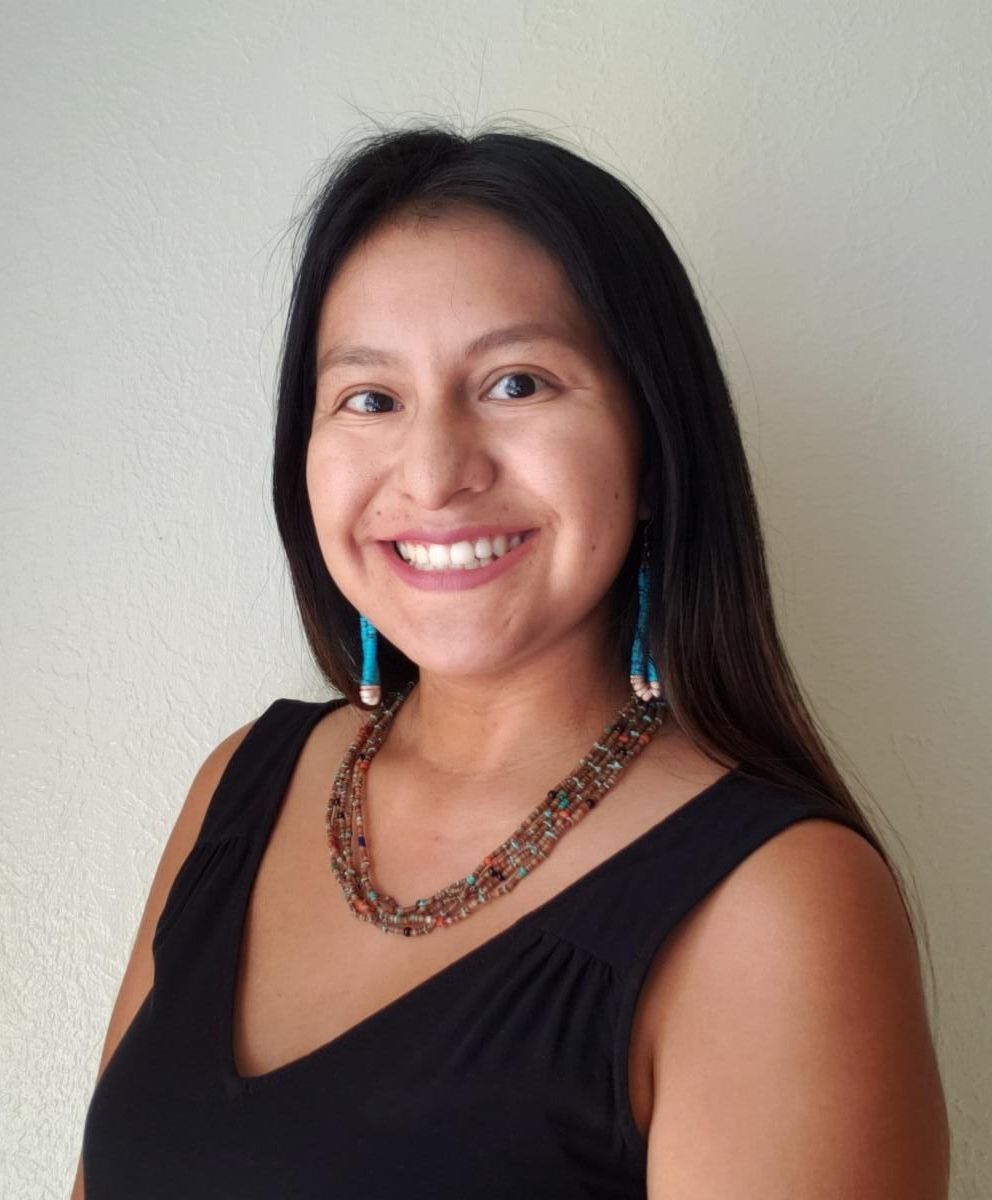
Remarks from Billie Tohee,
NICOA Executive Director
| |
NICOA is well-positioned for a new era of opportunity, growth, and prosperity, thanks in part to actions taken in 2024 and to actions we will continue focusing on in 2025. We will continue advocating to improve American Indian and Alaska Native Elders’ quality of life which means healthier lifestyles, stronger resiliency, and being better informed of opportunities involving the vast array of elder issues across Indian Country.
Now that it is 2025 and we are facing a new federal government Administration, everything is fragile right now. I know it is one of NICOA’s responsibilities to all Native Elders to approach and persuade tribal, local, state, and federal policymakers to make things better for all.
As I look back to 2024, some highlights of NICOA’s year involved many partners, collaborators, and friends throughout the Nation’s Aging Network who graciously invited us to many events, including:
Board Member Eileen Lujan and I attended American Indian Day at the NM Legislature. I met with Taos Pueblo Governor Fred Romero and staff during the Elders’ Lunch at the Taos Pueblo Senior Center. Additionally, Staff and I attended the New Mexico Indian Council on Aging conference in Espanola, NM.
As a Healthy Brain Initiative (HBI) Leadership Committee member, I attended the HBI Road Map Leadership Committee meeting in Oklahoma City. This is an ongoing project of the Alzheimer's Association.
Chair James DeLaCruz, Board Member Eileen Lujan and I attended the 2024 National Title VI Training and Technical Assistance Conference in Arlington, VA. We also met with Senator Lisa Murkowski’s office. Senator Murkowski (R-AK) is the Vice Chair of the Committee on Indian Affairs. We then met with Senator Ben Ray Lujan’s (NM) Senior Policy Counsel and Legislative Correspondence.
NICOA Staff and I attended and presented at the American Society on Aging (ASA) conference in San Francisco.
NICOA hosted a Summit with Tribal Government officials and NM community leaders to discuss the Next50 grant objectives.
NICOA Board Members Edna Riley, Eileen Lujan, Betsey Foote and I attended the American Society on Aging (ASA) HILL DAY in Washington DC to meet with Congressional staff.
I attended the Chickasaw Nation Hall of Fame Induction in Ada, Oklahoma. NICOA’s first female Chairperson Ms. Pat Woods was an Inductee.
Staff and I met with Department of Labor representatives regarding NICOA’s SCSEP grant.
I attended via Zoom a meeting with Senator Braun’s (R-IN) Aging Committee staff. Senator Braun is the top Republican on the Senate Special Committee on Aging.
Chair DeLaCruz and Vice Chair Donna Ennis and I attended the National Congress of American Indians conference in Las Vegas, NV.
As stated above, NICOA is well-positioned for a new era of opportunity, growth, and prosperity as we enter 2025.
I hope to see you at NICOA’s American Indian Elders Conference at the Choctaw Casino Resort, Durant, Oklahoma from September 29 to October 3, 2025. Registration is now open.
Wishing you a blessed year,
Billie Tohee,
Otoe-Missouria Tribe of Oklahoma
Executive Director
| | | |
NICOA IMPORTANT ANNOUNCEMENTS | |
|
SECURE YOUR SPOT
Early registration available until March 31, 2025 🚨
| |
|
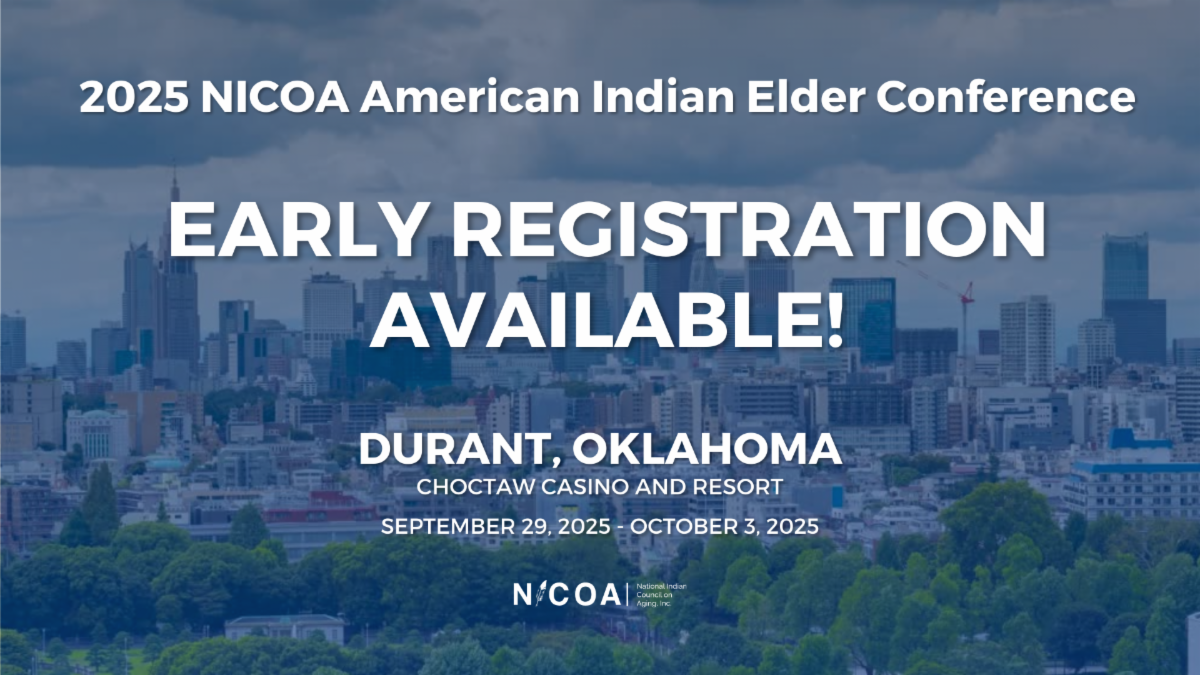
Early registration is now available! The National Indian Council on Aging (NICOA) invites you to secure your spot for the 2025 NICOA American Indian Elder Conference in Durant, Oklahoma from September 29 - October 3, 2025.
This biennial event, hosted by the National Indian Council on Aging, brings together American Indian and Alaska Native elders to elect new board members, establish the aging policy agenda, and discuss solutions to improve aging services across Indian Country.
Early registration ends on March 31, 2025. Save your spot with our early discounts!
You can register online or by mail using the conference forms on our website.
For any questions, please call our office at (505) 292-2001 or visit our website www.nicoa.org for the latest updates.
REGISTRATION FEES—All members must pay membership dues before registering for the conference. Under no circumstances will refunds be available after September 29, 2025.
| |
|
Become a NICOA Member:
2025-2027 Membership Available
| |
|
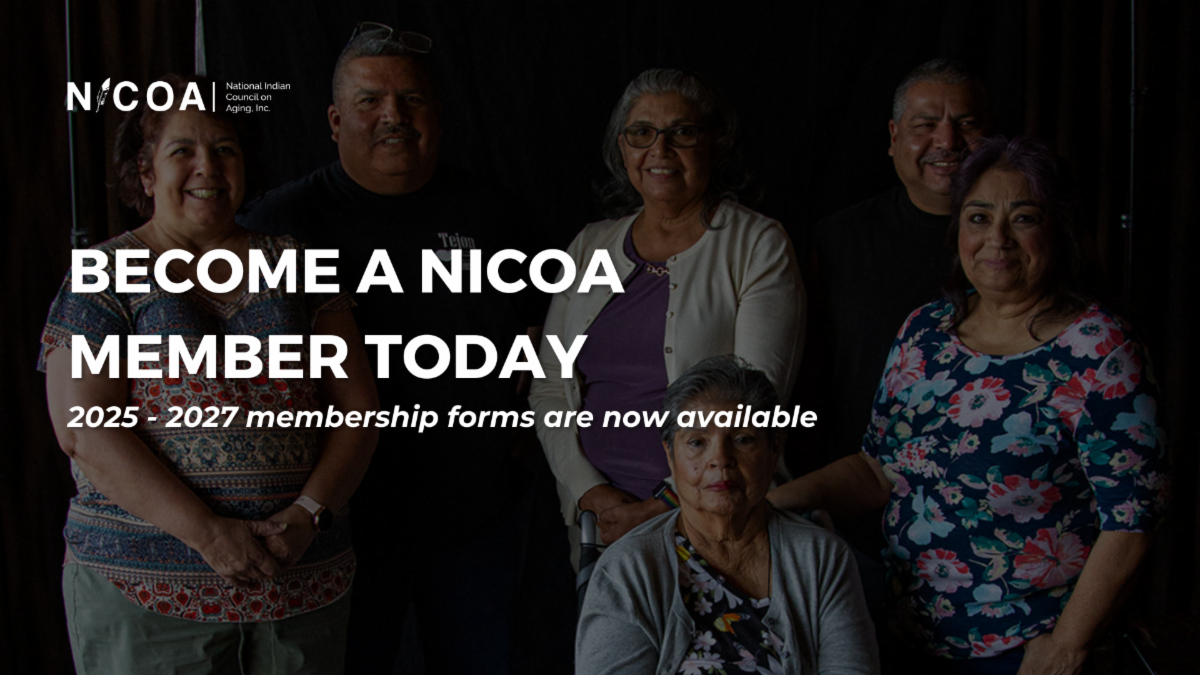
Do you want to improve aging services for American Indian and Alaska Native elders?
If so, become an advocate and learn more about supporting Native elders! NICOA is the premier organization on Native aging, and we invite you to become a member. Anyone can become a member, regardless of their age.
All elders are encouraged to join and have their voices heard. Be an important part of a national membership network and become a NICOA member by applying today.
Memberships are up for renewal on December 2, 2027.
| | | | | |
|
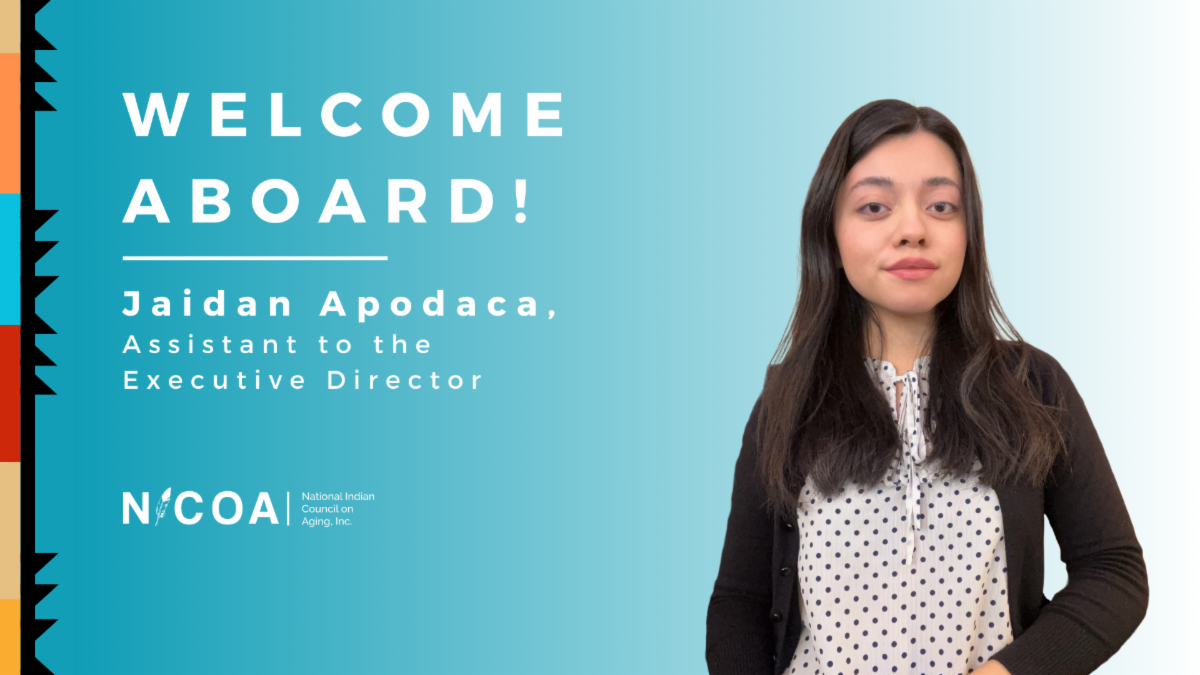
The National Indian Council on Aging is thrilled to announce Jaidan Apodaca as the Assistant to the Executive Director.
Jaidan is a proud member of the Comanche Nation in Oklahoma and from Albuquerque, NM. In her spare time, she likes to draw and paint.
In her role, she will assist the NICOA Executive Director with meetings, scheduling, and coordinating with NICOA Board Members, partners, and contacts to ensure the smooth operation of day-to-day activities.
Jaidan chose NICOA because she believes advocating for American Indian and Alaska Native Elders is both meaningful and essential. She also expressed that NICOA's dedication to serving Elders is something that deeply resonates with her, especially as a nonprofit organization.
| |
A Message from the Health Programs Director | |
Happy New Year!
I hope you all had a joyful and safe holiday. It’s great to spend time with family and hear stories from previous holidays or even reflect on old childhood memories. Natives have a way of storytelling and adding humor into it. Now, through digital storytelling, NICOA has a collection of digital stories that share personal journeys and experiences of American Indian and Alaska Native elders. These stories were created, written and voiced by elders and paired with their personal photos and other media.
These stories delve into:
- Financial Resilience: Elders discuss overcoming financial struggles, managing debt, and the importance of budgeting.
- Cultural Preservation: The integration of Native ways of life with federal programs such as the Older Americans Act and the Senior Community Service Employment Program.
- Health and Well-Being: Insights into navigating healthcare and social services while maintaining cultural traditions.
Each story is a testament to the strength and humor that define Native communities, serving as a living legacy for generations to come. We invite you to experience these stories and celebrate the wisdom of our elders. Thank you to the elders who have gifted us with their stories and thank you for supporting NICOA’s mission to uplift and inspire Native communities.
| |
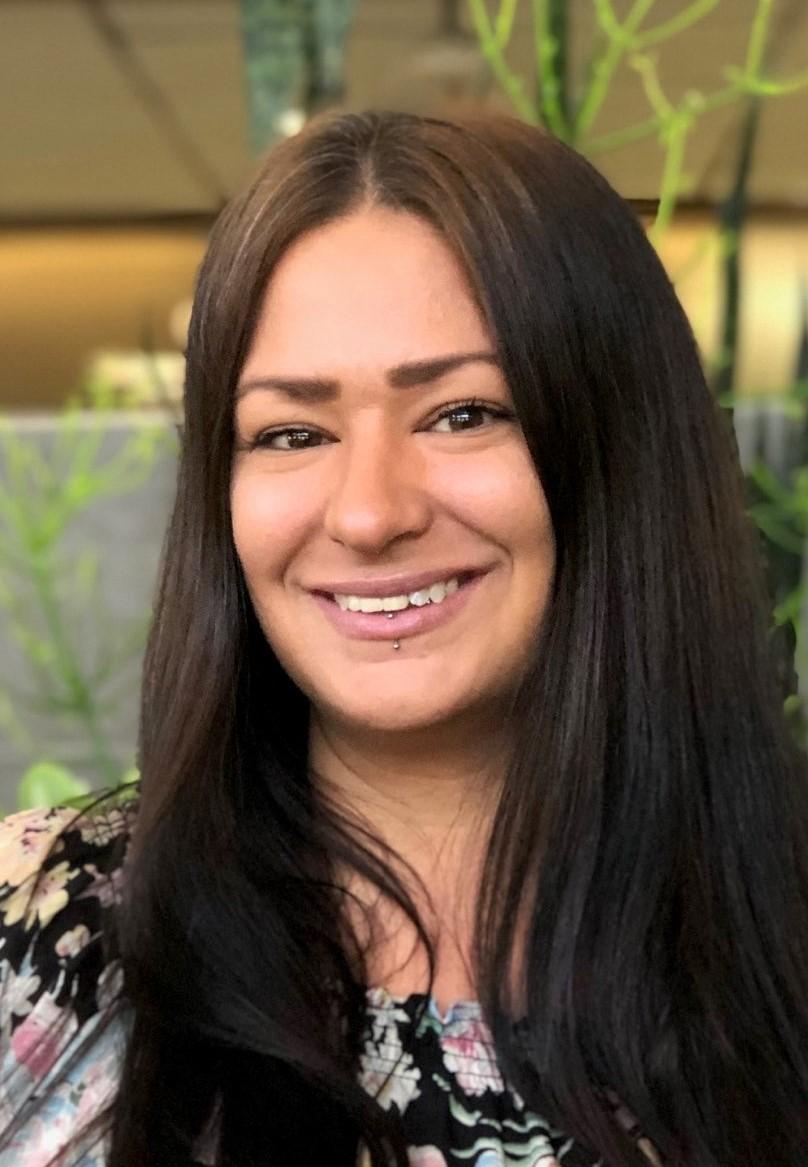
Desiree Lapahie,
Navajo Nation
Health Program Director
| | | |
A Message from the Senior Community Service Employment Program (SCSEP) | |
Empowering Seniors Through Opportunity:
NICOA SCSEP’s Vision for 2025
As we step into 2025, the National Indian Council on Aging (NICOA) is proud to highlight the transformative work of the Senior Community Service Employment Program (SCSEP). For decades, SCSEP set aside funds have enhanced NICOA’s mission to serve older American Indians and Alaska Native older adults. SCSEP empowers them with the tools to re-enter the workforce and achieve financial independence. Thanks to increased federal funding this year, our program is poised to expand its reach and impact, fostering stronger communities and brighter futures.
The Heart of SCSEP
SCSEP is more than just a workforce development program; it is a lifeline for older adults aged 55 and over who face barriers to employment. By providing paid, on-the-job training opportunities at local nonprofit organizations and public agencies, SCSEP participants of all nationalities gain critical skills and experience transitioning into permanent employment. Beyond economic benefits, SCSEP instills a renewed sense of purpose and confidence in our older adults, reaffirming their vital role in society.
2025 Goals: Scaling Success
With increased funding, NICOA SCSEP aims to amplify its efforts across several key areas:
- Expanding Training Opportunities Additional resources will allow us to partner with a broader range of host agencies, serving additional counties in the seven states we serve.
- Reaching More Older Adults Enhanced funding enables us to extend our services to underserved regions, ensuring that more older adults can access SCSEP’s life-changing opportunities. Our goal is to enroll 30% more job seekers by the end of 2025.
- Strengthening Support Services We understand that successful employment is about more than job skills. With expanded resources, we plan to continue supportive services, including career counseling, transportation assistance, and access to technology training.
- Building Employer Partnerships Engaging local businesses and organizations is key to creating sustainable job placements. In 2025, we aim to establish 30-40 new partnerships across our seven states that align with job seekers’ skills and aspirations.
Join Us in Making a Difference
As we embark on this ambitious journey in 2025, we invite you to join us in supporting SCSEP. Whether as a host agency, employer partner, or community advocate, your involvement can have a profound impact on the lives of older adults.
Together, we can honor the wisdom and contributions of our older adults while building a more inclusive and prosperous future. To learn more about NICOA SCSEP and how you can help, visit www.nicoa.org.
Let’s make 2025 a year of opportunity and empowerment for all.
SCSEP is hiring! We are currently looking for a full-time Program Manager in Albuquerque, NM and a full-time Employment and Training Coordinator in the Green Bay, Wisconsin area. Please visit https://www.nicoa.org/about-us/job-opportunities/ for more information.
SCSEP is funded by the U.S. Department of Labor, Employment and Training Administration.
| | | |
|
Contact Information:
New Mexico Regional Office (Serving portions of AZ & NM)
Phone: (505) 292-2001, Fax: (505) 292-1922
Oklahoma Regional Office (Serving portions of MN, OK, & WI)
Phone: (405) 254-3642, Fax: (405) 254-5044
North Dakota State Office Phone: (701) 314-5100, Fax: (701) 787-1880
South Dakota State Office Phone: 605-220-7200, Fax: 605-220-8869
Leslie Maly
Senior Community Service Employment Program Director
| | | |
Connecting with OUR Community | |
|
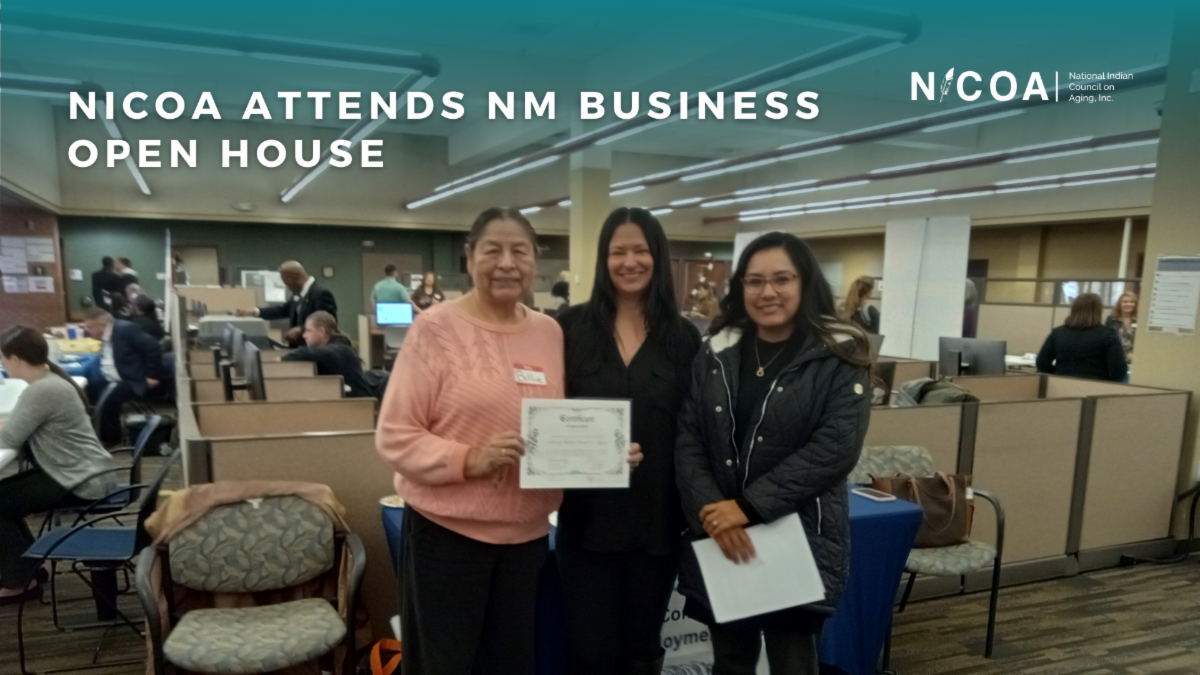
The National Indian Council on Aging recently attended the first annual business open house hosted by New Mexico Workforce Connection.
Our Executive Director, Billie Tohee, and SCSEP Director Leslie Maly represented NICOA to meet with other businesses and gained valuable insights from different experts.
| |
|
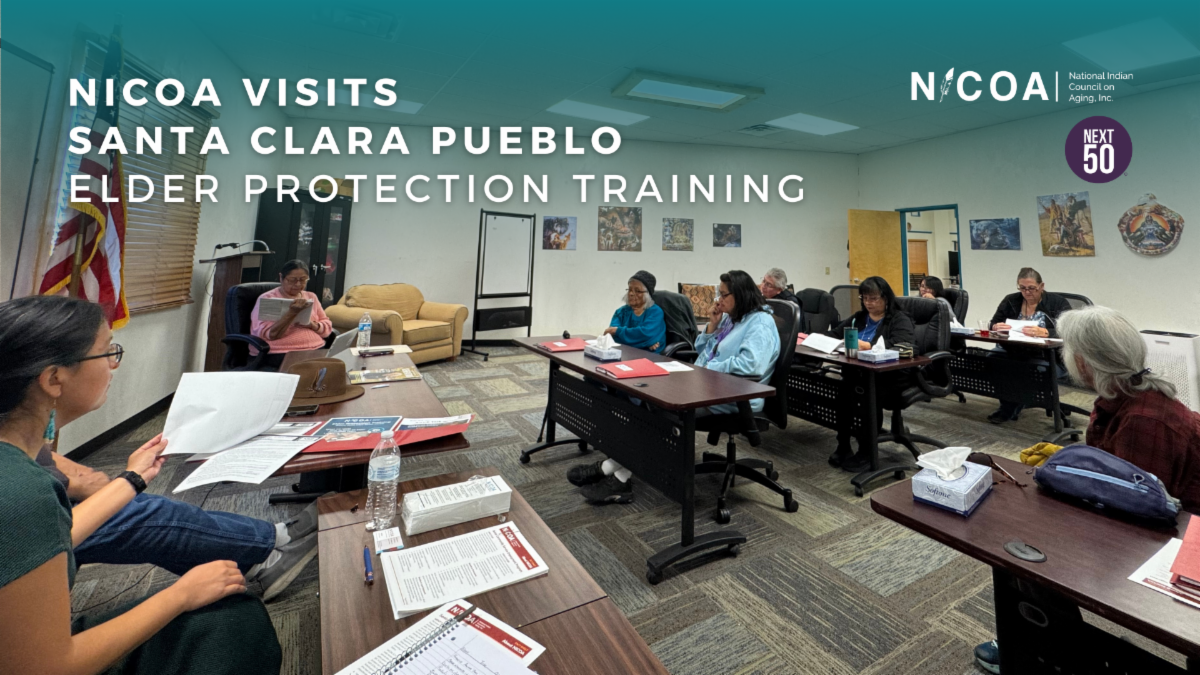
The National Indian Council on Aging would like to thank Santa Clara Pueblo for graciously hosting our Elder Protection Training, as well as members of Santa Clara Puebo for attending and offering their insight.
The Elder Protection Training led by Billie Tohee, NICOA Executive Director, ensures elders have a strong and effective Elders Protection Team and Elders Protection Code in place where they live.
| |
|
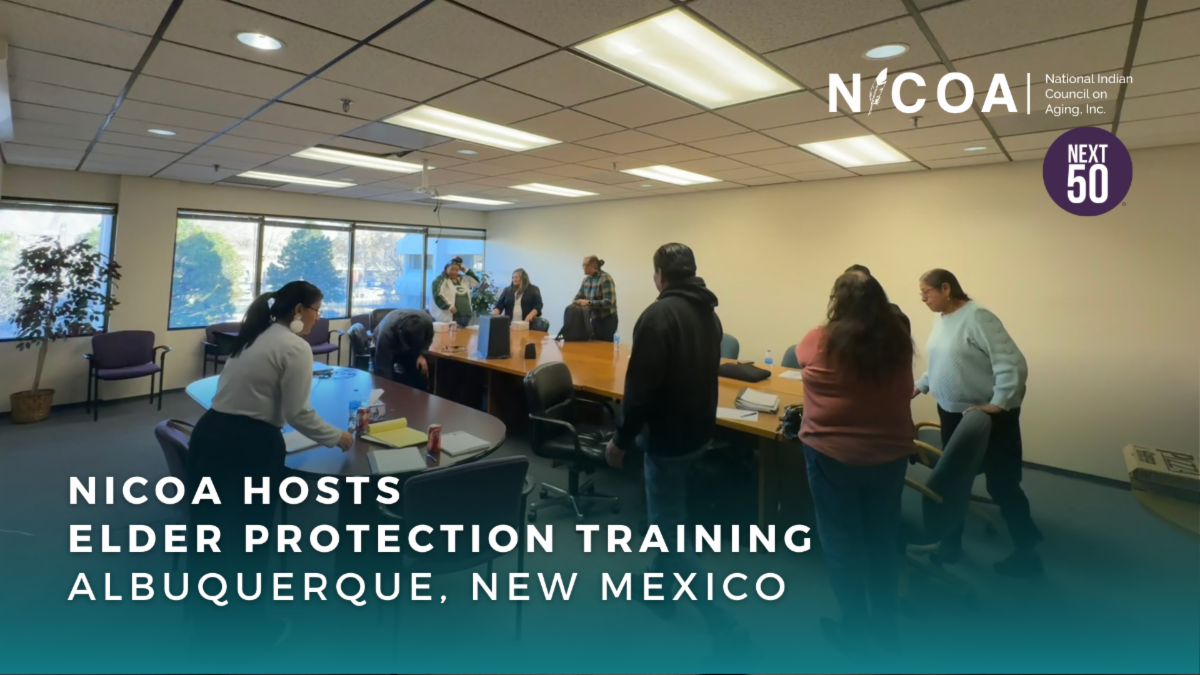
The National Indian Council on Aging hosted an Elder Protection Training (EPT) this past month in Albuquerque, NM.
We discussed current Native issues happening in our city with attendees and current partners and we developed innovative ideas to combat them.
This EPT was led by Desiree Lapahie, NICOA Health Programs Director, who also shared insightful information on effective Elder Protection Teams and Codes in urban areas to support our native Elders.
| |
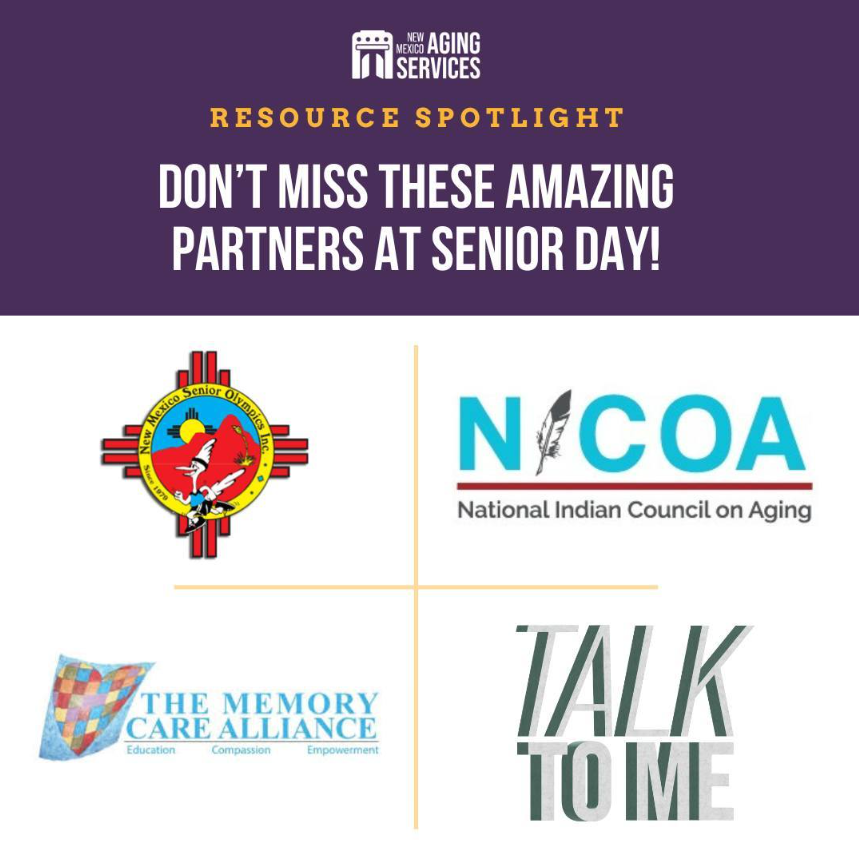
NICOA is excited to work with our partner the New Mexico Aging Department in participating in Senior Day in Santa Fe, NM.
Join us at the anticipated Resource Fair in Santa Fe, NM, on January 27, 2025, where we’ll showcase valuable resources specifically for American Indian and Alaska Native Elders. NICOA will join New Mexico Senior Olympics, Inc., The Memory Care Alliance and Talk To Me.
Don’t miss out on this incredible opportunity to connect with us and discover the support and services available to you! Make sure to RSVP and view the schedule with the links below.
| |
|
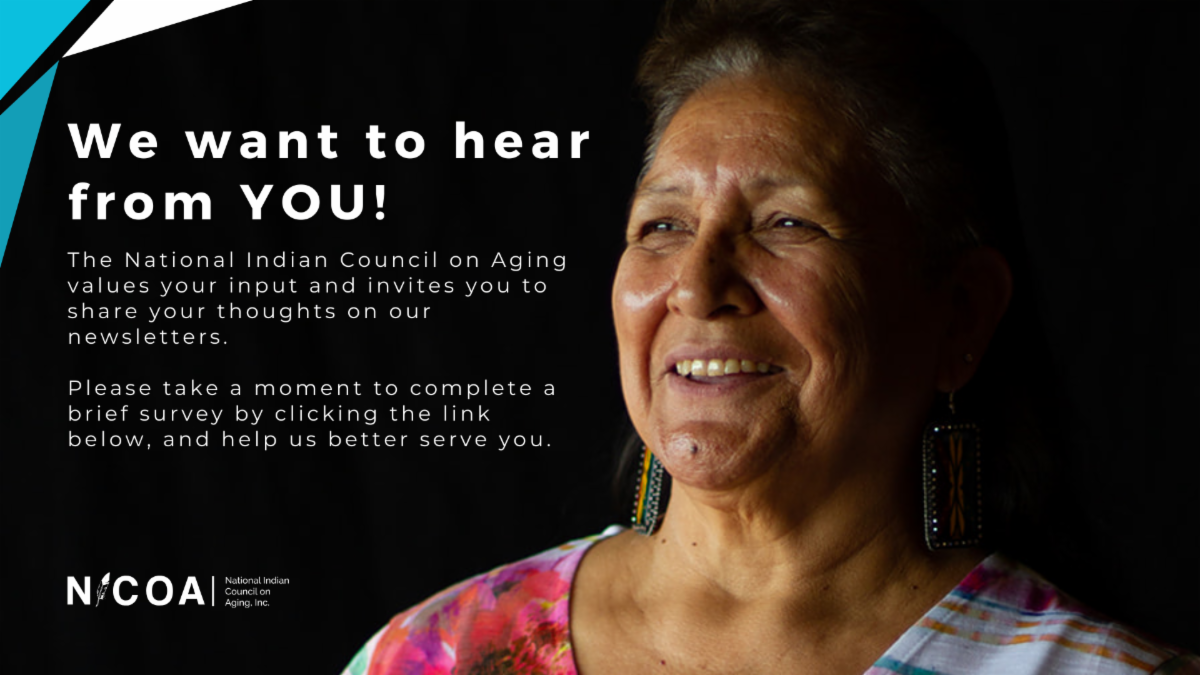
We value your input and invite you to share your thoughts on our newsletters. As we enter 2025, we would like to hear from you directly and provide content most relevant to you.
Please take a moment to complete a brief survey by clicking the link below, and help us better serve you.
| |
Recent Tribal Newsletters | | | |
|
STILWELL – From a cellular “dead spot” in rural Adair County, the Cherokee Nation’s chief signed into law the Cherokee Connect Broadband Initiative, paving the way for high-speed internet and cell coverage for more than 6,000 households lacking service.
“We’re at CC Camp in Adair County,” Principal Chief Chuck Hoskin Jr. said Dec. 18. “We’re celebrating something that will make generational impact for Cherokee Nation citizens and the communities where they live, in areas that have the biggest gaps in terms of connectivity. We are today signing a resolution that will allow us to move forward on 15 cell towers connecting 16 communities – an investment of $45 million.”
The towers will be in the communities of Belfonte, Bell/CC Camp, Brent, Brushy, Chewey, Christie, Dry Creek, Eucha, Greasy, Marble City, Oak Hill/Piney, Oaks, Proctor, Tailholt and Vian.
| | | |
|
The Alzheimer’s Association and the Centers for Disease Control and Prevention (CDC) have unveiled today the second edition of the Healthy Brain Initiative: Road Map for American Indian and Alaska Native Peoples, an important tool designed to tackle dementia and promote brain health in Native communities.
This updated roadmap builds on its original 2019 version, providing actionable strategies for public health professionals serving Native populations.
"Given the unique priorities, assets, and challenges within tribal nations, any response to Alzheimer’s and other dementia must be initiated and sustained by leaders and staff within the communities themselves," Carl V. Hill, Chief Diversity, Equity, and Inclusion Officer for the Alzheimer’s Association said in a press release.
Beyond addressing immediate healthcare needs, the Road Map encourages actions that tackle root causes, such as social determinants of health, that exacerbate disparities.
“Addressing dementia in American Indian and Alaska Native communities requires a holistic life course approach that respects and integrates Indigenous knowledge, promotes cultural safety, and tackles the root social determinants of health,” Billie Tohee (Otoe-Missouria) of the National Indian Council on Aging said in a press release.
| | | |
|
Arizona State University (ASU) unveiled last month the Indigenous Health Research Dashboard, an online repository aimed at improving access to health research for Indigenous populations.
Spearheaded by Angela Gonzales, an enrolled member of the Hopi Tribe and ASU’s director of American Indian Studies, the dashboard is a user-friendly database that compiles peer-reviewed studies from 2020 to the present, with plans to include earlier publications starting this winter.
“Specifically, we’re thinking about the ability of tribal communities, our tribal partners, to be able to access research on Indigenous health issues. The goal is to provide a one-stop source for people to search through keywords, health conditions, or even specific tribal affiliations,” Gonzales told Native News Online.
Development of the dashboard was supported by a grant from Genentech’s Health Equity and Diversity in STEM Innovation Fund.
| | | |
|
The Waadookodaading Ojibwe Language Institute (WOLI) is excited to announce a transformative $1.5 million donation from philanthropist MacKenzie Scott. This generous gift will support the construction of a Community Language Revitalization Center, a crucial step in advancing WOLI’s mission to preserve and promote the Ojibwe language.
The new Community Language Revitalization Center will serve as a hub for language immersion, cultural events, and community gatherings, creating a space for intergenerational language transmission and cultural enrichment. This state-of-the-art facility will help accelerate language acquisition and increase opportunities for cultural engagement for all age groups.
David Scott Bisonnette, a member of the Lac Courte Oreilles Tribal Governing Board and long-time supporter of WOLI, highlighted the impact of the donation: “WOLI has been instrumental in reviving the Ojibwe language, and this funding will significantly amplify those efforts. It’s a gift that will ensure future generations can reconnect with their heritage through language. MacKenzie Scott’s generosity is a shining example of how an individual can positively impact an entire community, both now and for years to come. Miigwech!”
| | | |
|
On Christmas Eve, Navajo Nation President Buu Nygren signed long-awaited legislation to have the Navajo language used, taught and supported by appropriations. With his signature, Diné bizaad, is now the official language of the Navajo Nation.
“One of my priorities coming in as President has always been to make sure that we make Navajo cool again,” he said. “It's exciting to see the work that's being done. And, so, I commend the Navajo Nation Council for doing that, and I really want to commend all of you for doing that.”
Navajo Nation Council Delegate Shawna Claw sponsored the legislation to establish Navajo as the official language of the Navajo Nation.t states, “Since time immemorial, our people have survived by maintaining our value system given by the HoIy People. The core of our value system is embedded in the language.”
| | | |
|
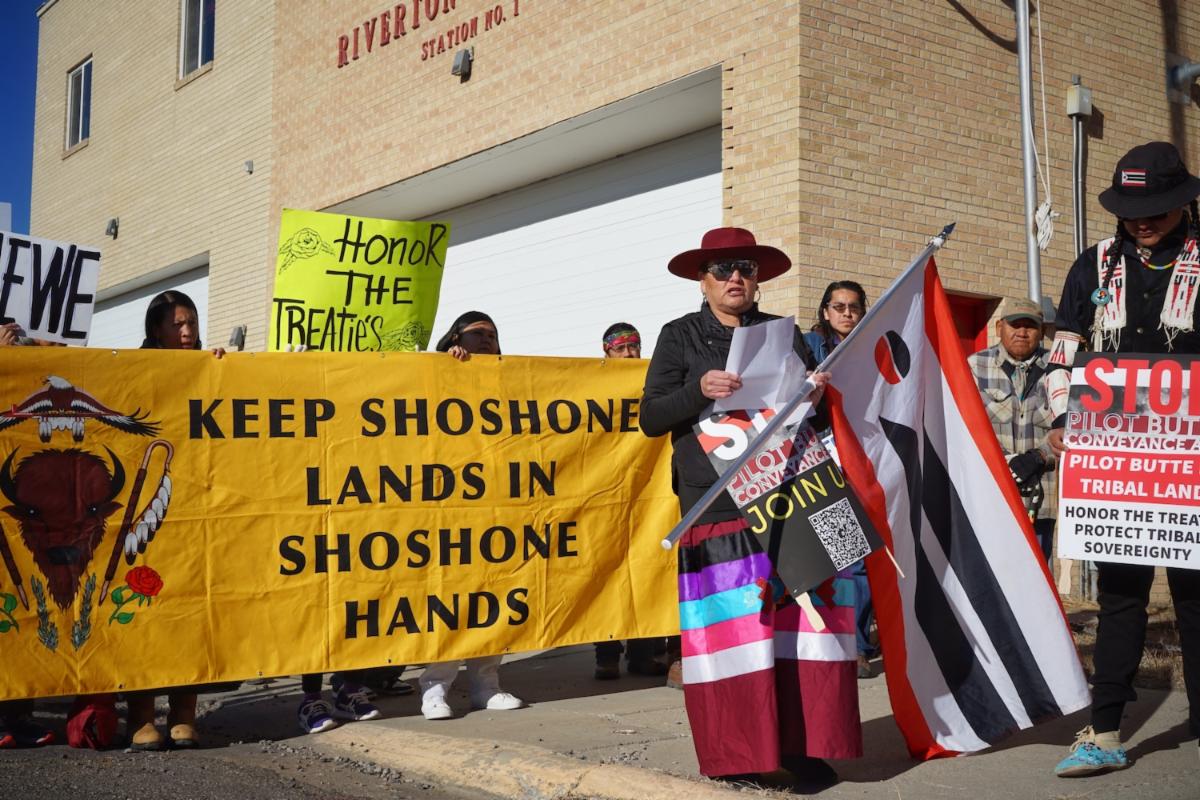
A group of Northern Arapaho and Eastern Shoshone are protesting today for the second time this month outside of Senator John Barrasso's office in Riverton, Wyoming, in opposition to a bill that opponents say could see the Wind River Reservation losing more than 110,000 acres of land to the state.
The Power Butte Conveyance Act was introduced last year as co-current bills by Barrasso, Senator Cynthia Lummis, and Representative Harriet Hageman. The bill would require the U.S. Bureau of Reclamation to transfer ownership of a rundown hydroelectric power plant located within the borders of the Wind River Reservation — home to the Eastern Shoshone and Northern Arapaho Tribes — to a nearby irrigation district. The plant sits on 2.5 acres of land and has been defunct since 2008. It was set to be demolished by the Bureau of Reclamation, but it never was.
The land in question was part of 1.5 million acres ceded by the tribes in 1905, and on 111,000-acre the tribes have been attempting to repatriate since 1939.
| | | |
|
WASHINGTON — Since the 1970s, the Native American Rights Fund has helped Tribal Nations achieve their water goals to secure access to safe and reliable water supplies through multi-party, negotiated water rights settlements.
Currently, a record 12 such settlements are pending in Congress.
Legislators have the historic opportunity to save taxpayers millions of dollars and provide water-access certainty for Tribal and non-Tribal communities for generations to come. Help get the word out to your congressional delegation TODAY to support this slate of critical Tribal water rights settlements.
| | | | | | |
|
We are committed to providing services for Native elders, but the power to provide starts with you.
Your support brings attention, education, and improved services to elders and people with disabilities across Indian Country. Every elder deserves access to the services and resources necessary to age independently, with dignity, and in their chosen community.
Consider donating to us directly to help us with our mission to improve the lives of American Indian and Alaska Native elders. Your financial support will go directly to supporting our mission to improve health, social services and economic well-being for all Native elders.
| |
| How did you like this email? | | | |
The National Indian Council on Aging | 8500 Menaul Blvd. NE, Suite B-470, Albuquerque, NM 87112 | 505-292-2001 | www.nicoa.org | | | | |