Flight Safety Information - August 24, 2026 No. 165 | | |
In This Issue
: “Mark your calendar for the PROS Summit! Don’t miss the opportunity to connect, learn, and stay ahead of what’s next in aviation safety.”
: Incident: Delta B764 at New York on Aug 21st 2026, engine compressor stalls
: SFO Selects ProSafeT
: Accident: American A321 at Dallas on Aug 21st 2026, passenger's laptop on fire
: Incident: Indigo A21N at Gorakhpur on Aug 19th 2026, tail scrape on go around
: Incident: CAA A333 at Lubumbashi on Aug 14th 2026, stuck flaps twice
: Incident: Ryanair B738 at Alicante on Aug 9th 2026, rejected takeoff due to rudder stiffness
: Incident: Thai B773 at Frankfurt on Aug 21st 2026, could not fully retract landing gear
: Incident: Delta B739 at Atlanta on Aug 20th 2026, engine failure
: Cabin Smoke Engulfs American Airlines Flight During Dallas Landing, Burning Passengers
: Air safety concerns mount in Australia amid surge in close calls
: Delta flight makes emergency landing in St. John’s Sunday night
: American Airlines Flight Attendant Accused of Interrogating Assault Victim Over His Buddy Pass Instead of Helping Him
: Second American Airlines laptop fire this year is part of a pattern aviation insurers are repricing
: NTSB recovers data cards from Cessna, helicopter in deadly crash at Carlisle Airport
: Executive jet maker SyberJet claims light jet Transcon speed record
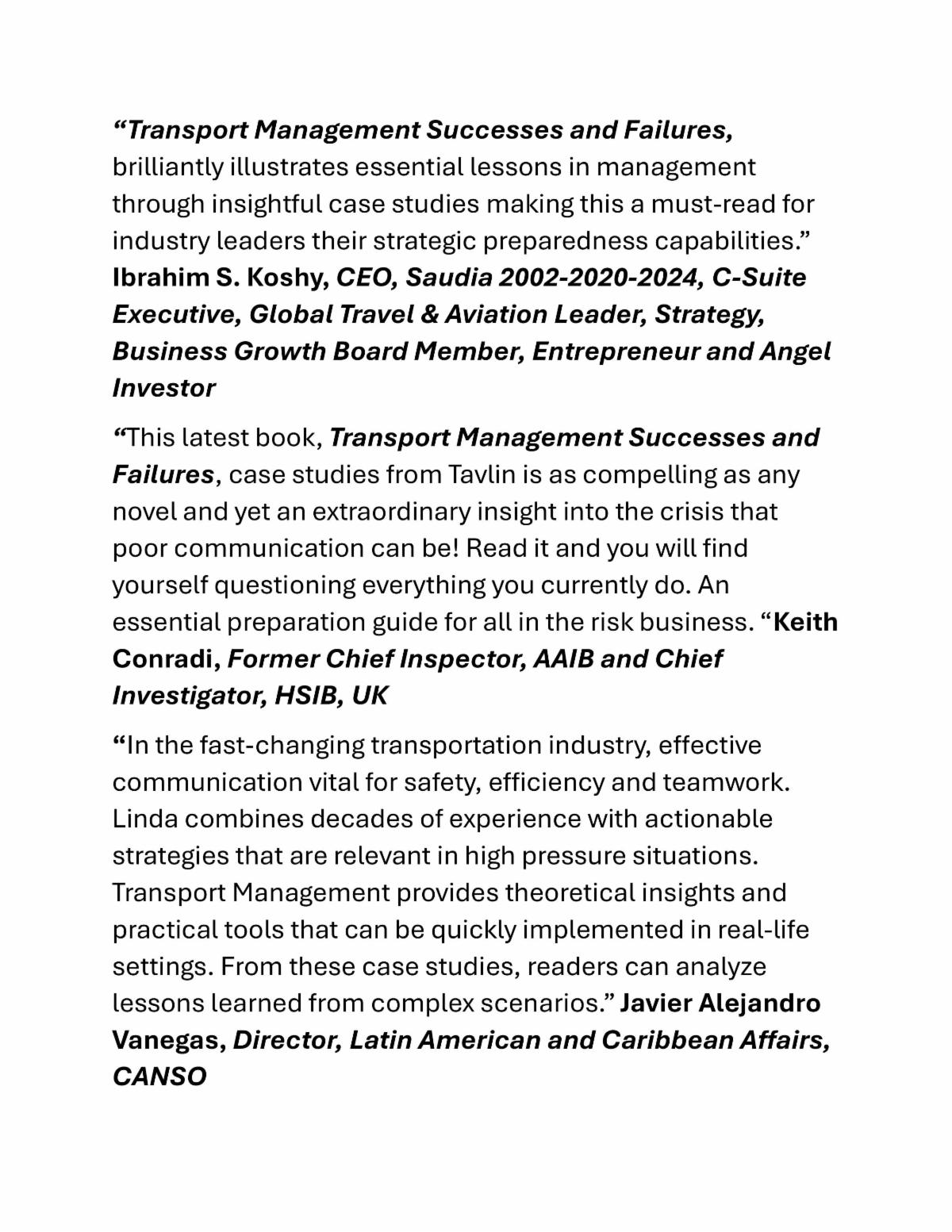
: New Book Available – Get the Back Stories!
: Calendar of Events
| | |
Incident: Delta B764 at New York on Aug 21st 2026, engine compressor stalls
A Delta Airlines Boeing 767-400, registration N845MH performing flight DL-747 from New York JFK,NY to Los Angeles,CA (USA), was climbing out of New York's runway 31L when the crew reported the right hand engine (CF6) compressor stalls, they regained control of the engine but nonetheless were returning to JFK. The crew requested a block altitude 3000 to 5000 feet while running checklists and requested the longest runway most suitable for the current winds, the controller reported winds from 070 and offered runway 04L which was accepted by the crew. The aircraft landed on JFK's runway 04L about 35 minutes after departure.
The flight was cancelled.
The aircraft remained on the ground for about 19 hours, then departed for flight DL-668 to San Francisco,CA (USA) but needed to return again.
https://avherald.com/h?article=53e49c42&opt=0
| | |
Accident: American A321 at Dallas on Aug 21st 2026, passenger's laptop on fire
An American Airlines Airbus A321-200, registration N197UW performing flight AA-2398 from Atlanta,GA to Dallas Ft. Worth,TX (USA) with 133 people on board, was on approach to Dallas when the crew reported a fire in the back of cabin, cabin crew was trying to put it out. Later the crew advised a passenger's laptop had caught fire, the laptop was now contained in mid cabin, 4-5 people on board received injuries including burns to hands. The aircraft continued for a safe landing on DFW's runway 17C and taxied to the apron where emergency services boarded the aircraft.
The aircraft is still on the ground in Dallas about 10 hours after landing.
https://avherald.com/h?article=53e43528&opt=0
| | |
Incident: Indigo A21N at Gorakhpur on Aug 19th 2026, tail scrape on go around
An Indigo Airbus A321-200N, registration VT-ILR performing flight 6E-2381 from Delhi to Gorakhpur (India), was on short final to Gorakhpur's runway 11 when the crew initiated a go around, climbed to 2000 feet, positioned for another approach to runway 11 and landed without further incident.
A post flight inspection revealed scratches on the tail section of the aircraft.
A replacement Airbus A321-200N registration VT-IBC positioned from Lucknow (India) to Gorakhpur and performed the return flight 6E-5018 with a delay of about 6 hours.
The airline reported the crew initiated a go around in the interest of safety. After landing ground staff discovered minor scratches near the APU and on the tail section of the aircraft.
The aircraft is still on the ground in Gorakhpur about 71 hours (2 days 23 hours) after landing.
https://avherald.com/h?article=53e4262f&opt=0
| | |
Incident: CAA A333 at Lubumbashi on Aug 14th 2026, stuck flaps twice
A CAA Compagnie Africaine Aviation Airbus A330-300, registration 9S-ABS performing flight BU-1612 from Lubumbashi to Kinshasa (DR Congo), was climbing out of Lubumbashi's runway 07 when the crew stopped the climb at FL100 due to the flaps being stuck in position 2. The aircraft returned to Lubumbashi for a safe landing about 30 minutes after departure.
The aircraft remained on the ground for about 4.5 hours, then departed again but again needed to stop the climb at FL080 as the flaps again became stuck at position 2. The aircraft landed safely back on runway 07 about 25 minutes after departure.
https://avherald.com/h?article=53e33c81&opt=0
| | |
Incident: Ryanair B738 at Alicante on Aug 9th 2026, rejected takeoff due to rudder stiffness
A Ryanair Boeing 737-800, registration EI-EFH performing flight FR-3507 from Alicante,SP (Spain) to Milan Bergamo (Italy) with 191 passengers and 6 crew, was accelerating for takeoff from Alicante's runway 10 when the crew felt the rudder became unusually stiff making it harder with increasing speed to keep the aircraft on the centerline of the runway. The crew rejected takeoff before V1 due to the worsening condition and vacated the runway.
Spain's CIAIAC opened an investigation into the occurrence.
The aircraft positioned from Alicante to Madrid,SP (Spain) and back on Aug 14th 2025 (5 days later) and is still on the ground in Alicante on Aug 21st 2026.
https://avherald.com/h?article=53e33436&opt=0
| | |
Incident: Thai B773 at Frankfurt on Aug 21st 2026, could not fully retract landing gear
A Thai Airways Boeing 777-300, registration HS-TKK performing flight TG-921 from Frankfurt/Main (Germany) to Bangkok (Thailand), was climbing out of Frankfurt's runway 18 when the crew stopped the climb at FL070 due to the left main gear not retracting. The aircraft returned to Frankfurt for a safe landing on runway 25C about 70 minutes after departure.
The aircraft is still on the ground in Frankfurt about 5 hours after landing back.
https://avherald.com/h?article=53e33032&opt=0
| | |
Incident: Delta B739 at Atlanta on Aug 20th 2026, engine failure
A Delta Airlines Boeing 737-900, registration N938DZ performing flight DL-1518 from Atlanta,GA to Raleigh/Durham,NC (USA), was climbing out of Atlanta's runway 27R when the crew stopped the climb at 4000 feet and reported they had lost an engine (CFM56). The aircraft returned to Atlanta for a safe landing on runway 27L about 30 minutes after departure.
A replacement Boeing 737-900 registration N939DZ reached Raleigh with a delay of about 3 hours.
The occurrence aircraft is still on the ground about 19 hours after landing.
https://avherald.com/h?article=53e32db0&opt=0
| | |
Cabin Smoke Engulfs American Airlines Flight During Dallas Landing, Burning Passengers
Dallas – An American Airlines flight encountered a sudden and alarming development as it descended toward the airport. Smoke rapidly filled the cabin during the landing sequence, leaving at least four passengers with burns. The pilot later confirmed the details of what unfolded aboard the aircraft.
The Moment Smoke Appeared
The problem emerged without apparent warning while the plane was in its final approach. Cabin conditions changed quickly, creating a hazardous environment for everyone on board. Crew members faced the immediate task of completing the landing safely amid the reduced visibility and discomfort. Passengers experienced the effects directly as the smoke spread. The situation demanded rapid response from the flight crew to maintain control and bring the aircraft to the ground. Once on the runway, attention shifted to assessing injuries and evacuating those affected.
The Pilot's Account
The pilot provided the clearest description of the incident after the flight concluded. He stated that the cabin had filled with smoke during the landing phase in Dallas. This firsthand report established the timeline and confirmed the presence of the hazard. The account also noted the resulting injuries. At least four passengers sustained burns, with some reports indicating the number could reach five. The pilot's statement remains the primary source of information about the sequence and its immediate consequences.
Immediate Consequences for Those Aboard
Medical evaluation followed the landing for the injured passengers. Burns require prompt attention, and the airline would have coordinated care once the plane reached the gate. The event disrupted what had otherwise been a standard arrival. Such occurrences highlight the unpredictable challenges that can arise even on routine commercial flights. Passengers and crew depend on established procedures to manage unexpected developments. The incident in Dallas adds to the record of in-flight issues that demand swift professional handling.
Key details at a glance
– American Airlines flight landing in Dallas
– Cabin filled with smoke during approach
– At least four passengers burned, per pilot
– Pilot's report confirms the sequence
The episode serves as a reminder that aviation safety relies on constant vigilance and preparedness. Even brief disruptions can have lasting effects on those involved.
https://www.yahoo.com/news/us/articles/cabin-smoke-engulfs-american-airlines-203302581.html
| | |
Plane Carrying Nearly 300 People Veers Off Runway, Strikes Tail on Ground During Takeoff: Reports
The Vietnam Airlines jet reportedly circled Munich Airport for two hours on Saturday, Aug. 15, before landing safely
A Boeing 787 carrying 271 passengers and 16 crew reportedly veered off the end of a runway and struck its tail on the ground while taking off at Munich Airport on Saturday, Aug. 15
The crew then spent two hours circling to dump fuel and make the aircraft lighter before bringing it back down on the runway
German and Vietnamese authorities are investigating the incident to determine the cause and prevent future occurrences
A Boeing 787 carrying nearly 300 people narrowly avoided disaster when it veered off the end of the runway and hit its tail on the ground.
The Vietnam Airlines jet was scheduled to leave Munich, Germany at 1:35 p.m. local time on Saturday, Aug. 15, and arrive in Hanoi, the Vietnamese capital, at 5:20 a.m. the following morning, per Flightradar24.
As the plane accelerated down the runway, it unexpectedly stopped gaining speed before accelerating again, U.K. newspaper The Times reported. The pilots noticed the speed dropping a second time, but by then the aircraft had traveled too far down the runway to safely abort takeoff.
The aircraft veered off the runway before it became airborne, creating a huge dust cloud and heading toward trees as the crew tried to get its nose in the air. The pilots eventually managed to get the plane airborne, per video footage circulating online.
The crew then spent around two hours circling and dumping fuel to make the aircraft lighter for landing, The Times reported. They also made a number of low passes for ground crew to visually inspect the landing gear before they were able to bring the plane back down on the runway.
The main landing gear was badly damaged and four tires burst, but all 271 passengers and 16 crew survived the ordeal without injury, reported The Times.
According to Vietnam News, a preliminary report from the Civil Aviation Authority of Vietnam also found multiple scratches on the underside of the rear fuselage and torn outer skin.
Three captains and a first officer were on board the flight, and German investigators are analyzing their actions and "technical aspects" of the aircraft to determine what caused the loss of acceleration and late braking, The Times reported.
Vietnam Airlines said in a statement, via Reuters, that the flight returned to Munich after takeoff due to a "technical issue" and added that the crew had followed all required procedures and landed safely but did not provide further details.
Munich Airport told the agency that the plane wasn't able to taxi off the north runway under its own power, prompting the closure of the runway and a rerouting of traffic.
Never miss a story — sign up for PEOPLE's free daily newsletter to stay up-to-date on the best of what PEOPLE has to offer, from celebrity news to compelling human interest stories.
According to Vietnamese newspaper Nhân Dân, the country's Ministry of Construction requested the Civil Aviation Authority of Vietnam and Vietnam Airlines cooperate with the German authorities to clarify the cause of the incident and prevent similar incidents from occurring in the future.
PEOPLE reached out to Vietnam Airlines, Munich Airport, the Federal Bureau of Aircraft Accident Investigation in Germany and the Civil Aviation Authority of Vietnam for comment but did not immediately hear back.
https://www.yahoo.com/news/weather-news/articles/plane-carrying-nearly-300-people-104748118.html
| | |
Air safety concerns mount in Australia amid surge in close calls
Australia’s shortage of air-traffic controllers is showing signs of nearing a breaking point after the country’s busiest airport recorded at least four near misses in the past month.
Since late July, incidents at Sydney Airport included a passenger jet aborting its takeoff because there was a plane in its path. In a separate close call, an aircraft that was taxiing had to slam on the brakes to avoid colliding with another jet.
Short-staffed control towers have long been a problem globally, but nowhere is the urgency of the matter more on display recently than in Australia. The growing number of incidents is pressing the need for authorities worldwide to crank up hiring and adopt new tools like artificial intelligence.
“Air-traffic control staffing levels are not at the level required,” said Andrew Marshall, president of the Australian and International Pilots Association, which represents the flight crew at the nation’s flag carrier, Qantas Airways. “Whilst pilots are the last line of defense in aviation safety, it isn’t an appropriate long-term solution.”
The problem is there’s no quick way to fill the shortfall of air traffic controllers in Australia, largely because it takes years for a new recruit to be fully trained. Meanwhile, flight demand continues to grow.
That’s becoming the case worldwide as the lack of controllers has turned into one of the aviation industry’s biggest frustrations. More than 70,000 new controllers will be needed globally by 2034, according to forecasts by aviation training provider CAE.
At Sydney Airport, staffing pressures have spilled over to the point that a whistleblower told authorities that short-handed workers held “grave concerns” about safety. That alarm was sounded in June from an experienced air traffic controller, who drew comparisons with the way controllers near Washington pleaded for changes in the months before a midair collision that killed 67 people in January 2025.
The latest incident emerged on Friday, when authorities said they were investigating an event three days earlier in which two Qantas planes were taxiing toward each other. Both crews reporting they had received clearance to proceed.
About a week earlier, a Virgin Australia Holdings jet aborted its takeoff when a Qantas plane started to cross the runway. The same morning, a taxiing Jetstar plane almost collided with a Qatar Airways aircraft that was under tow, injuring one member of the cabin crew. A similar incident occurred between two Qantas planes in late July.
These were close calls. An announcement on the Jetstar plane — aired on local media — indicated that the crew spotted the nearby Qatar jet by chance at the last moment. The Virgin Australia aircraft was already applying thrust when it noticed the Qantas plane ahead, the Australian Transport Safety Bureau said.
The bureau is investigating all the incidents.
The frequency of the events in Sydney has laid bare the fragility of the workforce.
Workers inside Sydney Airport’s control tower often struggle to fill all shifts on the roster, and the ranks are so thin that controllers sometimes work 10 days straight without a break, according to their union.
“There just aren’t enough people,” said Scott Nugent, president of Civil Air, the controllers’ union.
Some days, 20% of rostered shifts are vacant — and that’s before anyone calls in sick, Nugent said in an interview. The system relies on people doing large amounts of overtime, and if they can’t fill the gaps, flights start getting delayed, he said.
What’s more, not enough staff have a sufficient range of skills to carry out different tasks, which makes it harder to plug specific holes in the roster when they pop up at short notice, he said.
“Recruitment is only one piece of this puzzle,” Nugent said.
One tool that could help alleviate the crunch is artificial intelligence. AI could be particularly useful for managing routine jobs like aircraft parking, helping avoid runway and taxiing conflicts, as well as coordinating the growing number of drones and unmanned aircraft, said Ugur Turhan, a trained controller who’s now an aviation lecturer at UNSW Canberra in Australia.
At Hong Kong airport, for example, an AI-powered system that’s fed with data from high-resolution cameras is designed to prevent tragedies such as the one in March at New York City’s LaGuardia Airport, where an Air Canada Express jet with 76 people on board smashed into a fire truck shortly after landing, killing both pilots.
Still, AI systems will require years of testing before being effectively deployed, and human controllers will be needed for the foreseeable future, Turhan said.
Meanwhile, the shortage of controllers in Australia has led to an increase in flight delays, disgruntling passengers and airlines. Rob Sharp, chief executive officer at Airservices Australia, a government-owned entity that manages the country’s airspace, has issued a public apology. He said the organization is building a larger pool of standby controllers to bolster the Sydney roster and that it’s in “full recruitment mode.”
“We need to fix this problem,” Stephen Beckett, CEO of Airlines for Australia & New Zealand, which represents Qantas, Jetstar and Virgin Australia, said in an interview.
It’s a common complaint among airlines around the world. Carriers argue that flight delays caused by shortages in control towers create extra costs from staffing, fuel and passenger compensation.
According to the International Air Transport Association, air traffic controller delays in the U.S. cost carriers almost $11 billion between 2015 and 2025, and the situation is only getting worse. In Europe, delays caused by air-traffic management in the same period cost airlines and passengers €17.5 billion ($20 billion), IATA estimates.
For Airservices, like much of the global industry, the shortage of controllers traces its roots to the COVID-19 pandemic, which caused air travel to grind to a near halt and led thousands of aviation workers to leave the industry or lose their jobs. In 2021 and 2022, about 450 employees took voluntary redundancy, Airservices filings show.
Airservices had just over 1,000 full-time controllers at the end of June 2025, and added 109 more in the following 12 months, filings show.
“They perhaps let too many of the experienced ones go,” said Ian Douglas, a senior lecturer at the school of aviation at UNSW in Sydney. “You can’t create controllers out of thin air.”
https://www.japantimes.co.jp/news/2026/08/24/asia-pacific/air-safety-australia-close-calls/
| | |
Delta flight makes emergency landing in St. John’s Sunday night
An American flight carrying 267 passengers and 13 crew members made an emergency landing in St. John’s Sunday night after experiencing a problem with one of the aircraft's engines.
The St. John’s Regional Fire Department responded shortly after 10:30 p.m. to the emergency call. Delta Air Lines flight 182 was travelling from New York to Italy when the flight was diverted due to the mechanical issue.
There were no injuries reported.
Delta wrote in a statement to CBC News that it followed standard procedures when diverting to land in St. John’s and is evaluating the aircraft to determine what happened.
“Safety is always Delta’s top priority, and we sincerely apologize to our customers for their experience,” wrote Delta Air Line’s statement.
According to Delta, customers have boarded a new aircraft to return to New York to be rebooked for their final destination.
They have also been given meal vouchers while the airline works to find the most appropriate way to compensate passengers affected.
CBC has reached out to the St. John’s Airport Authority and the St. John’s Regional Fire department for comment but the request has not yet been returned. This story will be updated if more information becomes available.
https://www.cbc.ca/news/canada/newfoundland-labrador/delta-emergency-landing-9.7317946
| | |
American Airlines Flight Attendant Accused of Interrogating Assault Victim Over His Buddy Pass Instead of Helping Him
An attorney traveling on his mother’s American Airlines buddy pass is suing the carrier, alleging crew ignored him being elbowed and doused in wine by an intoxicated seatmate, then accused him of being the one causing problems.
An American Airlines passenger who was traveling on a deeply discounted standby ticket that was available to him because his mother works as a quality control inspector for the carrier is now suing because flight attendants reported him to corporate security for causing problems and being drunk on a flight.
The actual incident in question dates back to September 2025 when attorney David Cruz was traveling on a non-rev ‘buddy pass’ from Miami (MIA) to Los Angeles (LAX) aboard American Airlines flight AA-2290, which departed Miami International Airport at around 8:15 pm.
Cruz had been lucky enough to score an available seat on the flight and was assigned 17B with an empty seat beside him. During the flight, however, flight attendants moved another passenger into 17A after he had allegedly been involved in an altercation further back.
‘Rather than restrain the passenger, secure him, seat him apart from other passengers, alert the flight deck, prepare an incident report, request law enforcement to meet the aircraft, or take any other measure available to a cabin crew confronted with a disruptive and intoxicated passenger, American’s crew relocated that passenger to seat 17A — immediately beside Plaintiff,” Cruz’s complaint, filed in a Miami district court reads.
Oh yeah! You are an attorney, but you fly D2? Hahaha, you are lying, just tell the truth, where do you work, you work for American, you work for American! You are a D2!
American Airlines flight attendant, per the complaint
“At the time American made that decision, American knew, or in the exercise of the high degree of care owed by a common carrier to its passengers should have known, that the 17A passenger was intoxicated, that he had already been involved in an altercation with another passenger aboard the same flight, and that he presented a foreseeable and continuing risk of harm to any passenger seated beside him.”
Cruz alleges that the passenger who moved into seat 17A elbowed him in the ribs on three seperate occasions, threw a bottle of wine on him, which ended up saturating his clothing and documents, and knocked over a drink that Cruz had bought but hadn’t even yet had a chance of taking a sip from.
The complaint explains that Cruz repeatedly requested assistance from the flight attendants, but none of the crew members intervened or even warned the passenger who had been seated beside him.
At the end of the flight, it wasn’t the alleged unruly passenger who ended up getting in trouble, but rather Cruz, who was berated by a flight attendant who had noticed he was traveling on a buddy pass, with a so-called D2 boarding priority.
“TELL ME THE TRUTH! WHERE DO YOU WORK? YOU ARE A D2, DON’T LIE — YOU ARE LYING TO ME! YOU WORK IN MIAMI, RIGHT? WHERE DO YOU WORK?” the flight attendant allegedly shouted at Cruz.
The flight attendant then added: “YOU KNOW YOU CAN’T CAUSE PROBLEMS BECAUSE YOU CAN LOSE YOUR FLIGHT BENEFITS, YOU ARE A NON-REV. YOU KNOW THAT, RIGHT?”
According to the lawsuit, this exchange continued at length before Cruz was allowed to leave. Days later, Cruz received a call from American’s corporate security department, during which he was allegedly accused of “passenger misconduct.”
American Airlines opened an internal investigation, during which it transpired that flight attendants had accused Cruz of being intoxicated. Cruz says these allegations are baseless, as he hadn’t drunk anything before boarding the plane, and didn’t get to take a sip from the single drink he bought on board.
That didn’t stop American Airlines questioning his mother about the allegations, however, Cruz is now suing American Airlines for negligence, defamation, and infliction of emotional distress.
When it comes to non-rev travel, there are very specific written and unwritten rules that govern how employees and their buddy pass holders are meant to behave on board. One of the unwritten rules is that non-revvers shouldn’t complain – broken seat? Grin and bear it. No food left? Go hungry. Asked to move to accommodate another passenger? Do so willingly without saying a word.
What exactly happened in this situation remains unclear, but it appears that Cruz reaching out for help in response to his seatmate’s behavior appears to have triggered a response from the flight attendants who were more concerned about his non-rev status, rather than the substance of his complaint.
Whatever happened, though, filing a lawsuit is likely to lead to non-privileges being revoked.
A summons has been served on American Airlines, but the carrier has yet to respond. In the meantime, the FBI has reportedly opened an investigation into behavior of Cruz’s seatmate.
https://www.paddleyourownkanoo.com/2026/08/24/american-airlines-flight-attendant-accused-of-interrogating-assault-victim-over-his-buddy-pass-instead-of-helping-him/
| | |
Second American Airlines laptop fire this year is part of a pattern aviation insurers are repricing
One passenger was treated after a burning laptop filled a cabin with smoke on approach to Dallas. The FAA has recorded 58 lithium battery incidents aboard passenger aircraft so far in 2026
Second American Airlines laptop fire this year is part of a pattern aviation insurers are repricing
A passenger was treated and released after a laptop caught fire aboard American Airlines Flight 2398 as it approached Dallas Fort Worth International Airport on Friday, filling the Airbus A321's cabin with smoke and prompting flight attendants to contain the device using a thermal containment bag.
The flight, carrying 133 people from Atlanta, landed safely at around 6:55pm local time. The pilot reported to air traffic control that four to five passengers may have suffered burns while the fire was being dealt with, and that the laptop had been moved to the middle of the aircraft once contained. One passenger was confirmed treated at the scene and released; no hospitalizations were reported. American Airlines said the aircraft landed safely after reports of smoke from a passenger's device during landing and thanked its crew for their response. The FAA is investigating.
Not an isolated event, even for this airline
This is the second laptop fire on an American Airlines aircraft this year. In an earlier incident, a laptop ignited inside a carry-on bag during boarding of American Airlines Flight 2045 from San Francisco to Miami, prompting a full evacuation via emergency slides and the jetbridge, with three minor injuries reported from the evacuation itself.
The FAA has recorded 58 verified lithium battery air incidents involving smoke, fire or extreme heat aboard US passenger aircraft so far in 2026. Over the past two decades, laptop batteries account for the highest incident count of any single device category at 84 cases, ahead of battery packs, e-cigarettes and mobile phones. Because lithium batteries can enter a process of thermal runaway - where an internal fault causes temperature to rise rapidly and self-reinforce - a smoking device in a pressurized cabin is treated as an emergency regardless of how contained it initially appears.
The pattern extends beyond US carriers. A UK-bound EasyJet flight from Egypt was diverted to Rome in May after a power bank was found charging in a passenger's checked luggage, delaying the journey by a full day. The UK Civil Aviation Authority has flagged power banks as a growing source of serious in-flight issues globally.
Why aviation insurers are treating this as a structural underwriting problem
Frequency is the issue. WTW's aviation team, in analysis reported by Insurance Business earlier this year, identified lithium battery risk as systemic rather than episodic, noting that the insured peril can originate from a consumer power bank, an incorrectly declared battery shipment or a compliant freight pallet - and that the average US traveler carries four battery-powered devices per flight. Spread across hundreds of passengers on a modern widebody, that is a meaningful aggregate exposure per departure.
That exposure is landing on a market already under financial pressure. Gallagher Specialty's Plane Talking research found attritional losses have eroded airline premium bases after several consecutive loss-making years, pushing underwriters toward rate increases heading into 2026. The International Civil Aviation Organization responded in March 2026 with new global specifications limiting passengers to two power banks each and banning in-flight recharging, on top of existing airline-specific restrictions on device capacity and storage.
What underwriters are actually looking for
For brokers placing aviation coverage, the WTW analysis points to a shift in how underwriters are framing the risk. The question is no longer simply whether an airline has experienced a battery incident, but whether it can demonstrate credible operational controls: crew training on two-step fire suppression procedures, thermal containment equipment carried and used correctly in practice rather than only in training, clear passenger communication protocols, and cargo screening processes for both declared and undeclared battery shipments.
Friday's incident on Flight 2398 - contained with a thermal containment bag, one passenger treated, no evacuation required, aircraft landing under its own power - is a reasonable demonstration of those controls functioning as designed. That outcome is worth noting at renewal as evidence of effective crew response under real conditions.
What it cannot do is alter the frequency trend. Fifty-eight incidents in eight months, a second American Airlines laptop fire within the same year, and a high-profile European diversion all point to a peril that is becoming routine rather than rare. For an aviation market absorbing rate pressure from a run of loss-making years, a risk rising in frequency while remaining largely non-fatal is exactly the kind of exposure that shows up first in underwriting scrutiny and risk control requirements - well before it produces a headline catastrophic loss.
https://www.insurancebusinessmag.com/us/news/breaking-news/second-american-airlines-laptop-fire-this-year-is-part-of-a-pattern-aviation-insurers-are-repricing-587094.aspx
| | |
NTSB recovers data cards from Cessna, helicopter in deadly crash at Carlisle Airport
CARLISLE, Pa. — The National Transportation Safety Board (NTSB) held its second media briefing on Friday as investigators continue examining a deadly collision between a Pennsylvania State Police helicopter and a Cessna 150 airplane at Carlisle Airport in Cumberland County.
NTSB aviation accident investigator Aaron McCarter spoke at 9 a.m. at CEFC Church on Petersburg Road, providing an update on the agency’s analysis of videos, pilot communications and witness statements.
The crash on Wednesday, Aug. 19, killed the Cessna's pilot and sole occupant, Dr. Paul Sokoloski. On board the helicopter were Cpl. Bryce Corman and Trooper Jason Mills, who were both injured but expected to be okay.
Dr. Paul Sokoloski
The NTSB reported that the pilots of the two aircraft were communicating with each other before Wednesday's collision. Investigators are reviewing those communications and the aircraft's movements to determine what caused the crash.
Data cards recovered from both aircrafts, McCarter says
During Friday’s briefing, McCarter said investigators recovered data cards from the Cessna and the helicopter and believe both are intact. Although it remains unclear what information the cards contain, he said investigators are hopeful they can retrieve useful data.
McCarter also confirmed that the helicopter was not on the runway when the collision occurred. Investigators have obtained additional video that has not been released publicly and will be analyzed as part of the investigation.
The NTSB also plans to conduct weather and aircraft performance studies.
Flight-tracking data shows Sokoloski’s Cessna was first detected by FlightAware as it approached Carlisle Airport. Nine minutes later, at 6:51 p.m., the tracker showed the airplane circling the airport before attempting to land.
State police said the Cessna veered into the path of the police helicopter during the landing attempt. Investigators are still working to determine what caused the airplane to change direction.
McCarter said the Cessna exhibited unusual movements as it flew back toward the airport.
"We're looking at why the aircraft came in that direction," McCarter said. "The helicopter did a hover taxi—a helicopter will come in and hover and proceed to move forward. When he comes off the runway, that's when the Cessna came in, straight level, suddenly increased its pitch, severe nose up, did a left turn, leveled off, and flew into the helicopter."
The NTSB has not announced a probable cause, which typically is not determined during the preliminary stage of an investigation.
New images capture moments before crash
Courtesy of NBC 10, the following images capture the moments leading up to the deadly collision between the Cessna 150 and the Pennsylvania State Police helicopter.
Communication at towerless airport examined
Because Carlisle Airport does not have an air traffic control tower, pilots must communicate directly with one another to coordinate takeoffs, landings and movements near the airfield.
Harvey Scolnick, a retired Lancaster County air traffic controller, emphasized the importance of those communications at smaller, uncontrolled airports.
"It's so important to understand how the operation works between pilots, how they coordinate with each other," Scolnick said. "You need to be coordinating with other airplanes that are operating in and out of the airport that aren’t talking to air traffic control."
CNN aviation and transportation correspondent Pete Muntean said the helicopter made a straight-in approach from the east after flying from Capital City Airport, near Harrisburg. Investigators are expected to examine whether that approach contributed to the circumstances surrounding the collision.
"That's something that is known to essentially build a recipe for a midair collision and something that has been sort of a risk in the past and has been a common theme in other midair collisions," Muntean said. "So, of course, investigators want to know what the thinking was of the Pennsylvania State Police there."
Aircraft to be moved to Delaware
Aircraft recovery specialists are expected to move the helicopter and airplane on Friday to a secure private facility in Clayton, Delaware.
Investigators will continue examining the wreckage, flight communications and other evidence as the inquiry proceeds.
A preliminary report is expected within several weeks, but the NTSB’s final report could take 12 to 18 months to complete.
https://www.wgal.com/article/pa-deadly-plane-helicopter-crash-paul-sokoloski/73492350
| | |
Executive jet maker SyberJet claims light jet Transcon speed record
Executive jet maker SyberJet Aircraft claimed on August 21, 2026, that one of its SJ30-2 aircraft established a new light jet Transcontinental east-west speed record in the United States.
The aircraft, with pilot Gordon “Gordy” Bryan at the helm, covered the distance between Jacksonville, Florida, and San Diego, California, in approximately four hours and seven minutes at an average speed of 505.3 mph (813.2 Km/h).
It is worth noting that the speed record SyberJet Aircraft is claiming is for aircraft within the C-1.f aircraft class, which, under the classification of the Fédération Aéronautique Internationale (FAI), refers to powered landplanes (C-1) in the 6,000 to up to 9,000 Kg of weight (.f).
In a press release announcing the milestone, SyberJet Aircraft said the record is expected to be certified by the National Aeronautic Association and the FAI within approximately 90 days.
The previous record in this category was established in 2013 by an Embraer Phenom 300, which flew from Melbourne, Florida, to Long Beach, California, with an intermediate stop in El Paso, Texas, for a total transcontinental time of six hours 38 minutes, although that time includes the refueling stop.
Also onboard the record-breaking jet was Trevor Milton, CEO of Arizona-based SyberJet Aircraft. Milton has been a controversial figure in the US business scene since he was convicted on fraud charges related to his time leading now-bankrupt electric truck startup Nikola in 2022, and was subsequently pardoned in 2025 by President Trump. In 2025, just a few months after the presidential pardon, Milton took over SyberJet Aircraft.
This small executive jet maker has a rather long and protracted history, with many ups and downs. Designer Ed Swearingen conceived the SJ30 jet in the 1980s. This aircraft had its first flight in 1991 and was even showcased at the Paris Air Show that year.
The company, however, had to stop its development due to lack of funds and was subsequently rescued by Taiwanese investors, which relaunched its executive jet program with the SJ30-2, a stretched version of the SJ30.
The SJ-30-2 was certified in 2005, although only a limited number had been built and delivered to customers when the manufacturer went bankrupt in 2010.
The company has since changed hands several times, and was rebranded in 2011 to “SyberJet Aircraft”. The different owners have since attempted to restart the SJ30 program by coming up with several variations of the original model.
In 2025, SyberJet Aircraft was taken over by Milton, with the goal of bringing to the market a new model of executive jet, the SJ36, a nine-seat, single-pilot light jet which is also broadly based on the SJ30 platform.
SyberJet is targeting 2032 for certification and entry into service of this new aircraft type.
https://www.aerotime.aero/articles/executive-jet-startup-syberjet-claims-light-jet-transcon-speed-record
| | |
CALENDAR OF EVENTS
. ALPA's 70th Air Safety Forum -September 14-17, 2026; Washington, DC
. ICAO/EASA Third Global RSOO/RAIO Forum for Aviation Safety — September 29–30, 2026, in Georgetown, Guyana., https://www.icao.int/events
: NATA Ground Handling Safety Symposium - September 15-16, 2026
Dallas/Fort Worth, TX
www.nata.aero/ghss
: Aircraft Cabin Air International Conference - 22-23 September 2026
. ISASI - BOSTON 2026 - September 28, 2026 – October 2, 2026
. Global Aviation Conference Frankfurt- 29-30SEP2026 - Frankfurt, Germany
. Defence Aviation Safety Conference 2026 — October 5–6, 2026, United Kingdom.
. European Aviation Training Summit
3 – 5 November 2026 • Estoril Congress Centre, Cascais, Portugal
. 79TH ANNUAL INTERNATIONAL AVIATION SAFETY SUMMIT
MONTREAL | NOVEMBER 10-12, 2026.
. Airlines 2026 conference - November 11, 2026 (London)
. 2026 NBAA Business Aviation Convention & Exhibition (NBAA-BACE)
Oct. 20-22, 2026 | Las Vegas, NV
. Bombardier Safety Standdown (November 10–12, 2026 in Wichita, KS)
| | | | |