|
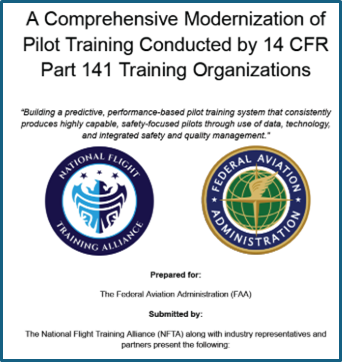
The Flight School Association International (FSAI) created in 2009 is a 17-year-old trade association dedicated to the flight training industry. FSAI has conducted a preliminary review of the 471-page Modernization report of Federal Aviation Regulation Part 141, submitted to the Federal Aviation Administration (FAA) by the National Flight Training Alliance (NFTA).
While the report is 471 pages, it falls far short of addressing the needs of the Primary, Ab Initio flight training community. It has become clear to FSAI that the report, while certainly representative of what might be in the best interest of the NFTA and its members, is not necessarily in the best interest of safety, the overall pilot training process, or all providers of pilot training. Concurrently, the report does very little to improve safety for pilots who will be operating airline and/or corporate high speed turbine aircraft.
“The Part 141 report, as delivered to the FAA, reflects a focused industry carveout that primarily benefits a narrow set of special interests. The first major carveout occurred following the Colgan Air crash in Buffalo, NY, on February 12, 2009, where 45 passengers, two pilots, two flight attendants, and one individual on the ground lost their lives. In the aftermath, the collegiate aviation sector successfully lobbied for regulatory changes that now allow graduates of FAA-approved Institutions of Higher Education to serve as first officers in Part 121 airline operations under reduced experience requirements. The new Part 141 report appears to lay the foundation for a second round of similar carveouts, again favoring select institutions over the broader flight training community,” said Robert Rockmaker, President and CEO of FSAI.
The FAA originally began an effort to update 141 training processes, initially proposing an Aviation Rulemaking Committee (ARC) (the draft of which was shared with some industry representatives and can be seen by clicking here) and then for unknown reasons avoided this commonly followed regulatory process by establishing a set of industry meetings to gather information for the federal record that would be utilized to guide future proposed rulemaking.
Several important facts which have helped form the foundation of the 141 report include the following reports which lead up to the 141 Modernization report submission to the FAA.
1. The P3-WG report which was a precursor to the 141 project has still not been provided to FSAI. FSAI submitted a FOIA in July 2025 and has yet to receive any information from the FAA. FSAI believes that the P3-WG was a small group of select people who met privately to begin a complete business reconstruction of the Primary, Ab Initio flight training industry in the United States. While it has not been confirmed due to the secrecy of the P3-WG, FSAI does not believe that there were any independent flight schools engaged with the study group.
2. The P3-WG report was then submitted to the Air Carrier Training Aviation Rulemaking Committee (ACT ARC). The ACT ARC was established by the FAA on January 21, 2014. The ACT ARC is led by industry co-chair Rob Thomas, Vice President of Flight Operations-Planning & Development at United Airlines and Lee Abbott, Manager, Air Transportation Division, Training & Simulation Group Manager AFS-280.
According to the FAA, the ACT ARC provides a forum for the United States aviation community to discuss, prioritize and provide recommendations to the FAA concerning operations conducted under parts 121, 135, and 142. Part 141 is not part of the ACT ARC charter. The Federal Aviation Administration (FAA) is committed to maintaining the safest air transportation system in the world. One key area to ensure a safe system is maintaining the quality of air carrier training.
The FAA chose the NFTA as a representative tasked with collecting industry input and providing an industry-consensus report on agreed-upon proposed improvements to pilot quality and the integration of 141 programs with FAA oversight. What resulted was a special-interest group report on what would best serve their goals and improve efficiency for businesses engaged in large-scale training operations. While FSAI understands that businesses want what is best for their profitability, the FAA needs to ensure that our aviation training system first focuses on the quality and safety of the pilots it develops.
From the report as stated, the goal of this modernization effort is unambiguous: to develop a robust certification and regulatory framework under 14 CFR Part 141 that stands alone as the preeminent accreditation and method by which aviators are trained throughout the world. Under this new framework, achieving FAA certification would represent the highest standard of training excellence available anywhere negating the need for further accreditation or external oversight. The American flight training system would, in this vision, stand alone already.
As FSAI members and staff have reviewed the report intended to represent industry consensus, it has become clear that the task of providing a report that represented the industry was not accomplished. We have spoken with a wide range of industry participants who have raised concerns about various parts of the submitted report. The report fails to address the stated goal.
Major concerns with the proposed 141 Modernization changes include, but are not limited to that:
- The proposal allows reduction of overall pilot training requirements from initial to commercial pilot certificate issuance, and potentially for ATP pilots who will enter into service as airline pilots;
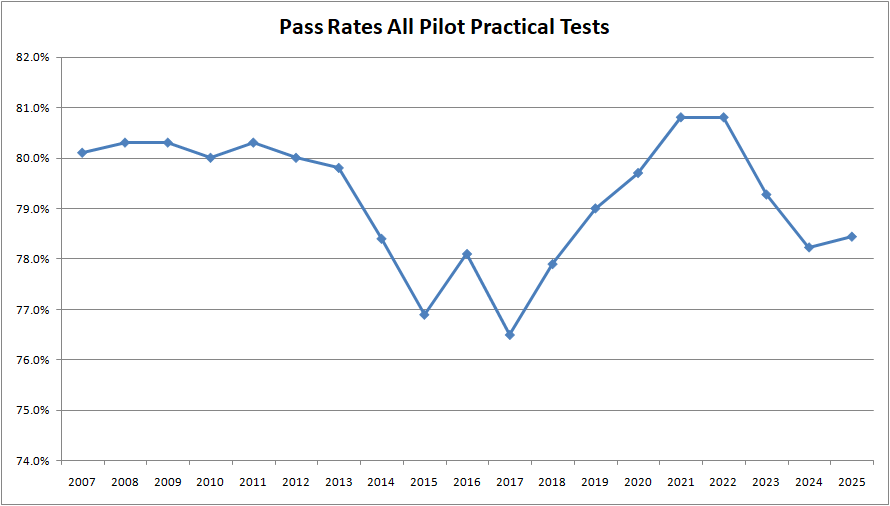
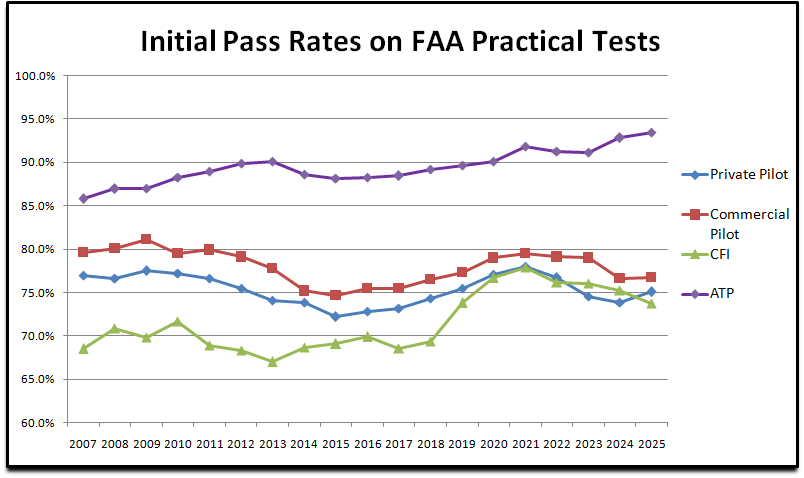
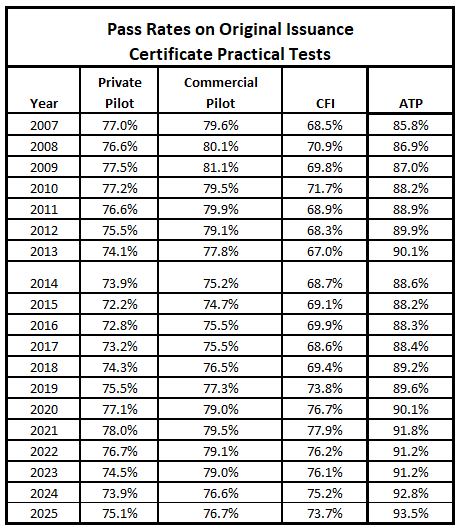
- External validation of airman quality through testing is removed for some training providers, with no minimum standards established for qualifications of individuals who will “test pilots” internally at schools that are given self-examining authority;
-
FAA oversight of training standards and requirements is transferred to a special interest group, the American Society for Testing and Materials (ASTM), which would establish and maintain its own oversight of pilot qualification standards in the future.
- Under the proposed provisions of the NFTA proposal, large flight training providers will be prioritized and given advantages. It is FSAI’s belief that many smaller, local training providers in both the Part 61 and 141 segments will likely be marginalized or driven out of being able to provide pilot training. This will likely reduce availability at a diversity of locations and sizes of training providers around the United States, consolidating it into a few large academy and collegiate training pathways.
The report fails to note the negative economic impacts that will develop if the report were to be made into regulation. These impacts include:
-
Overall cost of “Primary” Ab Initio flight training will substantially increase.
-
The number of training outlets will be greatly reduced.
-
Local airports and their respective communities will be negatively impacted.
-
Many flight training providers will be forced to close over time as the career pilot track becomes marginalized by college aviation programs and a select number of large academy flight training providers.
-
The supply chain will become consolidated which will lead to fewer vendors.
-
Future innovation will be stymied due to a reduction in the supply chain.
FSAI has noted many more concerns, and we continue to find more as we evaluate the proposal. But these are some major ones that lead FSAI to determine that, as the report is written, FSAI cannot support the recommendations given to the FAA as direction for the modernization of the 141 training sector, or aviation training as a whole, in the United States.
There are proposals that FSAI agrees with. A central office for management of the 141 programs in the FAA is needed, but it has to be well-managed to be effective. We agree with the concept of self-examining authority, but it cannot be done without FAA minimum standards for those who provide internal tests, and it cannot be done without reporting pass-fail results to the FAA for airmen test events.
There are other proposals that might be able to be well implemented if they were fully developed with established standards and reporting requirements. But the report strategically leaves such considerations out, providing hot topic highlights of “QMS” and “SMS” systems referenced that sound great, but have no parameters associated with them. This would allow minimal quality-focused business interests to circumvent real quality standards, since the proposals allow providers to establish their own internal standards rather than be required to meet externally set ones established by an agency such as the FAA. Just having a QMS system does not mean the standards it tracks or maintains are high-level.
The public comment extension provided by the FAA has been sufficient for a preliminary review, and FSAI believes more time is now needed. The extension granted by the FAA so far is insufficient to do what now must be done to properly provide feedback to the FAA’s 141 Modernization Federal Register request.
The pilot shortage that was experienced post the 2020 pandemic was a once in a lifetime event similar to the 500 year storm. FSAI does not believe that the “Primary” Ab Initio flight training industry is any need of planning for the aviation 500 year storm. “The pilot shortage following the 2020 pandemic was an extraordinary, once-in-a-generation event, more akin to a ‘500-year storm’ than a sustained industry trend. FSAI does not believe the primary, ab initio flight training system should be restructured around a short-term disruption driven by unprecedented global circumstances,” said Robert Rockmaker, President and CEO of FSAI.
There will always be a need for pilots however using the Part 141 “Modernization” project as a lever to accomplish un-needed goals is not in the best interest of flight training providers and their students.
The back of the 141 report contains a full list of stakeholder participants and/or organizations including FSAI. By including all stakeholders in the report does not mean that all stakeholders are in agreement with the report. At the present time, FSAI does not endorse the Part 141 “Modernization” report.
FSAI strongly believes that further extension of the comment period is required to respond to the report proposals that the NFTA made and to provide new input regarding 141 modernization regulatory improvements that would best serve safety and improvement of pilot quality and integration with FAA oversight, not just recommendations to make certificate generation go faster with less FAA oversight or integration into the quality of airmen development in the United States.
FSAI has requested that a minimum of 180 days of additional time be provided with regards to the federal register comment period on the 141 report.
|