16th International Flight School Operators Conference Attendee Registration Open | |
FSANA is pleased to be hosting its annual Conference & Trade Show on February 5-7, 2025 at Walt Disney World Dolphin Hotel. Plan to join your peers, friends, and exhibitors at the next Flight School Operators Conference & Trade Show.
Come learn, network, and meet government officials, supply chain partners, and others who interface with your industry. Over 20 professional sessions to choose from. Don’t miss out on the most important days of the year for your business.
Looking forward to its 16th year, this is the annual event that has been having a huge effect on businesses like yours. The FSANA conference experience is about learning how to:
- Increase profits
- Engage in growth strategies and new business opportunities
- Adapt to the latest trends and technology
- Manage costs and be more efficient
Registration will be opening in October and includes:
- Entry to professional sessions and workshops
- Admission to exhibition hall with over 50 exhibitors
- 2 receptions
- 1 dinner
- 2 luncheons
- Coffee breaks with exhibitors
This is the industry's only annual conference and trade show focused on the business of flight training.
Click here for hotel information and reservations.
Exhibitor and Sponsor Information
To become an Exhibitor, Sponsor of the 2025 conference and/or annual "Partner", FSANA has packages available. Exhibit space will most likely sell-out in 2025. Contact FSANA soon to secure your spot. info@fsana.com or 610-791-4359. All annual "Partners" are required to submit exhibitor registrations for 2025.
You can learn more about sponsor and exhibitor information by clicking here.
| |
|
FSANA Representatives in
Attendance at King Schools
at Sea Event
| |
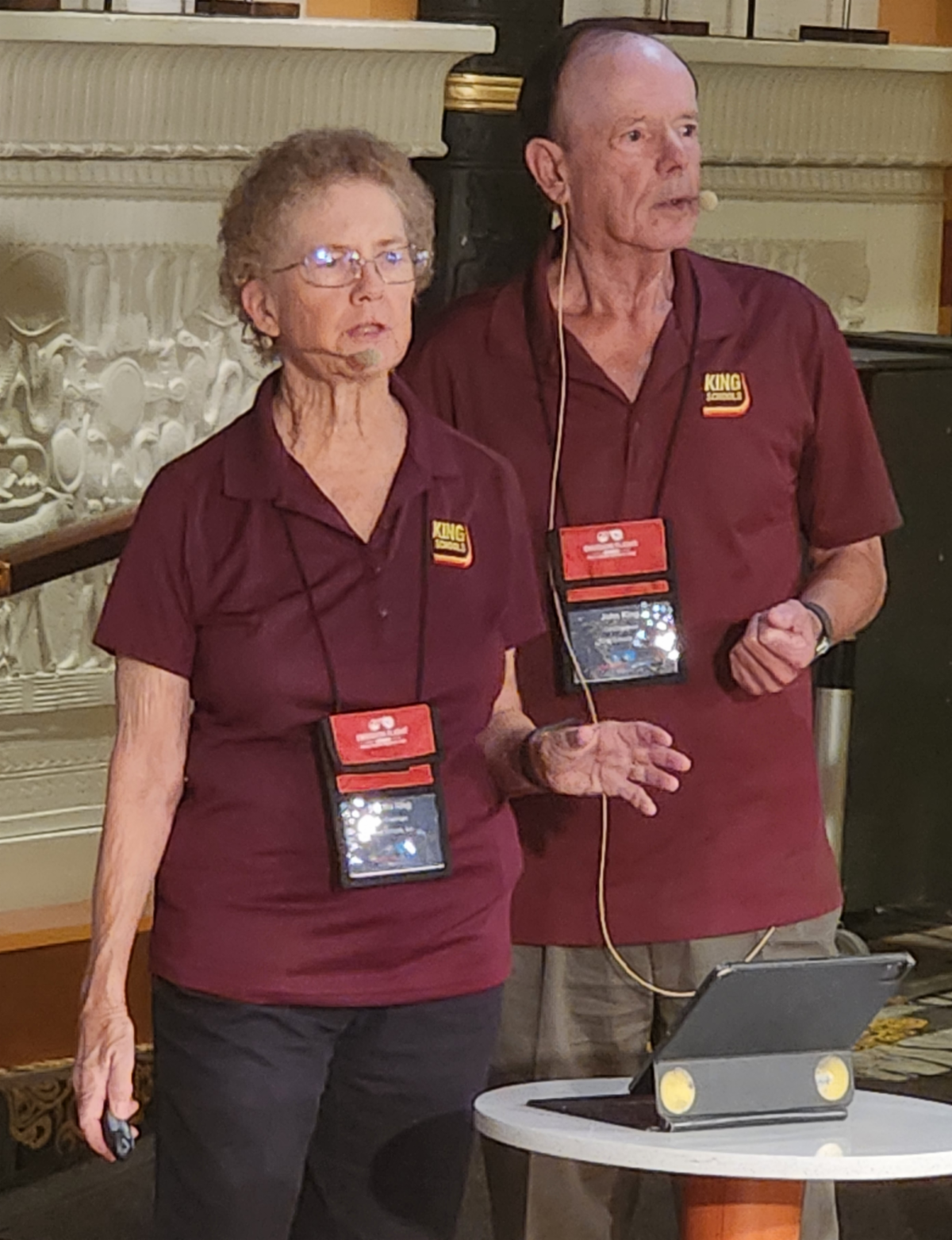
A few FSANA members recently attended the King Schools at Sea Event to help honor the participation of John and Martha King through their tenure in the aviation training landscape.
King Schools recently deployed their educational conference to the high seas. Taking place on a Tuesday and Thursday, the content was dedicated to aviation education. Between those days, Wednesday, was a free day which offered attendees a variety of off-ship excursions.
John and Martha King were gracious hosts as they and other speakers shared their aviation experience with the attendees.
In an interesting approach to aviation education collaboration, attendees had an opportunity to share industry concerns during the event.
| |
Thrust Flight Completes IAAC Accreditation | |
The International Aerospace Accrediting Commission (IAAC) is pleased to report that at its October meeting, Thrust Flight of Addison, Texas has received initial accreditation for a period of three (3) years.
| |
|
Thrust Flight becomes the first independent flight school to apply to and successfully progress through the IAAC Process. To reach this pinnacle, Thrust Flight voluntarily submitted to the rigorous assessment process within the IAAC Standards of Accreditation.
This included undergoing an extensive internal evaluation of its operations culminating in providing a detailed and introspective Self-Study, which was verified on-site by an IAAC Team of aviation and accreditation specialists. The final step was a comprehensive review of the school’s Application and all Reports and Documents submitted to demonstrate that they met or exceeded the standards. It was the determination of the Commission that Thrust Flight was worthy of this distinction.
Institutions eligible for application to, and accreditation from, the IAAC must offer programs that lead to gainful employment in an aerospace-related field as its primary purpose. Such training may include, but not be limited to, programs that are approved by the Federal Aviation Administration (FAA) such as those offered under 14 CFR Part 141 for Pilot Training, Part 142 Simulator Training Centers, Part 147 for Mechanic Training, Part 65 Dispatch Training, Air Traffic Control (ATC) Training and Part 107 Unmanned Aerial Vehicles (UAV) Pilot Training. [Note: schools training under Part 61 may be eligible if for such training the institution utilizes an FAA Approved Curriculum and meets the IAAC Standards].
Schools interested in IAAC Accreditation can learn more about the Commission’s requirements, Standards, Policies and Procedures at: www.iaac.aero.
The International Aerospace Accrediting Commission (IAAC) was formally launched in February 2023 and exists as a separate and independent accrediting commission. The IAAC accreditation program is bringing cultural change to the Ab Initio flight training and the aviation-focused career-training space within the United States and ultimately other nations. The genesis of the Commission began in 2017 with guidance and support from the Flight School Association of North America (FSANA).
| |
Flight Schools on IAAC Accreditation Pathway | |
|
The International Aerospace Accrediting Commission (IAAC) reported that the following flight schools are in the application process of becoming accredited by the IAAC.
Current IAAC Applicant Schools
Academy of Aviation - #MC231001.1
Main Campus, Farmingdale, NY
Academy of Aviation - #BC231001.2
Branch Campus, West Harrison, NY
Academy of Aviation - #BC231001.3
Branch Campus, Gastonia, NC
Academy of Aviation - #BC231001.4
Branch Campus, Peach Tree City, GA
Sun State Aviation
Main Campus, Kissimmee, FL
Sling Pilot Academy - #MC241003.1
Main Campus, Torrance, CA
W/Satellite Campus in El Cajon, CA
W/Satellite Campus in Long Beach, CA
W/Satellite Campus in Santa Monica, CA
Air Fleet Training
Main Campus, Fairfield NJ
| |
GAJSC October FlySafe Flyer Available | |
The General Aviation Joint Safety Committee (formerly the General Aviation Joint Steering Committee) was launched in 1997 as part of the industry-government Safer Skies Initiative to improve aviation safety. The GAJSC works to improve general aviation (GA) safety through data-driven risk reduction efforts focused on education, training, and enabling new equipment in GA aircraft.
One way the committee works to do this is through a relatively recent quarterly newsletter that highlights safety information and concerns.
The GAJSC is a public-private partnership, of which FSANA is a part, working to improve general aviation safety with the goal of reducing the GA fatal accident rate. The committee analyzes aviation safety data to identify emerging issues and develop mitigation strategies to address and prioritize safety issues. Participants include the Federal Aviation Administration (FAA) and industry stakeholders, including pilot organizations, flight instructors, mechanics, builders, and manufacturers.
| |
|
The newest Fly Safe Flyer, the GAJSC's quarterly newsletter came out in October and can be seen by clicking here:
October 11, 2024 GAJSC FlySafe Flyer
In it you will find current information relating to general aviation safety performance fo fiscal year 2024, a focus on recent safety topics, and safety enhancement spotlights. Check it out and share information with others in your organization!
| |
New FAA Advisory Circulars on Flight Training and Pilot Currency and Proficiency | |
In early November the FAA released a number of new advisory circulars that training providers, DPEs, pilots, and especially CFIs and CFI candidates might find worthy of note.
Here are a few of them:
AC 61-65J - Certification: Pilots and Flight and Ground Instructors
This is the AC that documents and provides guidance on endorsements for CFIs.
AC 61-98E Currency Requirements and Guidance for the Flight Review and Instrument Proficiency Check
This AC provides best practices and guidance for the conduct of flight reviews and IPCs.
AC 91-91K WINGS—Pilot Proficiency Program
This is AC provides information about the use of the FAA Wings proficiency program.
AC 61-145 Flight Instructor Enhanced Qualification Training Program (FIEQTP)
This AC will be relevant to the new ability for some programs to provide training to initial CFI candidates with instructors who do not meet the traditional two-year CFI requirement and have had specific training. This is a new AC.
AC 61-83K Nationally Scheduled, FAA-Approved, Industry-Conducted Flight Instructor Refresher Course
This AC dictates the content and conduct of Flight Instructor Refresher Course efforts.
| |
FAA Offers Regulations Changes to Instructor Qualifications for Training Initial Flight Instructor Applicants (§ 61.195(h); § 141.11; Part 141, Appendix K) | |
by Jason Blair
A recently published "...rule revises the qualification requirements for flight instructors seeking to train initial flight instructor applicants by adding two additional methods."
"Section 61.195(h) contains the qualification requirements for flight instructors seeking to instruct initial flight instructor applicants. The NPRM proposed to restructure § 61.195(h)(2) to contain general qualifications for all flight instructors providing flight training to initial applicants for a flight instructor certificate, including flight instructors providing training under FAA-approved courses. This final rule retains these general requirements, which include the requirement for the flight instructor to meet the eligibility requirements of § 61.183 and hold the appropriate flight instructor certificate and rating."
BUT...
There are three new different qualification options now available for those who might train initial CFI applicants.
"The first option retains the existing requirements of current § 61.195(h)(2)(iii), (iv) and (v), which include the requirements for the flight instructor to have held the flight instructor certificate for at least 24 calendar months and to have given at least 200 hours of flight training as a flight instructor for training in preparation for an airplane, rotorcraft, or powered-lift rating (or 80 hours of flight training if training in preparation for a glider rating). This option is retained as § 61.195(h)(2)(i)(A) and (B)."
"The second qualification option modifies the previous § 61.195(h)(3). Section 61.195(h)(2)(ii) now requires a flight instructor to have trained and endorsed, in the preceding 24 calendar months, at least five applicants for a practical test for a pilot certificate or rating, and at least 80 percent of those applicants must have passed that test on their first attempt. This will allow more flight instructors to exercise this qualification option as compared to the similar option previously available under § 61.195(h)(3).
This allows CFIs who have less than 2-years of experience as a CFI, but has had a good pass rate with their students, at least 80%, to be eligible to train initial CFIs at an earlier time.
"For the third qualification, this final rule adds a new qualification method in § 61.195(h)(2)(iii). This option requires a flight instructor to have graduated from an FAA-approved flight instructor enhanced qualification training program (FIEQTP). Additionally, they must have given at least 200 hours of flight training as a flight instructor for training in preparation for an airplane, rotorcraft, or powered-lift rating (or 80 hours of flight training if in preparation for a glider rating) before being eligible to complete the FIEQTP."
This matches up with the new AC 61-145 Flight Instructor Enhanced Qualification Training Program (FIEQTP). (https://www.faa.gov/regulations_policies/advisory_circulars/index.cfm/go/document.information/documentID/1042632)
This new AC sets forth the process where the FAA may approve a provider’s development of an initial CFI training program and utilize instructors that do not meet traditional initial CFI training requirements. It is a structured program though that must be approved.
These changes offer more flexibility when it comes to who is eligible to train new CFIs.
If you want to see where this comes from, you can find the final FAA rule that was published by clicking here. The rule becomes effective December 1, 2024.
| |
Recision of FAA Legal Interpretations and New Regulation Mean CFIs Must be Landings Current When Conducting Training as PIC | |
by Jason Blair
In the past, the FAA had interpreted the requirement to be “landings current” under 14 CFR § 61.57 (https://www.law.cornell.edu/cfr/text/14/61.57) as not applicable to CFIs when conducting instruction, the logic being that the student was not a “passenger.” This has been rescinded by the FAA.
In the final fule Public Aircraft Logging of Flight Time, Training in Certain Aircraft Holding Special Airworthiness Certificates, and Flight Instructor Privileges (https://www.federalregister.gov/documents/2024/10/02/2024-22009/public-aircraft-logging-of-flight-time-training-in-certain-aircraft-holding-special-airworthiness) the FAA makes this change.
In this document, it is noted that:
"The FAA had previously issued legal interpretations indicating certain operations related to obtaining recent flight experience with an instructor on board are already permissible under existing regulations, notwithstanding the prohibition on passenger-carrying flights. The FAA determined the plain text of its regulations did not support the conclusions in these interpretations."
It is further highlighted in the document that,
"Although the FAA has not previously defined “passenger” in regulation, the NPRM analyzed the FAA's historical interpretation of the term. Previous FAA legal interpretations have stated that a flight instructor and a person receiving flight training are not considered passengers to one another. However, the NPRM concluded that those FAA legal interpretations had no regulatory basis to assert such a position, and the FAA has since rescinded those interpretations. While the NPRM did not assert that a flight instructor and a person receiving flight training are not passengers to one another, it sought to clarify when certain operations involving such persons may be conducted."
It goes on to indicate,
"Section 61.57 contains recent flight experience requirements to maintain privileges to act as PIC under certain scenarios, including requirements to complete takeoffs and landings to continue to act as PIC of a flight that is carrying passengers. The FAA proposed to add § 61.57(e)(5) to codify an exception that, in certain circumstances, would enable a person receiving flight training to act as PIC, even if that person does not meet the recent flight experience requirements for carrying passengers under § 61.57(a) or (b). This person would be required to meet all other requirements to act as PIC, except for the recent flight experience requirements of § 61.57(a) or (b), and only the authorized instructor and person receiving training could be on board the aircraft. The FAA proposed the change in response to a disparity created between several legal interpretations [31] that concluded, unsupported by the regulations, that a flight instructor and a person receiving flight training are not considered passengers to one another. This final rule adds the definition of “passenger” and addresses how those legal interpretations relate to the requirements of § 61.57"
So what's the gist?
Either the CFI must meet takeoff and landing currency requirements in the category and class of aircraft being operated. If the CFI does not have this currency, then they are not able to be the PIC of the flight. This could be the case if someone was receiving instruction and they were able to be the PIC. This could happen such as a commercial student who was able to be the PIC of the aircraft, or an individual receiving a flight review, but would be not possible for a CFI who was taking out a student pilot for their first night flight experience in training for example. The best practice is for a CFI to be takeoff and landing current for the day or night operations in the category and class of aircraft in which they will be instructing.
| |
DPEs May Now Use BasicMed for Medical Compliance | |
The FAA has recently provided guidance on changes that allow a DPE to provide services while complying with medical requirements under BasicMed.
In a communication to DPEs, it was noted that:
"The Federal Aviation Administration met a Congressional requirement by updating its BasicMed regulations to allow pilots to operate larger aircraft and carry more passengers.
BasicMed, which took effect in 2017, allows pilots to fly without holding an FAA medical certificate provided they meet certain conditions.
The FAA Reauthorization Act of 2024 expanded BasicMed to:
Increase the number of allowable passengers to six from five, and the number of occupants to seven from six.
Increase the maximum aircraft takeoff weight to 12,500 lbs. from 6,000 lbs., excluding transport category helicopters.
Allow pilot examiners to conduct flight checks using BasicMed in aircraft that are covered by the BasicMed rule. Information for examiners is available here.
Pilots must meet specific conditions to operate under BasicMed. Among other things, they must have held a valid medical certificate at some point after July 14, 2006; the most recent medical certificate cannot have been denied, revoked, or suspended; they must complete a medical exam by a state-licensed physician; they must complete an online medical education course; and they must hold a valid U.S. driver’s license.
BasicMed also includes certain limitations. Pilots cannot fly for compensation or hire and are restricted to flying at or below 18,000 feet altitude and at a speed no greater than 250 knots."
You can learn more about this change in the FAA Notice N8000-386.
| |
ARTICLES OF INTEREST FROM THE INDUSTRY | |
FSANA has been collecting DPE names who have expressed a willingness to travel to help flight training providers secure practical tests.
The latest List of Travel-Willing DPEs with contact information is available on the FSANA website. If you are a flight training provider who is finding a challenge of scheduling DPEs in your local area, feel free to reach out to these individuals. They may be able to serve some of your local testing needs.
If you are a DPE who is not on this list but would like to be, please let us know. Write us at info@fsana.com with your name, city, state, email and phone number and we will add you. | |
Email Feedback Concerns about FAA Practical Tests to:
| | |
Tell us what is important to you as a school owner, manager or chief flight instructor. We will share comments in an upcoming edition of Flight Training News. Send your thoughts to info@fsana.com.
| | |
FSANA LEGISLATIVE ADVOCATES | |
Legislative Advocates are flight schools, businesses and individuals who support FSANA’s efforts to advocate for public policy that benefits the flight training industry. | |
FSANA SUPPORTING PARTNERS | |
Annual Partners are flight schools, businesses and individuals who support FSANA’s ongoing efforts to strengthen the flight training industry. | |
V I S I O N A R Y •• P A R T N E R S
| |
D E V E L O P E R •• P A R T N E R S
| |
B U I L D E R •• P A R T N E R S
| |
L E A D E R •• P A R T N E R S | |
Established in 2009, the Flight School Association of North America (FSANA) is the first and only association of its kind dedicated solely to the flight training industry. FSANA represents flight schools, firms that provide products and services to the flight training or aviation industry, and other supporting partners.
The Mission of the Flight School Association is to support, promote and advocate for the business of flight training; to provide knowledge, programs and services that help its members thrive and better serve their customers and communities; to foster best business practices; to educate and inspire youth; to increase the global pilot population; to improve general aviation safety; and to work in alliance with the aviation and aerospace industry.
| | | | |