4th Annual DPE Symposium in Dallas Brings DPEs, FAA Staff, and Flight Training Providers Together to Share Best Practices and Efficiencies in FAA Airman Testing | |
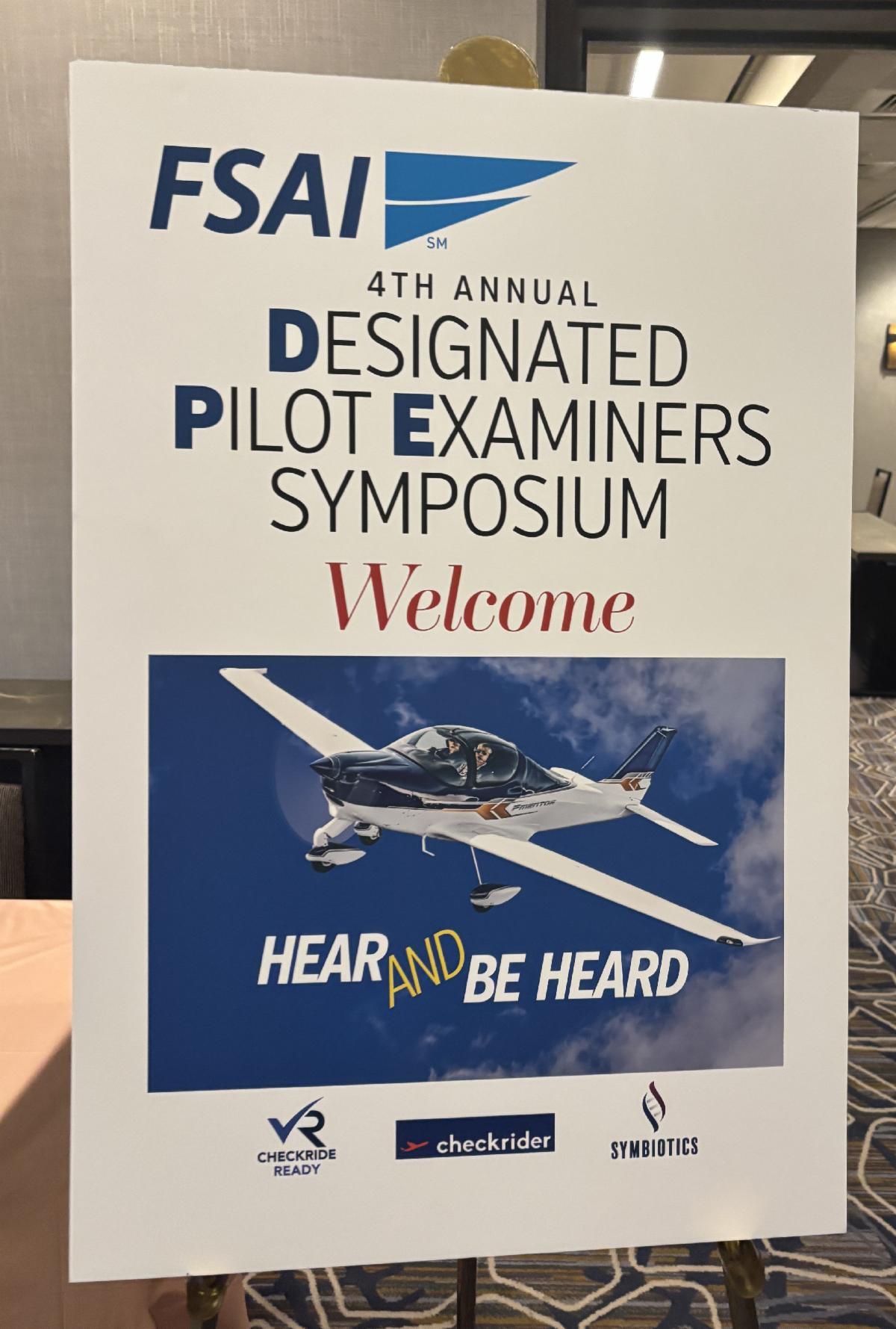
FSAI hosted the 4th annual Designated Pilot Examiners Symposium last week in Dallas, Texas, brining DPEs, potential future DPEs, FAA staff, and flight training providers together to talk about issues and practices in airman practical testing as provided by FAA DPEs.
The event now in its 4th year is not some secret meeting of DPEs, but a collaborative open meeting that talks about how DPEs do their jobs, how people can become DPEs, how DPEs and flight training providers can work together to increase testing efficiency and airman quality.
Some of the most committed DPEs in the country shared their best practices, the group discusses concerns in the airman testing landscape, and discussion is included about what policies and procedures have changed over the last year or are expected to see changes in the upcoming year.
"This event is a unique opportunity for all of us to work together to improve airman testing relationships," said FSAI President and CEO, Robert Rockmaker. "Before FSAI began this event, there was no national forum where DPEs, regulators, and flight training providers could get together and talk about some of the most important issues in flight training. All of the discussion was focused locally, and sometimes local issues are ones should be discussed more nationally. FSAI is pleased to be able to provide this forum and hopeful that as it continues, more and more DPEs will see the value in coming to this event and being a part of the national level discussions relating to the work they do."
The event took place over two days, covering FAA policy concerns, updates from FAA staff on national level FAA policy and airman testing efforts, standardization of discrepancies in the practical testing landscape, working with training providers to best develop understanding of what it takes to deliver a good quality applicant [once the DPE is able to proceed with the test], documenting checkride disapprovals and how to do so properly, how to work within the IACRA and DMS system [including tips and tricks], how MOSAIC changes in regulations affect practical testing, how DPEs can handle awkward, challenging, and contentions situations, and breakout sessions for people who were interested on how to become a DPE and a discussion of how DPEs can develop their plans of action for the tests they conduct. The event finished with a briefing from attorney Jack Webb, who is leading a national class action lawsuit against the FAA relating to DPE management and termination practices.
Each year this event grows and continues to deliver content that examiners can use to improve their own work within that national aviation training testing landscape. FSAI is truly thankful for all the DPEs who attended and took part and especially the FAA staff that took the time to be a part of the discussion at the event.
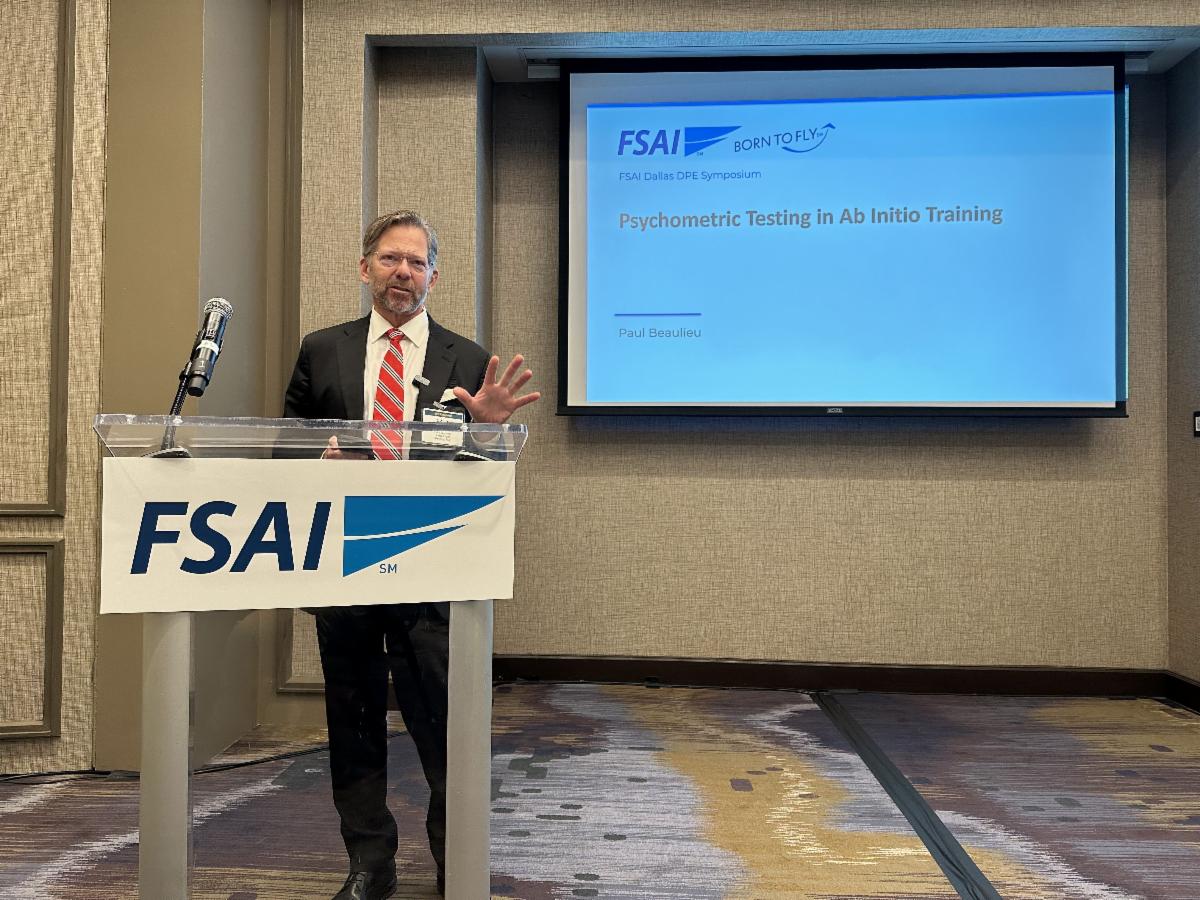
Paul Beaulieu, President of Avier Flight School in Beverly, Massachusetts shared a presentation on the future of "Psychometric" testing in the Ab Initio flight training industry. He explained how and why pre-screening is important for people seeking a career on the flight deck of aircraft.
Paul noted that psychometric testing has been deployed for years in many foreign countries and the United States is starting to catch the wave. While psychometric testing may not stop a person from enrolling in a career pathway program, it may provide insight for the candidate with respect to the chances of their long term success on the flight deck.
| | FAA Staff Highlights Direction of FAA DPE Program and Policy Updates at FSAI DPE Symposium | |
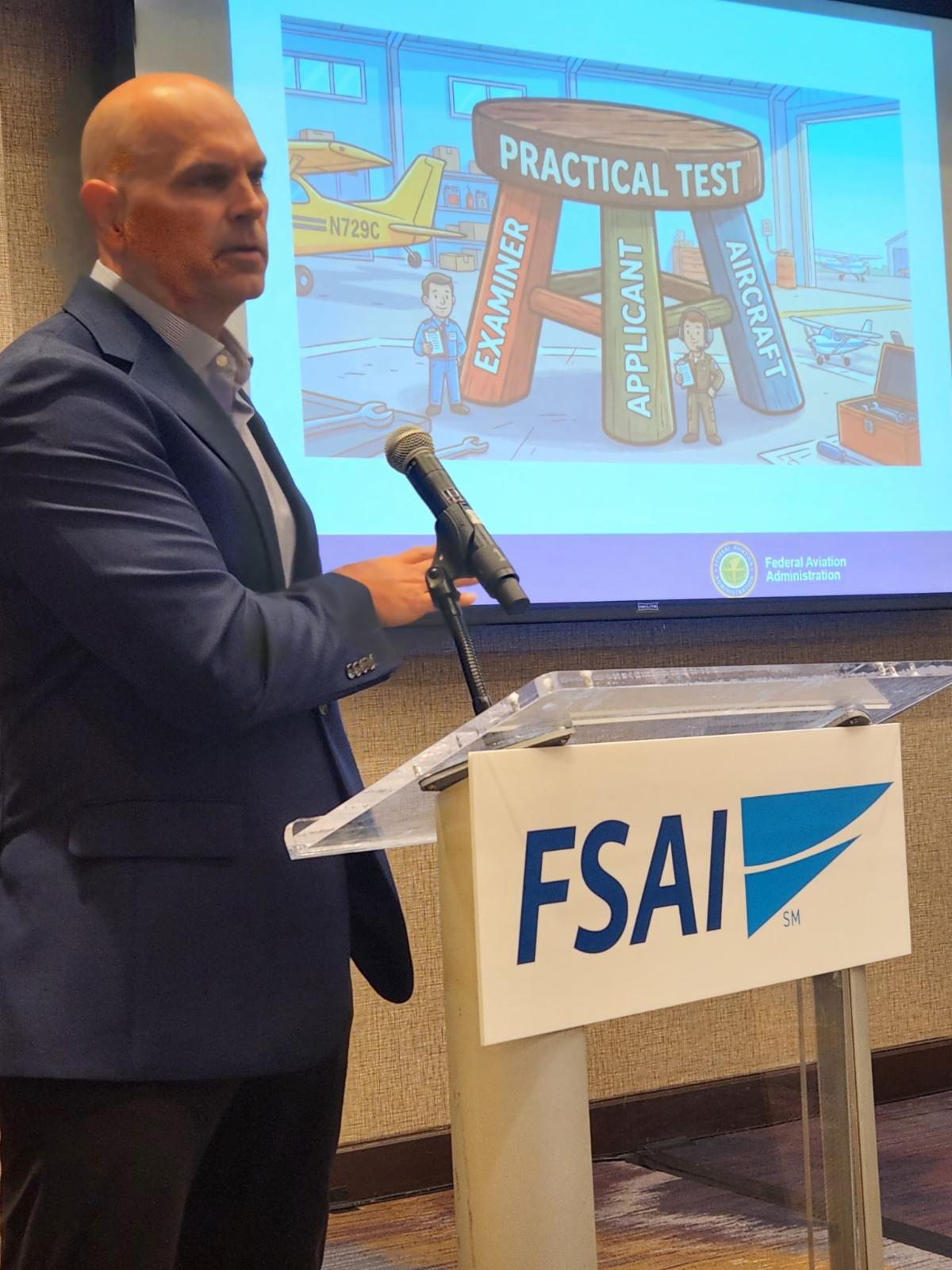
Starting with a briefing and question-and-answer sessions led by Timothy Kray, the acting Branch Manager for the FAA's Delegation and Resource Branch, attendees of the symposium had an opportunity to get an update on the status of the FAA's DPE oversight and management processes.
Highlighting efforts of the FAA to transition to a national-level management practice for DPEs from a more localized [FSDO] approach that has existed for a long time, updates were provided on how many DPEs have been transitioned to the new national office, what near- and long-term targets are to continue this effort, and how it affects DPEs and how they work with their assigned managing specialists.
The effort to transition to a national management model continues to proceed to allow workload shift from overtasked local offices and an FAA model that continues to have challenges attracting sufficient workforce to oversee DPES. With that said, the national model is leveraging dedicated FAA staff who are solely responsible for managing DPEs, and additionally tasking some DPEs to be managed by non-local office staff when their local office is short of human resources to locally manage them. The entire intent of these efforts is to be able to provide sufficient testing capacity to meet airman training needs for test throughput.
At the time of the conference, it was noted that there were 1,113 DPEs active and that the FAA had appointed 73 new DPEs in FY2026. As the FAA appoints DPEs, it is working hard to make sure the DPEs appointed have the ability to serve reasonable numbers of tests per year. The goal is to bring on new DPEs who will help provide a reasonable number of tests to serve the demand, not just a test or two every few months.
| |
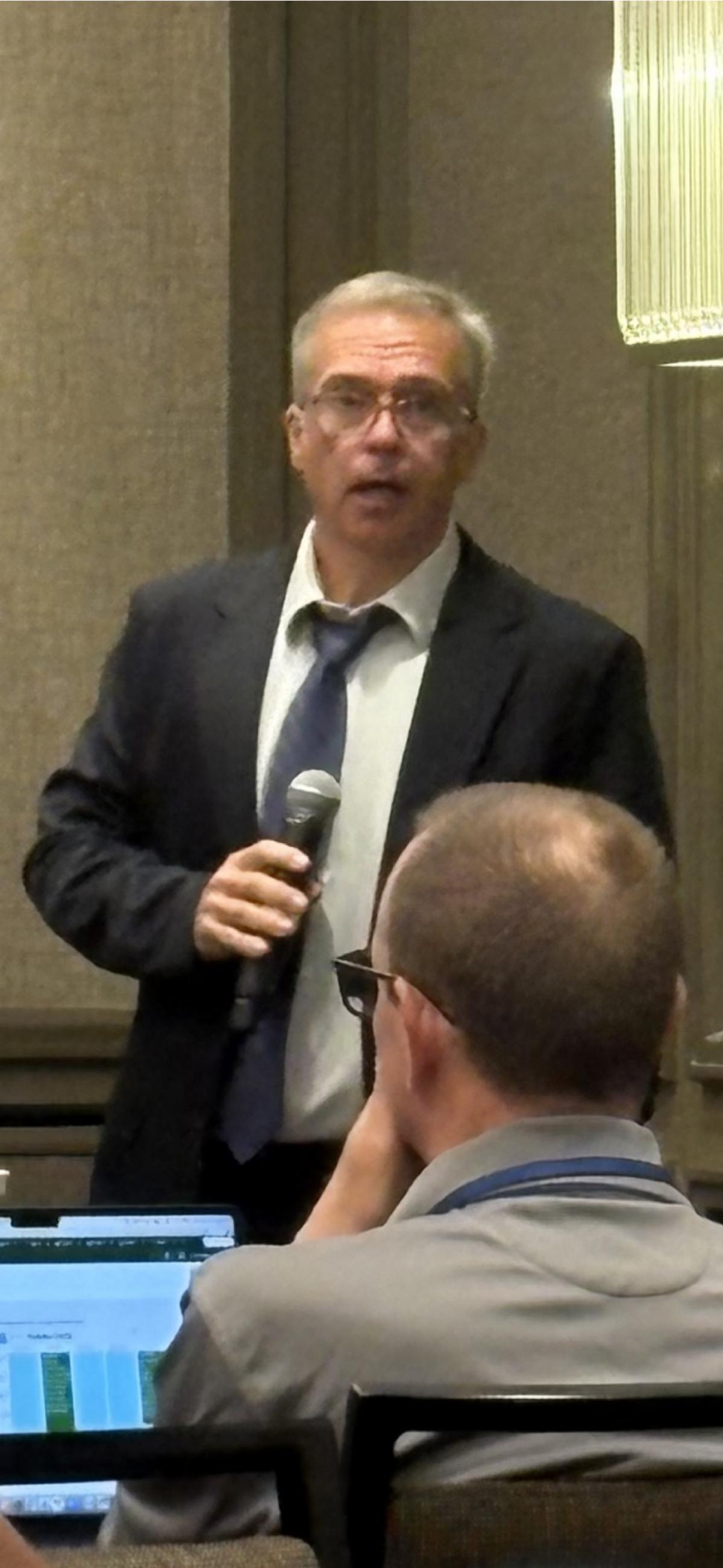
Albert Hilliard, Acting Operations Manager with the Lubbock, Texas FSDO which manages over 40 DPEs took part in numerous sessions, helping share information for attendees about what he sees working with DPEs that can make them more efficient, common errors he sees DPEs make in paperwork and testing practices, and how to work well with a managing specialist.
Another FAA staff member who is an oversight inspector on the national team took part in discussions about how the transition of DPEs from local offices to national offices work and some of the efforts they work with when they transition a DPE in such a pathway.
Throughout the FAA staff members' comments and participation, a key point was made: that the FAA values DPEs and wants to work with them to keep them active and improving. They highlighted that there is no national effort or desire to get rid of a bunch of DPEs or somehow "take out a bunch of DPEs." The goal is standardization of DPE services through the system for airmen seeking testing.
This is a key reason why this symposium is so important, and why FSAI is so thankful to the FAA for again providing staff to the event to be a part of the discussion. Open collaboration between designees, FAA staff, and the training community makes all of our testing efforts more efficient and increases standardization.
FSAI appreciates and thanks the FAA and its staff who were present for this year's symposium. FSAI looks forward to continuing this effort and the FAA participation at the next symposium.
| | FSAI Part 141 Report Update | |
FSAI continues in the writing stage of the Federal Aviation Regulations (FAR) Part 141 Report. The report will be shared with the FAA along with other governmental bodies that have made this request. The report is estimated to be 25-50 pages.
The FSAI report has come about after discussions with the FAA, Congress and other governmental bodies regarding the 471 page report that was submitted by the NFTA.
| | Hotel Room Reservations Open for the 2027, 18th Annual International Flight School Operators Conference & Trade Show in New Orleans (February 9-11) | |
Plan to join your peers, friends, and exhibitors at the 2027, 18th annual Flight School Operators Conference & Trade Show from February 9th through the 11th. Come learn, network, and meet government officials, supply chain partners, and others who interface with your industry. Nearly 20 professional sessions to choose from. Don’t miss out on the most important days of the year for your business.
This is the annual event that has been having a huge effect on businesses like yours. FSANA is now Flight School Association International (FSAI). Our name has changed, but the event will be the same great gathering it has been for the past 17 years. The FSAI conference experience is about learning how to:
- Increase profits
- Engage in growth strategies and new business opportunities
- Adapt to the latest trends and technology
- Manage costs and be more efficient
EXHIBITOR INFO
To become an Exhibitor, Sponsor of the 2027 conference in New Orleans and/or an annual "Partner", FSAI has packages available. Exhibit space will be sold out prior to the 2027 conference in February, so act now to secure your spot. Contact FSAI soon to secure your spot. info@fsai.org or 610-791-4359. All annual "Partners" are required to submit exhibitor registrations for 2027.
Learn more about exhibitor and sponsor information by clicking here.
HOTEL INFO AND ROOM RESERVATIONS
The Hyatt Regency New Orleans is the 2027 Host Hotel. Located next to the Caesars Superdome and Smoothie King Center, Hyatt Regency offers spacious accommodations, an outdoor rooftop pool, an onsite Starbucks and FedEx Office, and multiple dining options—all within walking distance of the South Market District, Warehouse District, and the French Quarter.
Click here for hotel information and discounted room reservations.
The 2027 conference program and attendee registration will be available within the next week.
| | 2027 AOPA Foundation Flight Training Experience Awards Applications Open | |
Each year AOPA collects nominations for best providers of services in the flight training sector.
The process is easy. Whether you’re a flight instructor or a flight school, submit your application. Once that’s done, you receive a link to share with customers and colleagues you’ve worked with in the past 12 months to gather feedback. After the application window closes, applicants receive a summary—the customer feedback report—also known as the “report card” with the comments.
Award recipients are selected by a panel of industry experts. The identity of the school or instructor is withheld from the panel.
Applications are due October 24th, 2026.
Visit https://www.aopa.org/training-and-safety/flight-schools/flight-training-initiative/flight-training-awards for more information.
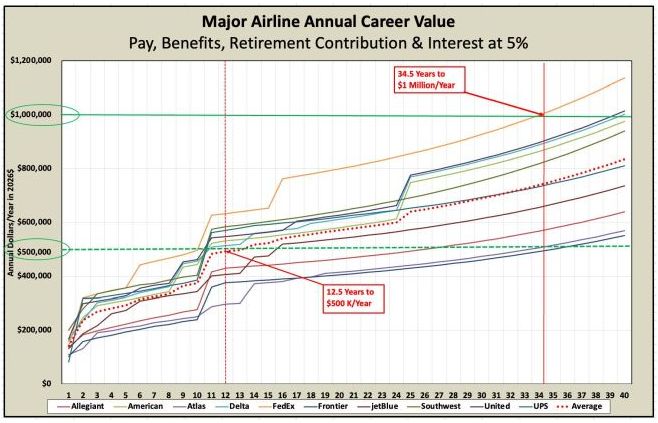
| | Top Major Airline Pilot Career Value Exceeds $1,000,000 per Year with a 35-Year Career | |
The sum of annual pay, benefits, retirement contributions, and retirement fund interest at 5%.
The big four (AA, DL, SW, UA) plus Top Cargo airlines (FedEx and UPS) all offer career values approaching $1M per year. UPS still has an A-fund, which adds $2M at 40 years to the values on this chart, bringing it on par with FedEx, the top Major airline.
Of course, few pilots are hired in their mid-twenties and enjoy a 40-year career. Getting hired at 30 for civilian or 35 for military pilots is more common.
| |
The average career value exceeds $500,000 per year after just 12 years, and even the lowest-paid Major reaches $600,000 per year after about 30 years. The average Major yields about $700,000 per year at 30 years.
How is it possible?
FedEx EXAMPLE
Pay $474/Hr. X 92 Hours per Month = $517,608
Benefits non-retirement: Medical. Life, Vision, Loss of License: 15% X $517,608 = $77,614
Retirement DC & CBP contributions at 19% of income. $517,608 X 19% = $98,346
Retirement Fund Interest on $ 6,850,086 after 35 years x 5% interest + $342,504
Total: $1,036,072
Assumptions:
11 Years to Captain
Wide-body Captain in about 25 years if available (16 years at FedEx)
Current fleet mix
Current pay rates in 2026 - no future increases added
No extra flying at 100%
No premium flying at 150% to 200%
No profit sharing – Averages 5.5% for those who have it & adds $500K to a 30-year career value
5% retirement fund growth on company-paid retirement – averages about 8%
Add:
Future pay raises, which average 4.2% annually over the past 18 Years
Average Flying:
15 days per month, ranging from 10 to 20
Average hours at each airline – 71 to 92 hours; varies by airline; averages 83.4 Hours/Month
Most pilots are paid for about 5 hours more each month than they bid due to delays like weather and maintenance, plus vacation, training, and sick pay.
2026 is shaping up to be the 3rd-best year in history, with over 6,500 new jobs at the Majors.
Great time to be or become an airline pilot!
From KitDarby.com Aviation Consulting, LLC
Atlanta, GA
877-334-2939
| | Capitol Technology University Offers Online Accredited Certificates, Master's, and Doctorates in Aviation and Aerospace-related Fields | |
University will host a free webinar Oct. 6
discussing its degree programs.
A Maryland-based university with nearly 100 years of experience teaching technology has added seven master’s degrees and doctorates in aviation and aerospace-related fields over the last ten years. All the degrees are offered completely online and are accredited. Each of these programs is designed for working professionals who need an advanced degree but cannot move or stop working to earn it.
The university offers five different online master’s degrees, two online Ph.D. programs, and two online graduate-level certificates for the aviation and aerospace-related fields.
- Master’s degrees offered include a Master of Science (M.S.) in Aviation (starting Fall 2027), an M.S. in Aerospace Cybersecurity, an M.S. in Uncrewed and Autonomous Systems, a Master of Philosophy (M.Phil.) in Aeronautical Accident Investigation, and a Master of Research (M.Res.) in Aviation Maintenance.
- Doctor of Philosophy (Ph.D.) programs offered by Capitol include a Ph.D. in Aeronautical Science and a Ph.D. in Uncrewed Systems Applications.
- The university also offers graduate-level certificates in Aviation Maintenance and Aerospace Accident Investigation and Fault Analysis.
All programs are offered completely online, with no residency required. The university is institutionally (regionally) accredited by the Middle States Commission on Higher Education, and all programs meet the highest professional and academic standards.
A unique feature of the aviation programs is that the university has partnered with the Royal Aeronautical Society (RAeS) for international networking and professional development.
As a non-profit private university, Capitol Tech works to keep tuition costs affordable while maintaining national rankings for the quality of its programs. University HQ ranked the university in the top five percent, and Forbes America’s Top Colleges has ranked Capitol Tech in the top eight percent of all colleges and universities in the U.S. A study by the State of Maryland indicated that both master’s and doctoral graduates from Capitol earn substantially more than their counterparts from other Maryland universities and colleges.
According to Dr. Bradford Sims, university president, “Completing a graduate degree is more than an academic achievement—it is an investment in your professional future. An advanced degree can distinguish you in a competitive workforce, strengthen your expertise, expand your leadership opportunities, and position you to make a greater impact in your field. It also connects you to a global community of accomplished professionals, creating new opportunities to collaborate, build your network, and advance your career.”
To learn more about Capitol and its graduate programs, visit www.captechu.edu, email gradadmit@captechu.edu, or call 1-800-950-1992.
| | FAA Includes Flight Schools in Notice about New SMS Voluntary Program | |
On September 4, 2026, the Federal Aviation Administration published a notice that looks, at first glance, like bureaucratic housekeeping. It is not. FR Doc. 2026-18143 asks the public to comment on a new information collection for the Safety Management System Voluntary Program (SMSVP)—the only formal path most flight training organizations have to get an FAA-accepted safety management system. Comments are due October 5, 2026.
For Part 141 pilot schools and Part 142 training centers, the notice is a reminder of where training sits after the 2024 rewrite of 14 CFR part 5: still outside the mandate, but firmly inside the voluntary program, and now measured against the same part 5 standard that airlines and charter operators must meet.
What the notice actually does.
The notice is not a new rule. It is FAA’s request for Office of Management and Budget approval to collect safety data from SMSVP participants and to confirm that those participants meet the program standard.
The agency first sought comments on this collection in July 2023. Two comments came in. A lot has changed since then. On April 26, 2024, FAA expanded part 5 so that certain part 21 design and production organizations, all part 135 operators, and § 91.147 air-tour letter-of-authorization holders must implement an SMS. Some part 121 requirements were updated as well. Single-pilot and sole part 135 operators were carved out of selected part 5 duties.
SMSVP was built in 2018 for organizations that are not required to have an SMS. That line still holds. Operators already covered by the mandate cannot join the voluntary program. Organizations that remain eligible include Part 91 Living History Flight Experience, Part 91K fractional ownership, Part 125, Part 133, Part 137, Part 141, Part 142, Part 145, and Part 147. FAA also notes that other aviation organizations can still build an SMS using Advisory Circular 120-92, even if they never enter SMSVP.
Entry is no longer a custom “SMSVP standard.” A school that wants in must develop an SMS that meets part 5, then file a declaration of compliance with its Flight Standards office. That declaration is a legal document: the organization is telling FAA it has voluntarily built and implemented a part 5 SMS.
As of December 2025, FAA counts 159 SMSVP participants. It estimates 795 responses a year and 11,258 burden hours annually across the program, with no extra capital or maintenance cost beyond those hours. Implementation cost is a separate number. Using the Web-Based Application Tool offered through FAA’s partnership with Universal Technical Resources Services, FAA estimates $6,052 to $10,912 for an organization building an SMS from scratch, and only “minor” extra cost for one that already has a system. Cost scales with certificate type, fleet size, and aviation employees.
Why this matters on the ramp, not just in the docket.
Flight training is not a part 135 charter flight, but it is one of the highest-throughput risk environments in civil aviation. Dual instruction, first-solo supervision, pattern congestion, rental checkout standards, instructor turnover, and students who do not yet have the judgment the certificate implies—all of that is daily work at a 141 school. An SMS does not replace the practical test standards or the training course outline. It is the system that asks, before the next similar event, why the last one happened.
That is the point of the 5 pillars—safety policy, safety risk management, safety assurance, and safety promotion—applied at school scale. A well-run SMS gives a chief instructor a way to treat a string of go-around botches, a particular intersection departure, or a recurring squawk on one airplane as data, not folklore. It also gives students and instructors a reporting path that is supposed to be non-punitive when the report is honest.
What a school should do with the next 30 days.
First, decide whether SMSVP is the goal or whether an informal, AC 120-92-based system is enough. SMSVP means part 5 compliance plus a declaration the FAA will validate. That is more than a safety bulletin board and a suggestion box.
Second, if the school already claims an SMS, check it against current part 5, not the pre-2024 text. Earlier SMSVP participants were told to update to the amended rule. New entrants are expected to meet part 5 from the start and then declare.
Third, allocate the expense of the the work honestly. FAA’s $6,000–$11,000 range is a start-up estimate for building the system, not a substitute for the ongoing hours of reporting, review, and training that produce the 11,258-hour program-wide burden. A 20-airplane academy and a three-airplane 141 school will not spend the same money. They also should not copy an airline manual.
Fourth, comment if the burden numbers are wrong for training. The notice asks whether the collection is necessary, whether the hour estimates are accurate, how FAA could make the data more useful, and how burden could fall without hurting quality. Flight schools that have tried SMS, or that have been told by a POI that they “should get in the program,” are the people who can tell OMB whether 159 participants and those hour counts match the real world.
The bottom line.
This notice does not require a flight school to stand up an SMS. It does confirm that Part 141 and Part 142 remain in the voluntary lane, for now, and that the lane now uses the part 5 rulebook, and that FAA wants a durable way to collect data from the schools and repair stations that choose that lane. For training operators, the relevant question is no longer “Does the FAA make us do this?” It is whether a part 5-shaped system is how the school wants to manage dual instruction, fleet risk, and the expectations of the airlines that will hire its graduates. The comment window closes October 5. The operational question does not.
You can learn more about this posting and post your comments at:
https://www.govinfo.gov/content/pkg/FR-2026-09-04/pdf/2026-18143.pdf
| | Regional Airline Association Releases 2026 Annual Report | |
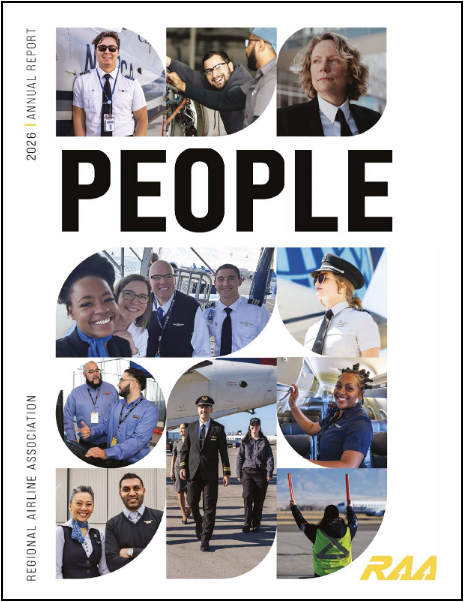
Last week the Regional Airline Association released its annual report, highlighting the essential role that regional airlines play in the national transportation infrastructure. Many of these airlines are first target professional air transport pilot jobs that CFIs who work in the flight training industry target once they have accumulated enough experience to meet ATP (or restricted ATP) minimums.
The report highlighted that regional airlines provide the only scheduled passenger service at 63.8% of the nation’s commercially served airports. In all, regional airlines served 637 airports in 2025, representing 93.7% of U.S. airports with scheduled passenger service.
In the report, data presented that slightly more than 34% of all passenger enplanements in the United States in 2025.
The report contains updated economic analysis showing that scheduled passenger air service at small-community airports supported more than 1.2 million jobs, $57 billion in payroll and wages, and roughly $190 billion in economic activity in 2025.
Click here or the graphic to the right to see the entire report.
| | Updated PTS for Sport Pilot Ratings Released | |
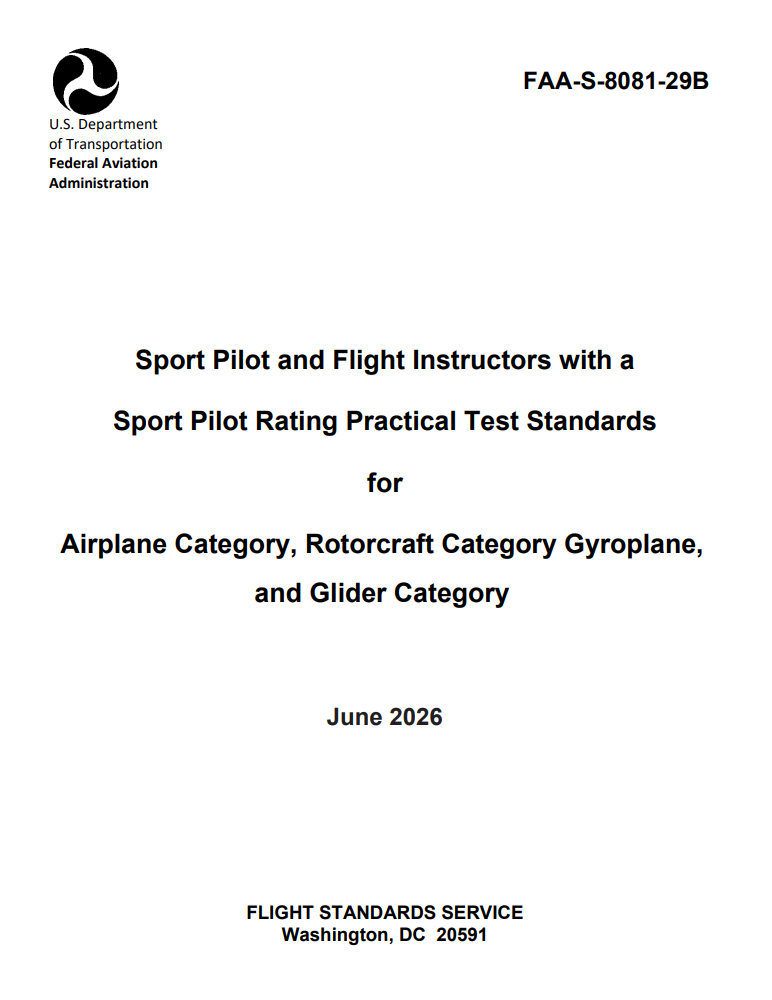
Finalizing some alignment of sport pilot testing standards as a result of recent MOSAIC regulatory changes, the FAA has released updated Practical Test Standards for Sport Pilot certification efforts.
The following sport pilot PTS documents are now available:
FAA-S-8081-29B, Sport Pilot and Flight Instructors with a Sport Pilot Rating Practical Test Standards for Airplane Category, Rotorcraft Category Gyroplane, and Glider Category - Effective September 14, 2026
FAA-S-8081-30B, Sport Pilot and Flight Instructors with a Sport Pilot Rating Practical Test Standards for Lighter-Than-Air Category - Effective September 14, 2026
FAA-S-8081-31B, Sport Pilot and Flight Instructors with a Sport Pilot Rating Practical Test Standards for Powered Parachute Category and Weight-Shift-Control Aircraft Category - Effective September 14, 2026
These PTS documents can be found at:
https://www.faa.gov/training_testing/testing/test_standards
You can learn more about the changes the FAA made from the NPRM in the final rule on the Federal Register page, Sport Pilot Practical Test Standards Alignment at:
https://www.federalregister.gov/documents/2026/09/14/2026-18776/sport-pilot-practical-test-standards-alignment
| | Transportation Security Administration’s (TSA) Flight Training Security Program (FTSP) Upcoming Webinars | |
The Transportation Security Administration’s (TSA) Flight Training Security Program (FTSP) is inviting flight training providers to attend upcoming FTSP Monthly Flight Training Provider Webinars. In these seminar, they provide an overview of any updates with FTSP Portal changes and answer any questions flight training providers may have.
Questions may be send ahead regarding specific training events or system functionality to: ftsp.policy@tsa.dhs.gov
Please click here to register for the October 13, 2026 session.
Please click here to register for the November 10, 2026 session.
Please click on the December 8, 2026 session.
Please click on the January 12, 2027 session.
| | ARTICLES OF INTEREST FROM THE INDUSTRY | |
|
FSAI collects the names of DPEs who have expressed a willingness to travel to help flight training providers secure practical tests.
The latest List of Travel-Willing DPEs with their contact information is also available on the FSAI website. If you are a flight training provider who is finding a challenge of scheduling DPEs in your local area, feel free to reach out to these individuals. They may be able to serve some of your local testing needs.
If you are a DPE who is not listed but would like to be, please let us know. Write us at info@fsai.org with your name, city, state, email, and phone number and we will add you.
| |
Email Feedback Concerns about FAA Practical Tests to:
| | | Tell us what is important to you as a school owner, manager or chief flight instructor. We will share comments in an upcoming edition of Flight Training News. Send your thoughts to info@fsai.org. | | | FSAI LEGISLATIVE ADVOCATES | | Legislative Advocates are flight schools, businesses and individuals who support FSAI’s efforts to advocate for public policy that benefits the flight training industry. | | FSAI ANNUAL SUPPORTING PARTNERS | | Annual Partners are flight schools, businesses and individuals who support FSAI’s ongoing efforts to strengthen the flight training industry. | | V I S I O N A R Y •• P A R T N E R S | | |
D E V E L O P E R •• P A R T N E R S
| | B U I L D E R •• P A R T N E R S | | L E A D E R •• P A R T N E R S | | |
Flight School Association International (FSAI), founded under the name Flight School Association of North America (FSANA) in 2009 is the first association of its kind dedicated solely to the flight training industry. FSAI represents flight schools, firms that provide products and services to the flight training or aviation industry, and other supporting partners.
The Mission of Flight School Association International is to support, promote and advocate for the business of flight training; to provide knowledge, programs and services that help its members thrive and better serve their customers and communities; to foster best business practices; to educate and inspire youth; to increase the global pilot population; to improve general aviation safety; and to work in alliance with the aviation and aerospace industry.
fsai.org / 610-791-4359 / bob@fsai.org
| | | | |