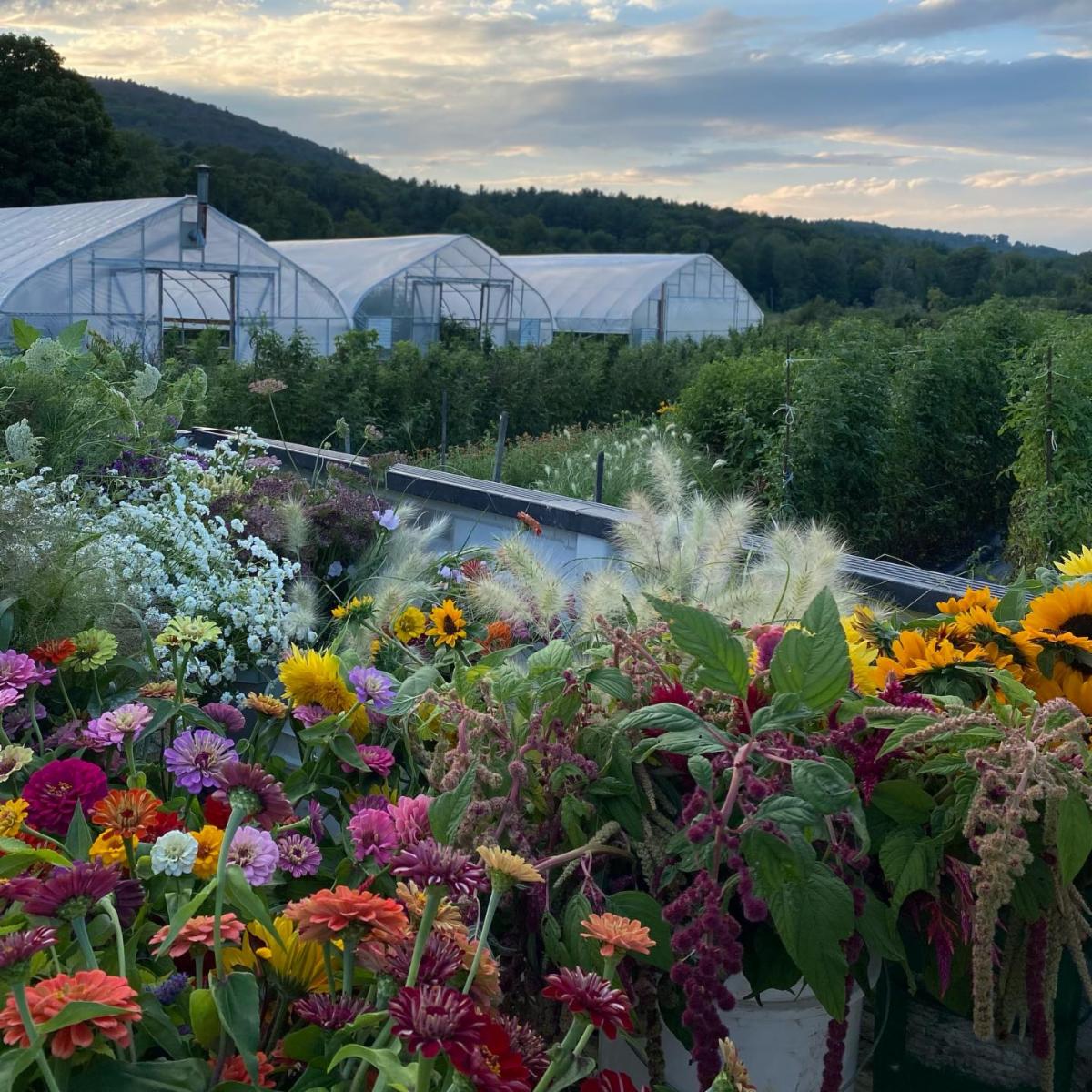
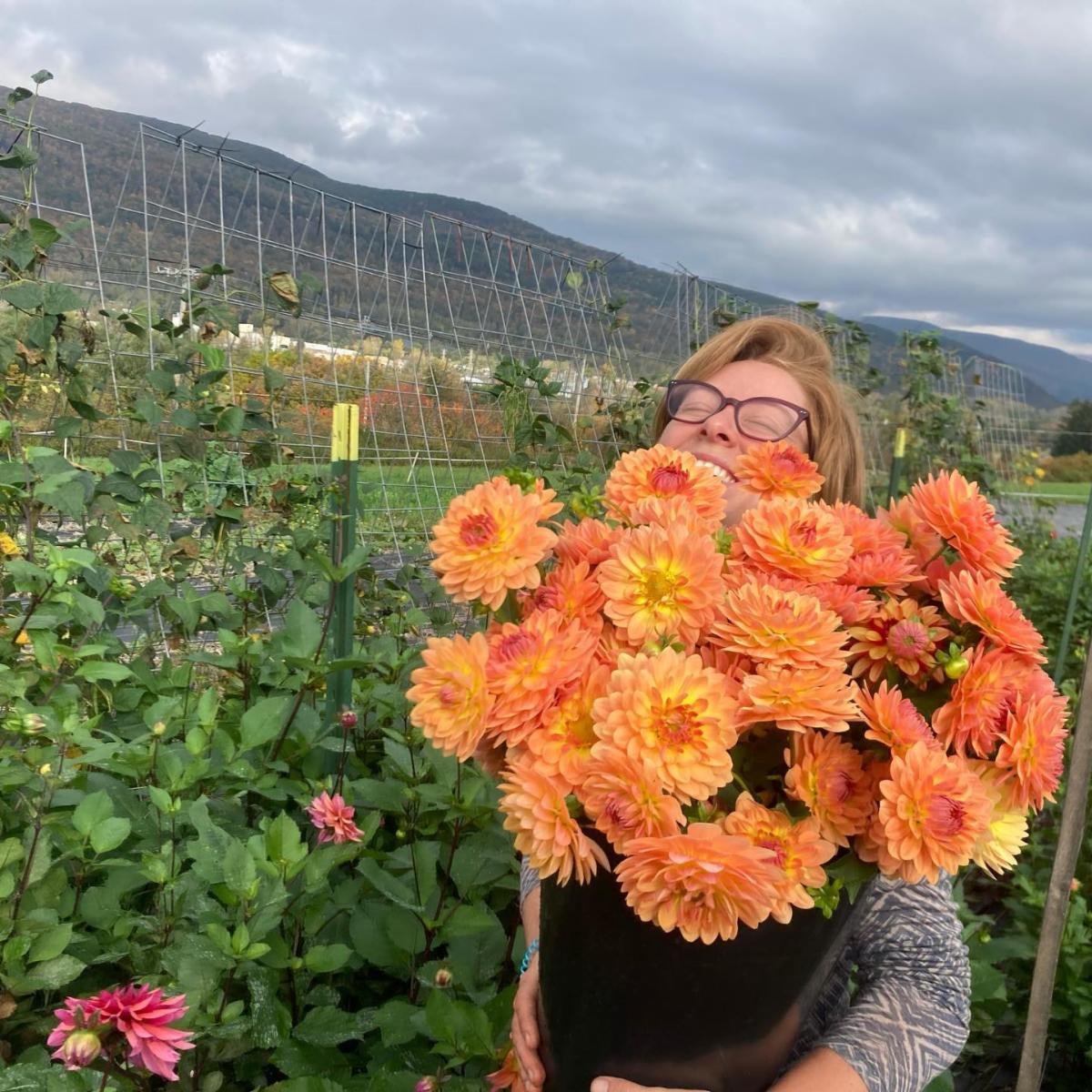
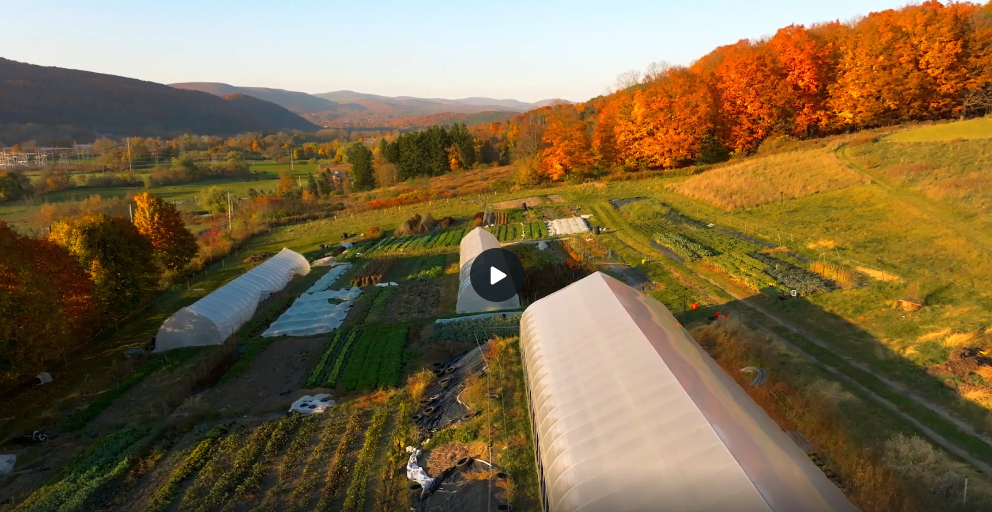
Life's Abloom in the Berkshires! | | Indian Line Farm, Great Barrington | | |
In Berkshire County, the arrival of spring rarely announces itself all at once. It unfolds in quiet, observable shifts: frozen ground yields to muddy footprints, the light lengthens across fields, the rising polyphony of returning birds fills the air. For flower farmers, these signals are not just welcome—they are essential. They mark the beginning of a new growing season and the renewal of a cycle that connects land, livelihood and community. In the Berkshires, our flower farmers are already several steps ahead of the season, tending trays of seedlings in high tunnels, their greenhouses full of snapdragons, ranunculus and anemones that will become the first blooms of the year.
Flower farming in the Berkshires operates at the intersection of patience and precision. The region’s relatively short growing season and variable weather demand careful planning. Farmers track frost dates and soil temperatures, adjusting their planting schedules accordingly. Many rely on season extension techniques such as row cover, high tunnels and succession planting to ensure a steady supply of flowers from May through October.
| | |
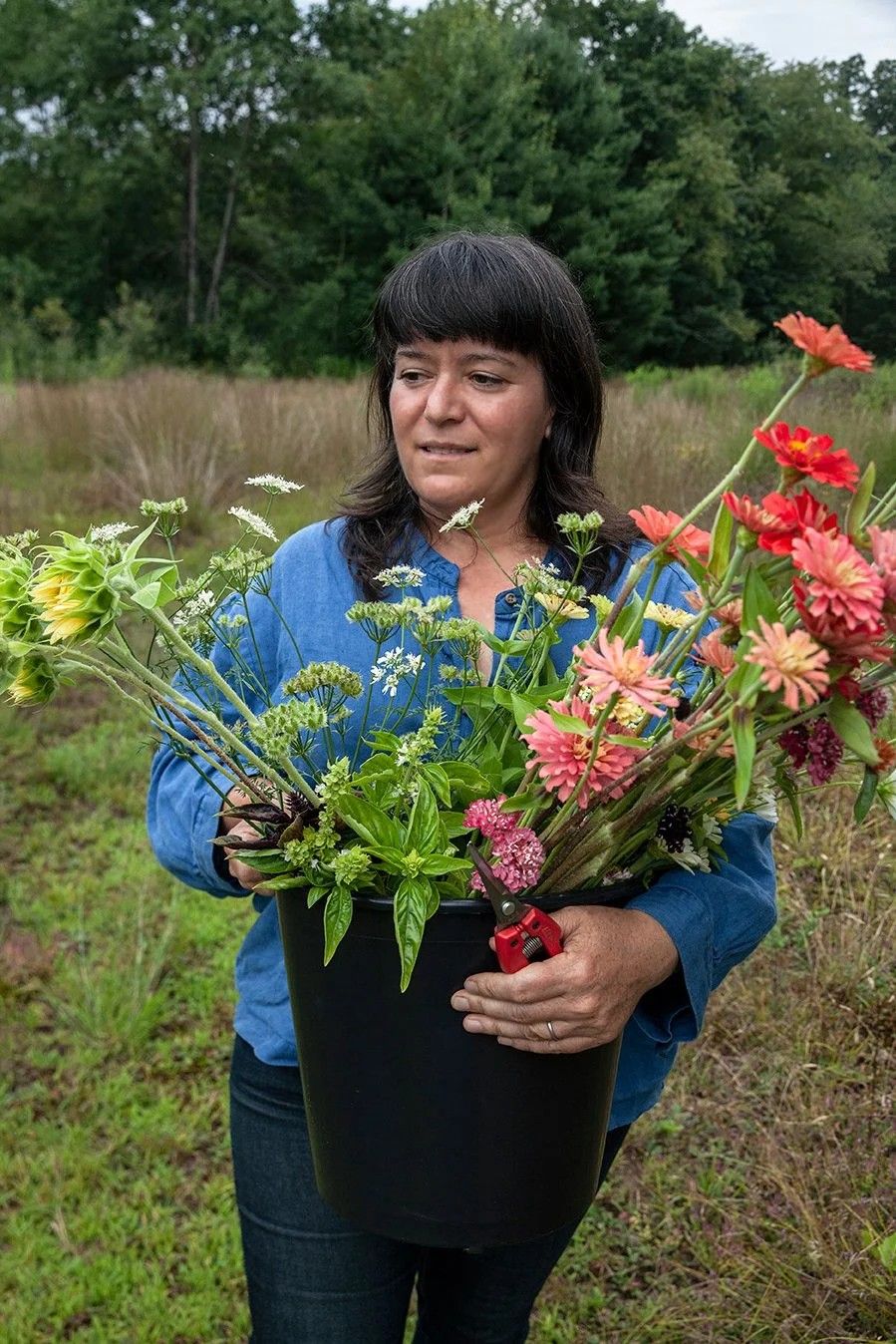
Rana Boland of Flycatcher Farm (pictured) in Great Barrington uses a high tunnel to protect plants such as larkspur, anemone and chrysanthemum from the volatile winter and early spring temperatures. Her farm focuses on using regenerative and organic growing practices to offer seasonal, hyper-local and specialty cut flowers. “I’m also excited to have a large crop of peonies this season after investing in several varieties during my first year of farming here,” Rana adds. “They take about three years to establish, and everyone loves them.” She’s also planning to re-skin her high tunnel this season to offer further weather protection.
| | |
Mary Berle of Lila’s Mountain Farm in Great Barrington (pictured) also looks forward to peonies and offers, “any brides who choose our peonies for summer weddings can come back in the fall and get a root for their garden, which will then bloom annually for up to a hundred years with minimal care,” she said.
Beyond its technical aspects, flower farming in the Berkshires is deeply attuned to the rhythms of the natural world. The emergence of pollinators is one of the most important indicators that the ecosystem is coming back into balance. Mary Berle keeps large pollinator strips in the flower field. “We also plant some natives,” she said. “We notice which hybrids attract beneficial insects and butterflies, and we privilege them. We are paying attention to the ecology all the
| | time. Sheep manure is our primary amendment, andif we use anything else it is organic. Last summer we had 17 bluebirds in the field and more varieties of bees than I could count.” Early blooms like crocus and hellebore provide critical food sources, while later plantings of zinnias, cosmos and sunflowers sustain pollinators throughout the summer months. In this way, flower farms are not just producing beauty, they actively support biodiversity and ecological health. | |
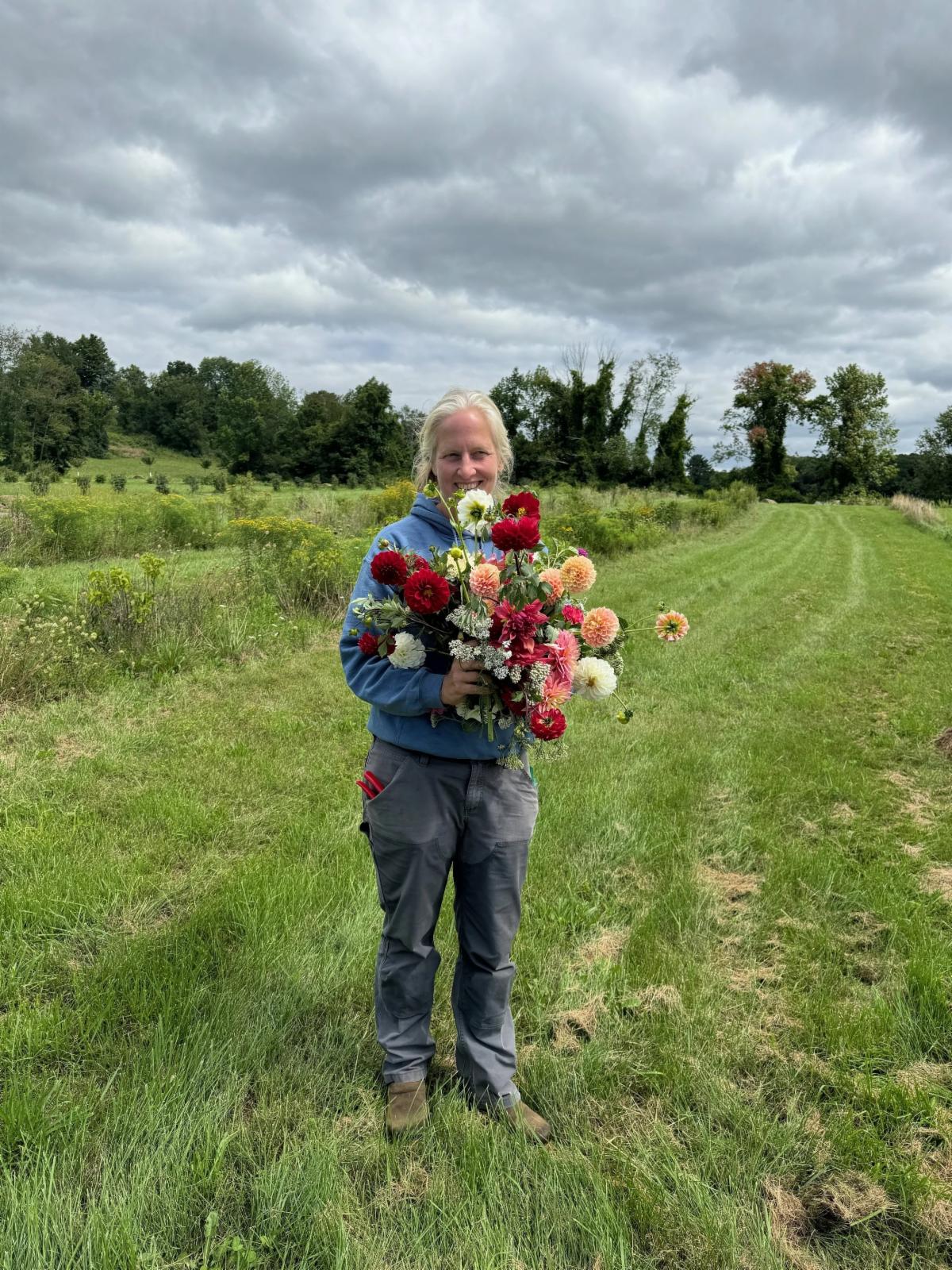
| |  | The impact of these farms is easy to see at the opening days of the season’s farmers markets. Buckets of freshly cut flowers bring instant delight to the faces of shoppers passing by. Unlike imported flowers, which tend to be shipped long distances and treated for preservation, locally grown flowers are harvested at peak freshness. Laura Tupper of Full Well Farm in Adams (pictured) explains, “There is a huge difference in vase life. Our flowers are often harvested within a day or two of getting to the customer, so they last a lot longer on your table than imported flowers.” Their scent, color and longevity reflect the conditions and care in which they were grown. The significance of these farms extends throughout the state; Massachusetts is ranked 19th in the nation for wholesale value of floriculture crops, according to UMass Amherst. Nurseries, greenhouses and garden centers represent Massachusetts’ leading ag sector, accounting for about 27% of the agricultural economy. Massachusetts is home to over 800 commercial greenhouse and nursery businesses.
| | |
Supporting flower farmers in Berkshire County and beyond means investing in a broader regional food and agriculture system. Many flower growers operate diversified farms, producing vegetables, herbs and other crops alongside their blooms. Revenue from flowers can help stabilize farm income, making it possible in these uncertain times for farmers to continue stewarding their land and contributing to local food access initiatives.
Flower farming offers a compelling example of how small-scale operations can have outsized impact. A single field of flowers provides habitat for pollinators, income for a farm family and a source of connection for the community. Workshops, Pick Your Own (PYO) farms and Community Supported Agriculture (CSA) flower shares invite people onto the land with their snips and their baskets, fostering a deep connection to where flowers come from and how they grow.
For those who follow flowers, the invitation is simple: pay attention to the small changes. Notice the first blossoms, the first insects scuttling at your feet, the subtle greening of the landscape. These are not just signs of spring, they are indicators of a living system, ever changing, one that flower farmers in the Berkshires help sustain with their care, skill and deep commitment.
| |
|
Berkshire Area Flower Farms:
Cedar Farm Wholesale, Ghent NY
Flycatcher Farm, Great Barrington
Markristo Farm/BridleWood Blooms, Hillsdale NY
Wild & Cultivated, Sheffield
Berkshire Area Nurseries:
Beetle Buds Native Gardens, Lanesborough
Clark's Nursery, Lee
Jaeschke's Fruit & Flower Center, Pittsfield
Taft Farms, Great Barrington
Ward's Nursery & Garden Center, Great Barrington
Whitney's Farm Market & Garden Center, Cheshire
Windy Hill Farm, Great Barrington
Berkshire Grown Farmer Members who also grow flowers:
328North, Williamstown
Abode Farm, New Lebanon
Caretaker Farm, Williamstown
Dandelion Hill Farm, Sheffield
Farm Girl Farm (seedlings), Great Barrington
Field of Love Farm, Sheffield
Full Well Farm, Adams
Indian Line Farm, Egremont
Lila’s Mountain Farm, Great Barrington
Many Forks Farm, Clarksburg
New Leaf Farm, New Lebanon
Red Shirt Farm, Lanesborough
Second Drop Farm, Lanesborough
Square Roots Farm, Lanesborough
Woven Roots Farm, Tyringham
Find these growers and many other flower producers at your
favorite Berkshire area farmers market or on the
Berkshire Grown searchable map!
Resources:
Floriculture Statistics in Massachusetts
Top 10 Massachusetts Agricultural Products
| | |
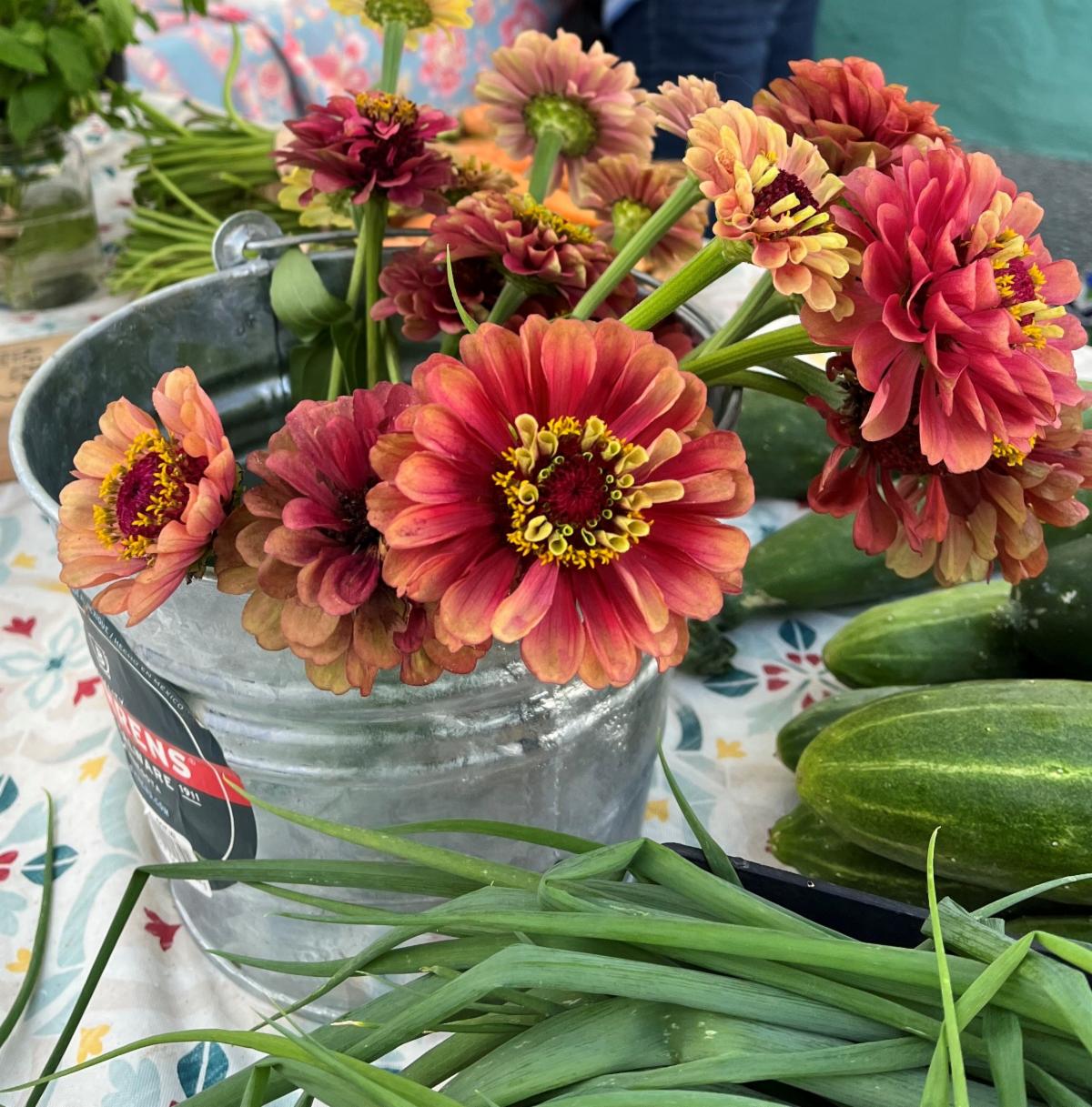
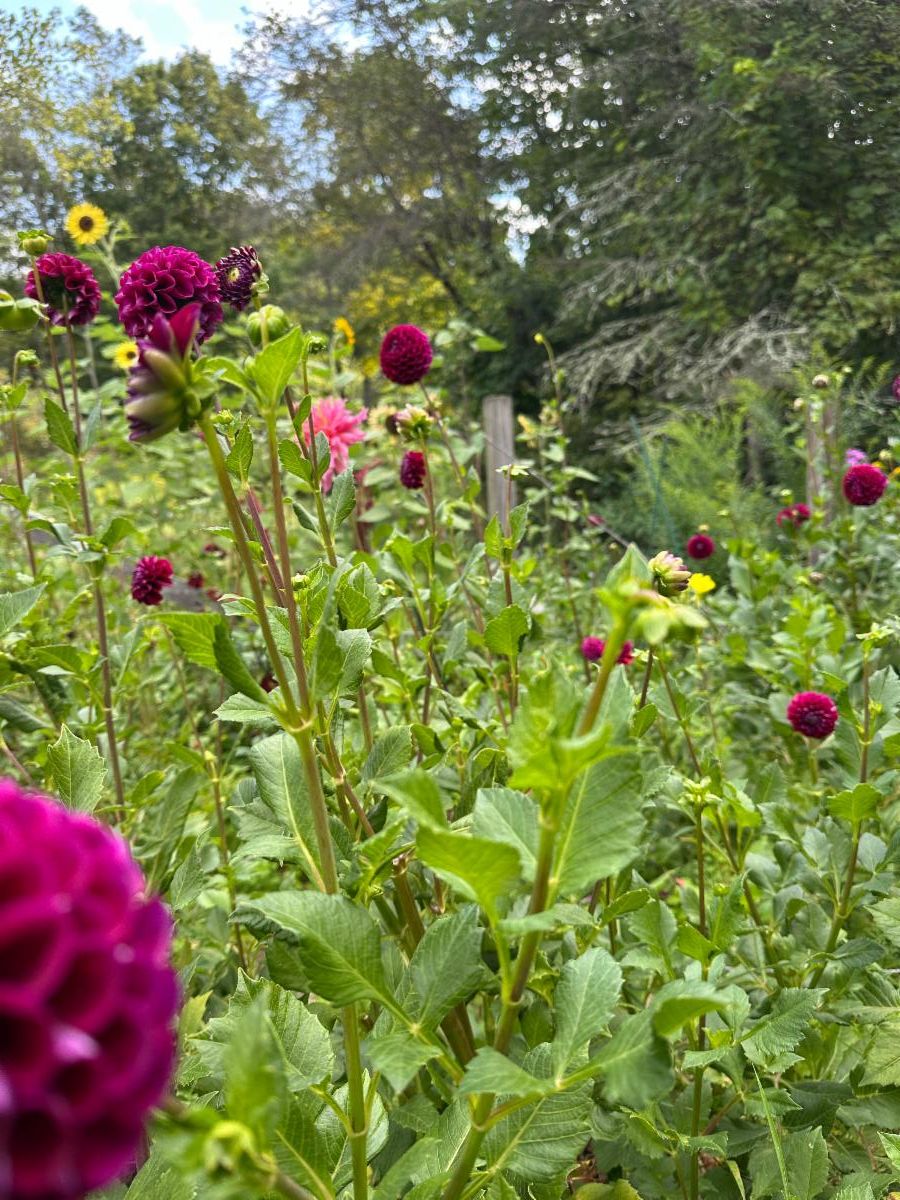
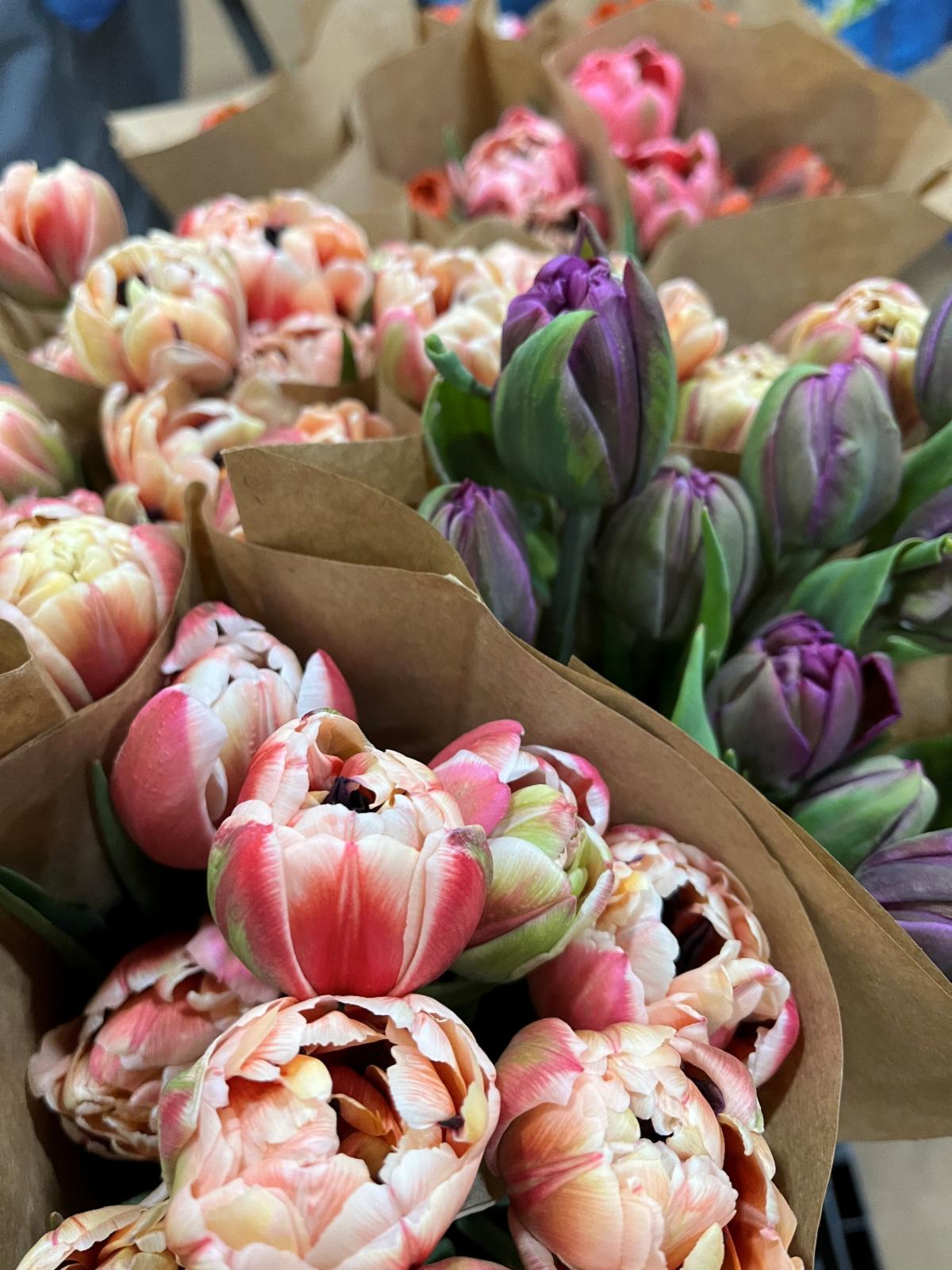
Field of Love dahlias at Sheffield Farmers Market, row of dahlia's in the field, Wild & Cultivated tulips at the
Berkshire Grown Winter Farmers Market on April 18.
| |
Advancing Our Work:
from the Executive Director's Desk
Crisis in farming – thoughts from a farmer and a professor:
I’m sharing this space today with two people whose thoughts on farming in the Berkshire area highlight some of the many obstacles facing local farms. We share excerpts from a recent presentation about the rapid loss of farmland in Massachusetts by Sarah Gardner at the Lee, MA Agricultural Commission, as reported by Leslee Bassman in the Berkshire Edge. Gardner is President of Berkshire Grown’s Board of Directors, a Williams College professor, and chair of the Williamstown Agricultural Commission. Alongside Gardner’s higher-level view are personal reality-checks from Eric Suquet of Graylight Farm in nearby Hillsdale, NY. Suquet authors a Substack column shedding light on his experience as a farmer.
“We have what I consider to be a real farm crisis in Massachusetts,” says Sarah Gardner. The historical statistics of Massachusetts farms are staggering. In 1900, 474,000 acres within the state were involved in farming, accounting for 3,436 farms. Fifty years later, those numbers dropped by more than half, with 202,206 acres devoted to farming, or 1,388 farms. In 2022, state farms comprised just 17,160 acres.
Part of the problem is the high cost of acquiring the fertile land required for farming. Massachusetts boasts the second highest farmland price in the U.S., after Rhode Island. Today’s farmers face enormous challenges that include high labor costs, desire for towns to support ventures that boast more tax revenue, shortage of agriculture programs at the high school level, and a lack of succession plans. Gardner says “We have some young farmers, and they’re awesome. They’re not enough to replace [aging farmers]. That’s the problem.”
Local farmer Eric Suquet writes, “the spreadsheets that eager new farmers develop as proof that they can quit their job and live out their dream of being a back-to-the-roots roll-up-your-sleeves real deal farmer, don’t begin to represent reality.” He continues, “the most obvious thing missing are the start-up costs. Land access. Equipment. Infrastructure…You have to sell an awful lot of micro-greens to justify the purchase of a million-dollar property.” Suquet continues, “I never expected to get rich farming, but I was led to believe that if I just made smart choices and worked hard that it was a reasonable way to make a living. I’m here to report back that it isn’t. Without a well-paying off-farm job, savings to burn through, or a trust fund, farmers will be hard pressed to make enough from farming to live above the poverty line.”
With the multiple sources of competition for large tracts of land, local farms are being pushed out. Sarah Gardner says “Farmers cannot compete with wealthy land buyers or solar developers.” The issue is exacerbated by federal funding cuts to agricultural and environmental programs that trickle down to state budgets. Gardner writes that “without concerted action, all the unprotected farmland will be lost.”
Suquet implores readers to understand that “in response to our broken food system, sustainable farming becomes a moral imperative…If we don’t shift to more small-scale localized food production that takes into consideration animal welfare, and the health of both the environment and the individual, we are doomed to suffer irrevocable consequences. When faced with having to actually turn a profit, it becomes easy to see why industrial farms have cut corners that sacrifice the environment, animal welfare, and the ability to pay workers a fair or even legal wage, but avoiding these things is exactly why most of us got into this maddening line of work… Up until now, farmers have carried far too much of this burden upon their backs, but it’s been obscured by some romanticized notion of the plucky resourceful farmer.”
At Berkshire Grown, we are not miracle workers, but we will continue to put our backs into supporting our local farmers, sharing their stories, and working toward a more resilient food system.
|
Events
Towards Racial Justice- South County hosted by BRIDGE. Connect with Berkshire community members to advance racial equity and justice throughout the county and beyond. First Thursday of Every Month, 6:30-9:00pm. Unitarian Universal Meeting of South Berkshire, Housatonic or by ZOOM. RSVP@multiculturalbridge.org. Read more here.
Don't miss these upcoming plant sales!
Arbor Day Plant Sale-Sheffield Farmers Market, Sheffield Land Trust, Sheffield Tree Project & Zinke's Homegrown. Free Native trees & shrubs, plant & seedling sale. April 25, 10am–1pm, Sheffield Library.
Many Forks Farm, Clarksburg, May 15, 2-6pm, May 16 & 17 10am-2pm
Red Shirt Farm, Lanesborough, seedlings at farm store
Berkshire Botanical Garden, Stockbridge, May 8-10
Markristo Farm, Hillsdale NY, vegetable & flower seedlings, now –summer
MX Morningstar Farm, Hudson, seedlings at farm store, May–Jun
|
Winter Farmers Market wraps up 2025-2026 Season!
Thank you to our partners, sponsors, farmers and vendors, musicians and community of shoppers for a wonderful season!
Berkshire Grown hosted eight separate indoor winter farmers markets November 2025–April 2026. Throughout the season 5,309 shoppers purchased locally produced products from 66 participating farm, food, and artisan vendors. Food access was an integral part of the markets, with over $21,000 in SNAP + Market Match + HIP distributed, boosting food buying power for low income shoppers.
Stay tuned for the 2026-2027 Berkshire Grown Winter Farmer Markets dates and locations beginning in November 2026.
| |
Meet your local farmer at the Berkshire Farmers Market!
The Berkshire Farmers Markets summer season begins in May.
Berkshire Area Farmers Market (Lanesborough)
Sat 8am–2pm, May 9-Nov 14
Copake/Hillsdale Farmers Market
Sat 9am–1pm, May 16–Nov 21
Great Barrington Farmers Market
Sat 9a–1pm, May 9–Nov 14
Lee Farmers Market
Sat 10am–2pm, May 23–Oct 10
Lenox Farmers Market
Fri 11am–3pm, May 22–Sep 11
Millerton Farmers Market
Sat 10am–2pm, May 16–Nov 28
New Marlborough Farmers Market
Sun 10am–1pm, Jun 7–Oct 11
North Adams Farmers Market
Sat 9am–1pm, May 16–Oct 31
Otis Farmers Market
Sat 9am–1pm, May 23–Oct 10
Pittsfield Farmers Market
at 9am–1pm, May 16–Oct 10
Sheffield Farmers Market
Fri 3–6pm, May 22–Oct 9
Stockbridge Farmers Market
Wed 2:30–5:30pm, Jun 24–Sep 30
West Stockbridge Farmers Market
Thu 3–6pm, May 21–Oct 1
Williamstown Farmers Market
Sat 9am–1pm, May 16–Nov 7
|
What We’re Reading
From farm fields to museum walls, Lila Wilde Berle shaped the Berkshires. Lila Berle, founder of Lila's Mountain Farm in Great Barrington and an active community member, is remembered in the Berkshire Eagle.
Some Expert Help Planting Your Edible Garden This Spring Raised beds, smart placement, and realistic expectations: Kristen Svorka of Sproutwell shares how to build an edible garden that actually produces—and fits your life.
What Makes a Plant Native? A Guide for Gardeners During Native Plant Month. In celebration of April’s Native Plant Month, American Meadows is helping gardeners better understand a common—but often misunderstood—question: what exactly makes a plant “native”?
Massachusetts Prohibited Plant List. A list of plants, including all cultivars, varieties and hybrids, for which the sale, import, trade, purchase, distribution, propagation, and related activities are currently prohibited within the state of Massachusetts.
"Surrender" by Jennifer Acker: Familiar Berkshire Settings, Feelings, Characters, and Goats. There's a popular fantasy about the ease of life in our rural region that tantalizes the minds of burnt-out urban professionals when they hit middle age. Available at your local bookstore.
| Your contributions help to ensure everyone in the Berkshires has access to fresh, locally grown food. Please consider a gift today. | | | | |