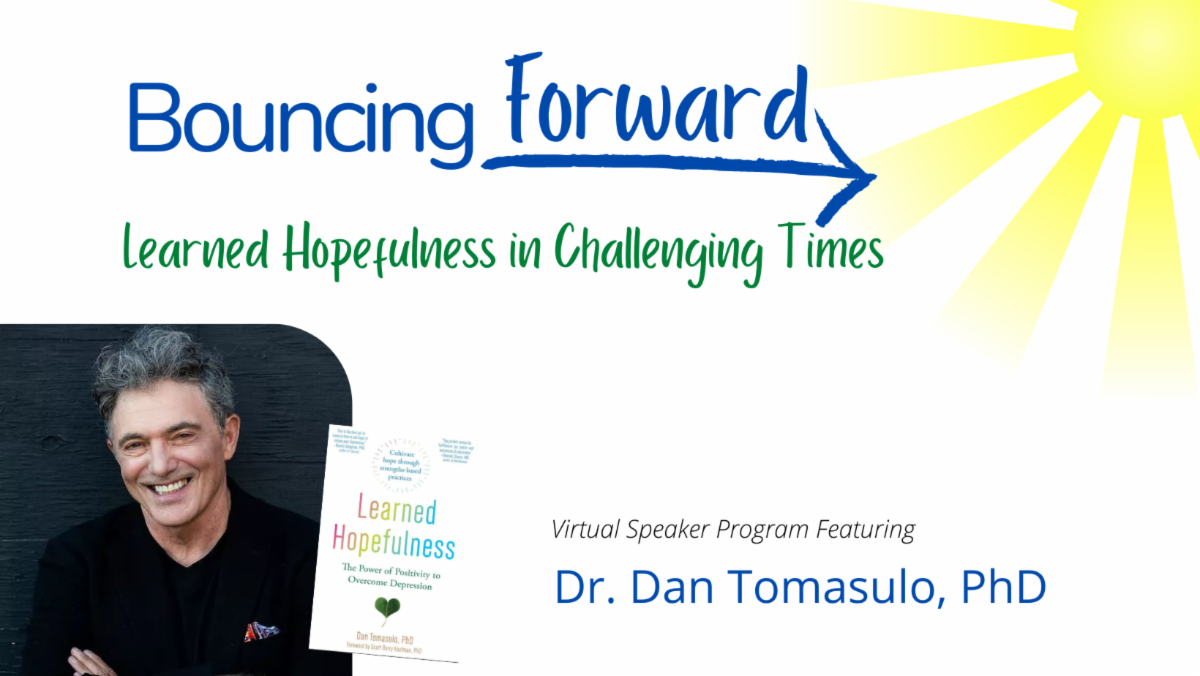
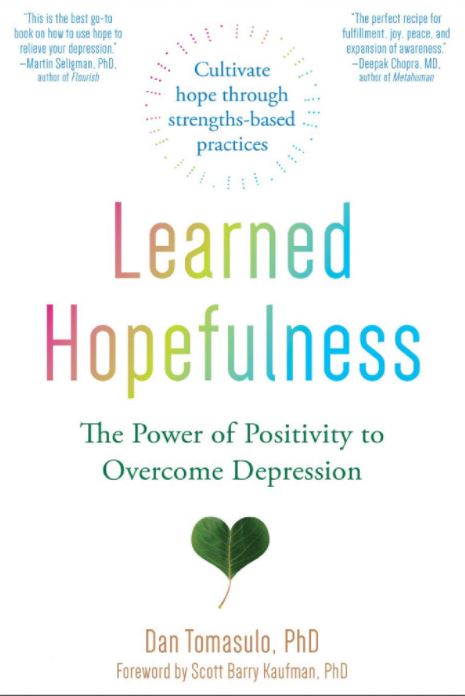
*Our brain has a negativity bias. In order to gain more hope, resilience and joy, we need to challenge and shift our perception.
*After investigating many studies and theories across various disciplines, Dr. Tomasulo formulated the following definition of learned hopefulness: "Hope is the regulation of perception toward a belief in control of the future."
*During the presentation, Dr. Tomasulo dispelled 5 myths of hope:
-
Hope is a purely positive emotion - FACT: "Hope is the only positive emotion which requires negativity and/or uncertainty to be activated."
-
Hope influences our belief system - FACT: Hope is informed BY our beliefs.
-
Hope is synonymous with faith - FACT: Hope is when we feel we can impact our future positively while faith is when we surrender to something greater than us.
-
Hope is regulated by our circumstances - FACT: Hope is regulated by correction and recalibration of goals.
-
You either have hope or you don't - FACT: Hope can be activated, regulated and facilitated by positivity.
*Based on 7 decisions high hope people make, Dr. Tomasulo recommended the following in order to become more hopeful:
-
Look for possibilities. (Don't see things as fixed and unchangeable; rather, see the opportunity)
-
Notice the good (Intentionally focus on the beauty and benefits around you)
-
Cultivate positivity (Hunt the good - Look at things in a different, more positive way; attitude of gratitude)
-
Use strengths (Don't think of your weaknesses; focus on using your strengths)
-
Adjust goals (Rather than being disengaged, reset your goals into achievable micro goals)
-
Engage with purpose (Look for meaning and a reason for living)
-
Cherish others (make choices that nurture and cherish your connections with others)