|
Did You Know?
Title & Escrow Insights Every Agent Should Know
Understanding title and escrow isn’t just about closing paperwork, it is about protecting your clients and your reputation. The more you know about title insurance, escrow processes, and common exceptions, the better you can anticipate challenges, set clear expectations, and avoid last-minute surprises that can derail a deal.
That is why we have put together this quick “Did You Know?” list; a set of key insights every agent should keep in mind when guiding clients through their transaction.
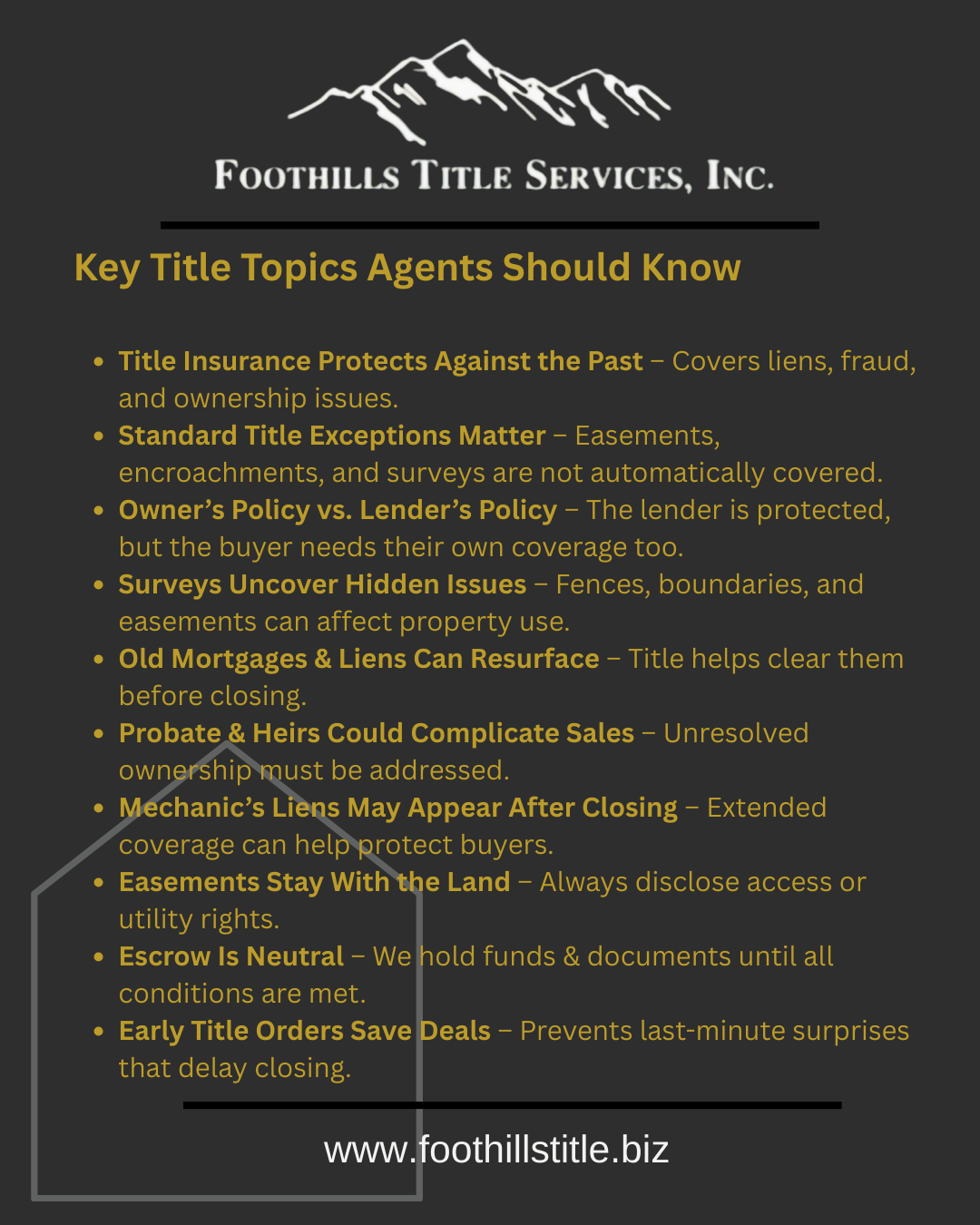
1. Title Insurance Protects Against the Past
Unlike homeowner’s insurance (which covers future events), title insurance protects buyers and lenders from past issues that could affect ownership, such as undisclosed liens, unpaid taxes, or forged documents.
2. Not All Liens Are Cleared at Closing
Certain liens, like HOA dues, unpaid utilities, or municipal assessments, may survive closing if not properly addressed. Always ask us to double-check!
3. Standard Title Exceptions Matter
Title policies typically exclude things like easements, boundary disputes, and encroachments unless specifically insured against. Reviewing the title commitment with your client can prevent surprises later.
4. Surveys Can Uncover Hidden Issues
A property survey can reveal boundary line encroachments, unrecorded easements, or fences built in the wrong spot, issues often excluded from standard coverage.
5. Escrow Is a Neutral Third Party
Escrow holds and disburses funds only when all conditions of the transaction are met, ensuring fairness and protecting both buyer and seller.
6. Early Title Orders Save Deals
Ordering title early helps uncover liens, judgments, or ownership discrepancies before they delay closing, or worse, kill the deal at the last minute.
7. Unreleased Mortgages Are Common
Old, paid-off mortgages sometimes remain on record if a release wasn’t properly filed. Title insurance helps clear these clouds on title.
8. Owners vs. Lender’s Policy
A lender’s policy only protects the lender’s interest, not the buyers. An owner’s policy ensures the buyer’s ownership rights are covered, too.
9. Probate and Heirs Could Complicate Sales
If a seller inherited the property, unresolved probate issues or unknown heirs can create title problems that need to be cleared before closing.
10. Mechanic’s Liens May Appear After Closing
Contractors or subcontractors can file mechanic’s liens for unpaid work even after the property changes hands. Extended coverage can protect against this risk.
11. Title Exceptions Can Sometimes Be Removed
Many “standard exceptions” (like survey matters) can be deleted or insured over with additional documentation or endorsements, giving your clients stronger protection.
12. Encroachments Affect Value & Use
A neighbor’s fence, driveway, or shed crossing the boundary may limit your client’s future property use or cause legal disputes. Title and surveys help uncover these risks.
13. Escrow Instructions Must Match the Contract
If the purchase contract and escrow instructions differ, it can delay or complicate closing. Double-check that they align from the beginning.
14. Easements Stay with the Land
Utility, access, or shared driveway easements don’t disappear with a new owner, they remain attached to the property and should be disclosed to buyers.
15. Clear Communication Prevents Closing Delays
Providing escrow with all addenda, HOA info, and payoff details upfront helps keep your closing timeline on track.
Download the list of Key Title Topics flyer Here
|