FEATURE
_____________________
Prescription for Prevention: GRHIC, Mercer School of Medicine and CWC Alliance Host Conference Addressing Opioid Misuse in Rural Georgia
by Samantha Johnson, Lead Community Resource and Assessment Specialist
| |
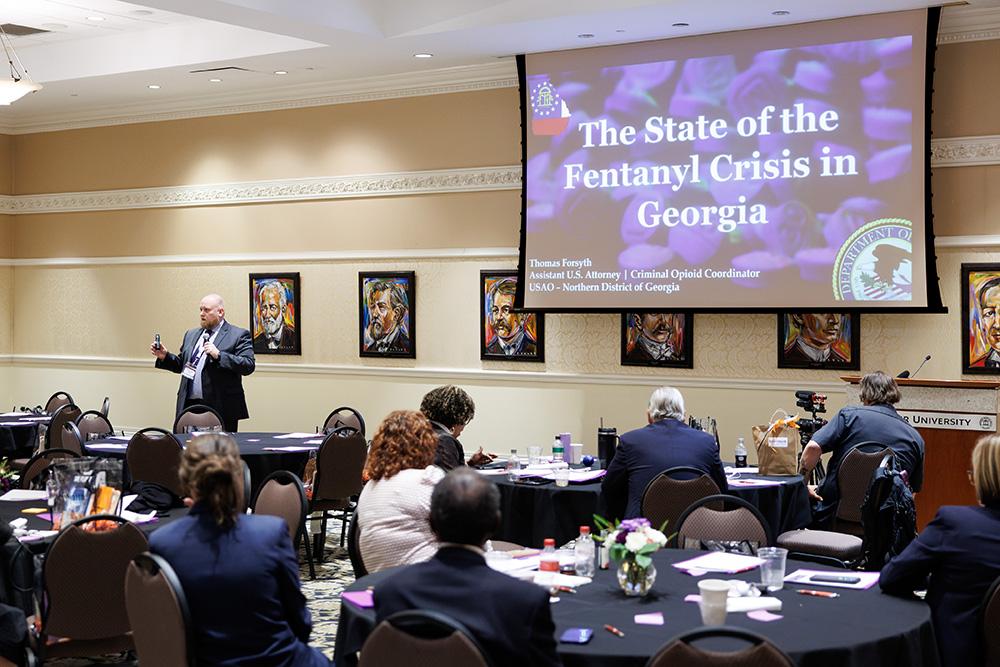
Assistant U.S. Attorney Thomas Forsyth, JD, presents on the state of the fentanyl crisis in Georgia.
_____________________
| |
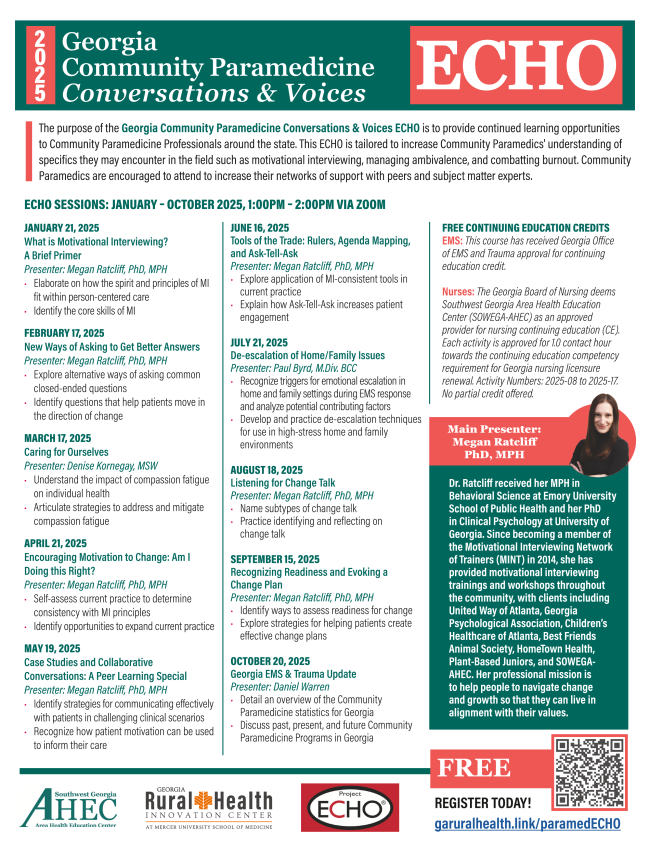
On Sept. 18, 2025, Mercer University School of Medicine (MUSM), its Georgia Rural Health Innovation Center (GRHIC) and the CWC Alliance partnered to host the Prescription for Prevention: Opioid Misuse in Rural Georgia Conference.
The full-day event brought together physicians, nurses, counselors, social workers and advocates to address the opioid crisis and challenges facing Georgia’s rural communities. Special presentations included CWC’s opioid crisis response, the impact of addiction on medicine, the Prescription Drug Monitoring Program and the state of the fentanyl crisis in Georgia.
A feature of the event was the Life Care Specialist (LCS) program. The LCS program is a hospital-based model that provides opioid safety education, pain management techniques and mental wellness skills. The program was launched at Grady Memorial Hospital by CWC. To address the rise in opioid-related deaths in rural communities, CWC partnered with MUSM and GRHIC to implement the program. It has since expanded to rural hospitals across the state, such as Mountain Lakes Medical Center, Stephens County Hospital and Coffee Regional Medical Center.
Participants also viewed a screening of the documentary “Fentanyl: Death Incorporated,” followed by a panel discussion that offered a range of perspectives on the fentanyl crisis and the need for prevention strategies that address families, youth and community resilience.
| | Health Access Locator Database Helps Rural Residents Find Health Care | | |
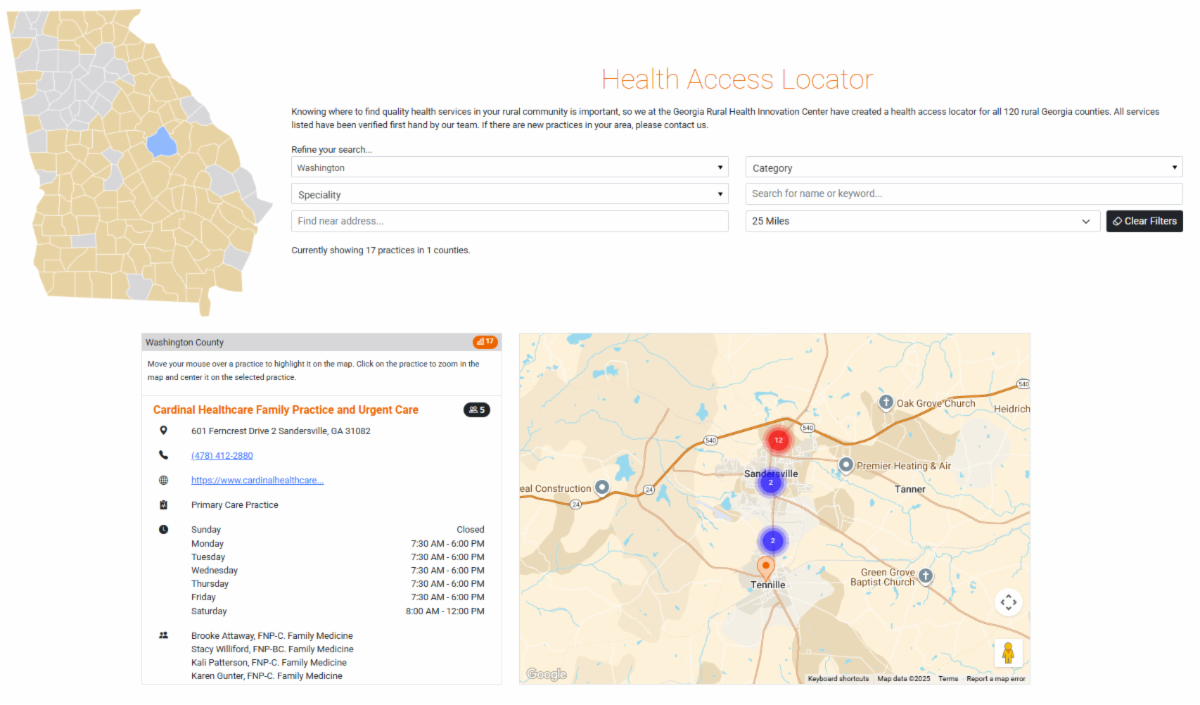
The Georgia Rural Health Innovation Center at Mercer University School of Medicine launched an online tool to help residents locate health care options in rural counties.
The Health Access Locator (HAL) database allows users to easily search for primary care providers, physicians, and other health care facilities across underserved communities. Users can search by county, physician specialty and facility category. GRHIC's community health reporters routinely verify and update sites and providers in their local county or territory.
By centralizing information about local clinics, hospitals, and practitioners, the platform helps residents, community leaders, and health professionals identify available services, close care gaps, and strengthen the overall health infrastructure of rural areas in the state.
|
| | | |
Join the Community Health Reporter Program
Do you want to make a difference in your rural community?
Help keep your neighbors informed of what local health care options are available by becoming a community health reporter.
| | |
Dawsonville Market Connects Farmers, Community
by Kayla Stroud, Communications and Events Specialist
| | |
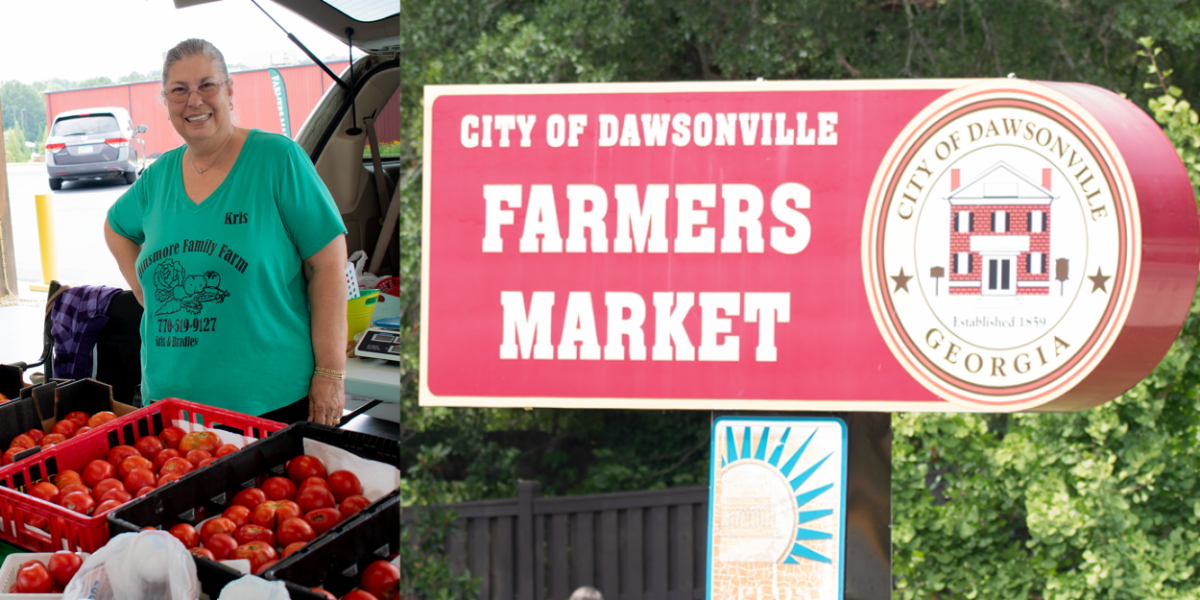
Kris Dinsmore sells fresh produce at the Amicalola Farmers Market in Dawsonville.
____________
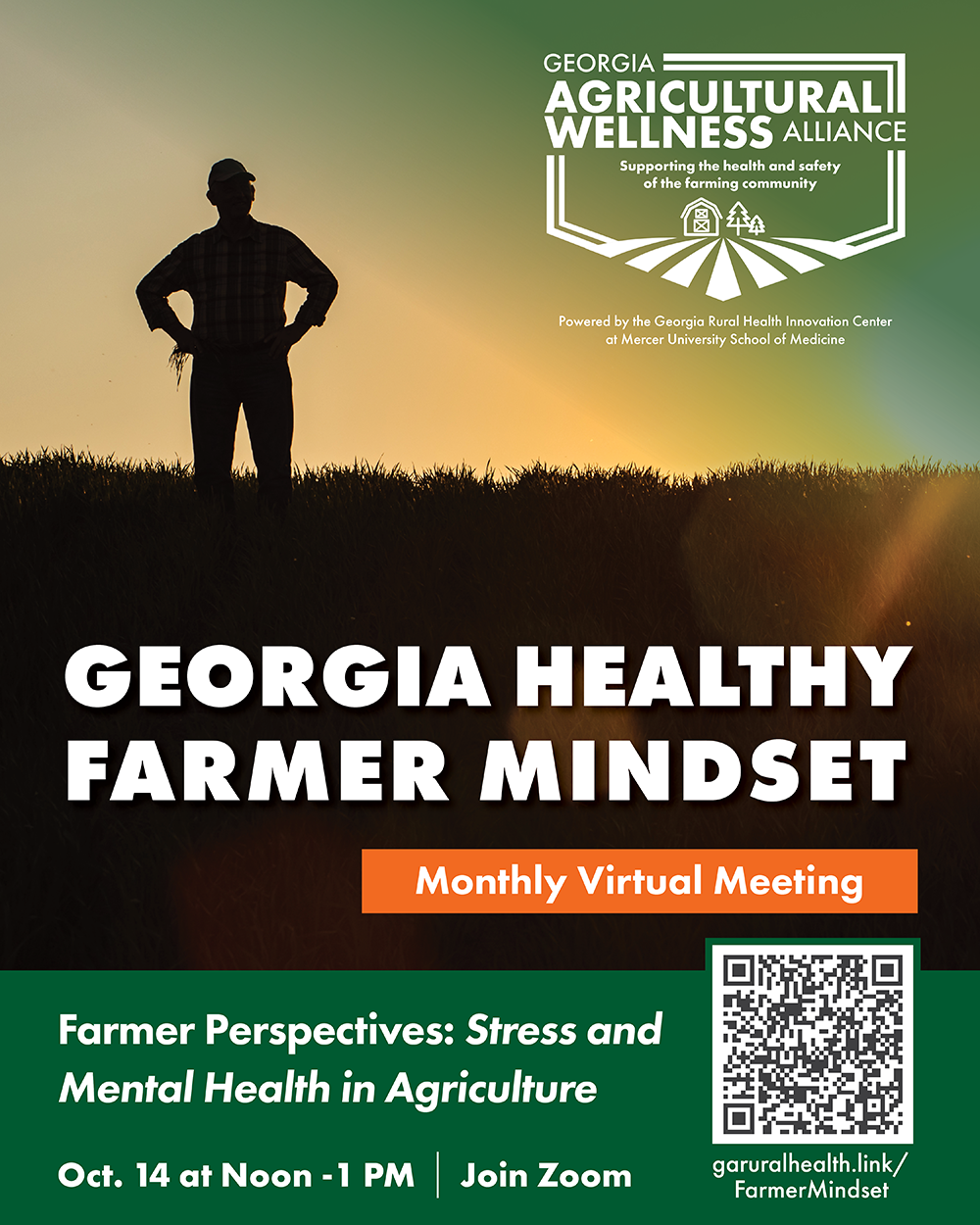
| | The Georgia Agricultural Wellness Alliance was established in response to the prevalence of mental health challenges experienced by farm families and communities, which was revealed, in large part, through a joint study conducted by Mercer University School of Medicine's Georgia Rural Health Innovation Center, the Georgia Foundation for Agriculture and students in the School of Medicine’s Rural Health Sciences Ph.D. program. GAWA's focus is all of Georgia's farming communities. In this issue of For Rural, we spotlight the Amicalola Regional Farmers Market in Dawson County. | | |
What started as a small gathering of vendors in a parking lot has grown into one of Dawson County’s most cherished community spaces: the Amicalola Regional Farmers Market.
“I helped start the market around 16, 18 years ago,” said Jimmy Hill, a retired engineer who now sells goods alongside his wife, Gail. “We were trying to figure out what we could do to improve agriculture in this county. One of the ideas that came out was a farmers market so that farmers could have a place to market their products.”
Market manager Clark MacAllister said it initially operated on a small scale. “It was very seasonal, very small,” MacAllister said. “Just people with tomatoes, peppers—whatever their garden produced.”
The market is now downtown under its own pavilion, where vendors can sell goods or arts and crafts every Saturday morning. One thing that sets the market apart is its commitment to local products by limiting who can sell.
“Vendors must either grow what they’re selling or live in Dawson County or one of the surrounding counties like Hall, Forsyth, Cherokee, Gilmer or Lumpkin,” MacAllister said.
MacAllister said shoppers value being able to trace where their food comes from more than ever. He said, "They can talk to the person who grew it, drive by the farm or garden where it came from, and know it hasn’t been heavily sprayed with industrial herbicides.”
Kris Dinsmore, who runs a small farm in McCullough with her husband, agrees that customers’ concern is about food quality.
“We don’t spray anything on our vegetables, so customers aren’t getting pesticides or any of the harmful chemicals,” Dinsmore said. “The quality of how it was grown is a question I often get.”
“The market has evolved in ways I couldn’t have predicted,” MacAllister said. “I enjoy getting to know the people—vendors and shoppers alike. It brings back a sense of community that’s missing in fast-paced life.”
After years of involvement, MacAllister credits the community for the market’s success.
“We dreamed about that for a long time, having a farmers market, and it’s gone a lot better than I could’ve imagined.”
| | |
Rural Hospital Emergency Department Collaborative
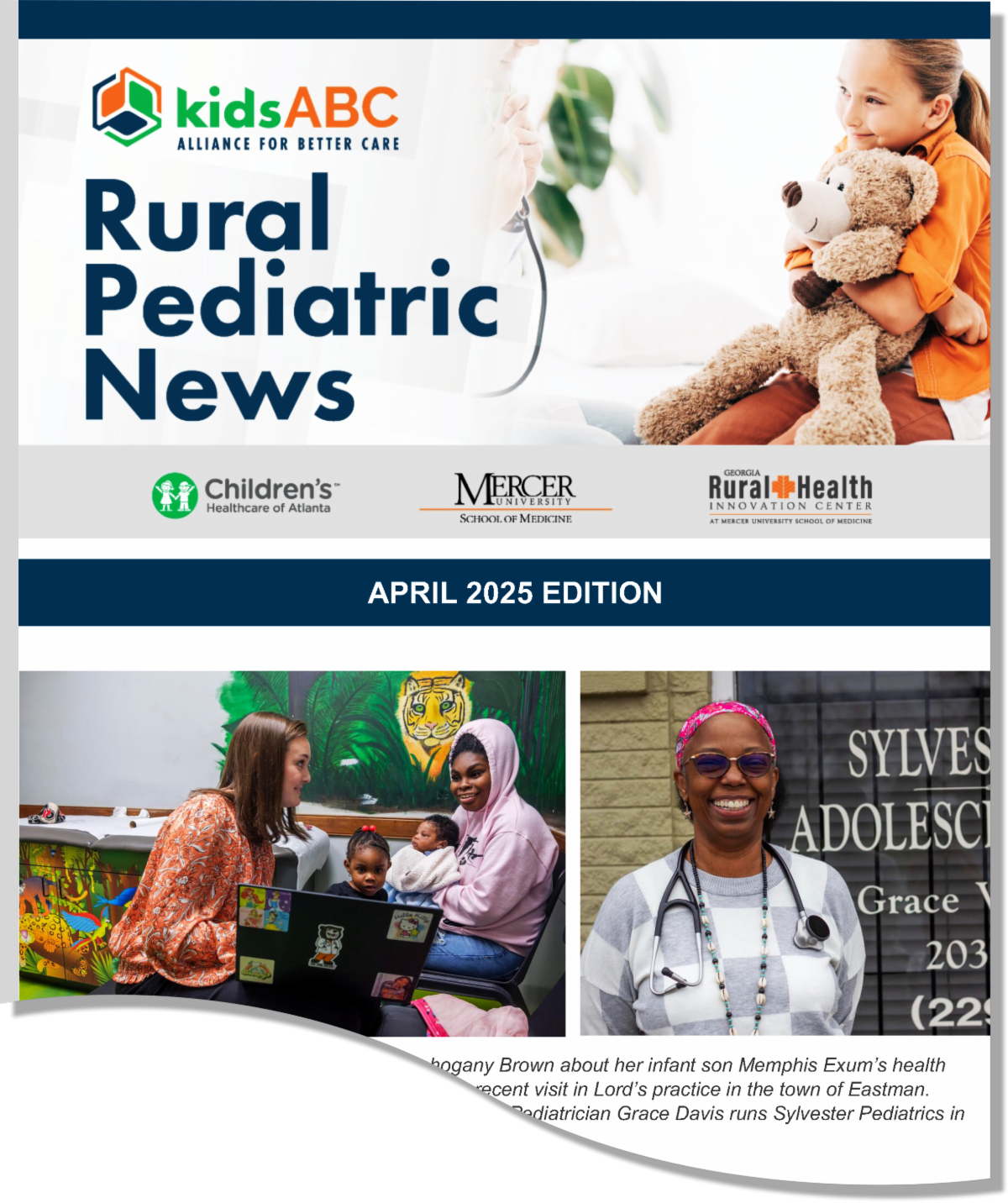
The KidsABC Rural Emergency Department project continues to enhance rural pediatric care across the state. The ED collaborative meeting was held Sept. 24 at Crisp Regional Hospital in Cordele. Participants shared best practices, engaged with peers and brainstormed innovative solutions to enhance pediatric care. Education sessions included using clinical competencies to improve quality, resilience and well-being in health care, and overcoming budget constraints. Pediatric-specific training for rural ED staff remains ongoing, with additional classes being added for Cohort 3. In addition to Neonatal Resuscitation Program certification and recertification classes, the team is preparing to offer a Certified Emergency Nurse Exam Review course and a four-day Marcus Crisis Prevention training. Lastly, Rural Pediatric Respiratory training sessions will be offered. These regional scenario-based classes are designed specifically for respiratory therapists and will focus on pediatric airway management.
Rural Pediatric Support Collaborative
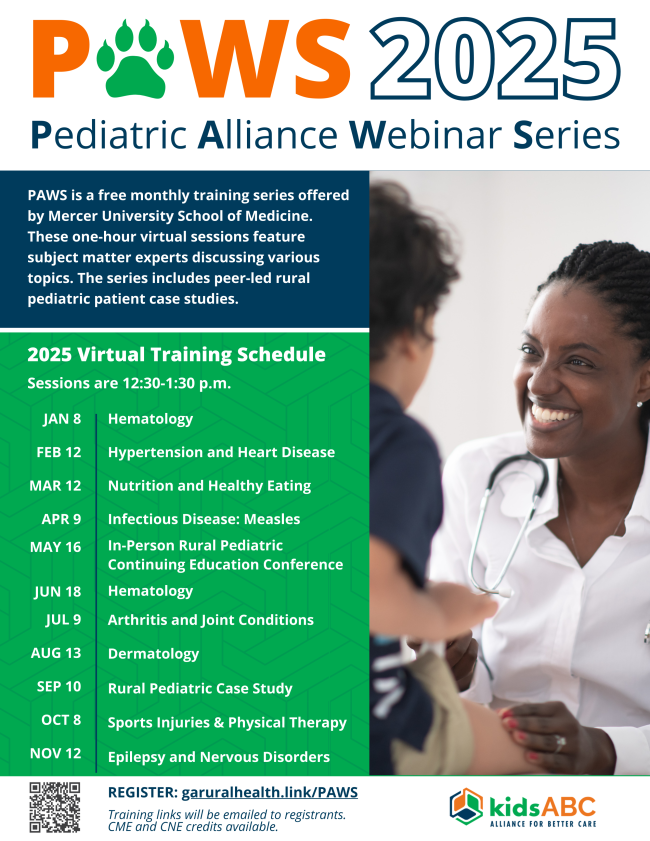
Rural pediatric and family medicine physicians, along with staff and students, engaged in the Sept. 10 PAWS Session on dermatology, presented by Joshua Lane, MD, PhD, MPH, MBA, a Mercer University School of Medicine alum and professor of surgery and medicine at the MUSM Columbus campus. Dr. Lane introduced and recognized a variety of dermatologic conditions seen in rural Georgia and provided a detailed strategy for dermatologic consultation in rural areas. Offices for Cohort 3 have been confirmed and will be announced soon. The annual Children’s Family Therapy Scholars Day was held Sept. 22 at the Marcus Autism Center. The agenda included an overview of the Marcus Autism Center mission, clinical portfolio and research activities; a tour covering diagnostics and medical services, early intervention, skill acquisition, complex behavior supports and feeding disorders; a panel discussion with clinical program leaders; and lunch with the center director and staff. The family therapy scholars in attendance learned more about caring for patients with autism and built connections with several pediatric providers who serve rural Georgia patients with autism. The Oct. 8 PAWS session will feature Stephen Miller, MD, a pediatric primary care sports medicine physician at Children’s Healthcare of Atlanta Fayette Clinic. His presentation will highlight concussion management in the primary care office. Telehealth appointments remain active in KidsABC pediatric and family medicine offices.
Rural Pediatric Mental Health Collaborative
The Georgia Rural Health Innovation Center at Mercer University School of Medicine continues to offer universal mental health and wellness screenings in rural school systems for students in grades 3-12 as part of the KidsABC Mental Health and Wellness project. During the 2025-26 academic year, universal screenings will expand to 11 rural school systems in 10 counties. If a student’s responses suggest severe or moderate symptoms, the student’s parents or guardians are contacted. These students and their families are then offered care navigation and services. Behavioral health and other supportive services will be available from Children’s Healthcare of Atlanta, the Georgia Rural Health Innovation Center’s Pediatric Mental Health Initiative, Emory University and local community resources.
| | |
QI Projects Available
Streamlined, Complementary Templates
We have three Quality Improvement (QI) projects now available through our portfolio site. Designed with ease and efficiency in mind, the projects focus on depression screening, anxiety screening and ADHD screening in adolescents ages 12-18.
View or Enroll in QI Projects
Visit your MOCAM profile, and find our projects with templates under Mercer University School of Medicine, or contact Anne Montgomery, PhD, School of Medicine associate professor, at montgomery_a@mercer.edu.
QI Project Virtual Training Opportunity:
Anne Montgomery, PhD, is offering quarterly training sessions on QI projects that fulfill MOC Part 4 for ABP.
Training presentations include:
- Basic overview of what is necessary for a QI project for MOC
- How our portfolio program can help
- How to participate
- Currently approved ready-to-go projects
- Other project ideas
Presentations are 10 to 15 minutes and can be one-to-one or in groups.
Contact: montgomery_a@mercer.edu
| |
_________
Mercer University School of Medicine is a Pediatric Portfolio Sponsor for ABP Maintenance of Certification (MOC) activities. The sponsorship gives pediatricians and pediatric trainees a seamless opportunity to earn MOC credit for work they are already doing while participating in the School of Medicine’s quality improvement (QI) activities.
|
| Training and News for Rural Pediatric Health Care Providers | | 2025 Ongoing Center Initiatives | | |
ABOUT THE CENTER
Mercer University School of Medicine’s Georgia Rural Health Innovation Center was established to address the complex health care challenges and disparities faced by rural communities throughout the state. The School of Medicine boasts a longstanding commitment to serving rural Georgia’s health needs, with a mission to educate physicians dedicated to tackling the health challenges in rural Georgia. The Rural Health Innovation Center serves as a critical resource to rural communities to improve access and effectiveness of health care by offering research, collaboration and training opportunities.
| | | | |